Wednesday, October 5, 2022
Valerie Bolling Gets Readers Rolling!
Wednesday, September 28, 2022
Whispering Pines Writing Retreat 2022 Recap with Chris Mihaly and Kathy Halsey
Words of Wisdom (from the mentors)
![]() |
| Abby Mumford & Brent Taylor (Photo, Mary Cronin) |
Brent Taylor (agent, Triada US) broke down the business of children's books. Even the seasoned authors learned a thing or three. (Territories: World, World English, North American)
Applying the Lessons
Parting Thoughts: Top Tips for Writing Workshops
![]() |
| Sally is game! photo by Charlotte Sheer |
![]() |
| Books by WPWR attendees (photo, Nancy Tupper Ling) |
Is it time to break your pandemic-era isolation and congregate again? Thinking of brushing off your Lucky Scarf and signing up for a workshop or conference soon?
Wednesday, September 21, 2022
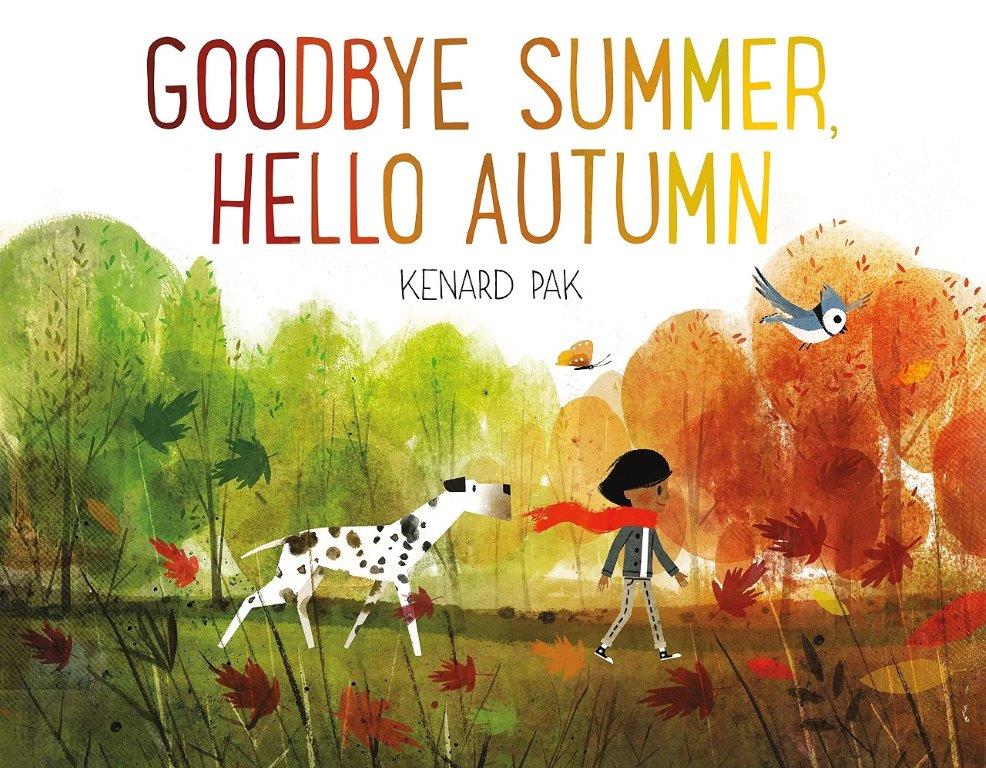
Mentor Texts for a Changing Season
Wednesday, September 7, 2022
Addressing OCD with Young Readers - Kidlit Author Natalie Rompella Talks About her New Picture Book by Eileen Meyer
I'm delighted to welcome author Natalie Rompella here today to share her thoughts about researching and writing her new picture book about OCD, which comes out later this month.
1. Tell us a little bit about your newest picture book coming out with Albert Whitman & Co., MALIK’S NUMBER THOUGHTS: A Story about OCD
Malik’s obsessive-compulsive disorder means his brain wants him to do everything on the count of four. When he’s invited to a mini-golf birthday party, Malik is excited. But he worries about his Number Thoughts. If he has to take four tries to get the ball in the hole, he’ll never win—and everyone might make fun of him. Can Malik say “no” to his Number Thoughts?
2. This seems like such an important picture book for young readers because it includes good strategies for dealing with obsessive-compulsive disorder. Can you share more:
Yes, it
was important to me that young readers who have OCD could see themselves in this
book. When I set out to write it, I realized that I could not convey
(especially in a low-word-count picture book) someone with OCD receiving a
diagnosis, working through treatment, and reaching a point at which he
or she implemented strategies successfully. I chose to start the book when
Malik has already been in treatment and is applying what he learned to a new
situation.
I wanted to feature an activity many children enjoy that could be difficult for someone with counting OCD. I chose mini-golf—a favorite in my family. I also wanted to have a spread where Malik creates his own practice course—something I have done in my classroom that can be a blast!
I hope that someone who has just been diagnosed with OCD as well as someone working on strategies can see that he or she is not alone.
3. This is your THIRD book about the topic of OCD. Can you share a bit more about why this topic is important to you, as well as information about your earlier work?
The first book I wrote on OCD was a nonfiction book for teens titled It Happened to Me: Obsessive-Compulsive Disorder [Scarecrow Press]. This book contains narratives from teens with OCD and offers information, such as types of OCD, types of treatment, and tips for handling OCD in college. Book link here:https://www.amazon.com/Obsessive-Compulsive-Disorder-Ultimate-Guide-Happened/dp/0810857782/
Because of all my research for that book, as well as because I have OCD, I decided to write a middle grade novel, Cookie Cutters & Sled Runners [Sky Pony Press], where the character is coping with her OCD. I wanted this book to be both a mirror and a window—a chance for kids with OCD to see themselves in the book and a chance for kids who don’t have OCD to understand what it’s like. Find Natalie's novel here: https://www.amazon.com/Cookie-Cutters-Runners-Natalie-Rompella/dp/1510717714
4. With your detailed research and experience, do you have any special advice for teachers who work with students or parents who have children with OCD?
I am not a therapist/psychologist. However, as a teacher and a parent, I would suggest reaching out to the parents for how you can help. There are so many great books out there. I recently did a talk about Cookie Cutters for kids with OCD, and they appreciated reading about a character who was going through things they had gone through.
Mention that writing can be therapeutic and suggest that the parent help the child pick out a journal in which to write down whatever he or she wants—unwanted thoughts, goals, poetry, stories, etc.
Through my
research and writing, I fell in love with watching/following sled dog racing
(featured in Cookie Cutters & Sled Runners)…I even attended the
start of the Iditarod.
Any spare
time I have is spent playing pickleball—it is how I clear my mind. As for
favorite food: yellow cake with buttercream frosting. And I am sometimes called
The Bug Lady because I collect and study bugs for fun.
THANK YOU, Natalie, for joining us today on the blog.
Natalie Rompella is the author of more than sixty books and other resources for children, including Malik’s Number Thoughts: A Story about OCD, a picture book addressing obsessive number thoughts; Cookie Cutters & Sled Runners, a middle grade novel about OCD; and It Happened to Me: Obsessive-Compulsive Disorder, a nonfiction book about OCD for teens. She is a former elementary school and middle school teacher. Natalie lives with her two kids, husband, and dog in the Chicago suburbs, where she enjoys playing pickleball, baking, and hanging out with her family.
Find out more at natalierompella.com.
If you’re interested in a school or library visit, contact me at info@natalierompella.com
Website: https://natalierompella.com
Twitter:
@NatalieRompella
Facebook:
https://www.facebook.com/AuthorNatalieRompella/
Wednesday, August 31, 2022
Wolves, and Cats, and Elephants--Oh My! An Interview with Sarah Kurpiel--Giveaway
Welcome the creative and charming author/illustrator, Sarah Kurpiel to the GROG.
Hello, Sarah.
Congratulations on your new book baby! Our readers will love finding out how Elephant over comes stage fright and gains confidence. Sarah is generously raffling a copy of her new book, ELEPHANT’S BIG SOLO to one lucky reader! (U.S. only)
1. Who is your agent?
My co-agents are Allie Levick and Rebecca Sherman at Writers House. They’re both so knowledgeable and enthusiastic. I feel lucky to have two such amazing people in my corner.
2. How did you get the idea for your story?
It all started with a single line: “Elephant had a way of standing out, even when she’d rather not.” I can’t explain why, but I got really emotional about that line. I read it aloud to myself over and over. Then, the story poured out of me–a very rough draft, at least! ELEPHANT’S BIG SOLO is about an anxious, music-loving elephant pressured to perform a solo on stage. Over time, with editorial guidance from my agents and the book’s editor, the story changed quite a bit. But that first line has always remained the same. What I hope kids take from the story is that there’s more than one way to shine.
3. What is your favorite part of the story?
My favorite page of ELEPHANT’S BIG SOLO is a close-up of Elephant playing her French horn with her eyes closed. It’s just her and her music, alone. It’s a little bit sad but really peaceful too. That’s the thing about some forms of anxiety: it can feel so peaceful to not be seen, but it also means you’re alone. It’s a curious mix of feelings. It can be tough to be nervous, especially when you’re a kid trying lots of things for the first time. I think that’s why that page has always resonated with me. I hope it will resonate with kids too.
4. How long did it take to write? Get to a publisher?
I wrote a very rough first draft of ELEPHANT’S BIG SOLO one evening in July 2020 and thumbnailed the story shortly after. I revised for about a month with the help of my agents, who then sent the manuscript and thumbnails over to Martha Mihalick, the wonderful editor of my first two books (LONE WOLF and ORIGINAL CAT, COPY CAT). Fortunately, Martha accepted the story, so I got straight to work sketching out the full dummy. Although the story came together quickly, the ideas and main character had been fermenting in the back of my mind for more than a year. I knew for a long time, for example, that I wanted to make a story about an elephant one day. I love drawing elephants. They’re my favorite animal and always have been. I once drew a picture of an elephant playing a French horn (I liked the way the French horn curled like an elephant’s trunk) and wrote an unfinished story about an indecisive elephant trying to pick one instrument to learn. Those later served as inspiration for ELEPHANT’S BIG SOLO. Looking back, the story had been dancing around in my mind long before I wrote the first draft.
5. What is your writing routine?
I don’t write regularly, but I do draw regularly, which I consider an important part of my routine. When I’m itching to start a new story, I usually begin by mining my past doodles for ideas. I love to draw without a plan and without any expectations. It feels like meditation to me. Then, especially in January during Tara Lazar’s awesome Storystorm, I’ll look back at my doodles and ask myself questions like, What do I naturally draw again and again? Could I draw this character a hundred times and never get tired of it? Does this picture have a story? Once I have a loose concept or a very rough draft, I jump straight into thumbnailing because I don’t like to get bogged down by exact words at this stage. Other than designing characters, thumbnailing is my favorite part of the process. It’s so fun to explore layouts and page turns. It also helps me decide if I’m really ready to commit to a story or not. Without fail, new ideas emerge while thumbnailing, which is another reason why I usually leave the exact words until later. Then, I write the manuscript, which is a slow process for me. If I can write outside on a warm summer day, that’s my ideal writing environment. But we can’t control the weather (unfortunately).
6. What is your favorite writing craft book?
That’s a great question! It’s not exactly a “writing craft” book per se, but I recently read Scott McCloud’s Understanding Comics. I’m a big fan of graphic narratives, and this book helps me think deeper about how words and pictures can work together to make a story sing.
7. What inspires you to write?
Doodling, nature, animals, my funny pets, outer space, the ocean, kids being regular kids, summer, the arctic, StoryStorm, big wide-open spaces, creative books by talented authors and illustrators, webinars (12x12 webinars always put me in a creative mood), and so much more.
8. What are you working on now?
I’m working on a lyrical picture book that’s different from anything I’ve made before. It’s based around a special event that took place in my hometown when I was growing up. I’m excited to share this story with kids one day. I’m also playing around with a funny picture book about a grumpy bird. I’m not yet sure if this story will pan out in the end; not every story does. But it sure is fun exploring this silly character’s antics!
9. Words of advice for writers.
Read lots of picture books. Read your favorites again and again. Then, write the story only you can write. (I keep that quote on my desk.) And join a critique group if you can. Sharing my WIPs with a small group of trusted authors/illustrators each month has given me the extra push I need to keep drafting and revising.
Sarah, thank you for the delightful interview and sharing your thoughts and creative process with us. Readers don't forget to sign up for the chance to win a copy of ELEPHANT'S BIG SOLO.
Links to order:
a Rafflecopter giveawayWednesday, August 24, 2022
Battle of the Books Review and Craft Chat with Melanie Ellsworth by Kathy Halsey
As a former school librarian, my idea of a “Battle of the Books” was a book-based quiz competition with student teams. (think spelling bee only cooler.) Imagine my surprise to learn BATTLE OF THE BOOKS is also a delightful picture book with anthropomorphized books who aspire to be the coveted bedtime story.
This clever tale by Melanie Ellsworth, illustrated by James Rey Sanchez, introduces the idea of book genres: poetry, joke, pirate, humor, pop-up, dinosaur in a magical way. Illustrator Sanchez gives them distinct personalities and author Ellsworth adds extra punch with definitive dialogue for each book character/type. As the books fight to be read, the pushy pirate book is forced to walk the plank. But, below lurks a shark under the bed. The books rally to help Pirate in their own unique ways, only to find that no one can beat Grammie with her beloved childhood favorite. Who will win the day? A satisfying ending makes every book the winner.
BATTLE OF THE BOOKS (little bee books) launched yesterday for children ages 4-8, but parents, librarians, and teachers will enjoy sharing this book that celebrates teamwork and the love of reading.
Craft Chat with Melanie
Kathy: The book characters are such fun. How did you come up with the personalities and make them distinctive? Did any characters you brainstormed in earlier drafts get cut? Why?
Melanie: Thank you, Kathy! I had lots of fun thinking about popular picture book genres and character types that kids see so often - dinosaurs, pirates, poetry, fantasy/fairy tale, humor, and space - and then imagining those books coming alive and embodying those characteristics. Dinosaur Book has great bravado, but its feelings are easily hurt by the overly confident Pirate Book (who secretly has a sensitive side); Space Book is over-the-top enthusiastic; Pop-up Book is a bit snooty about its design awards; and Poem Book wants to help everyone understand their feelings and come together as a community. Much of the book is dialogue, so I was able to use fun pirate expressions and space terminology to distinguish those characters, and Poem book only speaks in rhyme (a suggestion from editor Courtney Fahy). The editorial and art teams chose to use different fonts that match the characters’ personalities, which also helps set them apart.
Some characters evolved into others in the writing process; Dragon Book became Dinosaur Book, and Castle Book turned into Pirate Book, which made the dialogue funnier and the character more appealing to illustrate. (I love how James gave Pirate Book an eyepatch!) Comic Book became Joke Book after the illustration process started, in part because James chose to illustrate it with a microphone, like a stand-up comic.
Other characters, like Old Book and New Book, were completely cut from the book early in my drafting process. Originally, BATTLE OF THE BOOKS had more of a Velveteen Rabbit feel, with an older, tattered book pushed to the back of the shelf and ignored by the other books as they battled over who would be chosen for story time. And while I liked the ending of the child needing comfort and turning to Old Book, the character of Old Book didn’t have a lot of agency, New Book wasn’t super likeable, and the story wanted to be sillier rather than somber, so out they (and that ending) went! (Don’t tell anyone, but I miss them a tiny bit.) My very first draft also had Number Book and Snowy Owl Book that didn’t make the final cut. I had completely forgotten about them until you asked this question – and now you’ve given me an idea for another book…
Kathy: Love that explanation of how the characters “auditioned” to be kept in the story! You have so many hooks in this clever story: bedtime, intergenerational, book genres, love of reading. In creating BATTLE OF THE BOOKS did you specifically think about hooks or did that happen organically or with the help of your critique group or agent?
Melanie: The concept of BATTLE OF THE BOOKS came from watching my young daughter pick books at bedtime; she had her favorites, but sometimes she surprised me with her choices, or I’d try to sneak in a genre she wouldn’t normally read (such a mom move). Then I wondered how that whole process would feel from the books’ perspective – all wanting to be the ones chosen by the child. So I think many of the hooks were there from the beginning – bedtime, story time, love of reading, choosing books, book genres, and the feeling kids can relate to of wanting to be picked first for something. Themes of friendship, forgiveness, and cooperation evolved as I wrote the story. The intergenerational hook came a little later in the writing process when I switched out the mom for the grandmother. I wanted the grandmother to bring her own favorite childhood bedtime story to share with her grandson because that amped up the tension/conflict for the books on the shelf who are all hoping to be picked! Grammie’s book took the role that New Book had played in my earlier drafts. I’m grateful to my critique groups and agent because they are always helpful in identifying more hooks and amplifying existing ones.
Kathy: This is your third picture book. How has your writing process changed over time with each book?
Melanie: In connection with your previous question, now that I’ve written and published a few books, I tend to get more excited about ideas that have multiple hooks. If I can’t see how an idea might have several layers, I’m not as likely to write a first draft anymore. I have a lot of ideas and not enough time to write them all, so I like to focus on those ideas which get my heart racing a little, and those ideas usually have multiple layers. I also gravitate towards ideas with word play potential.
Kathy: I noticed from your website that you won a 2017 Writing with The Stars mentorship with author Beth Ferry. How can writers take advantage of these mentorships? In what ways did working with Beth affect your work?
Melanie: That mentorship was a turning point for me in my writing career, so I absolutely encourage writers to seek mentorships like “Writing with the Stars” and enter competitions. There are many good opportunities, and I’ve known writer friends who’ve entered Susanna Leonard Hill’s “Valentiny” and “Halloweensie” writing contests and Vivian Kirkfield’s #50 Precious Words contest. Kate Messner also has a free “Teachers Write” on-line summer writing camp for teachers and librarians – not a contest, but an excellent learning opportunity. Look for the opportunities that excite you and join in! One of the biggest benefits of these contests is the connections you make with others in the writing community, so you can support each other on your journeys. I’m still connected with other winners from that 2017 Writing with the Stars contest, and it’s fun to see each of their new book announcements.
My mentorship with Beth Ferry was especially helpful because it gave me confidence that I was on the right track with my work. It often feels like you’re writing and submitting into a big void, so helpful feedback and support at the right time is a huge boost for a creator. My mentorship with Beth was for three months, so we had time to discuss and revise several of my manuscripts. BATTLE OF THE BOOKS was one of the books we worked on revising together, and I’m thrilled it’s finally coming out. I wrote my other two published picture books CLARINET AND TRUMPET and HIP, HIP…BERET! shortly after the mentorship ended. Beth Ferry is such a master of writing funny, punny, heartwarming friendship stories, and working with her inspired me to write the friendship story that became CLARINET AND TRUMPET.
Some of Beth’s most helpful advice was to make sure your story isn’t just funny but also has heart. She asks herself, “Why do I care?” as she’s writing each story. Beth also helped in very specific ways with BATTLE OF THE BOOKS. I had originally written the whole book in rhyme, and it had more of a gentle bedtime feel, but Beth encouraged me to try it in prose because in places the rhyme felt forced. The prose version gave me the freedom to play more with the characters and their voices, and the final result was funnier but still has heart (I hope!). Thank goodness for the kindness of the children’s lit community – Beth and many others have given so many hours of their time to emerging writers, and it’s just the kind of encouragement we all need to keep going!
Kathy: What do you enjoy most about being a children’s writer?
Melanie: I think it’s the permission the job gives me to think more like a child. I can be silly, think outside the box, see the potential for ideas everywhere, and be curious about everything. There’s a certain freedom in the ability to create within that mindset.
Kathy: Great answer! I like to keep in touch with my inner kid! What are you working on now?
Melanie: I have a few picture books I’m revising, several on submission with my agent, and a few new ones I’m working on now. Promotion, especially with a new book coming out, is always part of the writing process, too. (Many thanks to you and all the bloggers who help authors and illustrators promote our books!) Marketing is a different kind of writing, but worthwhile, and sometimes it feels good to exercise different writing muscles. I recently wrote an early graphic reader, and it was fun to try something new.
More About Melanie
Melanie Ellsworth writes in an old barn in Maine, surrounded by books. Her picture book titles include Hip, Hip…Beret!, Clarinet and Trumpet, and Battle of the Books. As a former ESOL teacher and literacy specialist with a Masters in Language and Literacy, Melanie loves creating books that make kids laugh while they learn! Visit Melanie at MelanieEllsworth.com, on Twitter @melanieells, or on Instagram @melaniebellsworth.