Showing posts with label Writers' Inspiration. Show all posts

Wednesday, November 5, 2025

Writing Board Books part I ~ an author's roundtable

by Sue Heavenrich

Welcome to the GROG’s roundtable discussion about Board Books. I’ve got four board book authors with me today, so grab your coffee (or cocoa or tea), pull up a chair, and let’s meet the authors. 

Darrin Lunde typically writes on topics related to animals and nature. Seven of his picture books have been reissued in board book format, most recently Whose Egg is That? Darrin’s day job is mammals collection manager at the Smithsonian’s Museum of Natural History, so he’s often in the field doing research. 

Laura Purdie Salas is a Minnesota author who has written more than 140 picture books and board books. She loves connecting kids to nature and hopes to inspire them to look at a familiar topic in a new way. Her most recent board book is A Home Like This. 

Nancy Churnin, a longtime journalist and former theater critic living in North Texas, is probably best known for picture book biographies. Her rhyming board book, Counting on Shabbat, encourages readers to think about ways we can make the world a kinder and more inclusive place.

Laura Gehl has written board books, lift-the-flap books, picture books and early readers. Her newest board book, Odd Bugs: Meet Nature's Weirdest Insects joins her “Curious Critters” series in March, 2026.  

I have no board books. What I do have is a new grandbaby … which is why I invited these wonderful authors to the table this morning - I want to pick their brains!

Me: Let’s begin with topics - What made you know that you HAD to write your book?

Nancy & her mom
Nancy: It was actually my mother, Flora Churnin, who inspired Counting on Shabbat – she loves numbers. My mother is 99 years old, and for the past decade it has been hard for her to go out and visit with people she loves. That's why Counting on Shabbat starts with an elderly person on his own and how delighted he is to hear five knocks on the door and have a family arrive with food and cheer. Is it his family? Is it a family caring for someone in the community? That does not matter. In the book we are counting objects on Shabbat, so we are counting, but we are also counting on kindness. My mother has been dealing with dementia for the last five years, and as she has struggled to read and speak, this has become one of her preferred books.

I think there is a lot of value in sharing board books with seniors as well as toddlers, and would love to see an organized effort to bring board books and picture books to senior living facilities. One of my most precious moments came after I read this book to her. After I closed the book, she looked me right in the eye and said, "Eleven!" Then she grinned as if she was telling me something I didn't know (after all I had only gone up to 10). I loved that!

Laura Salas: For A Home Like This, the publisher actually asked me to write a board book about animal homes. While the topic was chosen, I got the fun of figuring out how to approach it. I love refrains, and I wanted the book to be lovely and lyrical, like Joyce Sidman’s Swirl by Swirl. I also wanted a bit of a different approach from the board books already published on this topic. I wrote a few different drafts exploring materials, how homes are different, some in rhyme, some not. I wrote close to 20 drafts spread among eight or so different approaches. Because board books are so short, a lot of my writing time was spent trying different structures. It's enormous fun, and I love the trial and error of it all. I have to be open to diving in and seeing what appears on the screen. It ended up gently rhyming, but without any refrain at all!

Darrin: Sometimes I get my ideas for books by settling on a topic and then waiting until a catchy title for it pops into my head, for example, Meet the Meerkat. Other times, the topic presents itself during the course of a normal day, such as when I was standing in the driveway of my neighbor talking. We both looked down at the same time and saw what turned out to be a fox scat in his driveway, but when we both looked up at each other and asked Whose Poop is THAT? I knew I had my next book. I try not to force things. Rather, I try to stay open and alert to new possibilities. Of course, I always have the fear that I might never come up with a new book idea, but so far, the ideas have kept coming.

Laura Gehl: My new board book is the third in a series. The first two were Odd Beasts and Odd Birds. I knew I wanted to do Odd Bugs if possible—because there are so many weird and wonderful bugs out there—but we had to wait to see how well the first two did. I was so excited when I heard from my editor that Odd Bugs was a go!

Me: Did you initially write this to be a board book? And if not, why do you think it works well as a board book?

Laura Gehl
Laura Gehl: Yes, this was always intended to be a board book. It has very simple, rhyming text, just one line per spread. However, what’s unusual about this board book (and the other two in the series) is that it has back matter. At the end of the book, there are photographs of each critter, plus a few interesting facts about each one. I think the back matter allows these board books to appeal to older kids and adults as well as to babies and toddlers. 

Laura Salas: Definitely. I think its gentle rhyme and adventurous language make it work well. Of course, Miriam Nerlove’s brilliant art and the wonderful design helps! Each spread has an animal close-up on the left side and a pulled-back view of the home on the right side. Perfect to help kids understand what animal we’re talking about and what its home looks like. I also think the ending, which comes around to humans and to love, makes it a satisfying toddler read. They know love, and they’ve likely heard opposites, such as big and little and below and above. I feel like the main text language may stretch them some, with a few less familiar words and creatures. But the cuddly ending brings it all back to the heart. This is a book I would love to read to a baby on my lap.

Nancy:  I had always envisioned it as a board book anchored by the 1-10 counting element. From the start it was a book that began with 1, which in the book is "1 table draped in white," but that you can also see that visually as the 1 elderly person who is alone. I always wanted it to lead up to "10 smiles. Shabbat is here!" because that reminds us that what is joyful about this weekly celebration is when we are all together as a family and as a community -- including the four cats, whose smiles are included in the 10-smile count. I believe it works well as a board book, because the story is told visually, with Petronela Dostalova's exquisite illustrations. The simple rhymes and the numbers on each page anchor the story while toddlers can "read" the narrative to themselves by following the pictures.

Darrin: No, I've always written 32-page picture books and then my editors pick and choose which ones they want to adapt as board books. I think my first few picture books I had originally written as board books, but my editor asked me to expand them as 32-page picture books. Funnily enough, some of these same books were later reissued as board books.

Me: What’s the biggest challenge in creating a book for an adult to read to a very young (0-2 years) child?
Darrin Lunde / Charlesbride photo

Darrin: I'm a very economical writer, meaning that I like to write in the simplest possible form. I'm always trying to reduce my word count, but without sacrificing content. For me, writing board books is like solving a puzzle--How do you say what you want to say with crystal clarity in 100 words or less? It's fun, and I'm always looking for ways to further simplify or reduce my text.

Laura Gehl: For me, the biggest challenge is targeting the book at the very young child but somehow making it interesting enough for the adult reader too.

Nancy: You have to approach a board book with a different mindset than you would a picture book. With a board book, you have to let the illustrator take the lead – with the written words as anchor and jumping-off points. Picture book writers are discouraged from writing too many art notes. But with Counting on Shabbat, art notes were essential because without them how would you know that there would be one senior alone on the page that simply says "1 table draped in white." Without the art notes, how would you know that "5 knocking on the door" would reveal a family of five bringing bags of food? All those details didn't need to be written out for the reader because Petronela was creating the images. But I did need those essential words (and art descriptions of what I was envisioning for my editor and illustrator) for the images to make sense.

Laura Salas: Two things come to mind immediately. First off is the incredibly short word count. A Home Like This has fewer than 60 words to both introduce a big topic and also connect with the reader. The other challenge for me is finding the right tone—one where I’m talking to a very young child, but not in a babyish or condescending way. It’s an exciting struggle to balance between having fun with my own creativity and giving the adult and child readers a wonderful experience. 

Me: Any advice for picture book authors who might want to try their hand at writing a board book?

Laura Salas
Laura Salas: Think about word choice, word count, language, imagery, rhyme, complexity… then simplify, simplify, simplify. That doesn’t mean dumb down. It means find a single, elegant line to follow through your text. Even if it’s a laugh out loud funny text. There’s only room for one narrative, one concept, one conflict. It has to be simple and sparkling. So it's about finding the best, most exciting way to relate that one idea using language that evokes a reaction from the reader. It's okay to use some words that a toddler doesn't know. But the idea has to be one a toddle can really connect to somehow.

Also, go to several libraries and bookstores and read dozens of dozens of board books. Especially try to read the ones that aren't licensed characters or aren't just adaptations of picture books. Find the publishers creating the ones you love the most and study their catalogs. Then choose a topic and start playing with it. Have fun!

Nancy: Think short. Counting on Shabbat is only 48 words! Think spare. I didn't have to say who was cooking the matzo balls or bringing the kugel to the table or that the kids were drawing pictures and our senior would put them up on his refrigerator (even though that is what I envisioned). Leave the illustrator room to weave the visual magic. But make sure your editor and illustrator are on the same page with your vision for the story. 

Laura Gehl: What Laura said - and then go read lots and lots of board books and see what works. Unlike picture books, board books don’t always have a standard number of pages, but aiming for about ten spreads is a good idea. As far as word count, I’d say aim for 100 words max. Another important aspect of writing board books is to think of a series concept rather than just a single book. Single board books do sell on occasion, but most board books are sold in series.  

Darrin: (nodding in agreement with the Lauras) and then it all comes down to having a love for clear and concise language. I actually don't write board books for children, rather, I write board books because I love writing as simply as possible. Even when my editor thinks a manuscript is done, I'm always looking for a way to say something more simply – to cut down on words without sacrificing clarity.

Me: We could talk about books all day long, but my coffee cup is empty. Please drop by our roundtable guest's websites, and check out their amazing books! And make sure to come back next week when I chat with two board book editors.

Nancy Churnin shares books and more at her website, www.nancychurnin.com. You can find an activity guide here.

Laura P. Salas parks her website at laurasalas.com

Laura Gehl shares her books and more at her website lauragehl.com

Darrin Lunde has a page on the Smithsonian’s site at naturalhistory.si.edu/staff/darrin-lunde

Wednesday, April 16, 2025

The Fifth Annual GROG Arthropod Roundtable

hosted by Sue Heavenrich

Welcome to the Fifth Annual Arthropod Roundtable! Grab your cup of coffee, pull up a chair, and please help me welcome our guests. Christine Van Zandt’s book Milkweed for Monarchs fluttered off the shelves last year. Sara Levine’s Watching and Waiting: What Hatches from Nature’s Nurseries hatched out just a couple weeks ago. Penny Parker Klostermann’s newest book, The Spider Lady: Nan Songer and Her Arachnid World War II Army will be weaving it’s magic when it releases in a couple weeks. And Susan Edwards Richmond’s third book in the Community Science Counts series, The Great Pollinator Count, just released yesterday.


Some of you may know that insects are my passion. But they weren’t always. In fact, when I was a kid I was terrified of cockroaches. This could be because I could hear them skitter about in the air ducts, and occasionally a couple would drop out and land on me. The ultimate irony: my graduate research was on the behavior of … you guessed it – cockroaches!

That got me wondering whether arthropods were ever “scary” or “creepy-crawly” to other folks? So I asked a few:
Christine with monarch wings

Christine: I was that kid who picked up bugs. I didn’t really understand why kids (or adults!) would scream when, for example, they saw a spider. My parents deserve credit for that since they let me play outside in our large yards. In the back, we had an area that was an ivy “tunnel”—and who knows what lived in there—but it was my favorite place to read books.

Sara: Mostly not.  When I was growing up, I was the one in my family who came to the rescue for bugs found inside the house. When my sister would find a spider, she would yell, “Come and get it! I’m going to kill it!” and that was my cue to come running. I would carefully cover the bug with a glass, slide a piece of paper underneath and escort the arthropod safely outside

Susan:  The only arthropod  I’ve ever really had an ambivalent relationship with is the spider. (Well, and ticks, after we got a dog!) I’ve appreciated spiders’ skills and their niche in nature, but, in the past, preferred to view them with a little distance. I’ve definitely gotten  more drawn to insects and arthropods as a group, however, since I’ve been teaching nature preschool.  In addition to having fascinating life cycles, these animals are easy for young children to discover and observe up close in their environment.

Penny: Interestingly enough, spiders were the only arthropods that were scary to me. And they were very scary to me.  My arachnophobia slowly changed to respect as I did hours and hours of research on spiders to better understand Nan Songer's work. I learned that they avoid humans, whereas before I had the unfounded fear that they might come after me. I was fascinated by the many ways they use their silk and the different ways they hunt or capture prey.  Now, when a spider is nearby, I don't feel the need to flee or stomp. (Yes. Sorry! In my pre-respect past, stomping out of fear definitely happened.)

Me: I totally understand the stomping-out-of-fear response, and am happy that you and your local spiders are now in a relationship of respect. So what made you realize that you HAD to write this book?

Penny
Penny: When I first learned about Nan Songer, I immediately scoured the web (Ha! Couldn't resist.) to see if there was a children’s book about her. I was shocked to find there wasn't a book for children or adults. Besides being shocked, I'll admit that I was also thrilled that I could be the one to share her story. I felt like I'd struck gold in terms of an unsung hero. Her story is unusual and riveting! In order to harvest enough silk needed for crosshairs in scopes during World War II, she kept up to ten thousand spiders in a room in her home! That deserves ten thousand exclamation points instead of just one, right?  Even though my work on this book started in 2017, I've never lost enthusiasm about Nan's contribution to the war effort. I HAD to write this book to share Nan's story and due to my certainty that others would find her work as a home front hero as compelling as I do.

Susan: My passion for children participating in community science has continued to grow since the 2019 release of my first picture book, BIRD COUNT.  Young children are eager to explore their environment and are natural scientists, with their keen focus and propensity for questions.  But many children—and adults as well—are instilled with a fear of bees and other stinging insects, while often celebrating butterflies.  Respect and caution are healthy, but I wanted my readers to gain the same appreciation for all of our insect pollinators

When I learned that Georgia conducted an annual insect pollinator census, which includes schoolchildren, I knew this would be my gateway!  In founder and coordinator University of Georgia Extension’s Becky Griffin, I found the perfect mentor.  She was super knowledgeable and enthusiastic about a book that would engage young participants in the census. Becky and I are pairing up for two weeks of launch events following the book’s April 15 release. The Great Southeast Pollinator Census has now expanded to include four more states—North and South Carolina, Florida, and, most recently, Alabama.  May this notion of promoting a healthy pollinator population continue to grow!      

Sara: A number of things came together. Invertebrate eggs, egg cases, and galls are fascinating, but there is so little on this topic in picture books. I especially wanted to share information about galls, which are bumps formed from the tissue of a plant in which young insects or mites develop. These unique nurseries grow when a mother insect or mite puts down chemicals on the plant while she is laying her eggs. How cool is that?!  Galls come in interesting and unique shapes, and they are easy to find and identify once you know where to look.  The book includes beautiful photographs to introduce children to galls, as well as eggs and egg cases, and to what animals are growing inside of them.

I also wanted to write a lyrical book that emphasized an empathetic approach to learning about animals. Scientific learning is often taught with a focus on taking things apart to see what is inside and how things work. But what if we wait instead and see what happens?

Christine: When I found out that the western monarch was nearly extinct, I knew I had to do something about it. I grew up going to the California coast with my parents in the winter to see millions of monarchs overwintering in the trees. It was amazing. In 2020, there were fewer than 2000 butterflies; in 2024, only about 9000. That may not be enough individuals to sustain the population.

We’ve lost so many animals already and losing the monarch seems preventable if people plant milkweed. Like pandas or koalas, monarch caterpillars can only eat one kind of food: milkweed. There’s not much of found in nature anymore because we’ve cleared land for homes or farms. Home gardeners are reluctant to grow plants that aren’t perfect even though munched leaves mean caterpillars may make it into forming a chrysalis. Also, pesticide use harms a wide range of insects.

Me: What do you hope readers take away from reading your book?

Sara
Sara: I hope readers will come away with an excitement about insect eggs, egg cases, and galls, and that they head outside to search for them. And when they find them, I hope they will be patient and kind enough to observe them over time to see what hatches out.

Christine: I hope they want to help save this amazing animal and encourage their parents, schools, and neighborhoods to plant milkweed. If that’s not possible, then I hope kids share this information so that others, who can plant milkweed, may help out.

Penny: Nan's interest in insects and spiders began when she was a child and continued into her adult years. As an adult, she continued to call her research a "hobby" but, ultimately, her skills and knowledge led to a career that she enjoyed and that also contributed to the war effort. I hope young readers will realize that childhood hobbies and interests are not only enjoyable, but important. They impact their future by nurturing creativity, helping to develop critical thinking and problem-solving skills and learning about time management. Who knows, a hobby or interest might even lead to a career, just as it did for Nan Songer.

Susan:   I hope that young children and their families will develop a fascination with the tremendous diversity of these insects—and that THE GREAT POLLINATOR COUNT will inspire them to go outside and observe their own local pollinators.  Another of my hopes is that this book will help people draw connections among all living things, and realize how important each one is to the health of our planet, and, consequently, ourselves.  Maybe readers will want to plant their own pollinator gardens at school or at home, contribute data to local and regional counts, or nurture a desire to learn more on the path to becoming stewards of their environment.  

Me:  As someone who’s been counting pollinators for the past 16 years with the Great Sunflower Project, I agree! I know that counting bees has made me more aware of the need to plant more pollinator flowers.

So … what can we do this Earth Day and every day to help make our world a better place for bugs?

Susan
Susan: Earth Day is the perfect time to launch an initiative with your children, whether you are a teacher, librarian, parent, or other educator or caregiver.  It’s never too early to start developing habits of observation and care that can continue all year and  throughout a lifetime.  Growing and observing the life cycle of a garden or a garden insect, conducting counts, developing research projects or presentations, or writing letters to advocate for local conservation efforts are all wonderful ways to honor our friends the arthropods and improve all of our lives.  

Christine: Hearing bad news isn’t fun, but if we take a moment to realize our impact on the planet then, maybe, we will do one thing to help out the animals and plants we share our world with. Delving into this kind of information can be overwhelming and saddening. I tell myself that I can’t change everything but I can change something.

Penny: Learning what arthropods contribute to our environment is a good first step. In the case of spiders, eating insects is their main contribution. Did you know that spiders eat four hundred million to eight hundred million tons of insects each year and that a single spider eats around two thousand insects a year! By controlling the insect population, spiders reduce the need for chemical pesticides. Spiders also minimize the spread of disease since many of the insects they eat carry diseases that are harmful to humans and animals. 

This Earth Day, make your yard spider-friendly by planting tall sturdy plants to give them a place to spin. Provide a water source such as a bird bath. A thin layer of mulch, leaves or grass clippings will help protect them from the elements. These tips will also attract other insects that contribute to the environment and  will provide plenty of meals for the spiders.

Sara:  Please don’t use pesticides on your yard. Encourage native plants to grow, which provide food and shelter for native bugs. And when you see a bug inside you can’t live with, don’t kill it. Instead, go get a glass and a piece of paper to help safely bring it outside. 

Me: I know I could talk bugs all day long, but my coffee cup is empty. Please drop by our websites and blogs, and remember to go outside and get to know some awesome arthropods.

Flutter over to Christine Van Zandt website at christinevanzandt.com 
Penny Parker Klostermann has spun her website at  pennyklostermann.com  
Sara Levine nurtures stories and more at www.saralevinebooks.com
Susan E. Richmond counts bees at www.susanedwardsrichmond.com
I hang my bug net over at www.sueheavenrich.com

Wednesday, February 12, 2025

What makes a Bird Book?

by Sue Heavenrich

I love to watch the titmice and cardinals (and chickadees, jays, juncos…) at our feeder. They bring color and action to an otherwise monochromatic and tedious landscape. Plus, watching them makes me wonder things. And wondering about things makes me think: hey, maybe I could write something about…

… birds. During the last decade of the previous millennium, my kids and I participated in Project Feeder Watch. Back then we had a couple field guides and a lot of questions, but most of the books about our feathered friends had the title “Birds” and were pretty general. 

Over the years books have changed and there are as many ways to write about birds as there are birds to watch. Here are some of the ways authors and illustrators have gone … Beyond-the-Field-Guide. I know I missed a bunch, so please share your favorite kid's bird books in the comments!


You could watch birds from a different perspective

Look Up! by Annette LeBlanc Cate is a middle-grade book that uses humor to encourage kids to get outside with a sketchbook and capture some of the cool birds living right outside their windows. The birds talk back to the author, and make up songs about their lives, sport cool hairdos (feather-doos?), and show off their feet.

Fans of Jane Yolen’s book, Owl Moon might like to check out Night Owl Night, by Susan Edwards Richmond. In this picture book, Sova’s mom disappears each night. She is a scientist who studies owls, and Sova wants to join Mama on a night walk where they (eventually) capture, measure, and release a saw-whet owl.

Another person who studied birds?  That would be Roger Tory Peterson – a name that’s become nearly synonymous with field guides. For the Birds by Peggy Thomas is a fun biography for kids who love their field guides.


If you’ve got kids involved in the Great Backyard Bird Count this weekend, or Project Feeder Watch, they might enjoy reading one of these - and you might get ideas for a different angle on your own counting story.

Finding a Dove for Gramps, by Lisa J. Amstutz plunks us right into the Christmas Bird Count with Jay and his mom. You can almost hear the snow crunching underfoot, the calls of chickadees and jays, the rat-tat-tat of woodpeckers drumming on a tree. You can feel your toes freeze and, at the end, the warmth of a mug of hot cocoa.

In Bird Count, by Susan Edwards Richmond, Ava is excited because this year she gets to keep tally of the birds “her” crew finds during the annual Christmas Bird Count

There are a couple of recent middle grade novels that have bird watching at their core. The Secret Language of Birds, by Lynne Kelly is about a girl who discovers a pair of endangered birds nesting in an unusual place. She breaks a few camp rules to watch them - will she get sent home before the egg hatches?

Bird Nerd by Jennifer Ann Richter features a birding tournament between two schools that gets a bit more competitive than expected. But it's also about and finding your own flock

or focus on feathers…


Bird Show, by Susan Stockdale is a plumage fashion show! Eighteen brilliantly dressed birds show off their jackets, aprons, and headdresses. Well … at least they show off their wing bars, frilly feathers, long tails, and feathery crowns.

Melissa Stewart highlights the more practical uses of feathers in Feathers ~ Not Just for Flying. Not all feathers are the same. They have so many different jobs to do, from distracting predators and keeping warm to carrying nest materials and making music.

Or maybe your passion is:
beaks
feet 
flight or 
family.

There are a whole bunches of books about those topics ... and there are bunches of books about bird behavior. In Bird Talk, Lita Judge shows how birds use song to attract mates, proclaim their territory and call their chicks. But not all birds are born knowing the family song – some have to learn their song by listening to their parents.

or maybe you'd like to write about one particular bird...


I feel like the newest charismatic brainy bird is the crow. They are intelligent, have great memories, and can solve problems that confound squirrels. For three different ways to look at a crow, check out Crick, Crack, Crow! by Janet Lord; How to Know a Crow, by Candace Savage; and Crow Smarts, by Pamela S. Turner.

Where will your bird-curiosity take you...
and your book?

Wednesday, April 17, 2024

The Fourth Annual GROG Arthropod Roundtable

 by Sue Heavenrich

Welcome to the Fourth Annual Arthropod Roundtable! Today's guests are: Susannah Burman-Deever, whose book Before the Seed came out last month; Helen Frost, whose book The Mighty Pollinators also released last month; Loree Griffin Burns, whose book One Long Line hits the shelves next month; Amy Hevron, whose City of Leafcutter Ants will be out near the end of June; and Megan Litwin, whose first two chapter books in the Dirt and Bugsy series were published last summer.


I’ve spent many hours following ants and counting bees. Even so, my relationship with the local insect community is … complex. Sure, I love watching the pollinators in my garden but there are some arthropods who truly bug me. Especially when they stab their blood-sucking proboscis in my earlobe!

Me: How you relate to the arthropods living in your neighborhood. 

Amy Hevron
Amy: I love nature and am fascinated by all the little critters that live outside. Sometimes they come inside too, mostly cute little doodle bugs and lady bugs. And sometimes we get giant spiders in the house as well. I’m a little scared of spiders but know they’re helpful to have around. So I usually talk to them to try to convince them to go hide somewhere. 

Megan: I grew up a book and animal lover…but not exactly a bug lover. I had such an intense fear of spiders that I would refer to them as “you-know-whats” rather than saying the name aloud! Over time I changed my mind because I learned more about bugs and spiders – first as a second-grade teacher who taught an insect unit every year, and then as a mother of two boys who loved dirt and bugs from the start. That fear was slowly replaced with awe and wonder as I realized arthropods are fascinating! It is amazing how getting to know something (or someone…) can change your perspective.

Helen: I have always loved insects. As I have moved from one neighborhood to another, I have kept my little patches of earth free of pesticides and herbicides, and have delighted in watching the little friends who share my space. I plant milkweed and nectar flowers for the migrating monarchs. I love the flashes of color all the butterflies bring, and the bright green beetles that sometimes cross the table as I am eating my lunch outdoors. In the summer evenings, fireflies light up my backyard as cicadas emphatically let us know when they are with us! I know that most of the insects are staying hidden from me most of the time, but I do what I can to increase the possibility of our close encounters.

Loree: I’m a former scientist who now works as a writer and a writing teacher. I write about science! The natural world! And curious people—young and old—who are passionate about both. I’m an enthusiastic amateur naturalist and entomologist, and I’m fascinated by the incredible variety of insects living their strange and beautiful lives all around me. I’m grateful for access to green spaces in which I can watch these lives unfold and libraries in which I can research what others have learned about those lives, too. And, of course, I’m also grateful to have a job that sometimes involves sharing what I learn about my neighbor arthropods through books and essays for readers of all ages.

Susannah Burman-Deever
Susannah: In college, I was lucky enough to work with a scientist who was studying how swarms of honey bees search for and decide upon a new home. I spent a couple of summers sitting beside swarms and tracking the dancing as the bees told the others about their finds. I no longer study insects professionally, but I’m lucky enough to have a pretty big yard to play and garden in. Over time, I’ve been adding habitat for insects, with areas for nesting and more and more flowering plants and native shrubs. The insect diversity in my yard has definitely boomed. I love watching all the different insects in my gardens, from orchard bees to gorgeous green sweat bees to hummingbird moths. It’s a wonderful reminder that there is a whole world of amazing creatures just outside our doors.

Me: I always want to know how authors come to write their book. Was there a specific question or thought that grabbed you and wouldn’t let you go until you wrote about it?

Helen: The Mighty Pollinators is my eighth book about the natural world, and my seventh collaboration with photographer Rick Lieder. We settled on this topic during the early days of the pandemic when small children were baffled by the fact that something as small as a virus could upend their world so dramatically. We tried to think of things that are very tiny, but not quite invisible, and also important, and we settled on pollen and began thinking of how to make it seen and real to children.

Megan: Bugs are cool! Kids love bugs! I saw this natural curiosity and connection with bugs as a teacher when we raised and released butterflies in my second-grade classroom. Kids loved getting up close and personal with the caterpillars and then witnessing the magic of metamorphosis right before their eyes. I saw it again as a mom when my boys would spend hours playing in our backyard. They would catch bugs. Name them. Build whole cities for them with friends. I have them all to thank for the Dirt and Bugsy books!

Loree Burns (photo by Carter Hasegawa)
Loree: One day when they were very young, my twin sons found a new-to-us caterpillar (we did not know what kind it was) crawling across the grass of our back yard. They wanted to keep it as a pet, which I’m generally okay with. “But,” I told them, “we have to figure out what it eats.” All caterpillar species have a host species—a plant or related group of plants on which the adult butterflies/moths of that species lay their eggs and which those caterpillars eat. So they followed it around the yard until they caught it eating something. The view from my kitchen window: a tiny caterpillar crawling through a grassy lawn and two small boys on their hands and knees, crawling behind it. Later, I learned about Jean-Henri Fabre who studied the pine processionary caterpillars that travel form one place to another in long, single-file lines … I wanted to share that story.

Amy: I first became fascinated with leaf cutters ants while on a hike in Costa Rica. We saw this long parade of little ants carrying leaves down the trail. The ants were all different sizes. I just had all these questions. Where were they taking the leaves? Why were they different sizes? Did they eat the leaves? I started researching them and felt like this could be a really fun book.

Susannah: The inspiration for this book comes from my garden. Caring for my garden feeds my soul, and I find a lot of joy in learning about the relationships between the plants and animals around me. I wanted to write a book that celebrates the beauty and diversity of those relationships, and explore how the needs of both plants and animals have shaped the pollination process.

Me: How do you bring your passion for this topic to writing for children?

Susannah: I’m endlessly curious about the living world. It makes me feel small in the best possible way: that there is always more to discover about the world around us. And being curious means looking and asking questions. So with this book, I started with something that children might have noticed (that there are lots of different types of flowers in the world) and asked why. Why are there so many different types of flowers? Why do they have different shapes and colors and scents? The book is structured as a series of questions, with answers that lead to more questions. Which is really what science is all about. 

Loree: For One Long Line, I wanted to share my passion for the scientific method and how we humans use it as a tool to learn about the world we live in. And the story I used to demonstrate all that? The story of those pine processionary caterpillars and the man, Jean-Henri Fabre, who studied the ones living in his own backyard. The experiments he did helped us understand how and why these unusual caterpillars march in lines the way they do. One Long Line is beautifully illustrated by Jamie Green. (https://www.jamiegreenillustration.com/)

Helen Frost (photo by Tim Andersen)
Helen: Three things I love – insects, children, and poetry – come together in the creation of this book. I bring the topic to life through details and the delight of language! And I continue to learn as I think about how to bring the importance of pollination to the attention of children as I share this book with them.

Megan: Two things I happen to be passionate about are nature and unstructured play. I got to blend what I know about kids and bugs from my own life with themes of nature, imagination, and problem-solving. I also brought my teacher heart to the table because these books are written for kids learning to read on their own. That is another passion of mine…literacy education! I used simple sentences and vocabulary along with purposeful repetition so that a newly independent reader could find success. I hope these books encourage kids to be both book lovers and bug lovers. Bookworms, in the best sense!

Amy: I’ve always been interested in ants and how they live in colonies. I love those little ant farm kits – and had one once, until all the ants got out! Leaf cutter ants are especially interesting to me with the complexity of their society. And from a visual perspective, as an illustrator, I knew it would be fun to illustrate the underground nest with all the chambers and pathways. And show all the ants with their different jobs in their society.

Me: What can we – and the kids we write for – do this Earth Day and every day to help make our backyard and neighborhood a better place for bugs?

Loree: We can pay attention to bug lives and recognize that the places we live are the very same places they live. The decisions we make about how to manage those places matters: Mow the lawn, or let the grass grow? Rake up the leaves or let them rot in place? Share our garden with the neighborhood animals and insects? Or fight with those animals and insects over rights to the tomatoes? These are decisions that have real consequences for us and for the insects around us, though it’s only a matter of life and death for them. So my wish is that all of us will start to pay more attention to the arthropods in our lives, learn their stories by first-hand observation, share what we see and learn, and then keep those stories in mind as we make decisions about the land we share.

Megan Litwin
Megan: I think if we encouraged kids to get outside and to pay attention, all sorts of good things would happen…for both the arthropods and our Earth. Once you notice the incredible life teeming around you, you are more likely to take care of it. I’ll say what I say at the end of Dirt and Bugsy readings. Go outside. Look for bugs. Build bug houses. Plan a nature scavenger hunt. Find tiny things. Find shiny things. Plant things. Just get out and explore your world!!

Amy: Most people don’t really want more ants near their homes but something fun to do for other insects on Earth Day could be to plant some native flowering plants in your yard for your local bees and butterflies.

Susannah: So often we think of people and nature as being separate from each other. But we are a part of the ecosystem. We are connected to all the living things around us. What can we do to help? Maybe plant native plants. Maybe leave some leaves unraked in the fall to provide wintering habitat for insects. Even if you don’t have your own yard, you can work with neighbors in community gardens to promote insect habitat. Only by seeing what’s out there can we answer the question of how we can help protect the life that surrounds us every day.

Helen: I treat little ones (both insects and children who observe them) with respect and affection. I plant a garden to be welcoming to insects and other pollinators, and I share information with neighbors who may question why we don’t mow our lawn in early spring, why we let dandelions and clover and violets grow, why we let the milkweed remain even when it may no longer be seen as beautiful. When, as happens each spring, a salesman goes door-to-door offering to rid our neighborhood of “creepy crawlies,” I alert the neighbors to all the good we receive from insects, and try to educate the salesman that it is not possible to kill some insects without harming all of them, and in turn harming ourselves.  

Me: I know I could talk about arthropods all day long! But my coffee cup is empty and it’s a perfect day for bug-watching and flower-planting. Please drop by our websites and blogs, and remember to go outside and make friends with members of another phylum.

Loree Griffin Burns https://loreeburns.com/
 

Wednesday, June 7, 2023

Writing with Pride!

 by Sue Heavenrich

June is Pride Month and I thought: wouldn’t it be fun to kick off the month with a post about books that celebrate the diversity of families and who we are. Then I got to thinking ... why do we write the stories we do?

So I asked my friend and critique partner, Rowen MacCarald about their writing life. Rowen is a biologist who writes about science (and history and a lot of other topics) and we connected years ago while writing about nature for local newspapers. Since then, Rowen has authored more than forty nonfiction books for the educational market, including Getting Smelly to Survive (Abdo, 2022),  Eleanor Roosevelt: Progressive Reformer (Momentum, 2018) and soon-to-be-released The Weirdest Animals in the World (BrightPoint Press, August 2023).


Me: Forty nonfiction books! What made you decide to go from writing articles to writing books for kids?

Rowen: Honestly, my main reason for turning to writing for children (young adults specifically) was to write a story in which a kid like myself got to be the hero. I'm still working on that goal.

For me, nonfiction is about exploring the magic of the real world and finding the unexpected in real life. My favorite nonfiction is about animals, because I've loved animals as a kid and have amassed a fair amount of knowledge about wildlife and ecology over the years. So anytime I have an animal topic to write about, it's like visiting with an old friend. The Animal World series that I did recently was particularly fun. For The Weirdest Animals in the World, I got to delve into bizarre creatures like hagfish, a fish with no bones, no eyes, and the ability to make buckets of slime when threatened, and the platypus, an egg-laying mammal with a leathery bill and the ability to sense electricity. 

Me: In the past couple years, you’ve started writing  picture books that celebrate queer joy, pride, diversity, and inclusion. It’s been fun watching these stories come alive, but I wonder if you can talk about what nudged this change in your writing life.

Rowen: I remember listening to the Aru Shah book series (the Pandava Quintet by Roshani Chokshi) with my daughter, and there was a part where one of the characters was divorcing. Aru started thinking about all the different kinds of family structures the people she knew were part of. I loved that my kid got to hear that. Since she grew up with two moms, it was always important for me to feel like that was normal, and seeing it in books was a great way to do that.

I started writing picture books because they're short, honestly. Not because they're easier than longer books, because they're in some ways harder to write. No, the great thing about their length is that you can easily rewrite them multiple times, trying out different approaches and seeing what works and what doesn't work.

Once I started writing picture books, though, I ended up doing what I always do, which is try to take my unique perspective and share it on the page. So I wrote what I know about--queer parents, neurodivergent kids--and made sure to give my characters agency. That's really what wanting to be the hero is all about. It's not about slaying the dragon (who maybe would rather go on an adventure with you) or getting the girl (unless the girl is also getting you, because love interests deserve agency too). It's about having the power to influence your own fate. It's about having a voice to tell your own story.

I think the important point to remember about people with marginalized experiences is that we've had other people telling our stories for a long time. That's disempowering – even when they get things right. It's worse when they get things wrong, and it can feel dehumanizing. So I love that not only are many people with marginalized experiences getting the chance to share their own perspectives, people outside those identity who include marginalized characters are more motivated nowadays to try to get things right. 

Is this process perfect? No. Is there a lot of work still left to do? Yes, and what seems like progress can be a mistake that needs to be corrected. But I have to believe it's work worth doing. 

I want to show queer kids and kids with queer people in their family that they can take charge of their own story. And for kids who aren't queer, if they see queer kids having agency in a book, maybe that will help them support the queer kids around them. I think maybe the best thing a writer can do is remind us that we're all human, and our differences don't change the fact that we all need love, respect, and the chance to be the main character of our own story.
 
Me: I’m going to copy that last line and tape it to the wall above my desk! Thank you so much, Rowen, for sharing your story.

No matter what kind of family you live in, there’s a good chance that you’ve had to face issues with a new sibling, wanting a pet, going to school, fighting dragons… okay, maybe not the last, but the thing is, books that celebrate LGBTQ pride are about everyday things. 

Here’s a baker's dozen picture books suitable for Pride Month or any time of the year:

And Tango Makes Three, by Justin Richardson and Peter Parnell; illus. by Henry Cole 
Heather Has Two Mommies, by Leslea Newman; illus. by Laura Cornell 
Julián Is a Mermaid, by Jessica Love 
They're So Flamboyant, by Michael Genhart; illus. by Tony Neal 
Bathe the Cat, by Alice B. McGinty; illus. by David Roberts 
Not Yet a Yeti, by Lou Treleaven; illus. by Tony Neal 
When Aidan Became a Brother, by Kyle Lukoff; illus. by Kaylani Juanita 
Patience, Patches! by Christy Mihaly; illus. by Sheryl Murray 
Mama and Mommy and Me in the Middle, by Nina LaCour; illus. by Kaylani Juanita 
Prince & Knight, by Daniel Haack; illus. by Stevie Lewis 
Neither, by Airlie Anderson 
My Mommies Built a Treehouse, by Gareth Peter; illus. by Izzy Evans 
Worm Loves Worm, by J.J. Austrian; illus. by Mike Curato

Want more? Check out this list of LGBTQ+ Picture Books for Kids by Children's Services Librarians of the Seattle Public Library, and these links to the New York Public Library: New Books for Kids & Teens to Celebrate Pride Month and Great Board Books & Picture Books to Celebrate Pride Month. If that’s not enough, Allison McDonald has her own Ultimate Pride Book list of 90 books .

Wednesday, November 24, 2021

The Gratitude Attitude with GROGgers with Kathy Halsey, Sue Heavenrich, Tina Cho, Patricia Toth, Christy Mihaly, Leslie Colin Tribble, Suzy Leopold

During this Thanksgiving holiday consider adding the gratitude attitude to your life for a healthier mindset, a happier life, and even better days creating. We GROGgers are sharing what we are grateful for along with some inspiring messages and images. Please join us in what you're grateful for posting in the  comment section.           

Kathy Halsey: This is a wonderful day. I have never seen this one before."  - Maya Angelou

I love this quote from poet Maya Angelou as it is the beginnings of wonder and thanks. I think of a new day, full of possibilities, looking for wonder and awe in the world. What will I see today that I have never seen exactly the same before? As writers, it's all about POV, and I choose to see the world like a child experiencing a number of first. Wonder fills my well and makes me smile. 

I lucked into a webinar with Jeffrey Davis through The Writing Barn and can't wait for this book, TRACKING WONDER. 

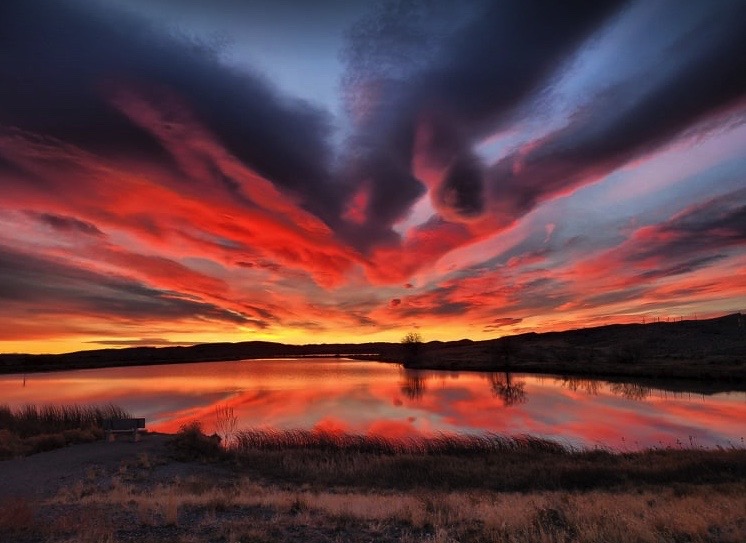
These days I'm tracking wonder through the eyes of a new one year old rescue pup, Scrappy Doo. What excitement in a new toy or outside? Scrappy helps me find the joy as do nature scenes like this captured by GROGer/photographer Leslie Collin Tribble. No filter indeed when Mother Nature and Leslie are scouting the wonder.


Sue Heavenrich:  When we live in the spirit of gratitude, there will be much happiness in our life.  ~ Thich Nhat Hanh

I think about this when I am outside planting seeds, or gathering vegetables from my garden: how thankful I am for the bounty of the earth. When I am kneeling next to the beds pulling weeds from between the beets and carrots, I smell the richness of the soil. I see the beetles and spiders busy on their errands, and hear the humming of bees, the chorus of birds. Even when a chipmunk climbs the fence and leaps to the thick sunflower stalk, I am grateful that there are many sunflowers - and we can all share the seeds. It's true, you know ~ the thing about being happier when we appreciate the gifts around us.  And there is something else: a realization that I have enough.


Tina Cho: Being joyful isn't what makes you grateful. Being grateful is what makes you joyful. ~Ann Voskamp

When I'm feeling down or overwhelmed, I ask myself--did I write down my blessings for the day? I keep a notebook where I try to write something I'm thankful for each night before I go to bed. Lately, I've been thankful for the cheery flowers. I do NOT have a green thumb, and so for this plant to actually bloom instead of die is a miracle. 

In this season of my writer's life, I'm extremely thankful for...

  • my three critique groups and the unique angles each brings to my manuscripts that greatly need help. 
  • my wonderful agent who believes in me and my writing, even when I don't.
  • my awesome editors who show me how to take my writing to the next level.
  • the kidlit community, who is more like a kidlit family that is very supportive.
  • readers, who read our books & blog posts!

Patricia Toht:

Like Kathy Halsey, my gratitude quote is from Maya Angelou:

"The more you practice the art of thankfulness, the more you have to be thankful for."

If there's one thing that I've learned over two decades of writing, it's that consistently practicing an art makes you better at it. This is as true for gratitude as it is for writing. I frequently pause to count my blessings, especially when things are feeling tough or irritating. I love this song by Bing Crosby, so fitting for the season. 


Christy Mihaly: 

"There is a crack, a crack in everything
That’s how the light gets in." ~Leonard Cohen, "Anthem"

This time of year in northern New England, I dread the gloom, the slow leaching away of our light. We'll soon be down to those shortest days, when the sun sets before 4:30. 
I've been thinking about the darkness, and the light. And so this brilliant Leonard Cohen lyric came to mind. And then I thought of the wonderful Louise Penny novels. I love them all, and several pay homage to Cohen's words, and explore the notion of "how the light gets in" through the cracks, the imperfections, the breaks. I'm grateful for the light that shines through our flawed creations. And I'm grateful for Goodness, which, as Louise Penny and Leonard Cohen and many other beautiful souls have reminded us, still exists despite our doubts, and continues to light the darkness. Thank you.

Suzy Leopold:

“Today is today, and it is a gift.” ~Tomie de Paola

Look and Be Grateful is just one of hundreds of beautiful picture books written by Tomie de Paola. The message of this book is sweet and simple. It is an ode to gratitude and mindfulness that includes brilliant illustrations.


As a creator—a writer and painter, I have the ability to communicate meaningful thoughts and feelings of gratitude through the written word with pen and paper and with paints and brushes. I am grateful for the opportunity to share my love of writing with readers. I am grateful to gift my creations to family and friends.

Every day is a gift to be grateful for.
Watercolor by Suzy Leopold
Inspiration from Tomie de Paola
We GROGgers are always thankful for our resident photographer and outdoor woman, Leslie Colin Tribble, who reminds us via her art that wonders await us.