

It's Back to School time, and who better to interview, than my wonderful friend who runs the popular web site full of educational publishers for writers--Ev Christensen!

1. For those who
might not know you, can you tell us a little about yourself? Were you ever a
teacher?
Yes, teaching was my career and I think I was always a
teacher at heart from the time I knew what the concept was. In elementary
school, I used to come home from school and ‘teach’ in my pretend school. I was
a high school math teacher first. Then I got my doctorate in education and
planned to teach math methods to prospective teachers. After ten years at home
with my own preschool children, when I was ready to look for a job, I decided I
shouldn’t try to tell elementary teachers how to teach if I hadn’t had
experience at that level. I intended to get just a couple of years experience,
but I fell in love with the little ones and chose to teach at the K-2 level the
rest of my career.
2. How did you get
into educational writing?
My first book, which I wrote when I was that stay-at-home mom with three young kids, was inspired by a Christmas gift of colored paper clips from one of my children to another. I was fooling around with those clips one day, entertaining the kids, and I thought, "I would be able to do something 'neat' with these. Most math manipulatives are so expensive, but anybody can afford paperclips." The result was a set of fun logic puzzles, called Clip Clue Puzzles, in which you use clues to try to determine the correct color order of the clips in a chain. The set was used for several years in a couple of classrooms before I got the courage to submit it for publication. When I did, I was blessed to have it accepted by the second publisher I sent it to.

3. What prompted you
to start your awesome web site, listing educational publishers?
About eight years ago, the thought occurred to me that the
results of all the time and energy I’d been expending on researching potential
publishers for my own manuscripts should be shared with others. Initially, I
was going to do it in book format. I’d seen a very outdated book for teachers
on how to get their ideas published, and thought the market needed something
more current. I even contacted another author who agreed to write the articles
for the book. But for some reason (maybe a nudge from God), I changed my mind
and decided to provide the information free on my website. I like being able to
help others, and it makes me happy whenever someone tells me the list has been useful
to them.

4. What are some of
your books that have been published?
Multiplication
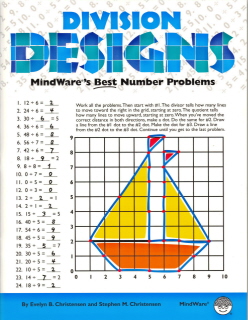
Mosaics, my most successful book, has its 12th birthday this year. Some
other popular books in that series are Division
Designs, Addition Adventures, and Subtraction
Secrets. Inchimals is one of my personal favorites. It’s a combination of
manipulative rods and a write-on/wipe-off activity book and has won several
awards.

5. Can you give our
audience some educational writing tips that they might not have heard?
- Most educational publishers prefer sets of books, as opposed to stand-alone titles. That’s because sets sell better for them. So if you have a manuscript you’re trying to get published, if you can possibly stretch it to be even two books, you’ll increase your chances of acceptance. The same is true if you’re querying an editor about an idea for a book you’d like to write. Unless the book will already be part of a series, frame your query in terms of a set of two or more books, and the response is more likely to be positive.

- If
you’re doing research for a book or article, especially if you already
have a contract for it, and your research takes you to a place that has an
entrance fee (like a museum or zoo), you can sometimes get free admission.
I had experience with this for the first time this summer. The term that’s
used is “complimentary media ticket.” Of course, some places will say no,
but it doesn’t hurt to ask.
- Being a success at writing for the educational market will likely involve sending out oodles of queries and resumes. A few writers may get prompt responses and receive enough assignments or acceptances to keep them as busy as they want to be. But many writers may feel like much of their correspondence is going into a black hole. Unless you’ve received an outright rejection, I encourage you not to lose hope. I sent out one query more than six years ago. I didn’t hear a single peep from the publisher and had long since written off that effort as futile. Then one bright day this past December, an email appeared in my inbox. An editor was asking if I were still interested in writing the book in their series I had volunteered for in my query all those years ago! So—keep sending out those letters and don’t give up hope!
 |
| Nancy I. Sanders, Ev Christensen, and Tina Cho |
- This
last tip comes from my friend Nancy I. Sanders in her book Yes You Can Learn How to Write
Children’s Books, Get Them Published, and Build a Successful Writing
Career. She suggests studying
publishers’ catalogs to find a series written by a variety of authors.
Brainstorm other titles that would fit in the series. Then query the
publisher and ask if they would be interested in seeing a formal proposal
for any of those titles. Since my book contract from my 6-year-old query
was based on that tip, I can attest that it’s a good one.
6. What are you
working on now?
I’ve just finished proofing the final copy-edited version of
Graph Grapplers, a puzzle book using
pictographs, bar graphs, and line graphs, to be published by MindWare next
month. I’m also working on a picture book about my beloved Kentucky , which will be published hopefully
in the fall of 2016.
7. You also publish
the Writing for Children's Magazines ezine. How did that start? And how can writers be a part of that?
Jan Fields used to have a wonderful ezine, Kid Magazine Writer, that was very
helpful to me when I first started writing for children’s magazines. When she
decided to close down her site and suggested someone fill in the gap, I
realized this was another way I could ‘pay it forward’ to the children’s
writing community.
You can be a part of W4CM by submitting articles that relate
in some way to writing or illustrating for children’s or YA magazines. Even if you
haven’t been published, if you have experiences or insights that would be
helpful to others, you can write an article. The other kind of article I’m
looking for from writers is an overview of a sample magazine issue. All you
need to write one of these is a recent issue of a magazine and the time to
describe what’s in it. Examples can be seen on theW4CM website. Right now, I’m
calling for submissions, so this is a great time to send either kind of
article.

Just for fun:
favorite color:
yellow
favorite flower: daisy
favorite food: fruits and veggies
favorite candy: Turtles
(chocolate, caramel, pecans)
favorite subject: math
favorite pet:
cats
favorite children's
book/author: Dr. Seuss
Thanks so much, Ev, for taking the time to do this interview! Please visit Ev's web site if you're interested in writing for the educational market or children's magazines!
