Showing posts with label social media. Show all posts

Wednesday, July 15, 2020

Rethinking Social Media Time for Creatives

By Suzy Leopold

How are you doing with social media [SM] during these unprecedented times?

Is SM supporting your reading, writing, and creating goals? For many creatives, SM can be a distraction as one attempts to stay informed with issues and concerns during a global pandemic and a call for kindness and respect for all.

I notice when I step back from social media for short, frequent pauses I find more time to do what matters to me. I’m not planning on giving up on my Facebook, Instagram, and Twitter accounts completely. However, I’ve found these social media breaks impact my life in positive ways, including more reading, more writing, more creating, and most importantly more family time. I am thankful for the connections I’ve made with like minded writers I’ve met online, from trusted critique partners to friendships. 

Taking conscious SM breaks provides more headspace for creativity to show up in new ways.
I picked these flowers for you!

Social media and smartphone use are destroying attention span.

We’ve become a distracted world. Research shows our attention span is shorter than that of a goldfish. Research shows our attention span is becoming less. Check out the research in this info gram:

We are interrupted by notifications, reminders, and alerts almost all day long.

Often we interrupt ourselves to quickly check email messages, Facebook posts, create a tweet on Twitter, and/or scroll through Instagram. “Just checking in” derails deep, concentrated creative work and usually extends longer than just a five to ten minute quick look.

The human brain needs twenty minutes to resume and get back on task after a distraction.

As a writer, having an online presence somewhere is important for followers and a reading audience. However, one doesn’t need to be everywhere, all of the time on line.

Social media impacts our creativity in positive and negative ways.

Social media and searching the Internet can spark creativity. There are valuable emails to read, blogs to learn from, and FB posts written by like minded creatives. Many of these posts share information, inspiration, and encouragement for readers, writers, and creators.

These online communities can push your creative boundaries. However, there needs to be a balance. Spending too much time on SM can derail your goals.

The Internet and social media offer resources to writers and illustrators and can be an excellent tool.

There may be times to step away from online communities and engage with people in your community to bring fresh ideas that you won’t find on your FB feed.

Talking and reading about writing are not the same as actual writing.

“Social media groups for writers practically beg us to talk about our work, and it’s easy to spend our designated writing time talking about writing instead of actually writing. It’s important that we balance our desire to connect online with our need to guard our work time.”
Jess Townes, Co-Regional Advisor for the Kansas-Missouri SCBWI

Revisit the SMART goals you created at the beginning of the year. Make adjustments if need be. Push your writing to the next level.

For more information about goals click SMART goals. An additional post can be found by clicking more SMART goals.

I picked some more flowers for you

“Don’t wait, write. Take an hour a week, or twenty minutes a day. Or a four day retreat. If writing is something you love to do, then just do it. Plain and simple. You can do it. Don’t wait, write.”
Amanda Zieba, Children’s Book Author

Balance your desire to connect online with your need to set aside valuable time to read, write, and create.


In the comments below share a tip about how you balance your creative time with social media time to be eligible for the giveaway. If you follow the instructions, I’ll put your name in a hat and draw two winners. Each winner will receive a hand crafted bookmark painted with watercolors. U. S. Mail only.

The two lucky winners will be announced on the next GROG Blog on July 22nd. Good luck!

Wednesday, May 20, 2020

Marketing a Picture Book in a Pandemic ~ by Patricia Toht

Authors and illustrators dream of the big day that their new book launches. They plan bookstore and school visits. They invest in swag and educational materials. Excitement builds as the day nears.

But this year? BAM! A pandemic hits!


So, what can you do to market a book in the time of Covid-19? 

With schools out and bookstores closed, social media is a lifesaver.
Meet Lisa Katzenberger, SCBWI-Illinois' Social Media Coordinator:

Lisa is a former freelance technical writer and social media manager, who now writes for children. She lives near Chicago with her husband and two children.

Her new picture book, NATIONAL REGULAR AVERAGE ORDINARY DAY, illustrated by Barbara Bakos, is released by Penguin Workshop on June 23rd. With Lisa's background, I knew she'd have some ideas about marketing a book in the time of a pandemic.


Q: It's pretty overwhelming to think about launching a book right now. What's the first thing you did when you found yourself in this situation?

Lisa: Honestly, I held a little pity party for myself. I moped. I whined. But after a few days, I put on my big girl pants and started to brainstorm ways to promote my book online. I reached out to friends for help, and people replied with support. I now have three virtual events planned for my release, and a few more in the works.


Q: Are there any ideas that are still feasible for working with bookstores and schools?

Lisa: I read my book to both of my kids' classrooms via Zoom. I did an intro, then shared my screen to display a pdf of the book so they could see it better, and read it to them. Afterward, we did a Q&A. It was a good reminder that you can do school visits, and on a smaller scale (class-sized), so you can give the kids more attention. I'm also working with a publicist to do virtual story-times through independent bookstores.
Lisa, meeting with a class, in pre-pandemic times.
Q: With the various possibilities for promotion, which are ones that you feel will give you more "bang-for-your-buck" (and time)?

Lisa: I'm doing a virtual book launch through The Writing Barn, and they are partnering with an independent bookstore in Austin, Book People. It's a fun way to celebrate and gives people an easy way to order. I can do everything I would do in a live event (except hand out treats!), and I can bring in more people virtually.

Q: Are book giveaways worth it?

Lisa: I don't have enough data to know if they're worth it yet, but they sure do make me feel good! I'm doing them through #PBChat on Twitter and the Debut Review Challenge. It's easiest to partner with someone else who already has a good system in place for handling the giveaway.

Q: What's your preference - Facebook, Twitter, or Instagram?

Lisa: I've been marketing my book on both Twitter and Facebook. I have a wider audience on Twitter, and have the support of author friends who retweet my posts. I try to always include a cover image and a link to buy my book. I use Canva to make a graphic that is properly sized for Twitter. The example below is how I shared a review for my book. 


Thank you, Lisa, for this wonderful information!

Here are a few more ideas:

Facebook, Twitter, and Instagram are all ways of connecting with your audience. 
  • Try an attention-grabbing trailer, like this one by Michelle Schaub, or this one by Suzanne Slade.
  • Do a special countdown or series of focused posts. Eileen Meyer continues to focus on Abraham Lincoln facts to promote her book, THE SUPERLATIVE A. LINCOLN.
  • Add links to activities and/or educational materials. Check out Jarret Lerner's offerings. 
  • Always tag your publisher, illustrator, and key groups!

Magnify your message.
  • Form a group of others with new books, either a formal one like @Perfect2020PBs (Lisa is in this group), an ad hoc mix of friends with similar titles, or join forces with others in your publishing family.
  • Check in with your publisher to see what they are doing. If they are sharing content on their websites, too, that doubles your message. 
  • Offer a giveaway, and add a condition to your draw - ask people to follow you, retweet/share, and/or tag a friend to enter. This will build your audience.

Look for Lisa's book, NATIONAL REGULAR AVERAGE ORDINARY DAY, on June 23rd. You can pre-order it through your local bookseller, IndieBound, Amazon, and B&N. Her next book, IT WILL BE OKAY, publishes on February 1, 2021.


Find out more about Lisa here:
Website - www.lisakatzenberger.com
Twitter - @FictionCity
Facebook - Lisa Katzenberger Author
Instagram - @lisakatz17

⭐⭐⭐⭐⭐⭐⭐⭐⭐⭐⭐⭐⭐⭐⭐⭐⭐⭐⭐⭐⭐⭐⭐⭐⭐⭐


WINNER ALERT!


The winners of the May 13th GROG post by Garden Girl are
KIM P. and ELIZABETH SABA!

If you haven't already been in touch, you can reach Suzy at sleopold (at) gmail (dot) com.

Congratulations!

Wednesday, May 8, 2019

A Quick Instagram Primer

By Leslie Colin Tribble

Have you wanted to jump on the Instagram bandwagon, but didn't know where to start? Keep reading for a quick guide on how to use this social media platform for personal and professional use.


First off, a disclaimer. I've been on IG for nearly six years and I still don't really know much about it. I just post my little photos and enjoy seeing other people's pictures. That being said, I do think it's a fun platform and I think kidlit writers should be branching out to embrace the Gram. The name Instagram is a combination of Instant Camera (mobile phone camera) and Telegram - sort of an instant postcard.

Why You Should Have a Presence on IG
Insta has been around for about nine years. It appears to be growing in popularity, especially with a younger demographic. I'm a Baby Boomer and all my friends use Facebook. Some of them are on Twitter but very few are on IG. As of 2017, there were 800 million Instagram users, with a vast number of those folks being under the age of 35. Facebook is a great platform, but picture book authors need to go where adults with young children are, and right now, that happens to be Instagram.


Getting Started
The first thing you need to know is that Instagram is designed to work only on your cell phone. You can't access it with your laptop without a lot of effort. But creating an account is painless and the IG app for iPhone and Android is easy to use.

You need to decide on a user name - if you're an author and you want to use IG primarily for promoting your work then you can use just your name. If you chose a different name, you can link your personal name to that so followers can still find you by searching your name.

You have the option of making your account Public or Private. If it's public, anyone in the world can find you. People don't have to request to follow you so you'll definitely get some odd balls. You can block followers, though, if necessary.

Followers
You want to see and be seen on IG, just like any social media. Tell all your FB followers that you're now on IG and ask them to follow you there as well. You also need to follow others on the platform - oftentimes you'll get a return follow.

The best way to get followers is to use and follow hashtags. If you're on Twitter you know this already, but for anyone not on Twitter, hashtags are nothing more than key words (remember learning how to write essays and choosing your key words?). For instance, I post mostly landscape photos of Wyoming so I use these hashtags - #nature, #explore, #hiking, #getoutside, #wanderlust, #simplebeauty, #greateryellowstoneecosystem. IG helpfully provides a list of hashtags to choose from as you begin to type. When I first started, I wrote down other people's hashtags and used those.

This is my homepage, where you can see my massive 563 followers, which today was down to 553.

Photographs
Because IG is primarily a visual platform, try to post decent photographs. Don't use out of focus or poorly planned shots. Even cell phones that are a few years old take great quality photos, so make the effort to post something nice. The built in photo editor is wonderful and easy to use. To post a photo click on the + button at the bottom of the screen and chose a photo. Click NEXT and then you can edit your photo by using a filter or the editing tools. At the very least you can add a filter to enhance your photos, but try using the editing tools. I primarily brighten up my picture, bring up the contrast, bump up the warmth, and deepen the saturation of the colors. Then I use the Structure tool to sharpen the focus and give the photo depth. A good photo will get you followers, but bad photos will get you unfollowed.

The "unwritten" social norm is no more than one post per day. You can get started by simply posting a photo of a book, or a pretty landscape and let folks know you're ready for engagement.

Not my photo, but I wish it was. @ChristinaAdelephoto takes wonderful photos of Glacier National Park.


IG Stories
At the top of your feed, you'll see people you follow with circles around their user photos. These are IG Stories - little vignettes of life that are visible for only 24 hours. To make a story, swipe right and a camera will appear. You can take video or still shots, add text and stickers and have fun. If you're having a book signing, or other event, Stories is a great way to highlight it.

The Negative
Unless you're a self-made model or you have a really cute dog, it is hard to get a lot of followers these days on IG. Even Stephen King only has 1.1 million followers while Jiffpom, the Pomeranian, has 7 million and Doug the Pug has 3 million. But even without a lot of followers you can still get likes and engagement by people who follow some of the hashtags you use.

Spam comment on the bottom. 

There's also a lot of spam on IG - a lot of people are simply out to build their numbers so they comment something like 'Nice feed. Follow me.' And you can purchase followers if you're willing to pay the money and play the game. But as a kidlit writer, if you just be yourself you'll eventually garner a decent following. You want real people to follow you, not necessarily a brand or product.

Are you on IG? Tell me your username and I'll give you a follow. If you want to see photos of Wyoming, you can find me at sagebrush_lessons. Enjoy!

Monday, August 8, 2016

My Week Without Social Media: Or, Why I'm Not Nearly As Important As I Think I Am!

A few weeks ago, I had the pleasure of chaperoning a mission trip with high school students from Kenosha’s St. Mary’s Lutheran Church and Spirit Alive Church.  37 of us loaded up in three huge vans and one Chevy Traverse and headed to Detroit.  We were blessed to use Hope Lutheran Church in Farmington Hills, MI as our base camp.
IMG_2447
While in Detroit, we spent the bulk of our time supporting the Matrix Center.  This centrally located building is an oasis in the Osborne Neighborhood, just a few miles on the edge of Detroit.  We cleared vacant lots, did landscaping, painting and a whole host of other projects that the busy staff just never had the time to do. The hot temperatures made outdoor work challenging.  The intense summer sun and heat pushed us all to our limits.  Still, the trip was fantastic in every respect.  While I enjoyed the hard work, I also enjoyed the mental vacation from social media.
Mission trip
Image courtesy Victoria Fields.
We had asked the youth to limit their phone use.  We wanted them to ‘be in the moment’ that seems to develop when folks are not forever looking down at their tiny screens.  They rose to the occasion.  It seemed only fair that if I was asking them to step back, that I should do the same.  I added ‘vacation responders’ to all my email accounts, professed to the social media world that I was taking a break from it.
While I hardly ever have my phone’s volume up, I noticed the ‘notifications’ popping up on my screen over the directions app. almost immediately.  When we stopped, I was tempted to ‘just check’ on those emails or that funny tweet that popped up.  I knew I was going to have to do something drastic.  In fact, when I told my 18-year-old daughter what I had done, she let out an audible gasp.  I deleted ALL of the social media apps from my phone.  Twitter, Facebook, Instagram, Facebook Messenger.  I even deleted my email accounts.  Besides the camera and photography apps, my iPhone was basically, and somewhat ironically, a phone.  The chaperones were using a group text to keep in touch between vans and occasionally we had to place a random call, so I left those two apps intact.  Almost immediately I felt the relief, but also a bit of anxiety.  The word ‘addiction’ gets thrown around pretty loosely.  I don’t think I’m addicted to the phone, but I have been conditioned to pick it up every time it vibrates, ‘just to check.’
IMG_2437
One of the many beautiful art pieces at Hope Lutheran Church in Farmington, MI.
Why did I delete the apps?  Mostly because I have so little self-control; I'm just being totally honest.  I knew that if they were on the phone, I would look.  At first, just, a peek, but soon  full-fledged minutes would turn into hours and so on.  Why not just re-load them?  Well, that’s a good idea, but that would have taken time and by the time I had the ‘need’ to check notifications, the need had passed.  So, I embraced the void.  I figured if something earth shattering happened, I would find out soon enough.  I might even just get a phone call.  Remember those?
IMG_2418
The soaring sanctuary of Hope Lutheran Church in Farmington, MI.
Unfortunately, some horrible events DID in fact happen.  There was an attack in France and shortly thereafter there was another shooting of police officers.  We were alerted to the possibility of violence in major cities across America following these shootings.  I had told the other leaders about my social media ‘fast’ and they were monitoring events.  We shared the bare bones of the events with the students that evening as we gathered.  Seeing their faces reminded me how we ‘used’ to get bad news.  Because we were all essentially processing it together, we had time to reflect, cry and pray.  I think we miss much of this in our 24/7 connected world.  By the time one event hits the news cycle there is another event happening.  We don’t’ have time in this ‘modern’ world to grieve.
IMG_2430
The baptismal font is large and centrally located at the Hope Lutheran Church in Farmington, MI.
As the week wore on, I noticed that I didn’t even really miss the facebook updates or countless photos of friend's children or vacation images.  In fact, I actually found time to read.  Not as much as I would have liked to, but given the fact that I had 34 noisy teenagers around me all of the time, that I read at all is a miracle!
IMG_2445
Detail of a building at the Heidelberg Project in Detroit.
I won’t lie. I was very anxious to re-load the apps and check in with my social media accounts.  Somewhat disappointedly, I must say that nobody ‘needed’ me.  Nobody offered me a book deal, that part in the new action film, nor had I won any lotteries.  In fact, there actually very few emails or updates on my accounts.  I’d like to think that it was because I told everyone I was offline, but I think that the actual reason is that I’m just not as important as I would like to think I am.  I say that not in a disparaging way, but in an honest and humble way.  The world will turn.  The sun will rise.  All without me.
IMG_2115
One of the structures at the Heidelberg Project in Detroit.
And yet, despite the fact that I wasn’t ‘missed’ on social media, I made memories that I will never forget; even if I didn’t document them with a tweet, gram or post.  You could say I got to time travel because I saw the ‘future’ in the faces of the youth.  I spent countless hours with them singing, praying, working and sweating.  The future is indeed bright!
IMG_2442
The General Motors Building in Downtown Detroit, MI.
How can you manage your social media ‘addiction?’  Well,  Ibrahim Husain’s POST on Lifehack has some fantastic tips, a couple I would like to highlight.  First, he states that you have to acknowledge you have a problem.  Use one of the many trackers to monitor your use.  MOMENT is one of the best in my opinion.  It literally tracks every time you pick your phone up and seeing those statistics can be quite sobering.  After you acknowledge this, you can start working to curb your addiction.  Husain suggests deleting many of the apps from your phone, permanently.  Do you really need Facebook and Twitter on your phone?  I personally have found that using an interface like TweetDeck helps me efficiently monitor and learn from my Twitter feed.  I haven’t found anything similarly for Facebook.  For now, I’m limiting myself to it by using a timer.  
IMG_2431
The beautiful organ at Hope Lutheran Church in Farmingham, MI.
I DID make a few changes as I re-loaded those apps back to my phone.  The first is that I turned off ALL notifications except a few key apps (text messaging and calendars).  I will NOT get notifications of new tweets, or posts to Instagram and Facebook.  I won’t even get notifications of email messages. I am sure I’ll miss a few emails late at night or early in the morning.  I apologize in advance to you if that happens. (Three weeks on, I've really enjoyed not seeing those messages on my screen.  It takes a little discipline to 'remember' to check the messages, emails, etc. but that is a much healthier 'problem' than being a slave to the notices.) Who knows, hopefully, I’ll find some time to let my mind drift; it is in that kind of moments I find I do my best thinking.  Maybe my monumental stack of books next to my bed will gradually shrink!  One thing is for sure, my week without social media has had a powerful impact on me.  Give it a try!
IMG_2164
The whole crew gathered along the river walk in Detroit, MI.


Friday, September 12, 2014

How Do Writers Spend Their Time? -- By Christy Mihaly (and Cheddar)


Join this Writer’s Organization! Try that Challenge! Take another Course! EEK! Writer friends urge me to participate in this course, that workshop, these Facebook groups, those writing challenges. What am I missing? How can I ever find the time? 
Photo by GROGGER Suzy Leopold

Time for a reality check: I turned to my GROG colleagues --  serious writers all, ranging across continents, occupations, levels of experience, and numbers of publications. I asked them: "How do you spend your writing time?" I asked them to estimate how many hours they spent drafting, revising, reading, doing research, conferences, courses, social media, marketing, etc.  

And now, I'm happy to share these thoughts and recommendations, from my informal GROG survey.  

Bottom line: None of us has time to do it all.  We have day jobs, spouses and loved ones, social obligations, volunteer work, children, grandchildren, friends in need. We want to "give back" to the writing world. What’s a writer to do?  

We know the answer: WRITE. The GROGGER responses reminded me that when it comes to all those “writing-related” activities, we have to stick to the ones that are helpful enough to warrant taking time away from actual writing. 

I boiled my colleagues' responses down to these three points: 

1.  Write!  Carve out “writing time” every day.  Make writing your top priority during that designated time. Maybe it’s a half-hour before the rest of the household awakes. Maybe it’s an hour after everyone else is asleep. Whenever it is, make it sacrosanct.  No internet surfing.  No opening mail. “Writing” means drafting and revising. If inspiration isn’t coming, try writing a poem! A journal entry, a cover letter . . . just write! GROGGERs' writing times vary considerably, depending on where they are on a particular project (or other aspects of their busy lives) but range from about an hour a day to 30 hours or more per week.  (And we all spend more time revising than drafting!) 
GRAB THAT PENCIL, CHEDDAR!

2.  Everything else is extra. Select only those “extras” that really help your writing. Want to refine your craft?  Maybe a course or studying a book on craft is your best bet. Are you feeling isolated?  Then join a community, whether it’s an in-person critique group or an online writing group, or volunteer to work with kids. Has your inspiration dried up? Maybe you need to hang out with the grandchildren, or maybe just going for a walk is what you need! You’ll never be able to do it all . . . so choose what inspires you, and nourishes your writing.
Sniffing out new inspiration . . . 
Here's some collective GROGGER wisdom about setting priorities,  from among all those “other” activities:

Research: If you write nonfiction, this is a major element of your process . . . though fiction writers need research too. For our nonfiction GROGGERs, research can take MORE time than writing.  When we're in that "research groove," that's all we want to do. The consensus: Go for it!
                        

Challenges: GROGGERs have tried various online challenges, and concluded it's best to choose one, or at most two, per year. Favorites among GROGGERs are 12x12, WOW, and PiBoIdMo.

Reading: Do it! Study mentor texts, read books on writing craft and the business of writing, adult fiction and nonfiction for pleasure, YA for the heck of it, poetry, The New Yorker – read it all. GROGGER Pam Vaughan suggests that, if you’re stuck in the car a lot (chauffeuring kids, anyone?) try books-on-tape! GROG members agree, reading is a high priority. Most of us try to get some reading done every day.
 Hey, I get great ideas in my dreams!

Conferences/workshops: We can’t afford to attend all the conferences we’d like, but agree that two or three a year is good. SCBWI is the standard. A pointer: Figure out which format – National? Regional? Small? – works best for you, then focus on that type of gathering. For more GROG thoughts on conferences, check out these posts: 21st Century NF; SCBWI LA; SCBWI New England; write conference for you.
Critique groups: Serious writers must share drafts and revisions with trusted writing buddies. Online groups work well for many. Some are lucky enough to find supportive face-to-face groups. Crit groups are well worth the time -- though most GROG members find that one, or two, of these is the most we can responsibly handle.
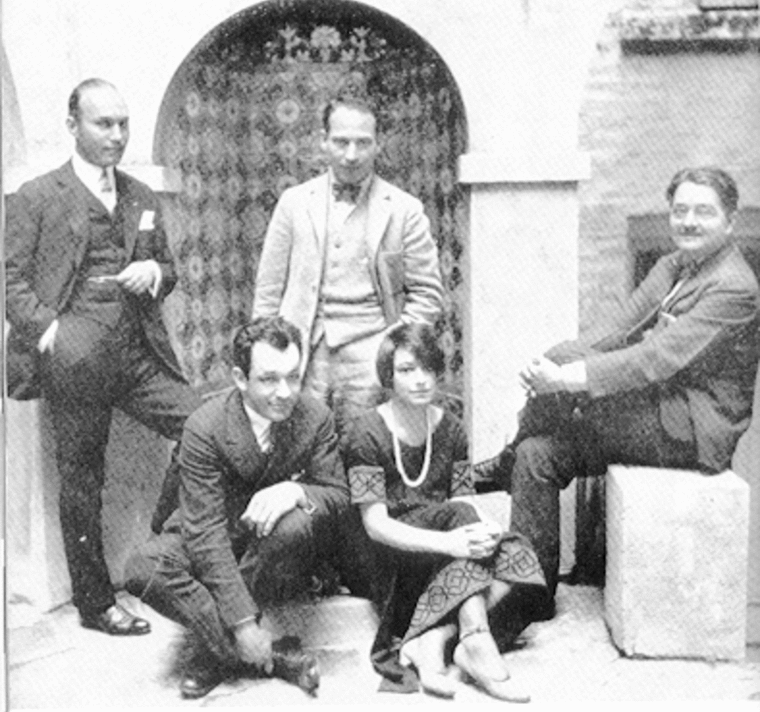
Algonquin Round Table members 
Art Samuels, Charlie MacArthur, Harpo Marx, Dorothy Parker, Alexander Woollcott 
circa 1919, from Wikimedia commons, photographer unknown.

Warning!  Warning!  LIMIT social media!  

Sure, there are some wonderful Facebook groups, and FB can be a great place to share information and support other writers. Twitter provides valuable connections and information too . . . but GROGGERs find social media can consume too much precious writing time. All GROGGERs participate in social media, and we agree a little can be good (a half-hour to an hour a day?).  (See these prior posts:  Facebook groups; more Facebook groups; Twitter tips; more Twitter tips.)  But it's also true that too much is . . . too much.

Try setting a timer!


By Hustvedt (Own work) [CC-BY-SA-3.0 (http://creativecommons.org/licenses/by-sa/3.0) or GFDL (http://www.gnu.org/copyleft/fdl.html)], via Wikimedia Commons


3. Keep track of how you spend your time 
(see above). 

Some of my GROG friends could tell me exactly how much time they spent regularly on various activities . . . others, not so much. Try this for a week or a month: record your hours. If you feel you're not getting enough writing done, you’ll see exactly what’s taking up too much time. You'll get a more realistic sense of how long different tasks take. And when you meet a writing target or a goal – celebrate!

Bottom line:  Remember Jane Yolen's essential rule:  "Butt in chair!" And write on. 
That's BUTT in chair, Cheddar!!


Special thanks to Marcie Atkins, Todd Burleson, Tina Cho, Suzy Leopold, Pat Miller, Janie Reinart, Patty Toht, and Pam Vaughan.