Monday, August 24, 2015

Makerspaces: A Whole New Market for Authors? By Todd Burleson

Makerspaces:  A Whole New Market for Authors? by Todd Burleson


What is a makerspace and why should authors be interested?  A makerspace is a place where learners create, tinker, explore, prototype, fail, research, discover and learn through a variety of materials. The tools can be anything from cardboard to microprocessors.  A makerspace is about producing rather than consuming.  Makers learn to make stuff by making things. “Schools often forget this as they endlessly prepare students for something that is going to happen to them next week, next year or in some future career. Students can and should be scientists, artists, engineers and writers today.”


As this movement continues to grow, educators and parents are constantly looking for ways to dovetail literacy with it. Sometimes, for me as a librarian, I’m looking for a way to fold in a lesson.  Take  Not a Box by Antoinette Portiss.   This lovely story about creativity is going to be an excellent way for me to introduce the Global Cardboard Challenge to my school.  


This coming October, we'll invite the school and wider community to come visit our IDEA Lab and Project Room. We’ll have stations set up and manned by parents and students.  This will be everyone’s chance to visit and learn more about the makerspace we’ve created.  Following the Open House, we’ll gather to watch the film that inspired the idea behind the Global Cardboard Challenge.


Then, we’ll invite families to use the hundreds of pounds of cardboard, dozens of rolls of Duck tape, packing tape, Make Do Kits, zip ties and more to create with cardboard.  They might create an arcade game or a robot.  The only limit is their imagination.  Finally, we’ll end the day by taking a gallery walk to see one another’s awesome creations.  


One of the elements of the Maker Movement that is most inspirational to me is that it is breaking down the traditional borders around engineering and making.  Great books like Rosie Revere the Engineer , Crafty Chloe, Violet the Pilot,Iggy Peck Architect are some tremendous examples.  


So why should I as an author be so interested in the Maker Movement?  I see the answer to this question in two parts. The first is that this should encourage authors to seek those obscure heroes from history; there’s never been a better time to highlight them.  The second is that as authors, indeed as human beings, we should be ‘making’ ourselves.  This summer, as a result of my attending the CMK Conference in Manchester, NY, I went from complete newbie with coding and circuitry to realizing that, with just a bit of research, I could make THIS

Rather than paying $3,000 dollars for it, I could actually make it. All it takes is a basic understanding of code and circuitry.

I began to look at the world with a lens that helped me feel empowered. No longer was I merely a consumer, I was a creator.  This is the same sense of empowerment we want to hone in our students and teachers who are involved in the maker movement.  Indeed, this is what it means when you hear that education is preparing students for jobs that don't yet exist. We are preparing them to think, explore and imagine!

As authors, we are constantly mining the world for our 'next' idea. When School Library Journal leads with a "Maker Issue," this is a good sign that the concepts are pretty entrenched.  


Makerspace, Hackerspaces, IDEA Labs, Innovation Studios, Fab Labs, whatever we call them, they are popping up in public libraries, in former furniture stores and a school near you.  Go CREATE!  Go get inspired and then turn those ideas and the ones they inspire into a piece of literature that will keep the movement going!

_________________________________________________________________________________
"Why the Maker Movement matters to educators | SmartBlogs ..." 2013. 23 Aug. 2015 <http://smartblogs.com/education/2013/08/20/why-the-maker-movement-matters/>


Friday, August 21, 2015

Stop, Drop and Roll... by Todd Burleson

Stop, Drop and Roll…
by Todd Burleson


When I was in elementary school, I remember one particular fire prevention assembly we had.  Our whole school gathered in the lunchroom.  We sat on the still sticky floor and waited patiently as the librarian loaded the 16mm film into the projector.  Our principal, a frumpy, hairy faced man said something, but neither I nor most of my friends were listening. I loved the sound the projector made and when those first few clicks of the film started, we were riveted to the glowing light on the screen. This particular film featured Dick Van Dyke, my friends and I knew him as the chimney sweep from Mary Poppins.  The only thing I really remember about that film is the three word phrase that he repeated at least ten times: Stop, Drop and Roll.


Funny how ‘seeing’ something again 35 years later seems so different.  Who knows.  Maybe this was just a snippet that played a thousand times on Saturday mornings as kids across America munched their cereal in their footed pajamas.  


About six weeks ago I was in the process of cleaning out my garage.  I piled all my lumber scraps on our fire pit like I’ve done hundreds of other times.  I put some gasoline on it to start the fire, walked the gas can a safe distance away and bent down to ignite the lumber.  Just as I clicked the igniter on the lighter, a gentle breeze wafted the vapors from the gasoline closer toward me.  In moments, my face, hair and hands were on fire.  


It’s only happened twice in my life, but time slowed so that every second stretched for what seemed like minutes.  I remember scrunching my face to brace for the explosion.  I remember opening my eyes and seeing the flicker of the flames on my face.  I remember turning away from the burn pile and seeing my son fifteen feet away.  I called out for him to help me and felt the searing heat engulf my head.  I took two steps toward my son and then by some miracle thought to pull my t-shirt up and over my head.  As I was doing this, I fell to the ground and rolled.   


As I sat up, I looked back toward the burn pile and saw that the fire had somehow spread across the grass and the nozzle on the plastic gas can was in flames.  All I could think about was that in moments that gas can, which still had gas in it, would explode sending gas and molten plastic like a bomb.  I don’t know how, but I managed to sprint over there and remove the nozzle and get the gas can out of the burn zone.  I yelled for Jack to get the fire extinguisher and in moments the whole mess was extinguished.


I asked my son, “How bad is it?”  Stunned, he really didn’t know what to say.  What do you say when you’ve seen your father’s head on fire?  So, being the nerd I am, I took a photo of my face with my phone.  There were some sections of my face that looked like they had been peeled off like a blister, and my usually pasty complexion was considerably more white but it really didn’t look too bad.  My hair was singed to the scalp.  Eyebrows and eyelashes were neater than they have been in months!  I could feel my face tightening and I knew I needed to get to the hospital.  


As we entered the emergency ward, there were three people standing in line.  They took one look at me and told us to go ahead.  By this time, I my face and hands were throbbing.   After telling the whole story, they started an IV and started the pain meds.  It was decided that I would be sent to the burn unit in Milwaukee.  That was one long ambulance ride, but it felt both good and concerning to be in a place that specialized in this type of care.


The nurses let my wife visit for a few minutes, but soon needed to tend to my wounds.  “Your face is going to swell,” is about all I remember from my doctor’s overview.  By morning my head and neck had swollen to twice its normal size.  My eyes blistered and were swollen shut.  I was a mess, but it could have been so much worse.  I didn’t burn my lungs.  Amazingly I didn’t breathe in the flames or the super heated air.  And, thanks to Dick Van Dyke, I remembered to stop, drop and roll.  


I had 2nd and 3rd degree burns to about 4-6% of my body.  My ears were burned the worst; a complete burn we were told.  Being a side sleeper and someone who benefits immensely from a CPAP machine, those first few weeks were the worst.  And yet, through careful tending and lots of pain medicine I can look back on this and see just how lucky I was and am.  The outpouring of prayers, cards, food and well wishes was simply overwhelming.


So this week I started back to work.  Prior to me doing so, the parent community of my school organized a sign up to have parent volunteers with me all day my first week back.  Amazingly, with all those hard working folks, our Resource Center is as ready as it can be!


I’ve learned a great deal from this event.  First and foremost is that I am a member of so many caring communities.  I learned to accept help.  I learned to be gentle with myself.  


As I begin the year officially next week, I am sensitive to my students and to the parents who do not know what I’ve been through. My face looks pretty good; kinda like I got a really bad sunburn.  But I look a little different.  


I plan to share a couple of titles with my students to help bridge those awkward questions and wonderings.  The first is called:  Stop, Drop and Roll by Margery Cuyler.  It has the refrain that may have saved my life in it and has a fun way of helping kids ease their worries by having a ‘plan’ should something awful, like a fire, happen.


The other book is Two Eyes a Nose and a Mouth by Roberta Grobel Intrater.  This book has faces of all shapes, sizes and races.  I actually ordered a second copy that is in Arabic.  I wanted to share it and focus on the beautiful faces in the pictures.  In this way, I hoped to ease the angst students might have about what had happened to me.  


I’m beginning this school year with a full heart.  I am grateful for so much and know just how lucky I am.  


Wednesday, August 19, 2015

Yes, You Can Teach a Writing Class: Follow My Lead by Kathy Halsey

Utilize Your Background

First an educator, then a school librarian, now a children's writer. In my career path, I am now on job 3.5. The .5 job is my new iteration, Kathy, the writing teacher! After our move back to Ohio, I surveyed my new environment. In my small suburb, Gahanna, they have a strong parks and recreation program. When I picked up my recycle bins at city hall, I also picked up the summer program guide which had 14 pages of youth programming and tons of classes for active adults, but only one class related to writing. 
Lesson #1: I could fulfill a niche and a need.
Well-versed in researching, querying, and pitching as a writer, I repurposed these skills to craft my own class. I read the blurbs in the program guide, then created my own blurb and title. (Picture Books 101: Hard Work but Lots of Fun.) Similar to a writer's pitch, I gave a brief, enticing view of the class and what the participant would gain. I created a bio that focused on my years as a teacher, librarian, writer, and Gahanna resident.  
My cover letter (query) to the director of parks and rec explained how a well-educated suburb like Gahanna needed to provide residents with literary options along with the robust senior, camp, and children's offerings.  A month later, the assistant director contacted me, and I replied w/links to my blog and some posts from the GROG. Before my face-to-face interview, I created a possible 6-10 week syllabus for his perusal, too.
Lesson #2:  Use your writing chops to your advantage.

At our interview, I referenced my book talking "job" at indie bookstore Changing Hands. (I volunteered but could take home any book I wanted to read and return; I received 20% off all inventory.) I offered to add a program for seniors if the writing class did not suit Gahanna's needs. Just as we authors need an inventory of polished stories to offer agents/editors, I needed a few class options for the assistant director to consider.
Lesson #3: The Comparisons Continue
Gahanna City is "my agent," they take a percentage of the revenue generated by the class, and they help w/publicity, BUT, I have to do my part, also, to make the class viable. I advertise via Facebook, here with this post, through library friends, and my school library professional organization. 
Yes, just like publishing your first book, the work is all up front before the payoff. However, once I create the class content, I can teach this class for other organizations or offer a winter class for those ready to move beyond an introductory class. 

Lesson #4: I took a risk and made a bold move.
I am a pre-published writer. I could think I don't have enough to offer, but I do. I am a successful educator; I know books from my library days; I know beginning writers' needs from my English teaching years; I have an agent, Jodell Sadler. Also, I understand those newbie fears and problems since I faced them and still do at this juncture in my career.  
Last Lesson in this "Kat Chat"
Believe in yourself. Make opportunities happen. Seize your day, NOW.
Shameless promotion: The new program guide is not yet up for fall, but if you live in the Columbus area, check out registration for my class and contact the Gahanna Parks and Recreation Department.


 .

Monday, August 17, 2015

Back to School with Evelyn Christensen, an Interview by Tina Cho


It's Back to School time, and who better to interview, than my wonderful friend who runs the popular web site full of educational publishers for writers--Ev Christensen!


1. For those who might not know you, can you tell us a little about yourself? Were you ever a teacher? 

Yes, teaching was my career and I think I was always a teacher at heart from the time I knew what the concept was. In elementary school, I used to come home from school and ‘teach’ in my pretend school. I was a high school math teacher first. Then I got my doctorate in education and planned to teach math methods to prospective teachers. After ten years at home with my own preschool children, when I was ready to look for a job, I decided I shouldn’t try to tell elementary teachers how to teach if I hadn’t had experience at that level. I intended to get just a couple of years experience, but I fell in love with the little ones and chose to teach at the K-2 level the rest of my career.


2. How did you get into educational writing?

My first book, which I wrote when I was that stay-at-home mom with three young kids, was inspired by a Christmas gift of colored paper clips from one of my children to another. I was fooling around with those clips one day, entertaining the kids, and I thought, "I would be able to do something 'neat' with these. Most math manipulatives are so expensive, but anybody can afford paperclips." The result was a set of fun logic puzzles, called Clip Clue Puzzles, in which you use clues to try to determine the correct color order of the clips in a chain. The set was used for several years in a couple of classrooms before I got the courage to submit it for publication. When I did, I was blessed to have it accepted by the second publisher I sent it to.


3. What prompted you to start your awesome web site, listing educational publishers?

About eight years ago, the thought occurred to me that the results of all the time and energy I’d been expending on researching potential publishers for my own manuscripts should be shared with others. Initially, I was going to do it in book format. I’d seen a very outdated book for teachers on how to get their ideas published, and thought the market needed something more current. I even contacted another author who agreed to write the articles for the book. But for some reason (maybe a nudge from God), I changed my mind and decided to provide the information free on my website. I like being able to help others, and it makes me happy whenever someone tells me the list has been useful to them.
4. What are some of your books that have been published?


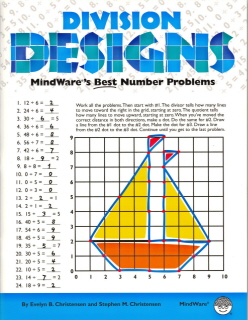
Multiplication Mosaics, my most successful book, has its 12th birthday this year. Some other popular books in that series are Division Designs, Addition Adventures, and Subtraction Secrets. Inchimals is one of my personal favorites. It’s a combination of manipulative rods and a write-on/wipe-off activity book and has won several awards.

5. Can you give our audience some educational writing tips that they might not have heard?

  • Most educational publishers prefer sets of books, as opposed to stand-alone titles. That’s because sets sell better for them. So if you have a manuscript you’re trying to get published, if you can possibly stretch it to be even two books, you’ll increase your chances of acceptance. The same is true if you’re querying an editor about an idea for a book you’d like to write. Unless the book will already be part of a series, frame your query in terms of a set of two or more books, and the response is more likely to be positive.


  • If you’re doing research for a book or article, especially if you already have a contract for it, and your research takes you to a place that has an entrance fee (like a museum or zoo), you can sometimes get free admission. I had experience with this for the first time this summer. The term that’s used is “complimentary media ticket.” Of course, some places will say no, but it doesn’t hurt to ask.

  • Being a success at writing for the educational market will likely involve sending out oodles of queries and resumes. A few writers may get prompt responses and receive enough assignments or acceptances to keep them as busy as they want to be. But many writers may feel like much of their correspondence is going into a black hole. Unless you’ve received an outright rejection, I encourage you not to lose hope. I sent out one query more than six years ago. I didn’t hear a single peep from the publisher and had long since written off that effort as futile. Then one bright day this past December, an email appeared in my inbox. An editor was asking if I were still interested in writing the book in their series I had volunteered for in my query all those years ago! So—keep sending out those letters and don’t give up hope!
Nancy I. Sanders, Ev Christensen, and Tina Cho
  • This last tip comes from my friend Nancy I. Sanders in her book Yes You Can Learn How to Write Children’s Books, Get Them Published, and Build a Successful Writing Career.  She suggests studying publishers’ catalogs to find a series written by a variety of authors. Brainstorm other titles that would fit in the series. Then query the publisher and ask if they would be interested in seeing a formal proposal for any of those titles. Since my book contract from my 6-year-old query was based on that tip, I can attest that it’s a good one.

6. What are you working on now?

I’ve just finished proofing the final copy-edited version of Graph Grapplers, a puzzle book using pictographs, bar graphs, and line graphs, to be published by MindWare next month. I’m also working on a picture book about my beloved Kentucky, which will be published hopefully in the fall of 2016.

7. You also publish the Writing for Children's Magazines ezine. How did that start? And how can writers be a part of that?

Jan Fields used to have a wonderful ezine, Kid Magazine Writer, that was very helpful to me when I first started writing for children’s magazines. When she decided to close down her site and suggested someone fill in the gap, I realized this was another way I could ‘pay it forward’ to the children’s writing community.

You can be a part of W4CM by submitting articles that relate in some way to writing or illustrating for children’s or YA magazines. Even if you haven’t been published, if you have experiences or insights that would be helpful to others, you can write an article. The other kind of article I’m looking for from writers is an overview of a sample magazine issue. All you need to write one of these is a recent issue of a magazine and the time to describe what’s in it. Examples can be seen on theW4CM website. Right now, I’m calling for submissions, so this is a great time to send either kind of article.

Just for fun:

favorite color: yellow
favorite flower:  daisy
favorite food:  fruits and veggies
favorite candy: Turtles (chocolate, caramel, pecans)
favorite subject: math
favorite pet: cats
favorite children's book/author: Dr. Seuss

Thanks so much, Ev, for taking the time to do this interview! Please visit Ev's web site if you're interested in writing for the educational market or children's magazines!


Friday, August 14, 2015

Rx for Your Critique Group ~ by Patricia Toht

Fellow GROGger Kathy Halsey wrote a terrific post Wednesday  about her experience in critique groups. I've also been a member of several groups over the years. Two were formed through the Society of Children's Writers and Illustrators (SCBWI), an international group that brings together writers for children and helps them in their writing journey. Another grew out of membership in a writing class. 

I firmly believe in the value of critique groups. They've helped me improve my writing and have also been an invaluable resource and support network in this crazy business of writing for children. If you are interested in beginning a critique group, or if you are currently a member of one, I've come across a terrific book for you. 


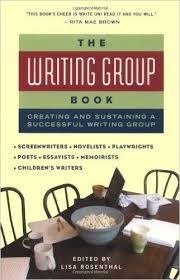
THE WRITING GROUP BOOK: Creating and Sustaining a Successful Writing Group (edited by Lisa Rosenthal, Chicago Review Press, 2003.

This book is a collection of essays from over 30 members of various writing groups, from screenwriters to novelists to kid writers. It's chockablock with information. Topics include: 
Part 1, Starting a Writing Group
Part 2, Organizing and Maintaining a Writing Group
Part 3, Why Writing Groups Flourish or Fizzle
Part 4, Venturing Beyond the Writing Group Setting


When one of my groups was faltering I sent a copy of this book to each member. We discovered a gem in Part 3 -- an essay from Kathy Briccetti, titled "Ten Reasons Why Writing Groups Flounder, Fizzle, or Fail." In Briccetti's words, we recognized three places where our group had derailed.


1) "Members use the group for the wrong reason." A critique group should NOT primarily be a social hour, book club, or therapy session. Of course those things will often be part of your gatherings, and rightly so, but it's important to keep your collective eyes on the main goal -- to improve writing and grow as a writer!

2) "There are varying levels of commitment to writing." Not everyone in our group brings texts to every meeting. But usually they are still providing important feedback to those who have. Yet, if too much time passes with no writing from a particular member, it may be time for that member to take a sabbatical and another member to join. (One of my groups still struggles with this.)

3) "Attendance is sporadic." Life is crazy, I know. But the key to making a critique group work is a firm commitment to attending. Too many delays or cancellations in meeting can be the death of a group.


Photo by David Gallagher

Luckily, we also found a remedy in the book that soon had members writing again and looking forward to meetings. 


We took a cue from an essay in Part 1, "Somehow, the Scenes Still Happen," by E.A. Bagby. Bagby describes writing in the round, having group members contribute lines and scenes to an ongoing piece. 

Our group decided to take this to the max by writing a group novel. One member wrote the opening chapter, and each month another member added the next chapter. What began as a simple wintertime story took a crazy-wicked turn, and a romantic twist popped up, too. As a picture book writer, I was really intimidated about contributing chapters, but I found that things went much more smoothly than expected. What a blast! 

I highly recommend that you buy this book, read it thoroughly, and keep it on hand for future reference. You'll be glad you did. 

Wednesday, August 12, 2015

Critique Mystic: What I've Learned by Kathy Halsey

What are the elements of a good group? How do you find a great critique group? How do you keep a good group going?  In this "Kat Chat," I'll explain what I've learned in the last 2.5 years.

 The Not-So-Good
As a new writer, I joined an eclectic group at my local indie bookstore. I had to drive 45 minutes each way once a month to get advice like "fun," "good title," "main character needs work." This group included those who wrote YA, adult, erotic, flash fiction, short stories, and romance. When I heard that a WIP about my Corgi should be in the shape of a dog, I knew I was driving too far for too little. 
A picture book in the shape of Wiley Corgi? I think not.
What I Learned
1. It can be important to be with those who write in your own genre, especially in the beginner's stage.
2. Input and output should be somewhat equal or at least substantive. My feedback did not equal the drive time.
3. Trust your instinct when it's time to go. I parted amicably with this group as I lucked into an all picture book critique group with a published author.
A MUCH Better Fit
I landed in a group of four other picture book writers who found each other via our SCBWI chapter. Dianne White and I had met at SCBWI event and hit it off. We joined forces with an illustrator/writer, a middle grade/picture book writer, a writer going through a formal program, and one more seasoned writer. We met monthly at the same indie bookstore as my former group and were able to attend SCBWI LA in 2014 and celebrate Dianne's first book, BLUE ON BLUE. Sadly, I had to leave these fab writers behind due to a cross-country move.
Dianne White, Kathy, and Elizabeth Saba, SCBWI LA 2014
The Takeaways Here
1. If one can meet face-to-face with a potential critique partner before joining a group, it is easier to see if you "jive."
2. Join a group with writers with more experience than you. 
3. Join a group with writers who have different experiences, too. Tanja Bauerle, our illustrator/writer, shared so much. She helped us see the illustrator's POV in our discussions.

The In-between
I have usually been in more than one critique group at a time. Some of the online groups fizzled out for various reasons: moves, re-evaluation of writing goals, lack of commitment to a group, or life changes. These groups served their purposes at the time and were valuable to me.
More Knowledge
1. Know that groups may naturally fizzle out or even reconnect in time.
2. Make an effort to stay connected in some way to members whose work you admire or whose critiques improve your craft. Andrea J. Loney, Lee and Low New Voices Winner, Pam Vaughn, and Lindsay Bonilla are still writer friends I can go to with any work in progress. 
3. Don't assume that critique partners will necessarily be friends (It's a bonus if you become friends), or that you did something "wrong" if a group breaks up.
The Present- A Real Present
Through my connections with Kristen Fulton's WOW nonficpic FB group, I met most of my current critique partners. We added members over time, we critique in smaller groups or on a one-to-one basis, and we all came together this year at the WOW Retreat 2015 in Georgia. We have some sort of magic glue that keeps us bound. People were even wondering how they could join our group! (Pam Courtney, Jackie Wellington, Kathleen Birmingham, Stephanie Thompson Box, and now Mona Pease.) This group of "sistas" as I call them are friends and honest, talented partners who help me grow. 
Pam and Kathy, Wow Retreat 2014
Kathleen and Mona, Wow Retreat 2015


The Critique Mystic

1. We all hail from different parts of the country: Mississippi, Atlanta, Ohio, Phoenix, Maine, Florida. This added a very unique regional component.
2. We have established rules and a formula to critique thanks to a super session at WOW Retreat 2015 by Kendra Marcus and Minju Chang. (One nugget: You are a consumer. Get what you need from your critique group.
3. We are dedicated to the goal of finishing each other's manuscripts  so that they are submission-worthy.
4. We bring different skills to the table: plot whisper, fixer of overall problems, lens of a former librarian, and 2 teachers of little ones.
I hope this post helps you see the components good critique groups  and what you can learn from your former groups. I would love to hear your critique group stories or suggestions in the comments.   


Monday, August 10, 2015

Create a Mission Statement ~By Suzy Leopold

The primary reason to create a Writer's Mission Statement is to identify one's purpose for writing, help a writer to stay focused, and to reach attainable goals. 
What is your voice for wanting to write? What is your purpose for needing to write? A clear, concise mission statement gives you a valuable tool for your writing journey.
By examining your desires, a writer is forced to think about goals and to list attainable goals and follow through to achieve them.
Created by my Cousin
Sheri McCulley Seibold
Let's get started.

1. Begin with your thoughts
Think about your hopes and dreams as a writer. Think about a mission statement as a strategy. It needs to serve a purpose for you and your writing. It must not be generic and meaningless.

  • Who are you as a writer?
  • What do you write?
  • Who do you write for?
  • Why do you write?
  • What's important to you personally and professionally?
  • What sparks you as a writer to write?

2. Focus on a goal
Brainstorm what is important to you as a writer. What goal do you want to achieve with your writing? This is an opportunity to define your goals as a writer. What is your purpose for writing? A good mission statement gives clarity and a purpose.

3. List actions
Think about what you can do to accomplish the goal[s] that you set in number two. What can you do to achieve the goals for your writing? Make sure these actions are realistic and attainable. Your statement should inspire action and create an image of you as a writer.


Goal + Action = Writing Success!

4. Time to revise and edit
Yes, just as a writer begins with a sloppy copy that becomes a draft, followed by revisions and more revisions, the same is true for a mission statement. Time to rewrite and rethink about what you wrote. This step is worth it. Time to bring it all together in words that ring true to you.

Mission statements define objectives for a writer and become part of who you are as a writer. Sure, you can edit and adjust as time goes on. A writer should make adjustments as need be after an action fulfills the goal and you have achieved success that you set out to do.

5. Post the Mission Statement 
Consider displaying your mission statement in your writing workspace, on your desk, on your business card, and on your social media profiles. Frame it. Refer to it often.

6. Memorize the Mission Statement
Internalize the reason why you write and the steps you will take to reach your goal.

A well-developed mission statement is a great tool to understand you as a writer. Doing so can be time consuming and soul searching. Writing a mission statement will help you find your way through the journey of writing for your audience. A mission statement will reflect who you are as a writer.


Claim it, Own it, Do it, Live it, Achieve it. 

Joanna Penn states, "Authors are entrepreneurs . . . " and should consider what companies do to achieve goals. She shares a 5-Step Mission Statement on her blog, The Creative Penn.  She states that a mission statement is essential to an author.

If you want to read my Mission Statement, you can read it on my Through the Prairie Garden Gate WordPress.

Don't let another day go by without writing a mission statement. Doing so will help you to stay true to you as a writer.
A sunflower from my garden.
Watch out for the bee!