Showing posts with label Earth Day. Show all posts

Wednesday, April 22, 2026

The Sixth Annual GROG Arthropod Roundtable

hosted by Sue Heavenrich

Welcome to the Sixth Annual Arthropod Roundtable! Grab your cuppa, pull up a chair, and please help me welcome our guests. 

Laura Gehl is a former science teacher and scientist who is now a full-time children’s book author. So it almost makes sense that most of her books center around science and nature themes. Her newest board book is Odd Bugs , the third in a series that includes Odd Beasts and Odd Birds

“When I was doing research for Odd Beasts, I came across a lot of fascinating bugs and couldn’t wait to give them their own book,” says Laura.

Melissa Stewart is a science writer, children’s book author, and avid nature lover. Her new picture book is Monarch and Mourning Cloak: A Butterfly Journal. While visiting schools to take about her earlier butterfly book, A Place for Butterflies (published in 2006) she noticed that many students raise monarchs. She also noticed that they thought all butterfly species have similar lives and habitats. 

“Butterflies are an incredibly diverse group of insects,” Melissa points out. “So, in 2008 I began writing a book called Two Butterflies, Two Lives to help kids understand the variety of foods butterflies eat, the different habitats they call home, and the many ways they survive winter weather.” Over the years, that book evolved into Monarch and Mourning Cloak!

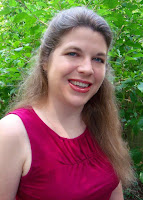
Karen Jameson is a retired elementary school teacher and author of lyrical, rhyming picture books. Insects have found their way into several of her books (including the beetles and dragonflies in It's Time to Shine). There’s even more bugs in her newest book, Who Nests Here?

“Insects have such unique ways of nesting,” says Karen. “I spotlight gall wasps, mole crabs, scorpions, and devil crayfish in my new book. And who wouldn’t thrill to see a termitarium – a giant termite nest?!

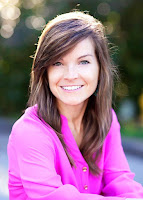
Katherine Hocker is a science illustrator, naturalist, and educator with an inordinate fondness for aquatic insects. Her new book, When You See Us, takes us on a field trip into the mysterious and fascinating world of aquatic insects. 

"They are some of the most watchable wildlife I know,” says Katherine. “They live pretty much everywhere on Earth, and are easy to find and observe. When you consider that they live double lives as some of our most familiar winged insects, such as dragonflies and mosquitoes, everyone should know about them!”

Jenni Walsh writes novels for kids and adults. She confesses that she didn’t know how cool bugs were until she was researching their defense mechanisms for her middle-grade tale of mystery and thievery, The Bug Bandits. 

“My book is inspired by a real heist that occurred at the Philadelphia Insectarium," says Jenni. "Over $40,000 worth of rare insects were stolen – and I found this utterly fascinating. In the book, we call it a buglery.”

I’m joining in this year because 13 Ways to Eat a Fly is celebrating its fifth birthday! Before writing books for kids, I taught science and also worked as a newspaper reporter. One afternoon I was covering the opening of a nature preserve. People were standing because there were “small bees” perching on the sun-warmed metal chairs. Those “bees” were actually flower flies – awesome little pollinators! That’s when I realized that too many folks have no idea about the diversity of flies buzzing around them. 

Initially I wrote 13 Ways to Eat a Fly as a backyard field guide. Bo-oring! It took a few years (and many revisions) before I came to the idea of making it a backwards counting book. You know: starting with a bunch of flies that disappear one by one as each hungry critter (or plant) grabs a snack. I added a brain-eating fungus, because who can resist zombies! I got to wondering... 

... why did other folks chose the format they did?

Melissa Stewart
Melissa: Because butterflies are so beautiful and graceful, I thought free-verse poetry would be the best way to share information. Initially, I wrote a series of poems in two voices, but the first-person point of view wasn’t working. Over the years, I continued to revise, writing draft after draft and receiving rejection after rejection. The book’s design pays homage to this process by showing each poem atop a stack of papers. Finally, in 2023, I decided that perhaps the book needed an additional conceptual layer that tied into the art and design. So I sent the manuscript to my friend, illustrator, and past collaborator Sarah S. Brannen. I let her know what I was thinking and invited her to go on a hike to brainstorm. A few hours later, we had a vision for what the book could be—a nature journal bursting with art, poems, and informational notes.

Jenni: I wrote The Bug Bandits for my 10-year-old so middle grade was the perfect age group for him. He’s a reluctant reader but I’m pleased to say he couldn’t resist a heist book that is Night at the Museum meets Home Alone.

Laura Gehl
Laura: I love writing board books because they can serve as a child’s first introduction to a topic—in this case, really weird and amazing bugs!

Karen: Lyrical, rhyming picture books are my jam. It feels natural to write this way in the main text - a style which is brief and accessible to younger readers. Science concepts in the back matter are written in prose for those who wish to explore the topic in more depth.

Katherine: I wanted the story to be told in the voices of the insects themselves—a kind of song they sing to reveal their secrets. That called for a more lyrical approach.

Me: As a kid, I was fascinated by ants. They lived in sidewalk cracks and in our garden, often working together to carry bits of dead beetles to their homes. Plus they have queens! Being a fairy tale-reading second-grader, how could I resist? I wondered ...

... what was the gateway arthropod for other authors?

Katherine Hocker
Katherine: Caddisflies! I remember discovering them as a child—these tiny crawling underwater beasties that built themselves homes out of grains of sand or tiny twigs. We used to call them “stick bugs.” It was many years before I learned that they have a winged adult form.

Laura: I read about a poop-shooting caterpillar when I was in grad school, and one of my first-ever published pieces of writing was about that caterpillar. I’ve been hooked on bugs ever since!

Karen: I am obsessed with dragonflies! Not only are they beautiful, but they’re symbolic of joy, good omens, and transformation.

Melissa: I’ve been a lover of all creatures big and small since childhood. I was fortunate that my parents owned 10 acres of woods, and we had a national forest across the street from our house. My brother and I spent most of our time outdoors—immersed in the natural world. Some of my long-time favorite insects include walking sticks, lightning bugs, and of course, butterflies.

Jenni Walsh
Jenni: I’ve always loved butterflies. When we visited the insectarium the book is based on, my family and I loved walking through the butterfly pavilion. We also hatched them at home and had a release party. It inspired my main character, Liberty, to have a butterfly releasing business in The Bug Bandits!

Me: Today is Earth Day. What can we – and the kids we write for – do to help make our backyards and neighborhoods better places for bugs?

Jenni: There are certain native plants that encourage bug-life, such as butterflies. I encourage everyone to find out what plants/flowers are bug friendly for your area!

Karen Jameson
Karen: I include a Nesting Site Conservation section in the back matter of Who Nests Here? Here’s a few tips: 1) Pick up trash and keep waterways clean. 2) Leave rocks, shells, pine cones and other natural elements where they are, as they may be someone’s home. 3) Don’t poke sticks into nests or move them to another site.

Laura: This is pretty easy for me, because my husband and I don’t have the time or energy to keep our back yard neat or tidy! Having a messy yard with leaf litter, brush/wood piles, clover and dandelions, and sections of longer grass is great for bugs!

Katherine: Aquatic insects need water to survive. Many, such as caddisflies, stoneflies, and mayflies, need water that’s very clean and cold. We can help them thrive by protecting our ponds, lakes, streams, and rivers.

Melissa: Grow native plants is the most obvious answer. But Earth, our precious planet, is one big interconnected system. Anything we can do to lessen pollution and climate change, and to preserve natural areas is going to help every living thing—including us.

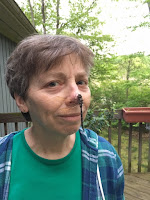
your host, Sue Heavenrich
looking for spiders
Me: To these great suggestions I’ll add that using natural mulches, such as dried leaves, grass, and straw creates the perfect habitat for spiders. Also, my lazy gardening provides other benefits. All those dried, hollow flower stems that I never remove turn out to be great homes for native bees. 

We could talk bugs all day long… but I’m out of coffee. Check out our author websites, drop by our blogs, and remember to head outside and watch some bugs!

Katherine Hocker at  https://katherinehocker.art/
Melissa Stewart at   https://melissa-stewart.com/

Wednesday, April 20, 2022

The Second Annual GROG Arthropod Roundtable

Hosted by Sue Heavenrich

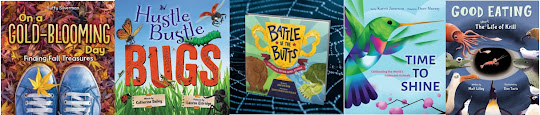
Last year I hosted the First Ever GROG Roundtable on Arthropods where we chatted about insects and spiders. This year I’ve got a whole new crew of authors to share their arthropod musings: Matt Lilley , whose book Good Eating: The Short Life of Krill hit the shelves in January; Catherine Bailey, whose book Hustle Bustle Bugs was released at the end of February; Karen Jameson, whose book Time to Shine: Celebrating the World’s Iridescent Animals will celebrate its birthday next month; Buffy Silverman, whose book On a Gold-Blooming Day: Finding Fall Treasures comes out at the end of summer; and Jocelyn Rish, whose book Battle of the Brains: The Science of Animal Minds comes out in November and is a companion to Battle of the Butts: The Science Behind Animal Behinds which came out in late fall of 2021.


me: After studying the sex life of cockroaches, I turned to teaching high school science. Now, I observe insects and count pollinators for the Great Sunflower citizen science project. What about the rest of you?

Matt 
Matt: I have an MS in scientific and technical communication and I write nonfiction books for kids. In my writing, I try to teach kids about science and share my love of the natural world.

Catherine: I’m a former research attorney who used to work in forensic science for a grant program. My favorite subjects back then were forensic anthropology and forensic entomology. Now I split my time between raising a family and writing picture books for kids.

Karen: I’m a retired elementary school teacher, now a picture book writer. I love exploring animal and nature themes in my books. These days you’ll find me discovering bugs and creepy crawly critters alongside my curious grandchildren.

Buffy
Buffy: For many years I taught biology and environmental education to students of all ages. Now I focus on writing about the natural world and speaking to kids about writing nonfiction and poetry.

Jocelyn: I have to admit, I was never a fan of the creepy-crawlies. But I am a fan of cool facts, and as I researched animal butts I discovered that arthropods have some fantastically fascinating fannies! 

me: What made you want to include arthropods in your book? 

Karen: The word “iridescent” came up in a movie, and it stopped me cold. Initial research turned up some super surprising ways that iridescent animals use their shine to thrive and survive in nature. After seeing some videos of jumping spiders shaking their sparkles during courtship dances, I was hooked! I can’t wait for readers to meet these incredible spiders and other amazing arthropods in Time to Shine.

Buffy: On a Gold-Blooming Day explores seasonal changes in nature. I have been fascinated with insects since I was a kid, so it would be impossible to ignore insects and spiders we might see walking in the woods, by a pond, or through a field! When autumn begins, we might see crab spiders hiding on goldenrod flowers. These spiders don't spin a web. Instead they pounce on insects searching for nectar and pollen. Crab spiders can change color to match the flower or leaf where they hide.

Jocelyn
Jocelyn: For Battle Of The Brains, I wanted to make sure I featured brainy animals other than mammals. Then I learned about the Portia jumping spider, and she immediately became my favorite animal genius. Her brain is only about the size of a poppy seed, yet she has so many tricks and techniques for hunting for food. I don’t want to spoil her section of the book, but the things she does are truly mind blowing.

Matt: Good Eating is all about the important role that krill play in the Southern Ocean food web. When I first learned about how important krill are to their ecosystem, I thought I might like to write about them. After doing just a little research, I discovered how strange and fascinating they are. That’s when I knew I had to write about them.

Catherine: I have always had a very deep-seated fear of spiders, probably dating back to a childhood trailer trip to Arizona during tarantula mating season. (It’s a thing! And it’s terrifying!). However, I’m raising a daughter who adores bugs – even spiders. I think every piece of Tupperware I own has, at one time or another, housed a creepy crawly critter. I also live in perhaps the “buggiest” state of all – Florida. So, it made sense to write a nonfiction picture book about insects.

me: As Earth Day approaches, what can we do to become more aware of arthropods – and to make Earth a better place for them? 

Catherine
Catherine: Once I decided to write about bugs, I did a ton of research on their behaviors. I was struck by how each insect had an important role to play in its environment – for example, dung beetles roll and bury balls of poop which feed the soil. My book discusses these “jobs” and encourages kids to be still and observe insects at work. This Earth Day, head out to your backyard and set a timer for five minutes for some intentional observation. Bring a pad and pen and write down what bugs you see, and what they’re doing. 

Jocelyn: A few years ago, my brother started keeping bees, and he shared all kinds of amazing facts about them. Bees are extremely impressive, and I enjoy putting on the bee suit to watch their hive in action. While providing honey is a tasty bonus, their role in pollinating and keeping our food supply going is vital. Kids can help bees by planting native flowers that bees love, and that bloom at different times of the year. They can also put out shallow dishes of water with rocks in them that bees can stand on to drink.

Karen: Arthropods have been around for millions of years, and beetles makes up 40% of all the insects on Earth! How crazy is that? It’s incredible to learn that one in every four animals is a type of beetle. They remain a vital part of ecosystems and are found in nearly every habitat. On Earth Day kids can take some time to create environments that invite and sustain local bug populations by planting native flowers and plants.

Karen
Matt: Krill eat the one-celled organisms at the very base of the food web. Despite their small size, krill swarms are so massive that they can be seen from space. Krill are very good at eating and growing, and turning themselves into food for other animals. Many fish, sea birds, penguins, seals, and whales depend on them for food. We can help the Earth by eating more like krill, by eating more plants and less meat. If we eat green plants like a krill eats phytoplankton, we can help conserve natural resources.

Buffy: About twenty years ago, we stopped mowing our backyard. Over the years it has become a field where native plants grow and bloom. The wildflowers attract all kinds of insects that in turn pollinate flowers and provide food for birds and other animals. Is there a corner of your yard that you can save from the lawnmower? You will enjoy seeing the plants that grow and the insects and spiders that you find.

me: I am a big fan of not mowing the lawn! Let’s talk about how you bring your passion to writing nonfiction for children?

Buffy: One of the wonderful things about insects is that you can watch them wherever you live. The more I observe and learn about insects, the more fascinated I become with them.  I spend many hours watching and photographing insects near my house, and it's that fascination that leads me to write about them.

Matt: I try to stay on the lookout for fresh topics that will interest kids in science. I hope that increased awareness and knowledge will also encourage people toward conservation. For instance, if someone reads my books and learns about how cool krill are, then they will also want to protect krill from things like climate change and overfishing.

Catherine: I definitely appreciate bugs a lot more, now that I know how hard they work. I’ve always said, “I’m a worker bee, not a queen bee.” To me, this means I enjoy completing projects and accomplishing goals. I love that even small jobs can have a big impact – which is true for people and bugs. I figured a great way to share this with kids was to present the information in accessible, bouncy rhyme. 

Karen: My youngest son was obsessed with bugs as a child! For years, we never left home without our bug hunting kit, complete with jar, net, and magnifying glass.  His fascination with the subject drew us all in and found its way into the hands-on science lessons I created for my students. As a children’s author, I’ve carried that passion into my books.

Jocelyn: I love learning new facts about animals, especially the kind that make me go, “Wha?!?” or “No way!” or “That’s so freakin’ cool!” And I want to bring that same sense of discovery and wonder to kids. Our world is full of things so different from us that they seem alien, and it’s a privilege (and a total blast) to share these nuggets with kids to help expand their universe.

We could talk arthropods all afternoon… but I’m out of coffee. Check out our author websites, drop by our blogs, and remember to head outside and watch some insects, spiders, crustaceans, and their arthropod kin.

Find out more about Matt Lilley at www.mattlilley.ink
Hustle over to Catherine Bailey’s website at catherinebaileybooks.com
Visit Karen Jameson at karenljameson.com
You can find Buffy Silverman at  https://buffysilverman.com
Jocelyn Rish celebrates animals of all kinds at www.jocelynrish.com
I hang my bug net over at www.sueheavenrich.com
 

Wednesday, April 21, 2021

Books for Earth Day and Poetry Month ~by Christy Mihaly


Today let's explore poems about Earth! Tomorrow (April 22) is Earth Day . . . and of course . . .  

April is National Poetry Month. 

SO: Here's a quick round-up of ten Earth-themed books for kids. Of the many books out there I chose 5 outstanding poetry books and 5 favorite rhyming picture books. Please add your own in the comments! 

Nature-Themed Poetry Books

Poetry is an ideal way to encourage kids to explore nature: reading and writing poems makes us slow down, observe, and ponder the wonder and the connections.

The Wisdom of Trees: How Trees Work Together to Form a Natural Kingdom
(Roaring Brook, 2021).
This new picture book is written and illustrated by Lita Judge. It illuminates cutting edge science about how trees communicate and collaborate in communities. Judge uses heartfelt, evocative poems to convey the magical-seeming properties of trees. Gorgeous art complements the scientific sidebars and helpful back matter about each spread.

A Place to Start a Family: Poems about Creatures That Build (Charlesbridge, 2019).
David Harrison's dozen poems about animal architects, illustrated by Giles Laroche, provide a fun introduction to structures that animals build, from birds to fish, prairie dogs to king cobras and more. 

Sing a Song of Seasons: A Nature Poem for Each Day of the Year (Nosy Crow, 2018) is a gorgeous 366-poem anthology edited by Fiona Waters and illustrated by Frann Preston-Gannon. Though the selected poets tend toward the classical (Emily Bronte, Margaret Wise Brown, William Wordsworth, Robert Frost) with a smattering of traditional verses, it's a nice introduction for kids.

National Geographic Book of Nature Poetry: More than 200 poems with photographs that float, zoom, and bloom! (Nat Geo Kids, 2015). Whew, that title just about says it all. This book will engage young readers who love photos. It's filled with stunning Nat Geo images from around the world, paired with poems old and new. The poets here include Nikki Grimes, Langston Hughes, and Naomi Shihab Nye, and are collected by J. Patrick Lewis, a former children's poet laureate. 

Song of the Water Boatman and other Pond Poems
(HMH 2005) offers wonderful kid-friendly poems about the creatures and plants that live in and around a pond. Joyce Sidman starts with my favorites -- spring peepers, those tiny heralds of spring --  and moves through the seasons with poems and informational sidebars. Striking woodcuts by Beckie Prange bring the pond ecosystem to life.

Rhyming Picture Books about Earth

Chase the Moon, Tiny Turtle: A Hatchling's Daring Race to the Sea (Page Street Kids, 2021). In rhyming verse, Kelly Jordan captures the drama of a loggerhead turtle's post-hatching sprint across the sand to the safety of the ocean. The lyrical text and Sally Walker's engaging illustrations are sure to delight young readers as they learn about sea turtles and their struggle to survive.

Ocean Soup: A Recipe for You, Me, and a Cleaner Sea
(Sleeping Bear, 2021). Meeg Pincus's clever rhymes explain plastic pollution in the ocean, using the metaphor of soup -- how we threw all the ingredients in and let it simmer for years -- and includes specific actions kids can take to help. Bright illustrations by Lucy Semple keep the tone upbeat. 
 
Anywhere Farm (Candlewick, 2020) by Phyllis Root, illustrated by Brian Karas, stands out for its inclusivity. It encourages kids by letting them know you can start a garden on a city vacant lot ... or really anywhere: 
"But a pan or a bucket,
a pot or a shoe, 
a bin or a tin 
or a window will do." Empowering and inspiring.

One Earth
(WorthyKids, 2020) is a rhyming counting book that does it all! In addition to teaching the numbers, text by Eileen Spinelli and art by Rogerio Coelho share the wonder of Earth, and may inspire kids to want to take care of it.

Compost Stew: Recipe for the Earth (Dragonfly Books, 2014) puts a different spin on the "ocean soup" concept. It's a zippy rhymer that explains compost to kids. With clever rhyming verse by Mary McKenna Siddals and fun pictures by Ashley Wolff, this book is a great way to get kids excited about composting. 

Bottom line: Nature inspires great writing! This post just scratches the surface -- what other great books do you recommend?