Showing posts with label Mentor Texts. Show all posts

Wednesday, September 27, 2023

Introducing THE PALACE RAT, and author Lynne Marie ~ Christy Mihaly


I'm pleased to welcome author and picture book booster Lynne Marie to chat with GROG. She's celebrating the release of The Palace Rat, illustrated by Eva Santana, and she offered to share some insider's insights. (Also, check out the adorable book trailer at the end of this post.)

You may already know Lynne Marie's work. She has several prior books (listed below) and is the owner/director of the RATE YOUR STORY critiquing and mentoring service,  as well as the organizer of March on With Mentor Texts, among her other activities. 

But let's get to our interview!
Q: Welcome, Lynne Marie! Your latest book is about a rat in the palace of Versailles. How did you ever come up with this idea?

Lynne Marie: The inspiration came on a family trip to France in 1997. We took an excursion to Versailles. As we waited for the tour guide to pass out the tickets, a rat scurried across the courtyard. That inspired a game of "what if?" in my mind. What if that rat was related to the rats of the French Revolution? What if the (long-ago relative) rat was the pampered pet of King Louis XIV? What if others in the Palace were jealous of the King’s attention for the rat? What would they do to get rid of it? How would the rat react? The wheels started turning and never stopped. 

Q: Wow! And the result was a great fairy-tale-like story. Nicely done. The Palace Rat is published by Yeehoo Press. I know they publish in China, too. How have they been to work with?

Lynne Marie: The Palace Rat is my first book published with Yeehoo Press. I am excited that it will also be published in China! The people I worked with were very accommodating and very communicative. It has been a pleasure working with them. 

Q: You’ve published other picture books based on fairy tales or folk tales. What's the secret to making those work? 

Lynne Marie: When writing a folktale, it is important to find a way that today's children can relate to the retold tale. In the case of THE PALACE RAT, my thought was to support the message to bloom where you are planted (as many children don’t have control over where they go or who they go with, both in divorces and foster care, etc.), and doing what you love to do best (this helps with coping and discovery). I hope that my story will inspire little ones, no matter the situation, to bloom where they are planted and to make the best of their strengths. 

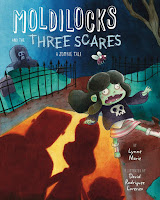
 In MOLDILOCKS AND THE THREE SCARES it is more about following your heart and being open to the fact that someday, when you least expect it, you will find your “place.” 
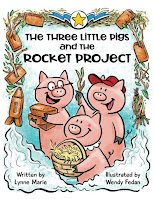
THE THREE LITTLE PIGS AND THE ROCKET PROJECT supports that sometimes the losers can be winners. It just matters that you use what you have to play the right game.

Q: Excellent points! You often discuss the importance of mentor texts. Did you have any particular texts in mind as you wrote this? 

Lynne Marie:  For this story, I used a variety of Mentor Texts, including picture books that featured rat characters, were set in France, or were about moving. I also looked at retellings of City Mouse/Country Mouse and The Prince and the Pauper
I wanted to make sure that my story was new and different, a fresh retelling, and could stand out among and above the rest. I also really wanted to introduce this historic period to readers, to plant a seed and grow a history lover. 

Q:  Much of what you do is supporting other picture book creators. Tell us what motivates you and what you like best about that. 

Lynne Marie: I was really fortunate to realize my dream of becoming a multi-published picture book author and it makes me feel like a fairy godmother to help others to achieve their dreams. I have worked as an editor for a few small presses and run a mentoring and critique service at www.thepicturebookmechanic.com

And, I am currently an Agent Mentee with the Seymour Agency and am on my way to becoming an Agent. I am very excited about this as it makes me an official Fairy Godmother. 😊 My own literary agent, Marisa Cleveland of the Seymour Agency, is my Agent Mentor. I adore her and think she is the best of the best – so enthusiastic and supportive.

Q: You and I first crossed paths when you took over the administration of Rate Your Story. What made you decide to take that on? 

Lynne Marie: I was already a big fan of the Rate Your Story Rating and Feedback Service (www.rateyourstory.org). I actually didn’t want to become a Judge as I would no longer be eligible to be a Member. But Sophia Gholz, the owner at the time, finally convinced me that I should. Then after I'd been a judge for several years, Sophia was ready to hand over the torch and convinced me that I was just the person to take it. I love Rate Your Story and being an important part of many writer’s journeys so I am grateful she did! 

Q: And in addition to your writing life, you’re a travel agent, too! What’s your favorite part of that job? 

Lynne Marie: Yes! I am a Travel Agent with Pixie Vacations (www.pixievacations.com/lynne) and I love that job. As mentioned, my travel inspired THE PALACE RAT so you can see that I am passionate about wearing both of these hats. I find travel and history very inspiring and often try to weave what I learn about the world through travel into my stories. I also love reading and collecting world folktales.
Lynne Marie

Q: Okay, now our readers want to know: How do you have time to do it all? What’s your secret? 

Lynne Marie: I love everything I do and it feeds each other. I think that the fact that all the things I do are related and feed each other, it really helps! So no matter what I am working on (writing, reading, travelling, mentoring, giving feedback, etc.), I am learning and growing and creating. 

Thanks for taking the time to chat, Lynne Marie. And good luck with all you're doing!

Thank you, dear Christy, for having me on the GROG blog. I am very happy to have you as a Judge at Rate Your Story and to be on this wonderful path together! 

Aaand, here's that trailer: 


More about Lynne Marie: She is co-host of #SeasonsofKidLit along with Heather Macht. And she is a long-time Cybils judge and feature columnist at Children's Book Insider. When she’s not traveling the world in search of story ideas, she lives in the heart of Florida with her family, a Schipperke named Anakin and a Mini Pinscher named Marlowe Charlotte. Visit her at 
 www.LiterallyLynneMarie.com. LynneMarie is represented by Marisa Cleveland and Jonathan Rosen ofwww.theseymouragency.com.

Here are Lynne Marie's earlier (and forthcoming) titles: 

Hedgehog Goes to Kindergarten -- art by Anne Kennedy (Scholastic 2011)
Hedgehog's 100th Day of School -- art by Lorna Hussey (Scholastic 2017)
The Star of the Christmas Play -- art by Lorna Hussey (Beaming Books 2018)
Moldilocks and the 3 Scares -- art by David Rodriguez Lorenzo (Sterling / Scholastic 2019)
Let’s Eat! Mealtime Around the World -- art by Parwinder Singh (Beaming Books 2019)
The Three Little Pigs and the Rocket Project and The Three Little Pigs and the Rocket Project Coloring Book -- art by Wendy Fedan (Mac and Cheese Press 2022)
The Palace Rat -- art by Eva Santana (Yeehoo Press 2023)
forthcoming: 
Broommates co-written with Brenda Reeves Sturgis – art by Nico Ecenarro (The Little Press 2024)

And if you're looking for Lynne Marie, here are some of the places she hangs out:

Wednesday, December 14, 2022

A Slippery Slope of Sledding Stories

 by Sue Heavenrich

One year during StoryStorm (aka: slap-story-ideas-down-on-the-page-as-fast-as-you-can month) I came up with what I thought was the perfect sledding story. It involved a red sled, a big hill, and a bunch of assorted animals. I scribbled and sketched and was pretty impressed with my Wonderful Cool Sledding Story …

…until I did what I should have done back at the beginning: check to see what other sledding stories were out there. Turns out there are a lot. Tons, in fact. When I typed “sled” into the World Cat search bar (World Catalog, for the proper folk), I got thousands of sled books. So I added some filters: print books, in English, written for kids. That narrowed it to 1,985 titles – still too many to look at. I wondered what had been published over the past five years – yes! there is an option for that (in case you are ever looking for comp titles!) – and got the list down to 392 titles. Granted, some of those were about sled dogs, and a whole bunch had nothing to do with sledding down a hill. But one thing was clear:

there’s more than one way to tell a sledding story!

Part of me was thinking: wow! is there anything unsaid? Another part was thinking: yay! editors are open to different approaches to a winter story about sliding down a slope. 


Lots of books feature friends heading to a slope for some fun. Or in some cases, friendly competition. In Peep and Ducky, the friendly sled outing turns into a race which results in a crash and two very unhappy - not to mention cold and wet - friends. Mr. Putter & Tabby is a series of easy readers, each with a handful of short chapters. Mr. Putter and Tabby share a comfortable life and are usually not adventurous. But all that snow looks so fun, so they borrow a sled and head to the top of the local hill. After a cold, eventful slide, they realize that one run is plenty, and retire to a cozy chair and some warm treats.

Some books feature adventures with animals. Even then, there are many ways to approach the story. Red Sled poses the question: What happens when you leave your sled outside at night? In this case a bear borrows it to slide down a hill. Then other animals want to join… Go, sled! Go! follows a similar story, but includes  a snowman and a baker (with cakes!). In both of those, the number of riders increases from one page to the next. Ten on a Sled goes the other direction. Caribou is off for a run with his friends, but the sled is too crowded. So he says “move over”… and just like the song, one slides off and there are nine on the sled.


Maybe you have a story about wanting a sled. That's the core of A Sled for Gabo. Gabo watches other kids sliding down the hill. He wants to join them but doesn’t have warm boots (bread bags over his socks will work). More importantly, he doesn't have a sled… until a neighbor comes up with an idea. Penny and Her Sled takes a different approach. Penny has a sled. What she doesn't have is snow. But she finds a way to play on her sled anyway.


Some stories are set in time and place. When you open the covers of The Iciest, Diciest, Scariest Sled Ride Ever! it's clear you're in New England. New Hampshire, to be exact. And like any kids who've grown up hearing tales about sledding down Mountain Road, these kids decide it's their turn.  Sleds on Boston Common presents a slice of life from the American Revolution. When Henry wakes up on his ninth birthday, the snow is perfect for sledding. But British soldiers have put their tents and cook fires right in the middle of the sled runs. What's a kid to do? True or not, it's based on the local lore of Boston.

So this winter, if you're tempted to write a story about sledding, take a few minutes to think about what sort of story you want to tell. Check out the books in your library and then, after researching World Catalog, do a little bit of hands-on research: grab a sled and head to the nearest snowy slope. After all, you might have an adventure to share.

Wednesday, September 21, 2022

Mentor Texts for a Changing Season

 by Sue Heavenrich

Fall officially begins on Thursday, September 22. In reality, fall begins much earlier. The tomatoes and peppers in my garden know fall is coming. The birds and woolly bear caterpillars can tell, weeks before the official beginning of autumn. So when I began searching for mentor texts about fall, I looked for books that captured not just the season, but also that in-between-ness. 

I lucked out when Buffy Silverman’s newest book landed on my desk for a book review. Having seen the jacket image months ago, I was eager to read it.

On a Gold-Blooming Day: Finding Fall Treasures, by Buffy Silverman (Millbrook Press, 2022)

On a gold-blooming, bee-zooming, sun-dazzling day…
Snakes glide. 
Spiders hide. 
Crickets chirp. 
Butterflies slurp.

Buffy’s lyrical language that just reels you into the changing season! She fills the page with verbs and color and sensory detail, all rolled into one luscious leaf pile just waiting for you to jump on. Then there are the large, bold photos and, of course, excellent back matter. 

“So Buffy,” I asked, “do you use mentor texts?”

“Of course I do,” Buffy responded. “I am a believer in regular trips to the library to check out stacks of picture books.  Reading helps put me in the mindset to write, even if the books are not related to the topic that I'm focused on.”

Me: What were some of the mentor texts you looked at?

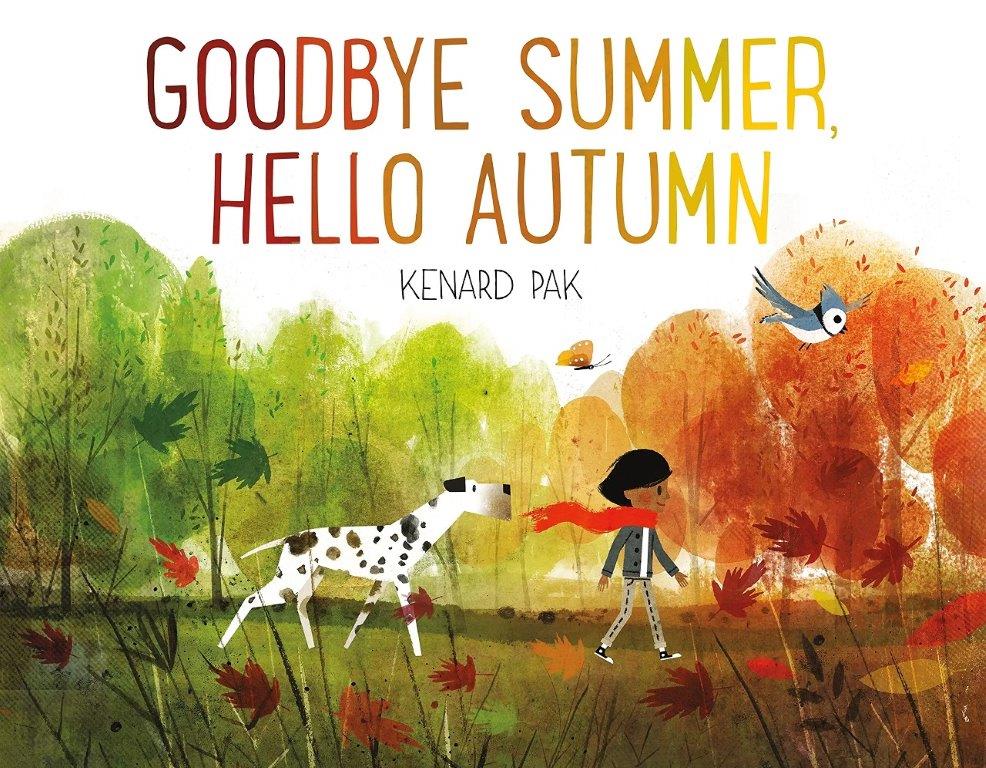
Buffy: Some of the books that I remember reading when drafting On a Gold-Blooming Day include Douglas Florian's Autumnblings, Kenard Pak's Goodbye Summer, Hello Autumn; April Pulley Sayre's Full of Fall; Lola Schaefer's Because of an Acorn; and Loretta Holland's Fall Leaves

I wrote the first draft of On a Gold-Blooming Day during my critique group's annual retreat. We couldn't spend time together during the summer of 2020, so we met on zoom for a few days. Each night we shared what we wrote during the day. Like many people, I had trouble finding motivation to write during the height of covid shutdowns. But peer-pressure is good motivation and inspiration.

Since I was writing a follow-up to On a Snow-Melting Day, I followed the pattern of that book. Writing the second book felt a bit like plagiarism--but I guess you can't plagiarize yourself! Many of the plants and animals featured in both books are ones that live near my house and that I observe and attempt to photograph. I live near a lake, woods, and field, so I included all three habitats. 

Me: How did you collect such a wonderful assortment of words? I imagine you collecting words like I collect leaves, but where I press leaves between the pages of old encyclopedias, you probably stick post-its of verbs to the wall.

Buffy: I tend to do a lot of playing with word options as I write. For example, on my first draft I wrote: 

On a leaf-chomping,
Romping, stomping, clomping, swamping, whomping
On a breeze-blowing/slowing/showing/crowing  
wind-whistling, leaf-shaking/trembling  
Tossing

And then landed on:
On a nut-crunching, leaf-lunching, hole-digging day...

It's possible that some of the words from mentor texts ended up in On a Gold-Blooming Day. They were certainly floating around in my head!  

What’s really cool is that some of Buffy’s mentor texts were the same ones I’d dug up from the library stacks. 

Summer Green to Autumn Gold: Uncovering Leaves’ Hidden Colors, by Mia Posada (Millbrook Press, 2019).

This book celebrates the colors of fall, and introduces the science behind leaf color. I love Mia’s artwork – here she combines watercolor and collage – and I love her use of language. Take this sentence: From emerald to jade and every shade in between, summer leaves fill the world with green. 

Read it out loud, slowly enough to enjoy the internal rhymes (assonance) of jade and shade and between and green. 

She does a good job explaining leaf pigments, how leaves separate from their twigs, and what happens to them once they fall. Then there is the back matter to consider: why deciduous trees lose their leaves, the various pigments in nature, and some hands-on activities.

Full of Fall, by April Pulley Sayre (Beach Lane Books, 2017)

Big photos, lyrical language. What’s not to love about an April Pulley Sayre book? Especially when the back matter explains each of the spreads in greater detail. Notes about chlorophyll and other pigments. A focus on midribs and leaf margins.

Goodbye Summer, Hello Autumn, by Kenard Pak (Henry Holt, 2016)
What’s fun about this book is that it’s a conversation between a girl and the trees (and flowers and creatures) she meets as summer turns to fall. 
Hello, trees, she says as she heads off on a walk. And the trees answer: Hello! Now that the cool winds have come, we love how our branches sway in the sun. 
Note to self: Be Playful!


Autumnblings, Poems and Paintings, by Douglas Florian (Greenwillow Books, 2003)
Normally, I seek mentor texts published within the last 5 years, but I have a soft spot for Florian’s books. They are just plain fun to read. Plus, poetry does not go out of date no matter how long a book’s been sitting on the shelf. Because I love to write lists, I was happy to see some list poems ~ couplets about “What I love about autumn”: apple picking, frisbee flicking…

If you’re seeking fall mentor texts, these are good ones to start with. Depending on what you write, your list of autumnal mentor texts may look different. Fortunately, there are bushel baskets full of books about fall and leaves and pumpkins…

And if you want to know more about mentor texts, here’s a link to earlier posts on GROG.

Wednesday, July 6, 2022

Summertime Reading List

By Suzy Leopold

Take a break from the summer heat and discover seven books to add to your summertime reading list.

Someday Is Today 22 Simple, Actionable Ways to Propel Your Creative Life

Written by Matthew Dicks

New World Library, 2022

Stop dreaming. Stop procrastinating. Stop hoping for someday. 

Creative individuals will find this book thought-provoking. 

Simple, practical strategies are shared to help make your dreams come true. Inspiring and amusing, the author shares a plan of action. 

“Someday Is Today will give you every tool to get started and finish that _______ (fill in the blank). 

What are you waiting for? Start today to realize your creative dreams.


Born Hungry Julia Child Becomes “the French Chef”

Written by Alex Prud’homme

Illustrated by Saran Green

Calkins Creek, 2022

Julia Child’s grandnephew is the author of this biography picture book. One of America’s most celebrated chefs, Julia believed every meal should be special and encouraged everyone to enjoy their meal. 

She made cooking fun.  

The back matter includes an author’s note, books Julia wrote, TV shows she starred in, and a recipe for Oeufs Brouillés-Scrambled Eggs. 

Bon appétit”


The Gardener of Alcatraz: A True Story

Written by Emma Bland Smith

Illustrated by Jenn Ely

Charlesbridge, 2022

The opening lines are sure to make the reader want to turn the page: “The boat chugged out of San Francisco and into the bay. Sound nice? It wasn’t. This was no pleasure outing, let me tell you. Gulls squawked. A foghorn moaned. And Elliott Michener, prisoner #AZ-578, stared into the fierce wind. Ahead loomed an island topped with a concrete fortress, watchtowers, and barbed wire.

The back matter includes a timeline, additional facts and information, an author’s note, and a selected bibliography.


The Woman Who Split the Atom: A True Story

Written by Marissa Moss

Abrams Books for Young Readers, 2022

Lise Meitner was born in 1878 in Austria. In 1906 Meitner earned a Ph.D. in physics from the University of Vienna. 

This forty-chapter middle-grade book shares the many challenges Meitner encountered during her lifetime. She experienced discrimination and racism. She was stripped of her position as a professor and her citizenship--all rights under the Nuremberg Laws enacted against Jews. 

The award-winning book includes graphic drawings by the author, Marissa Moss. The well-researched novel shares a timeline, a glossary, profiles of scientists, and more.  

All from a Walnut

Written by Ammi-Joan Paquette

Illustrated by Felicita Sala

Abrams Books for Young Readers, 2022

The opening line is sure to entice the reader with curiosity: “One chilly morning when Emilia woke, there was a nut on her nightstand.” 

Turn the page to read a tender story that Grandpa shares with Emilia. The story behind the walnut includes Grandpa’s journey across the ocean with a walnut in his pocket.

Whirl!

Written by Deborah Kerbel

Illustrated by Josée Bisaillon

Owlkids Books, 2022

Follow another journey. This time it is with a maple seed, also known as a whirligig, a helicopter, or even a maple key in this wordless picture book. 

This delightful wordless picture book shares the wonder of nature as readers are encouraged to observe, explore, and discover. Maple seed facts are included in the back matter to support the STEAM curriculum.

Celia Planted a Garden: The Story of Celia Thaxter and Her Island Garden

Written by Phyllis Root and Gary D. Schmidt

Illustrated by Melissa Sweet

Candlewick Press, 2022

In 1835, Celia Laighton was born in Portsmouth, New Hampshire. At four years old, the Laighton family moved to White Island. Celia's father is the keeper of a lighthouse on the desolate island located off the coast of Maine.

Celia adored the sea, the rocks, the birds, and the many colors of the island. She became a gardener, a writer, and a painter. Celia’s flower gardens were as pretty as her poems.


Pour yourself a tall glass of iced tea or lemonade and enjoy this short stack of seven books. 

Time to play Summertime Bingo in the summertime breeze. Can you cover a row of four books or five books? I challenge you to read nineteen books this summer. Cover every square of the Bingo card to win at "Blackout Bingo".

May you enjoy reading these seven summertime books as you dig deep to acquire new knowledge and information. 

Explore and discover the picture book elements in these books: unique themes, similes, strong voices, beautiful imagery, and fun onomatopoeia. Writers may find a mentor text or two to support a writing project.

Several of these titles are sure to delight readers of all ages. Help kids to avoid the Summer Slide by sharing as read-alouds during story time. 

Summertime is for reading. It's the kind of reading where you don't want to book down as you get swept away for hours. 

Wednesday, May 13, 2020

Let’s Look at Satisfying Endings and a Giveaway

by Suzy Leopold

Writers who study the craft of writing children’s literature understand the importance of satisfying endings for picture books.

A good ending should satisfy the reader with delight and include an Aww!, Aah!, or Ha!

As a gardener on the Illinois Prairie, my husband Perry and I strive for a satisfying ending to the garden season. However, before the bountiful harvest is achieved, there is much to do. The first steps include planning and planting for the spring gardening season. This is the beginning. As days become warmer, seeds begin to sprout. Roots dig deep and shoots peek through the soil. Flowers and vegetables grow reaching for warm rays of sun. Watering and weeding take place to encourage strong, healthy plants. All of this care becomes the middle part of our garden story. Garden chores continue and time passes. Finally, the satisfying ending produces fresh garden goodness. This becomes our ending of Aww!
Beginning
Middle
Ending
Just like a gardener, a writer must plan and prepare to achieve a final outcome—a satisfying ending. There are many important elements to consider when writing stories for children. 

For more thoughts about story beginnings with an opening line to hook a reader, click here for a post I wrote in March.

The most common fiction and nonfiction plot structure follows a problem/solution or rise/fall structure. This structure incorporates a beginning, middle, and ending.

Through action, dialogue, obstacles, and challenges, the main character solves a problem and answers questions that were raised during the story. A good ending shares a resolution. The takeaway may be fun, heart warming, surprising, or new learning. The ending shouldn’t be rushed, nor should it drag on. The reader needs to feel satisfied and pleased.

Satisfying endings may circle back to the hook at the beginning of the story. This technique ties the ending with the beginning.


“Come full circle, or bookend your book.
By ending your manuscript with a concept, word, 
or phrase from the beginning, 
you create an appealing, elegant symmetry.”
—Lisa D. Kerr

Sometimes writers like to review the main ideas in a story and remind the reader of important takeaway facts. This is a great technique for nonfiction stories. 

Let’s take a look at a picture book with nonfiction facts.


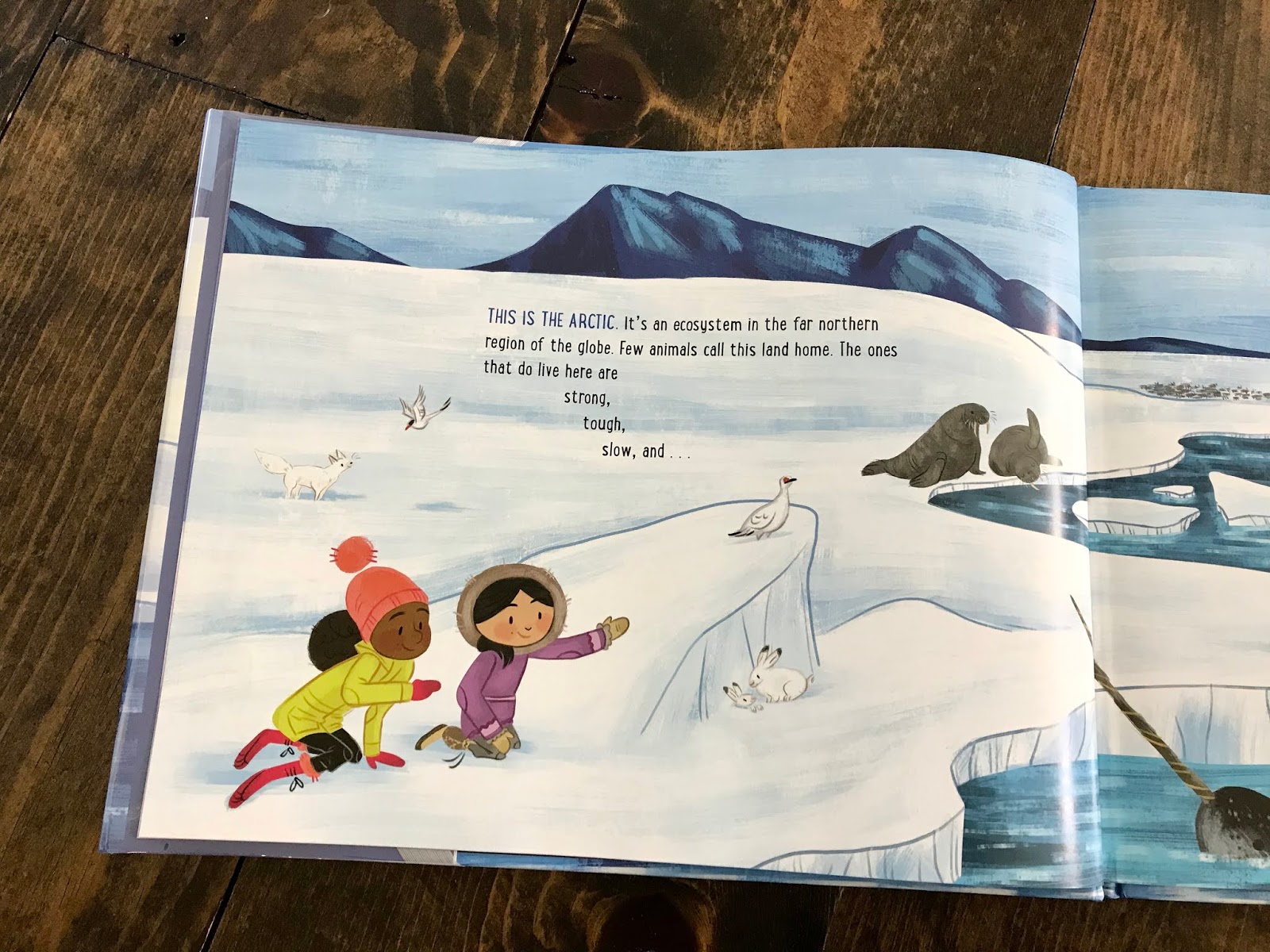
IF POLAR BEARS DISAPPEARED 
written and illustrated by Lily Williams
Roaring Brooks Press, 2018
Beginning
“This is the Arctic. It’s an ecosystem in the far northern region of the globe. Few animals call this land home. The ones that do live here are strong, tough, slow, and ... ”
Ending
“The best way for you to help is to learn everything you can about climate change and how it affects environments like the Arctic. Taking action will lessen its devastating effects.

And maybe we will find that the answer to saving polar bears ...

Has been right in front of us all along.”


Here’s one more example:

MAYBE:
A STORY ABOUT THE ENDLESS POTENTIAL IN ALL OF US
written by Kobe Yamada; illustrated by Gabriella Barouch 
Compendium, Inc. 2019

Beginning
“Have you ever wondered why you are here?”

Ending
“One thing is for sure, you are here.
And because you are here ...

... anything is possible.”


Now it is time to review one of your manuscripts or two. Examine the ending of your WIP. Revise and polish the story to include an Aww! Aah! or Ha!

In the comments below write an outstanding ending from a recently published fiction or nonfiction book to be eligible to win a bookmark. If you follow the instructions, I’ll put your name in a hat and draw two winners. Each winner will receive a hand crafted bookmark painted with watercolors. 
U. S. Mail only.

I will announce the lucky winners on the next GROG Blog on May 20th. Good luck!

1. Write an ending that left you with a feeling of satisfaction.
2. Include the title of the book, the author, the illustrator, and the publication date [2015-2020].

Wednesday, February 13, 2019

Writers Use Mentor Texts ~By Suzy Leopold

Writers know the value of reading mentor texts. 

My students at Lincoln Land Community College, know the value of reading mentor texts. Students in my classroom read for pleasure becoming proficient readers. Through daily reading, freshman learn how to write and make improvements with their writing.

Mentor texts can be used in a variety of ways for all students and writers. Mentor texts become powerful models to inspire students and writers.

There are times when I share direct instruction to guide students and model for them good writing elements and what to look for.


"Let's look at what real writers are doing. Let's see how 
we can learn from these writers." 
Ralph Fletcher, Author

A shorter reading passage can be used as a mentor text to focus students' attention with a mini-lesson.
I picked these flowers for you
from my 2018 garden.
Happy Valentine's Day!
Here's an example of a mini-lesson using direct instruction along with what I might say . . .

Today's lesson includes author's word choice. Let's read, and look for word choices made by the author on these two pages.

Now reread. This time as you read, jot down and write as you answer these questions:

1. Do you note active verbs?
2. What word did the author chose? Think of a synonym that may work.
3. Did you find interesting figurative language, such as a metaphor?

I don't always require students to focus on a particular concept, such as word choice. Some lessons are less structure, allowing students to discover what is working in a piece of writing. As an educator, I must encourage higher order thinking through the six steps of Bloom's Taxonomy [there are several variations of Bloom's Taxonomy--a cognitive development tool]. The highest level of learning takes place is through evaluating. To do so, students are judging the value of the material being read for a given purpose.

Click on the link again and you'll note active verbs used by students for this learning outcome: evaluate, appraise, assess, compare, and so forth.

"Every writer, no matter how skilled you are or how beginning 
you are, encounters and reads something that can 
lift and inform and infuse their own writing."
Ralph Fletcher, Author

Writers and readers use mentor texts to discover why writers are successful. Reading and examining books as model texts encourages readers and writers to become better at the craft of writing.

Mentor texts are powerful tools--books that students and writers can learn from, glean from and eventually affects your writing in positive ways.

There are numerous methods for reading and examining mentor texts to support students and writers.

I'll share a mini-lesson on the Book Head Heart Reading Framework.

The BHH model was developed by Kylene Beers and Robert E. Probst. They are the authors of DISRUPTING THINKING WHY HOW WE READ MATTERS.

"What do we mean by Book, Head, and Heart?
This is a simply a short, telegraphic phrase to suggest 
that we need to pay attention to the text, to our thoughts about it, 
and to what we feel and how we might have changed, 
no matter how slightly, as a result of reading."
Kylene Beers and Robert E. Probst

BHH Reading
The BHH framework is a great tool for students and writers to stop, notice, and note.
DISRUPTING THINKING
WHY HOW WE READ MATTERS
Reading carefully requires a certain amount of stamina, concentration, and patience. There are moments when a reader needs to slow down and ask what is working and what isn't.

Open up a mentor text and read it. Now read the story for a second time--better yet, read it aloud. Consider using the BHH Reading Framework. Find several ideas that can be used as a take-away to make your own writing polished and satisfying.

Next month as you participate in ReFoReMo, with coordinators and contributors, embrace mentor texts in a way that makes room for your meaning to improve your writing.

Check out these Picture books by Ralph Fletcher
This tab shares books for writing teachers and there are excellent tips for all writers on the teacher hangout tab.