Showing posts with label nonfiction. Show all posts

Wednesday, March 25, 2026

Christy Mihaly writes about the power of Music and Silence

by Sue Heavenrich


Today I’m talking with GROG’s own Christy Mihaly about her book, Music and Silence: The Passion and Protest of Pablo Casals, illustrated by Mariona Cabassa. It will be released next month by‎ Eerdmans Books for Young Readers. Christy and I have been critique partners for nearly as long as she’s been working on this book, and it’s been a wonderful journey to watch it grow up and, now, hit the shelves. 

When Christy began working on her story that would become Music and Silence, she was at the beginning of her writing journey. She had just returned from a year of living in Spain (her husband was on sabbatical). 

Christy: When our family moved to Seville, I left my job as a lawyer in Vermont and resolved to spend the year evaluating whether I could start a new career as a writer for children. 

in Cordoba
During that year, I encountered fresh inspiration on every corner. Everything I did and saw felt new and unfamiliar. Everywhere I went I thought, “This would make a fun story for kids.” So, I wrote and sold an article to AppleSeeds magazine about the Pinzon brothers, Spanish sailors and navigators that all Spanish schoolchildren know about and without whom Columbus wouldn’t have succeeded. 

I also continued with my cello lessons, and I decided to learn more about Pablo Casals. So we visited Barcelona and went to his birthplace and museum. The more I learned about him and his life, the more I admired and appreciated him, his ideals, his activism, his pacificism, his principles, and his passion. I started thinking I’d like to write a book for kids about Casals. I realized lots of people in the U.S. didn’t know his story, but I thought maybe they should!

 dressed for la feria
Sue: With all that inspiration, you wanted to write something for children. Can you share your navigation from story idea to writing a book?

Christy: When I returned from Spain, I attended a workshop at the Highlights Foundation about writing nonfiction for kids. I learned a huge amount and started seriously on the path to becoming a nonfiction children’s author. 

Sue: We met at that workshop!

Christy: And that was the beginning of our years-long collaborative friendship. In 2014 I took an online writing class and wrote an initial draft of the Casals book. I was still researching the life of Pablo Casals, viewing videotapes and movies about him, listening to recordings, and studying the co-written memoirs he left as well as biographies and press articles. I studied mentor texts. I explored possible themes and put together musical word lists. I shared drafts with critique partners and revised. I also started, prematurely, sending the manuscript out to editors. Editors under a certain age didn’t know who Casals was, so they didn’t understand why people would want to know read about him. Clearly, I had more work to do.

Sue: One of the things we’re told as writers is to come to our story from different angles. 

Christy: Yes. I changed the focus and tried different approaches. Some of my drafts included direct quotations from Casals, in boxes. I loved this; the editors, not so much. I laid out the page turns and tried to squeeze Casals’s whole life into 12 spreads - thankfully, the final book is much longer than the typical 32 pages! I cut down the words about his childhood and then put them back in. I cut pages from his later years. One time, I received a thoughtful critique from an editor and, at her invitation, edited and re-submitted. But that revision was rejected.

I must have revised my story more than twenty times that year, and I continued working on it into the next year, 2015 when I sold my first picture book, Hey, Hey, Hay! – a rhyming picture book about making hay. That was a thrill, and an educational process. 

signing the contract with Erzsi
And then, in 2016, I submitted the Pablo Casals story to literary agent Erzsi Deak, who loved it enough to offer to represent me. Yay! At last! Erzsi had a couple suggestions, so I tweaked the manuscript and then she started submitting the story. But nobody bit. 

Meanwhile, the political winds in the U.S. were shifting, and Erzsi and I discussed bringing more emphasis to the anti-fascism theme in Casals’s story. I made more revisions while also trying new approaches to the story. In one draft Pablo’s cello narrates, and another draft is told in verse. I didn’t end up with any of those versions, but each one informed how I eventually wrote the story of Casals’s life. 

In 2018 we started a new round of submissions. The story felt more timely than ever. After about a half dozen rejections, we received an offer from Eerdmans Books for Young Readers. Over the next seven years the story wended its way through the publishing process, getting delayed for a bit by Covid. In 2022, when the search for an illustrator started, I knew I wanted an illustrator from Catalonia, Casals’s homeland. I pushed for Mariona Cabassa, whose work I knew because she had beautifully illustrated my 2021 book, Barefoot Books WATER: A Deep Dive of Discovery. It took a while, but it was worth the wait. I am so glad she brought her gorgeous art – and love of Casals – to this project.


Sue: Fourteen years is a long time to keep believing in a book. What words of wisdom might you offer to kidlit writers who are having a hard time getting an editor to love their stories? 

Christy: Write the story that is in your heart. Because that’s what writing is about. Don’t get distracted when people tell you what the market wants, or how to sell to a certain editor – unless those are stories your heart also wants to tell. Editors and agents love to read work in which they can sense the author’s passion and commitment, stories that are animated by the author’s love of the topic, the characters. If you don’t love what you’re writing, write about something you do love writing about.

Sue: You started playing the cello as an adult. What advice might you offer to folks who want to learn how to play a cello – or any instrument – later in life?

Christy on the cello

Christy: First, accept that you’ll never be a brilliant player. Or, you won’t develop the level of competence you would have if you’d started young. So let go of that expectation. Do it for the joy of making music, for the pleasure of learning a new skill – that’s what keeps us young.

Second, you must practice. A lot. But don’t overdo it, because you do not want to injure yourself. (I speak from experience.) Take breaks. 

And third, find others to play with. My cello teacher organized a group of students to play together. I love making music in a group, together with other (older) musicians. I also loved playing duets with my daughter, who was taking violin lessons and who is  a better player than I’ll ever be. What a joy! You might look for a local community orchestra or band to play with. Or draft your family members and friends.

Sue: I should probably have asked you this first. What is it about Pablo Casals’s music that absolutely gobsmacks you?

Christy: I love the emotion that permeates his playing. I love that he isn’t afraid to show us his passion through his musicianship. His technique, obviously, is lovely, and he produces a gorgeous, mellow tone. But what I love most is that when he makes his cello sing, you can hear the music of his heart.

Thank you, Christy, for sharing your book love and your lessons on how to courageously dive into new things! 

Christy Mihaly has written books on topics from civics to sunlight, and math to moose, including a picture book about making hay when the sun shines! You can find out more about Christy’s books and writing life at her website, www.christymihaly.com
And if you'd like to preorder Music and Silence here, (OR Christy's book coming out in May, America's Founding Myths ... And What Really Happened here), her local indie, Bear Pond Books, is taking orders online. Christy will sign your book before it goes out. You can specify how you want it personalized .... or call the bookstore and let them know. Thank you!

Wednesday, February 25, 2026

Borrow From Nonfiction to Enhance your Fiction

 by Sue Heavenrich

If you’re a nonfiction writer, then you’ve read plenty of articles suggesting that you use fiction techniques to spiff up your writing. But have you ever heard anyone suggest that fiction writers borrow from nonfiction to enrich their novels?

Picture book authors do this frequently, especially when their story includes elements that connect with curriculum topics like nature, gardening, science, space exploration. But for novels – excepting historical fiction – I haven’t heard many folks saying, "hey, try this approach used in nonfiction."

There are a few cases where I have seen novelists and picture book writers use nonfiction techniques to great effect. Most of them include…

Notes

Sure, lots of novels have author’s notes, but the ones I fall in love with tend to read like back matter in children’s nonfiction books. Take The Inquisitor’s Tale, by Adam Gidwitz. He begins, “My interest in the Middle Ages is entirely my wife’s fault…” and then goes on for 14 pages dissecting what is true in his novel and how much is made up. He also talks about the Bayeux Tapestry which, he says, isn’t a tapestry at all but rather, an embroidery of a 230-foot long graphic novel (or the Middle Ages equivalent thereof).

In his author’s notes for Heroes, Alan Gratz tells more about Pearl Harbor, where he got his inspiration, and explains a few things in the book that are outside of the historical timeline. He also talks about Asian Americans in comics and the legacy of Pearl Harbor.


In her notes to Boy Bites Bug, Rebecca Petruck provides a guide to eating bugs and includes a couple recipes. Author notes and recipes aren’t so unusual, so I really love it when fiction authors …

Map Out the World


Fantasy and fiction authors put a great deal of energy and imagination into world building. So I love it when they include a map on the end pages or first pages of their books. Whether it’s Avalon or Redwall, or the map drawn by The Last Mapmaker, seeing their world on paper makes it more real. Visual maps allow us to orient in space: which direction are the mountains? Where be there dragons?

Historical fiction feels richer when accompanied by a map. Alan Gratz includes a map of Pearl Harbor in Heroes, and Laurie Halse Anderson includes a great map of Boston in her novel, Rebellion 1776. Maps are a lot like illustrations, so they feel like a natural part of any story. That’s why I appreciate it when they include a…


Bibliography

This is where we find the gold – the truth behind the fiction. Gidwitz includes nine pages of annotated bibliography. Laurie Halse Anderson includes detailed “Notes on Sources” at the end of her book and Carol Baldwin – who I interviewed back in August – includes both endnotes and resources (a selected bibliography) in her historical fiction, Half-Truths. While I love end notes and chapter notes, I fall head over heels when I see a piece of fiction incorporating…

Footnotes, Appendices, and More

There is something about a footnote that just imbues a piece of writing with authority.  Even if – no, especially if – it is a work of fantasy. Take Jonathan Stroud’s first book in the Bartimaeus Trilogy, The Amulet of Samarkand

This is a tale of magical espionage, murder, and rebellion. Stroud wastes no time, introducing footnotes as a feature beginning on the second page of the story. Most of them are asides – comments by the narrator such as when talking about architecture and noting that those folks in Pisa clearly hadn’t paid attention to his engineering expertise when they built that tower.

My favorite use of footnotes is in Cindy Derby’s picture book, How to Walk an Ant. On one page she warns not to stab an ant, and in the footnote refers the reader to “How to Conduct a Funeral” in appendix 1. Swoon! Not only does she have footnotes, but she includes an appendix and a glossary! 


Baldwin doesn’t have any footnotes, but she does include photos and a family tree at the end of her book. Other authors, both fantasy and historical fiction, have included pronunciation guides and timelines. 

Next time you create a story, what will you borrow from the nonfiction writing toolbox?

Wednesday, March 6, 2024

Celebrating Women's History in Picture Books

by Sue Heavenrich

It’s Women’s History Month and Calkins Creek has a bunch of wonderful women’s biographies for kids. These picture book biographies are aimed at the 7-10-year-old crowd and range from 40 to 48 pages. The women featured in these stories followed their passions and curiosity. They met with challenges and persevered. Some helped create something new; some raised awareness about an issue; all will have you asking: why haven’t we heard their stories before?

The Fabulous Fannie Farmer: Kitchen Scientist and America’s Cook, by Emma Bland Smith; illustrated by Susan Reagan (released January) 

I grew up with The Fanny Farmer Cookbook on a kitchen shelf, so what a pleasant surprise to see this book celebrate her life. When you want to make a stew or bake a cake, the recipes in your cookbooks list how much of each ingredient you need: a cup of flour, a teaspoon of baking soda… But back in the 1800, when Fannie was learning to cook with her mother, recipes were often “cloudier than clam chowder, and the measurements could be downright silly,” writes Emma Bland Smith. A recipe might call for a “suspicion” of nutmeg, a “pinch” of salt, or enough yeast to make the bread “light” – whatever that means.

As Fannie cooked food, something revolutionary was simmering in her mind. You see, she was a scientist, and she noticed (through trial and error) that consistent and precise measurements made a difference in the outcome of cakes and other foods. So she created a cookbook with recipes written so that no matter who cooked them, the result would be the same. 

One of a Kind: The Life of Sydney Taylor, by Richard Michelson; illustrated by Sarah Green (released February)

This book is about books, writing, and an author driven to write her stories because she didn’t see her family and culture mentioned in the books she read as a child. Sydney Taylor didn’t set out to become an author; she simply began writing stories for her daughter. Stories about growing up Jewish, about celebrating the holidays, about family life. She never expected her stories would see publication, but they did – and they appealed to a broad range of readers. More than that, they won awards and inspired others to write their stories. Perhaps you have heard of the Sydney Taylor award, presented for books that authentically portray the Jewish experience. 


Pedal, Balance, Steer: Annie Londonderry, the First Woman to Cycle Around the World, by Vivian Kirkfield; illustrated by Alison Jay (released February)

Annie Londonderry wanted to cycle around the world to win a prize - $10,000! That would really help he pay the bills… but first, she’d have to learn how to ride a bike. So she signs up for lessons from a local bicycle academy and began pedaling. 

“Neighbors scoffed. Strangers sneered. But Annie persevered.” Author, Vivian Kirkfield introduces us to this intrepid adventurer using lyrical language, teasing us with internal rhymes and alliteration. She layers in the details, such as how Annie took off from Boston with only one extra pair of underwear. And she includes important stuff, like how Annie took only a single pair of extra underwear with her – tucked into a pocket. And then there’s the delicious repetition of “pedal, balance, steer.”

Cactus Queen: Minerva Hoyt Establishes Joshua Tree National Park, by Lori Alexander; illustrated by Jenn Ely (released this month)

What if you knew a place that was filled with thorny, spiny beauty and dainty wildflowers, but all other people saw was a wasteland? In the early 1900s that’s how people thought of the Mohave desert. It was a place where you could dig up Joshua trees and yucca plants to put in your garden, and the trees provided wood for furniture. But it was so desolate. There was nothing there.

What if you noticed that, after a few years, the desert plants didn’t grow back? The wild animals, having lost their homes, moved away? If you were Minerva, you’d find a way to help the desert recover – even if it meant going all the way to Philadelphia or Washington to show others how important the desert is. This is a great story about a desire to save an iconic desert area – Joshua Tree National Park.


Bird Girl: Gene Stratton-Porter Shares Her Love of Nature with the World, by Jill Esbaum; illustrated by Rebecca Gibbon (releases next week)

Geneva loved birds. After feeding the chickens, she’d head out to watch the birds around her family’s farm (even the hawk family that occasionally snacked on chickens!). She watched nests and wrote stories about birds and their behavior. And when an editor said they’d publish her stories, Gene was excited – until she learned the illustrator would use stuffed birds as models to draw from. Nope! She wanted photos, and that meant getting a camera and learning to use it. And then lugging the 40-pound beast through brambles and hip-deep swamp water. This book may inspire the young birders in your family!

Skybound: Starring Mary Myers as Carlotta, Daredevil Aeronaut and Scientist, by Sue Ganz-Schmitt; illustrated by Iacopo Bruno (releases in April)

When Mary grew up, young girls were expected to marry, have children, and “stay tethered to their homes.” But not Mary. She dreamed of flying. Even when she did marry, she didn’t settle into the kitchen. Instead, she began researching aeronautics and meteorology. She and her husband developed a fabric for making hot air balloons, and also designed balloons. But Mary had questions: which balloon shape performs best? How do currents and weather affect them? She became an aeronautical science, going up into the air to answer those questions – and more.

What stories do YOU want to share with your children, your friends, your students?  Why not write them down?

Calkins Creek provided copies of these books for review. They are an imprint of Astra Publishing. You can learn more about their books - and check out activity guides - at their website here.

Wednesday, October 11, 2023

A Roundtable on Structure in STEM picture books

  by Sue Heavenrich
 
 Last month over at Archimedes Notebook, Elizabeth Shreeve said, “Structure is so important for nonfiction! Otherwise we’re just relaying facts.” So this month I invited her, along with Heather Montgomery, here to the GROG so we could hang out around the kitchen table and chat more at length about writing nonfiction and structure. 
 
I was first introduced to Elizabeth through her book, Out of the Blue, which highlights evolution. Her most recent book is The Upside-Down Book of Sloths, which you can totally read sitting right-side-up.

I met Heather through her books, initially, and then in person at a Highlights science and nature workshop in 2022. Her picture books include Bugs Don’t Hug and What's in Your Pocket? She’s also written about roadkill and three years ago, when we were locked down for the pandemic, we had a great talk about poop right here at the GROG.
 
So, let’s all grab our coffee and introduce ourselves before we dive into shop talk. I’ve taught science in the classroom and in my kitchen (homeschooling) and was a science/agriculture reporter for local and regional papers. I write because I’m curious about all kinds of sciencey things, but I’m particularly passionate about bugs! And fungi. And flowers. What about you?

Heather: I am a curious person who loves to share my passion for nature with kids of all ages. I love all parts of nature but have a special place in my heart for bugs and am particularly fascinated with the way bodies work. I have a B.S. in biology, a M.S. in environmental education and over 25 years of experience teaching inside and outside of the classroom. Research is my life!

Elizabeth: I consider myself a student of nature. To me, the history of life on Earth offers the most compelling and fascinating stories imaginable. There’s so much to learn! In college, I majored in geology and went on to a master’s degree in landscape architecture. After working for 35 years in a design firm (plus raising kids and writing a few books along the way), I decided to put that hodge-podge of science and art into full-time writing. I’ve always been a big scribbler, and working in the architecture field taught me the discipline of spare, concise writing. One more essential ingredient—I love children! I admire their joyful, open “beginners minds,” their curiosity and how they relate to the natural world without any sense of separation. My goal is to create fun, informative books that nurture those connections.

Sue: We all start with ideas and scribbles, but sometimes it takes forever to figure out how to write the book. When I first wrote 13 Ways to Eat a Fly it wasn’t much more than a list. Like, yeah – here’s all these different ways to dine on diptera. An agent at a retreat said, this is great but it’s not a book. It took me a long time to figure out how to make it into something kids would enjoy listening to.

When do you start exploring possible structures for your story? And how many different ways do you try writing it out?

Elizabeth: For me, the discovery of structure depends on the initial idea. I start with a deep dive into research. Once my head is full, a structure usually emerges from the gloom when I’m first waking up or walking the dog. Sometimes it seems obvious. For example, a chronological sequence worked best for Out of the Blue. But the approach seemed boring, until I found a question that precedes the title page. For The Upside-Down Book of Sloths I was struck by the differences between modern tree sloths and their amazing prehistoric relatives, the giant ground sloths. So I fooled around with charts until a pair/compare structure emerged.

thinking about structure for Out of the Blue 

Heather: Figuring out the structure has been my greatest challenge.  And the shorter the book, the greater that challenge is. When I can't ignore the idea that one of my questions might need to become a book, my mind typically jumps to a structure right away. That's not a good thing because the brain has a way of latching on and not wanting to let go—and that first idea has never been THE structure that finally works. Take Bugs Don't Hug for example. The first time I submitted it was to Ranger Rick and it was a list of insect parenting behaviors written to celebrate Mother's Day. It took me about 3 years to let go of that idea. Sigh.

Sue: What are some of the tools and techniques you use to explore structure? For example, I use word banks because sometimes that will help me see connections. I also use storyboards to look at page turns and see whether there’s enough space for the illustrator.

Heather: I use sticky notes. I put one idea/concept/example on one sticky note, post them all on my wall or a huge piece of foam board. Then I move them around to see how I can put them together to build to one big idea. I'll often take a photo before I mix the notes all together and make myself re-arrange them in a different structure. I also do this digitally in PowerPoint to make it easy to save my work. I set up PowerPoint slides as spreads of a picture book and map out ideas (one per page or spread).

Elizabeth storyboarding Upside-down Sloths
Elizabeth
: I’m a fan of storyboarding, too. It’s something I learned from working in a design office. When an idea for structure pops up, I grab it! I outline and sketch in notebooks. Next I lay a picture book template on the table, roll out trace paper, and make a nice big storyboard. This helps with page turns and balancing content between spreads. It’s useful for revision, too, when you’re reviewing a sketch dummy.

Sue: In addition to doing research about my book topic, I also spend time reading and studying other books to glean ideas for structure. When the idea for The Pie that Molly Grew started germinating in my brain, I began looking at other books that adopted the "House that Jack Built" as a structure. And I always look at what authors add in their back matter, both content and how they present it. 

Elizabeth: Want to know the best way to spend the day? Visit local libraries and bookstores for picture books to study and read. (I’ll also buy picture books - supposedly for our granddaughter, but actually for me.) If a book impresses me, I’ll type it out word for word. By typing, I absorb the flow and can analyze word count, page turns, repetition of key phrases and metaphors. When people ask me to critique their drafts, that’s my advice—get yourself ten books that you admire, type them out, and then come back. It’s helpful for understanding the pacing and content.

Sue: I do that, too … typing them out.

Heather, probably studying structure of a book...
Heather
: I spend tons of time studying and teaching about the structure of other trade books. One of my favorite things to do is to find a structure (such as the mirror structure in Liz Garton Scanlon's One Dark Bird where the second half of the book presents information in the reverse order as of the first half) and try to apply that to one of my projects.

Sue: When I wrote The Pie that Molly Grew, I thought I was writing about the growth process of a pumpkin plant. After I finished, I realized I was writing about connections – both natural and human. Do you ever discover something unexpected when you are writing your book?

Heather: All the time! When I wrote Bugs Don't Hug, I thought it was a book about insect and human parental behaviors, but I discovered that my big idea about families could humans connect to each other as well!

Elizabeth: I often cram too much information into a draft. As my brother, also a writer, says…sometimes it’s best to unpack an idea or a page. With The Upside-Down Book of Sloths, I’d included too much information on each page. That led to a major revision which made me realize I need to find the space between the facts.

Sue: Well, my coffee’s gone and there's nothing left of the muffins but crumbs, so it’s time to skedaddle. A huge thank you to Elizabeth and Heather for joining me today. Please visit their websites to learn more about them and their wonderful books:

Elizabeth at www.elizabethshreeve.com
Heather at www.HeatherLMontgomery.com

Wednesday, August 26, 2020

Hands-on Research Tips with Author, Annette Whipple

By Suzy Leopold

Let's welcome author, Annette Whipple, to the GROG Blog today. I understand Annette thinks facts are fun. I agree. Annette writes informational books for children that include pieces of information as fun facts.

Many writers read books on the craft of writing kid lit to master the art of writing for young readers. Many writers research books and online sites. Annette spends valuable time with hands-on research.

Before Annette gives tips for hands-on research for picture book writers, let's learn more about her as she shares her story and writing journey:

Annette Whipple celebrates curiosity and inspires a sense of wonder in young readers while exciting them about science and history. She's an author of eight fact-filled children's books including:

THE LAURA INGALLS WILDER COMPANION: 

A CHAPTER-BY-CHAPTER GUIDE, 

Chicago Review Press, August 4, 2020


WHOOO KNEW? THE TRUTH ABOUT OWLS, 

Reycraft Books, September 30, 2020


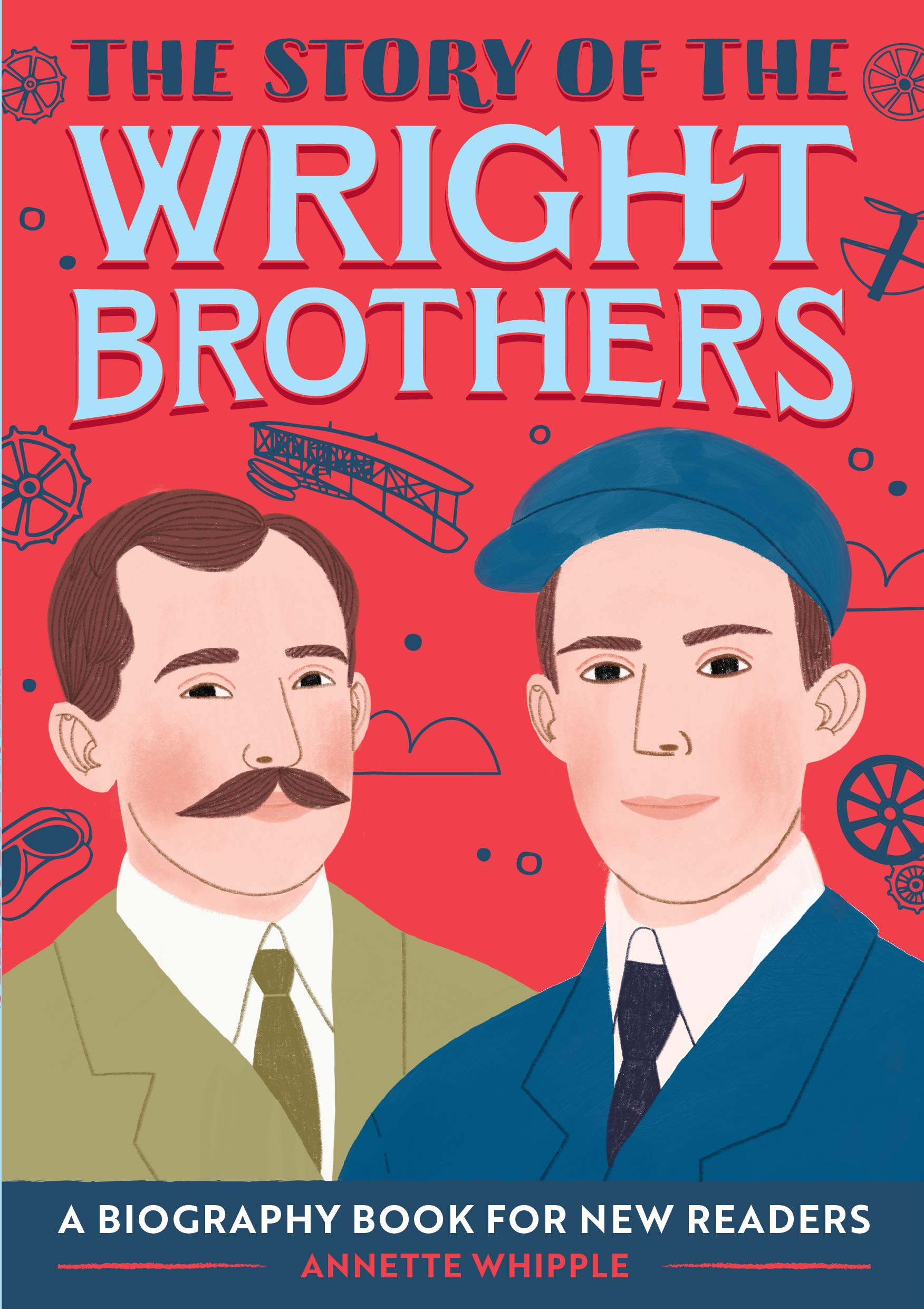
THE STORY OF THE WRIGHT BROTHERS, 

Rockridge Press, 

July 28, 2020

Many writers love chocolate and Annette is no exception. Annette is a fact-loving, chocolate chip cookie-baking children's nonfiction author from Pennsylvania. 

Learn more about children's author, Annette Whipple at her web site.

Tell us more about your writing and reading.

Annette loves to wind down at night and on weekends with a good book. Most of Annette's weekday reading consists of audio books while cooking and exercising. Annette enjoys reading nonfiction books across all age groups--especially kidlit. Additionally, she reads middle grade fiction.

Annette shares why she chooses to read mentor texts and how reading supports her writing in the following quotes:

"Reading great books opens the world [and fictional worlds] for me." 

Books help me connect with and understand people who live very different lives than me.

Even if the characters are fictional, the understanding translates to real people, too.

Of course reading is also huge part of my research process."

Share your writing journal . . . 

My love of writing did not begin as a child. I wrote notes to friends and letters to my penpals. My call to writing began in my thirties.

I began blogging to share my daughter's journey as she overcame a speech disorder apraxia, also known as acquired apraxia of speech [AOS] or childhood apraxia of speech. I quickly learned I loved to encourage others on similar journeys and began sharing my daughter's therapy and progress. I wrote about our home and family life, the books we read, favorite recipes, and fun activities. Overtime, I became serious about writing and took a few classes. Eventually a few magazines published my work.

In August 2014, I had an idea for a book. It was a story I knew I could write. It became my seventh published book. It is:

THE LAURA INGALLS WILDER COMPANION: 
A CHAPTER-BY-CHAPTER GUIDE

For more information click here

I wrote this newest publication because I think the Little House series by Laura Ingalls Wilder is a valuable window into American history. But understanding the historial context makes the stories even richer, especially for children. My book explores the history, people, and the context of each of the books in the Little House series. I address the racism and prejudice found within the books because reading about prejudice is difficult without a conversation. My book can serve as a conversation with others or as an awareness if the book is read independently by a child. I want the reader to understand why people felt the way they did and know it's not right. I included hundreds of pioneer terms and seventy-five activities for readers to "Live Like Laura" [FARMER'S BOY'S activities are referred to as "Live Like Almanzo".]

Children and adults are learning from my book and I've received incredible feedback about THE LAURA INGALLS WILDER COMPANION: CHAPTER-BY-CHAPTER.

I now primarly write for children and I love it. I hope my words inspire, encourage, and teach children about our amazing world.


Tell us about your special place to write and a necessary writing tool . . . 

I don't have a special writing studio or even an office. But I do have a desk made by my great uncle more than twenty years ago. It has my stacks of books and papers all around. It also has a big monitor that I use along with my laptop. Having two screens make writing so much easier. 

My favorite writing tool is probably a good pen. I prefer the Pentel EnerGel pen with a fine tip. I also love my wrist pads and ergonomic wireless mouse.

When you are not reading or writing, what do you like to do?

When I'm not reading or writing, my favorite work-related task is helping authors. I love to critique others' manuscripts and work-for-hire packages. I also love to teach. Though in-person instruction is my favorite, I'm embracing online teaching, too. You can find my on-demand writing video courses at KidLit Creatives.

To relax, you might find me vegging in front of the television or peeking at my bird feeders. Or baking chocolate chip cookies or eating the fruit of my labor. Mmm . . . My favorite!

A literary character that I would like to dine with . . . 

That's a hard phrase to complete. Maybe Ma from the Little House series or the Finch Family from TO KILL A MOCKINGBIRD. Or even Jo from LITTLE WOMEN, LITTLE MEN, and Jo's boys.

I just realized all of those books and series mentioned are more or less based on the lives of authors. Interesting.

Share some hands-on research tips . . .

I write nonfiction and informational fiction for children. So, I want to share a bit of my research process.

I begin my research with books and online searches. I always try to consult with experts. But really, it's getting hands-on with my topics that really makes my writing stronger. 

When I researched and wrote THE LAURA INGALLS WILDER COMPANION, I had a question I could not find the answer to. 

So, I contacted the Wilder Homestead--Almanzo Wilder Farm in Malone, New York. During the conversation, an expert jokingly said I should hop in my car to tour the homestead. That was on a Wednesday afternoon. I planned a road trip and was on my way Saturday morning. I walked around the property with reconstructed barns. I saw Almanzo Wilder's bedroom. I even walked on the floors Almanzo once walked. It was a glorious day at the Almanzo Wilder Homestead. All of it amazed me.

For the book WHOO KNEW: THE TRUTH ABOUT OWLS, I met two owls. Alexandria and Quincy! 

Right away I noted how the Spectacled Owl, Alexandria, had tight, dense feathers. Her feathers keep her dry in the tropical forest of South America. Quincy, the Eurasian Eagle Owl, has fluffy feathers compared to Alexandria. Visting and holding these birds in-person supported my research. I don't believe an on-line photo of the owls could show such detail. 

You can read more about it here.

You can view a book trailer for WHOOO KNEW? THE TRUTH ABOUT OWLS here

Finally, I can't say enough about hands-on research to support your nonfiction writing. 

However, during a global pandemic it's a bit of a challenge. I'm working on another book in The Truth About Animals Series with Reycraft Books. I want to meet some spiders! I should take the time to study spiders I shoo out my back door! However, consulting with an expert and hands-on experience is best to support my research. 

If you want to strengthen your nonfiction writing, try hands-on research to support your manuscript. If you are interested in learning more, consider participating in an on-demand video course through Kidlit Creatives

To receive a 10% off, use this code: WRITER10

Thank you, Annette, for sharing your writing journey, success with publication, amazing book titles, and some outstanding hands-on research for nonfiction writing. 

Facts and information in children's nonfiction literature satisfy a curious young reader to ask for more. Anything with chocolate satisfies a writer to write more.

I baked these dark chocolate chip cookies with dried cranberries for you, Annette.

For more information about Annette:

Author Web Site and Writing Resources

Sign up for a montly Newsletter 

Facebook

Instagram

Twitter

A Giveaway!

To be eligible for a giveaway read and follow these instructions:

In the comments below share a tip about research for nonfiction stories OR a recommendation for a currently published [2020] nonfiction picture book title. 

If you follow the instructions, I’ll put your name in a hat and draw two winners. Each winner will receive a hand crafted 4 X 4 flower cut paper creation painted with acrylics. U. S. Mail only.

The two lucky winners will be announced on the next GROG Blog.

Wednesday, June 24, 2020

Writing Nonfiction for CRP: Lisa Amstutz Dishes the Inside Scoop ~ Christy Mihaly

Author Lisa Amstutz is an accomplished nonfiction writer who has written several picture books and more than 150 educational books. She recently put her science background to work to write Amazing Amphibians: 30 Activities and Observations for Exploring Frogs, Toads, Salamanders, and More, published this January with Chicago Review Press (CRP). It's full of kid-friendly facts and activities, along with amazing photos and educator resources.

Many GROG readers are familiar with the traditional picture book process: Submit manuscript, wait, weather a storm of rejections, and if you're lucky and persistent, eventually find an editor who loves your story, then wait for an illustrator, and perhaps celebrate publication a few years later.

With longer nonfiction, the process usually begins with a proposal. Publishers vary, but I was interested in Lisa's experience with CRP, so I asked Lisa some questions. Okay, perhaps it's fair to say that I peppered her with questions. Which she graciously answered.

Lisa on a visit to Vermont: Looking for frogs?
Christy Mihaly: At 128 pages and 30,000 words, Amazing Amphibians is longer than many of your previous works, and it's your first with Chicago Review Press (CRP).
What do you want readers to know about this book?

Lisa Amstutz: First of all, amphibians really are amazing! Amazing Amphibians gives an overview of amphibian biology, behavior, and conservation. There are tons of color photos in the book, and each chapter has three hands-on activities related that will be useful for parents and educators.

CM: Amphibians may not be everyone's favorite creatures on Earth, but your enthusiasm for them shines through. How did you get the idea to write this book?

LA: I had seen some of the other books in the CRP "Young Naturalists" series. They seemed like they would be fun to work on and right up my alley as a science writer. After studying CRP’s catalog, I brainstormed ideas for topics that they hadn’t yet covered.

CM: I've heard other authors recommend looking for a gap in a series or pitching to fill a hole in a publisher's catalog. It's great to hear you say that it worked for you.
Why and how did you pitch amphibians to CRP? Was there any back and forth with the publisher to finalize the book outline and treatment?

LA: I actually pitched several ideas to CRP, and the editor at the time was most interested in seeing a proposal for this one. I then wrote up a full proposal and sample chapter and she took it to acquisitions. The final book more or less followed that original outline, but of course went through several rounds of editing before publication.

CM: So you pitched before drafting a complete proposal, which saved time, and then you knew they were interested in your topic before you put in the work. Great! 
Did you enjoy the process of writing this book? How long did it take? How did you stick to your schedule and get it all done?

LA: CRP has been wonderful to work with! The process took about two years from pitch to publication. Writing a book this long can be overwhelming, so I had to assign myself a daily word count, allowing plenty of time for self-editing and peer editing before submission.

CM: I'm sure that discipline was an indispensable part of your process. And yes, I know how important critiques can be! 
Amazing Amphibians includes intriguing activities for kids. How did you come up with them? Were there series guidelines? Did you try all the activities?
One of the 30 activities in Amazing Amphibians

LA: I brainstormed activities based on the topics at hand, and used Google and Pinterest to look for ideas I could adapt as well. I hired my kids to test out the activities for me, which was really helpful! 

CM: Ah, nepotism! I particularly noticed the many gorgeous photos in this book--I think there are about 60 of them. How did you conduct photo research and select photos? Did you contact photographers yourself? And is this the first book you've done where this was required?
Lisa and friend photograph a newt

LA: Yes, this was the first time I’ve had to acquire photos. I found them all online. Some were free on Flickr, Pixabay, or Wikimedia Commons. Others I purchased through stock photography sites like Shutterstock and iStock. For a few of them, I worked out a purchase from individual photographers. The publisher required very detailed documentation of each photo source and permissions, which was a little daunting until I figured out the system!

CM: Whew. This might be intimidating to writers who haven't done it, but I understand it's part of the process for many nonfiction books. 
How were the book's artwork and design developed?

LA: CRP handled all the graphic design. I did supply rough sketches for the activities to show what I had in mind.
Fun Facts and Graphics in Amazing Amphibians
CM: Did you hire an expert to review the text and/or illustrations? What kind of expert background does CRP require its authors to have?

LA: I had an amphibian expert review the manuscript. I’m not aware of specific requirements at CRP, but I think having relevant education or experience is a good selling point for nonfiction topics in general. My science background definitely made me feel more confident in having the background knowledge to tackle this topic. 

CM: Compared with working on an illustrated picture book, were there additional challenges and/or costs involved in putting Amazing Amphibians together? 

LA: I spent a good chunk of my advance on photo permissions. Some of the photos were a challenge to track down—it turns out there aren’t a lot of photos of endangered species available. Probably should have seen that one coming! I could have gotten by with spending a bit less, but wanted the photos to really pop. So I consider that an investment in the book’s success.

CM: Ah. Note to self: Write about commonly photographed species. 
So Lisa, what else should writers know before submitting to CRP? Any additional words of advice?

LA: As with any publisher, study their catalog and look for holes you could fill. Check out some of their recent books to get a sense of their style, especially if you’re targeting an existing series. Their submission guidelines are on the website, so read and follow those carefully. 
Best of luck!

CM: Thanks, Lisa, for your words of wisdom. 
And best wishes and health to all our readers.

Lisa Amstutz is the author of more than 150 children's books, including Applesauce Day, Finding a Dove for Gramps, and Amazing Amphibians. PLANTS FIGHT BACK (Dawn Publications) will be released in October 2020, and MAMMAL MANIA (Chicago Review Press) in 2021. Lisa specializes in topics related to science and agriculture. Her background includes a B.A. in Biology and an M.S. in Environmental Science. She lives on a small-scale farm in Ohio with her family. 

For more information about Lisa’s books as well as her critique and mentorship services, see www.LisaAmstutz.com.
And find Lisa here:
Twitter: @LJAmstutz
Instagram: @slow.simple.green
Facebook: facebook.com/AuthorLisaAmstutz


Wednesday, April 22, 2020

Environmental Writing sends Earth Day message

by Sue Heavenrich

On a normal spring day bees cluster on willow catkins, filling the air with buzzing. But last year the bees were few and far between. I began to worry we might have a silent spring.

Thing is, native and bumble bee populations are declining. For those of us who like to eat, this is a problem because bees pollinate 75 percent of the fruits, vegetables, and nuts grown in the United States – about $3 billion worth of crops each year. Plus, they pollinate plants and fruit trees that provide food for birds and other wildlife.

Rebecca E. Hirsch dives into the pollinator crisis in her most recent book, Where Have All the Bees Gone? She begins her tale by taking the reader on a field trip to find Franklin’s bumble bee, once common in Oregon and California. That bee hasn’t been seen since 2001, and it’s not the only bumble bee in decline either. In her book, Rebecca highlights what can happen when wild bees disappear. For example, decades of pesticide use in apple orchards in Sichuan, China, killed off the natural pollinators. Now farmers have to pay workers to climb ladders and hand-pollinate the blossoms using paintbrushes of bamboo and chicken feathers.

But, says Rebecca, we can change things. She concludes her book with two chapters devoted to bee conservation and positive action kids – and their families –  can take: plant gardens for pollinators; engage in citizen science bee counts; and encourage organic farming and gardening. Back matter includes a list of online resources and links to citizen science projects making it a perfect book for Earth Day!

So I caught up with Rebecca by phone a few weeks ago. Had she intended her book to be an activist call to action, I wondered?

Yes, she said. “I wanted to embrace the more activist part of environmental writing. I wanted to appeal to emotion and encourage people to take action.” So she turned to Rachel Carson’s Silent Spring as a mentor text, reading and re-reading passages to see how Rachel put words to the page.

Inspiration to write about bees came while volunteering at a local pollinator garden. It was eight years ago, Rebecca said.  “At first I worked there because I wanted to see the butterflies. But all the master gardeners talked about were the bees, so I started to pay attention to them.” When Rebecca planted native plants in her own garden, she noticed the bees visited every day. The butterflies? Only occasionally.

When she heard hints about bees in trouble, Rebecca began learning about the Rusty patch bumble bee. It was the first bee to be put on the endangered species list, “and that was when I decided to do a book about bees,” she said. Rebecca also spent time at a rural school. One of the teachers works with his class to convert a strip of grass into pollinator garden every year.

“There’s so much that people can do to help,” Rebecca says. “If you put native plants in your garden, bees will show up! If you mow less often and let the clover grow, bees will show up.”

As a nonfiction writer, Rebecca feels most comfortable with facts. “I had to learn that it’s okay for people to have a point of view.” As she read other writers, Rebecca decided that she needed to figure out how to imbue her writing with a more activist voice. “We need to be shouting about the environmental stuff,” she said, referring to climate change and other issues. “Even if you’re not an environmental writer, find a way to work environmental concerns into your story.”

You can find out more about Rebecca at her website.

Wednesday, March 25, 2020

WIDE RESEARCH: “WE ARE MADE BY HISTORY” --Guest Post by Author Beth Anderson

Beth Anderson
I, Tina Cho, want to welcome author Beth Anderson back to the Grog Blog. Both of us had debut picture books in 2018, & you can read about her previous book here. I have learned so much from Beth's blog and expertise as a nonfiction picture book writer. She's the author of An Inconvenient Alphabet: Ben Franklin & Noah Webster's Spelling Revolution (2018) and most recently, Lizzie Demands a Seat: Elizabeth Jennings Fights for Streetcar Rights. (Jan. 2020) Beth is going to show us about researching widely to get to know our character & story. Plus, you can watch her talk about the book at the end of this post. Take it away, Beth!

Martin Luther King, Jr. said, “We are not makers of history, we are made by history.” As I researched, wrote, and revised Lizzie Demands a Seat, I really got it.

I learned a lot about researching wide, as well as deep, with Lizzie’s story. As my reach widened, I saw how delving into the issues and complexities of the time and place can provide valuable insight into character and a deeper understanding of crucial emotional elements like motivation, stakes, and impact, especially when there’s limited information about a person.

I’ll show you what I mean with a few examples, along with some lines from the book, of how wide research opened the story up as I understood more about how Elizabeth Jennings was “made by history.”


Elizabeth Jennings’ published statement revealed her cleverness, poise, tenacity, courage, confidence, and own sense of self. What shaped her character? Her abolitionist parents, certainly. But beyond the basic meaning, the more important question is how did that play out? I learned about community, social attitudes, and key ideas and goals of the African American movement to abolish slavery and obtain equal rights in the north.

·             Education – One goal was to educate both children and adults in order to better their lives. With that, the fact that Elizabeth Jennings was a teacher makes her part of a movement, which goes much deeper than a “job” and enhances her impact and commitment. As part of the movement, we understand why her fight to ride goes beyond her as an individual to a court fight that will impact all African Americans.
“This wasn’t about her. It was about dignity, about justice—ideas she’d been raised on.”

And when you add her being part of a movement to her upbringing in a home frequented by leaders like Frederick Douglass and J.W.C. Pennington, it underscores her urgency and courage when she stands strong against the conductor.
“Suddenly late-for-church wasn’t as important as late-for-equality.”

·             Public opinion – Another goal of the movement was to affect public opinion to bring about social change. They used newspapers, lectures, and personal narratives to inform, create empathy, and present the idea that democracy isn’t democracy if all can’t participate equally. Knowing about the importance of public opinion, the fact that a white witness offered to testify for her might carry more meaning as a “representative” of public opinion. The fact that no one on the streetcar objected to her presence also reinforces the idea that many whites might believe in her rights. That’s encouraging for Lizzie on more than a personal level.  
“As she watched him disappear, a flicker of hope sparked. A witness. Someone who believed in her rights.”  


When it came to the court case of Elizabeth Jennings v. The Third Avenue Railroad Company, I had very little information. With no court records and only a few newspaper articles about the ruling, wider research and an expert allowed deeper understanding.

·             Motivation - First, it’s easy to understand her motivation for standing firm against the conductor’s words and for taking her case to court after reading about the African American movement of the time.  
“There was one place where justice for one could mean justice for all. A courtroom.”

·             Risk/Stakes – At first glance, her risk was losing due to discrimination. But looking at the history of the right to ride, I learned about a case lost thirteen years earlier that worsened discrimination. To the public, the loss appeared to support segregation. Knowing this increases her stakes and the emotional tension of her decision.
“But if she failed to win, she could make it worse. Thirteen years before, a black man lost his case for the right to ride. No one had dared try again.”

This loss also made it clear why many blacks didn’t want to push too hard for rights and believed that waiting it out was better. With this I understood how crucial community support was for Elizabeth Jennings and why she didn’t take it to court on her own.

·             Jury – While black men could vote at the time and could technically serve on a jury, tradition probably ruled and excluded them. With a white judge and jury, once again we see the importance of shifting public opinion.
“Newspapers printed Lizzie’s account. Her father spoke in churches, wrote letters and articles, and appealed for public support.”

·             Judges – In the cases that followed hers, some people won and some lost. Given her precedent, why? It turns out a judge’s instructions to the jury were key. He could emphasize business rights or individual rights and tip the case. This also provided information for a more complete courtroom scene.
“The Third Avenue Railroad Company argued for its right to do what was good for business.”

Also, after seeing how judges could tip the scale, when the judge in Lizzie’s case said that streetcars were required to carry all respectable, well-behaved people, I considered how the key words, “well-behaved” and “respectable,” could be interpreted differently by different people. No doubt Lizzie knew this all too well, and it presented an opportunity to amp up her anxiety. 
“Was it ‘respectable’ to demand her rights? Was it ‘well-behaved’ to fight back? If the jury didn’t think so, they could deny her right to ride.”


In addition to deepening the emotional impact of Lizzie Demands a Seat, wide research brought my “vital idea” into focus—no hero does it alone, change requires many, creating a “path of inspiration” through history.

It’s true – “we are made by history.” And I think that’s an important concept for us as writers.
Wide research is time-consuming work. But when Kirkus, in a starred review, said, “…Anderson’s third-person text allows readers under Lizzie’s skin…,” that was the highest praise I could ever hope for.

Thank you, Beth. That was very helpful, especially for me & my nonfiction writing. I came across Beth talking about her book on Kidlit TV and know you would all love to watch it. Click here! And below are photos of the neat shoe activity she does on Kidlit TV.


Twitter, Instagram, Pinterest: @BAndersonWriter

Beth Anderson loves digging into history and culture for undiscovered gems, exploring points of view, and playing with words. A former educator who has always marveled at the power of books, she is drawn to stories that open minds, touch hearts, and inspire questions. Born and raised in Illinois, she now lives in Loveland, Colorado. Author of AN INCONVENIENT ALPHABET (S&S 2018), LIZZIE DEMANDS A SEAT (Boyds Mills & Kane, 2020), and “SMELLY” KELLY AND HIS SUPER SENSES: HOW JAMES KELLY’S NOSE SAVED THE NEW YORK CITY SUBWAY (Oct. 2020, Boyds Mills & Kane), Beth has more historical gems on the way.

From the desk of Suzy aka Prairie Garden Girl--
The winners from the March 18th Giveaway are:
Charlotte Dixon
Janet Smart