Showing posts with label Janie Reinart. Show all posts

Wednesday, August 31, 2022

Wolves, and Cats, and Elephants--Oh My! An Interview with Sarah Kurpiel--Giveaway

by Janie Reinart


Welcome the creative and charming author/illustrator, Sarah Kurpiel to the GROG.  

Hello, Sarah. 

Congratulations on your new book baby! Our readers will love finding out how Elephant over comes stage fright and gains confidence. Sarah is generously raffling a copy of her new book, ELEPHANT’S BIG SOLO to one lucky reader! (U.S. only)

1. Who is your agent? 


My co-agents are Allie Levick and Rebecca Sherman at Writers House. They’re both so knowledgeable and enthusiastic. I feel lucky to have two such amazing people in my corner.


2. How did you get the idea for your story?


It all started with a single line: “Elephant had a way of standing out, even when she’d rather not.” I can’t explain why, but I got really emotional about that line. I read it aloud to myself over and over. Then, the story poured out of me–a very rough draft, at least! ELEPHANT’S BIG SOLO is about an anxious, music-loving elephant pressured to perform a solo on stage. Over time, with editorial guidance from my agents and the book’s editor, the story changed quite a bit. But that first line has always remained the same. What I hope kids take from the story is that there’s more than one way to shine.


3. What is your favorite part of the story?


My favorite page of ELEPHANT’S BIG SOLO is a close-up of Elephant playing her French horn with her eyes closed. It’s just her and her music, alone. It’s a little bit sad but really peaceful too. That’s the thing about some forms of anxiety: it can feel so peaceful to not be seen, but it also means you’re alone. It’s a curious mix of feelings. It can be tough to be nervous, especially when you’re a kid trying lots of things for the first time. I think that’s why that page has always resonated with me. I hope it will resonate with kids too.


4. How long did it take to write? Get to a publisher?


I wrote a very rough first draft of ELEPHANT’S BIG SOLO one evening in July 2020 and thumbnailed the story shortly after. I revised for about a month with the help of my agents, who then sent the manuscript and thumbnails over to Martha Mihalick, the wonderful editor of my first two books (LONE WOLF and ORIGINAL CAT, COPY CAT). Fortunately, Martha accepted the story, so I got straight to work sketching out the full dummy. Although the story came together quickly, the ideas and main character had been fermenting in the back of my mind for more than a year. I knew for a long time, for example, that I wanted to make a story about an elephant one day. I love drawing elephants. They’re my favorite animal and always have been. I once drew a picture of an elephant playing a French horn (I liked the way the French horn curled like an elephant’s trunk) and wrote an unfinished story about an indecisive elephant trying to pick one instrument to learn. Those later served as inspiration for ELEPHANT’S BIG SOLO. Looking back, the story had been dancing around in my mind long before I wrote the first draft.


5. What is your writing routine?


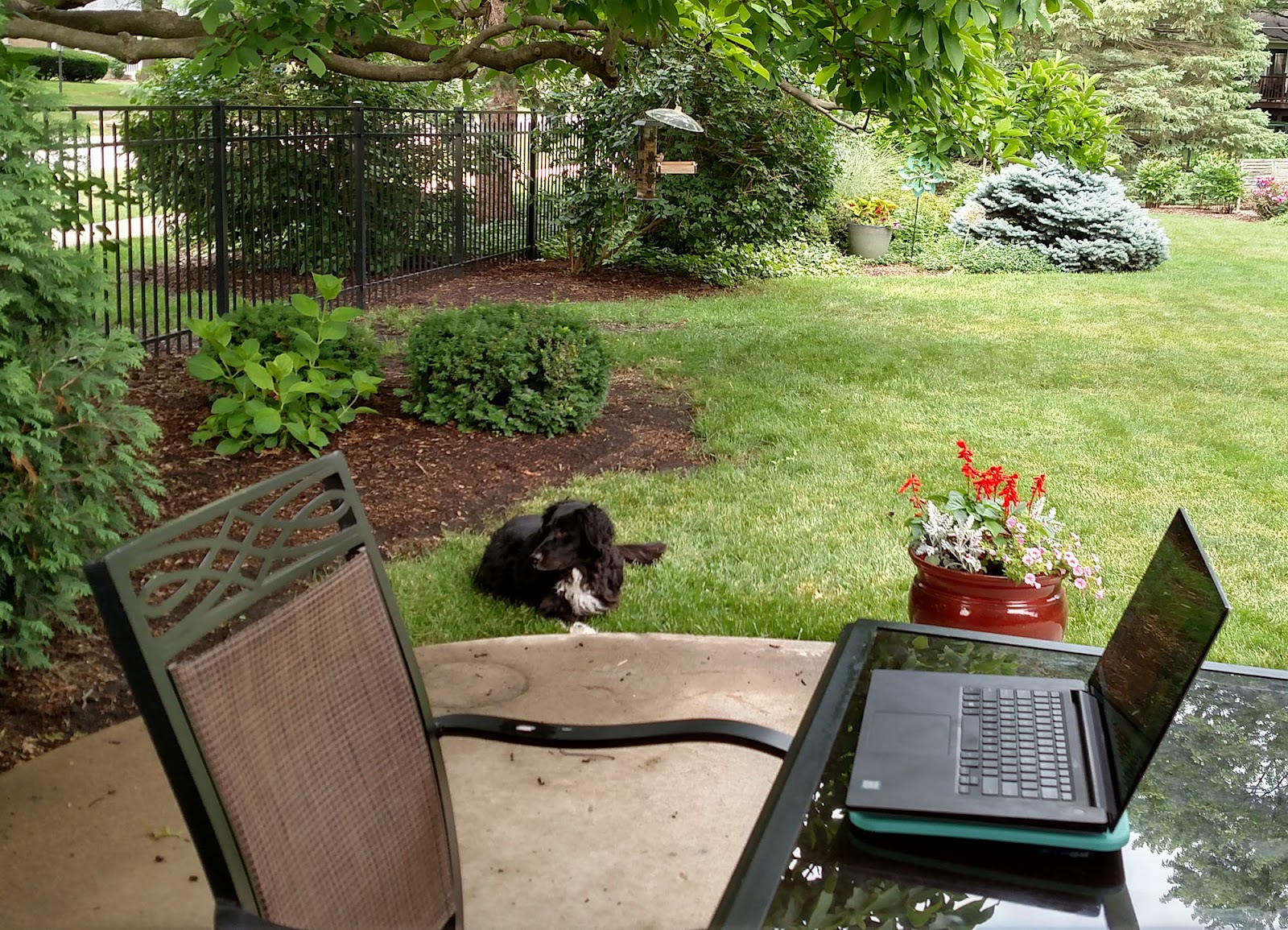
I don’t write regularly, but I do draw regularly, which I consider an important part of my routine. When I’m itching to start a new story, I usually begin by mining my past doodles for ideas. I love to draw without a plan and without any expectations. It feels like meditation to me. Then, especially in January during Tara Lazar’s awesome Storystorm, I’ll look back at my doodles and ask myself questions like, What do I naturally draw again and again? Could I draw this character a hundred times and never get tired of it? Does this picture have a story? Once I have a loose concept or a very rough draft, I jump straight into thumbnailing because I don’t like to get bogged down by exact words at this stage. Other than designing characters, thumbnailing is my favorite part of the process. It’s so fun to explore layouts and page turns. It also helps me decide if I’m really ready to commit to a story or not. Without fail, new ideas emerge while thumbnailing, which is another reason why I usually leave the exact words until later. Then, I write the manuscript, which is a slow process for me. If I can write outside on a warm summer day, that’s my ideal writing environment. But we can’t control the weather (unfortunately).


6. What is your favorite writing craft book?


That’s a great question! It’s not exactly a “writing craft” book per se, but I recently read Scott McCloud’s Understanding Comics. I’m a big fan of graphic narratives, and this book helps me think deeper about how words and pictures can work together to make a story sing.


7. What inspires you to write?


Doodling, nature, animals, my funny pets, outer space, the ocean, kids being regular kids, summer, the arctic, StoryStorm, big wide-open spaces, creative books by talented authors and illustrators, webinars (12x12 webinars always put me in a creative mood), and so much more.


8. What are you working on now?


I’m working on a lyrical picture book that’s different from anything I’ve made before. It’s based around a special event that took place in my hometown when I was growing up. I’m excited to share this story with kids one day. I’m also playing around with a funny picture book about a grumpy bird. I’m not yet sure if this story will pan out in the end; not every story does. But it sure is fun exploring this silly character’s antics!


9. Words of advice for writers. 


Read lots of picture books. Read your favorites again and again. Then, write the story only you can write. (I keep that quote on my desk.) And join a critique group if you can. Sharing my WIPs with a small group of trusted authors/illustrators each month has given me the extra push I need to keep drafting and revising.


Sarah, thank you for the delightful interview and sharing your thoughts and creative process with us. Readers don't forget to sign up for the chance to win a copy of ELEPHANT'S BIG SOLO.


Sarah Kurpiel is a librarian by day and self-taught picture book author/illustrator by night and weekend. Her stories are inspired by animals, nature, and everyday life. Sarah hopes her work brings a bit of happiness into the worldand a bit of disability representation too. She uses a power wheelchair and considers her disability an important part of her identity.

Website 

Twitter

Instagram

Links to order

IndieBound

B&N

a Rafflecopter giveaway

Wednesday, June 9, 2021

When Water Makes Mud: A Story of Refugee Children: Book Review and Craft Chat with Janie Reinart by Kathy Halsey


Book Review
It's a pleasure to review author Janie Reinart's debut picture book, When Water Makes Mud: a Story of Refugee Children, illustrated by Morgan Taylor and published by Blue Whale Press. (Please note that the publisher's profits are being donated to UNICEF.)

A lyrical, heartfelt picture book, this story of Big Sister and Little Sister highlights the refugee situation in South Sudan via the resourcefulness of children and the strength siblings can give each other through kindness and imagination.

Author Reinart creates a reassuring, child-centric problem for the two sisters that kids around the world can identify with - what to do when you're sad, when you have to move, or worse, when you may even have nothing but the clothes on your back and little else? The immediate problem is solved as big sister relies on critical thinking, problem solving, and her environment to soothe her sister's feelings. A stick sketches a story from home, pebbles create a puzzle, a bag becomes a balloon, and finally Big Sister creates a doll that brings happiness to Little Sister.

The magic of creativity and reality is woven together by Janie's poetry, illustrator Morgan Taylor's warm, yet realistic illustrations, and a stunning final photo by Nora Lorek of ten-year old Susan James with a real clay doll. (See the true ingenuity of Bidibidi's children and their toys photographed here in the National Geographic article.) Although Amazon indicates the book is for ages 4-8, this fictional account grounded in real world problems is a perfect introduction for older children to discuss poverty, imagination, and the design process. The perfect question may be, "How can first world children make something out of nothing and help others as Big Sister has?"

Authors Marcie Atkins, Sherri Jones Rivers, Kristen Fulton, Kathy Halsey and Janie Reinart kick up their heels at a nonfiction retreat in Georgia, 2014.

Craft Chat with Janie Reinart

Chatting with Janie about children's books and writing is something we've done together since we first met at the WOW Nonfiction Retreat, 2014, with amazing writers, many who are now published authors. Today I'm kicking up my heels for Janie's debut picture book and the years of writers' craft that brought When Mud Makes Water to fruition.


Kathy: I notice lots of repetition and parallel structure  in your lyrical text, such as “something from nothing” and the structure of “something is something until . . .” Here's an example ,“A bag is a bag until . . .” Was that a “happy accident” or did you plan it?


Janie: Kathy thank you so much for interviewing me on the GROG. The repetition and parallel structure was more like a “happy plan.”  I wanted the text to be playful and invite the child reader to interact and say the lines with me. 


Kathy: Please share the inspiration that photographer Nora Lorek and writer Nina Strochlic’s National Geographic piece had on your story. Many writers wonder how to get photo permissions. Did you reach out to the NatGeo team or did your publisher? How does that work?


Janie: The photos pulled me in and the story grabbed my heart. In my case after reading the article, I noticed that Nora was on Instagram. I gathered my courage and contacted her. Nora gave me her email and we began to correspond. She became my inspiration and resource. Nora asked to see my story when it was done. She loved the story and said it reminded her of this photo. When I clicked on the link it was the very picture of Nora’s that started the story for me. I wanted the picture in the back matter.  It was so important to me for children in the USA to see that photo to empathize with children in other places in the world. Nora directed me to her agent in London. I purchased the photo. 


Kathy: Illustrator Morgan Taylor’s work is evocative, yet realistic. What surprised you most when you first saw Morgan’s art?  Are you collaborating with her for book promotion? 


Janie: I saw sketches early on and was blown away by Morgan’s talent.  Her use of color and the emotions captured in each picture takes my breath away. Morgan and I are collaborating on book promotion and hope to do some virtual author/illustrator visits together too!


Kathy: Janie and I would like to share a post that highlights illustrator Morgan Taylor's illustration background and process for this collaboration with Janie here.


Kathy: I know  you’ve begun virtual author visits. Will you share some of your highlights and challenges for our readers, please? How did you tailor the visit to different age groups? 


Janie: I love working with all ages. I divide my author visits: K-2nd grade, 3rd-5th grade,  6th-8th grade, and high school.  I include singing and reading the picture book story with K-2nd grade. With 3rd-5th grade and up, I include a readers theater version of the story and more writing prompts. These are some of the best responses I received this year to the question--Why do we write? 


“We write to change people’s lives.” 3rd grader in Minnesota

“We write to bring joy.”  3rd grader in Cleveland

“We write to express our emotions.” 5th grader in Cleveland


I loved a response from a kindergarten group in Cleveland. The students were sitting on a rug. Interspersed during the visit, I told jokes. There was always a pause--then they would literally fall on the floor laughing. It was so much fun to laugh with these students! 


A challenge was having kindergarteners on individual computers. They all had to be muted to keep the noise level down. I also couldn’t see anyone when I was sharing my screen. The teacher sent me little videos of the kids following along singing and doing the hand motions.


Kathy: What are you working on now? 


Janie: My husband and I previously traveled to France to walk in the footsteps of a saint. I am working on a rewrite of that story.

Janie revels in playing with words. As an author, educator, storyteller, and poet, words are her tools. Janie’s passionate about encouraging emergent writers of all ages to find their voice, share their stories, and experience the sheer joy of writing. She lives in Chagrin Falls, Ohio with her charming husband. Janie relishes reading historical novels and poetry, writing picture books and singing, and delights in playing with her 16 grandchildren.


Twitter

Instagram

Pinterest


Wednesday, July 22, 2020

She Wears Many Hats...Interview with Alayne Kay Christian

By Janie Reinart


Alayne Kay Christian


It is my great pleasure to welcome Alayne to the Grog for an interview.This charming and creative lady sees a picture book in almost everything. Not only is Alayne Kay Christian an editor, but she is also an award-winning author, and creator and teacher of her own picture book writing course. Alayne is always generous with her time and a cheerleader for writers learning the craft. Let's dive into the questions.

1. How did you get the idea for your stories?

Both of my latest picture books are based on true stories. I got the idea for An Old Man and His Penguin: How Dindim Made João Pereira de Souza an Honorary Penguin in 2016 when a flood of videos and news articles arose about this very unusual love story between, can you guess? An old man and a penguin. Even though João first met Dindim in 2011, for some reason—at least to my knowledge—the story didn’t break until October of 2015 when the Wall Street Journal featured the odd pair. 


For The Weed that Woke Christmas: The Mostly True Tale of the Toledo Christmas Weed, I first saw the story on the news. The story was such a testament to goodness, love, and the human spirit that I was compelled to share this lovely message with children. 

The beautiful true story is about a weed, a family that put the first Christmas decoration on the weed, and a city and nation who was reminded of the true Christmas spirit. I call it the “mostly true tale” because in the book, I tell the story from the weed’s perspective. 


2. What is your favorite part of the story?

Wow! That’s a tough question. I think for both stories, the endings are my favorite parts because they are so touching and leave a message of hope. Next to the ending, in The Weed That Woke Christmas my favorite part is the turning point. And with An Old Man and His Penguin, I just love the ups and downs throughout.

I must also share that I love the art in both books—thanks to Milanka Reardon (Old Man) and Polina Gortman (Christmas Weed).

3. How long did it take to write? Get to a publisher?

I started writing An Old Man and His Penguin in 2016 and have done countless revisions over the years. I started writing The Weed That Woke Christmas in early 2019, so that one took a lot less time to get to publication.


Alayne's workspace


4.What is your writing routine?

Because I’m so busy now with Blue Whale Press, I feel like I can’t afford a routine. So, it’s a difficult balancing act to fit it “all” in. I write new stories when I’m moved to get them out in my first draft. Usually, once this happens, the story keeps calling me, so I do my best to dedicate some focus time. 

However, revisions on more established stories keep calling me too. So, decisions, decisions. I have a fabulous critique group and some fantastic critique buddies. 

When I get encouraging and inspiring critiques with suggestions that I have no doubt will help me take my story to the next level, I have to choose between working on a new story and revising the established story. Any story that has gained interest from an agent or editor always takes priority when revising.

5. What is your favorite writing craft book?

The first one I always recommend to emerging writers is Ann Whitford Paul’s Writing Picture Books. I have so many craft books that I feel it would be impossible to choose just one. 

For novels, Janice Hardy has some excellent books and workbooks. And her Fiction University blog has non-stop tips on writing. I can’t let myself get started on all the craft books that I love and would recommend because this interview would never end ;-)


6. What inspires you to write?

My creative spirit won’t be still, so I have no choice but to respond. But I am most moved by true stories or ideas that touch my heart or funny bone. Motivation to write comes from being in critique groups and any sense of success—even if it’s a positive one-sentence manuscript rejection. 

Publication doesn’t help my addiction, with every one of my books that have been brought to life via amazing illustrations and brought into the world through publication, I have another story that I love that I must see come to life.

And then, there is my original and everlasting desire to touch the readers of my books through language and meaningful stories.

7. What are you working on now?

I’m working on a request for a rewrite and resubmit from an editor. All my fabulous critique partners have given me their thoughts, and I’m putting the puzzle pieces together for the rewrite. 

I’m also trying to find the funny and light-hearted side of my creative spirit. So, I’ve got already critiqued light-hearted stories awaiting revisions that are allowing me a chance to experiment with a different side of me as a children’s writer.


You can pre-order An Old Man and His Penguin here.

8. Words of advice for writers. 

One thing I’ve been thinking about a lot lately is the importance of the training ground that peer manuscript critiques provide. I think it is important to experience critiques through this training ground and work to learn your craft via working with peers before spending money on professional critiques. 

Among other things, this training ground helps you learn how to deal with constructive criticism on an emotional level and on a decision-making level. It also opens your mind to trying different things, and helps you learn your craft. 

You can experience giving and receiving peer critiques by joining a critique group or taking advantage of manuscript swap groups, such as the ones KidLit411, SubItClub, and sometimes SCBWI offer. And if you are a 12 X 12 member, take advantage of their full manuscript critique benefit.

Along the lines of being in a critique group for a while before paying for a professional critique, and maybe even before submitting to agents and publishers, my next tip is to be patient. For most authors, publication does not happen overnight and for many it took years before their debut book.

Do everything in your power to learn. There is so much information available online, in writing groups and the online writing community, in craft books, in courses and webinars, and on and on. 

And as you learn, read as many books in your genre as possible. But don’t just read them. Analyze them. What do they have in common? What makes their beginnings grab you? What makes the beginnings special? What makes the middle keep you engaged and turning pages? 

If you are writing chapter books or novels, how does each chapter move the story forward? How does each chapter compel you to keep reading? What makes the ending of picture books or novels touch you and leave you feeling satisfied? And on and on I could go. Then, use what you have learned to create or analyze your own work.

I’d like to give a big thank you to you Janie and the GROG team for having me as a guest on your fabulous and informative blog.

Thank you, Alayne for joining us. May the success of your books go swimmingly. 


Alayne Kay Christian is the acquisitions editor for Blue Whale Press and an award-winning children’s book author. She is the creator and teacher of a picture book writing course Art of Arc. Her published works include Sienna, the Cowgirl Fairy chapter book series and the picture book Butterfly Kisses for Grandma and Grandpa. The second Sienna, the Cowgirl Fairy book, Cowboy Trouble, will be released in the summer of 2020. The Weed That Woke Christmas: The Mostly True Story of the Toledo Christmas Weed will be available late summer 2020. Her next picture book Faith Beneath the Bridge will come into the world in 2021. Born in the Rockies, raised in Chicago, and now a true-blue Texan, Alayne’s writing shares her creative spirit and the kinship to nature and humanity that reside within her heart. 


*WINNER ALERT*
From the desk of Suzy aka Prairie Garden Girl

The winners from the July 15th giveaway are:

Annette Whipple 
and
Jarm Del Boccio

Please contact me at sleopold@gmail.com

Wednesday, July 1, 2020

A "Beary" Funny Story...Interview with Sharon Giltrow and Book Giveaway-First of the Month Book Release

By Janie Reinart

Sharon's Little Bear reading his Daddy Bear a story.


This is a "beary" funny story. A real life incident sent our guest author Sharon Giltrow, an early childhood teacher, on the exciting path of writing a special how-to picture book story.


By Sharon Giltrow
EKBooks Australia
Booktopia Australia's Local Bookstore
Amazon USA


One night, Daddy Bear (Sharon's husband) was putting their son to bed. Daddy Bear belly-flopped into their son's bed and said, "Tonight you are putting me to bed." And the rest is bedtime history.
Art by Katrin Dreiling


Welcome, Sharon we are thrilled to have you here to share your story. Congratulations on your debut picture book. Let's snuggle in and start the interview.


1. Who is your agent? 
     
 No-one yet.


 2. What is your favorite part of the story?

  My favorite part of the story is when Daddy Bear interrupts Little Bear and asks,  
    
  'Why don't ducks have arms?'
                 and 
  ‘Do sharks sneeze?’ 

   Such good questions and very typical of small children’s inquisitive minds.  
   
Art by Katrin Dreiling
3. How long did it take to write? Get to a publisher?

I wrote the first draft in June 2017. Revised it for four months. Then submitted it 
November 2017, which was too soon. Put into the drawer. Took it out of the 
drawer in June 2018, revised it again. Submitted it to EK Books and signed the 
contract in August 2018. So short answer four months to write and one year to 
get an offer to publish. Then two years after acquisition, it was released, in May 
2020.

4. What is your writing routine?

 I have a monthly schedule where week one and week two of the month I write a 
 new picture book. Then week three I revise a previous manuscript and critique. 
 Week four if I have a manuscript ready, I submit to publishers and agents. I        
 teach three days a week so my writing days are Monday and Friday. After dropping    
 the children at school, I go to my home office and try to write for at     
 least an hour. I am a member of a picture book accountability group and we       
 have a spreadsheet where we record our individual time spent writing. I find this    
 accountability essential. I aim to write a total of one day i.e. 24 hours each       
 month.

5. What is your favorite writing craft book?

I am better at doing online courses to improve my writing. My favourite courses 
are the ones offered by The Childrens Book Academy. I have done the picture 
book course and the middle grade course.

6. What inspires you to write? 

 Inspiring ideas get me started. The creative act of making a story out of words 
 gets the story written. Then sharing the story with my critique partners gets my 
 story to a submittable standard. And now that I have a published picture 
 book the joy of sharing my story with children keeps me writing.


This is Sharon's workspace and Pepper.


7. What are you working on now?

 I am currently working on a story about my niece who was born through             
 surrogacy.

 8. Words of advice for writers. 

   In the words of a very wise little blue fish called Dory, ‘Just keep writing,
   just keep writing,    
                                   writing, 
                                                writing.'


Thank you, Sharon for joining us today. Sweet dreams and best wishes with your debut book.


Enter Rafflecopter for a book giveaway of Bedtime Daddy.  
a Rafflecopter giveaway   Runs until July 8, 2020. Watch for the winner. 


Twitter: @sharon_giltrow
Instagram@sharongiltrow1
 @sharongiltrowwriter · Author
 AuthorAuthor
Website: sharongiltrow.weebly.com

Sharon Giltrow writes humorous picture books and adventure-filled chapter books. Sharon was born the youngest of eight children and grew up on Yorke Peninsula in South Australia surrounded by pet sheep, sandy beaches and fields of barley. She now lives in Perth, Western Australia with her husband, two children, a tom cat and a miniature dog.


Wednesday, January 22, 2020

Monkey Business -interview with debut picture book author KT Johnston

KT with her childhood pet.

What happens when you love animals, writing, and are curious your whole life? You write stories from the heart and share them one true story at a time. That is just what KT Johnston did. 


Her debut picture book, Railway Jack is the true story of the remarkable partnership between a railwayman and a baboon in 1880s South Africa. When Jim Wide lost his legs in an accident, he had to find clever ways to get around and perform his work. He obtained a very unusual, and very smart, helper: a baboon named Jack. But what about a monkey’s monkey business?? Jim pleaded with the authorities at the rail yard to give Jack a chance and they agreed to a test. 

Coming February 2020 Links to preorder can be found at  ktjohnston.com

Welcome to the Grog today, KT.  No more monkeying around. Let's get to the interview.

1. Who is your agent? 


          I have not yet landed an agent. I sent my first query letter about 4 1/2 years ago...and quickly discovered U.S. publishers aren’t terribly interested in literary novella-length historical fiction from debut authors—and therefore, neither are agents. So I just kept going: learning, writing and querying. RAILWAY JACK is the 3rd manuscript I’ve queried (to agents and publishers willing to take submissions directly from authors), and the first to be published.

2. How did you get the idea for your story?

    I follow history-related feeds and one day an article about Jack came across my desk, so to speak. His story sucked me in and spoke to my heart. I started researching it and it’s amazing how clearly a project can form in your head when you’ve found just the right one.

3. What is your favorite part of the story?

    Anthropomorphism can be harmful to properly understanding our natural world and I try to avoid leaving that impression, but I am touched by the deeply reciprocal relationship Jack and Jim appear to have had. That sentiment came through in contemporary articles I found about them—which I hope I have been able to convey to my readers.

4. How long did it take to write? Get to a publisher?

    Like many writers, I juggled writing around a paying job. It took 4 months to research, draft, edit and put a bow on RAILWAY JACK. I sent out 7 queries (3 rejects, 4 “the sound of crickets”) before Capstone and I found each other.


KT's work space.


5. What is your writing routine?

    I don’t have a terribly specific writing routine other than, well, coffee first—and that I like to get started in the coziness of pre-dawn and shut it down for a glass of wine around suppertime. I should say, though, that I rarely have a whole day spanning between the two that I can devote to writing. I don’t limber up with timed sprints or writing prompts, and I don’t set word count targets; I don’t find those sorts of things effective for priming my pump or measuring my progress. I try to clear my mind of distractions by taking care of communications and social media before getting started (and could get better at resisting the urge to check during the day), and I almost always do a little reading after lunch. Are those part of my writing routine? Yes, I suppose I consider them to be. I guess I have more of a routine than I thought!

6. What inspires you to write?

    I am definitely energized when I run across true stories from the past about animals who made a remarkable impact on an everyday human’s life. Not typical animal hero stories, but stories that can be felt as a ripple in society today.

7. What are you working on now?

    I have 4 manuscripts that are currently in motion at different stages, as well as a whiteboard on my wall with many more ideas queued up.

    8. Words of advice for writers:
     
    Sometimes you should ignore the thou-shalts and thou-shalt-nots and just write what desperately wants to come out.

   Thank you, KT for sharing your heartwarming story celebrating service animals. Best wishes with your debut.


KT lives in Minneapolis, where the four-legged members of her family have always been special. She earned a degree in biology and conducted wildlife behavior studies for the U.S. Forest Service in Montana and the research department at the Minnesota Zoo. She also researched and developed materials for the zoo's education department. KT enjoys traveling, whether she's touring a historical site, experiencing a foreign land, or being transported by a good book.

KT's website is ktjohnston.com     
Twitter: @KTDidz