Showing posts with label writing. Show all posts

Wednesday, April 27, 2022

PROCRASTINATION—A Creative Conversation by Julie Phend and Carol Coven Grannick

Photo by Brett Jordan (Unsplash)
Julie: I procrastinate. I admit it. When a task annoys or frustrates me, I put it off. I’ve missed submission deadlines because I find the process tedious and frustrating. I make lists and assign deadlines and then blow right past them. I do get things done—but I can’t help thinking how much more productive I’d be if I’d just dig in and do the work. So, this year, instead of a list of New Year Goals, I made just one: Stop procrastinating!

Carol: My perspective is a bit different. I find it helpful to see situations in a neutral or more positive way. ‘Procrastination’ becomes an informative signpost rather than a flaw or weakness. I think, This is interesting—is there something here I can learn? 

I’m uncomfortable with activities that trigger my historical shyness or social anxiety. Posting about a success feels like bragging, reaching out to present or “sell” my book and receiving less-than-pleasant responses triggers memories of being laughed at or being an object of disdain. But lots of responses are positive, and as I practice reaching out, or posting a success, I’m more comfortable—which eliminates the need to procrastinate.


What is procrastination?


Simply put, procrastination is the act of delaying or putting off tasks until the last minute, or past their deadline. Most people procrastinate occasionally, but others are habitual procrastinators. It’s a habit that causes undue stress and can negatively impact one’s work.


 So Why Do We Do It?


Most researchers agree on several types of procrastinators. Carol reframes these definitions to reflect a less judgmental perspective.


Performers love the rush of putting off tasks until the last minute and believe they work best under pressure.

Carol’s Reframing: What about saying this, instead? "The rush of meeting deadlines is energizing for me. Knowing that about myself, I won’t call what I’m doing ‘procrastinating’ or judge myself in a negative way."


Avoiders fear being judged or put off doing boring, tiresome tasks. 

Carol’s Reframing: Certain outreach tasks trigger historical fears (feeling “not enough”, not mattering, vulnerable to potential shame, embarrassment, etc.) and it’s understandable that we want to avoid that. But respecting this, gently nudging myself to take even one risk and then doing it moves me beyond the fear, and beyond procrastination. Repetitive practice tends to build an alternative ‘story’ to historical fears, reminding us that there are a variety of responses when we take the risk of reaching out.

Indecisives have difficulty making important or stressful decisions, often ruminating over several choices. 

Carol’s Reframing: Ruminating wastes time, so I suggest focusing on the “do” or “don’t do.” Pay attention to the choices, consider emotions as well as intellect. Tell yourself the truth about what direction you feel most strongly about, and whether its impact is worth it. Talk with a trusted friend. If it involves sending a difficult email, save it in “Draft” and leave it there to re-read (to self and a trusted other) before you send it.


Colleagues Have Their Say


We wanted to get a sense of other creators’ experiences, and received responses from seven colleagues to these questions:

Do you procrastinate? All seven colleagues agreed that they procrastinate in some way, from mildly to severely. 

What are the areas in which you procrastinate?      

  • Revision
  • Querying
  • “Something that feels big and frustrating—rewriting a synopsis, facing revisions I’ve received contradictory feedback on—but mostly business-related tasks.”
  • Submitting and beginning a new piece of art: fear of rejection, fear of failing to create what I was imagining.
  • Everything related to writing: the writing itself, response to queries about appearance, fan mail. Why? Low energy, anxiety, indecision. [When] creativity is removed from the equation—for example, doing things for other people—the anxiety diminishes.



Tips for Handling Procrastination:


Most of us turned to lists and structuring specific times to counteract putting off distasteful, difficult, or uncomfortable tasks—each of us a little differently.


Julie: I make lists, breaking down the tasks so I can cross them off. Recently, I've started a running list for the week. I force myself to clear it by Saturday or write the item again on next week's list. I hate having to write the same task on the following week's list, so I'm motivated to get it done. 


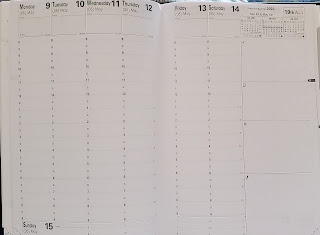
Carol: I, too, make a list for each week and break down the tasks if they feel overwhelming. I know and accept that I’m not going to complete everything—and that’s fine with me. I set work and home priorities and can transfer some to the daily note section of my Quo Vadis planner.


We find that for ourselves and colleagues, the following tips also help:

o   Break Down Tasks into small (and even smaller) bits—break into pieces that feel absolutely doable, no matter how tiny! The important thing is to complete a task. 


o   Set Real Deadlines but be generous to allow plenty of time.


o   Change Something: direction, activity, content—it clears and opens your brain to return to the original task.


o   Talk With an Empathic Friend


BONUS TIP! From Carmela Martino, who heard this at Dr. Laurie Santos' The Happiness Lab podcast: Think about how you will feel when [the thing] is done! And find a way to celebrate!


Final Thoughts:

Carol: When I’m ‘putting off’ writing-related business or need a break from those things that must be done, I busy myself with other small tasks, or I relax and distract myself with reading or watching an old video. I don’t judge myself because that never helps me—it makes things worse. Compassion for the resistance to act allows me to explore it with interest and nudge myself gently forward. 

But I also want to say this: Life events call us from our work. I’m grateful that I still have the ability to take care of necessities and crises, to hold tight to and nurture relationships, and to enjoy relaxing time. I don’t view these as taking me away from my writing. 


Julie: Carol’s tips on reframing my tendency to procrastinate and being kinder to myself have helped already! And my new list strategy, mentioned above, is working because I am holding myself accountable for my goals.


What are your experiences with procrastination and tips for moving past it?
Photo by Brett Jordan (Unsplash)

Wednesday, April 14, 2021

GETTING "UNSTUCK" - SPARKING CREATIVITY By Eileen Meyer


Have you felt your creativity sapped at some point during the past year with the pandemic? What can you do to help ignite a creative spark for writing or illustrating work? How can you think differently when you need to solve a difficult plot problem, address writer's block, or come up with a fresh idea?


Let’s first consider how the brain works. Neurons are the brain’s building blocks—those nerve cells send and receive signals along the brain’s pathways. When you feel stuck in a rut, your brain might actually be stuck on a neural pathway that you keep following over and over again.  What can you do? Create a new neural pathway to make new connections. Harvard Professor of Psychiatry John Ratey notes, “A person who forcibly changes his behavior can break the deadlock by requiring neurons to change connections to enact the new behavior.” (see A User’s Guide to the Brain) Your brain will greatly benefit from experiencing new sounds, sights, smells and even tastes—and as a result, be energized!


So how can you boost your creativity? I posed this question to fellow creatives online to discover what they did to help them become “unstuck.” Their responses were wide-ranging and intriguing.


GET MOVING!

Patricia Hruby Powell doing "The Charleston"  

Many writers and artists noted that physical activity was key for them. Former professional dancer and author Patricia Hruby Powell finds that any form of dancing (tap, tango, you name it) will help her to break through an impasse. “Nowadays, I do a zoom tap class on a sheet of plywood in a wide spot of my hallway. Tap develops my brain to work in a certain way. To learn steps. . . . I try to get into the body-mind-soul of the people I write about. I can become them by moving like they move, I think. At least I try to.”  

Artist Laurie Barrows shared that when she is out hiking, she always takes a sketchbook with her to jot down notes, draw or play with ideas. Being in different and beautiful surroundings helps spark a new thought process. Many people noted that simply walking outdoors was key for them to let their mind relax and wander, forming new connections to help solve a problem. Others mentioned that cycling, swimming, and working out helped them jump start new ideas. So if you’re stuck—get your body moving!


ENGAGE IN OTHER CREATIVE PURSUITS


Nancy Sanders with one of her lovely quilts!

Author Nancy Sanders uses quilting as a way to break through writer’s block. “Before I sit down to sew, I jot down my writing goals for this creative break. For example, if I’m writing a segment of rhyming text and am stuck on a rhyme, my goal is to write the next stanza. Then as I pick up my fabric and get to work on my current quilt project, I allow my brain to relax and play with the problem I was struggling with. Many, many times, within minutes my writing task is accomplished and back I head to my writing desk. Something about the creative process let’s my brain relax, not feel the pressure I was demanding of it a minute ago, and I can break through that dreaded writer’s block.” Here’s Nancy with one of the quilts she loves making.


Author Katey Howes also likes working with textiles and finds weaving on a small loom helps spark new ideas. Writer Jaimie Franchi likes planning the creative use of plants. She finds caring for them in her home garden is the perfect answer for her.


Jessica Henderson, Maria Marshall and Sherry Roberts all use photography to stimulate their creativity and writing. Middle school teacher and author Sherry said, “Sometimes I just need to think and I find that going on a walk and taking photos helps. This creative outlet has led to a new contract where I am the author / photographer for a non-fiction series!”  Congratulations to Sherry—her solution for getting unstuck actually created a brand-new opportunity!


Inspiration photo - Julie Phend 

Author Julie Phend  takes photography one step further as she finds inspiration from nature and then creates her own art in a watercolor journal she started this year. “When I take my daily walks, I snap a photo of something that captures my attention, and I try to recreate it in a painting. I often find myself creating a poem or quoting a

Watercolor Jrnl. Entry - Julie Phend

snippet of poetry inspired by the painting. This opens my mind to new possibilities and inspires me to notice things in a different way.” Fabulous point, we are seeking to stimulate our brain and look at things in new ways!


TRY A SURPRISING SUGGESTION


A few writers swore by this solution—which totally took me by surprise! What is it? VACUUMING! Elaine Kiely Kearns, Joan Slone, and Tara O’Dowd love to problem-solve while running their vacuum cleaner. This physical, yet rote activity frees up their brains and the noise actually blocks out other distractions. Tara noted, “I’ve had enough epiphanies while vacuuming that expectation may play a role. I also assume I will solve any problems in my life as soon as the vacuum starts.” Bonus for these writers– a clean house PLUS a new idea!


So try something different or new to help your brain get unstuck—and have fun doing it! Get out there - dance, quilt, weave, take photos, sketch, try chalk art on your front sidewalk or even run your vacuum cleaner to solve a difficult plot problem, address writer’s block, or come up with a fresh idea.


WHEN ALL ELSE FAILS . . .

I’ll leave you with one final option.


Author Natalie Rompella finds great insights in an unlikely place—in the shower! So much so that she even has a handy-dandy waterproof notepad her husband found for her. (YES, these do exist and Natalie is a big fan!  Search for “waterproof notepad” to find great options from your favorite online retailer.) Engaging in an activity like taking a shower doesn’t require a lot of effort, so our mind is free to wander. And creativity and relaxation have a strong link, so it’s worth a try. Who knew you could simply lather up and come unstuck! Just be sure to jot down your great idea . . . Happy creating!


Wednesday, December 18, 2019

ANYWHERE: The Place Ideas Live — Part One by Carol Coven Grannick

As I think about the school visits I hope to do after Reeni's Turn (my MG novel in verse) arrives in the world, I anticipate a child asking a question so many writers hear: Where do you get your ideas?

As writers, we know for sure that working hard to find ideas may not the most productive way of discovering ideas.

It's a seemingly simple, but actually complex question, because it involves our brains. And we don't really mean 'ideas', which by definition are thoughts or opinions. We mean thoughts or opinions that are unique, new, or completely different. They turn us suddenly onto a new path with a delightful shock, or slowly with awe and wonder. We can feel the difference!

I found myself thinking about the where-ideas-come-from question during a recent walk in the Mary McDonald Woods at the Chicago Botanic Gardens. It's a place in which I feel my brain clear out and open up as soon as I enter.

That day, my husband and I strolled along the winding trails, quiet, taking in the soft feel of the path, the almost-bare trees, the clean smells. After awhile, I stopped to take photos here, there, up into a tree.

I'd click, then tuck my phone away and pull out a small notebook and pen and scribble in a word or phrase. It wasn't something I planned. But it was something I was prepared for.

My mind popped with ideas for poetry inspired by a leaf,

Frozen in Time

young trees growing in a group,

Family Portrait

and two trees in 'conversation'.

My Nest's Bigger Than Your Nest


I believe it happened because my brain was open to two important aspects of discovering and receiving creative ideas: 1) noticing and 2) surprise.


Who forgot to sweep the floor?


 I Promise, It's Up There!!


May I Lean On You?


The outdoors offers many opportunities to notice, and according to research, to allow our brains to "open". And I do believe that time outdoors impacts the brain. But I also believe we can experience an open brain, receptive to noticing and to surprises, anywhere.

One of my indoor places that's loaded with opportunities to notice events, comments, and interactions is my favorite early childhood center.


Words spoken by the two, three, and four year-olds light my brain up and whisper, Surprise! And suddenly there's a new idea for a poem, a short story, or a picture book.

Creative ideas can happen in relaxed moments, or in response to a sensory, internal, or external experience so compelling that it pushes the brain into a state of attention, reminding it to find delight and poetry in a thing, an event, or an interaction.

Or they may occur during the routine chores of everyday life—folding laundry, cutting up veggies, mopping the kitchen floor.  It's not hard to love these times, the small, routine activities of daily life, when they become opportunities for receiving surprising ideas that float or pop in.  

It's as if the absence of looking for creative ideas—or even needing them—allows them to arrive in our brains, as long as those brains are open to the world around us—anything, everything, and anyone in it. 

Any moment we're alive in the world and open to noticing, our brains may also open to the surprise of a creative idea. Those wonderful new ways of experiencing anything in the world happen anywhere we are.

And then all we have to do is grab the nearest piece of paper and write them down.

Which means keeping paper everywhere...and especially, Anywhere.

Where or how do you find your Anywhere?

(Part Two: coming in February)


Wednesday, January 23, 2019

DRESS LIKE A GIRL - A Fashionable Interview with PATRICIA TOHT about her latest PB, including a BOOK GIVEAWAY

Patricia Toht talks girl power, two new books releasing in 2019, and some wise writing advice she received  . . .

By  Eileen R. Meyer

Welcome to another TAKE FIVE interview. I hope that you’ll take five minutes to get to know more about our fellow GROG BLOGGER, Patty Toht and her latest picture book, DRESS LIKE A GIRL.

Patty's new picture book released just yesterday, January 22nd! Her book birthday also happened to coincide with Patty's actual birthday, too--what a great birthday gift! Cake and ice cream for everyone. :) Now on to our Five Questions for Patty:

   1. What was the inspiration behind your new picture book, DRESS LIKE A GIRL? Did your 3-year old granddaughter have anything to do with it?


The book is dedicated to my smart and feisty granddaughter, but the inspiration actually came from Twitter! Early in 2017, a story circulated about a new White House dress code, reportedly stating that female employees should “dress like a woman.” As a result, women began to post photos on Twitter, wearing professional garb that was anything but traditionally “lady-like.” There were astronauts, firefighters, soldiers, construction workers, scientists, etc. After I re-tweeted several images, my agent dropped me an email with a little nudge: “What about Dress Like a Girl”? BRILLIANT! The text came together and was submitted and sold very quickly. (So unlike me - I can be The Pokey Little Writer sometimes!)

2.  This is your third picture book. You’ve previously released: All Aboard the London Bus, 2017 and Pick a Pine Tree, 2017. Tell us more about your writing process. As an author who also works a full-time job and manages a busy family life, how do you work to squeeze in writing and revision time?

I’m anything BUT consistent with my writing, especially with new projects! Although I’m obsessed with recording new ideas in tiny notebooks or on a phone app, I often carry these ideas around in my head for months until I finally get started on them. It’s like a pitcher being filled, and until it reaches overflow level, I’m willing to let it keep filling. But the positive twist is that my first drafts tend to be very well-developed.

As for revisions, I can be grumpy about revising, (my critique partners are angels for dealing with my grousing!), but I love working to an established deadline. I dig in and get the work done. The text for Dress Like a Girl was almost completely rewritten twice, so there was a lot to do!

3. What is the best writing advice that you ever received?  Did it encourage you during a time that you felt stuck?

The best advice I received came from fellow Illinois author Carol Grannick. We both had begun writing for children during the days of snail mail subscriptions, when editors actually sent correspondence in return – either acceptance or rejection letters. But this practice sadly disappeared, to be replaced by a bit of a black hole, with no word unless editors or agents wanted to acquire your work.

Carol had grown discouraged by this and had written a post about putting aside thoughts of publication to focus on craft and writing that brought joy. I decided to do the same. After a few years of doing just that, I discovered that I was enjoying the journey again and my writing had taken a leap forward. I was then ready to start submitting again.

4.  Share something surprising that people don’t know about you.

Most people outside of the Chicago area don’t know that I’ve been writing for over 20 years! It wasn’t until recently that I’ve been published, so many folks see me as a “new” author.

5. Tell me a little bit more about the artist for your book, Lorian Tu, and about how her style was the perfect fit?

My co-creator for Dress Like a Girl is illustrator Lorian Tu. Lorian has illustrated two books for a small press; this is her debut picture book with a large publisher. I’m excited that HarperCollins teamed up my words with Lorian’s illustrations! Her girl characters are adorable, and I love how the overall theme of a sleepover holds everything together. Some pages were a wonderful surprise, like the penguin outfits in the Arctic scene. My original thoughts about the outfits were to keep them quite literal, so I was happy to see the girls in the book being more creative and whimsical. You can check out Lorian’s work on her website, www.loriantubooks.com.

In closing – Patty, you have another book releasing later this year – Pick a Pumpkin! 2019 will be a very exciting year for you. Where can readers and fans find you on social media?

I do have another book coming out in 2019! Pick a Pumpkin (July 2019) is a companion book to Pick a Pine Tree, which came out in the autumn of 2017. Jarvis has illustrated them both in a rich, nostalgic style. I am completely crazy over his illustrations! Lucky me, he will also be illustrating a future book of mine, Together With You (date TBD).

Readers can find me in several places:

My website = www.patriciatoht.com
Facebook = Patricia Toht
Twitter handle = @patriciatoht
Instagram = patricia.toht

Thank you Patty! For readers - leave a comment below and you'll have a chance to win a copy of Patty's new book, DRESS LIKE A GIRL! We’ll announce one lucky winner from those who comment by Saturday, February 2nd.

Thank you for having me, Eileen! I’m so happy to be part of the kidlit world!


Patty is involved with the #KidsNeedMentors program. 
Here is Patty visiting with students and sharing a sneak preview 
of  PICK A PUMPKIN, due out later in 2019.


Wednesday, May 2, 2018

Paying for a Professional Critique - Some Thoughts


By Leslie Colin Tribble


It’s been a slow year of writing for me. I wasn’t able to attend any conferences in 2017 and didn’t get a chance to have an agent or editor critique any manuscripts. I have several manuscripts that need some final work, but I’m just not sure how to get them to that polished state and my critique group has helped about as much as they can. What to do? 

I’ve decided to pay for a few professional critiques.

Before jumping in, I asked writer friends and folks within Facebook groups what they thought. I've taken their responses and come up with some tips for deciding why to pay for a critique and how to find the best person to do one. 

Hunting for a critique service doesn't have to be hard.

 Why Pay for a Critique
1.       You’ve written a story. And rewritten. Your critique group has been through several rounds of revisions with you. The story is Just. About. There. But you know in your heart something’s Just. Not. Right. This is the perfect time to pay for a professional critique. This person will read your story with a completely fresh set of eyes and will see it in a way neither you, nor your critique group did. That clarity can be the focus needed to make your story sing.

Who needs a professional critique? Maybe you do.

2.       Maybe you’ve already had too many people look at a manuscript too many times and are receiving too much conflicting advice. Again, that fresh set of eyes might show you the right path forward.

Critiques help you get back on track.

3.       Author (and critiquer) Jill Esbaum feels that a professional critique can shorten a writer’s learning curve. She feels one of the differences between published and unpublished writers is published writers are willing to listen to criticism and do the revision work necessary to perfect a manuscript.

Can you bearly stand to hear criticism?

How to Chose A Critique Service
4.       When paying someone to critique your story, choose wisely. Jill Esbaum says book editors, as gate keepers of the kid-lit world, might be a good place to start. But published authors can talk to you on a writer-to-writer basis and possibly explain problems in a way that’s easier to understand. Everyone I asked said to definitely find someone who writes, or edits the type of book you’re writing. Is your book a non-fiction picture book biography? Then don’t pay for a critique from someone who writes YA fiction.

Critiques keep you afloat.

5.       Price isn’t everything when it comes to paying for a critique. You need to make sure you understand what you will receive from the professional. Will they do line edits? Are they simply critiquing the scope and tone of the story? Will they provide a detailed write up of the critique or simply a summary? Do they offer a phone consultation or possibly a second consultation? Do your research and compare services, not just cost.
  
I can’t wait have my manuscripts critiqued. I think it will be just the boost I need to get my stories off my computer and out into the land of submissions!

Have you paid for a critique outside of a conference? What are your thoughts?

Critiques help you see the big picture.