Showing posts with label children's poetry. Show all posts

Wednesday, February 16, 2022

The Cybils Poetry Award ~ by Christy Mihaly


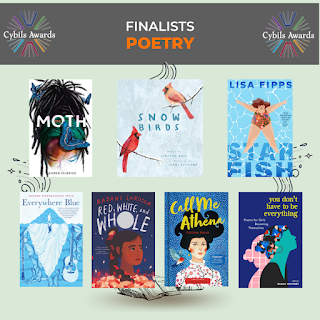
The Cybils Awards for 2021 books are out! These awards for children's and YA works recognize books with "highest literary merit and popular appeal." That's a tough standard, and it's hard to choose just one winner. 

I should know--I was a Round 2 judge this year in the Poetry category. We were tasked with reviewing a diverse field of finalists, and each of these books was truly wonderful in its own way.  I recommend them all!

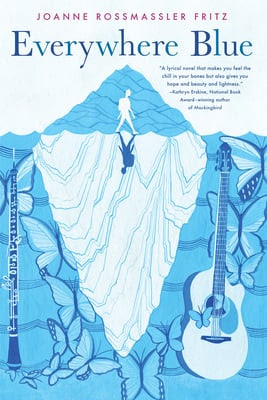
Aaaand: The Cybils poetry winner is: Everywhere Blue by Joanne Rossmassler Fritz.

Congratulations, Joanne! This middle grade book is a a lovely and lyrical novel in verse. Maddie, the appealing and earnest protagonist, comes from a musical family and the story uses engaging poems to weave together music, mystery (Maddie's brother goes missing), family dynamics, and love for Earth. 

The judges were particularly impressed with the author's sensitive and age-appropriate treatment of difficult topics, including mental health and environmental crises. Beautiful poetry and interwoven musical references make this a truly outstanding work. 

And for more virtuoso poetic works, check out the other finalists: 


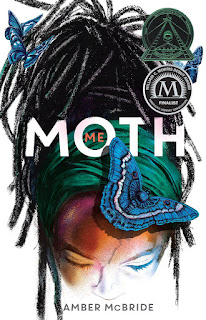
Me (Moth), by Amber McBride is a YA fantasy verse novel about grief and loss. It's also a ghost story and a powerful tale of healing, with haunting language and gorgeous imagery, full of myth and music and metaphor, and with a stunning twist. This masterpiece of storytelling was a finalist for the National Book Award for Young People's Literature. 
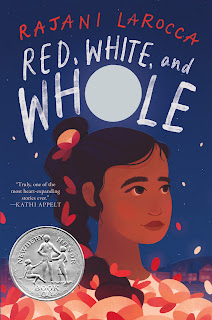
This book made me cry! Newbery Honor winner 
Red, White, and Whole, by Rajani LaRocca, is a middle grade verse novel that deals with growing up and grief. Reha lives in two worlds: Indian (her parents are immigrants) and not (as she works to fit in, in middle school). When her mother becomes ill, Reha realizes what's most important, and finds her courage. Beautiful use of metaphor and poetic language.


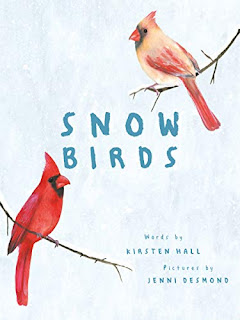
Snow Birds, by Kirsten Hall, illustrated by Jenni Desmond, is a collection of lively poems celebrating the birds that spend the winter in snowy climes. The art is superb, and the book conveys plenty of interesting information about winter birds. A sampling of verse: 

Black Rosy-Finch

Hop! Stop! Hop! Stop! SO MUCH SNOW!

    Check! Peck! Check! Peck! COME ON, LET'S GO!

        Peep! Cheep! Peep! Cheep! WE WANT MORE!

            Till back they bounce through the barn house door. 

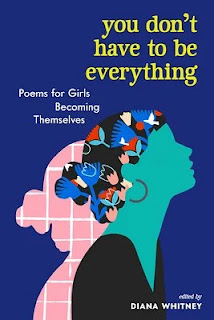
In You Don't Have to Be Everything: Poems for Girls Becoming Themselves, Diana Whitney selected works by 68 poets including Amanda Gorman, Margaret Atwood, Naomi Shihab Nye, and Elizabeth Acevedo. The poems, exploring themes of loneliness and longing, seeking and sadness, shame and rage, speak to girls coming of age. Whitney says she wanted to collect voices she wished she'd heard when she was a teen. Here's an excerpt from a poem  by Elizabeth Spires, "Questions for Google": 

What does it mean and why does it matter?

How do I get from here to there? 

Where is the line that cannot be crossed? 

Why is the first time the best? 

Who will be coming and when will they get here? 

How long will it last before it is over? 

Who has the right and why do they have it? 

Who is the most important one?  

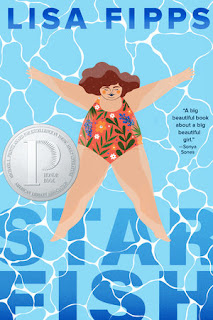
StarfishLisa Fipps has been garnering well-deserved praise (including a Printz Honor) for this powerful and beautifully written middle grade novel in verse. Ellie faces bullying (about her weight), and tries to live by the Fat Girl Rules. She finds friendship and acceptance, and through therapy finally feels ready to confront her badgering mother. Middle grade (and older) readers will respond enthusiastically to this much-needed title.

Call Me Athena, by Colby Cedar Smith, is an evocative YA historical novel in verse. It tells the story of a girl's coming of age in a Greek-French immigrant family in 1930s Detroit. Told in beautiful poetry with multiple voices and great historical details, this book impressed the judges with deep historical research and comprehensive back matter. 


If you haven't read these, don't wait -- get down to your library or bookstore and check them out. If you have -- what's your favorite? Are there other recent works of poetry you'd recommend? Please share in the comments. And thanks for supporting poetry for kids!

Wednesday, April 21, 2021

Books for Earth Day and Poetry Month ~by Christy Mihaly


Today let's explore poems about Earth! Tomorrow (April 22) is Earth Day . . . and of course . . .  

April is National Poetry Month. 

SO: Here's a quick round-up of ten Earth-themed books for kids. Of the many books out there I chose 5 outstanding poetry books and 5 favorite rhyming picture books. Please add your own in the comments! 

Nature-Themed Poetry Books

Poetry is an ideal way to encourage kids to explore nature: reading and writing poems makes us slow down, observe, and ponder the wonder and the connections.

The Wisdom of Trees: How Trees Work Together to Form a Natural Kingdom
(Roaring Brook, 2021).
This new picture book is written and illustrated by Lita Judge. It illuminates cutting edge science about how trees communicate and collaborate in communities. Judge uses heartfelt, evocative poems to convey the magical-seeming properties of trees. Gorgeous art complements the scientific sidebars and helpful back matter about each spread.

A Place to Start a Family: Poems about Creatures That Build (Charlesbridge, 2019).
David Harrison's dozen poems about animal architects, illustrated by Giles Laroche, provide a fun introduction to structures that animals build, from birds to fish, prairie dogs to king cobras and more. 

Sing a Song of Seasons: A Nature Poem for Each Day of the Year (Nosy Crow, 2018) is a gorgeous 366-poem anthology edited by Fiona Waters and illustrated by Frann Preston-Gannon. Though the selected poets tend toward the classical (Emily Bronte, Margaret Wise Brown, William Wordsworth, Robert Frost) with a smattering of traditional verses, it's a nice introduction for kids.

National Geographic Book of Nature Poetry: More than 200 poems with photographs that float, zoom, and bloom! (Nat Geo Kids, 2015). Whew, that title just about says it all. This book will engage young readers who love photos. It's filled with stunning Nat Geo images from around the world, paired with poems old and new. The poets here include Nikki Grimes, Langston Hughes, and Naomi Shihab Nye, and are collected by J. Patrick Lewis, a former children's poet laureate. 

Song of the Water Boatman and other Pond Poems
(HMH 2005) offers wonderful kid-friendly poems about the creatures and plants that live in and around a pond. Joyce Sidman starts with my favorites -- spring peepers, those tiny heralds of spring --  and moves through the seasons with poems and informational sidebars. Striking woodcuts by Beckie Prange bring the pond ecosystem to life.

Rhyming Picture Books about Earth

Chase the Moon, Tiny Turtle: A Hatchling's Daring Race to the Sea (Page Street Kids, 2021). In rhyming verse, Kelly Jordan captures the drama of a loggerhead turtle's post-hatching sprint across the sand to the safety of the ocean. The lyrical text and Sally Walker's engaging illustrations are sure to delight young readers as they learn about sea turtles and their struggle to survive.

Ocean Soup: A Recipe for You, Me, and a Cleaner Sea
(Sleeping Bear, 2021). Meeg Pincus's clever rhymes explain plastic pollution in the ocean, using the metaphor of soup -- how we threw all the ingredients in and let it simmer for years -- and includes specific actions kids can take to help. Bright illustrations by Lucy Semple keep the tone upbeat. 
 
Anywhere Farm (Candlewick, 2020) by Phyllis Root, illustrated by Brian Karas, stands out for its inclusivity. It encourages kids by letting them know you can start a garden on a city vacant lot ... or really anywhere: 
"But a pan or a bucket,
a pot or a shoe, 
a bin or a tin 
or a window will do." Empowering and inspiring.

One Earth
(WorthyKids, 2020) is a rhyming counting book that does it all! In addition to teaching the numbers, text by Eileen Spinelli and art by Rogerio Coelho share the wonder of Earth, and may inspire kids to want to take care of it.

Compost Stew: Recipe for the Earth (Dragonfly Books, 2014) puts a different spin on the "ocean soup" concept. It's a zippy rhymer that explains compost to kids. With clever rhyming verse by Mary McKenna Siddals and fun pictures by Ashley Wolff, this book is a great way to get kids excited about composting. 

Bottom line: Nature inspires great writing! This post just scratches the surface -- what other great books do you recommend?

Wednesday, September 25, 2019

Welcome to our newest blogger, Carol Coven Grannick! ~ by Patricia Toht

The GROG has added a new blogger to its roster:

Carol Coven Grannick!

PT: Welcome, Carol! How did you get started as a writer?

Carol: As a child, it seemed natural for me to write, to put thoughts and emotions to paper. From childhood on, poetry and wonderful stories delighted and moved me, and the most natural thing in the world seemed to be for me to create the same. I suppose without putting it into words at the time, it felt like this - this thing, this experience is 'me.'

As far as I've meandered from full-time writing, being a writer has always figured into my multi-faceted identity. But there did come a time, once I was writing for children in a committed way, when I said to myself that whether or not I ever became book-published, I was a writer, and would keep writing. For several years, I put submitting on the back burner, and that freed me to write exactly what I needed and wanted to write. I still do. The deepest joy is in creating and re-creating.


PT: What inspires you?

Carol: Everywhere I go, everything I do, every moment of my life, can inspire a poem or idea for a picture book. It could be something a child does or says, something I observe or experience during the day, but it's always something visceral and something that my brain sees in language. An idea comes from this kind of response to anything - always something that catches me, sparks a sensation of wonder, even awe. Something tiny, but breathtaking, whether beautiful, joyful, painful, sorrowful, will catch my attention, and I'll hear an opening line of a poem, a title or opening lines for a picture book.


Advice Image source and CC link
PT: You've written quite a bit for newsletters and blogs. What are your favorite bits of advice for writers?

Carol: It's true that I've written lots of articles on the writer's inner life for newsletters and blogs. In fact, before I had a professional interest in the writer's inner journey and the strengths needed for persisting on the journey, I wrote columns for my high school paper, and later longer papers and articles that always leaned "internal." 

I never offer advice that I don't take myself, and so the small pieces of advice I'd offer - as a writer and clinical social worker - are these overarching things:

  1. trust or learn to trust your emotions and refrain from judging them; 
  2. if a pessimistic framework seems to inhibit your work, choices, and life, learn - with help and practice - to reframe language into a heartfelt, optimistic framework; and
  3. when preoccupied with the self-absorbing issues of working at being creative, make certain that your life has "other-balance" - focusing on what you can do for others or the greater good.

PT: Which books and authors are among your favorites?

Carol: Many authors have impacted my writing life, from the ALL OF A KIND FAMILY books I received as a child and classic picture books like BLUEBERRIES FOR SAL, MAKE WAY FOR DUCKLINGS, and THE STORY OF FERDINAND, to the extraordinary books I discovered at Skokie Solomon Schechter Day School, where Irene Sufrin had created and shared a magnificent K-5 library that took my breath away and turned my writing journey toward children. I read and re-read Jerry Spinelli, Linda Sue Park, Katherine Applegate, Kerry Madden, Karen Hesse, Lois Lowry, Claudia Mills, Deborah Wiles, Frances O'Roarke Dowell, Richard Peck, and so many more I don't have room to mention.

PT: Tell us a little about your upcoming book. What was your path to publication?
Esther Hershenhorn

Carol: My middle grade novel in verse, REENI'S TURN (Fitzroy Books, 2020), is a story of becoming, as one of my mentors, Esther Hershenhorn, so aptly said - really, a story of a shy, self-conscious preteen girl becoming the girl she'd like to be, without giving up the person she already is. It is a body-positive story that challenges the cultural notion that who we are, what we achieve in our lives, and what we even allow ourselves to want, is dependent on the size and shape of our bodies. 
The seed story for the novel appeared in Cricket Magazine in 2001, and inspired the award-winning experimental film, La Folia (Filmelodic, 2018). For now, I'll say that REENI has been through many years and more drafts and versions than I could have imagined, with me facing plenty of obstacles not unique to our business, but important to learn from, and to share. The degree of help and support I received from so many people in so many different arenas was a true gift. I took a turn toward independent, traditional publishers in early 2019, and found my good (and best) match with Fitzroy Books and publisher/editor Jaynie Royal.
Carol spent time this summer on a creative retreat, led by
Esther Hershenhorn in Landgrove, Vermont.

PT: Do you prefer the initial writing or the revision process?

Carol: I prefer revision, hands down! I love revising and have learned to revise with the eyes of a stranger. The benefit of putting away a manuscript for some period of time cannot be overstated. Our brains need the distance in order to see clearly.

PT: What's next for you?

Carol: I believe I've circled back to where I began my writing life - with poetry, whether verse or poetic prose, it feels like where I belong.


Heidi Bee Roemer
Poetry for the very young is my primary focus right now. When I began writing full-time, for the first time in my life, in July 2018, I took an intensive class with Heidi Bee Roemer. I felt like my brain exploded into a garden. I couldn't stop writing poetry for the very young, and I didn't want to! My inspirations were, and still are, the beloved children at the cutting-edge early childhood center where I'd worked for six years, and continue to serve as a volunteer story-reader. Heidi is a wonderful teacher, and a loving and supportive mentor. My classmates and I continue to exchange valuable critiques online.

I'm also working slowly and carefully on a poetry chapbook for adults that deals with an experience in a major hospital that jeopardized my husband's life, and had a major impact on me that I'm still processing.

PT: Wow, Carol! What an interesting journey you've had. Your path and persistence are an inspiration to me. We're so looking forward to having you join us on the GROG!


Hello, Carol!


************ WINNER ALERT!!! ************

Congratulations to Andrea Page,
the winner of Michelle Schaub's
new picture book/poetry collection,
FINDING TREASURE!

Andrea, please contact Michelle via her website
HERE.


Tuesday, March 5, 2019

BOOM! BELLOW! BLEAT! by Georgia Heard and Aaron DeWitt


Greetings - we have a winner of this new title - Lynne-Marie.
Thank you everyone, for participating!
----------------------------------
Introducing Georgia Heard's BOOM! BELLOW! BLEAT!
with illustrations by Aaron DeWitt
picture book poem collection + giveaway
 * * * *
By JG Annino

I'm chirpy today with news of a community chorus collected in 
BOOM! BELLOW! BLEAT! 
Animal Poems for Two or More Voices.

This is an inter-active book that blares, whispers and
cajoles with an invitation to Read Aloud. 
Through the poem pages and beyond, nature notes
in this pitch-perfect picture book
invite us into a wild way of communication, some of which
I didn't know existed. You, your students, family, friends
will be baffled, excited and jubilant about questions raised and 
answers given in this clever approach to sharing creature sounds.
I can especially see this title selected by youth chorus directors,
music teachers & and youth musical theater directors, beyond
the family, library and school market.

Poems mentioned here are c.2019 by Georgia Heard

Cricket Arithmetic

Cold pierces evening
crickets crouch in corn stubble-
last chant of the year
chirp chirp chirp chirp chirp chirp chirp chirp chirp chirp

The crickets (channeling Georgia) provide two other poems
and also work on counting (in back-of-book nature notes.)
Right whales offer a deep-sea song,  
elephants speak in their own two voices,
from trunk tip, or, their mouths.
So many other creatures (I counted at least 40) also chime in.

Georgia Heard's spare poems provide room for child readers
(or their older companions) to expressively play the parts of
lungs (frogs, toads,)
swim bladder (some fish,)
claw (snapping shrimp)
to attempt to emulate sounds from origins other than mouths.
I knew a little bit about cricket wings, but not as much as this
book joyfully shares, not did I ever guess much about other body parts
that animal language tumbles from.


I like how illustrator Aaron DeWitt's double spreads
evoke a here and now mood in me, employing an uncluttered
digital painting style that is  transportive,
making me feel as if I am in the scene.

I hope you can read BOOM! BELLOW! BLEAT! soon.
As someone who sometimes writes to pals whatdoyouthink? I melted
at these two ending lines from Georgia Heard's poem, titled

" Bigclaw Snapping Shrimp"

...Fast,fishswimawayfast,

                                                               watchoutforshimp'sbubbleblast!


Call me a punster but I will mention that Georgia heard
the sounds in creating these poems and Aaron illustrates with wit.
You will likely read this book several times to select a favorite
voice, sound, or back story of how specific community chorus members
create their communicating ways. I finish the book and want to begin
again, thinking what a marvelous universe this is.
And no, I'm not identifying the wild individuals who are the source
of the three title sounds. You. Will. Be. Surprised.

- COMMENT here by March 15 for a chance to receive my review copy.

Other Georgia Heard illustrated books for children I am fortunate to
already have on my shelves, include 
FALLING DOWN THE PAGE, which is a collection of  list poems 
and also, THE PLACE I KNOW,  poems of comfort for all of us,
especially students, in these troubled times. More recently I have found
Georgia's guide, WRITING TOWARD HOME and also, 
HEART MAPS and eventually expect to share some discoveries in these 
at Bookseedstudio, my blog. 

Aaron DeWitt also created the huggable art for DREAMING OF YOU 
by Poetry Friday's AmyLudwig VanDerwater, so it's time to meet 
Aaron's work if he is new to you.
  
* * * * 


(Remember to comment & if you don't want to be included in the give away, just say so.)

Bunny selects a winner! Lynne Marie will receive this title. Let us know your postal address. 


Wednesday, June 27, 2018

Poetic Ponderings ~ by Christy Mihaly


POETRY
When I set my writing goals for the year, a big one was to write more poetry. I've dabbled in poems, and published a few. I offered some poetry ponderings in past GROG posts (one is here) but mostly I write nonfiction books. This year I wanted to develop my poetic side. I joined an online poetry critique group, and I've tried to find inspiration for a new poem every day.  I've also started submitting more poems to anthologies and magazines. It takes persistence! Here are some thoughts after a half-year of paying attention to poetry.

What's so great about writing poetry? Consider these points:

 The right words: In a poem, the selection of each word is crucial. Each word affects the rhythm, the meter, the "mouth feel" of the poem. Writing poetry helps strengthen my word choices in other writing.

 Playful words: Poetry encourages the writer to play with words. A poem doesn't need a plot. Its words may simply evoke a feeling, or describe an object or a moment, or entertain. Developing this in-the-moment mindset can enliven your prose writing too.

 A few words: You can easily write a poem in a morning--and it might even be publishable (after a little polishing). Of course you can write a poem just for the pleasure of it. But, if a writer is struggling through year seven of revising a major work in progress, selling a poem--and seeing it in print--can be a big boost. Kids' magazines, in print and online, often seek kid-friendly poems – the Cricket magazines have been particularly interested lately. (Check out their active calls for submissions, here.) 

Plus, a special bonus for aspiring authors: A  series of related poems can become a published collection, like Fresh-Picked Poetry, about farmer's markets by Michelle Schaub, or Rainy Day Poems, by James McDonald -- and so many others that kids love.
And once in a while, a poem grows into an entire picture book. Think of Jane Yolen's How Do Dinosaurs Say Goodnight? It's basically an expanded poem, like many other Jane Yolen books.

The text of Snow Sisters, published this year by Kerri Kokias, is a mirror poem, or palindrome poem, in which the same words are used in the first half and the second half, but in reverse order. Simple? Yes! Hard to write? Yes, to get it right. Brilliant picture book? Absolutely!

My debut picture book, Hey, Hey, HAY! (coming August 14) got its start as a simple rhyming poem about making hay. You never know! 

For more examples of picture books that are poems, check out Marcie Atkins's GROG post, here.

Interested but unsure how to begin? Some writers have a  practice of writing a poem every morning. I can't always make this happen, but when I do, it starts my writing day off with a creative splash. It's a great habit to cultivate. Your morning poem doesn't have to be great literature. It's good practice to just do it. 

If poetry still seems intimidating, try working within the structure of an established poetic form. I've found that experimenting with different forms often helps me get a poem started. Here are a few fun forms to try:

Acrostic

In an acrostic poem, a word or phrase is spelled vertically down the page. This word is the poem's theme or topic. Each line begins with the next letter in your topic word. Rhymes are not required.
(Variations: Each line of poetry ends with the letter of the topic word, or the topic word runs down the middle of the lines.)

Here's a simple example, using "Cat":

Content to snooze
and soak up the sun ...
till Songbird shows up.

© Christy Mihaly

Diamante
A diamante is seven lines long and is printed so that it forms a diamond shape. Again there are variations, but here's the basic idea: The first half describes one subject and the second half describes a different subject, which is often the antonym of the first but may be a synonym. 

The diamante's lines are prescribed as follows:

1: Starting subject
2: Two adjectives about line 1
3: Three gerunds (or -ing verbs) about line 1
4: Four words, consisting of two about line 1, and two about line 7. (This line sometimes has more words, and may be written as one or two short phrases.)
5: Three gerunds/-ing verbs about line 7
6: Two adjectives about line 7
7: End subject

Here's a quick diamante that I posted one recent sunny day—the end of April—when confronting a persistent pile of snow atop my long-suffering garden: 


Double dactyl
I'm a big fan of the double dactyl, which can produce some very entertaining light verse. (A "dactyl" is a three-syllable word with the accent on the first, such as "holiday.")

In a double dactyl, there are eight lines broken into two quatrains, or 4-line stanzas. Each of the first three lines of the quatrain consists of two dactyls. The fourth line contains one dactyl plus another stressed syllable. The last syllable of each quatrain rhymes with the other.

Other requirements: Line 1 is a nonsense phrase; line 2 is a proper name of a person or place. One of the other lines, usually line 6, is a single word that is double dactylic. (And, technically, it should never have been used in a double dactyl poem before.)

It's easier to see how this works by reading an example. Here's one of mine published in April in Imperfect: Poems About Mistakes, an anthology for middle schoolers edited by Tabatha Yeatts. This wonderful collection contains a broad range of middle-school-friendly poems about making mistakes (and learning from them). I included a factual note with this poem in the book – because, as most GROG readers know, it's nonfiction!

Rejecting Harry Potter

Hippogriff, schnippogriff,
Salazar Slytherin.
Publishers dissed Rowling’s
Sorcerer’s Stone.

“Magic won’t sell; we need
marketability!”
They’d be much richer, had
they only known.


© Christy Mihaly

Of course there are many more poetic forms, including the mirror poem, mentioned above, and one I've been meaning to tackle but haven't yet tried myself: the roundel. Children's writer B.J. Lee wrote about roundels recently over on Michelle Barnes's blog "Today's Little Ditty" recently, and rather than try to repeat what B.J. said, I urge you to check out her post here.

If you are interested in writing more poetry, you can read and listen to poems--in books and online--and talk with others who are writing them. Attend poetry readings and other events, and/or seek out a poetry group to join--or form one. Consider taking a class or two. I learned so much from Renee LaTulippe's wonderful "Lyrical Language Lab" online course. 

For more pointers on poetry resources and how to get started, see poet-author Patricia Toht's  GROG posts here and here. Other prior GROG posts about poetry include guest posts by Margarita Engle and Penny Parker Klostermann. And GROG poetry maven Jan Annino offers ideas about prompts, poetry month, and Lee Bennett Hopkins.

Go forth, poets, and good luck. If you're so inclined, please leave a favorite poem in the comments. And happy writing!