Showing posts with label Writing Ideas. Show all posts

Wednesday, January 2, 2019

Kick off the New Year with Story Ideas

by Sue Heavenrich


It's January, which means it's time to... StoryStorm!
What's StoryStorm, you ask? It's a month of brainstorming ideas. Any genre.
Ideas of all sizes welcome.
Big ideas that scribble across pages.
Tiny ideas that take up less than a line on an index card. Ideas sketched in pencil or a rainbow of crayon color.

In the past I've spent the month generating picture book ideas. Partly because that's how it all started - as PiBoIdMo (picture book idea month).

This year I'm trying something new: generating ideas for a novel that's been bumping around in my brain for the past year. Instead of 30 picture book ideas - why not 30 chapter ideas? Maybe take the characters out for a pizza party or pit them against each other in a snowball fight (followed by hot cocoa and graham crackers).

Tara Lazar is the fearless leader and person who came up with this brainchild of StoryStorm. Every year she creates a wonderful space on her blog, Writing for Kids (While Raising Them) for StoryStorm posts - an entire month of inspiration and insight from novelists, picture book writers, nonfiction writers, artists, and experts in creativity. And did I mention there are prizes?

It's great fun! But here's the catch: you've got to register now. Registration is open through Monday, January 7  here, where you'll also find a link to the Facebook discussion group. Then check in on Tara's blog every day for Storystorm posts (or be lazy like me and sign up for email links).

Grab a notebook! Sharpen your pencils! Sign up and ... StoryStorm away!

Thursday, January 5, 2017

Stalking the Wild Ideas


by Sue Heavenrich*


There’s a Storystorm going on over at Tara’s blog all month long – an opportunity to brainstorm ideas and get into the habit of jotting them down. I started off with a bang: lined up my row of shiny sharpened pencils, cracked open the spine of my spiffy new composition book, and wrote down a few ideas. But day #2 – not so good. What’s a writer to do when the ideas won’t come?

Thing is, ideas don’t just fall off trees. Sure, some might pop up like mushrooms in your lawn after a week of rain. But most ideas – well, you’ve gotta go after them. Fortunately you won’t need a reflective orange vest or camo yoga pants, but I still take along the essentials: string, pocket knife, butterfly net, thermos of hot tea, and enough chocolate to last three days in case I get caught in a blizzard (it’s winter in these parts).
 
Hunting ideas is like hunting any other wild game – you’ve got to learn everything you can about their habits, preferred food, and migration patterns. One of the best ways to locate an idea is by what it leaves behind: its tracks, scat, and other sign such as feathers, fur, scrapes and rubs. Some ideas mark their territory using scents; others build fanciful bowers decorated with candy wrappers and chipped tea cups. Ideas communicate using different calls and songs, so you’ll need to learn those, too.

If you’re going to head off on an idea safari, you should know how to read a map, so you won’t get lost. Although, as one of my friends said, holding the map upside down sometimes reveals the path.

There are many ways to capture ideas. One hunter told me that the best way is to get up before dawn while the ideas are still bedded down, and sneak up on them. Another simply stalks them. I like to swish a sweep net back and forth, but that tends to capture only the winged ideas. You may need to dig them out if they are hibernating under the snow. You can also set traps, baiting them with the sorts of things ideas like (chocolate, coffee, wine, hot dogs). Snares are best; deadfall traps tend to squash whatever they fall on.

Once you capture your idea you need a place to keep it. Most writers use some sort of journal, but you can easily tape them to index cards and toss them in a box, or press them into a scrapbook (like some people do with fairies), or even collect them in a jar. Some writers accession each idea, listing it in an index so they can find it later or filing it in an old card catalog acquired from a library that has gone digital.
 
As you prepare to head out into the wilds, here’s a quick list of places you might look for ideas:

  • Newspaper and radio stories – Science Friday (NPR) is a great source of nonfiction ideas
  • Magazines – next time you’re trapped in a doctor’s office or airplane, hunt for some ideas
  • Websites – WiseGeek, History.com, and On This Day
  • Lists – if you need ideas check out 20 Things the Dog Ate and Listverse
  • Library – wander through the shelves and jot down titles. Even those you misread might jiggle loose some ideas
  • Art museums and galleries – great places for field trips
  • Eavesdropping on conversations – kids, adults, loggers coming in for coffee and pie
  • Road signs and street names – like Blueberry Hill
  • Horoscopes
  • Fortune cookies – sometimes ideas are curled up inside
  • Songs and poetry
  • Photos
  • Story cubes and magnetic poetry tiles
  • “Weird but True” books
  • Boxes of photos, stamps, coins or other treasures
  • Places where children play
  • In the backyard, or a garden, a weedy patch along the roadside
  • Need more? Check out this post from a couple years ago.

 Good Hunting!
*Thank you to all the GROGGERS who shared ideas and photos! 

Monday, January 2, 2017

Start New Year with a Storm of Story Ideas


~by Sue Heavenrich 

I love the beginning of a new year. It gives me a great excuse to buy pens and notebooks and sticky notes... and inspires me to list my writing goals for the upcoming twelve months. And then... I eat chocolate and split wood and procrastinate.

But not this year because Tara Lazar - the very Tara of PiBiIdMo fame- has a brainstorming challenge to get us going for the year. It's called Storystorm and it happens this month! 

If you participated in PiBoIdMo - aka, Picture Book Idea Month - you'll remember it was during November. The idea was awesome: jot down an idea or two for picture books every day during the month - kind of like NaNoWriMo but with way fewer words.

The timing was not so great. "Over the years I kept hearing the same questions," Tara said. "Why November? It's always such a busy time, what with Thanksgiving." She paused, musing that she never meant it to be a burden. "So I got to thinking, what month could I do it?"

The answer: January. It's a new year and what better way to start a new year than with a month of new ideas!

"People probably have some writing resolutions to begin their new year. So I figured I'd make a challenge that would fit in with that. It would be like going to the [writing] gym," Tara said.

 But wait! There's more! Tara wanted to open the idea-generating challenge to any kind of writer or artist, whether picture book or novelist, illustrator or fine artist. "Putting aside time everyday to think about projects is a good habit," she says. "I see the Storystorm challenge as an opportunity for people to unplug and take time to think about their art." 

Storystorm is a month of brainstorming, Tara says. At the end of the month participants should have their brains filled up with ideas and be ready to go. Tara has a month's worth of guest bloggers lined up: novelists, picture book writers, nonfiction writers, artists, and experts in creativity. Registration is open through Saturday, January 7  here, where you'll also find a link to the Facebook discussion group. Check Tara's blog daily for Storystorm posts.

"It takes 30 days to make a habit," says Tara. She hopes people will continue this daily habit of catching ideas for the following eleven months.

When Tara isn't rounding up story ideas, she's busy writing and raising her children. She's a member on the Rutgers University Council on Children's Literature conference committee and also a mentor for We Need Diverse Books. She's written a bunch of picture books (The Monstore, I Thought This Was A Bear Book,    Little Red Gliding Hood, Normal Norman,Way Past  Bedtime, 7 Ate 9: The Untold Story) and she’s busy on her newest project: The Whiz-Bang Word Book - an illustrated dictionary. You can find out more about her at her website, taralazar.com

Monday, December 8, 2014

Mining Your Ideas by Pat Miller

It was the third week of January. I had asked my kindergarten students what special day was coming up on February 2. They guessed Valentine’s Day, Halloween, and Mother’s Day. I gave them a hint, “It’s the day when a small, furry animal pops up out of its hole to tell the weather.”
The five year-olds were stumped. Suddenly, one boy pumped his arm and said, “I know! I know!” When I asked him which animal popped up, he replied with enthusiasm. “It’s the armadillo!”
Not surprising for a child from Texas where there are no wild groundhogs. When the class left, I quickly jotted the conversation in my idea book. It remained there for two years until I needed to write a manuscript for credibility in my local SCBWI. After 33 rejections over two more years, Substitute Groundhog popped up out of its hiding place in my writer’s journal and went on to become a Junior Library Guild selection. It was reissued as an audio book, and was translated into French. Not bad for a “wrong” answer!

Perhaps you have a notebook or file of ideas, especially if you participated in Tara Lazar's Picture Book Idea Month. You've jotted down a lot of ideas and sparks of stories. Perhaps you’ve even earned your PiBoIdMo Badge of Completion. Now what?

First, let me ask if you know the story of Petunia. She was a goose who thought that carrying around a thick book under her wing was enough to make her smart. It wasn’t till she deciphered the word “dynamite” as “candy”, that the disastrous results blew open the book. Only then did Petunia realize that she had to begin the hard work of reading the book to become smarter.
For us writers, it's not enough to be content with capturing ideas. Now it’s time to begin the hard work of writing or illustrating the book. It’s not enough to be smug about the ideas we have tucked under the wing of our writing journals. Today is the perfect day to take the next step.
Turn back to your idea(s) and add something to the first story that catches your imagination. Extrapolate a plot point. Describe the main character. Write down what could go wrong for the character. No need to fully flesh out the story—unless it insists you do so. Repeat the process tomorrow with your second idea. In spite of the holiday busyness, keep going to your desk each day, fanning each spark a little more until one catches fire.
This is the process that will take your ideas and carry them through to possibility. Mining your ideas each day will eventually lead you to gold. You never know what will pop up out of the ground until you dig for it. Good luck with your own armadillos!
A version of this post first appeared on December 1, 2011, Tara Lazar's Picture Book Idea Month.

Tuesday, October 21, 2014

PiBoIdMo - Picture Book Idea Month- WARNING: Pie Might Be Involved by Kathy Halsey

No matter how you say it phonetically, "Pie. Bow. Id. Mow." it's time to sharpen those pencils and minds (wait, that would hurt) for a super challenge, Picture Book Idea Month! Find all the info you need at Tara Lazar's blog/website.

This is my second year for the challenge and this year Tara is even including instructions on how a classroom of kids could signup. What fun for all! 
"November?"you say. Yes, we are all busy come November, but one of last year's suggestions fueled a story that snagged me an agent...just saying...

Here's the 411...

1. It's' a daily challenge to come up with a new idea for 30 straight days.
2. There are great prizes, fabulous camaraderie, and it's free.
3. On Tara's blog, writing luminaries host and share their process to stay energized and find new ideas. You can hang out with Molly Idle, Aaron Reynolds & others!
4. Sign up is October 25-Nov. 4 here. 

Here's are tips to keep you organized...

1. AM is the best time for me to do this before the day takes shape. I always feel accomplished once I've written.
2. Blog posts come via my email and I create a folder for them in mail so I can always refer to them later.
3. I use a graphic organizer for each day to cover these areas: Doodle, Date, Idea, Title, Concept/Storyline (no more than a graph unless I'm on a roll), Themes that fit story.

4. No worries if you can't fill all the requisite days or spots on your graphic organizer! Some days will flow better than others. Just keep up momentum!
#173132360 / gettyimages.com
REWARDS!!!! 
1. New writing buds.
2. New discipline. 
3. Oh, and maybe pie...

Monday, September 1, 2014

The Shortcut that Changed My Writing Process: AKA Duh! by Pat Miller

As a novice writer, I thought if I had one or two pieces of the story puzzle, I could write my way into the rest. And I did--over months and months of fruitless writing. It was a long, daunting process. Here’s my former process, and the shortcut that changed everything.

Substitute Groundhog cover1. First strategy: Start with the ending. When I asked my kindergarteners what animal popped out of its hole on February 2, they were stumped until one blurted, “It’s the armadillo!”

His answer inspired my first book. But all I had was an unexpected character. WHY was an armadillo the forecaster? I thought of numerous scenarios. They were rejected 32 times. Each time the ms. returned, I revised. Once I finally got the beginning locked in, the middle perked up, and manuscript #33, Substitute Groundhog, was accepted by Albert Whitman.

Squirrel's New Year's Resolution cover
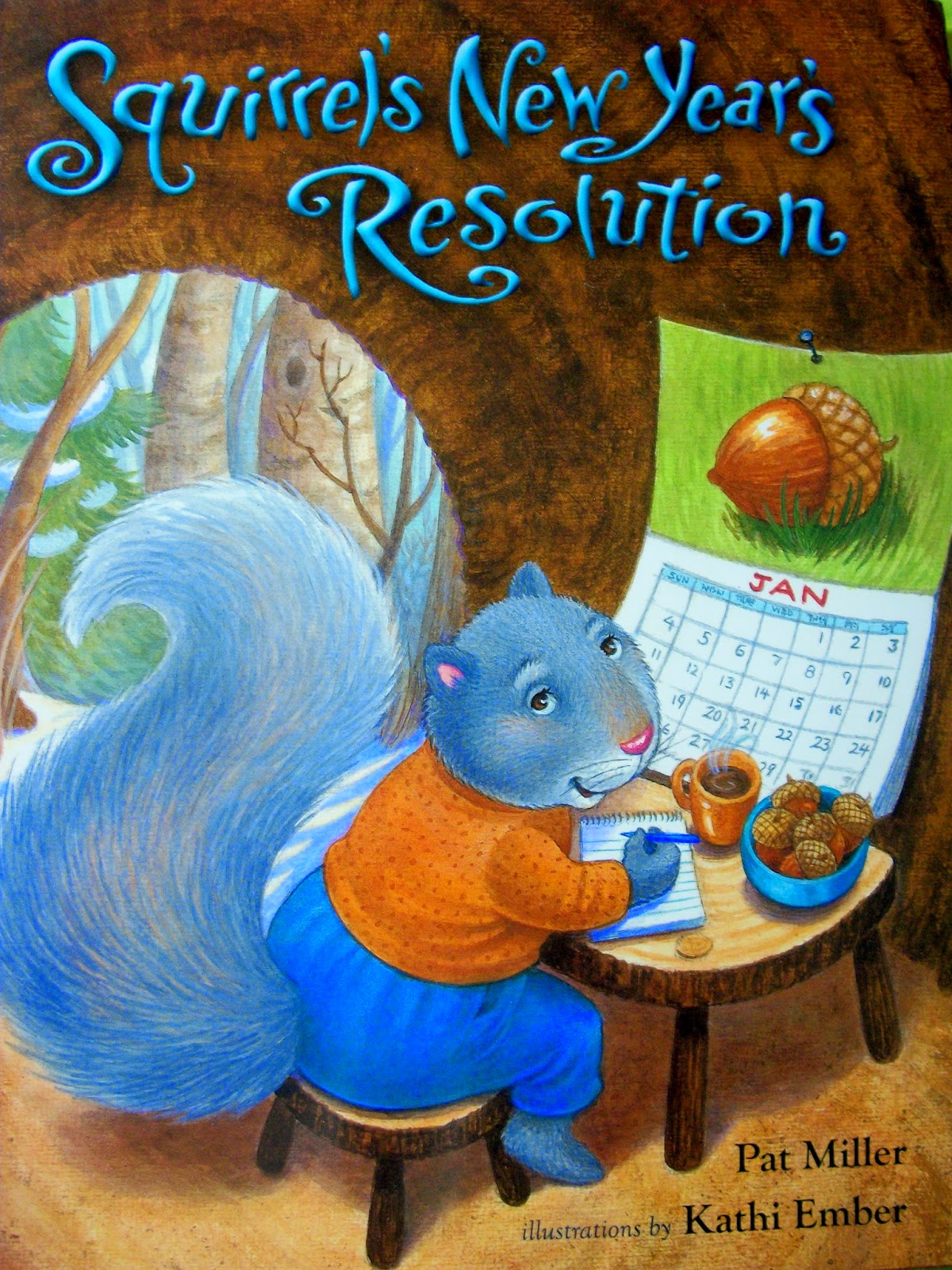
2. Second strategy: Start with the characters. Albert Whitman was looking for holiday books. I flailed around, brainstorming a number of ideas, none of which had any substance. When I thought of the characters from my first book, I knew what they would say and how they would interact. But I still spent months coming up with a variety of unsatisfactory holiday stories in which they starred. Eventually, I got it right, and Squirrel’s New Year’s Resolution was purchased by Albert Whitman.


We're Going on a Book Hunt cover3. Third strategy: Piggyback on a traditional tale. This one worked because the original tale provided the beginning, middle, and end. Early in the semester, I shared We’re Going on a Bear Hunt with my students, and it donged (as my husband says) on me that this was the perfect pattern for my book on library orientation. It was just a matter of altering the traditional tale to fit the library content. It sold within a week to Upstart Press. I was getting closer to the shortcut.


Library Monkeys cover4. The shortcut! Get all the pieces in place first. I was doing 
some things right, but not consistently or efficiently. I studied my first three books to determine how I could shortcut this ineffectual process. Call me a slow learner, but I made a list of the key story elements. Then I filled them in with my ideas. This time, I wanted to write a fun story about book care. Here’s my plan:
  • Characters: Five mischievous monkeys à la Curious George
  • Problem: Big sis discovers that her sibs have damaged their books
  • Beginning: The five little monkeys are in bed reading together
  • Middle: One by one, big sister discovers that her sibs have damaged their books (I listed four common problems)
  • Solution/Resolution: Don’t worry, you can…. (book care solutions with Ms. Booker)
  • Ending: All is well, with books repaired, lessons learned, until they discover that Big Sis has an overdue book!
After brainstorming all these sections, I was able to use the bouncy rhythm of "Five Little Monkeys Jumping on the Bed" to frame the story. Upstart bought the ms. and published it as story cards.

Knowing ALL the key elements first made the difference. My writing was more targeted. I knew where I was going, who was coming along, and what problems and solutions we would encounter. The actual trip was much easier than my previous strategy of setting out with hope but no map and only a sketchy plan. 

Examine some of your favorite children’s picture books, using this outline. Do you see how everything else falls into place? Sure, this is Writing 101.  But if you didn’t take that class, you may be floundering around like I did. Focus, plan, then write once you have all the elements worked out. Bon voyage!


Monday, July 7, 2014

Create a Summertime Journal ~By Suzy Leopold

In a previous GROG post, about journals, I shared information on why one should consider keeping a journal or two, or three or even more.  Are you writing in a journal?  I do hope the answer is a resounding, "Yes!"  If not, here's an opportunity for you to make and create a journal for yourself and even consider making and creating journals to share with others. 

Throughout the years, my students have enjoyed making and creating journals.  The journals were used to display "published best copies," written during a Writer's Workshop lesson. Illustrations were added.  Creating student journals for the content areas of Math, Social Studies and Science are very effective. 

Consider making memories creating a personal journal, this summer, with your kids or the grandkids.

Being a crafty person is not required.  If you are a reader and a writer, you can construct your own personal journal to write thoughts, lists, ideas, poems, stories, doodles and much more. Making a journal just takes a little time and patience and does not require much money.  

Begin with the following materials:
1.  A composition notebook
2.  Four pieces of scrapbook paper 12 X 12 inches. Cut two pieces 12 X 8 inches for the outside front and back covers of the notebook. Cut two pieces of scrapbook paper 6 x 9 for the inside front and back covers of the notebook.
Note:  Be creative and consider using gift wrap paper, construction paper, cardstock, linen type paper or even brown craft paper.  All work great.
3.  Glue stick
4.  Hot glue gun
5.  Scissors
6.  Ribbon, rick rack and/or twine
7.  Embellishments
Note: Scrapbook letters and/or stickers, recycled greeting card cutouts, buttons, etc. make great additions.
8.  A Paper Folding Tool or Straight Edge Tool [optional]
Gather the supplies needed to create a personalized journal.
Many of these items you may have around the house. If you do not, consider purchasing what is needed from a local retail store or a indie craft store. 
Using a glue stick, generously apply glue to notebook.  Line up and place the cut scrapbook paper to the front of the composition notebook.  Repeat for the back of the notebook. The scrapbook paper should line up to the spine of the journal without gluing the paper onto the black binding of the note book.
Use a folding tool or straight edge tool, to smooth out any air bubbles, which helps to adhear the paper to the notebook and provide a finished look.
My favorite folding tool is a kitchen gadget. It is a plastic spatula.
A ruler or a sample piece of vinyl works well. You could even try a credit card!

Triangle corner folds are glued securely.

Continue using the folding tool to make some more paper folds. Pressing firmly with your fingers, works well, too. Create triangle shape corners as you fold the scrapbook paper inward. Do this for both the front cover of the notebook and for the back of the notebook.
Make four triangles folds for each corner of the notebook.
Once the four triangles are folded, use the glue stick to adhere the corners to the notebook.  

Now it is time to fold the paper along the three sides, of the front and back, of the notebook, as you can see in this photo:
Glue and secure these three folds, on the inside front cover and the inside back cover. Press firmly or use a folding tool.
 
This is what your journal should look like at this point.  I used a laminated piece of paper inbetween the cover of the notebook and the first page, as the glue was not quite dry and I did not want any of the glue to stick to the first page.  You could use a piece of parchment paper or wax paper, to prevent sticking until the glue is completely dry.
A piece of laminated paper sits temporarily
inside to prevent the drying glue from sticking.
Just a few more steps.  And here is another picture of the journal project:
Using a generous amount of glue, attach the 6 X 9 pieces of paper to the inside front and back covers as noted in this photo: 
Be creative and use paper that compliments the paper on the outside of the journal.  Mix and match.


Attach ribbon type bookmarks to the
center seem of the journal
Open up the notebook to the center seem.  Using a hot glue gun, attach some ribbon and/or rick rack or even some rope or twine for bookmarks.
Tie a knot at the end of each bookmark.   


This is the final step to complete your journal. 

Time to personalize it and make it your own. Select some scrapbook letter stickers [self adhesive work great], some baubles and other embelishments to make your journal special. Use the glue stick or hot glue gun, to adhere the decorations to the notebook.  Add some bling and baubles!

You did it!  Your journal is ready for some words. Time to write!

Here is a picture of one of my many journals: 
Suzy's Journal

Hope your new personalized journal provides you with many opportunities to write.  Share your journal creations.
Journals galore for family and friends!

Friday, June 13, 2014

Inspiration [ĭn′ spǝ-rā′ shǝn] n. is Everywhere ~By Suzy Leopold

What inspires you to write?  Where do you find inspiration when writing for children?  How do you seek out ideas for inspiration to write children’s literature?

The American Heritage dic•tion•ar•y defines the word inspiration: [ĭn′ spǝ-rā′ shǝn] n.  1.  Stimulation of the mind or emotions to a high level of feeling or activity. 
Inspiration is everywhere.  As a writer, you can find ideas that stimulate thoughts and ideas in common everyday events, places, and situations that spur writing ideas for children's literature.

Think about the five senses that we all learned about in our elementary school Science lessons.  Can you name all five? 

1.  See   2.  Hear   3. Smell   4.  Taste   5.  Touch

Spending time outside, on the Illinois prairie, in our garden or riding my bike down the country roads, I am aware of my five senses and how they inspire me as a writer-in-process.  I keep in mind the audience that I write for -- children.
  • Observe the Sights of Summer

The bright, vivid colors of summer are everywhere, on the prairie.  While spending a lazy summer day outside, I note the blooming flowers and herbs are a rainbow of color. Red verbena, orange tiger lilies, yellow calendulas, a variety of green herbs, blue bachelor buttons, an indigo wandering jew, and sweet purple violas inspire me to write down some ideas for a non-fiction children's book.  Look closely and examine all of the wonder and beauty that nature offers during the season of summer.


  •  Listen to the Sounds of Summer

I can hear many sounds of nature and the word onomatopeia comes to my mind. The whooshing of the wind between the long needle pine trees, the chirpping and fluttering of the birds, the croaking bull frogs in the gurgling creek, the kerplunk of the weight from my fishing rod into the pond, the buzzing of a bee, and the chattering and cheering of children playing baseball in a nearby field are just a few of the summer sounds that I can hear.  These sounds inspire me.
While spending summertime with family, I am amazed by the smart, unique conversations with our grandkids.  I delight in their curiosity and wondering questions that they have about life. Listening to their interactions, vocabulary usage and innocent conversations, provide many interesting writing topics that are priceless.  
Reading with the grands in the reading nook is the best. All seven of them inspire me to write and to share the love of reading and writing with them. 
Be still and listen to 
the sounds of children. 
Take the time to 
jot down the precious words.
  • Enjoy the Fragrance [Smells] of Summer

Together my husband, Perry and I enjoy gardening.  Since returning to the Midwest, our homestead on the prairie, is under construction and evolving.  The other day, while mowing the lawn, I found inspiration. At one point, I took a short break, to write down a thought that popped in my head. I grabbed a clipboard and wrote down my ideas.  Two more times, my lawn mowing was interrupted by more writing ideas. Once again, I headed to the West porch to scribe more thoughts on the piece of paper attached to the clipboard. 

There are so many fresh summer smells that I appreciate -- the newly harvested potatoes from the vegetable garden; oh, and the lovely bouquets of hydrangeas, lilacs, and peonies, that fill our home with a sweet fragrance. The aromatic herbs, of basil, rosemary, and mint, are summer aromas that tickle my nose and are used for baking and cooking. All of these fragrances ignite writing ideas that I quickly jot down.

  •  Delight in the Taste of Summer

Around our house, summertime means special treats harvested from the garden. Nothing tastes better than a fresh, vine ripened, homegrown tomato.  And the first bite of a crisp Red Delicious apple, picked off of the tree is always delightful. Summertime snacks may be a refreshing ice cream treat or a juicy, tasty peach with the grandkids.  Savor the summer flavors.  Jot down adjectives that describe the tastes of summer, quoted by kids.  Write a poem using these descriptive tastes of summertime.

  • Feel the Touch of Summer
On sunny summer days, I feel the warmth of the sun.  On stormy days, the cool, wet raindrops bring much needed rain for the garden.  Take the time to touch flower petals, tree leaves, vegetable plants and herbs.  Walk barefoot through the cool grass or slosh through the muddy garden after a rain. Think about what you feel.  Now write these thoughts and ideas on a Notes App in your phone or in your special journal filled with picture book ideas.


My inspirations become my ideas.  


Over time, these ideas become a first draft, followed by many revisions and editing, several rounds of critiquing, more revising and editing. In time, these ideas will become a polished picture book manuscript, ready for submission.  

What sparks your inspiration, 
as you write for children?  

This summer, while out and about, spending time with your family and friends, be inspired by what you see, hear, smell, taste and touch.  Be aware of your surroundings.  Be present. Inspiration is all around.  Keep a notepad, a journal, or even a clipboard handy. Jot down your thoughts and ideas, from your summer experiences, that inspire you to be the best writer you can be.

Always write about what inspires you.
Write about the ideas that you are passionate about.
Write about what is in your heart.