Showing posts with label Pat Miller. Show all posts

Thursday, October 13, 2016

An Author's Note By ~Suzy Leopold

I’ve been thinking about the importance of Back Matter and how it adds another layer to a story. Back matter may include a bibliography, a glossary, a timeline, even additional facts and information serve as a resource to supplement the text. 

One element that is sometimes included is an author’s note. I want to acquire more information on how and why to compose an author’s note.
  • What is an author’s note? 
  • What is the purpose of an author’s note?
  • What should be considered when including an author’s note in the back matter of a manuscript? 
Believing in the value of learning and growing, I began researching this particular element and discovered it is a meaningful addition to back matter. 

I began my research by reading author’s notes written in a stack of currently published picture books. I used these books as mentor texts and began seeking answers to the questions about writing an author’s note.
Time to learn and grow. 

You’ll need a piece of paper and a pencil or pen. Write the numbers one through twelve and answer the following statements as true or false.

An author’s note is:

1.  A brief explanation about the creation of the book.

2.  A statement of purpose.

3.  The inspiration and insights behind the story.

4.  Sharing the journey of research and discovery about the manuscript.

5.  The story behind the written tale.

6.  Not limited to the genre of nonfiction.

7.  May be surprising, compelling and/or revealing.

8.  Adding layers of meaning and a bigger picture to the subject matter.

9.  A sneak peak into the creative process.

10. Enhancing the reading experience for the audience.

11. The last chance to make an impression on a reader.

12. An element that every reader should try.

Did you answer TRUE to all twelve statements? If you did, you are correct. 

Excellent! Super! Good job! Great! High five!

The four picture books that I read and studied the author's notes are:

THE HOLE STORY OF THE DOUGHNUT
By Pat Miller
Illustrated by Vincent X. Kirsch
Houghton Mifflin Harcourt 2016

I PLEDGE ALLEGIANCE
By Pat Mora & Libby Martinez
Illustrated by Patrice Barton
Alfred A. Knopf 2014

THOMAS JEFFERSON BUILDS A LIBRARY
By Barb Rosenstock
Illustrated by John O'Brien
Calkins Creek 2013

SEPARATE IS NEVER EQUAL
Sylvia Mendez & Her Family's Fight for Desegregation
By Duncan Tonatiuh
Abrams Books for Young Readers 2014
Let’s continue to learn and grow together. Share your knowledge and understanding of an author’s note. Perhaps you have some additional thoughts and tips. Post what you know in the comments below.

Writers know that words are fundamental to writing. Choosing the just right word is essential. Selecting the just right vocabulary is important when writing a story that draws and engages readers.

The German word for vocabulary is wortschatz. Translated it means “treasure of words”. May you choose words selected from your treasure box of words and write the right words for your manuscript and for an author’s note.

Thursday, April 28, 2016

The Hole Story of the Doughnut by Pat Miller


By Janie Reinart

Ummmm. Doughnuts! I used to work at a bakery when I was in high school. The going rate was eighty-five cents an hour, and all the doughnuts I could eat! I never once thought to ask,"Who invented the doughnut?"

Lucky for us, the lovely and talented Pat Miller answered that question and her new book, The Hole Story of the Doughnut is debuting on May 3, 2016.


Pat how did you get the idea for the book?

When my husband and I were taking a harbor tour of Boston, I heard the guide say, “And over there is where they buried the guy who invented the doughnut.” 

We know who that is?! I quickly wrote the fact in my author’s notebook, which is a part of my wallet, and then forgot about it. 

The next year, I was attending a Highlights nonfiction workshop, and we were required to bring a nonfiction manuscript. Yikes! What would I write about? I scavenged my writer’s notebook and rediscovered this fact. That was the beginning.  


How long did it take you to write the story?


The research took a heady six months. I LOVED being a detective and finding facts that have been hidden from history. 

Making myself stop searching and start writing was difficult. It took me another six months and numerous rewrites to finish the text. 


Do you have an agent?

For my first 25 books, I had no agent. Stephen Fraser of Jennifer De Chiara Agency saw my most recent story through Julie Hedlund’s 12 x 12 and asked to represent it. 

He placed The Hole Story of the Doughnut with Houghton Mifflin Harcourt. Steve saw it in January of 2013, Kate O’Sullivan of HMH bought it in July. Then it sat for a year while its turn in the editorial cycle came up. It debuts on May 3, 2016. 


What inspires you to write?


Sitting down to my desk in my lovely little office inspires me. I write until something comes to me. 

I also get so many ideas in the shower that I had to buy a waterproof tablet! 


What is your writing routine?

I prefer to be up and writing by about 6:30 am, five days a week. I use a timer app that rings after 25 minutes of work. 

I make myself take a 5 minute break and then get back to it. I find that this really helps me stay focused. If a distraction comes along, I jot it down for later. 

I go to water aerobics at 10:00 am three times a week, and all that oxygen really gives me some good ideas. 

So I get back to the desk till about one o’clock and lunch. By then my brain/imagination are palms up, saying, “That’s all I got!” 

I try to stick with this, arranging commitments and fun things in the afternoons as best I can.

What is your favorite craft book about writing?

My favorite craft book for nonfiction, the one that truly inspired and taught me, is one I received at the Highlights nonfiction workshop: The Anatomy of Nonfiction: Writing True Stories for Children by Margery Facklam and her daughter Peggy Thomas. 

My favorite writing book in general is Bird by Bird by Anne Lamott.


What are you working on now?


I’m working on several workshops that I will present at my NF 4 NF Writing Conference for Children’s Nonfiction Writers. 

Candace Fleming, Peggy Thomas, Melissa Stewart, Nancy I. Sanders, and Kelly Milner Halls will be joining me and three dozen participants for four days in Rosenberg, September 22-26. 

I can’t wait to learn more from them! As for manuscripts, I’m working on the story of an amazing woman who actually bested Sam Houston.


What are your words of advice?


Don’t listen to yourself. By that I mean it’s not unusual for your inner self to be critical, hopeless, daunted, and downright catty. 

Instead, write down your goals, your hopes, your targets and post them next to your computer or writing spot. THAT’S your reality. 

Surround those printed goals with affirmations and believe those. When your whiny self (“I can’t do this...”) tugs on your sleeve, give her/him a tiny pity party with chocolate, reread your goals and affirmations, and KEEP ON! 

Thank you Pat for an inspiring interview. Best wishes on your book launch. And as my dad used to say, "See you around like a doughnut!"

Monday, June 22, 2015

What Can I Write About? What to Do When the Well Runs Dry by Pat Miller


Recently, one of those registered for my upcoming NF 4 NF Children's Nonfiction Writing Conference asked a surprising question. "It's my writing day today and one of my task list items is to ask you for homework. Sounds strange, I know, but I feel like I'm having writer's block on what to do next."

I find that taking action creates motivation, rather than the other way around. Asking for help is one way to take action when the well runs dry. Perhaps you need a little "homework?" This was the assignment I gave for her nonfiction needs. 

1. Revive a languishing manuscript
If you're like me, you have manuscripts “under the bed” that just didn't catch fire. Distance from your once-loved manuscripts creates a detachment that makes it easier to delete paragraphs, remove incidents, and see where sensory details are needed. Hopefully it’s been long enough that you’ve forgotten the information you subconsciously brought to the page, revealing assumptions and gaps for the reader you were blind to before.

Choose one of your non-starters that still seems to have some juice in it. Use Nancy I. Sanders' checklist to attack your story methodically. Have fun giving this work a thorough makeover. Play with the language. Add details that put us there. Sketch each scene with stick figures to see if you have provided enough detail for the reader’s imagination and the illustrator. Nonfiction needs the same detail so the reader can picture the time, the people, or the science you are writing about. 

2. Do a quick investigation
When you find yourself thinking, “I wonder why…?” or “How does …?” you have a bridge to a writing project. And if those thoughts don't occur to you regularly, here are some books I use to pique curiosity. Sometimes the unpressured action of investigating a mental nudge bypasses the perfectionism that may be keeping you from writing. (I've included a similar website in parenthesis.)

Chase’s Calendar of Events. This book contains 12,500 entries. Many of those could start one writing. The day of the request, for example, was the birthday of Elizabeth Fry. She devoted her life at the turn of the 19th century to improving the conditions of women in prison. Sounds hopeless—why did she care? How did she try? Did she have any success? It was also the beginning of the Mudbug Madness Festival in Shreveport, LA. What is the appeal of mudbugs (crawfish)? What’s their life like? Why is it such a mainstay of the Cajun cookbook? (Important Dates in History)

An Uncommon History of Common Things is a National Geographic book by Bethane Patrick and John Thompson. Chapters include Food & Drink, Toys & Games, Symbols & Customs, and six more. Any of these may make you wonder—and investigate further. This technique works--my upcoming book from Houghton Mifflin Harcourt is about the guy who invented the hole in the doughnut. (Origins of Everyday Things)

Robertson’s Book of Firsts: Who Did What for the First Time by Patrick Robertson. Learn about the first microwave oven, the first railroad accident, even the first elevator music. Perhaps you can challenge yourself to write about the event in 100 words or less—giving yourself practice in getting the best bits into the best words. (Firsts in America)


3. Prime the pump with mentor texts
There are so many engaging and inspiring children’s books that you can use as a mentor or template. For this assignment, you'll need at least three books in your genre—maybe three biographies, or three books about animals.

First, read each one thoughtfully with the goal of choosing your favorite. Second, make a page by page list of the structure of the story. You’re looking at the bones, not the meat.


For example, here is the page by page structure I would write for Those Rebels, John & Tom by Barbara Kerley:

  1. Set the stage, and the hook, with a single summary sentence 
  2. Single sentence that is true about both
  3. John as a kid
  4. Tom as a kid
  5. Two lists of differences between two men
  6. John at home and work
  7. Tom at home and work
  8. They were different, but one big thing they  had in common…

Last, using that structure, build a similar book on the same structure. For this example, choose two people who are similar in a major way, but different in many others, and plug your research into this structure. Maybe Eleanor Roosevelt and Calamity Jane? Ben Franklin and Thomas Edison? Elizabeth Blackwell and Amelia Bloomer?

Or you might choose a book about wolves, and use its structure to write about raccoons. Or a book about the early settlers in Virginia as a model for your book about the early settlers of your home state.

If these suggestions don't get your fingers on the keyboard, here are 11 pages of nonfiction writing prompts from Los Gatos High School, Los Gatos, CA, to keep you busy and inspired. Good luck!

Monday, June 1, 2015

Five Reasons Why Back Matter Matters in Nonfiction by Pat Miller

What is back matter, and why is it important, even required by many publishers?

Back matter is the information provided by the author after the main text. It can make the topic of the book more clear, more relevant, or more applicable for the reader. Editors and many readers often read nonfiction from the back first, to gain an idea of the author's credibility, sources, and effort to provide more for the reader. 

If you are a writer, you will select those features that fit your work. You will be constrained by the page count, so factor that in when you are writing. Here are five reasons back matter is important in a nonfiction work.

1. It provides information unrelated to the text. (Timeline, Author's Note)


The timeline in At Home in Her Tomb: Lady Dai and the Ancient Chinese Treasures of Mawangdui by Christine Liu-Perkins shows key events at points on a linear timeline. The timeline in Wangari Maathai: The Woman Who Planted Millions of Trees by Franck Prévot is more anecdotal by year, with few specific dates.

For The Hole Story of the Doughnut, I had more than 200 pages of research about Captain Hanson Gregory. But the book's 800 words left out most of it. My author’s note includes information about his registration for the Union Army, his five daughters, the challenge to his claim as inventor and its resolution, his honor from the American Baker’s Association, and the replacement of his lost headstone and the ensuing celebration, all of which didn't fit the main story of the text.

2. To further explain something related to the text. (Further Information, Afterword) 


In The House That George Built, Suzanne Slade explains many of the changes to the President's House since its early days, including its name. Teddy Roosevelt added a tennis court, and William Taft converted the stables into a four car garage. Barack Obama planted a vegetable garden on the south lawn.


The Afterword in Little Melba and Her Big Trombone by Katheryn Russell-Brown gives further details about the bands and places Melba Liston played, and the honors she won--details not given in the text.                                                                                                  
Irena Sendler saved the lives of nearly 400 Polish children during the Holocaust. The Afterword to Irena Sendler and the Children of the Warsaw Ghetto explains what happened to Irena and many of those children after World War II.


Mesmerized: How Ben Franklin Solved a Mystery that Baffled All of France tells how Dr. Mesmer has the French believing that he can control a mysterious force streaming from the stars and use it to compel grown men to cry, women to swoon, and children to fall down in fits. Dr. Franklin uses the scientific method to debunk Mesmer's claims, making for an embarrassing departure for the hypnotic Dr. Mesmer. This true story is followed by three pages explaining the science behind both doctors' endeavors.

3. To explain how or where the information was obtained. (Source Notes)

Source notes are like footnotes provided in longer works. In The Family Romanov: Murder, Rebellion and the Fall of Imperial Russia, Candace Fleming provides 21 pages of notes that give the source for each of the quotations included in the book. 

Christine Liu-Perkins also documented the quotes used in her book about Lady Dai. Footnote numbers are no longer used in children's works. Instead, the first few words of the quotation are listed by chapter and page, and then the source is listed.


4. To provide extra materials of help to the reader. (Further Reading, Map, Glossary, Index, Educational Activities) 

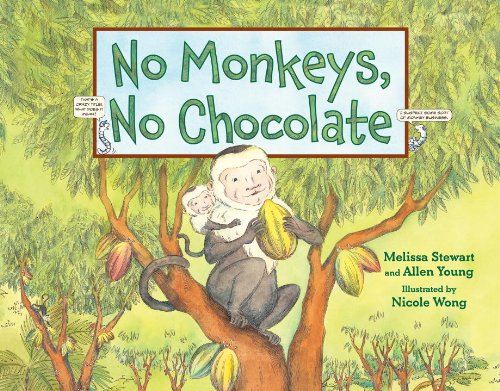
In the back matter, Melissa Stewart and Allen Young provided a list of things readers can do to live in a way that decreases their impact on the natural world in No Monkeys, No Chocolate.  


Because Capital Days: Michael Shiner's Journal and the Growth of Our Nation's Capital is based on the actual writings of a freedman who worked in the Washington Navy Yard through the inauguration of eleven presidents, the words are from centuries ago. Words like coffle, manumit, and cut up shines are no longer used, so they are defined in a glossary.


In A Chameleon's Life by Ellen Lawrence, students are encouraged to be a reptile scientist by writing a report that compares a panther chameleon to a reptile of their choice. It provides sources and questions to help with the research.  


5. To provide credibility for your work. (Acknowledgments, Bibliography or Resources, Image Credits)

The Resource list in Irena Sendler and the Children of the Warsaw Ghetto by Susan Goldman Rubin is extensive, though the story is only 36 pages long, half of them full page illustrations. It includes seven books, several translated from Polish; eleven articles from magazines, newspapers, and The Encyclopedia of the Holocaust; two videos; the written or recorded testimony of Irena herself and other Poles; stories unpublished in English; and correspondence between the author and Polish experts. Rubin is definitely a credible author.

Editors, teachers, and savvy readers will often scan the back matter to see why the author is qualified to write this book. How does one know the information is accurate? In The Hole Story of the Doughnut, I thank seven people in the Acknowledgments, including researchers and historians at various maritime locations and libraries. My Selected Bibliography includes twelve resources. Publishers prefer primary sources. Next in importance are secondary sources from newspapers, experts, or well-respected institutions, whether in print or online.

As a writer, the back matter will add value and information for your reader, and give you additional ways to bring your subject to life. And that matters!

Wednesday, May 13, 2015

Historical Fiction: History + Heart by Pat Miller

History is a recording of the facts as they were witnessed or conjectured based on evidence. It tells us what happened. Historical fiction is bound by the facts of a time period and setting, but it tells us what it was like. Historians rely on "just the facts, ma'am", researching and unearthing the closest thing to truth they can find. But the writer of historical fiction is interested in having you feel like you are actually there, you are experiencing the times and tribulations of the past when you time travel through his words.

In perusing several dozen historical fiction picture books from the past few years, I discovered that all had an author's note at the back to explain what parts were accurate, how the story was inspired, or to add further detail. The books seemed to fall into four groups:
  
 
1. Imagined people in imagined situations. This seems to be the most common. The writer researched the times and setting, and then set her characters and plot into a historical setting that is an accurate portrayal of a time at least 30  years in the past.

That Book Woman by Heather Henson is told by a boy who begrudgingly admires the female rider who brings books to their mountain home, refusing any kind of trade. "..it would not bother me at all if she forgot the way back to our door. But here she'll come right through the rain and fog and cold.  / That horse of hers sure must be brave, I reckon." Time and the woman's tenacity stirs the boy's mind. "And all at once I yearn to know what makes that Book Woman risk catching cold, or worse." Over the long winter, he submits to reading lessons from his gentle younger sister. Back matter tells of the Pack Horse Librarians who brought books that were "free as air" to Appalachian dwellers throughout the 1930's.

Who Was the Woman Who Wore the Hat? by Nancy Patz. The author saw a hat in Amsterdam's Jewish Historical Museum and poignantly imagined the woman might have worn it and what she might have done in her life.

Finding Lincoln by Ann Malaspina relates the story of a white librarian in 1951 Alabama who lets an African American boy into the whites only public library after hours, risking her job for what both believe is right. 

Whatever Happened to The Pony Express by Verla Kay relates the journey of a series of letters from Prudence in Plymouth Township, PA, to her brother in Sacramento, as communication improves from 1851 - 1870.
 

2. Imagined people in historical situations. Research is essential to all historical fiction. Often, a historical event comes to life when the writer inserts a fictitious character into history, who then becomes the eyes and ears of the reader.

Sky Boys: How They Built the Empire State Building by Deborah Hopkinson is unusual in its use of second person, which gives immediacy and experience to this miracle of metal and sweat.

A young boy is separated from his father when Baba is sent to a labor camp during the Cultural Revolution in China in Red Kite, Blue Kite by Ji-li Jiang. They manage to communicate hope across the distance when each flies a kite visible to the other. 

You might have trouble reading Shooting at the Stars: The Christmas Truce of 1914 aloud to your students without a tear or two. Author John Hendrix begins with an author's note, then tells the story through the letters and voice of an imagined British soldier.
  
 
3. Historical people in an imagined situation. Authors get playful with this category, but their research is still necessary. Though this may be an imaginary situation for the Wright Brothers, for example, they must remain true to their personalities and beliefs. These are fun to share, and all include an author's note to sort out the facts from the imagined. Get a new slant on the lives of men and women you or your students may think you know.

Dear Mr. Washington by Lynn Cullen is about the mayhem wreaked by the artist's children as George tries to sit for his portrait with Gilbert Stuart. 

In Abe Lincoln's Dream by Lane Smith, a young girl separated from her tour group of the White House answers questions from the ghost of Abe Lincoln, and comforts him with information about the progress of his nation.

The Wondrous Whirligig: The Wright Brothers' First Flying Machine by Andrew Glass explains how a toy brought home by their father inspires the brothers Wright to create a flying contraption in their backyard.

Levi Strauss Gets a Bright Idea: A Fairly Fabricated Story of a Pair of Pants includes humor, dialogue, and tall tale details added to the true story of the creation of blue jeans.

In Chasing Freedom: The Life Journeys of Harriet Tubman and Susan B. Anthony Inspired by Historical Facts, Nikki Grimes brings together the two historical figures, who had actually met, for a series of interesting conversations about their ideals, their lives, and their hopes for their country.

A Boy Called Dickens by Deborah Hopkinson brings to life the childhood that inspired so much of his writings. The fiction comes in when Hopkinson makes researched guesses and fills in the blanks in the historical record.
   

4. Historical people in an historical situation. Sometimes authors discover big gaps in their subject's lives for which there is no documentation. Or they include dialogue based on what they were likely to have said. When details are supplied based on researched conjecture, or words not actually recorded in diary, interview, or written record are used as conversation, the book becomes historical fiction, no matter how meticulous the rest of the research is. This often gives the writer the opportunity to increase the emotion or the immediacy of the story. Author's notes, like those in Amelia and Eleanor Go for a Ride, explain which details were imagined.

Amelia Earhart and Eleanor Roosevelt were two bold and principled women who took a brief flight over the capitol. Amelia and Eleanor Go for a Ride by Pam Munoz Ryan slightly embellishes the solid research to paint a powerful picture of these amazing women.

George Washington Carver spent many weekends traveling the Alabama countryside to bring his agricultural knowledge to farmers and children. Susan Grigsby imagines such a visit in In the Garden with Dr. Carver.

Shoeless Joe and Black Betsy were the winning combination of White Sox hitter and his beloved bat. Author Phil Bildner brings Joe Jackson's story to life in historically accurate detail, but he supplies much of the dialogue in context.

During the German extermination of Jews in WWII, there were many courageous heroes. One of them was King Christian X of Denmark. Carmen Agra Deedy based The Yellow Star: The Legend of King Christian X of Denmark on oral histories and historical research.

Candace Fleming based Papa's Mechanical Fish on true stories of the eccentric inventor, Lodner Phillips. Her note shows his submarine being raised from the Chicago River in 1915, and her research and imagination filled in the blanks.

The sorrow of slavery is readily felt in Henry's Freedom Box: A True Story from the Underground Railroad by Ellen Levine. Henry Brown was sold away from his mother, and later, from his wife and three children. With help from abolitionists, Henry escaped slavery by mailing himself in a box from Richmond to Philadelphia. 

Especially for children, historical fiction can bring the emotion and the universal experiences of the past to life. It adds heart to times before their birth, and makes the accomplishments and trials of historic figures to life. For history--read facts. For living history--read historical fiction.