Showing posts with label Beth Stilborn. Show all posts

Wednesday, October 27, 2021

What to Know About Editing, Editing Services & Accountability Partners with Beth Stilborn by Kathy Halsey


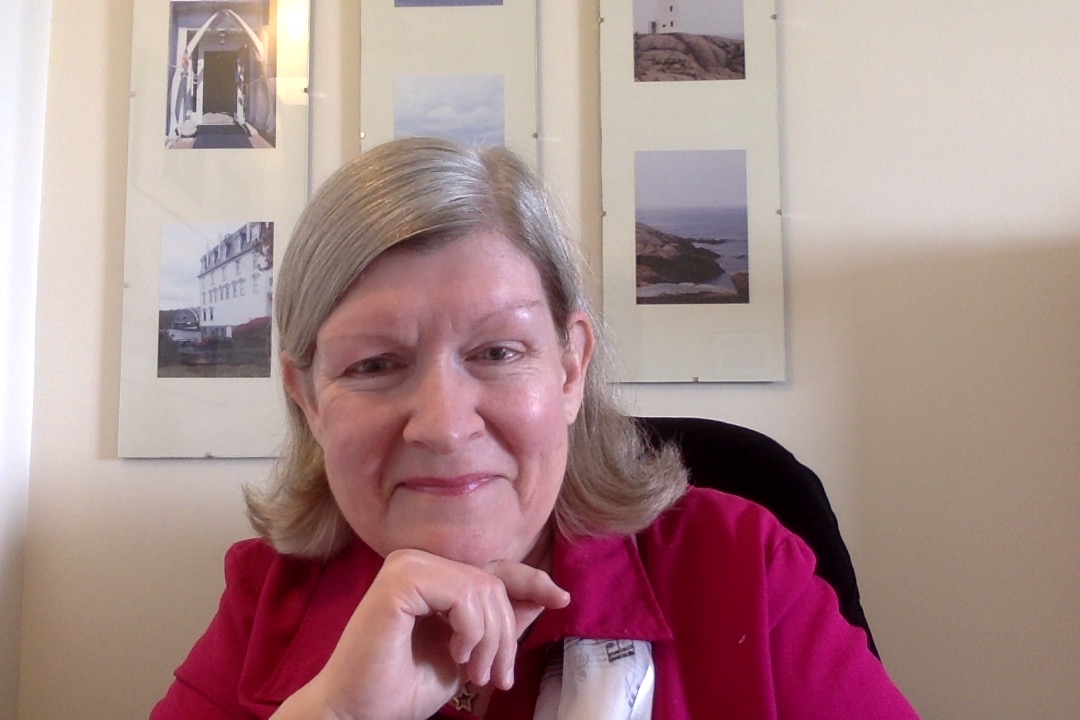
Today we're chatting with my accountability partner, Beth Stilborn, about editing, accountability and more!
Accountability and How We Met

Late December 2017/early January 2018, Kathy and I both participated in Julie Hedlund's amazing Twelve Days of Christmas for Writers, a 12 day experience designed to evaluate the past year and prepare for the new one. During a  discussion in the dedicated Facebook group, we were tossing around ideas about accountability, and Kathy and I decided to try being each other's weekly accountability buddy.


Three years later, we're still going strong. We email weekly to share what we’ve done in the past week, what we plan to do in the coming week, and to cheer each other on. We've supported each other through ups and downs, encouraging each other when the writing mojo isn't there, celebrating when things are going well, and making sure we keep on track. Just knowing I'm going to be listing my accomplishments and non-accomplishments for Kathy each week keeps me going, working to achieve my goals both small and large. In the process, we've become good friends, and buoy each other up in all sorts of ways. Thanks, Kathy!

Craft Chat with Beth


1. How did you get involved in the editing business?

When I was in university, I had a summer job helping to proofread the proceedings of the Legislature. After university, before I started working full time, I had a summer job as interim editor of the Saskatchewan Gazette, a weekly publication of the government here. Much later, in 2013, when I was thinking about writing-related income streams to pursue, I had a consultation with an insightful kidlit editor friend who nudged me in the direction of copy editing, particularly for the kidlit community. A dear friend came up with the name Flubs2Fixes for my new editing business, I registered the business name, got a business license, and worked with my first client in early 2014. I have been working with clients, honing my skills, learning and developing since then.


2. Across genres and manuscripts, what are the top mistakes you see in writers’ work? Any recommendations for books or remedies for these issues?

One of the most common problems is comma use. Commas are such sneaky little things. They like to wriggle in where they don't belong and wriggle away from the places where they do belong. Verb tense and dangling modifiers are a couple of other bugaboos. I often see questions about manuscript formatting, as well.


In the past, I've written blog posts addressing many of these issues, and I'm working on a way to make these posts more easily accessible to people who are looking for guidance on grammar, writing, or formatting problems. I plan to roll this out in November. Stay tuned to my editing blog for details!


I often recommend Grammar Girl for grammar questions. Her website is excellent, and she writes in a fun, approachable, and understandable manner to answer practically any grammar question you might have.


Something else that often trips new writers up is rhyme. New picture book writers often think they have to write in rhyme, and the truth is that isn't the case. Try writing the story without rhyme – it can often be told more easily as prose. If a writer finds that the story needs rhyme to make it work, make sure the rhyme and rhythm are perfect, or as close to perfect as they can be. Renee LaTulippe's fabulous videos on her Lyrical Language Lab YouTube channel are a great way to start learning about rhyme and rhythm. I also recommend her Lyrical Language Lab course, even if a person doesn't intend to write in rhyme.

3. Please explain the different types of edits: grammatical vs. copy edits, developmental editing, edits for continuity, and other types.

There are many ways of looking at the different types of edits. Some people divide the overarching heading of editing into three basic types, others suggest as many as six or more divisions. Here, I'll talk about the basic types of edits the average writer is likely to come in contact with.


Paid critiques and developmental editing are closely related. Often, paid critiques are offered by people whose primary focus is writing, but who want to share their experience and knowledge with other writers. They're similar to the feedback you might get from a critique group, but they're solely focused on your manuscript, and go into more depth in their suggestions.


Developmental editing digs deep into the building blocks of an effective manuscript, including narrative voice, story arc, character development, plot and theme development, story structure, and more. You will often receive an editorial letter, along with at least some line edits (comments directly on the manuscript). A full line edit takes this one step further, with comments on nearly every line in the manuscript.


Copy editing is basically editing for grammar, spelling and typographical errors, incorrect word use, capitalization, punctuation, clarity, sentence structure, redundancies and/or inconsistencies, consistent point of view and consistent verb tense. The copy editor also looks for issues in continuity. It should come near the end of the process for the manuscript, after developmental editing (if the author chooses to go that route), after all revisions have been made, just before it is ready for submission.


Proofreading is the final step, either before starting the submission process (for someone seeking traditional publication) or before creating the book (for someone self-publishing.) In traditional publishing, a proofreader goes over the final proof copy of the manuscript just before printing. The proofreading I offer includes checking for typographical errors, formatting errors and irregularities, awkward end-of-line word divisions, alignment, line length, spacing, consistent font size and style, and checking against the original manuscript to ensure there have been no omissions.


4. Do you edit your own work, or do you also use an editor? How can writers be their own editors?

I copy edit my own work. I have used a developmental editor in the past, and have found it a valuable tool in seeing all the issues with plot, characterization, voice, structure, and so on. I have often been amazed at how much better my manuscript becomes after I work through revisions based on a developmental edit.


I am well aware that writers may see editing as an expense that is simply out of reach. I understand that completely. At the same time, I want to emphasize that the writer gets great value from hiring an editor, whether a developmental editor or a copy editor, or a paid critique. I think it is vital for those who are self-publishing to work with editors to bring their manuscripts up to the highest level that they can. In either case, it is truly an investment in the writer's future and in the future of the manuscript.


That said, there are tools available to help those seeking traditional publication who can't afford to hire an editor or editors. The plans I have in place for sharing basic information on grammatical issues will help. For broader self-editing, one option is a tool Emma Walton Hamilton has available for purchase, either for self-editing picture books or for novels, called Editor-in-a-Box. (The picture book version is at this link. The novel version is at this link


Self-editing is by no means a complete substitute for the fresh eyes and in-depth experience and knowledge you get if you hire a developmental editor or copy editor, but for those who are seeking traditional publication and are on limited budgets, it is an option.


Above all, at least make sure you have a critique partner or critique group giving you feedback.


A great place to find the right editor or critiquer for your manuscript is the listing on the KidLit411 website.


5. What do you enjoy about editing?

Since I am a writer as well as an editor, I understand how it feels to entrust your manuscript to someone else for feedback of any sort, and so I am sensitive and encouraging while also being as helpful as possible. The joy of editing is not pointing out errors, but rather is helping another writer to learn and grow and make their manuscript shine. I find that all I learn with the goal of honing my own writing makes me a better editor. I continue to learn, and to teach — we all are teachers — and I love to help my editing clients learn more about the craft of writing through the comments and suggestions I make on their manuscripts.


I currently offer copy editing and proofreading, and plan to add picture book developmental editing/critiques early in the new year. You can learn more about my editorial services and how to work with me at my editing website, Flubs2Fixes.


BIO:

Beth Stilborn is a writer and copy editor located in Canada, but available to editing clients all over the world thanks to the magic of the internet. She has been writing and learning about writing for a number of years, and started her freelance editing business, Flubs2Fixes, eight years ago. She is a member of the Editorial Freelancers Association and the American Copy Editors Society (ACES). You can read more about her editing qualifications and services at her website. There, she also shares resources for writers, and blogs about grammar and editing-related subjects. At her more general website and blog, By Word of Beth, she shares more writer's resources, interviews authors, and blogs to share books, encouragement, teaching, and hope. She is active on social media and is co-admin of the Children's Book Hub Facebook Group with author, editor, and educator, Emma Walton Hamilton.


Find Beth on social media here.

Facebook:

https://www.facebook.com/flubs2fixes

https://www.facebook.com/bethstilbornwrites

Twitter:

@BethStilborn

LinkedIn: 

https://www.linkedin.com/in/beth-stilborn/


Wednesday, January 9, 2019

Bustin' Out with 2019 - Make It Your Year - by Kathy Halsey

Nothing but blue skies at the rodeo today. The year is still fresh, your intentions are good; you have saddled up your pony for a successful ride up the writing road. Hold your horses, writer gals and guys. I rounded up some help for you while you mosey down the trail.  

Anti- Resolutions Revolution
Back at the ranch house, Julie Foster Hedlund gave us some provisions for the trail. You might call it "food for thought." Back in 2014, I began participating in Julie's 12 Days of Christmas for Writers. (web site here and FB group here) From December 26 -January 6, we come together to review/reflect on our writing year to refresh/renew ourselves for a new year. The Facebook group closes January 10, 2019, but circle Dec. 26, 2019  on your calendar so you can join us at the year's end. Julie believes that most resolutions come from a place of negativity so we began with surprises, successes, move to challenges and disappointments, what we learned from both and then build goals from last year's achievements. This year 503 children's writers joined the fun. 
I'll share my illuminations from the process and the ripples of change that are already coming to fruition for me and others writers.   
Surprise
“A surprise is an extra gift over and above what you set out to achieve.” -Julie Hedlund 
One of the best surprises that continues this year is that Beth Stilborn and I became accountability buddies. Every Monday we email our weekly accomplishments and our intentions for the coming week. We're not critique partners; we don't even write for the same age group! Beth lives in Canada and I'm in the Midwest, but we were surprised by this great motivator and wonderful friendship. You might try this, too.
Guiding Word/Motto for 2019
Some writers created vision boards; many of us came up with  a word/phrases to guide our writing and goals. Words like "Power," "Treasure" "Fearless" were claimed. One writer said, "I want to treasure what has been given to me, like friends in the writing community, opportunities, ideas, and time to write. I want to treasure the process and let ideas grow organically into the stories they were meant to be." Beth came up with this formula: FOCUS plus FOLLOW-THROUGH leads to FRUITION.
The cover page to my 12 Days features my guiding phrase.
   

Ripple Effect
Most of my critique group participated in this challenge and we've revised and renewed some of our procedures. During our first online 2019 meeting we came up with these ideas.
  • Post a calendar on Google docs and sign up for a critique. Commit to the date.
  • Commit to writing sprints every first Thursday of the month.
  • Create our own missions statements for the year and share online for greater accountability.
  • Change up our critique style by using Manuscript Magic. Look at big picture items first. Give themes, motifs, goals for the manuscript. 
Another writer friend and member of 12 Days, Beth Gallagher   and I decided we wanted to submit more in 2019. With accountability as a key, we created the Facebook group 100 Rejections Are a Good Thing. Join us and go big in this year's writing rodeo. 

Finally, some folks were inspired to write poetry and share with the group. Derick Wilder reminded us that small steps lead to success with this poem.

The Mighty Teeny Tiny

Teeny Tiny isn’t much— 
shy, timid, brittle.
But Teeny Tiny 
can become,
possibly,
a Little.
Now Little’s also 
no big deal,
but better
than before.
And if you add 
those Littles up,
you get 
a little More.
More is less
than you would like,
but treasure 
what you’ve got.
Just lay some Mores
end-to-end
and then you’ve got
a Lot.
So dream delightful, 
vibrant dreams— 
make them 
sheeny shiny.
But don’t forget
each begins
with but a
Teeny Tiny
Gratitude
Julie had us end our 12 days with a list of gratitude. The gratitude attitude is one we can all cultivate as we grow into 2019. I am grateful to Julie and all the writers who shared so much over these 12 days. 
"Remember to illuminate your writing life, shine a light on the dark places, but even more, the light places, those where we excel." Julie Hedlund 
As Jane Yolen reminds us in her book Sister Fox's Field Guide to the Writing Life, "The joy is in the process."


Friday, June 20, 2014

Tag You're It! Writing Process Blog Hop


Yeah! It’s summer time! I remember playing tag on the lawn as a child. Now we’re playing again! This time my writerly friend, Beth Stilborn, a.k.a. Elizabeth Starborn tagged me on the Writing Process Blog Hop. What fun, Beth! Thank you.

While I catch my breath, let me tell you about my tagger. I first met Beth last year through JulieHedlund’s 12 x 12 group, The Children’s Book Hub Facebook page that Beth co-hosts with Emma Walton Hamilton, and at Katie Davis’ Video Idiot Boot Camp.

Beth and I just might break out into a duet. We share a passion for theater, music, and the Arts in children’s education. Beth is also the associate editor of the Children’s Book Hub monthly newsletter. If that isn’t enough to keep Beth running, check out her excellent copy editing and proofreading service.

Arghhh! Matey! This is me storytelling at South Primary School in Chillicothe, Il.  The students became the "crew" as we sang, danced, and read cue cards during my original story of The Tale of the Scurvy Ol' Sea Dog!  

While we are safe at home base, let me tell you about my writing process.

WHAT AM I WORKING ON?
Right now, I’m in the middle of the fabulous class co-taught by Sudipta Bardhan-Quallen and  Mira Reisberg : From Storyteller to Exquisite Writer: The Pleasures and Craft of Poetic Techniques  over at the Children’s BookAcademy.  There is so much wonderful information; it will make you jump up and down with excitement. Sudipta and Mira are masters at explaining things with examples, weekly webinars, and critiques.  My rhyming picture book about bugs is coming along nicely.

I am also researching and getting ready for the WOW Writing Retreat July 7-13th with the amazing Kristen McGill Fulton. Nonfiction is the name of the game at this retreat for me.  I have two manuscripts that will be critiqued. One story is about a saint. The other story is about a man that invented something that we use everyday.

HOW DOES MY WORK DIFFER FROM OTHERS?
Everyone has a story. It is my mission to help emergent writers of all ages articulate their own stories,write about them, and share their words. I love when authors find their voice and experience the sheer joy of writing. Love You More Than You Know, an anthology about moms sending their sons and daughters to war, helped us lighten our burdens and helped us to heal.

 WHY DO I WRITE WHAT I DO?
I write because I must. I write for the sheer joy of writing! I write because I love to read. I write so I can share these two passions. I write so that I can listen to others tell their story. When we share stories, we find out we are more alike than different.

HOW DOES MY WRITING PROCESS WORK?
·      I need quiet time. When my five kids were little, I would stay up way too late because that was the only time it was quiet in the house. 
·      I keep a sketchbook journal. Bring on the crayons, glitter, and pictures. When I let myself play with words and pictures, I get creative. I also free write (write with abandon) and go back and highlight the parts I like, leaving the rest behind.
·      I move. Walking can get you into the zone and solve things when you are stuck in a manuscript. Acting out stories can shed some light on your manuscript too! Try a hat or costumes. Walk and talk like your main character.

·      I work with my writing partner or critique group. Sometimes just talking it out will help a story. Getting feedback is also key in reworking my manuscripts. Remember writers are really rewriters!
·      Deadlines and chocolate help keep me focused.

Happy writing! So on with the chase! These are the lovely writers I tagged. 

 Kristen McGill Fulton writes nonfiction picture books and some historical fiction. She is represented by Kendra Marcus at BookStop Literary. Kristen is a wonderful writer and teacher!  This is what Kristen had to say:

 One of my favorite places is my office stacked with shelves full of nonfiction picture books in alphabetical order of course. I believe that a writer must write everyday. Whether it is for a story, blog, or personal journal- practice makes perfect.  I currently am occupied with preparing for WOW Nonficpic and our summer Retreat 2014. I teach an online nonfiction class called Nonfiction Archaeology and believe that it is awesome :-) But, I am a little biased.

My husband Rusty and I have three children, all grown and enjoy much of our time traveling around the US in our RV that we lovingly call Chalet Fulton. I absolutely love daffodils and it makes me smile just saying the word.  I love my pajamas and comfy slippers. Iced Tea and Diet Caffeine Free Coke are staples in my home. I play a silly game called Clash of Clans on my iPad and can whop some butt with my army of minions.That’s it, that’s me in a nutshell. Not complicated or fancy, just me. 


The fabulous Sue Heavenrich is a freelance environmental journalist, but behind those Clark Kent glasses is a gal who is passionate about writing for kids. In her past life she’s taught science, been a camp counselor, taught skiing, home schooled her kids, and now works part time in a small-town library. When she’s not writing, you’ll find her counting bees, following ants, or chasing that Bad Woodchuck out of the garden.

Her children’s articles have been published in Highlights, Ranger Rick, Boy’s Quest, Cobblestone, and Wild Outdoor World. Sue reviews STEM literature and writes about science at Archimedes Notebook  and reviews kid’s books at Sally’s Bookshelf.