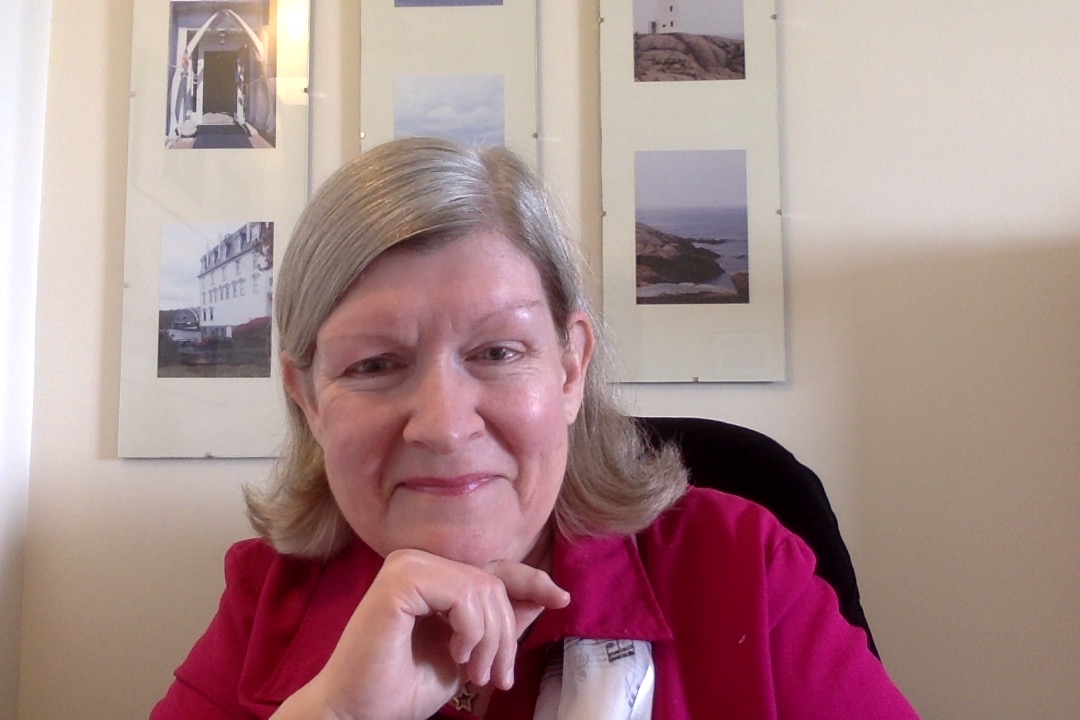
Today we're chatting with my accountability partner, Beth Stilborn, about editing, accountability and more!
Accountability and How We Met
Late December 2017/early January 2018, Kathy and I both participated in Julie Hedlund's amazing Twelve Days of Christmas for Writers, a 12 day experience designed to evaluate the past year and prepare for the new one. During a discussion in the dedicated Facebook group, we were tossing around ideas about accountability, and Kathy and I decided to try being each other's weekly accountability buddy.
Three years later, we're still going strong. We email weekly to share what we’ve done in the past week, what we plan to do in the coming week, and to cheer each other on. We've supported each other through ups and downs, encouraging each other when the writing mojo isn't there, celebrating when things are going well, and making sure we keep on track. Just knowing I'm going to be listing my accomplishments and non-accomplishments for Kathy each week keeps me going, working to achieve my goals both small and large. In the process, we've become good friends, and buoy each other up in all sorts of ways. Thanks, Kathy!

Craft Chat with Beth
1. How did you get involved in the editing business?
When I was in university, I had a summer job helping to proofread the proceedings of the Legislature. After university, before I started working full time, I had a summer job as interim editor of the Saskatchewan Gazette, a weekly publication of the government here. Much later, in 2013, when I was thinking about writing-related income streams to pursue, I had a consultation with an insightful kidlit editor friend who nudged me in the direction of copy editing, particularly for the kidlit community. A dear friend came up with the name Flubs2Fixes for my new editing business, I registered the business name, got a business license, and worked with my first client in early 2014. I have been working with clients, honing my skills, learning and developing since then.
2. Across genres and manuscripts, what are the top mistakes you see in writers’ work? Any recommendations for books or remedies for these issues?
One of the most common problems is comma use. Commas are such sneaky little things. They like to wriggle in where they don't belong and wriggle away from the places where they do belong. Verb tense and dangling modifiers are a couple of other bugaboos. I often see questions about manuscript formatting, as well.
In the past, I've written blog posts addressing many of these issues, and I'm working on a way to make these posts more easily accessible to people who are looking for guidance on grammar, writing, or formatting problems. I plan to roll this out in November. Stay tuned to my editing blog for details!
I often recommend Grammar Girl for grammar questions. Her website is excellent, and she writes in a fun, approachable, and understandable manner to answer practically any grammar question you might have.
Something else that often trips new writers up is rhyme. New picture book writers often think they have to write in rhyme, and the truth is that isn't the case. Try writing the story without rhyme – it can often be told more easily as prose. If a writer finds that the story needs rhyme to make it work, make sure the rhyme and rhythm are perfect, or as close to perfect as they can be. Renee LaTulippe's fabulous videos on her Lyrical Language Lab YouTube channel are a great way to start learning about rhyme and rhythm. I also recommend her Lyrical Language Lab course, even if a person doesn't intend to write in rhyme.

3. Please explain the different types of edits: grammatical vs. copy edits, developmental editing, edits for continuity, and other types.
There are many ways of looking at the different types of edits. Some people divide the overarching heading of editing into three basic types, others suggest as many as six or more divisions. Here, I'll talk about the basic types of edits the average writer is likely to come in contact with.
Paid critiques and developmental editing are closely related. Often, paid critiques are offered by people whose primary focus is writing, but who want to share their experience and knowledge with other writers. They're similar to the feedback you might get from a critique group, but they're solely focused on your manuscript, and go into more depth in their suggestions.
Developmental editing digs deep into the building blocks of an effective manuscript, including narrative voice, story arc, character development, plot and theme development, story structure, and more. You will often receive an editorial letter, along with at least some line edits (comments directly on the manuscript). A full line edit takes this one step further, with comments on nearly every line in the manuscript.
Copy editing is basically editing for grammar, spelling and typographical errors, incorrect word use, capitalization, punctuation, clarity, sentence structure, redundancies and/or inconsistencies, consistent point of view and consistent verb tense. The copy editor also looks for issues in continuity. It should come near the end of the process for the manuscript, after developmental editing (if the author chooses to go that route), after all revisions have been made, just before it is ready for submission.
Proofreading is the final step, either before starting the submission process (for someone seeking traditional publication) or before creating the book (for someone self-publishing.) In traditional publishing, a proofreader goes over the final proof copy of the manuscript just before printing. The proofreading I offer includes checking for typographical errors, formatting errors and irregularities, awkward end-of-line word divisions, alignment, line length, spacing, consistent font size and style, and checking against the original manuscript to ensure there have been no omissions.
4. Do you edit your own work, or do you also use an editor? How can writers be their own editors?
I copy edit my own work. I have used a developmental editor in the past, and have found it a valuable tool in seeing all the issues with plot, characterization, voice, structure, and so on. I have often been amazed at how much better my manuscript becomes after I work through revisions based on a developmental edit.
I am well aware that writers may see editing as an expense that is simply out of reach. I understand that completely. At the same time, I want to emphasize that the writer gets great value from hiring an editor, whether a developmental editor or a copy editor, or a paid critique. I think it is vital for those who are self-publishing to work with editors to bring their manuscripts up to the highest level that they can. In either case, it is truly an investment in the writer's future and in the future of the manuscript.
That said, there are tools available to help those seeking traditional publication who can't afford to hire an editor or editors. The plans I have in place for sharing basic information on grammatical issues will help. For broader self-editing, one option is a tool Emma Walton Hamilton has available for purchase, either for self-editing picture books or for novels, called Editor-in-a-Box. (The picture book version is at this link. The novel version is at this link
Self-editing is by no means a complete substitute for the fresh eyes and in-depth experience and knowledge you get if you hire a developmental editor or copy editor, but for those who are seeking traditional publication and are on limited budgets, it is an option.
Above all, at least make sure you have a critique partner or critique group giving you feedback.
A great place to find the right editor or critiquer for your manuscript is the listing on the KidLit411 website.
5. What do you enjoy about editing?
Since I am a writer as well as an editor, I understand how it feels to entrust your manuscript to someone else for feedback of any sort, and so I am sensitive and encouraging while also being as helpful as possible. The joy of editing is not pointing out errors, but rather is helping another writer to learn and grow and make their manuscript shine. I find that all I learn with the goal of honing my own writing makes me a better editor. I continue to learn, and to teach — we all are teachers — and I love to help my editing clients learn more about the craft of writing through the comments and suggestions I make on their manuscripts.
I currently offer copy editing and proofreading, and plan to add picture book developmental editing/critiques early in the new year. You can learn more about my editorial services and how to work with me at my editing website, Flubs2Fixes.

BIO:
Beth Stilborn is a writer and copy editor located in Canada, but available to editing clients all over the world thanks to the magic of the internet. She has been writing and learning about writing for a number of years, and started her freelance editing business, Flubs2Fixes, eight years ago. She is a member of the Editorial Freelancers Association and the American Copy Editors Society (ACES). You can read more about her editing qualifications and services at her website. There, she also shares resources for writers, and blogs about grammar and editing-related subjects. At her more general website and blog, By Word of Beth, she shares more writer's resources, interviews authors, and blogs to share books, encouragement, teaching, and hope. She is active on social media and is co-admin of the Children's Book Hub Facebook Group with author, editor, and educator, Emma Walton Hamilton.
Find Beth on social media here.
Facebook:
https://www.facebook.com/flubs2fixes
https://www.facebook.com/bethstilbornwrites
Twitter:
@BethStilborn
https://www.linkedin.com/in/beth-stilborn/