Showing posts with label Julie Hedlund. Show all posts

Wednesday, October 27, 2021

What to Know About Editing, Editing Services & Accountability Partners with Beth Stilborn by Kathy Halsey


Today we're chatting with my accountability partner, Beth Stilborn, about editing, accountability and more!
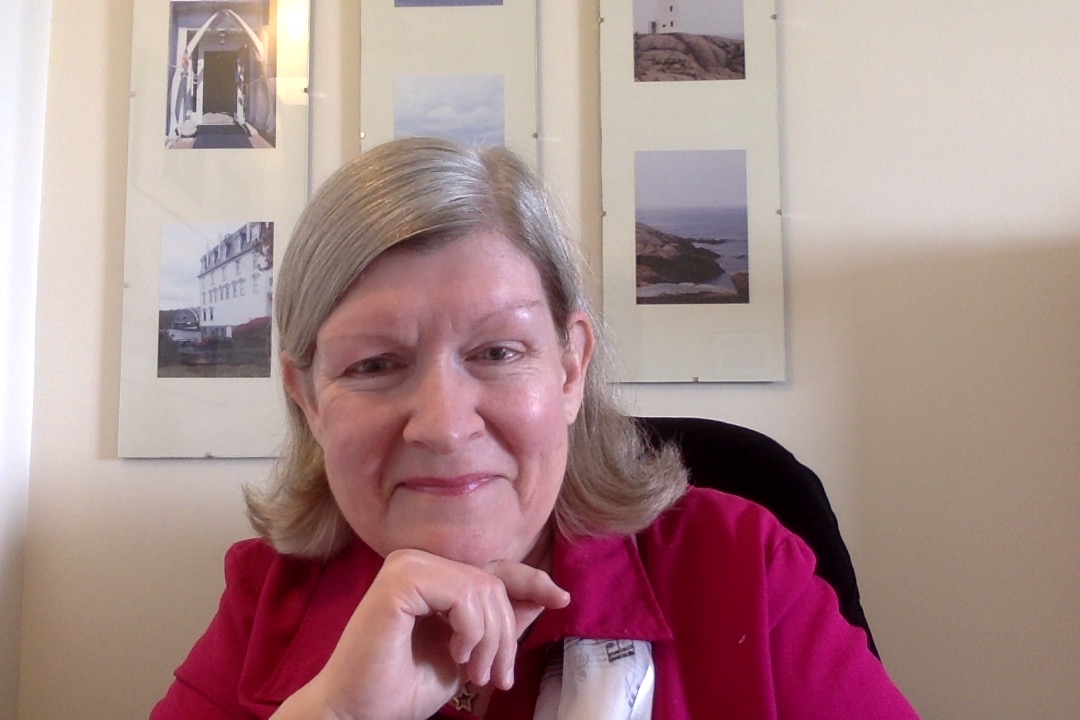
Accountability and How We Met

Late December 2017/early January 2018, Kathy and I both participated in Julie Hedlund's amazing Twelve Days of Christmas for Writers, a 12 day experience designed to evaluate the past year and prepare for the new one. During a  discussion in the dedicated Facebook group, we were tossing around ideas about accountability, and Kathy and I decided to try being each other's weekly accountability buddy.


Three years later, we're still going strong. We email weekly to share what we’ve done in the past week, what we plan to do in the coming week, and to cheer each other on. We've supported each other through ups and downs, encouraging each other when the writing mojo isn't there, celebrating when things are going well, and making sure we keep on track. Just knowing I'm going to be listing my accomplishments and non-accomplishments for Kathy each week keeps me going, working to achieve my goals both small and large. In the process, we've become good friends, and buoy each other up in all sorts of ways. Thanks, Kathy!

Craft Chat with Beth


1. How did you get involved in the editing business?

When I was in university, I had a summer job helping to proofread the proceedings of the Legislature. After university, before I started working full time, I had a summer job as interim editor of the Saskatchewan Gazette, a weekly publication of the government here. Much later, in 2013, when I was thinking about writing-related income streams to pursue, I had a consultation with an insightful kidlit editor friend who nudged me in the direction of copy editing, particularly for the kidlit community. A dear friend came up with the name Flubs2Fixes for my new editing business, I registered the business name, got a business license, and worked with my first client in early 2014. I have been working with clients, honing my skills, learning and developing since then.


2. Across genres and manuscripts, what are the top mistakes you see in writers’ work? Any recommendations for books or remedies for these issues?

One of the most common problems is comma use. Commas are such sneaky little things. They like to wriggle in where they don't belong and wriggle away from the places where they do belong. Verb tense and dangling modifiers are a couple of other bugaboos. I often see questions about manuscript formatting, as well.


In the past, I've written blog posts addressing many of these issues, and I'm working on a way to make these posts more easily accessible to people who are looking for guidance on grammar, writing, or formatting problems. I plan to roll this out in November. Stay tuned to my editing blog for details!


I often recommend Grammar Girl for grammar questions. Her website is excellent, and she writes in a fun, approachable, and understandable manner to answer practically any grammar question you might have.


Something else that often trips new writers up is rhyme. New picture book writers often think they have to write in rhyme, and the truth is that isn't the case. Try writing the story without rhyme – it can often be told more easily as prose. If a writer finds that the story needs rhyme to make it work, make sure the rhyme and rhythm are perfect, or as close to perfect as they can be. Renee LaTulippe's fabulous videos on her Lyrical Language Lab YouTube channel are a great way to start learning about rhyme and rhythm. I also recommend her Lyrical Language Lab course, even if a person doesn't intend to write in rhyme.

3. Please explain the different types of edits: grammatical vs. copy edits, developmental editing, edits for continuity, and other types.

There are many ways of looking at the different types of edits. Some people divide the overarching heading of editing into three basic types, others suggest as many as six or more divisions. Here, I'll talk about the basic types of edits the average writer is likely to come in contact with.


Paid critiques and developmental editing are closely related. Often, paid critiques are offered by people whose primary focus is writing, but who want to share their experience and knowledge with other writers. They're similar to the feedback you might get from a critique group, but they're solely focused on your manuscript, and go into more depth in their suggestions.


Developmental editing digs deep into the building blocks of an effective manuscript, including narrative voice, story arc, character development, plot and theme development, story structure, and more. You will often receive an editorial letter, along with at least some line edits (comments directly on the manuscript). A full line edit takes this one step further, with comments on nearly every line in the manuscript.


Copy editing is basically editing for grammar, spelling and typographical errors, incorrect word use, capitalization, punctuation, clarity, sentence structure, redundancies and/or inconsistencies, consistent point of view and consistent verb tense. The copy editor also looks for issues in continuity. It should come near the end of the process for the manuscript, after developmental editing (if the author chooses to go that route), after all revisions have been made, just before it is ready for submission.


Proofreading is the final step, either before starting the submission process (for someone seeking traditional publication) or before creating the book (for someone self-publishing.) In traditional publishing, a proofreader goes over the final proof copy of the manuscript just before printing. The proofreading I offer includes checking for typographical errors, formatting errors and irregularities, awkward end-of-line word divisions, alignment, line length, spacing, consistent font size and style, and checking against the original manuscript to ensure there have been no omissions.


4. Do you edit your own work, or do you also use an editor? How can writers be their own editors?

I copy edit my own work. I have used a developmental editor in the past, and have found it a valuable tool in seeing all the issues with plot, characterization, voice, structure, and so on. I have often been amazed at how much better my manuscript becomes after I work through revisions based on a developmental edit.


I am well aware that writers may see editing as an expense that is simply out of reach. I understand that completely. At the same time, I want to emphasize that the writer gets great value from hiring an editor, whether a developmental editor or a copy editor, or a paid critique. I think it is vital for those who are self-publishing to work with editors to bring their manuscripts up to the highest level that they can. In either case, it is truly an investment in the writer's future and in the future of the manuscript.


That said, there are tools available to help those seeking traditional publication who can't afford to hire an editor or editors. The plans I have in place for sharing basic information on grammatical issues will help. For broader self-editing, one option is a tool Emma Walton Hamilton has available for purchase, either for self-editing picture books or for novels, called Editor-in-a-Box. (The picture book version is at this link. The novel version is at this link


Self-editing is by no means a complete substitute for the fresh eyes and in-depth experience and knowledge you get if you hire a developmental editor or copy editor, but for those who are seeking traditional publication and are on limited budgets, it is an option.


Above all, at least make sure you have a critique partner or critique group giving you feedback.


A great place to find the right editor or critiquer for your manuscript is the listing on the KidLit411 website.


5. What do you enjoy about editing?

Since I am a writer as well as an editor, I understand how it feels to entrust your manuscript to someone else for feedback of any sort, and so I am sensitive and encouraging while also being as helpful as possible. The joy of editing is not pointing out errors, but rather is helping another writer to learn and grow and make their manuscript shine. I find that all I learn with the goal of honing my own writing makes me a better editor. I continue to learn, and to teach — we all are teachers — and I love to help my editing clients learn more about the craft of writing through the comments and suggestions I make on their manuscripts.


I currently offer copy editing and proofreading, and plan to add picture book developmental editing/critiques early in the new year. You can learn more about my editorial services and how to work with me at my editing website, Flubs2Fixes.


BIO:

Beth Stilborn is a writer and copy editor located in Canada, but available to editing clients all over the world thanks to the magic of the internet. She has been writing and learning about writing for a number of years, and started her freelance editing business, Flubs2Fixes, eight years ago. She is a member of the Editorial Freelancers Association and the American Copy Editors Society (ACES). You can read more about her editing qualifications and services at her website. There, she also shares resources for writers, and blogs about grammar and editing-related subjects. At her more general website and blog, By Word of Beth, she shares more writer's resources, interviews authors, and blogs to share books, encouragement, teaching, and hope. She is active on social media and is co-admin of the Children's Book Hub Facebook Group with author, editor, and educator, Emma Walton Hamilton.


Find Beth on social media here.

Facebook:

https://www.facebook.com/flubs2fixes

https://www.facebook.com/bethstilbornwrites

Twitter:

@BethStilborn

LinkedIn: 

https://www.linkedin.com/in/beth-stilborn/


Wednesday, January 9, 2019

Bustin' Out with 2019 - Make It Your Year - by Kathy Halsey

Nothing but blue skies at the rodeo today. The year is still fresh, your intentions are good; you have saddled up your pony for a successful ride up the writing road. Hold your horses, writer gals and guys. I rounded up some help for you while you mosey down the trail.  

Anti- Resolutions Revolution
Back at the ranch house, Julie Foster Hedlund gave us some provisions for the trail. You might call it "food for thought." Back in 2014, I began participating in Julie's 12 Days of Christmas for Writers. (web site here and FB group here) From December 26 -January 6, we come together to review/reflect on our writing year to refresh/renew ourselves for a new year. The Facebook group closes January 10, 2019, but circle Dec. 26, 2019  on your calendar so you can join us at the year's end. Julie believes that most resolutions come from a place of negativity so we began with surprises, successes, move to challenges and disappointments, what we learned from both and then build goals from last year's achievements. This year 503 children's writers joined the fun. 
I'll share my illuminations from the process and the ripples of change that are already coming to fruition for me and others writers.   
Surprise
“A surprise is an extra gift over and above what you set out to achieve.” -Julie Hedlund 
One of the best surprises that continues this year is that Beth Stilborn and I became accountability buddies. Every Monday we email our weekly accomplishments and our intentions for the coming week. We're not critique partners; we don't even write for the same age group! Beth lives in Canada and I'm in the Midwest, but we were surprised by this great motivator and wonderful friendship. You might try this, too.
. 
Guiding Word/Motto for 2019
Some writers created vision boards; many of us came up with  a word/phrases to guide our writing and goals. Words like "Power," "Treasure" "Fearless" were claimed. One writer said, "I want to treasure what has been given to me, like friends in the writing community, opportunities, ideas, and time to write. I want to treasure the process and let ideas grow organically into the stories they were meant to be." Beth came up with this formula: FOCUS plus FOLLOW-THROUGH leads to FRUITION.
The cover page to my 12 Days features my guiding phrase.
   

Ripple Effect
Most of my critique group participated in this challenge and we've revised and renewed some of our procedures. During our first online 2019 meeting we came up with these ideas.
  • Post a calendar on Google docs and sign up for a critique. Commit to the date.
  • Commit to writing sprints every first Thursday of the month.
  • Create our own missions statements for the year and share online for greater accountability.
  • Change up our critique style by using Manuscript Magic. Look at big picture items first. Give themes, motifs, goals for the manuscript. 
Another writer friend and member of 12 Days, Beth Gallagher   and I decided we wanted to submit more in 2019. With accountability as a key, we created the Facebook group 100 Rejections Are a Good Thing. Join us and go big in this year's writing rodeo. 

Finally, some folks were inspired to write poetry and share with the group. Derick Wilder reminded us that small steps lead to success with this poem.

The Mighty Teeny Tiny

Teeny Tiny isn’t much— 
shy, timid, brittle.
But Teeny Tiny 
can become,
possibly,
a Little.
Now Little’s also 
no big deal,
but better
than before.
And if you add 
those Littles up,
you get 
a little More.
More is less
than you would like,
but treasure 
what you’ve got.
Just lay some Mores
end-to-end
and then you’ve got
a Lot.
So dream delightful, 
vibrant dreams— 
make them 
sheeny shiny.
But don’t forget
each begins
with but a
Teeny Tiny
Gratitude
Julie had us end our 12 days with a list of gratitude. The gratitude attitude is one we can all cultivate as we grow into 2019. I am grateful to Julie and all the writers who shared so much over these 12 days. 
"Remember to illuminate your writing life, shine a light on the dark places, but even more, the light places, those where we excel." Julie Hedlund 
As Jane Yolen reminds us in her book Sister Fox's Field Guide to the Writing Life, "The joy is in the process."


Thursday, April 28, 2016

The Hole Story of the Doughnut by Pat Miller


By Janie Reinart

Ummmm. Doughnuts! I used to work at a bakery when I was in high school. The going rate was eighty-five cents an hour, and all the doughnuts I could eat! I never once thought to ask,"Who invented the doughnut?"

Lucky for us, the lovely and talented Pat Miller answered that question and her new book, The Hole Story of the Doughnut is debuting on May 3, 2016.


Pat how did you get the idea for the book?

When my husband and I were taking a harbor tour of Boston, I heard the guide say, “And over there is where they buried the guy who invented the doughnut.” 

We know who that is?! I quickly wrote the fact in my author’s notebook, which is a part of my wallet, and then forgot about it. 

The next year, I was attending a Highlights nonfiction workshop, and we were required to bring a nonfiction manuscript. Yikes! What would I write about? I scavenged my writer’s notebook and rediscovered this fact. That was the beginning.  


How long did it take you to write the story?


The research took a heady six months. I LOVED being a detective and finding facts that have been hidden from history. 

Making myself stop searching and start writing was difficult. It took me another six months and numerous rewrites to finish the text. 


Do you have an agent?

For my first 25 books, I had no agent. Stephen Fraser of Jennifer De Chiara Agency saw my most recent story through Julie Hedlund’s 12 x 12 and asked to represent it. 

He placed The Hole Story of the Doughnut with Houghton Mifflin Harcourt. Steve saw it in January of 2013, Kate O’Sullivan of HMH bought it in July. Then it sat for a year while its turn in the editorial cycle came up. It debuts on May 3, 2016. 


What inspires you to write?


Sitting down to my desk in my lovely little office inspires me. I write until something comes to me. 

I also get so many ideas in the shower that I had to buy a waterproof tablet! 


What is your writing routine?

I prefer to be up and writing by about 6:30 am, five days a week. I use a timer app that rings after 25 minutes of work. 

I make myself take a 5 minute break and then get back to it. I find that this really helps me stay focused. If a distraction comes along, I jot it down for later. 

I go to water aerobics at 10:00 am three times a week, and all that oxygen really gives me some good ideas. 

So I get back to the desk till about one o’clock and lunch. By then my brain/imagination are palms up, saying, “That’s all I got!” 

I try to stick with this, arranging commitments and fun things in the afternoons as best I can.

What is your favorite craft book about writing?

My favorite craft book for nonfiction, the one that truly inspired and taught me, is one I received at the Highlights nonfiction workshop: The Anatomy of Nonfiction: Writing True Stories for Children by Margery Facklam and her daughter Peggy Thomas. 

My favorite writing book in general is Bird by Bird by Anne Lamott.


What are you working on now?


I’m working on several workshops that I will present at my NF 4 NF Writing Conference for Children’s Nonfiction Writers. 

Candace Fleming, Peggy Thomas, Melissa Stewart, Nancy I. Sanders, and Kelly Milner Halls will be joining me and three dozen participants for four days in Rosenberg, September 22-26. 

I can’t wait to learn more from them! As for manuscripts, I’m working on the story of an amazing woman who actually bested Sam Houston.


What are your words of advice?


Don’t listen to yourself. By that I mean it’s not unusual for your inner self to be critical, hopeless, daunted, and downright catty. 

Instead, write down your goals, your hopes, your targets and post them next to your computer or writing spot. THAT’S your reality. 

Surround those printed goals with affirmations and believe those. When your whiny self (“I can’t do this...”) tugs on your sleeve, give her/him a tiny pity party with chocolate, reread your goals and affirmations, and KEEP ON! 

Thank you Pat for an inspiring interview. Best wishes on your book launch. And as my dad used to say, "See you around like a doughnut!"

Friday, November 20, 2015

An Interview with Julie Hedlund

by Leslie Colin Tribble


We have a treat for all our GROG friends today - an interview with the amazing Julie Hedlund. If you don't know who Julie is, then you either live where Internet access is nil, or you just joined the KidLit community yesterday. Julie is a powerhouse in the children's literature arena and she has a true desire to see writers succeed. 


Julie is the author of two print books, My Love for You is the Sun and A Troop is a Group of Monkeys. She also has two storybook apps for Ipad, Troop and its companion book, A Shiver of Sharks. I caught up with Julie over a lovely email exchange. Read on to get better acquainted with this giving lady.


Q: What did you do before you started writing? How long after you started writing did you quit your "day job?"

JH: I worked in electronic banking and payments - a far cry from children's writing! It was a rewarding job in a lot of ways, but not my passion. Once I found my love of writing picture books, it was three years before I quit the day job.


Q: Why did you want to start writing picture books? Have you considered writing other genre?

JH: That's a great question! All my life I imagined myself writing the "Great American Novel," mostly because that's what I love to read. Then my kids came along and I rediscovered the magic of picture books. I started getting tons of ideas and, truthfully, I haven't looked back. I DO hope to write novels someday, but I suspect that won't be until my kids have left the nest and I have time to learn the craft of novel-writing.


Q: You have an impressive number of income streams. Can you talk to us about those?

JH: I am a single mother of two children and no day job. As such, my choices are either to have multiple income streams or go get a real job. I love the flexibility that comes from working for myself AND the fact that everything I do outside of my own writing is dedicated to helping other writers. I derive so much reward from helping others in their journeys. 

The 12 x 12 Picture Book Writing Challenge, a year-long event, is my primary source of income, but I've recently added a product I co-created with Emma Walton Hamilton called The Complete Picture Book Submissions System. We also worked together with two other partners to produce the first-ever Picture Book Summit, and in 2016 I'll be releasing a new course called, appropriately, How to Make Money as a Writer.


Q: 12x12 is coming up, again. Tell us where the idea came from, about organizing such a huge undertaking, and any other great info about it.

JH: I got the idea for 12 x 12 because I wanted to increase my own writing output. In 2012, I challenged myself to write one picture book draft a month for each month of the year. I was quite surprised when 200+ people joined me that first year. The challenge has been growing both in participation and in features ever since. The best part about it is that it's a big giant family of picture book authors and illustrators at all stages in their careers working together and supporting each other. Yes, the bells and whistles are popular (submitting to agents, monthly webinars), but its core is the community and the collective desire to write more.


Q: Talk to us about your writing retreat in Italy. How did that come about?

JH: Ah, Writer's Renaissance. Italy inspires me like no other place on earth. After spending a summer in Italy in 2011, I decided I had to bring the experience to my fellow women writers. I chose Florence because it oozes beauty and inspiration down to the very last cobblestone. I designed the whole retreat to be exactly like one I would like to take. And secretly (although not so secret after this post publishes :-)), I needed to find a way to pay for my "Italy habit." :-)

Q: You offer several workshops/classes with Emma Walton Hamilton. How did the two of you start your collaboration?

JH: I am so lucky to work with Emma! She is not only a treasure trove of wisdom and compassion, she's now a dear friend. Our collaboration began in 2012, the first year I ran the 12 x 12 challenge. She reached out to me offering to help in some way since at the time she was running the Children's Book Hub and many of her members were interested in 12 x 12. She was one of my first feature authors for the challenge and the rest, as they say, is history.  


Q: What was your favorite picture book when you were a child? What was your favorite picture book you read to your own children?

JH: My favorite picture book was Eloise. Growing up in a small town in Northern Michigan, the idea of living in the Plaza Hotel in NYC with no parents was 'rawther' glamorous. I pored over those illustrations and read it hundreds of times.

I loved reading "quiet" books to my own kids. Owl Moon, by Jane Yolen. Time for Bed, by Mem Fox. I also loved Piggies, by Audrey & Don Wood because making the voices and hand motions was so fun!


Q: When you're not writing or teaching or reading, what do you like to do?

JH: Obviously spending time with my kids is my priority. I also love hiking, jogging, skiing, cooking, and going to the movies. Also travel, of course. If I'm not doing any of the above things you can bet I'm in pursuit of planning the next perfect vacation.

Q: You have a lot of irons in the fire. How do you make time for everything? What does a typical day in the life of Julie Hedlund look like? Any time management tips?

JH: There is no typical day for me, honestly. I'm always juggling and having to adapt. I share custody of the kids, for example, so the days I have my kids look completely different from the ones I don't. As far as time management, I'm not sure this is a tip so much as just some advice. There is no such thing as permanent balance. There is only prioritizing as best you can and then forgiving yourself when life gets in the way. I've always found that the things that must get done, get done. If you keep achieving that over time, you'll be just fine.

Q: What goals do you have for 2016?

JH: Write more! Then more! Also, 2016 is the five-year anniversary of 12 x 12, so I really want to blow the roof off the challenge and make it an epic year for the participants.

Q: Julie, thanks so much for taking time out of your busy day to answer my questions so we can get to know you a little better.

Readers interested in any of Julie's books, challenges, retreats or her blog should visit her website. Julie's passion for picture books and helping others is evident in the wealth of information for all writers.