Showing posts with label agents. Show all posts

Wednesday, September 27, 2023

Introducing THE PALACE RAT, and author Lynne Marie ~ Christy Mihaly


I'm pleased to welcome author and picture book booster Lynne Marie to chat with GROG. She's celebrating the release of The Palace Rat, illustrated by Eva Santana, and she offered to share some insider's insights. (Also, check out the adorable book trailer at the end of this post.)

You may already know Lynne Marie's work. She has several prior books (listed below) and is the owner/director of the RATE YOUR STORY critiquing and mentoring service,  as well as the organizer of March on With Mentor Texts, among her other activities. 

But let's get to our interview!
Q: Welcome, Lynne Marie! Your latest book is about a rat in the palace of Versailles. How did you ever come up with this idea?

Lynne Marie: The inspiration came on a family trip to France in 1997. We took an excursion to Versailles. As we waited for the tour guide to pass out the tickets, a rat scurried across the courtyard. That inspired a game of "what if?" in my mind. What if that rat was related to the rats of the French Revolution? What if the (long-ago relative) rat was the pampered pet of King Louis XIV? What if others in the Palace were jealous of the King’s attention for the rat? What would they do to get rid of it? How would the rat react? The wheels started turning and never stopped. 

Q: Wow! And the result was a great fairy-tale-like story. Nicely done. The Palace Rat is published by Yeehoo Press. I know they publish in China, too. How have they been to work with?

Lynne Marie: The Palace Rat is my first book published with Yeehoo Press. I am excited that it will also be published in China! The people I worked with were very accommodating and very communicative. It has been a pleasure working with them. 

Q: You’ve published other picture books based on fairy tales or folk tales. What's the secret to making those work? 

Lynne Marie: When writing a folktale, it is important to find a way that today's children can relate to the retold tale. In the case of THE PALACE RAT, my thought was to support the message to bloom where you are planted (as many children don’t have control over where they go or who they go with, both in divorces and foster care, etc.), and doing what you love to do best (this helps with coping and discovery). I hope that my story will inspire little ones, no matter the situation, to bloom where they are planted and to make the best of their strengths. 

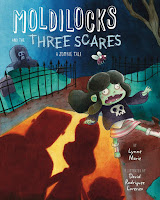
 In MOLDILOCKS AND THE THREE SCARES it is more about following your heart and being open to the fact that someday, when you least expect it, you will find your “place.” 
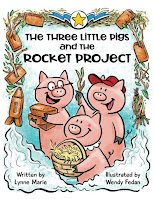
THE THREE LITTLE PIGS AND THE ROCKET PROJECT supports that sometimes the losers can be winners. It just matters that you use what you have to play the right game.

Q: Excellent points! You often discuss the importance of mentor texts. Did you have any particular texts in mind as you wrote this? 

Lynne Marie:  For this story, I used a variety of Mentor Texts, including picture books that featured rat characters, were set in France, or were about moving. I also looked at retellings of City Mouse/Country Mouse and The Prince and the Pauper
I wanted to make sure that my story was new and different, a fresh retelling, and could stand out among and above the rest. I also really wanted to introduce this historic period to readers, to plant a seed and grow a history lover. 

Q:  Much of what you do is supporting other picture book creators. Tell us what motivates you and what you like best about that. 

Lynne Marie: I was really fortunate to realize my dream of becoming a multi-published picture book author and it makes me feel like a fairy godmother to help others to achieve their dreams. I have worked as an editor for a few small presses and run a mentoring and critique service at www.thepicturebookmechanic.com

And, I am currently an Agent Mentee with the Seymour Agency and am on my way to becoming an Agent. I am very excited about this as it makes me an official Fairy Godmother. 😊 My own literary agent, Marisa Cleveland of the Seymour Agency, is my Agent Mentor. I adore her and think she is the best of the best – so enthusiastic and supportive.

Q: You and I first crossed paths when you took over the administration of Rate Your Story. What made you decide to take that on? 

Lynne Marie: I was already a big fan of the Rate Your Story Rating and Feedback Service (www.rateyourstory.org). I actually didn’t want to become a Judge as I would no longer be eligible to be a Member. But Sophia Gholz, the owner at the time, finally convinced me that I should. Then after I'd been a judge for several years, Sophia was ready to hand over the torch and convinced me that I was just the person to take it. I love Rate Your Story and being an important part of many writer’s journeys so I am grateful she did! 

Q: And in addition to your writing life, you’re a travel agent, too! What’s your favorite part of that job? 

Lynne Marie: Yes! I am a Travel Agent with Pixie Vacations (www.pixievacations.com/lynne) and I love that job. As mentioned, my travel inspired THE PALACE RAT so you can see that I am passionate about wearing both of these hats. I find travel and history very inspiring and often try to weave what I learn about the world through travel into my stories. I also love reading and collecting world folktales.
Lynne Marie

Q: Okay, now our readers want to know: How do you have time to do it all? What’s your secret? 

Lynne Marie: I love everything I do and it feeds each other. I think that the fact that all the things I do are related and feed each other, it really helps! So no matter what I am working on (writing, reading, travelling, mentoring, giving feedback, etc.), I am learning and growing and creating. 

Thanks for taking the time to chat, Lynne Marie. And good luck with all you're doing!

Thank you, dear Christy, for having me on the GROG blog. I am very happy to have you as a Judge at Rate Your Story and to be on this wonderful path together! 

Aaand, here's that trailer: 


More about Lynne Marie: She is co-host of #SeasonsofKidLit along with Heather Macht. And she is a long-time Cybils judge and feature columnist at Children's Book Insider. When she’s not traveling the world in search of story ideas, she lives in the heart of Florida with her family, a Schipperke named Anakin and a Mini Pinscher named Marlowe Charlotte. Visit her at 
 www.LiterallyLynneMarie.com. LynneMarie is represented by Marisa Cleveland and Jonathan Rosen ofwww.theseymouragency.com.

Here are Lynne Marie's earlier (and forthcoming) titles: 

Hedgehog Goes to Kindergarten -- art by Anne Kennedy (Scholastic 2011)
Hedgehog's 100th Day of School -- art by Lorna Hussey (Scholastic 2017)
The Star of the Christmas Play -- art by Lorna Hussey (Beaming Books 2018)
Moldilocks and the 3 Scares -- art by David Rodriguez Lorenzo (Sterling / Scholastic 2019)
Let’s Eat! Mealtime Around the World -- art by Parwinder Singh (Beaming Books 2019)
The Three Little Pigs and the Rocket Project and The Three Little Pigs and the Rocket Project Coloring Book -- art by Wendy Fedan (Mac and Cheese Press 2022)
The Palace Rat -- art by Eva Santana (Yeehoo Press 2023)
forthcoming: 
Broommates co-written with Brenda Reeves Sturgis – art by Nico Ecenarro (The Little Press 2024)

And if you're looking for Lynne Marie, here are some of the places she hangs out:

Wednesday, September 23, 2020

My Top 10 Ways to Research Kidlit Editors and Agents ~ by Patricia Toht

Come, gather at my knee, youngster...


I started writing for children way back in the 20th century. (GASP!) While many aspects of writing children have changed over the years, one goal that has remained constant is to find the editor (or agent) who will love my manuscript. 

Here are the Top 10 ways that I've used to research editors and agents:

1. CWIM
In 1995, the year I committed to writing for children, my "bible" for researching editors and agents was the Children's Writer's and Illustrator's Market. This book contains listings that are updated annually - names, addresses, and pertinent information about each entity - as well as helpful articles. It is currently in its 32nd printing, so it must be doing something right!


2. Agency Websites
Agency websites are a great way to find a list of their agents and a description of what types of books they represent. You may find a list of clients, too, where you might spot artists that you feel an affinity to. Sometimes individual agents post their wish lists. Above all, this is a definitive place to find specific submissions information for the agency.

You can get a feel for publishing houses and imprints by looking over their current and upcoming titles, but long gone are the days of requesting printed catalogs. These days, with publishing houses merging and morphing, I find the easiest way to peek at a catalog is through Edelweiss+. I search for an imprint and find their latest list.

4. Other websites/blogs
There are so many great kidlit websites! My top picks for submissions information are:

The Purple Crayon. Harold Underdown's website has so much to offer! In particular, the "Who's Moving Where?" section provides me with the latest information on editor changes at publishing houses.


Kathy Temean's Writing and Illustrating blog has terrific, in-depth interviews with agents each month, as well as editor and art director interviews. 


KidLit411, by Sylvia Liu and Elaine Kiely Kearns, describes itself as "a one stop info shop for children's writers and illustrators," and that's the truth. Scroll down their Topics list to check out Agent Spotlight, Editor Spotlight, and Submissions.

5. Social Media
On Twitter, I find handy hashtags to harvest information on editors and agents. Do a search for these hashtags: #askanagent, #askaneditor, and #MSWL (manuscript wish list), to name a few. Follow your favorite publishers and professionals to keep up-to-date with them. 

6. Conferences and workshops
Attending conferences and workshops may involve a cost, but they come with the possibility of great rewards. Often you can get an editorial critique of your work, which lets you to get tips from the top. And faculty members usually open their submissions window for a few months for attendees - so important for unagented manuscripts!

SCBWI is the Society of Children's Book Writers and Illustrators. If you are serious about writing for kids, membership in this organization is one of the most important steps you can take.
Among its resources, SCBWI has compiled The Book: Essential Guide to Publishing for Children. It details how to prepare and submit your work. The Market Survey section gives a current snapshot of the market (although change is continual). I like the section "Edited by..." with information that can help pair your book with a receptive editor. 

Querytracker is a database of agents and editors, and a channel used by many of them to recieve submissions. The standard membership is free; a premium membership has more to offer, but comes with a cost. (I've browsed the database for information, but I haven't used it for submissions.)

9. Author Acknowledgments
For novelists, you may discover agent and editor names for your favorite authors by checking out the acknowledgments in the back of their books. 


10. The PW Children's Bookshelf newsletter
This is my favorite way of tracking agent and editor preferences! Near the bottom of this twice-weekly newsletter is a list of current book deals. Each announcement includes the name of the author (and illustrator, if it's a picture book deal), the editor who bought the book, the book title, a brief description of the book, and the name of the agent(s) securing the deal. It takes some work, but I maintain a spreadsheet of this information that I can search when I have a new manuscript ready. Using Control + F brings up a search box where I can enter key words to find deals that have similarities to my work. (E.g. I search "rhyme" to discover editors that may be open to rhyming picture books.) Sign up for the Children's Bookshelf newsletter here.

These sources are my Top 10, but you'll undoubtedly find many more. If you have a favorite, please share it in the Comments below.

Happy writing, everyone! Good luck with those submissions!


Monday, August 1, 2016

Week of Writing Recap

by Leslie Colin Tribble


Groggers at WOW - Janie Reinart, Sherri Jones Rivers, Suzy Leopold, and me in the back.

And the GROG is back after a little summer recess.

Several of us used our summer break to attend the Week of Writing (WOW) Retreat in Helen, Georgia. One of us, Sherri Jones Rivers has attended all three of the WOW retreats, while others have been at least twice. This was my second year at WOW and it was just that, WOW!

The conference is held at Unicoi State Park, which sits at the southern end of the Appalachian Mountains. Rolling hills covered in green stretch as far as you can see. Coming from sparsely vegetated Wyoming, Georgia always feels like a foreign land. Unicoi is a great facility - the lodge where the sessions are held is comfortable and our rooms are just a short walk away. There are hiking trails, and this year we had the option of taking the shuttle into the nearby town of Helen, a Bavarian village in the heart of Georgia.

A Georgia peach morning.

Kristen Fulton organizes a fabulous retreat, and this year was no exception. The faculty was outstanding, the round tables were intimate and we had plenty of time for writing.

The food is always great as well.

Yes, you read those menu plates correctly!

Faculty included authors/illustrators Lisa Amstutz, Anna Crespo, Jill Esbaum, Barb Rosenstock, Linda Skeers, Don Tate and Duncan Tonatiuh. They spoke on writing for the educational market, how to get editors to read past the fourth word, inserting humor, looking at your stories from an illustrator's point of view, and how to be the best writer you can be. We were treated to a bonus Thursday evening when attendee and new author, Nancy Churnin (The William Hoy Story), gave a great after dinner talk about marketing your book.

The agents and editors were all very personable and approachable.They included Sally Apokedak, Silvie Frank, Clelia Gore, Kathy Landwehr, Victoria Selvaggio, Tamar Mays, Kelly Barrales-Saylor, and Essie White.

Author Panel

One of the changes at WOW this year was the roundtable format. Last year we had four or five attendees, plus a faculty member. The larger groups meant you had less time for comments after your story was read. This year it was two attendees plus a faculty member and you had an entire 20 minutes for a read and critique. That was very helpful - you could really delve into your story and see what wasn't working and why.

Author/Illustrator Duncan Tonatiuh

Another change was having much more time to write. Most days we were finished with sessions by 2:00, with roundtables following. The rest of the afternoon and evening were free for hanging out or revision work. Last year I was so brain dead by the day's end I couldn't even think about rewriting. This year with my head full of incredible knowledge, I raced back to my room and really got some great revision work done.

If you haven't been to an extended writing workshop, I encourage you to find one. Being able to write without the normal distractions of work, family, pets, etc. is a gift, and being around encouraging, helpful, fun writers just makes it all that much better.

Besides the valuable sessions, roundtables, and the opportunity of being able to purchase paid critiques, WOW offers writers the chance to connect with like-minded individuals. Evenings on the porch of the lodge, watching gorgeous sunsets, and getting to know the other attendees is really what makes WOW special. You can talk to people on every rung of the writing ladder in a non-threatening, inclusive atmosphere. It's never the exact same group every night with folks flowing in and out depending upon their mood. Some great friendships have formed at WOW, which I think is very special.

What made WOW valuable for me? Putting into practice what I learned during the day. Being able to spend an entire week immersed in writing was incredibly beneficial. I spent a lot of time revising the three manuscripts I took and am really excited about how they're shaping up. If you're struggling to find quality writing time, maybe WOW is exactly what you need.

The theme for next year's WOW 2017 retreat is Rock'n Roll'n and Writ'n. More details will be available August 1 at www.wowretreat.net.

We'll have more posts about WOW by other Groggers throughout August. Enjoy!

The Friday night party is always a blast.


Friday, March 11, 2016

Tips on Craft, Critiques, & Agent 101 by Kathy Halsey

I sprang into March with many recent webinars, meet-ups, and SCBWI events and I'm sharing them with GROG readers today. Here's to springing forward and new growth for us all!


Taking Writing to the Next Level

YA writer Emery Lord, author of OPEN ROAD SUMMER and THE START OF ME AND YOU, shared her thoughts at a recent Central Ohio SCBWI meet-up. More about Emery here.

1. That old adage, "show not tell" can be broken, especially in longer works. A writer should think WHEN to show and WHEN to tell.  Think - what's the intention of doing so purposefully.
2. When creating character depth, imagine your main character's parents and family. They are the central part of a child's identity, even in YA. 
3. Create/free associate a vocabulary list of your main character that includes his/her set of references. Emery's example: if your protagonist is religious the list might include "holy," "communion,"  "dove," "olive branch." Pull from this list for analogies, metaphors,  figurative language to set the tone of the book.

Being a Good Critique Partner

In a recent KidLIt College webinar with Heather Alexander, Pippin Properties, the emphasis was on big picture issues. Avoid line edits. Heather shared house renovation analogies. Don't change the "wallpaper," when the "blueprint" is lacking. 
1. Look at character arc for growth/change in character, flat characters, characters to whom kids will relate.
2. Motivation is the motor of the story. Can you find the core emotion that moves your character forward? Drill down and keep asking "WHY?"
3. The narrative arc is impossible to untangle from from character. All stories must have exposition, rising action, climax, falling action and a resolution. In a critique, all these elements need to be examined.
Photo by Juliana Lee
Agent 101- Vicky Selvaggio

Vicky Selvaggio, Jennifer De Chiara Literary Agency, pulled back the curtain on how she acquires clients to a packed house in Columbus, via Central Ohio SCBWI.
1. Know your communication style/needs and that of your perspective agent. Vicky emphasizes that this partnership IS a relationship.
2. Vicky says her job is to push, encourage, support her clients. Clients have a job, too. Read voraciously in your genre, make connections with editors at conference and pass that info on to your agent. Be open-minded with revisions.
3. Both agents and client should keep submission logs. SCBWI, THE BOOK has a great template in the back. You should know where your work is, who has it, and eventually receive feedback on your work. 
4. Realize that good agents put their current clients' needs first (red flag if they don't), so response to your query may take more time than you'd like.

Hope you've found a few tips that puts the spring back in your step. If you'd like to share a tip from a recent webinar/class/event you've taken recently, add it to the comments section. SPRING FORWARD!


Monday, September 21, 2015

Laughter and Learning
at Letters and Lines
SCBWI's Rocky Mountain Chapter's Fall Conference

By Leslie Colin Tribble

This past weekend I had the privilege of attending the Rocky Mountain Chapter's Fall Conference, Letters and Lines. This is my second year at this annual event and I loved every minute of the classes, industry panels and keynote session. Here are a few thoughts about what I learned and some general impressions about the conference. 


First, it's a glorious time to be in Colorado. It's an eight hour drive for me to attend this conference, but it's such a beautiful time of year the drive goes by quickly. The weather is still warm, which is incredibly helpful because everyone kept running outside to stand in the sun after freezing through sessions in the overly air-conditioned rooms. Besides, it's Colorado so you definitely want to be out under that blazing blue sky, enjoying the change of seasons.


Dan Yaccarino was the keynote speaker this year and he did a great job. Dan's speech was funny yet instructive, humble yet inspiring as he spoke of his career in illustration, writing, producing and designing. The theme of his keynote was, "Say Yes." There have been many points in Dan's career where he was asked to do something he'd never done, never even contemplated nor even entertained the remotest thought of doing it, yet he "Said Yes." I was inspired by the intersection of saying yes and as Dan put it, "the ability to work on an even bigger canvas." All of his varied projects have simply been a "bigger way to tell stories." It was especially reassuring to know he still gets plenty of rejections and not all his projects are home runs.

My next session was given by Deborah Warren of East/West Literary Agency and Erin Dealey. It was fun to hear how this agent-author duo sees the publication process and how much they enjoyed each other's presence. For them the agent/author relationship is "all about the connection and making sure the chemistry is there." One tidbit from this session: never submit on a Monday as agents and editors get slammed by submissions after weekends.


I missed part of the session given by Emma Ledbetter, Associate Editor for Atheneum Books for Young Readers. But what I did take home was her recommendation to add pagination to your manuscript submission, making sure you don't start with pages one or two (title, copyright, dedication, etc.) She also told us that Margaret Wise Brown said picture book manuscripts should be whistled to catch the rhythm and cadence.

Erin Dealey, author, had a great class on Strategies for a Long Shelf Life. She suggested asking yourself, what can I do for my local booksellers and librarians to make their job easier? Also, authors are completely worth an honorarium so ask for one or better yet, have it stipulated in the contract you send out to the store, school or library.


Deborah Warren gave a helpful session about marketing your work. She said, "Authors start the food chain of publishing," and "your passion for your book has to go up the whole food chain." Non-fiction writers will be happy to know Deborah doesn't consider NF a trend, it's here to stay since it's filling a need in the market.

The second day of Letters and Lines started with an impulse on my part. Instead of continuing on a picture book tract I sat in a session about writing novels in verse by Melanie Crowder, author. This session absolutely struck a chord with me and I'm excited about giving this new (to me) genre a try. To become familiar with this type of writing, Melanie suggested reading as many verse novels as you can find as well as reading lots of poetry.


Jenny Goebel gave a good talk on "To Plot or Not to Plot." I was pleased to learn that my haphazard way of winging it and then coming back to make sure I have all the plot necessities is really a method.


I also participated in the final picture book intensive which is a great way to get lots of eyes on your manuscript and comments from industry professionals. 


All in all, I thought this year's conference was great. The faculty was stellar and I learned so much. I'm excited to get out the red pen and revise, revise, revise!