I'm pleased to welcome author and picture book booster Lynne Marie to chat with GROG. She's celebrating the release of The Palace Rat, illustrated by Eva Santana, and she offered to share some insider's insights. (Also, check out the adorable book trailer at the end of this post.)
You may already know Lynne Marie's work. She has several prior books (listed below) and is the owner/director of the RATE YOUR STORY critiquing and mentoring service, as well as the organizer of March on With Mentor Texts, among her other activities.
But let's get to our interview!
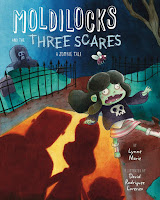
In MOLDILOCKS AND THE THREE SCARES it is more about following your heart and being open to the fact that someday, when you least expect it, you will find your “place.”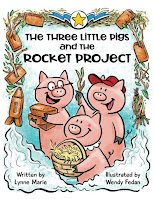
THE THREE LITTLE PIGS AND THE ROCKET PROJECT supports that sometimes the losers can be winners. It just matters that you use what you have to play the right game.
Q: Welcome, Lynne Marie! Your latest book is about a rat in the palace of Versailles. How did you ever come up with this idea?
Lynne Marie: The inspiration came on a family trip to France in 1997. We took an excursion to Versailles. As we waited for the tour guide to pass out the tickets, a rat scurried across the courtyard. That inspired a game of "what if?" in my mind.
What if that rat was related to the rats of the French Revolution?
What if the (long-ago relative) rat was the pampered pet of King Louis XIV?
What if others in the Palace were jealous of the King’s attention for the rat?
What would they do to get rid of it? How would the rat react? The wheels started turning and never stopped.
Q: Wow! And the result was a great fairy-tale-like story. Nicely done. The Palace Rat is published by Yeehoo Press. I know they publish in China, too. How have they been to work with?
Lynne Marie: The Palace Rat is my first book published with Yeehoo Press. I am excited that it will also be published in China! The people I worked with were very accommodating and very communicative. It has been a pleasure working with them.
Q: You’ve published other picture books based on fairy tales or folk tales. What's the secret to making those work?
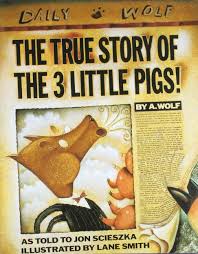
Lynne Marie: When writing a folktale, it is important to find a way that today's children can relate to the retold tale. In the case of THE PALACE RAT, my thought was to support the message to bloom where you are planted (as many children don’t have control over where they go or who they go with, both in divorces and foster care, etc.), and doing what you love to do best (this helps with coping and discovery). I hope that my story will inspire little ones, no matter the situation, to bloom where they are planted and to make the best of their strengths.

In MOLDILOCKS AND THE THREE SCARES it is more about following your heart and being open to the fact that someday, when you least expect it, you will find your “place.”

THE THREE LITTLE PIGS AND THE ROCKET PROJECT supports that sometimes the losers can be winners. It just matters that you use what you have to play the right game.
Q: Excellent points! You often discuss the importance of mentor texts. Did you have any particular texts in mind as you wrote this?
Lynne Marie: For this story, I used a variety of Mentor Texts, including picture books that featured rat characters, were set in France, or were about moving. I also looked at retellings of City Mouse/Country Mouse and The Prince and the Pauper.
I wanted to make sure that my story was new and different, a fresh retelling, and could stand out among and above the rest. I also really wanted to introduce this historic period to readers, to plant a seed and grow a history lover.
Q: Much of what you do is supporting other picture book creators. Tell us what motivates you and what you like best about that.
Lynne Marie: I was really fortunate to realize my dream of becoming a multi-published picture book author and it makes me feel like a fairy godmother to help others to achieve their dreams. I have worked as an editor for a few small presses and run a mentoring and critique service at www.thepicturebookmechanic.com.
And, I am currently an Agent Mentee with the Seymour Agency and am on my way to becoming an Agent. I am very excited about this as it makes me an official Fairy Godmother. 😊 My own literary agent, Marisa Cleveland of the Seymour Agency, is my Agent Mentor. I adore her and think she is the best of the best – so enthusiastic and supportive.
Q: You and I first crossed paths when you took over the administration of Rate Your Story. What made you decide to take that on?
Lynne Marie: I was already a big fan of the Rate Your Story Rating and Feedback Service (www.rateyourstory.org). I actually didn’t want to become a Judge as I would no longer be eligible to be a Member. But Sophia Gholz, the owner at the time, finally convinced me that I should. Then after I'd been a judge for several years, Sophia was ready to hand over the torch and convinced me that I was just the person to take it. I love Rate Your Story and being an important part of many writer’s journeys so I am grateful she did!
Q: And in addition to your writing life, you’re a travel agent, too! What’s your favorite part of that job?
Lynne Marie: Yes! I am a Travel Agent with Pixie Vacations (www.pixievacations.com/lynne) and I love that job. As mentioned, my travel inspired THE PALACE RAT so you can see that I am passionate about wearing both of these hats. I find travel and history very inspiring and often try to weave what I learn about the world through travel into my stories. I also love reading and collecting world folktales.
 |
| Lynne Marie |
Q: Okay, now our readers want to know: How do you have time to do it all? What’s your secret?
Lynne Marie: I love everything I do and it feeds each other. I think that the fact that all the things I do are related and feed each other, it really helps! So no matter what I am working on (writing, reading, travelling, mentoring, giving feedback, etc.), I am learning and growing and creating.
Thanks for taking the time to chat, Lynne Marie. And good luck with all you're doing!
Thank you, dear Christy, for having me on the GROG blog. I am very happy to have you as a Judge at Rate Your Story and to be on this wonderful path together!
Aaand, here's that trailer:
More about Lynne Marie: She is co-host of #SeasonsofKidLit along with Heather Macht. And she is a long-time Cybils judge and feature columnist at Children's Book Insider. When she’s not traveling the world in search of story ideas, she lives in the heart of Florida with her family, a Schipperke named Anakin and a Mini Pinscher named Marlowe Charlotte. Visit her at
www.LiterallyLynneMarie.com. LynneMarie is represented by Marisa Cleveland and Jonathan Rosen ofwww.theseymouragency.com.Here are Lynne Marie's earlier (and forthcoming) titles:
Hedgehog Goes to Kindergarten -- art by Anne Kennedy (Scholastic 2011)
Hedgehog's 100th Day of School -- art by Lorna Hussey (Scholastic 2017)
The Star of the Christmas Play -- art by Lorna Hussey (Beaming Books 2018)
Moldilocks and the 3 Scares -- art by David Rodriguez Lorenzo (Sterling / Scholastic 2019)
Let’s Eat! Mealtime Around the World -- art by Parwinder Singh (Beaming Books 2019)
The Three Little Pigs and the Rocket Project and The Three Little Pigs and the Rocket Project Coloring Book -- art by Wendy Fedan (Mac and Cheese Press 2022)
The Palace Rat -- art by Eva Santana (Yeehoo Press 2023)
forthcoming:
Broommates co-written with Brenda Reeves Sturgis – art by Nico Ecenarro (The Little Press 2024)
And if you're looking for Lynne Marie, here are some of the places she hangs out:
FACEBOOK:
https://www.facebook.com/WordsandPictures.by.LynneMarie
AUTHOR FACEBOOK PAGE: Children's Author Lynne Marie
https://www.facebook.com/LiterallyLynneMarie/
TWITTER: @Literally_Lynne
https://www.facebook.com/WordsandPictures.by.LynneMarie
INSTAGRAM:
https://www.instagram.com/literally.lynne.marie/
THREADS:
https://www.threads.net/@literally.lynne.marie
GOODREADS:
https://www.goodreads.com/author/show/4848931.Lynne_Marie
RATE YOUR STORY ON TWITTER: @RateYourStory
https://twitter.com/RateYourStory
RATE YOUR STORY RATINGS AND FEEDBACK:
CRITIQUE and MENTORSHIP WEBSITE: