Carol: My perspective is a bit different. I find it helpful to see situations in a neutral or more positive way. ‘Procrastination’ becomes an informative signpost rather than a flaw or weakness. I think, This is interesting—is there something here I can learn?
I’m uncomfortable with activities that trigger my historical shyness or social anxiety. Posting about a success feels like bragging, reaching out to present or “sell” my book and receiving less-than-pleasant responses triggers memories of being laughed at or being an object of disdain. But lots of responses are positive, and as I practice reaching out, or posting a success, I’m more comfortable—which eliminates the need to procrastinate.
What is procrastination?
Simply put, procrastination is the act of delaying or putting off tasks until the last minute, or past their deadline. Most people procrastinate occasionally, but others are habitual procrastinators. It’s a habit that causes undue stress and can negatively impact one’s work.

Most researchers agree on several types of procrastinators. Carol reframes these definitions to reflect a less judgmental perspective.
Performers love the rush of putting off tasks until the last minute and believe they work best under pressure.
Carol’s Reframing: What about saying this, instead? "The rush of meeting deadlines is energizing for me. Knowing that about myself, I won’t call what I’m doing ‘procrastinating’ or judge myself in a negative way."
Avoiders fear being judged or put off doing boring, tiresome tasks.
Carol’s Reframing: Certain outreach tasks trigger historical fears (feeling “not enough”, not mattering, vulnerable to potential shame, embarrassment, etc.) and it’s understandable that we want to avoid that. But respecting this, gently nudging myself to take even one risk and then doing it moves me beyond the fear, and beyond procrastination. Repetitive practice tends to build an alternative ‘story’ to historical fears, reminding us that there are a variety of responses when we take the risk of reaching out.
Indecisives have difficulty making important or stressful decisions, often ruminating over several choices.
Carol’s Reframing: Ruminating wastes time, so I suggest focusing on the “do” or “don’t do.” Pay attention to the choices, consider emotions as well as intellect. Tell yourself the truth about what direction you feel most strongly about, and whether its impact is worth it. Talk with a trusted friend. If it involves sending a difficult email, save it in “Draft” and leave it there to re-read (to self and a trusted other) before you send it.
Colleagues Have Their Say

We wanted to get a sense of other creators’ experiences, and received responses from seven colleagues to these questions:
Do you procrastinate? All seven colleagues agreed that they procrastinate in some way, from mildly to severely.
What are the areas in which you procrastinate?
- Revision
- Querying
- “Something that feels big and frustrating—rewriting a synopsis, facing revisions I’ve received contradictory feedback on—but mostly business-related tasks.”
- Submitting and beginning a new piece of art: fear of rejection, fear of failing to create what I was imagining.
- Everything related to writing: the writing itself, response to queries about appearance, fan mail. Why? Low energy, anxiety, indecision. [When] creativity is removed from the equation—for example, doing things for other people—the anxiety diminishes.

Tips for Handling Procrastination:
Most of us turned to lists and structuring specific times to counteract putting off distasteful, difficult, or uncomfortable tasks—each of us a little differently.
Julie: I make lists, breaking down the tasks so I can cross them off. Recently, I've started a running list for the week. I force myself to clear it by Saturday or write the item again on next week's list. I hate having to write the same task on the following week's list, so I'm motivated to get it done.
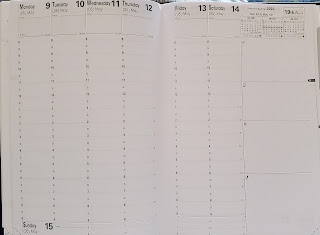
Carol: I, too, make a list for each week and break down the tasks if they feel overwhelming. I know and accept that I’m not going to complete everything—and that’s fine with me. I set work and home priorities and can transfer some to the daily note section of my Quo Vadis planner.
o Break Down Tasks into small (and even smaller) bits—break into pieces that feel absolutely doable, no matter how tiny! The important thing is to complete a task.
o Set Real Deadlines but be generous to allow plenty of time.
o Change Something: direction, activity, content—it clears and opens your brain to return to the original task.
o Talk With an Empathic Friend

Final Thoughts:
Carol: When I’m ‘putting off’ writing-related business or need a break from those things that must be done, I busy myself with other small tasks, or I relax and distract myself with reading or watching an old video. I don’t judge myself because that never helps me—it makes things worse. Compassion for the resistance to act allows me to explore it with interest and nudge myself gently forward.
But I also want to say this: Life events call us from our work. I’m grateful that I still have the ability to take care of necessities and crises, to hold tight to and nurture relationships, and to enjoy relaxing time. I don’t view these as taking me away from my writing.
Julie: Carol’s tips on reframing my tendency to procrastinate and being kinder to myself have helped already! And my new list strategy, mentioned above, is working because I am holding myself accountable for my goals.
What are your experiences with procrastination and tips for moving past it?