Monday, August 29, 2016

Bear Pond Books: A Bookstore of Consequence ~ by Christy Mihaly


Bear Pond Books~Montpelier, Vermont
For too long, I confess, I took my town's independent bookseller for granted. Then one chilly evening I attended an event sponsored by Montpelier's beloved locally owned bookstore, Bear Pond Books. Author M.T. Anderson read to a sold-out house from his YA book, Symphony for the City of the Dead: Dmitri Shostakovich and the Siege of Leningrad, and a talented string quartet played a passionate and moving selection of the music of Shostakovich. There were delightful refreshments and an enthusiastic music- and book-loving crowd. Wow! Not bad for the wilds of Vermont. 
Jane Knight, on location at Bear Pond Books

The brilliant person who conceived of and organized this multi-media event was Jane Knight. I tracked her down at Bear Pond Books, where she presides over the children's books section, to chat about favorite books, programming for kids and educators, and what this great independent book store does. Jane has worked at Bear Pond since 1995, and she's still filled with excitement every time she discovers a new book or author to fall in love with.

Q: Jane, one of the things that impresses me is how you seem to have read, and formed opinions about, all the most recent children's books at all levels, and I know I can count on you to recommend a great book for every reader. When you were a child, what was one of your favorite books?

One of Jane's childhood favorites
Jane Knight: I still have it on my shelf today -- The Wonderful Story of Henry Sugar by Roald Dahl.  Each story in the book was fascinating to me in a dark, vaguely sinister, totally intriguing way. I remembering sitting in front of a candle flame, trying to hone my second sight after reading Henry Sugar. I am impatient and it never paid off for me, but I still believe the story to be true.

Q: What's your view of the role of independent bookstores in general, and Bear Pond in particular?
JK: Indie bookstores have come a long way from the initial e-commerce onslaught about 10 or 12 years ago, when Amazon drove its book prices down so low the rest of us had to find other ways to be competitive and inspire customer loyalty. I believe the reason Bear Pond was able to hold on through some dark days was because we did not have many other bookstores in the area, and many of our customers came to realize the symbiotic relationship between their spending habits and a healthy downtown. 
Downstairs at Bear Pond Books
But we have had a lot of “educating” to do--and I don’t mean that in a condescending way--to help our customers understand the benefits of an actual brick and mortar bookstore in their community. We offer more than just books--we are your local hub of culture and information. We can bring authors to you. We are the place where you can actually open and touch a book. We answer the phones and we are available to talk to in person. We bake, we smile, we look you in the eye. I believe many people still want that kind of service.

Q: Kids love spending time in Bear Pond's Children's Room, with its comfy reading nooks and resident mascot, Veruca the Russian tortoise. How does this space fit into the local children's reading scene?
VERUCA on patrol
JK: The Children’s Room is inextricably bound with other literacy groups in our area. It is a symbiotic relationship--we are constantly striving to strengthen one another through cross-programming and promotion. Also, I have made wonderful librarian, teacher and parent friends through our book fairs and book giveaways. The Vermont College of Fine Arts is also a fabulous resource and our partner-in-crime in Montpelier. They hire really talented writers and help keep the pulse of this community jumping with excitement through their programs and events. Really, the more tangled web we weave, the stronger we all become together-- I guess that’s my philosophy to promoting literacy.

Q: Tell me about the Educators' Series you present at Bear Pond Books.
Jane shares her book wisdom at an educators' event
JK: Bear Pond’s Educator Series is about to embark on its fourth season. We host these events in the fall and spring of each school year. The goal is to offer thoughtful, diverse voices on literacy in the classroom for Vermont educators. We strive to help make book connections related to the material presented, especially new and kid-friendly titles. We also support educators by blogging about our events with supplemental material and book lists. Our presenters are authors, illustrators, teachers and librarians, literacy specialists, poets . . . anyone speaking to literacy issues that kids and teachers face in school and at home. There may very well be other bookstores doing something similar out there, but I can’t name any. Maybe your readers know of them!

Q: You're on the committee for the state's Dorothy Canfield Fisher book award. Your committee lists 30 books, and then each year Vermont students read the books and vote on the winner from that list. How much time do you spend reading children's literature?
JK: Can I LOL here? In order to come up with that wonderful Dorothy Canfield Fisher list of 30 middle grade books each school year we read dozens and dozens of books throughout the year. So. It’s KidLit TV 24/7 and I don’t regret one minute of it. It helps me in my job in so many ways.

Q: How do you decide which books to order? 
A: For me, ordering children’s books is informed mostly by experience and bookstore personality, aided by my incredibly hard-working book reps and my intuition. It’s alchemy, really.

Q: What would you tell parents about their kids' reading?
JK: For the love of all that is good, let your kids read what they want! If it’s Pokemon, let them read it. If it’s racy or violent, let them read it. If it’s above their so-called grade or maturity level, let them read it! If it’s Percy Jackson for the umpteenth time, let them reread it!! And also, read in front of your children, and not just on your phone or your iPad. Model the reading lifestyle for your kids. There’s a wonderful interview with Neil Gaiman about kids and self-censorship that should be required reading for all parents. Sorry--- rant over!
The dedicated staff of bibliophiles at Bear Pond Books
 . . .  So, dear readers, have you checked out what's happening at your local indie bookstore? We'd love to see your comments and ideas for bookstore programming, and for more ways to encourage kids to read. Thanks, and happy back-to-school and reading.

Thursday, August 25, 2016

Pete's Dragon created a picture book

Pete's Dragon Created a Picture Book

We are all about books here at Group Blog.
But please allow me to  interrupt our book 
love to talk about a children's movie.

It is Pete’s Dragon, an August 2016 release, by
an independent creator, bankrolled by
the Disney Folks.

I wasn't going to see it, but I'm glad I went to the theater
for it. Here are a few thoughts, why.

I left the moving wanting to climb a particular tree.

A key part of the plot is that a child reads &
 rereads & rereads….
a specific picture book that is very important to him
 in a touching way.

Legends & myths are some of my favorite literary tropes.
This one has a whopper.

Respect for imagination, forests & loyalty that is deserving
is to be appreciated.

The child actor, Oakes Fegley, is exceptional.

So, too are the special effects to make the facial
expressions of Elliott (the dragon) seem real.

It’s cool to see Robert Redford,  comfortable in his good-lookin’ older guy skin as a
storyteller. All the key actors are quite spiffy in their roles.

A nest of green pixie dust should be delivered to the creative maker, David Lowrey. Bravo!

So, go!

This is the news story that made me go see it. I guess I'm a sucker for the underdog.

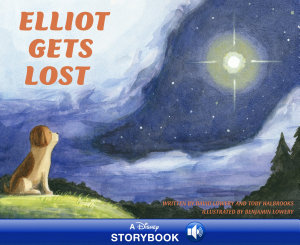
This is the picture book, which the movie brought into being.


Those of you who are cinema history buffs will want me to add that this movie

is a remake of a 1977 movie. I didn't see that earlier one & wasn't aware of it
until the story about this new version came out.

Which family movies were part of
your summer? I also loved seeing The BFG,
riffing off Roald Dahl's
wonderful story.


Monday, August 22, 2016

The Force Be With You (and Your Book Marketing) ~ by Patricia Toht

I like to gather ideas and brainstorm. I like first drafts. I even like revising. But the thought of marketing?
But authors are discovering ways to combine efforts to maximize the force of marketing. A new group, MGGetsReal, unites its members in marketing their books, which all share a common thread of tackling tough topics.

Before we talk about this power in numbers, let's meet #MGGetsReal member, Shannon Hitchcock:
Shannon's novel, RUBY LEE & ME, is the story of 12-year-old Sarah Beth Willis who has moved in with her grandparents after her sister's tragic accident. Sarah and her neighbor, Ruby Lee, will be in sixth grade together. But racial tensions are high in Shady Creek in the fall of 1969; Sarah is white and Ruby Lee is black. Race relations and personal guilt about her sister's accident could make for a rough year for Sarah...

Q: Hi Shannon! RUBY LEE & ME is loosely based on your childhood. Which parts of your youth did you draw upon for Sarah Beth, and which parts did you alter or make up?


Adorable!
A: The true part is the emotions. When Sarah Beth said she had always loved her sister, but before the accident she didn't know how much - that's exactly how I felt. [Shannon's sister Robin died tragically in a car crash when only 34.]
When Sarah Beth feels guilty about race relations in her town, I had those same feelings. When writing historical fiction, I have a motto to never let the truth stand in the way of a good story. I made up characters and embellished what really happened.


July 20, 1969
Q: What additional research did you need to do for RUBY LEE & ME?

A: Not an awful lot because this is based on a time period I actually lived through. Mostly I was fact-checking my memories, but I did read quite a bit about the first moonwalk.


Q: A reviewer on Goodreads applauds you for "...[weaving] fictional fact and factual fiction." What challenges did you find in weaving fact and fiction together?


A: My editor had to push me to make the racial issues more prominent. I was really uncomfortable when Sarah called Ruby a hateful name, but I think it sends an important message. Kids often get angry and call each other names without fully realizing how much words matter. There is a scene later in the book when Sarah finds out just how much hatred is behind the racial slur she uttered.

Q: There's been a call for more diverse books for children. Did this weigh heavily on you while writing, or did you find it inspiring?


To support We Need Diverse Books,
click here.
A: It weighed heavily on me, but if we're not writing books that matter, then it's a waste of time. I knew some white people would be offended I was dredging up the past. I also knew there would be African-Americans who might feel I didn't go far enough.


Q: How did it feel to get a Booklist starred review?

A: I cried! My first novel, THE BALLAD OF JESSIE PEARL, garnered positive reviews, but no stars, so this was a special honor.

Q: Let's talk marketing! You're part of #MGGetsReal. How did you find each other? And is there power in numbers?


A: Author Shannon Wiersbitzky [who has written a book about Alzheimer's] emailed me about a group marketing effort and asked if I knew other writers that might be interested in participating. I suggested Kerry O'Malley Cerra, who has written a book about 9/11 and Joyce Moyer Hostetter, who has written a book about war trauma. Joyce recommended Kathleen Burkinshaw, who has a brand new book about Hiroshima. What we all have in common is that we've written about tough topics in a way appropriate for a middle grade audience. 

YES! There is power in group marketing!

• Shannon Wiersbitzky is the architect behind the whole thing. Without her #MGGetsReal wouldn't even exist. She made really cool group ads for Twitter.

• Joyce Hostetter and her daughter made a video about our books:

• Kerry O'Malley Cerra compiled a comprehensive list of middle grade books that tackle tough topics. Find all 164 books here.

• Kathleen Burkinshaw wrote for the NCTE blog, hosting a giveaway of all five books that will run through the end of August.

• The contribution that I am most proud of is my post for the Nerdy Book Club.

Thanks for joining us, Shannon. WOW! There truly is power in numbers. Best of luck to you and the #MGGetsReal group.

If you fear marketing, GROG readers, consider joining forces with fellow authors to share the load!

For more information on Shannon, visit her website and blog here.

Or follow Shannon on Twitter, @ShannonHitchcock.


Thursday, August 18, 2016

Three Tips from Don Tate


"In the face of our greatest adversities, people can still do great things using their innate God-given gifts. Regardless of the circumstances, work hard, be persistent, believe in yourself, and never give up." 
~Don Tate
 

The Fabulous Don Tate and writing peeps.
By Janie Reinart

I too am a lover of words. I had the great fortune of meeting and listening to author/illustrator, Don Tate at the WOW Retreat. Don's words encouraged me and it was a delight to see his process.

As a child, Don preferred drawing to reading. When Don illustrates a manuscript, he begins by doodling in the margins all the images that come to his mind as he is reading. 

One of my favorite books Don Tate wrote and illustrated is Poet: The Remarkable Story of George Moses Horton.  Don said he became a lover of words after he wrote this book. Find a teacher's guide here.


Don said, "I began by writing and revising the manuscript many times. Then I began to sketch, which affected the words. Revised the words, which affected the sketches--it was like a moving target."

The last page of Poet reads: “Words made [George] strong. Words allowed him to dream. Words loosened the chains of bondage long before his last day as a slave.”


Three Tips from Don Tate:

1.  Draw, read, and write everyday.
2. Make your scenes visual and engaging to the reader--be a visual storyteller.
3. Work hard, be persistent, believe in yourself, and never give up.


Monday, August 15, 2016

Ask The Agent: Part 1


    At the WOW Conference in Helen, Georgia this past July, there was a stellar line-up of faculty. I had the pleasure of having Clelia Gore of Martin Literary and Media Management moderate a round table with me and another writer participating. She is lovely, smart, articulate, and very encouraging with her comments. She jumped right in with the manuscripts and never having seen them before was able to give great suggestions for improvement. She was willing to answer a few questions for us.


SHERRI: When do you consider a writer ready to query agents?

CLELIA: Remember, writing is rewriting. I want a writer to have gone through a full revision process--that means lots of drafts. It also means having had other people give you feedback on your manuscript. A writing group, writing partner, quality beta readers, or a hired editor are great options for manuscript reviewers. Someone who is either familiar with the genre as a reader or an experienced writer/editor who will give you quality feedback and a constructive, honest critique. Also, be mindful of the expected word counts. If I get a 100,000 word young adult novel, or an 80,000 word middle grade novel, to me, that's a red flag that the book hasn't been sufficiently edited. Research the expected word counts, and revise until you are in the range.

SHERRI: What do you think your strongest asset is as an agent?

CLELIA: I came to agenting via the legal field, and I have a deep appreciation of the client-agent relationship and how to manage it. My experience as an attorney also gives me a strong background in contracts and negotiation. I think I also have great taste and instincts when it comes to books and the book business.

SHERRI: How can a writer best determine when a manuscript is ready to share---close to the finish line, so to speak?


 CLELIA: Tough question! I think a lot of this is instinctual and a writer will likely just know when their manuscript feels ready to be submitted. The goal is to get your manuscript as near to publishable quality as you can. That means after many reads from top to bottom, you no longer think big changes are required. You can make small tweaks until the end of time, but I think the "ready" moment is when you feel confident that all of the big and medium tweaks needed have been made.

SHERRI: What makes a manuscript work for you?

CLELIA: Voice, characters, plot and writing have to come together. A strong voice matters a lot to young readers. I want flawed characters readers can connect with and root for. I want a compelling plot with resonating themes. And the writing has to be spot on. I especially appreciate manuscripts that feature voices and characters we haven't heard from as much in kid lit. Diversity is a biggie for me and I think that is true for a lot of agents and editors.

SHERRI: I know a lot of authors attend conferences and get 15 minute sessions with an agent and their manuscript. How would you advise authors to best use their time when meeting an agent for these one on one critiques?


CLELIA:  I think that the # 1 goal of these sessions is to make a personal connection with an agent. Agents are more likely to give your work their time and attention later on if they have met you in person. The best way to make an impression is to be professional, courteous and come prepared with a terrific pitch and manuscript. An agent is looking for someone they may want to partner with, someone who "gets" how to succeed in this very tough business. When an agent is giving feedback, be open to their commentary and do not use the short amount of time to counter their constructive criticism or say something like, "Well, my granddaughter/daughter/nephew really loved it." This happens more than you think and it's always off-putting from an agent point of view.


 SHERRI: What are some of the most important "Do's" and "Don'ts" for an author submitting to you?


CLELIA: Do your research. There will be the right and wrong agents to submit your work to--by doing a little research on what kinds of books an agent acquires, likes or has acquired and sold, you will be able to create a tailored submission list. Do follow individual submission requirements. These are in place to make the review process more efficient for us. We are dealing with a high volume of submissions and ones that don't follow our instructions are more likely to get passed on based on an administrative reason and not a reason based on a qualitative review of your work. Do consider your query like a business document. Don't get to cutesy, casual, or too familiar. Although we are working in a creative field (and I work exclusively in the kid lit field), this document has a business purpose and we are looking for serious, professional writers who are taking this as seriously as we do. The query is a sales pitch, so keep that in mind when you are writing it. Do give signals that you are a serious writer, not just a dabbler. In addition to being professional, you can tip off the agent that you are a serious writer by including any publication credits (no matter how small or outside of the genre), that you are a member of a writer's group, attend conferences, etc.

     At Martin Literary, Clelia represents all books under the children's book umbrella--that's picture books, middle grade and young adult books. Fiction and nonfiction across all genres. You can check out her blog at www.cleliagore.com for periodic wish list postings. 
     Stay tuned for part 2 featuring another fine agent from WOW 2016.