Thursday, November 9, 2017

Make Writing Challenges, Contests, and NaNoWriMo Work for YOU - by Kathy Halsey

NaNoWriMo, Storystorm, ReFoReMo, PBPitch, Susanna Leonard Hill's contests and Would You Read It Wednesdays... I know you can recite the writing alphabet with me if you are serious about this industry. So many opportunities and such a finite amount of time — so what's a savvy writer to do? My answer is to customize these events so they work for you! 


In the Beginning

We'll begin by using my track record as a newbie. As a beginner, I joined every challenge possible. That was a huge mistake as my time was so fractured, I had no time to spend on my own work. I followed all directions given by the moderator/group leader. I worried if I was doing it "correctly," if I had to use a certain form, or if I had really met the requirements for the challenge.
I still see comments that illuminate my first attempts in forums now, and I know the anxiety these writers feel. If you are asking questions such as "How do I prove I wrote 30  ideas in 30 days?" or "What's the best way to organize ReFoReMo research?" you need to relax and think about YOUR goals and what you need this challenge to do for you.


How to Thrive

  • Your time is precious so pick your challenges wisely. If you are on deadline or juggle writing with another career, an event like StoryStorm (a new idea each day) or Halloweensie (a story of 100 words or less) is more doable than NaNoWriMo (a complete novel in one month.)
  • Survey your strengths and weaknesses as a writer and choose accordingly. Since I had less knowledge on writing chapter books than picture books, joining ChaBooChaLite proved to be just what I needed. If you need help crafting a pitch, help others craft theirs or submit your pitch to Susanna Hill's "Would You Read It Wednesdays." It's great practice.
  • If you are intent in connecting with other writers, finding critique group, or submitting, 12x12 will satisfy your needs. 
  • When beginning a new conest/challenge, look for files with resources contest rules and forms. Review past years' challenges and see how they worked. Don't be afraid to ask questions of moderators and long-time members. These tips will save you time.
How to Customize


These anecdotes from my past will explain how I made events work for me after I'd spent a year or two following all instructions to a "t."

  • NaNoWriMo: This is year two for me, and I'm considered a "rebel." ( I love that NaNo has a nomenclature for what I do.) I am writing 10,000 words, not the recommended 50,000. I am using a picture book plot as my outline and am transforming it into a chapter book. I still get the motivation and camaraderie NaNo provides but on my terms.
  • Contests such as the Halloweensie, the Valentiny Contest, and 50 Precious Words: Word count is crucial in these contests, the lower, the better. I find WIPs that may not be working and  shave them down to the required words. I have saved time and haven't sacrificed a new story. An added bonus for me is these contests have taught me how to write in rhyme, a form I tend not to use.
  • ReFoReMo: Reading and learning from the copious mentor text lists is always a fun challenge. Now I peruse the lists, and select the texts that fit my current work – be it humor, science, circular stories. I also try to read a stack of books from specific  publishers/imprints if I am querying them in the future.
As writers, we all the same amount of time given to us each day to hone our craft. Find ways to make contests and special writing month authors create for us work to our advantage. Make the process a win-win.  Please share in the comments ways you've modified challenges to fit your needs. 


Monday, November 6, 2017

WALK, DON'T RUN INTO YOUR KID LIT CAREER- By Mike Malbrough, Posted by Sherri Jones Rivers

I fell in love with Mike Malbrough's cat book Marigold Bakes a Cake. It was clever and cute and I was drawn to the illustrations. It was his debut book and I thought it would be neat to find out how he got there. So, Mike, it's all yours!


    Have you ever heard of Tabata?

     Tabata is a popular form of HIIT (high-intensity interval training where you basically exercise as hard as you possibly can for 30 seconds and then rest for 10. Then you repeat that a bunch of times.


     I've tried it and you would never guess that 30 seconds could seem like such a torturously long time. I'm not a fitness geek, but there is apparently research that argues the benefits of this form of intense bursts of activity, with rest in between, when compared to something like jogging at a steady pace over the course of an hour.

     Maybe in fitness, but not, in my experience, when it comes to breaking into the world of children's literature.

     If I could jump through a black hole and go back in time like Matthew McConaughey did in the underappreciated film Interstellar,


 I would tell myself to take it easy. I wasn't going to SCBWI Conferences back then, but I was going to a ton of Comic-Cons trying to be the next Batman penciller, and every experience was marked by a mad dash of frenzied and desperate preparation about a week out from the convention date. My work was never ready, my spirit never settled and my confidence never high, and yet I would go into the fray of the show floor and come away defeated.

     The hunger and courage were to be commended, but I learned so little because I wasn't prepared. Not only had I not put the proper time into my work, but I wasn't ready to receive feedback and talk about my work, let alone talk to others about theirs. So I would come home dejected and not touch a pencil for weeks. Then after a rest I would start the next interval.

     Breaking in as an Author or Illustrator is a haul. It takes time. Mainly because it is about relationships. You have to meet face to face and build rapport. The most wonderful aspect of the kid lit industry is that the professionals who make up the industry are, with very, very few exceptions, remarkably warm, giving, and supportive. Every chance that you get to shake someone's hand


or have a conversation is an opportunity to get someone in your corner as a fan or someone who wants to see you grow and succeed, personally, artistically, and professionally. It can be hard when you want to break in so badly, to take your time, breathe and be in the moment with every hurdle, every not-so-good critique or round table session.

     Here are a couple of practical ways to do this:


     Plan out a year of work.  Pick a conference, class, or workshop that you are going to attend and use that as the start date.


That's where you begin. Even if it's months away. Then plan out what a year of working will look like with that same event NEXT YEAR as the finish line. The first conference is about collecting information, starting a relationship, finding inspiration, analyzing, etc.

     Create right after failure. This is really hard to do. But worth it. Plan to make something the day after a conference or critique. Notice I'm not saying get back to your dummy or manuscript. The key is getting back to why we all are drawn to this life. Make something that wasn't there before. Play the piano. Bake a cake, or go for a walk and imagine.

     Be patient with relationships. Finding an agent or publisher is like dating. There is definitely some magic involved and everyone has a unique experience, but most matches take time and a delicate hand. When wanting to display genuine interest, don't be pushy, but follow up and ask questions. Show gratitude and be polite. Most importantly, take your time.

Best wishes and happy strolling!

_________________________________________________________________________

Mike came to the world of children's picture books from a twenty-year career in comic books, graphic design, performing, and teaching. He lives in Orange, New Jersey with his wife, and two adventurous sons. He is presently illustrating a chapter book series for Viking called Warren and Dragon by Ariel Bernstein, which will be out next summer. He is working on a sequel to Marigold in which Marigold has a little trick up his sleeve. 


Thursday, November 2, 2017

Science Rocks: Jen Swanson & GEOENGINEERING EARTH'S CLIMATE:RESETTING THE THERMOSTAT by Kathy Halsey

Nonfiction writers, today is a REAL treat, prolific science writer Jen Swanson shares craft tips and how a fabulous book like GEOENGINNERING came to be. And if you comment on this post, you'll be entered to win a copy of GEOENGINEERING! Plus I'll review Jen's newest noting the exemplary writing techniques she uses. Finally, Jen's up to even more with the launch of a new blog! Over at From the Mixed-Up File of Middle Grade Authors comes STEM Tuesday beginning November 7 with the topic of zoology. Middle grade books will be highlighted along with resources for teachers. Look here to meet the STEM team of writers.

Book Review via a Writer's Lens
It takes a special skill set for an author to make a complicated topic like geoengineering accessible and interesting for tween/teen readers, but that is Jen Swanson's writing sweet spot. Via Jen's clear, concise yet captivating style, I've learned about and reviewed brain science, Brain Games, nanotechnology, Super Gear, and now geoengineering, the science of human interference to counteract climate change. This is a controversial topic and choosing to use the author's note in front rather than back matter was a smart move. Students will know upfront that Jen is discussing a "hot" topic that is at the forefront of our headlines today. (Think hurricanes such as Maria, Harvey, excessive flooding, and the Central Mexican earthquake, among others.) Yet Swanson delineates the pros and cons of every method she discusses so young readers will easily distinguish the facts and opinions stated. Writers new to expository nonfiction would do well to study Jen Swanson's craft throughout this book. Fun titles, the use of onomatopoeia, short chapters, examples kids can understand make this subject come alive. Teachers will appreciate the plethora of back material: source notes, bibliography, glossary, further information, and an index are all provided. I highly recommend this book for intermediate and middle schools as well as writers who wish to write curriculum-related nonfiction. (Jen speaks more about her craft in our Q & A below.)


Jen and Kathy Chat
What drew you to the topic of geoengineering? Did Twenty-First Century Books ask for a proposal? Did they require a set number of resources/websites? What about photos, infographics? Did you have to provide those? 
How this book came about is kind of a funny story. I was at the 21st Century NF conference and went to go get some tea for breakfast. There, I ended up speaking with Domenica DiPiazza, the Editorial Director of Twenty-First Century Books. We got to talking and I told her that I was writing engineering books. She asked if I knew anything about geoengineering. (I said no, because I didn’t). Then she said she was looking for an author to write a book about this very important topic. I quickly googled it and a few weeks later, submitted the proposal. It was a “right time, right place” sort of thing.

Every proposal requires the amount of research it needs. Which seems weird to say, but it’s true. There isn’t a set  of  “I need 10 resources” sort of thing. For me, you research until you know enough about your topic to write an amazing book about it. As for the photos, Twenty-First Century Books provided them for this book. That is not always the case. Every publisher has different requirements for photos.

I know you’ve done great nonfiction work with National Geographic. Is there a point when publishers began contacting you with proposals once you’ve established yourself? 
Once you establish a good working relationship with an editor, you may have chats about book topics they are looking for and/or ideas of your own to discuss with them. Sometimes these develop into actual projects and eventually books.

Your nonfiction is fun and understandable for its intended audience. What writing techniques do you employ to engage readers?
First, I imagine myself as a kid who is really interested in learning about this topic. I ask myself questions, such as: What is really cool about this process/topic/technique? How does it work? Why is it important? Is there something I can do to help? Any connections to the real world that I can make?

I use active words, kid-friendly descriptions and exciting information. For example, if I were going to talk about distance or size, I might say “it’s as big as a football field”  or “as small as a baseball” or maybe “sticky like a piece of tape on a hot summers day”. Something like that puts in immediate picture into the readers’ mind of exactly what you are describing. That allows them to then make their own connection to size and shape.

It’s immensely helpful when explaining difficult concepts, like geoengineering. In my geoengineering book, I made it easy to understand because every process scientists are looking at is something kids know: the rock cycle, the water cycle, the carbon cycle, etc. If you break it down into easy to understand concepts, then your readers will get it right away.

At what point in the research/writing process do you involve experts? How do you find them or does the publisher do that?
I usually look for experts right away. I don’t contact them until I am well-conversed in the subject, though. I approach them through email and sometimes do everything that way. Occasionally, I will ask them for phone interviews, but not always. I find them at universities mostly. The majority of my research is found in reading professional papers written by university professors. I just pick the experts from there. 

What projects are in the publishing pipeline for you now?
I am excited about the three books I have releasing from National Geographic Kids in 2018. Two are series books: Dr. E’s Super Stellar Solar System is about a planetary geologist who studies rocks on other planets (She has even driven the Mars Rover!). It’s some really exciting space stuff  and every chapter opens with a graphic novel spread. The second series book is a relaunch of Nat Geo’s famed Everything series as Absolute Experts: Dolphins which again features a National Geographic Explorer who studies and works with real dolphins. It’s a fantastic peek into the mind of one of the smartest creatures on the planet.

Finally, there is  Astronaut-Aquanaut: How Space Science and Sea Science Interact. I am VERY excited about this book. It’s a compare-contrast of how astronauts and aquanauts live, learn, and train for their environments. I spent many hours tracking down experts from both fields to include their actual experiences in this book. I had a blast writing this book!

What does a typical work day look like for you? How do you keep to such a tight schedule?  
Well, there is no such thing as a “typical” day for me. I’m very much a by-the-seat-of-your-pants type writer. I work best when I’m under deadlines, which is why I probably have so many. Most of my research takes place on the computer since I do a lot of technical books, I have to read A LOT of professional papers. I also head to the library. There are days when my 12-seat dining room table is covered with books stacked 3-4 high.


I love being a children’s author. It is a dream come true. And I am lucky enough to keep getting jobs so that’s what keeps me going, well, that and paying college tuition for two kids.

Remember to comment below to win a copy of this fabulous book! Wiley Corgi will be choosing a winner.

Monday, October 30, 2017

Todd Burleson Teacher, Librarian, & Technology Specialist Extraordinaire


By Janie Reinart


Give three cheers for our own Todd Burleson, a passionate educator and librarian/technology specialist. Todd was recently named as the 2016 School Library Journal's School Librarian of the Year!  He started the Grog Blog and is now adding author to his list of accomplishments.

Be excited people! There is a raffle (Rafflecopter will pick the winner) to win one copy of Todd's book,
The Green Screen Makerspace Project Book launching November 24,2017.  There is info toward the bottom of the interview about how to get the book for 20% off and free shipping!


Without further ado, here is the interview.


1. Who is your agent? 

I actually don’t have one!  I did for about a year and a half and it wasn’t the right fit, so I decided to explore other options. 

I was lucky enough to have become friends with Colleen and Aaron Graves.  They wrote the highly successful, Big Book of Makerspace Projects, also through McGraw Hill/Tab.   

When their publisher asked them to write a book about using a green screen in maker spaces, they said that they weren’t experts, but knew someone who was-me!  So, they asked me if I would want to write it.  The rest, as they say, is history!

2. How did you get the idea for your book?

As I mentioned above, the push came from my friends Colleen and Aaron Graves.  Once they set the idea into motion, I had to come up with a full book proposal for my editor.  That was a process in and of itself.  

I had to sum the book up in one concise paragraph.  Next, I had to create a table of contents. The meat of the project is the 24 step-by-step projects. I didn’t have to include all the steps, but I did have to share an overview of each of them.   

Once that was accepted, the book was a go. I received several deadlines to help the process stay on track. My editor, Michael McCabe, proofed each stage, gave feedback and guidance and encouraged and affirmed me along the way.

3. What is your favorite part of the book?  

Like choosing your favorite child, that is hard, but I would say I enjoyed writing the section about the history of visual effects in film the most.   

I am a huge history nerd and being able to immerse myself in some of the earliest historical films and study how filmmakers made ‘magic’ happen in their creations was mesmerizing.   

My favorite of these early filmmakers is Georges Méliès. He was a genius!  Some of the work he did ‘inside the camera’ still baffles viewers of his films today. 

The best example of this genius is his The Four Troublesome Heads (French: Un homme de têtes). In this film, he creates the illusion that he removes his own head several times and all sorts of craziness ensue. 

He had an incredible understanding of how the actual medium of film could be used and stretched to make the magic happen in his movies. 

I also enjoyed reaching out to colleagues around the world who were using green screen.  Many of their project ideas are in or inspired the projects in the book.

4. How long did it take to write?  

The book took about a year to write from start to finish.  Once the book was written, the post-production took about six months.  I had prepared myself for enormous amounts of work in post-production, but my editors made it a fun process.

5. What is your writing routine? 

I’ve discovered that I CANNOT write from home.  I am incredibly distracted and it is easier for me to go shine my shoes, iron my shirts or do dishes; anything other than the hard work of writing.   

My favorite table at our local public library and my trusty sketchbook and water bottle!

SO, I essentially claimed a table in my local library. I went there each weekend for about 3-4 hours on both Saturday and Sunday.   


While I was there, I cued up my playlist of ‘tunes.’  My tunes aren’t what you might think of as typical music.  In fact, I use something called ‘Binaural Beats’ to help me focus and drown out all other thoughts and distractions.  It might sound weird, but it truly works for me.  I’ve since learned about a smartphone app called Insight Timer. 

 
This free app is categorized as a meditation app, but there are thousands of tracks of all different lengths and arrangements.   

Some are purely binaural beats while others include guided meditations or simply musical selections for focus and meditation. 

I’ve since discovered that there are different frequencies related to different types of activity from sleep to study. I highly encourage other writers to give it a try.  


Another part of my ‘process’ is that each spring I take a writing retreat. I've stayed at a variety of hermitages, which offer me complete and utter isolation and peace.   

Typically I find locations that are surrounded or close to large forests or bodies of water as I find time in nature to be incredibly rejuvenating.   

After about a week I start to go stir crazy and need to ‘talk!’  One last thing I’ve done that has helped me a better writer and a lot more ‘present’ in my life was to remove the social media apps from my phone and desktop computer.

The hermitage I wrote at last spring break.

If I REALLY want or need to post something I still have my accounts, but not having them in my face all the time has eased that sense of ‘anxiety’ that the “FOMO” or Fear of Missing Out generates in me.

I also found that I much preferred writing in Google Docs than using Word.  Of course, the industry standard is Word, but while I was drafting for myself, I stuck to Google Docs because it autosaved and was available to me on every device I own.  I know there are purists out there that LOVE Word.  I am NOT one of them.

6. What is your favorite writing craft book? 

To be honest, it depends on what type of book I’m writing.  While I haven’t had any of my picture books published yet when I’m writing them, I immerse myself in the books I ‘see’ like my book to gauge where it will fit into the market.  

That being said, I spend the vast majority of my writing life pouring over authors like Barb Rosenstock, Jacqueline Briggs Martin, and Jane Yolen.  I am bewildered by the way they make every single word count and how the illustrators seem to squeeze the visual details that are implicit in the words.  

When it comes to writing non-fiction book projects like mine, I look to those who have successfully done it and I don’t have to look much further than my friends Colleen and Aaron Graves.  Their highly successful book helped me see how to effectively organize and then explain projects.  I wanted the projects to be accessible to teachers and students of all experience levels.

Huge thanks to my writing idol, Barb Rosenstock!

Barb's newest book about one of my all-time favorite artists!

7. What inspires you to write?  

The biggest inspiration for me is the desire to share and express my creativity.  With my green screen book, I wanted to demystify the process of using green screen.   
It truly is as simple as downloading an app, hanging a green Dollar Store tablecloth, yelling action and then doing minimal editing.   

Once the hurdle of the technology is bridged, the students will begin pushing the materials and technology to do exactly what they want; much like Georges Mélie´s did back in 1898!  

When it comes to some of my picture book projects, I am eager to share the lives of little-known individuals or tell stories in interesting ways.  I hope I can bring their stories to new generations so that their stories will live on for generations to come.


8. What are you working on now? 

I am currently working on re-writing a manuscript from another perspective about Orville Wright.  I’ve uncovered some new artifacts and interviews that have given me a fresh perspective to enter the ‘event’ I’m writing about.  


My hope is now that I’ve ‘delivered’ on one substantial project, I can land a book deal for some of my other work.  

I will be in The United Arab Emirates the first week of November.  I’ll be there presenting as part of the American Library Association Conference which takes place during the world’s largest children’s book festival.  Who knows?  I hope to meet some niche publishers and get my books out into the world!  Wish me luck!


9. Words of advice for writers.  


I have two things I recommend.  First, if you want to be a writer, read, reread and reread people who are doing it well.  I’ve found that literally copying their words by hand helps me connect and think in a unique way.  Sometimes I’ll do this several times to ‘see’ how they pace their story.   

After doing this, I try to imagine how I might illustrate the book in a different medium or from another perspective.  While I’m not an illustrator, even rough sketching the different page spreads helps me explore the complexity of the words and the ‘voice’ of the author.   

The second thing I recommend is that writers write, write, write and write. Seems elementary, but you won’t grow without practice. It’s also beneficial to put a draft away and let it simmer.  I have multiple projects going at the same time.  While I work on one, others are ‘cooking.’  I’ve actually found that the longer I keep them ‘away,’ the more capable I am to be re-explore it.   

I try to change the perspective of my stories in subsequent drafts to use alternative approaches to getting the story across.  When I’ve done this several times, I look at the work in totality and explore what really ‘sings’ and what strikes me as strong.  

I’ll go through and mark up the physical print out of the drafts and then file it away for another chunk of time allowing the drafts to ‘cure.’  

I work with several freelance editors who I pay to give me their gut reaction and thoughts about how I might tweak the piece. Then, I share with people whom I value and trust and let their thoughts permeate a bit.   

To me, it’s very important to keep in mind that the essence of the story should be fairly simple.  How you craft and tell it is the hard part. The next step is the loneliest: submitting to publishers. 

I think you just have to have a thick skin and believe in the project or story.  Another reason to have multiple projects in motion is so that you can distract yourself from the lonesome act of waiting for feedback. 

Every once in a great while, you get a morsel of advice. These are like garnets found in a mountain stream.  Use those to encourage you through the long, solitary process. 

Want to win a FREE Copy of Todd's new book?  You have several ways to enter to do so.  The drawing will take place on November 6th and Todd will send an autographed copy to you as soon as it is published!

a Rafflecopter giveaway

Can't wait? I don't blame you!  You can take advantage of this special offer to get 20% off the purchase price and FREE shipping.  Just use the info below!


Thank you, Todd, for a fascinating interview. Best wishes on your book launch. Pre-order here or use the info above for the special offer!
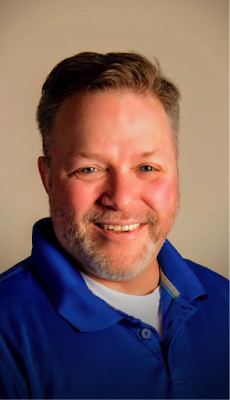

 
Todd Burleson
Todd Burleson is a Teacher-Maker-Librarian at the Hubbard Woods School in Winnetka, IL. The community helped develop, as part of their school library, a makerspace they call The IDEA Lab.  Todd's passion is the awakening of curiosity in learners of all ages and maintaining a balance of books and bytes.   @todd_burleson