Showing posts with label Science books for kids. Show all posts

Wednesday, March 15, 2023

Lisa Perron Talks About Rhymes and Patterns in Science ~ by Christy Mihaly

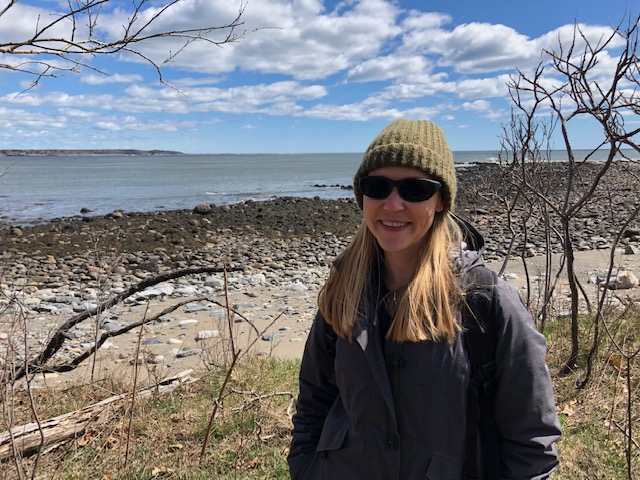
Lisa Varchol Perron

If you haven't yet heard about poet/author Lisa Varchol Perron, you will, because she's been working on a bunch of books that are coming out soon. I first got to know Lisa as a gifted poet through Poets' Garage, an online critique group. Now we also have an illustrator in common -- the talented Sheryl Murray (who illustrated my Patience, Patches!) illustrated Lisa's forthcoming book, My Love for You (Little Simon/Simon & Schuster). Meanwhile, Lisa's beautiful Patterns Everywhere (Millbrook), about the natural patterns all around us, is due out April 4. In it, Lisa explores the patterns of nature in rhyme, accompanied by gorgeous photographs and seriously scientific sidebars.

Sample rhyming text: 

Ripples stretch across the beach,

marking where the waves can reach.

Sand responds to water's flow. 

Patterns, patterns come and go. 

I invited Lisa to share her thoughts about poetry, science, and kids' books, some of my favorite topics. Read more on today's post at Archimedes Notebook by Sue Heavenrich. 

GROG: Welcome, Lisa, and congratulations! Tell us how Patterns Everywhere came to be. Did it start out in rhyme?

Lisa: Thank you so much, Christy. Patterns Everywhere began on a family hike. My husband ( a geoscientist) was pointing out patterns in the landscape to our daughters. 

I wrote it in rhyme from the get-go. Rhyming, metered verse has an expected pattern of stressed beats and end rhymes, so it felt like a natural fit.  

GROG: That's a great reason for this book to be rhyming, Lisa. Tell us how you write in rhyme -- and why.

Lisa: One of the biggest challenges is integrating the facts while keeping the verse natural. I enjoy jigsaw puzzles, and I get a similar feeling when piecing together a rhyming book, especially nonfiction. When writing nonfiction in rhyme, I start out with the topic and then decide what I want the tone and feel of the book to be. The rhymes come later, as I develop the focus of each spread.

One reason I write in rhyme is that research shows that rhythm and rhyme are important in developing early literacy skills. I saw how this worked when my kids memorized rhyming books and then started recognizing the words. Rhyming books were often the ones my daughters requested over and over. Re-readability is so important with nonfiction because repeated exposure helps readers retain information. 

GROG: How long did you work on Patterns Everywhere?

Lisa: I spent several weeks researching and deciding the scope of the book. This involved interviewing my husband as well as reading books and online sites. I generally research a bit and then start writing to figure out where the information gaps are. 

It took me a few months to write a draft that was ready to share with my critique partners. After that, several rounds of revisions. Then I had two geoscientists review it for accuracy. I submitted the manuscript to Millbrook a year after I first got the idea, and the book will be released about three and a half years after the idea sparked.

GROG: Where did the photos come from? Whose idea was the book design?

Lisa: I originally included reference images with my manuscript, as well as illustration notes. My editor suggested a photo-illustrated book and I thought it made perfect sense. The designer, Viet Chu, found beautiful photographs to showcase the patterns, and the team at Millbrook was receptive to suggestions I made as the book developed.

Elements of PATTERNS EVERYWHERE:
Rhyming text, sidebar, stunning photo (Millbrook Press ™-- an imprint of Lerner Publishing Group)

GROG: What do you want kids to take away from this book? 

Lisa: My biggest hope is that kids will feel excited about spending time outside. Patterns Everywhere is an invitation to explore our natural world with curiosity and wonder. The more we deepen our appreciation of the world around us, the more invested we become in taking care of it.

GROG: My thoughts exactly! So, tell us about your writing life ... What keeps you going?

Lisa: I write most days because I love it. Whether I'm working on a poem, picture book, or novel, I often start with a feeling or image that I want to capture. Sometimes I think I'm writing a poem but it turns into a picture book. Novel writing is more painstaking for me but it's really satisfying when the story comes together.

GROG: Okay! What about these forthcoming books?

After Patterns Everywhere and My Love for You this spring, I'll have two nonfiction from Little Simon/Simon & Schuster, illustrated by Jennifer Falkner: Tell Me about Space and Tell Me about Oceans. Then in summer 2024, Rocks Are All Around, which is co-authored with my husband, Taylor Perron, and illustrated by David Scheirer. 

GROG: So, that's five rhyming books announced for 2023 and 2024, nonfiction or informational fiction. Wow! Plus, I understand you have more yet to be announced. Congrats again. And for those wondering what is your secret, do you have some parting words of wisdom?
Lisa: We can spend a lot of time second-guessing ourselves and getting in our own way. When I feel stuck or self-conscious, I read some poems I enjoy, including Mary Oliver's "Invitation," and try to be more like the goldfinches who sing "not for the sake of winning but for sheer delight and gratitude."

GROG: Many thanks, Lisa, for stopping by and sharing your passion and insights! Congratulations again -- and happy writing.


Wednesday, June 24, 2020

Writing Nonfiction for CRP: Lisa Amstutz Dishes the Inside Scoop ~ Christy Mihaly

Author Lisa Amstutz is an accomplished nonfiction writer who has written several picture books and more than 150 educational books. She recently put her science background to work to write Amazing Amphibians: 30 Activities and Observations for Exploring Frogs, Toads, Salamanders, and More, published this January with Chicago Review Press (CRP). It's full of kid-friendly facts and activities, along with amazing photos and educator resources.

Many GROG readers are familiar with the traditional picture book process: Submit manuscript, wait, weather a storm of rejections, and if you're lucky and persistent, eventually find an editor who loves your story, then wait for an illustrator, and perhaps celebrate publication a few years later.

With longer nonfiction, the process usually begins with a proposal. Publishers vary, but I was interested in Lisa's experience with CRP, so I asked Lisa some questions. Okay, perhaps it's fair to say that I peppered her with questions. Which she graciously answered.

Lisa on a visit to Vermont: Looking for frogs?
Christy Mihaly: At 128 pages and 30,000 words, Amazing Amphibians is longer than many of your previous works, and it's your first with Chicago Review Press (CRP).
What do you want readers to know about this book?

Lisa Amstutz: First of all, amphibians really are amazing! Amazing Amphibians gives an overview of amphibian biology, behavior, and conservation. There are tons of color photos in the book, and each chapter has three hands-on activities related that will be useful for parents and educators.

CM: Amphibians may not be everyone's favorite creatures on Earth, but your enthusiasm for them shines through. How did you get the idea to write this book?

LA: I had seen some of the other books in the CRP "Young Naturalists" series. They seemed like they would be fun to work on and right up my alley as a science writer. After studying CRP’s catalog, I brainstormed ideas for topics that they hadn’t yet covered.

CM: I've heard other authors recommend looking for a gap in a series or pitching to fill a hole in a publisher's catalog. It's great to hear you say that it worked for you.
Why and how did you pitch amphibians to CRP? Was there any back and forth with the publisher to finalize the book outline and treatment?

LA: I actually pitched several ideas to CRP, and the editor at the time was most interested in seeing a proposal for this one. I then wrote up a full proposal and sample chapter and she took it to acquisitions. The final book more or less followed that original outline, but of course went through several rounds of editing before publication.

CM: So you pitched before drafting a complete proposal, which saved time, and then you knew they were interested in your topic before you put in the work. Great! 
Did you enjoy the process of writing this book? How long did it take? How did you stick to your schedule and get it all done?

LA: CRP has been wonderful to work with! The process took about two years from pitch to publication. Writing a book this long can be overwhelming, so I had to assign myself a daily word count, allowing plenty of time for self-editing and peer editing before submission.

CM: I'm sure that discipline was an indispensable part of your process. And yes, I know how important critiques can be! 
Amazing Amphibians includes intriguing activities for kids. How did you come up with them? Were there series guidelines? Did you try all the activities?
One of the 30 activities in Amazing Amphibians

LA: I brainstormed activities based on the topics at hand, and used Google and Pinterest to look for ideas I could adapt as well. I hired my kids to test out the activities for me, which was really helpful! 

CM: Ah, nepotism! I particularly noticed the many gorgeous photos in this book--I think there are about 60 of them. How did you conduct photo research and select photos? Did you contact photographers yourself? And is this the first book you've done where this was required?
Lisa and friend photograph a newt

LA: Yes, this was the first time I’ve had to acquire photos. I found them all online. Some were free on Flickr, Pixabay, or Wikimedia Commons. Others I purchased through stock photography sites like Shutterstock and iStock. For a few of them, I worked out a purchase from individual photographers. The publisher required very detailed documentation of each photo source and permissions, which was a little daunting until I figured out the system!

CM: Whew. This might be intimidating to writers who haven't done it, but I understand it's part of the process for many nonfiction books. 
How were the book's artwork and design developed?

LA: CRP handled all the graphic design. I did supply rough sketches for the activities to show what I had in mind.
Fun Facts and Graphics in Amazing Amphibians
CM: Did you hire an expert to review the text and/or illustrations? What kind of expert background does CRP require its authors to have?

LA: I had an amphibian expert review the manuscript. I’m not aware of specific requirements at CRP, but I think having relevant education or experience is a good selling point for nonfiction topics in general. My science background definitely made me feel more confident in having the background knowledge to tackle this topic. 

CM: Compared with working on an illustrated picture book, were there additional challenges and/or costs involved in putting Amazing Amphibians together? 

LA: I spent a good chunk of my advance on photo permissions. Some of the photos were a challenge to track down—it turns out there aren’t a lot of photos of endangered species available. Probably should have seen that one coming! I could have gotten by with spending a bit less, but wanted the photos to really pop. So I consider that an investment in the book’s success.

CM: Ah. Note to self: Write about commonly photographed species. 
So Lisa, what else should writers know before submitting to CRP? Any additional words of advice?

LA: As with any publisher, study their catalog and look for holes you could fill. Check out some of their recent books to get a sense of their style, especially if you’re targeting an existing series. Their submission guidelines are on the website, so read and follow those carefully. 
Best of luck!

CM: Thanks, Lisa, for your words of wisdom. 
And best wishes and health to all our readers.

Lisa Amstutz is the author of more than 150 children's books, including Applesauce Day, Finding a Dove for Gramps, and Amazing Amphibians. PLANTS FIGHT BACK (Dawn Publications) will be released in October 2020, and MAMMAL MANIA (Chicago Review Press) in 2021. Lisa specializes in topics related to science and agriculture. Her background includes a B.A. in Biology and an M.S. in Environmental Science. She lives on a small-scale farm in Ohio with her family. 

For more information about Lisa’s books as well as her critique and mentorship services, see www.LisaAmstutz.com.
And find Lisa here:
Twitter: @LJAmstutz
Instagram: @slow.simple.green
Facebook: facebook.com/AuthorLisaAmstutz


Thursday, November 2, 2017

Science Rocks: Jen Swanson & GEOENGINEERING EARTH'S CLIMATE:RESETTING THE THERMOSTAT by Kathy Halsey

Nonfiction writers, today is a REAL treat, prolific science writer Jen Swanson shares craft tips and how a fabulous book like GEOENGINNERING came to be. And if you comment on this post, you'll be entered to win a copy of GEOENGINEERING! Plus I'll review Jen's newest noting the exemplary writing techniques she uses. Finally, Jen's up to even more with the launch of a new blog! Over at From the Mixed-Up File of Middle Grade Authors comes STEM Tuesday beginning November 7 with the topic of zoology. Middle grade books will be highlighted along with resources for teachers. Look here to meet the STEM team of writers.

Book Review via a Writer's Lens
It takes a special skill set for an author to make a complicated topic like geoengineering accessible and interesting for tween/teen readers, but that is Jen Swanson's writing sweet spot. Via Jen's clear, concise yet captivating style, I've learned about and reviewed brain science, Brain Games, nanotechnology, Super Gear, and now geoengineering, the science of human interference to counteract climate change. This is a controversial topic and choosing to use the author's note in front rather than back matter was a smart move. Students will know upfront that Jen is discussing a "hot" topic that is at the forefront of our headlines today. (Think hurricanes such as Maria, Harvey, excessive flooding, and the Central Mexican earthquake, among others.) Yet Swanson delineates the pros and cons of every method she discusses so young readers will easily distinguish the facts and opinions stated. Writers new to expository nonfiction would do well to study Jen Swanson's craft throughout this book. Fun titles, the use of onomatopoeia, short chapters, examples kids can understand make this subject come alive. Teachers will appreciate the plethora of back material: source notes, bibliography, glossary, further information, and an index are all provided. I highly recommend this book for intermediate and middle schools as well as writers who wish to write curriculum-related nonfiction. (Jen speaks more about her craft in our Q & A below.)


Jen and Kathy Chat
What drew you to the topic of geoengineering? Did Twenty-First Century Books ask for a proposal? Did they require a set number of resources/websites? What about photos, infographics? Did you have to provide those? 
How this book came about is kind of a funny story. I was at the 21st Century NF conference and went to go get some tea for breakfast. There, I ended up speaking with Domenica DiPiazza, the Editorial Director of Twenty-First Century Books. We got to talking and I told her that I was writing engineering books. She asked if I knew anything about geoengineering. (I said no, because I didn’t). Then she said she was looking for an author to write a book about this very important topic. I quickly googled it and a few weeks later, submitted the proposal. It was a “right time, right place” sort of thing.

Every proposal requires the amount of research it needs. Which seems weird to say, but it’s true. There isn’t a set  of  “I need 10 resources” sort of thing. For me, you research until you know enough about your topic to write an amazing book about it. As for the photos, Twenty-First Century Books provided them for this book. That is not always the case. Every publisher has different requirements for photos.

I know you’ve done great nonfiction work with National Geographic. Is there a point when publishers began contacting you with proposals once you’ve established yourself? 
Once you establish a good working relationship with an editor, you may have chats about book topics they are looking for and/or ideas of your own to discuss with them. Sometimes these develop into actual projects and eventually books.

Your nonfiction is fun and understandable for its intended audience. What writing techniques do you employ to engage readers?
First, I imagine myself as a kid who is really interested in learning about this topic. I ask myself questions, such as: What is really cool about this process/topic/technique? How does it work? Why is it important? Is there something I can do to help? Any connections to the real world that I can make?

I use active words, kid-friendly descriptions and exciting information. For example, if I were going to talk about distance or size, I might say “it’s as big as a football field”  or “as small as a baseball” or maybe “sticky like a piece of tape on a hot summers day”. Something like that puts in immediate picture into the readers’ mind of exactly what you are describing. That allows them to then make their own connection to size and shape.

It’s immensely helpful when explaining difficult concepts, like geoengineering. In my geoengineering book, I made it easy to understand because every process scientists are looking at is something kids know: the rock cycle, the water cycle, the carbon cycle, etc. If you break it down into easy to understand concepts, then your readers will get it right away.

At what point in the research/writing process do you involve experts? How do you find them or does the publisher do that?
I usually look for experts right away. I don’t contact them until I am well-conversed in the subject, though. I approach them through email and sometimes do everything that way. Occasionally, I will ask them for phone interviews, but not always. I find them at universities mostly. The majority of my research is found in reading professional papers written by university professors. I just pick the experts from there. 

What projects are in the publishing pipeline for you now?
I am excited about the three books I have releasing from National Geographic Kids in 2018. Two are series books: Dr. E’s Super Stellar Solar System is about a planetary geologist who studies rocks on other planets (She has even driven the Mars Rover!). It’s some really exciting space stuff  and every chapter opens with a graphic novel spread. The second series book is a relaunch of Nat Geo’s famed Everything series as Absolute Experts: Dolphins which again features a National Geographic Explorer who studies and works with real dolphins. It’s a fantastic peek into the mind of one of the smartest creatures on the planet.

Finally, there is  Astronaut-Aquanaut: How Space Science and Sea Science Interact. I am VERY excited about this book. It’s a compare-contrast of how astronauts and aquanauts live, learn, and train for their environments. I spent many hours tracking down experts from both fields to include their actual experiences in this book. I had a blast writing this book!

What does a typical work day look like for you? How do you keep to such a tight schedule?  
Well, there is no such thing as a “typical” day for me. I’m very much a by-the-seat-of-your-pants type writer. I work best when I’m under deadlines, which is why I probably have so many. Most of my research takes place on the computer since I do a lot of technical books, I have to read A LOT of professional papers. I also head to the library. There are days when my 12-seat dining room table is covered with books stacked 3-4 high.


I love being a children’s author. It is a dream come true. And I am lucky enough to keep getting jobs so that’s what keeps me going, well, that and paying college tuition for two kids.

Remember to comment below to win a copy of this fabulous book! Wiley Corgi will be choosing a winner.

Monday, June 15, 2015

WRITING SCIENCE BOOKS FOR KIDS--PART 2 by: Sherri Jones Rivers

Today I have the privilege of sharing wisdom and insight from a writing friend and fellow SOUTHERN BREEZER, Heather Montgomery.


She knows her stuff, and we can learn a lot from her. So, let's get started.

What can you tell us about the types of science books that are out there? 

Heather:

I think it is first important to understand the many categories of NF science books. The first distinction is between writing for the education market (text books, series books written for school libraries, exam questions, etc.) and writing for the trade market (those sold in a book store). I've done both, and they are very different. Within those categories, books also fall into main types, i.e. survey type books (try to cover a subject broadly), how-to books, etc. Melissa Stewart does a good job of explaining some of these on her blog:
http://celebratescience.blogspot.com/2014/10/behind-books-nonfiction-types.html.

What drew you to writing for the science market?

Heather:

I love getting kids hooked on science. I wanted to teach even more kids than I could reach in my profession (environmental education). Now that I've published WILD DISCOVERIES:WACKY NEW ANIMALS with Scholastic, I know my teaching will reach tens of thousands of kids.


Do you know of any topics that librarians are asking for that they are not finding on the shelves?

Heather:

Teachers and librarians often request fun physical science books (heat, friction, simple machines, energy, waves, etc.) They also are looking for earth science books (rocks, soil, lightning, tornadoes, etc.) There aren't as many trade books on those topics and educators are looking to get kids hooked on those subject areas as well. My book HOW TO SURVIVE AN EARTHQUAKE


  is one way Capstone Publishing tied a more commercial idea (survival) with an earth science content that teachers were looking for.


What credentials, if any, does a writer need to write a science-related book?


Heather:


I don't think a writer necessarily needs strong science credentials to write a good science-related book, as long as they are good at researching and are careful to get their manuscript vetted by a scientist. Sometimes I think that when a writer doesn't have a strong science background, they are better at not writing over the heads of children. That said, a science degree, teaching experience or other professional experience in science does look good on a cover letter.


What, if anything, makes writing about science different from, say, a biography?


Heather:


In writing a trade book about science, I think one of the greatest differences is structure. A biography already has an inherent story structure (timeline through their life). When you are writing about science, the structure is wide open. This is refreshing because you have so many options, but also challenging because you need to pick a structure that supports your theme/main concept. Finding the right structure is often one of my greatest challenges, but when I do, it really makes the book work as a whole and takes it from being an info dump to a revelation of a new idea. It took me six years of revision to find the right structure for my upcoming book HOW RUDE:10 REAL BUGS WHO WON'T MIND THEIR MANNERS, but now the humor and science information support each other and do those bad boy bugs justice.


What advice would you give someone who wants to break into the field?


Heather:

The best way to learn about this kind of writing is to read, read, read. I try to read 100 recent works in any new market that I want to write for. It gives me a huge advantage in terms of understanding what is already out there, what works, what doesn't work, and what editors are looking for.

What are some books that you think are outstanding and would recommend to readers?

Heather:

That's hard because there are so many good individual titles out there and "outstanding" is all dependent on what you are looking for. I could recommend anything by Nicola Davies, Joyce Sidman, or Sy Montgomery. I can also recommend the "Scientists in The Field" series by Houghton Mifflin, Melissa Stewart's FEATHERS:NOT JUST FOR FLYING,
EARTH SHAKE:POEMS FROM THE GROUND UP by Lisa Westberg Peters, and
VULTURE VIEW by April Pulley Sayre.

Thank you, Heather, and we look forward to your book about rude bugs. Kids are going to love it!


Monday, May 25, 2015

WRITING SCIENCE BOOKS FOR KIDS: PART ONE by SHERRI JONES RIVERS

Today we are interviewing an outstanding author and good friend to many of us who write nonfiction. Miranda Paul, author of the newly released ONE PLASTIC BAG answers our questions about writing for the science market.


What drew you to the science market?

Miranda: I've always loved science. In middle school I subscribed to NATIONAL GEOGRAPHIC, and watched marine biology documentaries all the time.(Just ask my mom about that) I had posters in my room of the many species of cetaceans. When I left for college, I  started out as a Biology major. It's not a big surprise to me that when I began writing for kids, a lot of what I wrote about had to do with natural sciences. Writing for the science market is really just my way of exploring things I really wanted to explore.

What topics are librarians or teachers asking for, but not finding on the shelves?

Miranda:A few months ago, I was told by a librarian that they get a lot of requests for "mermaids."


But, they also get requests for "weird but true" kind of stories and anything out of the ordinary. So, if it's out of the ordinary, kids want to know about it! Asking teachers or librarians can be a great way to find ideas if you're not sure where to start. Sometimes, just finding a fresh angle on a subject that's already out there is also a big winner.

In order to write for the science market, what credentials does a writer need to have?

Miranda:
I don't think writers should stifle themselves by thinking they must have certain credentials to write a science-related book. Passion and enthusiasm are important--so try to choose subjects you are deeply interested in and/or have knowledge of. That said, learn how to do the research and always consult experts in the field. I do think that with today's standards, it's important to keep accurate records of your sources and/or list them in a bibliography or include them in an author's note that addresses any liberties taken or speculations made.

There are a lot of different genres of nonfiction writing. How would you differentiate between, say, social studies and science?


Miranda:
I think that there are several intersections between science and social studies-- in fact, if an author can find the similarities and focus on them, that author might be able to capture an angle of science that kids can relate to, and teachers can use in more than one way. I think there are a number of similar techniques a writer uses whether she is working on a science-related book or a biography. Biographies tend to be more narrative, while science books might be more concept-based, but I definitely wouldn't say that's a hard and fast rule.

Suppose some of our readers want to get into this market. What advice would you give them?

Miranda:
Read a lot and write a lot. Write poems, articles, nonfiction, and concept-based fiction. Also try to develop some good research habits, and/or connections. To "break in," I'd suggest looking into work-for-hire, magazine, and educational markets. Some bigger traditional houses don't publish as many educational or science-based books, whereas educational publishers and some book packagers are looking for new science titles or freelance writers all the time. Query often or widely to increase your chances, but always follow the guidelines and  be professional. Being professional (meeting deadlines, being polite, etc.) can improve the chance that an editor will want to work with you again and again.

Can you name some titles that you feel are particularly outstanding?

Miranda:
This is impossible---there are so many outstanding books for young readers! I'll try to give you just a few outstanding ones as a start:

For concept-based books, she recommends:
A LEAF CAN BE series by Laura Purdie Salas,
and


FLIP, FLOAT, FLY: SEEDS ON THE MOVE by Jo Ann Early Macken


For narrative style books, she recommends:
ON A BEAM OF LIGHT by Jennifer Beme,


and
BARNUM'S BONES by Tracey Fern.


These are just a few of the wonderful titles out there. If you are interested in writing for this market, Miranda, along with an award winning line-up of authors and editors will be teaching " The Nuts and Bolts of Science Writing" at the HIGHLIGHTS FOUNDATION in Honesdale, PA, this July 5th-9th. Check with HIGHLIGHTS for more information.