Showing posts with label Fiction. Show all posts

Wednesday, February 25, 2026

Borrow From Nonfiction to Enhance your Fiction

 by Sue Heavenrich

If you’re a nonfiction writer, then you’ve read plenty of articles suggesting that you use fiction techniques to spiff up your writing. But have you ever heard anyone suggest that fiction writers borrow from nonfiction to enrich their novels?

Picture book authors do this frequently, especially when their story includes elements that connect with curriculum topics like nature, gardening, science, space exploration. But for novels – excepting historical fiction – I haven’t heard many folks saying, "hey, try this approach used in nonfiction."

There are a few cases where I have seen novelists and picture book writers use nonfiction techniques to great effect. Most of them include…

Notes

Sure, lots of novels have author’s notes, but the ones I fall in love with tend to read like back matter in children’s nonfiction books. Take The Inquisitor’s Tale, by Adam Gidwitz. He begins, “My interest in the Middle Ages is entirely my wife’s fault…” and then goes on for 14 pages dissecting what is true in his novel and how much is made up. He also talks about the Bayeux Tapestry which, he says, isn’t a tapestry at all but rather, an embroidery of a 230-foot long graphic novel (or the Middle Ages equivalent thereof).

In his author’s notes for Heroes, Alan Gratz tells more about Pearl Harbor, where he got his inspiration, and explains a few things in the book that are outside of the historical timeline. He also talks about Asian Americans in comics and the legacy of Pearl Harbor.


In her notes to Boy Bites Bug, Rebecca Petruck provides a guide to eating bugs and includes a couple recipes. Author notes and recipes aren’t so unusual, so I really love it when fiction authors …

Map Out the World


Fantasy and fiction authors put a great deal of energy and imagination into world building. So I love it when they include a map on the end pages or first pages of their books. Whether it’s Avalon or Redwall, or the map drawn by The Last Mapmaker, seeing their world on paper makes it more real. Visual maps allow us to orient in space: which direction are the mountains? Where be there dragons?

Historical fiction feels richer when accompanied by a map. Alan Gratz includes a map of Pearl Harbor in Heroes, and Laurie Halse Anderson includes a great map of Boston in her novel, Rebellion 1776. Maps are a lot like illustrations, so they feel like a natural part of any story. That’s why I appreciate it when they include a…


Bibliography

This is where we find the gold – the truth behind the fiction. Gidwitz includes nine pages of annotated bibliography. Laurie Halse Anderson includes detailed “Notes on Sources” at the end of her book and Carol Baldwin – who I interviewed back in August – includes both endnotes and resources (a selected bibliography) in her historical fiction, Half-Truths. While I love end notes and chapter notes, I fall head over heels when I see a piece of fiction incorporating…

Footnotes, Appendices, and More

There is something about a footnote that just imbues a piece of writing with authority.  Even if – no, especially if – it is a work of fantasy. Take Jonathan Stroud’s first book in the Bartimaeus Trilogy, The Amulet of Samarkand

This is a tale of magical espionage, murder, and rebellion. Stroud wastes no time, introducing footnotes as a feature beginning on the second page of the story. Most of them are asides – comments by the narrator such as when talking about architecture and noting that those folks in Pisa clearly hadn’t paid attention to his engineering expertise when they built that tower.

My favorite use of footnotes is in Cindy Derby’s picture book, How to Walk an Ant. On one page she warns not to stab an ant, and in the footnote refers the reader to “How to Conduct a Funeral” in appendix 1. Swoon! Not only does she have footnotes, but she includes an appendix and a glossary! 


Baldwin doesn’t have any footnotes, but she does include photos and a family tree at the end of her book. Other authors, both fantasy and historical fiction, have included pronunciation guides and timelines. 

Next time you create a story, what will you borrow from the nonfiction writing toolbox?

Wednesday, October 24, 2018

The Great American Read ~By Suzy Leopold

Writers are readers and readers are writers. These two activities are reciprocal. They both go hand-in-hand. What are you currently reading? Perhaps you are reading a stack of picture books as mentor texts to support your writing. 

Picture book writers seek out currently published books from libraries and book stores to study the craft of writing for children. 

The best advice for writers is simple. READ. 

Do you know how important it is to read across genres to support your writing? It is one of the best strategies for improving as a writer.
The Great American Read

Beginning in May of 2018, Public Broadcasting Services [PBS], began a series of television programs depicting 100 best loved novels. The TV series, hosted by Meredith Vieira, featured documentaries and recommendations of best loved books by authors and celebrities from throughout the country. This popular campaign was a great success.


The eight-part series featured fiction books published from the past during the 1600s and recently published books from 2016. Various genres were included: Young adult novels, historical fiction, adventure, classics, and more.

We Want You


Click on this link to read the 100 list of books to learn more. You'll note many titles familiar to you. If you're like me, you will see the list includes many familiar and favorite books. I'm quite certain many of them are on your bookshelves at home.
READ
Whether you consider reading a new title from the list of 100 books or revisiting a beloved classic, you are sure to grow and learn by spending time reading a book from the PBS Great American Read.

You may even want to take The Great American Read Quiz.
 
Everyone was encouraged to vote for their favorite book. There were more than four million votes. A final vote for the best loved book took place on Tuesday, October 23rd. The Grand Finale Great American Read premiered yesterday. There were more than 300 guests, authors, and literary experts, and book fans.

And now for the Top Five Finalists including the #1 best loved book. Let's begin the countdown . . . 

#5 THE LORD OF THE RINGS by J.R.R. Tolkien

#4 PRIDE AND PREJUDICE by Jane Austen

#3 HARRY POTTER (series) by J. K. Rowling

#2 OUTLANDER (series) by Diana Gabaldon

It's time to unveil American's best-loved novel. America voted for . . . 

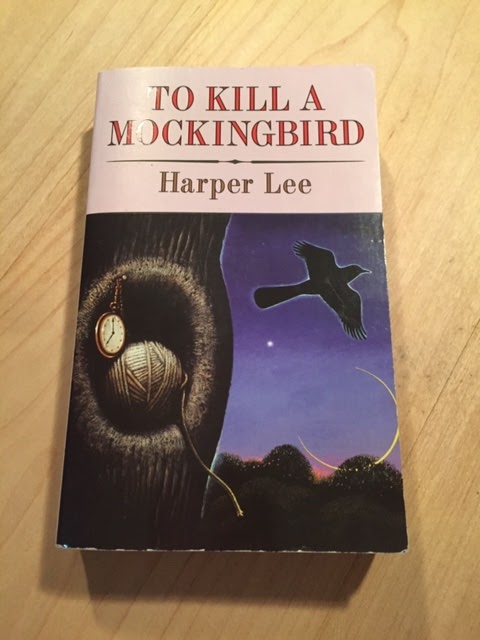
#1 TO KILL A MOCKINGBIRD 
by Harper Lee
TO KILL A MOCKINGBIRD
by Harper Lee
Time to celebrate The 2018 Great American Read!

If you weren't able to tune-in to the unveiling of the top five picks, click here to watch The Grand Finale.

Wednesday, December 7, 2016

An Amazing Author ~By Suzy Leopold

Today I want to share a book recommendation for all writers. This book is categorized fiction-technique-juvenile literature. Written with children in mind, I found this book to be an excellent read for adult writers. 

Are you ready for a little fun? Here are five clues about the author of today's book recommendation. Here we go!


The author of this book:

  • Was a Reading teacher for 20 years.
  • At the age of 40 she began a writing career. She is now 81 years young.
  • She is an author of many highly acclaimed books for children. She has written more than 90 children's books that include two Newbery Honor award books.
  • "Don't fool with me, or you're going to appear in a book," she told her husband Jim. And sure enough he is.
  • Together with her children, Ali, Jim and Bill, the family opened a bookstore called Dinosaur's Paw in 1990.
Do you need some more clues? Let's see . . . 
  • This amazing author has written across genres that include picture books, novels, nonfiction and several series. 
  • She claims, "I have no special talent. I never took a writing course before I began to write.
  • And here's the final clue . . . Her initials are PRG.
Did you guess Patricia Reilly Giff?

Well, you are correct! Hip, hip, hooray for you!

And here is the recently published chapter book on the craft of writing:

 WRITING WITH ROSIE
YOU CAN WRITE A STORY TOO
By Patricia Reilly Giff
A Holiday House Book
2016
Ages 8-12 [Don't let this stop you!]
73 pages
34 chapters

Patricia Reilly Giff and her rambunctious golden retriever, Rosie share the process of writing fiction that includes tips and step by step specific examples from many of her previously written books.


Mrs. Giff talks about a little of this and a little of that to make the page of a book right. The just right story blends action, dialogue and description.

Chapter 21
And she goes on to say:
"First you take a person.
Put him in a place.
Give him a problem.
Make him move [That's the action.]
Make him talk. [That's the dialogue.]
Make him worry about the problem.
Let the problem get worse and worse.
And in the end . . . 
You know what to do!
Go for it!"

Time for you to check out the book. Happy reading and writing.


For more about Patricia Reilly Giff check out this link on Book Browse or this biography on Scholastic.
About the Author

Friday, January 23, 2015

ReFoReMo ~By Suzy Leopold

Calling all picture book writers! Grab your writer's toolbox, a journal to take notes and your favorite pen. It's time for some picture book research. 

ReFoReMo
WHO? Picture Book Writers 

Fiction and Nonfiction

WHAT? Reading For Research Month

A writing challenge to help you reform your writing and learn how to use mentor texts. 

WHEN? March 1st through March 31st 

Registration opens February 15, 2015


To kick off the event prior to registration and be eligible for some prizes consider spreading the news through social media. To find out how to do so and enter for prizes go to ReFoReMo.

WHERE? Your choice for a favorite place to read and write.

WHY? Whether you are an experienced published author or a writer who is honing the craft of writing, you will find that studying and researching the newest picture books on the market is an excellent tool to have in your writer's toolbox.

HOW? Reading and researching mentor texts. Both fiction and nonfiction picture books. Recently published, highly recommended picture books will be studied.
A Tall Stack of Mentor Texts
Authors, educators, and librarians will share daily posts along with recommendations for five quality picture books. Inspiration, tips and excellent book recommendations will be made.

Read more about this upcoming event at ReFoReMo and find out who the twenty-eight guests are. Wow! What a line up!

Mark your calendars for this upcoming event! You won't want to miss it. Thank you, Carrie! 
Carrie Charley Brown

Monday, August 11, 2014

Fiction vs. Nonfiction: Must a Writer Choose? by Pat Miller


Unlike being engaged or voting in a primary, writers don’t have to choose just one. In fact, writing fiction can well equip one to write nonfiction. On the flip side, writing fiction can give nonfiction writers freer rein with their creativity.

Here’s how it works. Fiction writers can craft true books that use a story arc, character development, and dialogue to explain historical, scientific, or biographical topics. The difference is that everything is true. Creating characters solely from imagination exercises the part of a nonfiction writer’s brain that is the source of the lyrical language that can make nonfiction compelling.


Since there are so many of us fiction writers, let’s examine other benefits of writing true books. Nonfiction success can counteract the many rejections of one’s fiction. In Anatomy of Nonfiction: Writing True Stories for Children, Peggy Thomas states you are eight times more likely to be published in nonfiction than fiction. That means 1/8th the rejection letters, 1/8th the pity parties, and 8 times the confidence in one’s abilities! That confidence can help sustain the fiction writer who persists in the bruising submission process.


Bonus--you get a head start with nonfiction. According to biographer Jean Fritz, “[Writing nonfiction] is not a matter of coaxing up a story, but of perceiving the story line that’s already there.” If you're one who delves into your imaginary characters so deeply that you know their secrets, their songs, and all their uncles, then you are a natural for researching real facts about real people. Instead of plumbing your imagination, you will search through resources that are both interesting and addictive.  And unlike fiction, you will have experts, librarians, and enthusiasts who will eagerly help you on your quest.

From Peggy Thomas: “Nonfiction is a simple beast, really. In its most basic form it consists of a skeleton of accurate information, the flesh and blood of story, the heart of the writer, and the muscle of marketing.” If you write fiction, you already have three of these four tools in your toolbox.


Peggy continues, “Your job as a nonfiction writer is to raise your antenna and tune in to the true 

 stories that exist around you.” Unlike rubbing the genie lamp of imagination, hoping a story will wispily appear, the writer of true stories has merely to practice alertness to find things to write about—even topics already on the shelf. “A subject may have been written about, but not by you—not with your ideas, and not from your perspective.”

When you write fiction, you do your research between your own two ears. Since nonfiction happens here on our planet, lots of evidence and details are readily available. There are primary sources like journals, legal records, manuals, and letters. There are museums and restored habitations, aquariums, zoos, galleries, newspaper morgues, recordings, and online resources. These provide settings, characters, dialogue, and problems that you don’t have to imagine. And there are passionate experts only too willing to help you flesh out or vet your stories.

So you don’t have to choose. You can do both. If you write nonfiction, or are considering it, I have two suggestions:

1. Read Peggy Thomas’s Anatomy of Nonfiction. I read every page while working on my first biography. I credit her inspiration and practical techniques for its acceptance by Houghton Mifflin Harcourt for publication in 2016.

2. Participate in the NF 4 NF Nonfiction for Children’s Writers Conference on October 9 – 12. Peggy Thomas will present three of the 16 sessions and offers critiques. Peggy’s sessions include “The Heart and Voice of Your Story”, “Research Techniques That Get to the Facts”, and “Biographies: Making Friends with Strangers”. Be sure to bring your copy of Anatomy of Nonfiction to be autographed.

Learn more about the stellar faculty, the schedule, location, and social events at the site. Register today—Early Bird rate ends September 1.


Friday, June 27, 2014

So Many Books, So Little Time. . . . Summer Reading Recommendations from Christy Mihaly, and Cheddar the dog

                                      Cheddar is ready for reading!  (Photo by Cameron Field)

What's one of the first rules for writers?  Read, read, read -- right?  And what's summer for, if it's not for catching up on our reading!

Are you looking for some summer reading inspiration? Here are four Cheddar-approved suggestions from my reading pile. I've picked out a little of everything:  novels, nonfiction, history, for adults and kids . . . they're all good reads.
Orphan Train, by Christina Baker Kline.
Fiction, 2013.  304 pages.

Mollie, a contemporary "goth" teen in an unhappy foster care situation, and Vivian, an elderly neighbor who lives alone, strike up an unlikely friendship. As a community service project, Mollie is assigned to help Vivian clean out her attic. The wary teen gradually warms to the private old woman, as the story of Vivian's dramatic, unhappy past unfolds. Vivian narrates her experiences immigrating from Ireland to New York, riding the "orphan train" to Minnesota, being thrust from one home to the next through a tumultuous childhood. Mollie learns she can help Vivian solve some of the mysteries of her past. This books is a well-researched window onto the experiences of the young riders of the Orphan Trains, which plied the midwest bringing orphans for adoption by whoever showed up. (Be sure to check out the back matter.)


Why read it?  First, for the beauty of the story; second, for fascinating insight into the Orphan Trains; and third, to appreciate the book's structure: a modern story in third person, and a historical fiction account, in first person, woven into a powerful novel.


Black Swan Green by David Mitchell 
Fiction, 2006.  304 pages.  YA/adult.

Thirteen-year-old Jason Taylor narrates in this book by David Mitchell, author of Cloud Atlas. Jason faces the traumas, trials, and tribulations of middle school in a small English village.  Thirteen chapters, which read like short stories, each cover a month, and detail Jason's struggles with a speech impediment (he tries to hide a debilitating stammer) and the slow, painful dissolution of his parents' marriage. Political and social details (Margaret Thatcher, the Falklands War, no e-mail) bring the time period -- the early 1980's -- fully alive. The book can be hard to take because of the bullying Jason faces, but Jason is genuinely funny, and it's ultimately a hopeful book.  

Why read it?  Mitchell does a brilliant job portraying his bullied but smart and likable young character.  As an added bonus, you'll learn lots of teen slang from the UK (from the 1980's).  You might want to know that the book has been banned by some U.S. school districts as too raunchy for young teens. For mature readers and writers, it's a shining example of nailing that 13-year-old voice.


Wonder, by R.J. Palacio
Fiction, 2012.  320 pages, grade level 3-7.

I picked this book up because it was the 2014 selection for "Vermont Reads," a program in which community members of all ages read and discuss a chosen book.  (It also won this year's Dorothy Canfield Fisher award, based on voting by Vermont's fourth through eighth graders.) From the opening paragraph, I couldn't put it down. The ten-year-old main character, Augie, is "an ordinary kid, with an extraordinary face."  Born with severe facial disfigurements, even after numerous reconstructive surgeries, he says his face still causes kids to "run away screaming in playgrounds." Augie tells us, "I won't describe what I look like.  Whatever you're thinking, it's probably worse."  Augie has brains and a great sense of humor, and as he faces predictable bullying, hostility, and heartbreak, we see him, and those around him, growing in understanding and courage. The story is told in short (generally one or two-page) chapters. There are eight parts, each with a distinct narrator:  Augie (he gets three parts), two of his friends, his sister Via, Via's boyfriend Justin, and her friend Miranda.  Although this multiplicity of narrators can disrupt the flow, the kids' different points of view add to our depth of understanding.  

Why read it?  Palacio has created a memorable and believable young character, whose story will stay with you. The book may also, as the author intends, help us -- and help us to help our kids --to choose kindness.
The Lost City of Z:  A Tale of Deadly Obsession in the Amazon 
by David Grann

Nonfiction, 2009.  448 pages (including lots of juicy back matter).
As a nonfiction writer, I'm always on the lookout for models of lively nonfiction, and one of my favorite sources is the articles in The New Yorker.  Grann, a New Yorker staff writer, wrote this riveting account of his own travels and research following the trail of the lost Amazon explorer Percy Fawcett, one of the last great Victorian explorers, who vanished in the Amazon jungle in 1927.  Weaving together Fawcett's biography, tales of the many would-be rescuers who perished seeking him after his disappearance, and the modern archeologists who have carried on Fawcett's visionary work, Grann spins a riveting story.  He spent years researching, including finding long-lost family documents, and months struggling through the Amazonian jungle. 

Why read it?  It's a great -- and true -- story! The research is outstanding. If you want to make your nonfiction writing a compelling read, study this book.  

So -- let us know what you think of these books, or if you have other suggestions -- and HAPPY READING!

- Christy Mihaly, and Cheddar


Wednesday, May 28, 2014

A Glance at Picture Book Genres ~By Suzy Leopold

When writing picture books for children, consider the definition of genre and the categories of each, that are used to classify picture books for children's literacy.

What is a genre?  The definition can be defined as:

gen・re [zhä′ rǝ] n.  
A book type, classification or category of literature that is defined by content, form and style.  
The following are the most common types of reading genres:
  • Poetry
Poetry often uses rhythm and rhyme to convey a message or story.  Sound, imagery and figurative language may be included.  Poetry is written in verse to inspire the reader to respond with feelings and thoughts.

Nonfiction
  • Autobiography
A story based on true facts about the life of a real person written by that person.
  • Biography
A story based on true facts about the life of a real person written by another person.  Memories, letters, diaries and journals are all part of this genre.
  • Informational
Texts that are written based on facts about a variety of topics, such as animals, cooking, gardening, history, science, geography, space, weather, reference books, etc.

Fiction
  • Fantasy
A story that is make-believe.  It includes elements that are impossible in real life, such as magical powers or talking animals.
  • Historical Fiction
A fictional story that brings past events alive. The setting is real, however, the characters are not real.
  • Realistic Fiction
A story that could happen in real life.  The made-up characters are not real.
  • Science Fiction
A fantasy type story that blends futuristic technology with scientific elements and facts that are not possible in real life such as time machines, space travel and robots.
  • Mystery
A story that is suspenseful and is solved at the end of the story.
  • Traditional Literature
Stories that are passed down from generation to generation.  This genre includes tall tales, folktales, fables, legends, fairy tales, nursery rhymes, myths and even songs.
These are ten broad categories of genres.  There are many lists of sub-genres that include more categories and detail.

Marcie Haloin, along with Gaylynn Jameson, JoAnne Piccolo, and Kari Oosterveen created a more indept list of genres.  This compiled list, Genre Characteristics, is based off of an informative, resource book, Writing Essentials, written by Regie Routman [Heinemann: Portmouth, NH, 2005].  
 
On a future post, check out examples of book titles for each of these ten picture book genre categories. 

Do you have a favorite genre that you prefer to read about and/or write about? Consider expanding your craft of writing by trying new genre categories.