Showing posts with label summer reading. Show all posts

Wednesday, July 20, 2022

My Summer Reading is for the Birds!

 Birds abound all around us. So this summer my sit-under-a-shady-tree reading includes a collection of books about birds. They are equally suitable for reading beneath a beach umbrella.


National Geographic Kids bird guide of North America 
There’s always room to tuck a field guide (and even a pair of binoculars) into your beach tote or backpack. The NGK field guides are kid-friendly and filled with more than bird IDs. Check out this review by the Celebrate Picture Books team. Of course, you can always leave the field guide at home and load the Merlin app to your phone.


Backpack Explorer: Bird Watch, by Editors of Storey Publishing 
This book leads kids through the basics of birding – from how to identify common birds to learning about migration, where birds live, and even their songs. There are lots of hands-on activities as well as interactive mini-field guides for such things as eggs, bird tracks, and what sorts of nests birds build. And there’s a birding log where kids can record their bird sightings, and stickers for completing activities. Pairs well with binoculars, a granola bar, and water bottle.

On Gull Beach, by Jane Yolen
What’s a beach without gulls? If you’re headed to the ocean, or a lake, make sure you take this for a read-along. Check out my review here.

Odd Birds: Meet Nature's Weirdest Flock (Board book), by Laura Gehl 
This board book just hit bookshelves last month and is a fun way to introduce littles to some unusual birds. 
Eight birds are featured: the frigatebird, with a bright red throat pouch; the blue-footed booby, with feet as advertised; the shoebill stork, ostrich, a very stinky hoatzin, and oilbird; the California condor – the largest flying birds in North America; and the burrowing owl, possibly the cutest. Gentle rhymes introduce the birds, and photos with more information are included at the back.

Chickenology : the ultimate encyclopedia, by Barbara SandriDepending on where you live, chickens may well be part of the local bird fauna. This book is aimed at the 7-and-up crowd, and is fun to browse. Who knew chickens are so cool? Check out this review by fellow author, Jilanne Hoffmann


So You Want to Be an Owl, by Jane Porter 
If you want to be an owl, you have to go to Owl School. That’s where you learn everything you need to know about hunting, seeing in the dark, and flight. No wings? A shame… but you can practice hooting, toe swivels, and being alert. A fun way to learn more about owls.


Bird Show, by Susan Stockdale
Imagine if birds held a fashion show! This book is the next-best thing. Check out my review here.

A Peek at Beaks: Tools Birds Use, by Sara Levine
Wings are nice to have, but beaks can’t be beat. That’s because beaks are built-in tools that can help comb your feathers, scoop up food, and even show how you feel – if you’re a bird. Check out my review here


How to find a bird, by Jennifer Ward
If you’re going to watch birds, you need to find them. And Jennifer Ward shares all the secrets. Check out this review by fellow author, Carol Baldwin

Birds don’t build blanket forts or sand castles. They build nests. Here are two fun-to-read books about building bird nests.
The Nest That Wren Built, by Randi Sonenshine - check out my review here


This is the nest that Robin built : with a little help from her friends, by Denise Fleming
Check out this review by fellow book-lover, Joanna Marple


Lovebird Lou, by Tammi Sauer
There are tons of stories about birds. Here’s one published just a few months ago. I love it because my husband’s name is Lou. You’ll love it because it’s a sweet story about family and finding yourself. Check out this review by friend and fellow STEM Tuesday blogger, Maria Marshall


Wednesday, July 3, 2019

Yay! It's Time for Summer Vacay!

By Leslie Colin Tribble

Hello Dear Grog Readers! The Grog Collective is taking a wonderful summer break from now until August 14.


Summer is short and reading lists are long. We're  stepping back to recharge and reconnect with friends, family and the wonders of Summer.


Eileen Meyer and Julie Phend are preparing a phenomenal post just in time for back to school visits for authors.


Stay tuned and have a stellar summer!

Wednesday, June 12, 2019

Global Read Aloud

Global Read Aloud with Padma Venkatraman
by JG Annino 

Hello this lovely Wednesday in June. We become world travelers today,
whether the trip is by story or through seagoing or air-riding.
The Global Read Aloud & one of its 2019 authors,
Padma Venkatraman  take us out into the larger community.


Do you see the kids running across a bridge on the cover, above?
They won my heart & they broke it, so many times.
Such is the power of this story, a singular MG novel about unfortunate
children. It is unusual in the way the street-living children appear naturally
with their full humanity, including humor, creativity, joy & deep intelligence.
I also love how they question each other about Faith & their various beliefs
in the goodness of people.

This month the two girls, a younger sister & an older sister & two boys who aren't
related except through the community of life on the streets,  are
front and center characters
at the annual American Library Association meeting, in Washington, D.C.


These kid characters mesmerized me and they are deservedly here there
everywhere in reading groups, classrooms, home study programs
& award considerations. 

Readers in Global Read Aloud, whether they choose one of several listed
picture books or YA,  or THE BRIDGE HOME, or FRONT DESK by Kelly Yang
(see below) connect with other young readers in creative & deep ways,
to exchange ideas about Story.
Checking out the Global Read Aloud Facebook page I found that after
summer recess, classrooms from South Africa
to North Carolina are lined up to participate with their thoughts on
THE BRIDGE HOME, as is the lucky class of Group Blog's
own Patricia Toht - who told me about this neat connection.

Some children will have a jump start at the book before school resumes
if their families are TV watchers, because
a parents Super Summer list from the popular TODAY show
gave THE BRIDGE HOME a groovy shout-out.

The creator of of Global Read Aloud has been called
out as a cool teacher by Scholastic:

Here is the Global Read Aloud website:


                               Who is the author of THE BRIDGE HOME?

                                                     photo: Highlights Foundation
                                                     Author Padma Venkatraman

Padma Venkatram, Ph.D. worked as a scientist-oceanographer,
sailing world seas researching with and directing scientists onboard
research vessels.
She left her native India, where all of her novels are set, for the UK &
later for the USA East Coast, where she lives with her young family.
She is a popular mentor at reading & writing conferences,  in the USA
& outside the country.

THE BRIDGE HOME follows four characters who form bonds during
difficult times, as children living on the streets of Chennai,
(once known as Madras,) a coastal tourism area of India.
The characters are multi-dimensional, seen as complete
feeling thinking doing youngsters.
Tears may flow during tragic scenes - they did for me -
but because of the author's skillful framing of the story,
the reader is left with great hope.

For more on Padma Venkatraman, here is a lengthy recent Q/A interview
where she discusses craft, research, family & how characters stick
with her, among reader-friendly, writer-friendly, topics.

If your reading days are more often spent among 
Picture Books or Early Readers
you will also want to know that
the talented & prolific artist/ author 
amazing Yuyi Morales
is the 2019 Global Read Aloud picture book author.

And the Early Reader Author is Angela Dominguez, who is new to me,
which is part of what this global connection is all about - finding
books & authors new to you &
outside the place or culture in which you or your students/family/friends,
formed.
At Global Read Aloud,
alongside THE BRIDGE HOME by Padma Venkatraman,
please meet
(if you don't already know her p.b Where's Broccoli?)
the awesome Kelly Yang, with FRONT DESK, who is knew to me.
Kelly's poignant story is inspired on her immigrant family life as a child.
If I were a school, I would select each of these MG stories - THE BRIDGE HOME &
FRONT DESK.
We will be reading & hearing much about each of the Global Read Aloud Authors
for many years to come. 

A 2016 Highlights Foundation verse novel workshop brought my opportunity
to meet Padma (& other generous souls - bookstore maven Joanne Fritz, in particular,
who wrote the article linked to, just above.)
Padma asked me probing questions about my abolitionist-topic novel manuscript,
which is no where near revised enough,
but I'm glad we have stayed in touch on other topics.
                  Highlights Foundation - Padma Venkatraman,  Jan Godown Annino


Monday, June 30, 2014

Reading Is Not on Summer Vacation ~By Suzy Leopold

The Summer Slide!

As the school year comes to an end, some students will experience a summer learning loss or the “summer reading slide.”  Did you know that children can lose two to three months of reading progress if reading comes to an end on the final day of school?  The loss of three months, every summer, accumulates and becomes a cumulative achievement gap of 18 months, by the end of sixth grade.  

“Research shows the most damage to reading skills occurs outside school, during the summer months,” states Jim Trelease, author of The New York Times bestseller, The Read-Aloud Handbook. Even though the school doors are closed, it is important that learning and reading continue during the summer season.  Children who continue to read over the summer actually gain academic skills.
Reading books should not be on a summer slide.

Sustained summer learning that includes reading and new experiences provides many benefits for students when school is not in session.  Summertime reading provides positive effects on a child’s self-esteem, increased self-confidence and closes the achievement gap.  Learning opportunities, during the summer months, equal academic success, for the student once school resumes.  Reading during June, July and August, can make a difference in the likelihood of whether a student is on the path of preparing for college or a decision to drop out of high school.  Kids who read outside of school read the best.
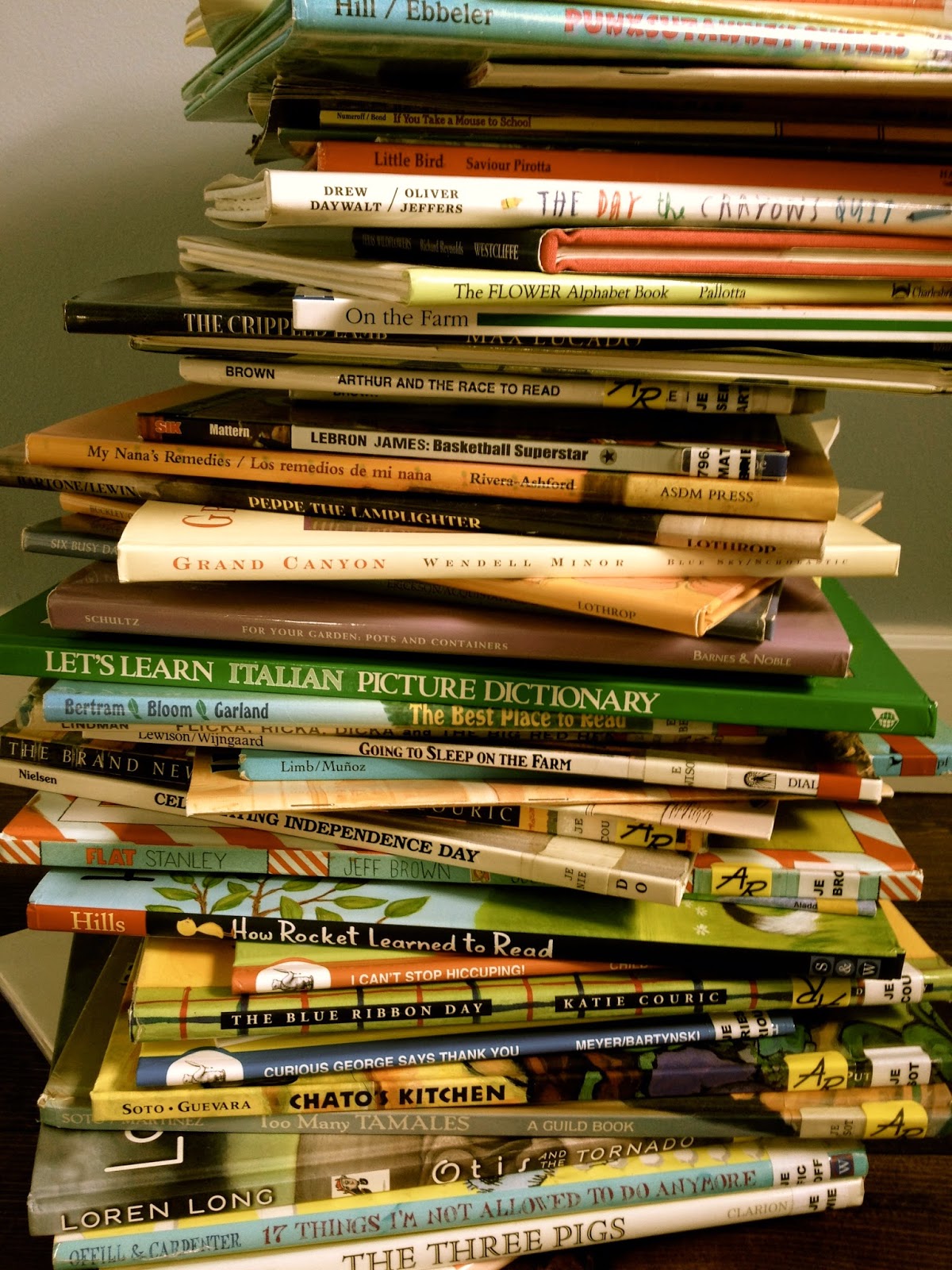
How tall is your stack of books for summer reading?
How can you prevent kids from losing academic ground during the summer months?  How can you encourage family literacy activities while kids are at home for the summer? 

1.  As a parent, make sure you are seen reading by your children.  Model the importance of reading every day.  Reading to your child and reading by your child is great.  Reading at the same time is even better. 

2.  Provide a print-rich home that includes books, newspapers, magazines, and even comic books.  Label items in your home, for an emergent reader to read.  Beginning readers will delight in reading the word “door,” written on an index card that is taped onto the back door. If your family is planning a summer vacation, take books along with you. Keep books in the car.  Pack books in a backpack or a satchel for easy reading while traveling.  Perhaps the plan is for a day trip to the zoo, a museum, or to get out for a favorite summertime ice cream treat.  If so, a book should be tucked in a pocket or a purse, as you get out and about. 

3.  Visit your local library.  Your child should have his own library card to check out a variety of books to read.  Select books together based on topics of interest, or within a particular genre or written by a favorite author that are developmentally appropriate for your child. Select a stack of picture books for toddlers and preschoolers that an adult or older sibling can read aloud to the emergent reader.  Younger children also enjoy reading by themselves, while looking at the pictures.  Allow independent readers to choose their own books.  Encourage your child to select books from both fiction and non-fiction genres.  A simple rule of thumb for helping your child select books at his reading level is to have them choose a page, in the middle of the book, and read it. If they do not know five or more of the words, then the book is too hard for independent, pleasure reading.  Consider keeping a reading log and recording the books that your child read. Reading should be fun and memorable.

4.  Participate in literacy activities at your public library.  Most libraries have summer reading programs and special events that are fun and engaging.  Enjoy story time, guest authors, movies, make and take crafts and many hands on activities. Many libraries offer prizes for meeting a reading goal.

Summer literacy experiences will increase a student’s vocabulary, build background knowledge, and ensure summer learning gain. To help kids sustain reading skills, they must practice reading and read for enjoyment. 
Yes, students are on summer break.  However, reading and learning are not. Provide opportunities for your kids to read and have fun in the summer sun. Reading during the summer makes a difference. Summertime learning and reading will equal student success and create a lifetime reader.
Read more books!
As writers of children's literature, it is so important for us to promote the value of reading throughout the four seasons of spring, summer, autumn and winter.  Reading, writing, learning and growing is not just for the classroom.  Reading together with your child or grandchild is a win-win for the child and for the reader. Smart summer fun that includes books, keeps kids learning and growing all summer long.  What picture books and/or chapter books are you and the kids reading this summer?

Friday, June 27, 2014

So Many Books, So Little Time. . . . Summer Reading Recommendations from Christy Mihaly, and Cheddar the dog

                                      Cheddar is ready for reading!  (Photo by Cameron Field)

What's one of the first rules for writers?  Read, read, read -- right?  And what's summer for, if it's not for catching up on our reading!

Are you looking for some summer reading inspiration? Here are four Cheddar-approved suggestions from my reading pile. I've picked out a little of everything:  novels, nonfiction, history, for adults and kids . . . they're all good reads.
Orphan Train, by Christina Baker Kline.
Fiction, 2013.  304 pages.

Mollie, a contemporary "goth" teen in an unhappy foster care situation, and Vivian, an elderly neighbor who lives alone, strike up an unlikely friendship. As a community service project, Mollie is assigned to help Vivian clean out her attic. The wary teen gradually warms to the private old woman, as the story of Vivian's dramatic, unhappy past unfolds. Vivian narrates her experiences immigrating from Ireland to New York, riding the "orphan train" to Minnesota, being thrust from one home to the next through a tumultuous childhood. Mollie learns she can help Vivian solve some of the mysteries of her past. This books is a well-researched window onto the experiences of the young riders of the Orphan Trains, which plied the midwest bringing orphans for adoption by whoever showed up. (Be sure to check out the back matter.)


Why read it?  First, for the beauty of the story; second, for fascinating insight into the Orphan Trains; and third, to appreciate the book's structure: a modern story in third person, and a historical fiction account, in first person, woven into a powerful novel.


Black Swan Green by David Mitchell 
Fiction, 2006.  304 pages.  YA/adult.

Thirteen-year-old Jason Taylor narrates in this book by David Mitchell, author of Cloud Atlas. Jason faces the traumas, trials, and tribulations of middle school in a small English village.  Thirteen chapters, which read like short stories, each cover a month, and detail Jason's struggles with a speech impediment (he tries to hide a debilitating stammer) and the slow, painful dissolution of his parents' marriage. Political and social details (Margaret Thatcher, the Falklands War, no e-mail) bring the time period -- the early 1980's -- fully alive. The book can be hard to take because of the bullying Jason faces, but Jason is genuinely funny, and it's ultimately a hopeful book.  

Why read it?  Mitchell does a brilliant job portraying his bullied but smart and likable young character.  As an added bonus, you'll learn lots of teen slang from the UK (from the 1980's).  You might want to know that the book has been banned by some U.S. school districts as too raunchy for young teens. For mature readers and writers, it's a shining example of nailing that 13-year-old voice.


Wonder, by R.J. Palacio
Fiction, 2012.  320 pages, grade level 3-7.

I picked this book up because it was the 2014 selection for "Vermont Reads," a program in which community members of all ages read and discuss a chosen book.  (It also won this year's Dorothy Canfield Fisher award, based on voting by Vermont's fourth through eighth graders.) From the opening paragraph, I couldn't put it down. The ten-year-old main character, Augie, is "an ordinary kid, with an extraordinary face."  Born with severe facial disfigurements, even after numerous reconstructive surgeries, he says his face still causes kids to "run away screaming in playgrounds." Augie tells us, "I won't describe what I look like.  Whatever you're thinking, it's probably worse."  Augie has brains and a great sense of humor, and as he faces predictable bullying, hostility, and heartbreak, we see him, and those around him, growing in understanding and courage. The story is told in short (generally one or two-page) chapters. There are eight parts, each with a distinct narrator:  Augie (he gets three parts), two of his friends, his sister Via, Via's boyfriend Justin, and her friend Miranda.  Although this multiplicity of narrators can disrupt the flow, the kids' different points of view add to our depth of understanding.  

Why read it?  Palacio has created a memorable and believable young character, whose story will stay with you. The book may also, as the author intends, help us -- and help us to help our kids --to choose kindness.
The Lost City of Z:  A Tale of Deadly Obsession in the Amazon 
by David Grann

Nonfiction, 2009.  448 pages (including lots of juicy back matter).
As a nonfiction writer, I'm always on the lookout for models of lively nonfiction, and one of my favorite sources is the articles in The New Yorker.  Grann, a New Yorker staff writer, wrote this riveting account of his own travels and research following the trail of the lost Amazon explorer Percy Fawcett, one of the last great Victorian explorers, who vanished in the Amazon jungle in 1927.  Weaving together Fawcett's biography, tales of the many would-be rescuers who perished seeking him after his disappearance, and the modern archeologists who have carried on Fawcett's visionary work, Grann spins a riveting story.  He spent years researching, including finding long-lost family documents, and months struggling through the Amazonian jungle. 

Why read it?  It's a great -- and true -- story! The research is outstanding. If you want to make your nonfiction writing a compelling read, study this book.  

So -- let us know what you think of these books, or if you have other suggestions -- and HAPPY READING!

- Christy Mihaly, and Cheddar