Showing posts with label Writing Picture Books. Show all posts

Wednesday, November 16, 2022

Picture Book Lessons from the Zoo ~ guest post by Kate Woodle

Kate Woodle is a member of the West/Central New York SCBWI region and also helps facilitate the Syracuse area Shop Talk. She worked as an illustrator at the Rosamond Gifford Zoo in Syracuse, NY for more than 25 years. One day we got chatting about picture books, and I asked her whether her zoo work gave her insights into picture book illustration. Here's what Kate has to say about that:

Working at the zoo was my dream job. It was creative (I was the exhibit designer) and it involved animals. I got to study the animals in our care, learn about their habitats and the food they ate, the environment and conservation issues affecting them, and then present their "story" to the public. 

I created illustrations and designed signs for exhibits. The zoo's educator wrote the signs. As an illustrator, my job was to get people to stop and read the sign. Then I could convey some additional information through the art, such as what food an animal eats, where it lives and what its habitat is like. This frees the zoo educator to address another topic. 

Exhibit illustration is a collaboration much like that between picture book author and illustrator. The biggest difference: in a zoo you have only seconds to catch a visitor's attention. It's harder than it looks. Not only that, you’ve got a limited number of words – hopefully no more than 40 on a sign (pretty close to the recommended number of words per page in a picture book). Sure, this "rule" can be broken, but it does help if you are trying to hold attention. If the sign is meant to be read by an adult who will then interact with the child, you have a little more leeway with your word count.

The illustration for this display helps a child visualize what the words mean. This sign is placed next to a life size baby elephant statue (I made that, too) so that kids can compare their weight, height and how much they eat to that of a baby elephant.

A great example of this in a picture book is "Actual Size," by Steve Jenkins. A gorilla's hand and a pigmy mouse lemur are shown full size on a spread. Not only does the book show the actual size of each animal or part of an animal, it has an interactive element: a child can place their hand on top of the gorilla's to see the difference. A pigmy mouse lemur's whole body can be covered by a child's hand. 

The book also has a fold out page to accommodate a Goliath frog that's 36" long. Jenkins’s amazing illustrations are all done with paper collage.

I also painted murals, both in exhibits and in public spaces. A mural is like a scene in a picture book. It gives all kinds of information that is not conveyed in the text: Does this animal live in a rainforest? What other plants and animals live there? Is it misty and damp with really tall trees, a hot dry African savannah, or the Grand Canyon?  

In Jason Chin's book, he does a great job showing both detail and scale as he takes you from the bottom of the canyon to the top.

Murals and signs can also be interactive. Here's an example of an interactive mural that represents the Amazon Rainforest. 
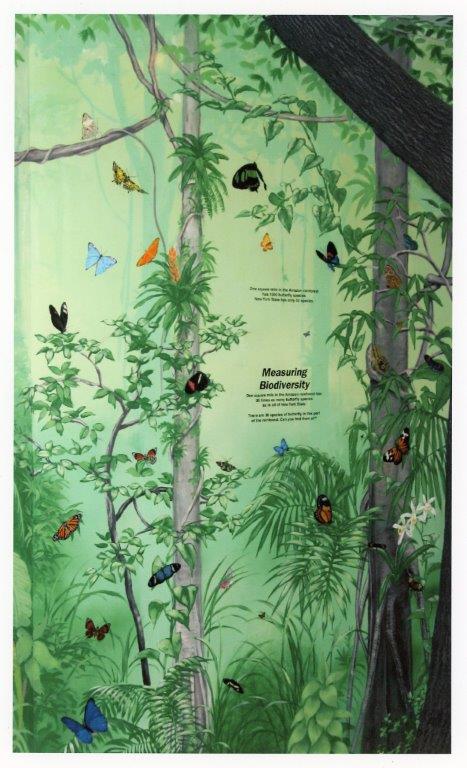
The text on the mural reads: 
Measuring Biodiversity.
One square mile in the Amazon rainforest has 30 times as many butterfly species as in all of New York State. There are 30 species of butterfly in this part of the rainforest. Can you find them all? 

As in the butterfly mural, an illustration can convey a sense of place and add depth to a text. It can evoke a mood. All the World, by Liz Garton Scanlon and illustrated by Marla Frazee is a perfect example of this. Scanlon's marvelous poem includes all kinds of events: playing at the beach, picking vegetables, etc. while Frazee's illustrations add to the action. While a rainstorm is never mentioned in the poem Frazee's storm meshes perfectly with the text. The illustrations are realistic but also evoke, along with the words, a sense of beauty, joy and community. 

I've been interested in illustrating children's books since I was old enough to know that that was a profession, and I'm particularly interested in STEAM books – especially those that feature biology. My job at the zoo encompassed these interests. What I hadn't expected while I was working at the zoo was what a good education it was for illustrating picture books.  


Here's another example of an interactive display: It's a photo opportunity showing all the kinds of primates at our zoo. Children are given the opportunity to include themselves in the group while their parents take a photo. 


This brings to mind the cover for the middle grade book Primates, the Fearless Science of Jane Goodall, Dian Fossey, and Biruté Galdikas.

There are so many similarities to the process. Whether it’s art for a zoo exhibit or for a picture book, research is important. You don't want to be accidentally teaching children something that isn't true. For example, polar bears don't really live with penguins! While fantasy and whimsy are wonderful, I believe it's important to be intentional about the message our artwork communicates to our readers. 

Kate Woodle has been drawing since she was three years old. She received a BFA at Syracuse University’s School of Visual and Performing arts, then taught art and later worked as exhibit designer and graphics artist at the Rosamond Gifford Zoo in Syracuse, NY. As part of her job she wrote and illustrated the children’s newsletter, MyZoo Jr. Her illustrations and photos have also been featured in Scholastic’s Weekly Reader, National Geographic Kids and in the books,  A Friend for Mia, A New Dog, and Newborn Kits (all published by Pioneer Valley Press). She also did several projects for McGraw Hill Education. You can find out more about Kate and see her wonderful artwork at her website, www.katewoodle.com.


Wednesday, June 16, 2021

Readers: The Third Leg of the Picture Book Stool by Julie Phend


It might seem obvious: books are made for readers. Yet, as creators of picture books, we are trained to think of the interplay of writer and illustrator. But the stool cannot stand on two legs. It’s not complete without the reader.

The First Two Legs: Writer and Illustrator

Let’s begin by talking about the first two legs of the stool: writer and illustrator. In a joint session at the 2020 SCBWI Annual Summer Conference, writer Mac Barnett and illustrator Jon Klassen spoke about what makes a successful picture book. Using their book Sam and Dave Dig a Hole as an example, they discussed how pictures and text lean on each other to tell a story.

When you’re writing a picture book, they remind us, you are writing an incomplete story. The illustrator is an equal contributor. Illustrations add energy and often humor. They add detail that’s not in the text. The pictures can amplify the text—or they can say something different.

No treasure?

Sam and Dave Dig a Hole falls into the latter category. The story is about two boys digging for treasure. They dig straight down and don’t find any. They split up and go different directions. They still don’t find any. But, as the illustrations show, the treasure is there—they’ve been digging around it all along. There’s no hint in the words of what the pictures clearly reveal.

It takes a reader to see the joke.


The Third Leg: The Reader

As Barnett and Klassen point out, Sam and Dave are left out of the joke, but the reader is not. The reader seems to know more than the characters—more than the writer, even. And that’s funny.

Sam and Dave Dig a Hole leaves many things unsaid, including the ending, and invites the reader to figure them out. A good picture book encourages kids to participate. In this way, they become active readers.

I saw this principle in action many times in the past year. When the pandemic shut down school for my grandchildren, then aged 5 and 8, my husband and I started a daily story time with them on FaceTime. Over the course of the year, we read more than 100 books to them, and they read about half that many to us. We quickly learned that they preferred books with illustrations, whether picture books or chapter books, fiction or nonfiction. They loved stories with built-in humor and surprises—and books that gave them an opportunity to predict outcomes.


I noticed how often their predictions were based on the pictures. “I think he’s the bad guy. See how he’s smiling when she falls down?” Or “Look! The shark is coming closer. That diver better turn around.”


Among their favorite read-alouds were the Amelia Bedelia stories by Peggy Parish and Fritz Seibel. Amelia Bedelia takes figures of speech literally, which gets her in all kinds of hilarious trouble, as the illustrations demonstrate. They also loved the Good Crooks series by Mary Amato and Ward Jenkins and the Olivia books by Ian Falconer for their humor and fun illustrations.


Another huge hit was Jim Benton’s Franny K. Stein series. Franny, a third-grade mad scientist, gets herself into scrapes and uses scientific principles of observation and experimentation to get out of them. The illustrations say so much about the characters—my grandson was in tears when Franny was mean to her dog Igor because “His face is so sad!”

Poor Sad Igor

These books have humor and surprise at their core, yet each one carries a deeper message: about friendship, resiliency, determination, or creativity. But nowhere does the author say that. It’s left to the reader to figure it out.


Picture Books Promote Literacy

Author Eileen Meyer reads to children

That’s how picture books teach best—by allowing the child reader equal participation in the story. In this way, picture books help children become good readers.

A large body of research into reading shows that good readers engage with text in an active way.

They:
  • visualize what they are reading (and pictures help them learn to do it).  
  •  use patterns to make predictions (children’s stories are filled with pattern.)
  •  adapt their predictions in relation to new information. (Surprise!)
  •  use context clues (both text and illustration) to create meaning.
  •  connect emotionally with characters.
  • compare content to their own experience or prior knowledge. 
  • use connections to make inferences. 
  • and enjoy reading! 


Early Literacy Favorites

I talked with children’s librarian Michelle Pursel, who says, “Storytime is the perfect introduction to the early literacy skills children need to become lifelong readers. I look for books that have an engaging story with vivid illustrations, elements that play a crucial role in audience participation."


Michelle's storytime favorites include Duck, Rabbit! by Amy Krouse Rosenthal, Mama Cat Has Three Kittens by Denise Fleming, Muncha! Muncha! Muncha! by Candace Fleming, and Grumpy Bird by Jeremy Tankard.

Children’s writer Katherine Patterson famously said, “Once a book is published, it no longer belongs to me. My creative task is done. The work now belongs to the creative mind of my readers.”

 So, as you write or illustrate books for children, keep in mind the third leg of your story: your readers. Give them opportunities to figure things out, connect, laugh, and be surprised—and grow into excellent readers. 

They'll enjoy the journey!


Wednesday, December 12, 2018

Writing a Holiday Picture Book ~ by Patricia Toht


This time of year, bookstores are filled with holiday books, with picture books making particularly festive displays. 
A holiday display at Dragonwings Bookstore
in Waupaca, WI
Perhaps that sets you wondering about writing one of your very own. I've written two holiday books, PICK A PINE TREE and PICK A PUMPKIN, and I've learned a few things along the way. 


Let's begin by looking at the pros and cons of holiday books:


THE PROS

• Many holiday books have a ready consumer market every year, with shoppers willing to open their wallets to buy. In 2017, Money magazine asked the National Retail Federation to rank which US holidays have the most consumer spending


National Retail Federation, 2013
The Winter Holidays are #1 by a long shot. The next biggest are Mother's Day, Easter, Valentine's Day, Father's Day, and Halloween (in that order). Each of these holidays offers an opportunity for books.

*The second largest "holiday" spending is Back to School. Another topic to consider!

• The school and library markets also buy holiday books, and are often interested in a greater variety of topics. While bookstores might not carry a wide stock of books on minor holidays, such as President's Day or Groundhogs' Day, schools and libraries order these books to support student learning.


• Often readers build their own personal libraries of holiday favorites, adding to their collections every year. Repeat business!

THE CONS

• The window for selling holiday books is narrow. You only get one shot each year for sales - the rest of the year, sales are pretty non-existent.

• The holiday book market is crowded. It can be difficult to come up with a unique offering that will stand out.

• Holidays are hardly universal. Some are celebrated widely in the world, while others are unique to certain countries or regions. Publishers may not want to take on a book with too narrow an appeal. 

• Publishers interested in selling co-editions (versions of the book published in other countries) will also not be interested in holiday books with a limited audience.


So, still interested? How do you get started? 

1) Visit the library and the bookstore. What holidays are celebrated in books? Read, read, read!

2) Christmas and Halloween are widely covered in the US. If you choose either, can you come up with a unique character, setting, conflict, or other element?

3) Diversity offers opportunity. Is a holiday that you celebrate under-represented?

4) Look at book formats. Has a particular format not been done? Concept book? Wordless? Nonfiction? Historical fiction? Poetry?

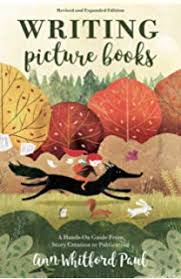
5) Apply your craft. Elements that make a terrific traditional picture book are the same ones that make a great holiday book. My favorite craft book is Ann Whitford Paul's WRITING PICTURE BOOKS.


Below is just a small sampling of my favorite Christmas books. What are yours, readers?

Unique setting

Economy of words, and so funny!
Cute character and sweet ending
A classic, in rhymed text
 
My favorite historical fiction
Christmas book


Merry Christmas! 

Happy Holidays! 

Best wishes for the New Year!


Monday, September 1, 2014

The Shortcut that Changed My Writing Process: AKA Duh! by Pat Miller

As a novice writer, I thought if I had one or two pieces of the story puzzle, I could write my way into the rest. And I did--over months and months of fruitless writing. It was a long, daunting process. Here’s my former process, and the shortcut that changed everything.

Substitute Groundhog cover1. First strategy: Start with the ending. When I asked my kindergarteners what animal popped out of its hole on February 2, they were stumped until one blurted, “It’s the armadillo!”

His answer inspired my first book. But all I had was an unexpected character. WHY was an armadillo the forecaster? I thought of numerous scenarios. They were rejected 32 times. Each time the ms. returned, I revised. Once I finally got the beginning locked in, the middle perked up, and manuscript #33, Substitute Groundhog, was accepted by Albert Whitman.

Squirrel's New Year's Resolution cover
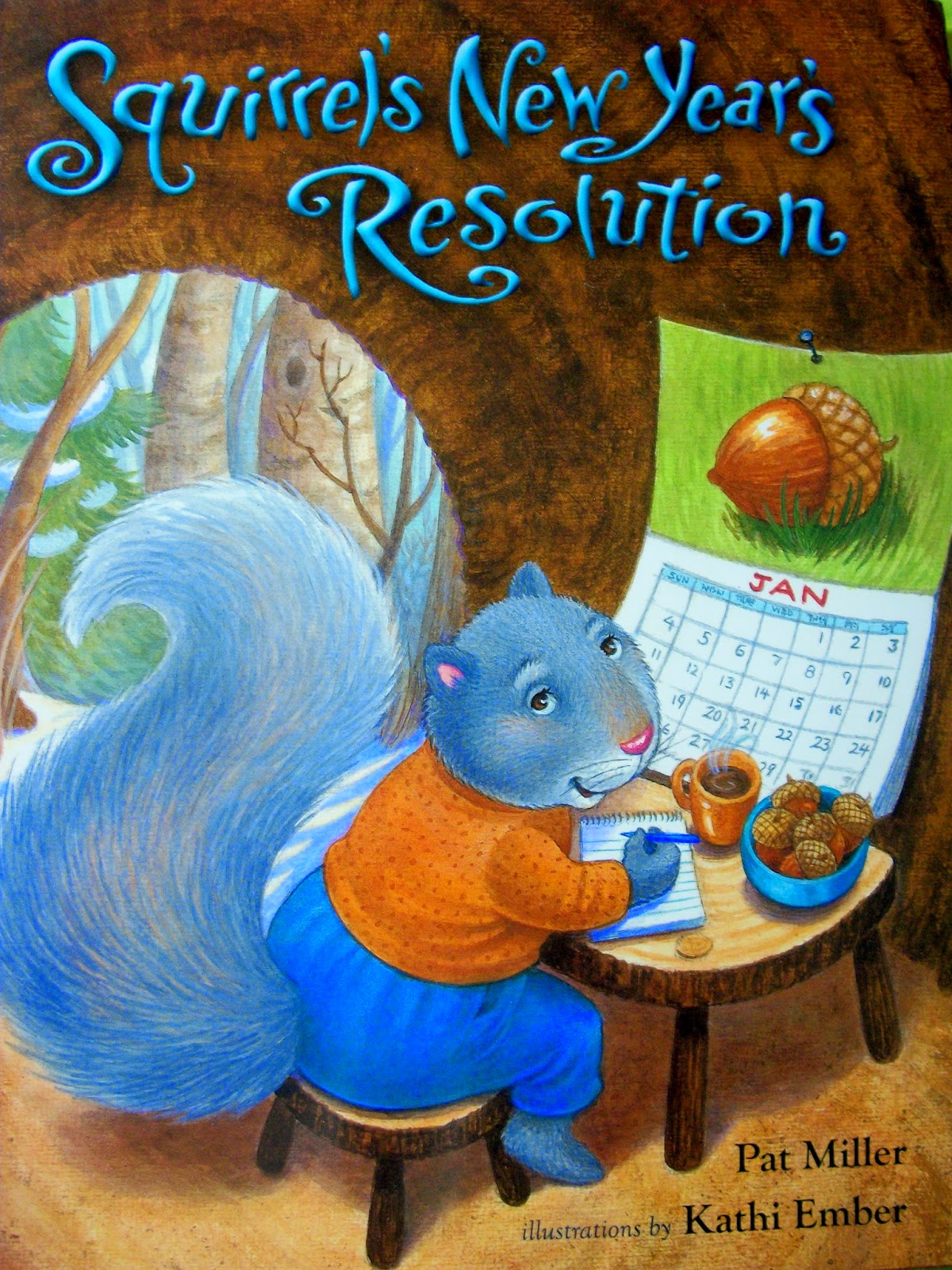
2. Second strategy: Start with the characters. Albert Whitman was looking for holiday books. I flailed around, brainstorming a number of ideas, none of which had any substance. When I thought of the characters from my first book, I knew what they would say and how they would interact. But I still spent months coming up with a variety of unsatisfactory holiday stories in which they starred. Eventually, I got it right, and Squirrel’s New Year’s Resolution was purchased by Albert Whitman.


We're Going on a Book Hunt cover3. Third strategy: Piggyback on a traditional tale. This one worked because the original tale provided the beginning, middle, and end. Early in the semester, I shared We’re Going on a Bear Hunt with my students, and it donged (as my husband says) on me that this was the perfect pattern for my book on library orientation. It was just a matter of altering the traditional tale to fit the library content. It sold within a week to Upstart Press. I was getting closer to the shortcut.


Library Monkeys cover4. The shortcut! Get all the pieces in place first. I was doing 
some things right, but not consistently or efficiently. I studied my first three books to determine how I could shortcut this ineffectual process. Call me a slow learner, but I made a list of the key story elements. Then I filled them in with my ideas. This time, I wanted to write a fun story about book care. Here’s my plan:
  • Characters: Five mischievous monkeys à la Curious George
  • Problem: Big sis discovers that her sibs have damaged their books
  • Beginning: The five little monkeys are in bed reading together
  • Middle: One by one, big sister discovers that her sibs have damaged their books (I listed four common problems)
  • Solution/Resolution: Don’t worry, you can…. (book care solutions with Ms. Booker)
  • Ending: All is well, with books repaired, lessons learned, until they discover that Big Sis has an overdue book!
After brainstorming all these sections, I was able to use the bouncy rhythm of "Five Little Monkeys Jumping on the Bed" to frame the story. Upstart bought the ms. and published it as story cards.

Knowing ALL the key elements first made the difference. My writing was more targeted. I knew where I was going, who was coming along, and what problems and solutions we would encounter. The actual trip was much easier than my previous strategy of setting out with hope but no map and only a sketchy plan. 

Examine some of your favorite children’s picture books, using this outline. Do you see how everything else falls into place? Sure, this is Writing 101.  But if you didn’t take that class, you may be floundering around like I did. Focus, plan, then write once you have all the elements worked out. Bon voyage!


Monday, June 9, 2014

The Picture Book "Rule of Three" ~ by Patricia Toht

Do you think "three" is a magic number?

(To discover how to make a Tagxedo word cloud like this one,
see Todd's GROG post on March 11, 2014.)
Schoolhouse Rock, says it is. Here's Blind Melon's cover of their song:


Decorators like to display knickknacks in groups of three because that's more pleasing to the eye. For young readers, story elements that occur in threes are more pleasing to the ear. Why? 

I haven't discovered a definitive reason (although wikipedia has enough mathematical nuances on the number three to make my head swim). But perhaps it's because many of life's rhythms come in threes. Morning, afternoon, night. Yesterday, today, tomorrow. Beginning, middle, end.

How does the Rule of Three work in books, especially picture books?

Well, a story may have three protagonists, like THE THREE NINJA PIGS by Corey Rosen Schwartz. Or it might have a trio of supporting characters, like Papa, Mama and Baby Bear in GOLDILOCKS AND THE THREE BEARS.

A character might have a three-part name, as Jasper John Dooley does in the chapter book series by Caroline Adderson. Or a character's actions, words or thoughts might occur in threes. Kevin Henkes' book WEMBERLY WORRIED begins:
"Wemberly worried about everything.
Big things,
little things,
and things in between."

But the Rule of Three usually occurs in picture books as the main character has three attempts (and failures) at solving a problem. As Ann Whitford Paul says in WRITING PICTURE BOOKS: "Three failures ups the stakes so the reader worries more for the main character." The fourth attempt is then satisfyingly successful.


A classic example of this is in THE LITTLE ENGINE THAT COULD by Watty Piper. A broken-down engine tries to enlist the help of a Shiny New Engine, a Big Strong Engine, and a Rusty Old Engine, who all decline to help. Her last hope is a Tiny Little Engine, so small yet so determined, who finally pulls the toys and food over the mountain.


If you'd like to study the Rule of Three, this trio of books serves as a good starting point:


EENY, MEENEY, MINEY MOLE by Jane Yolen not only has three main characters, but also uses the Rule of Three in supporting characters, verbal responses, thoughts and actions. For example, as Eeny considers the daytime which centipede has told her exists Up Above:

            
“She wondered if day was short or tall; 
if it was quiet or loud. 
She wondered if day was sharp like hunger or soft like sleep.”


In ME WANT PET, Tammi Sauer jumps into threes from the very start:
            “Cave Boy had lots of things.
            Rocks. Sticks. A club. But no pet.”

He attempts to bring home a trio of pets – a woolly mammoth, a saber-toothed tiger, and a baby dodo bird – to no avail.
 The book ends in a wonderful circle back to the beginning of the story:
            “Cave Boy had a lot of things.
            Rocks. Sticks. A club.
            But Cave Boy did not have one pet.
            Cave Boy had three.
            OOGA!”

OWL BABIES by Martin Waddell is one of my all-time favorites and a delight to read aloud. It, too, has three main characters – owlets, waiting in a tree, hoping for their mother to come back home. This excerpt is an wonderful example of threes:
 “A big branch for Sarah,
  a small branch for Percy,
and a small piece of ivy for Bill.
  ‘She’ll be back,’ said Sarah.
     ‘Back soon!’ said Percy.
‘I want my mommy!’ said Bill.”

Read more about the Rule of Three on Tara Lazar's blog here and here. The Picture Book Den also talks about it here and here. And Rob Sanders offers his thoughts here.

Happy, happy, happy writing, my friends!