
Plotting is my nemesis. I love to write lyrically. I love to write description. I love writing myself into a hole. I half-hoped that somewhere, I’d find a plot, waiting for me, one that I could just open up and it would fit my story perfectly. It turns out, it’s a bit more work than that.
I write middle grade novels, I have a rogue YA novel-in-verse lingering on my computer, and I write picture books. In every single case, I have struggled with plot. I knew that plotting was the very thing that could elevate my writing, and so I began to study that which was so difficult for me. The ever-elusive plot.

I wish I could be a plotter from the beginning, but I usually have to do some brainstorming, then I begin to write. I know where I want to end up, but I don’t always have a complete road map for how I’m going to get there. I’m a pantser, which is why I end up having to go back and do so many revisions—there are always plot missteps or holes along the way.
This post is not about answers. I don’t have the perfect solution for your plot problems. I'm not peddling "Plot Your Bestseller Novel in 30 Minutes." I'm in the trenches with you. What I do have is a list of resources that I’ve used and some examples. All of these examples are for novels. I have studied plots in picture books as well, but that would be a whole other post.
Books I Recommend

Save the Cat by Blake Snyder
Don’t shy away from this book because it’s for screenwriters. This book is a gem for novel writers because it helps you understand the essentials of good story telling. Snyder goes into explanations about beat sheets and how to break up your story. Check out the website with lots of plotting resources as well.

Write Your Novel from the Middle by James Scott Bell
This is a new one I’ve recently read and I love his simplified version of dealing with plot and the essential elements you have to have. It addresses the needs of both the pantser and the plotter.


The Plot Whisperer by Martha Alderson
This book is full of details about plotting. She is the plotting guru. I’ve had friends tell me this book overwhelmed them because it’s definitely nitty gritty details on how to plot. For those of us who would consider ourselves more literary writers, it’s sometimes hard to wade through so much plotting detail. However, this is an excellent book about plotting and one that I definitely recommend.

Here is a WIP of mine that I took apart while reading The Plot Whisperer.
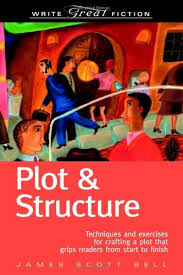
Plot and Structure by James Scott Bell
This is one I refer to quite a bit. He breaks down plotting techniques and makes them accessible and he understands the great importance of studying mentor texts to gain an understanding of how plotting works.
Courses
Cheryl Klein’s Writer’s Digest Master Plotting Class
I took this course several years ago, and I can't find any upcoming dates for this class. However, her book Second Sight talks about some of the revision techniques she talks about in her online class.

Be forewarned, you must love spreadsheets (and I do!). It’s a great way to see into an editor’s mind and really be able to delve into your own book. You need to have a book already written and ready to revise to really make this class worth your while. If you didn't have it written, it would be hard to employ the revision techniques.
Techniques I’ve Used
1) Study books as mentor texts
After reading James Scott Bell’s book Plot and Structure, I realized I needed to study novels in the same way that I study picture book texts. I picked several of my favorite middle grade novels and mapped out their plots, chapter by chapter. Because none of the above resources (with the exception of Cheryl Klein’s class) are really for children’s writers, I wanted to see how the plotting was handled in the kind of books I wanted to write.
Bell’s technique used index cards for recording the plot of each chapter in the mentor texts. I recorded a summary of the chapter, characters, setting, ending (did I want to keep reading), and type of chapter it was (action, reaction, setup, deepening). James Scott Bell describes in detail how to do this type of study in his book.
By walking through this process with books I loved, it helped me see the big picture and how those smaller plot pieces were woven together to make the big picture.
2) Spreadsheets
Cheryl Klein’s class uses a lot of different spreadsheets. I use spreadsheets because it is another way that you can see the different plot elements of your book in a big picture way, while also keeping track of those little items. There are some elements I’ll always want to track, but some will change depending on the book. For example, for one of my novels, my spreadsheet headers tracked these elements for each scene:
* Action
* Emotion
* Setting
* Characters in this chapter
* What does the character want?
* Climax
* Ending/Hook for next scene
* Clue revealed (specific to that book)
* Magic element (specific to that book)
The advantage of spreadsheets is that they are easily color-codable and it’s easy to see your whole book on a few pages.
3) Scrivener
I’ve written a previous blog post about Scrivener, but I always draft my novels in Scrivener. It helps me see things as a whole and I can also easily move parts around, much more so than in Word.
The index card feature is helpful when trying to have summaries of your story at a glance on your computer. You can also print them off, cut them apart, and physically arrange them just like you would with real index cards.

4) Plot chart
Remember 5th grade when you plotted stories on a chart that looked like a steep mountain? Another way to map out your story and see where it falls apart is to actually make one of these large charts of your book. After reading The Plot Whisperer, I actually got brave and did this with one of my books.

5) Shrunken Manuscript
Darcy Pattison teaches how to do this technique here. Basically, it’s another way to see your novel as a whole. It helps identify your weak spots and strong spots.
Plot On!
I still have a lot to learn about plotting. I’d love to know your favorite books about plot and your favorite techniques for revising for plot. Tell me about it in the comments.

