Thursday, August 10, 2017

Down the Road w/THE ROAD THAT TRUCKS BUILT - By Kathy Halsey


Trucking down the road with Susanna Leonard Hill this summer has been a barrel of fun. Just this stop and one more to go on August 15 over at A Penny and Her Jots. With such an inclusive tour, a total of 15 stops, what can a blogger say at this point? Along with my review, I've decided to focus on the art and physicality of the book. And, there's a prize for one lucky reader at the end.


Review
THE ROAD THAT TRUCKS BUILT by Susanna Leonard Hill roared into the world near the end of July, 2017. From the fun, interactive cover that reveals all sorts of "movers," to bright, upbeat rhyme, young readers and their parents will enjoy this picture book again and again. We're introduced to all sorts of trucks: bull dozers, scrapers, graders, and even the paint marker. The cumulative tale and guide to the featured trucks add another layer to Susanna's newest. Writers, take note, this picture book puts s spin on the classic rhyme THE HOUSE THAT JACK BUILT. What other nursery rhymes can benefit from a twist or retelling? Put on your thinking caps.

Q & A with Susanna w/An Art Emphasis 


Kathy:  I love the entire package design of THE ROAD THAT TRUCKS BUILT. Can you talk a bit about the look and feel of the book?
Susanna: The cover is sturdily constructed to look like a tire.  The book binding is striped black and yellow like construction zone caution tape.  The part of the tire where the hubcap would be in an interactive wheel which young readers can spin, showing all the different vehicles in the story.  It’s tons of fun!

Kathy: Did you make any suggestions about the interactive cover?
Susanna: I did not! J  That was the brainchild and work of the editor, and possibly the book designer.  I know a few different ideas were considered – they wanted to get exactly the right cover for the book. 

Kathy: As you wrote this picture book, did you consciously think about make "room" for illustrations?
Susanna: I tend to think visually when I write.  So I guess the answer to that question is yes, although kind of subconsciously.  I do consciously think about what words I need, what illustrations the illustrator might potentially draw, and how the words and the art could work together.  I know when I write that sometimes I’m putting in words to get ideas across that will later be cut because once the art exists they won’t be necessary.  But in the case of this story, the text was not changed.


Kathy: What are your feelings on art notes for authors? Do you ever include them with your submissions to editors?
Susanna:I trust that if I write a strong story, the editor will be able to envision the art.   And I trust illustrators to have the vision and creativity to make the art.  I have no wish to interfere or dictate – it would be unwelcome and hamper the illustrator’s freedom of expression.  That said, there are some cases where the text is quite spare, or where humor or surprise or something else depends on something different being shown in the illustration than is suggested by the text.  Although I try to keep art notes to a minimum, I do use them occasionally in situations like that because they are necessary to a proper understanding of the text.  THE 
ROAD THAT TRUCKS BUILT was straightforward in that sense, though, so no art notes were included. 

Kathy: Many of us know you not only as an author, but as a wonderful writing instructor. What was your biggest challenge and biggest joy in writing TRUCKS?

Susanna:My biggest challenge was definitely figuring out how to get all the trucks to fit into the rhyme scheme and meter.  I’ve said it before, but it’s kind of like a puzzle – choosing words, then arranging and rearranging them until you get meaning, rhythm and story balanced in rhyme.  My biggest joy was probably when I finally thought I’d gotten it right J  But it was also a joy to write this story on another level because I wrote it for my son, so it was something I could do for him and share with him even before it was published.


Prize Patrol
One lucky reader will win a copy of THE ROAD THAT TRUCKS BUILT by being the first one to do two simple things:
1. Leave a comment on this blog and
2. Using the hashtag #trucksontour link to this blog on either Facebook or Twitter and make sure to tag me. (I'm Kathy Halsey on FB and my twitter handle is @infowoman1.) Good luck. I'll write down the names and have Wiley Corgi choose one by tomorrow morning. Baroo!

 

Monday, August 7, 2017

Learning While Uncomfortable: Teacher and Explorer Susan Koch Shares Insights from the Arctic Circle ~ by Christy Mihaly

Welcome back! It's August, and thus our thoughts turn to the eternal question:

What did you do on your summer vacation?

IMG_7903.JPG
First Grade Teacher Susan Koch on the icy sea in Svalbard, Norway
As writers, educators, artists, and librarians, GROG readers know it's important to s-t-r-e-t-c-h . . . to find fresh inspiration, especially over the summer months.


Today we'll talk with an educator who went outside of her comfort zone this summer—way outside. First grade teacher Susan Koch—Vermont's 2016 Teacher of the Year—traveled to the Arctic! She participated in the National Geographic Society's Grosvenor Teacher Fellow Program, which sponsored her voyage aboard the National Geographic Explorer to Svalbard, Norway, "Land of the Ice Bears."

Susan and I sat down to chat about her amazing, all-expenses-paid adventure.


20170626-DSC_7634.jpg
What Susan Saw!
CM: Congratulations, Susi, on being a Grosvenor Fellow! What does the program involve?


SK: Thanks! The Grosvenor Teacher Fellowship is a two-year experience. Each year, 35 educators (from an applicant pool of about 500) are named to participate in a Lindblad Expeditions-National Geographic voyage. Then, we bring what we learn out there back into the classroom. The Grosvenor program is a gift from Sven Lindblad, the owner of the expedition company, to honor a long-time educator and leader of the National Geographic Society, Gil Grosvenor. Two or three Fellows sail on select voyages, along with paying guests and staff. The Fellows participate in the onshore hikes, onboard programs, meals, and every aspect of the expedition.
DSCN0369.JPG
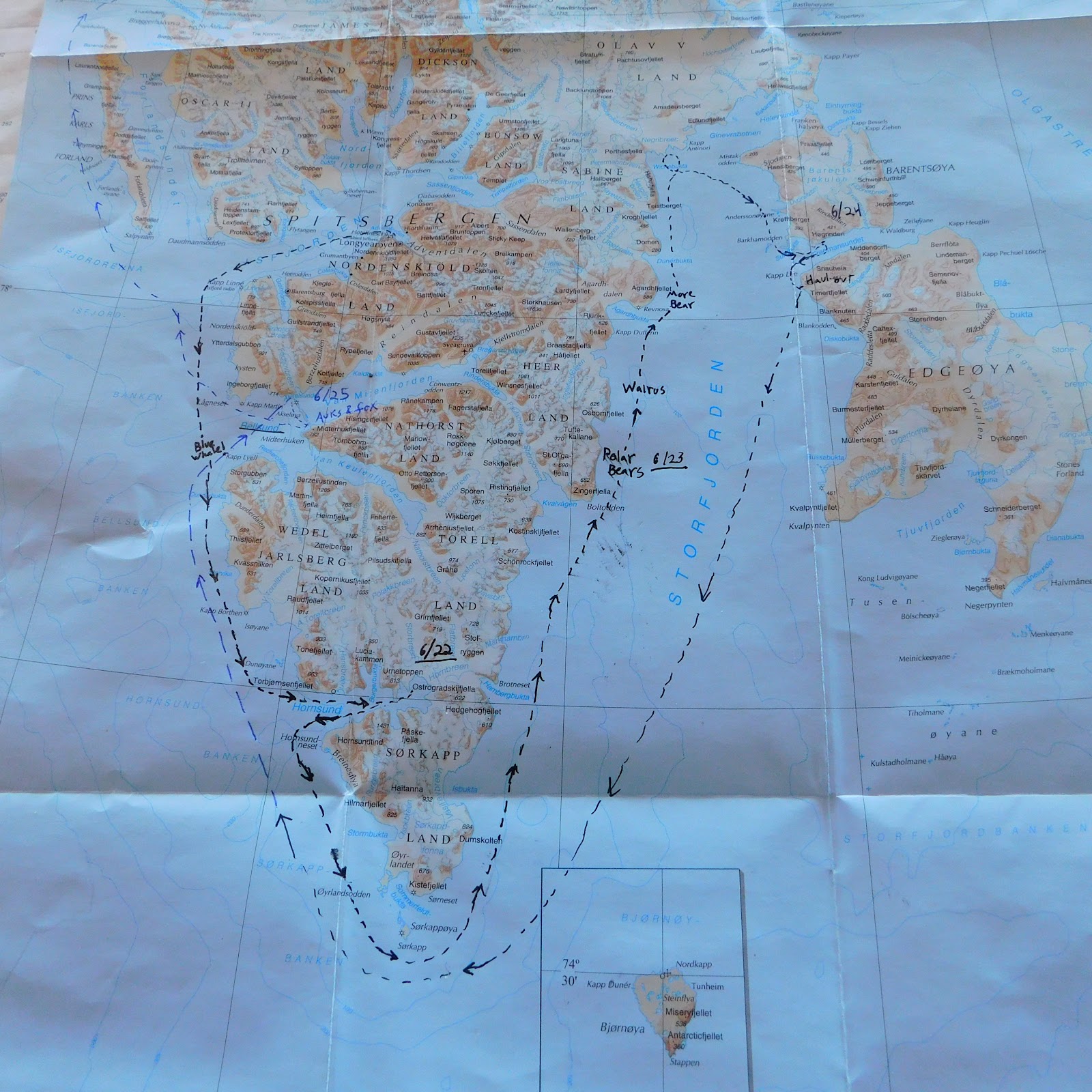
Susan Koch's map, marked to show her route aboard the Explorer
CM: Which expedition did you sail on?

IMG_0398.JPG
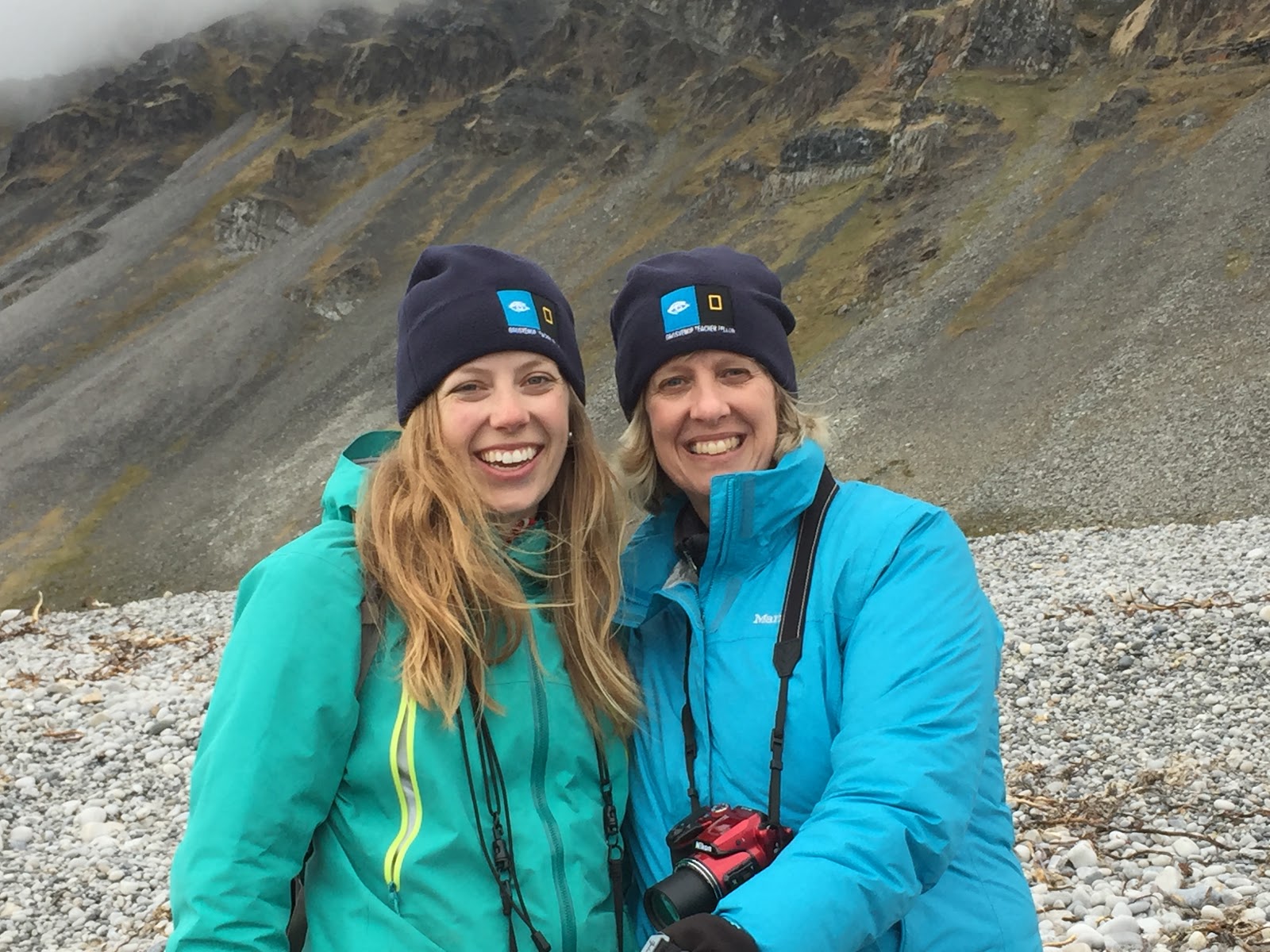
Susan Koch (right) in Svalbard with
her Grosvenor Fellow colleague Caitlin MacLeod-Bluver

SK: I was assigned to travel on the National Geographic Explorer for ten days in June. We journeyed around Svalbard, a group of islands in the Arctic Ocean. We spent eleven days north of the Arctic Circle; one day we sailed past the 80th parallel north, almost to the North Pole.

My roommate on the trip, Caitlin, is a teacher of recent immigrants in Boston. We were a good pair.

CM: What kind of training did you receive?

IMG_0513.JPG
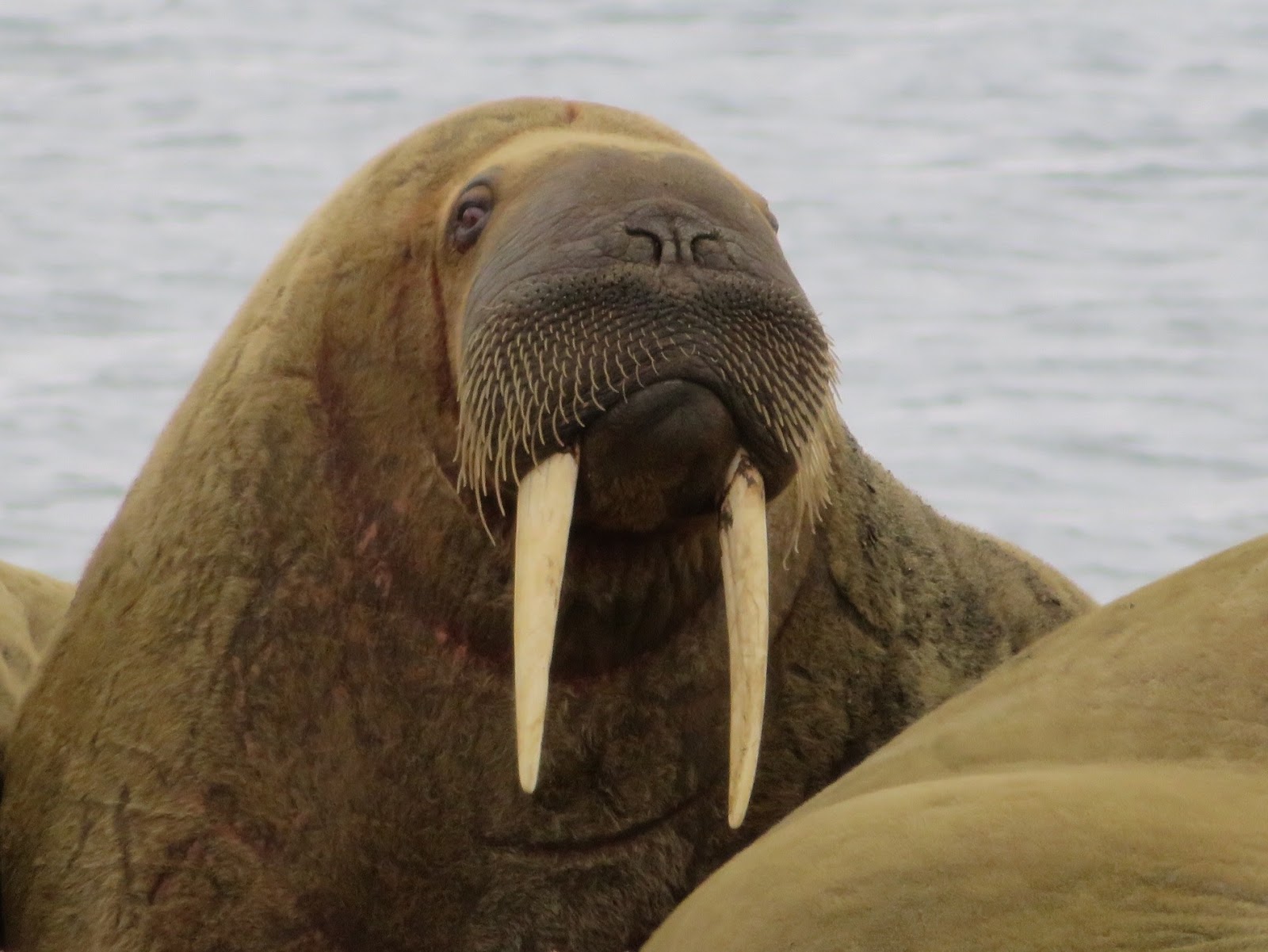
Walrus in Svalbard
SK: In March, this year's group met at the National Geographic headquarters in Washington, D.C. to learn about the program and ideas about following up the experience with classroom lessons and public presentations. We met staff from Nat Geo and Lindblad, including Nat Geo photographers, shared tips on cold-weather gear, trip preparation, and photography, and connected with other Fellows.

CM: What are some memorable aspects of your voyage to the Arctic?


SK: It's actually hard to find the words to describe the experience, and the vastness of that landscape. But I've been trying.

Here are some highlights:
IMG_6005.jpg
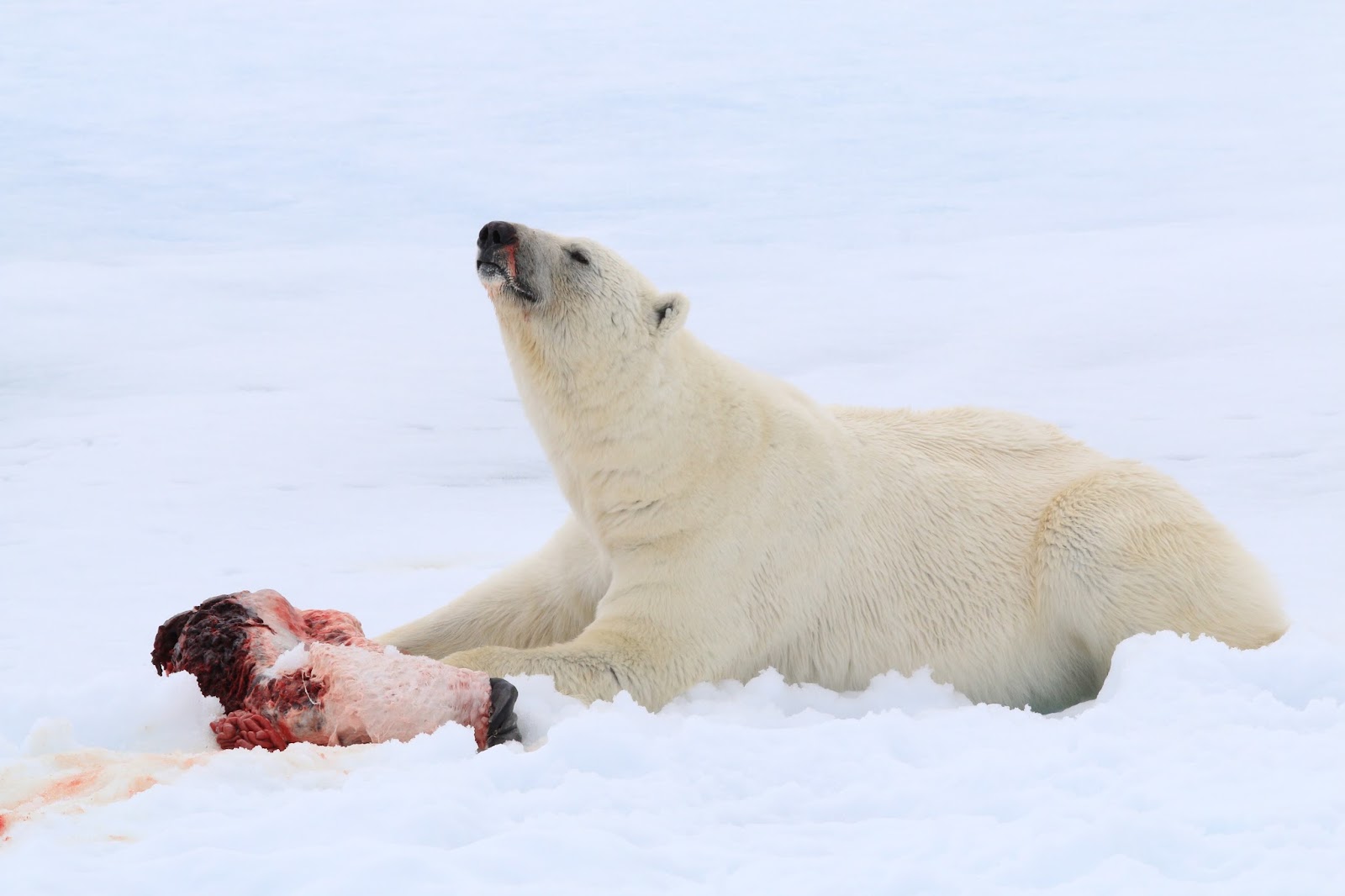
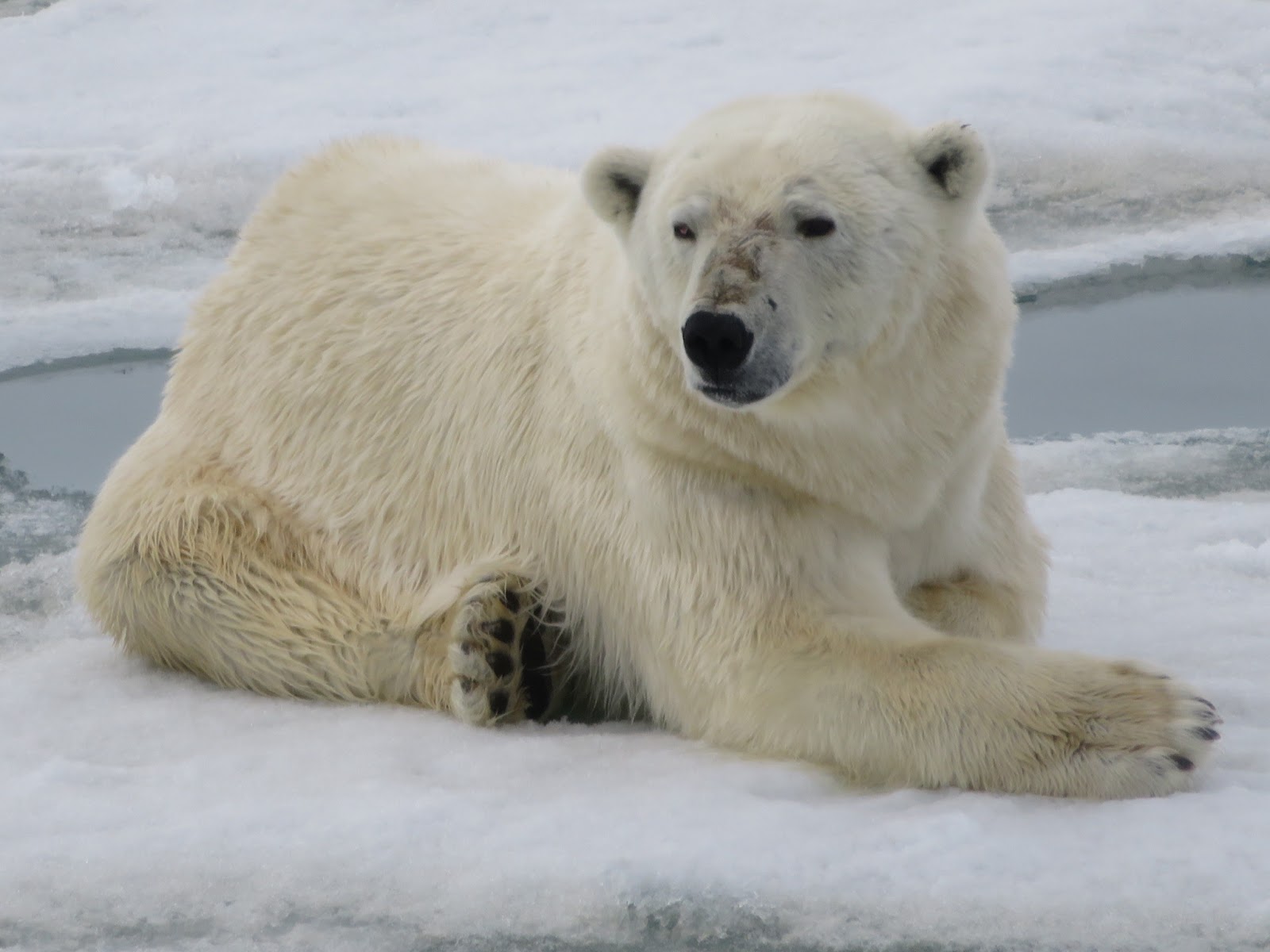
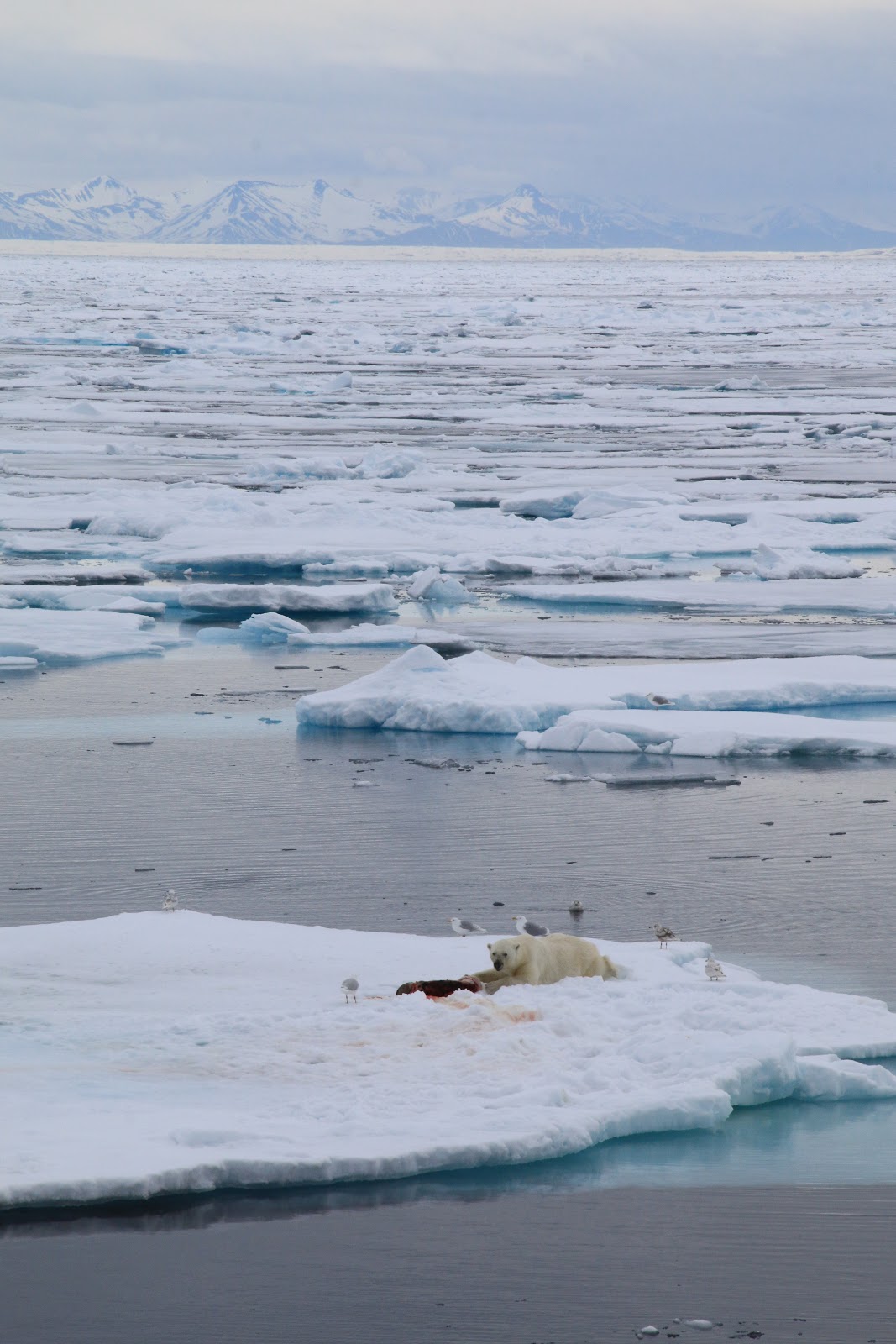
Polar Bear on the Ice (eating seal blubber)
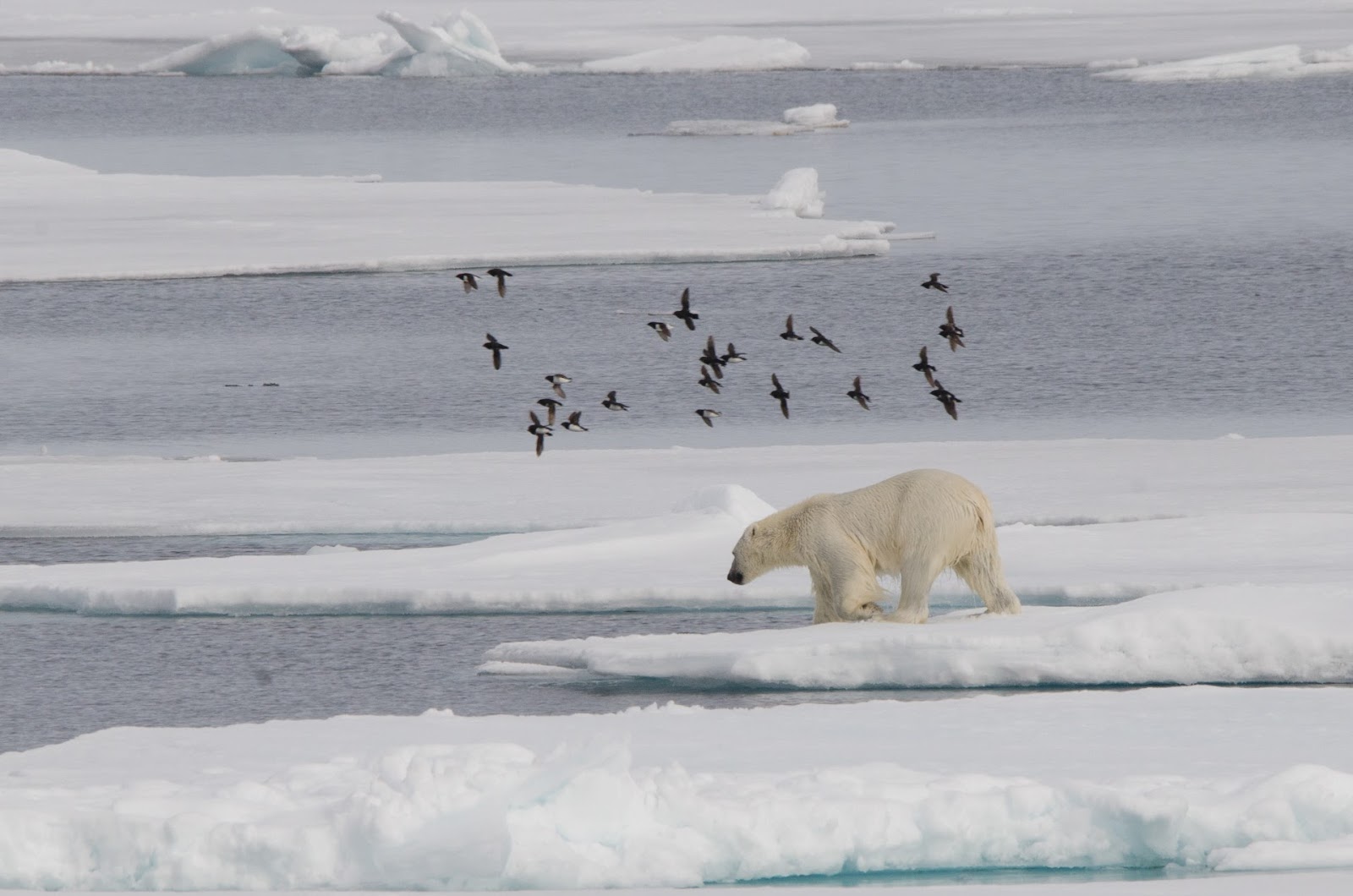
Polar bears. The ship sailed really close to bears hunting on the ice. The ice floats on the ocean, and we could watch the bears jumping between sheets of ice. In one day, we saw 13 adult bears and 4 cubs. We saw bears eating  the blubber from seals they'd killed. At the same time, we were learning from the trip naturalists about the bears' lives and the food chain, and how threatened the bears are by climate change. It brings it all home when you're seeing them on the melting ice. We actually saw a dead, starved bear on the beach—if bears come ashore, it means they're lacking a food source. That was a powerful image, reminding us how precarious their situation is.

IMG_0284.JPG
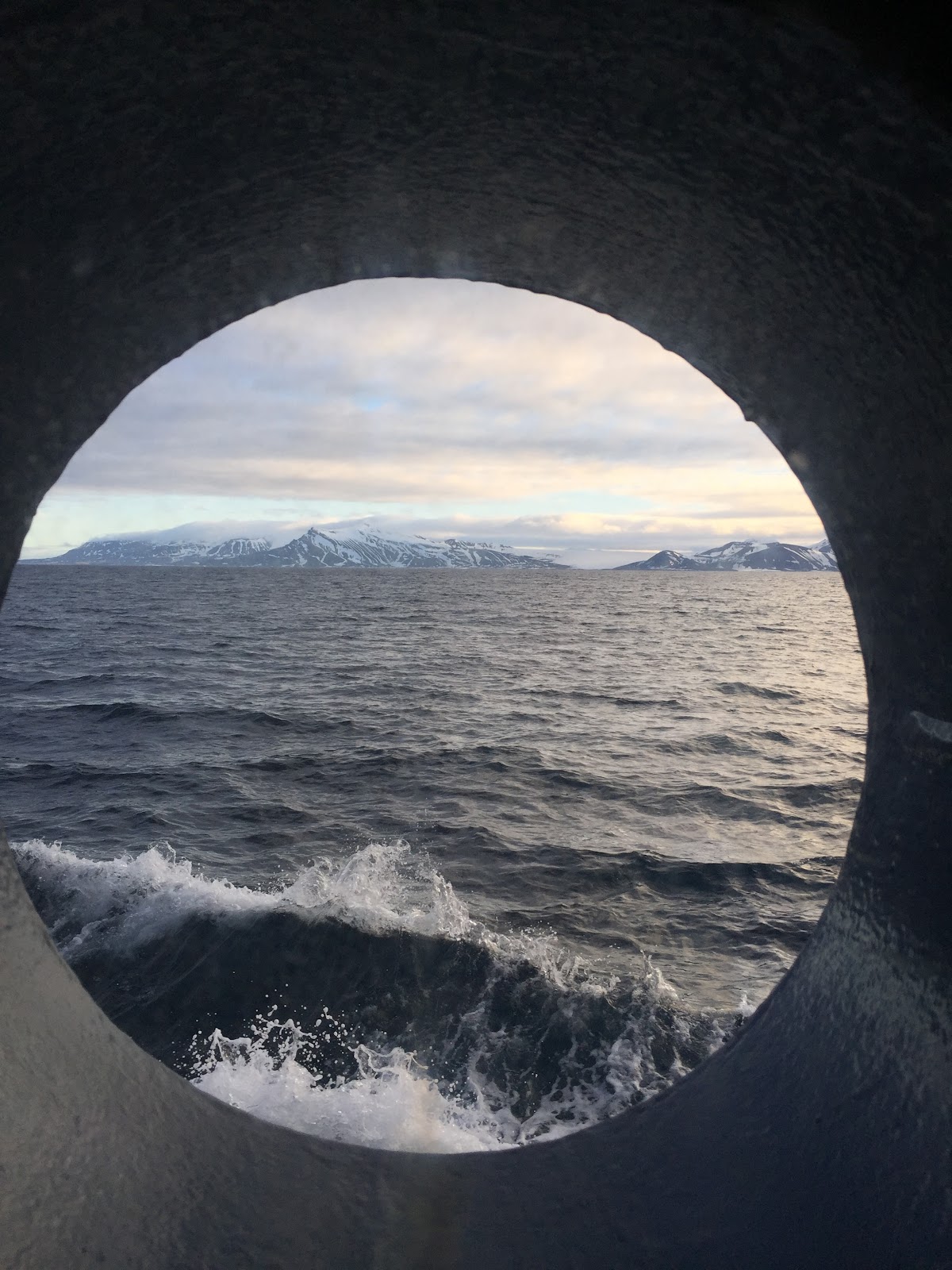
View from the Porthole of Susan's Cabin onboard the Explorer
Light. We had 24 hours of sunlight. It's weird how disorienting that is. The combination of the light and the excitement of being on the ship and hearing the captain announcing another wildlife sighting made it very hard to sleep, or keep a regular schedule. In fact, on June 21, the ship's chef, who is Swedish, prepared a special traditional midsummer dinner, but it was hard to convince people to come in from the ship's deck to eat, because there were so many animals to see. Even the staff was super excited to see the bears, the walruses, and the seals.

IMG_9672.JPG
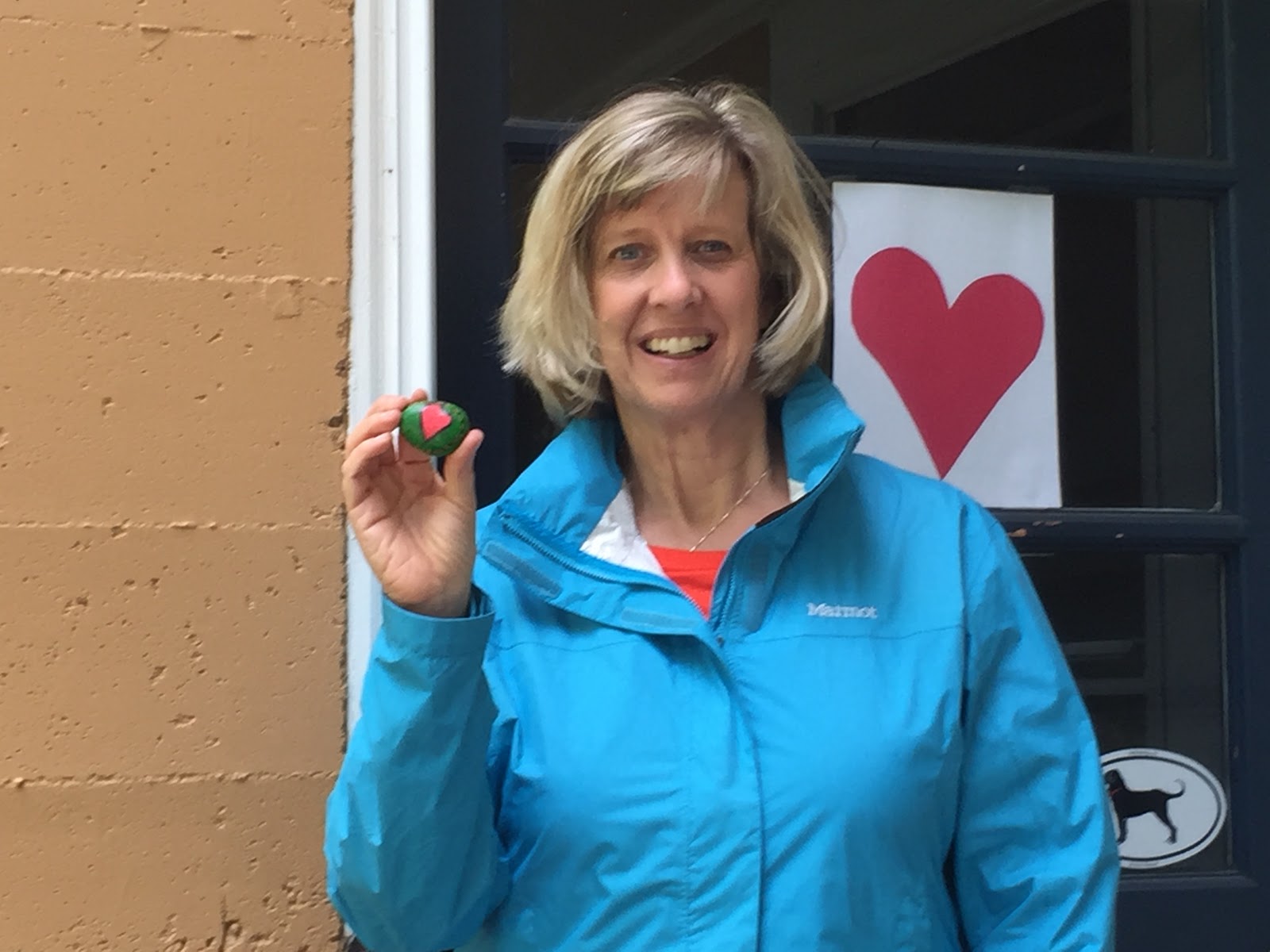
Susan with her Kindness Rock in Montpelier
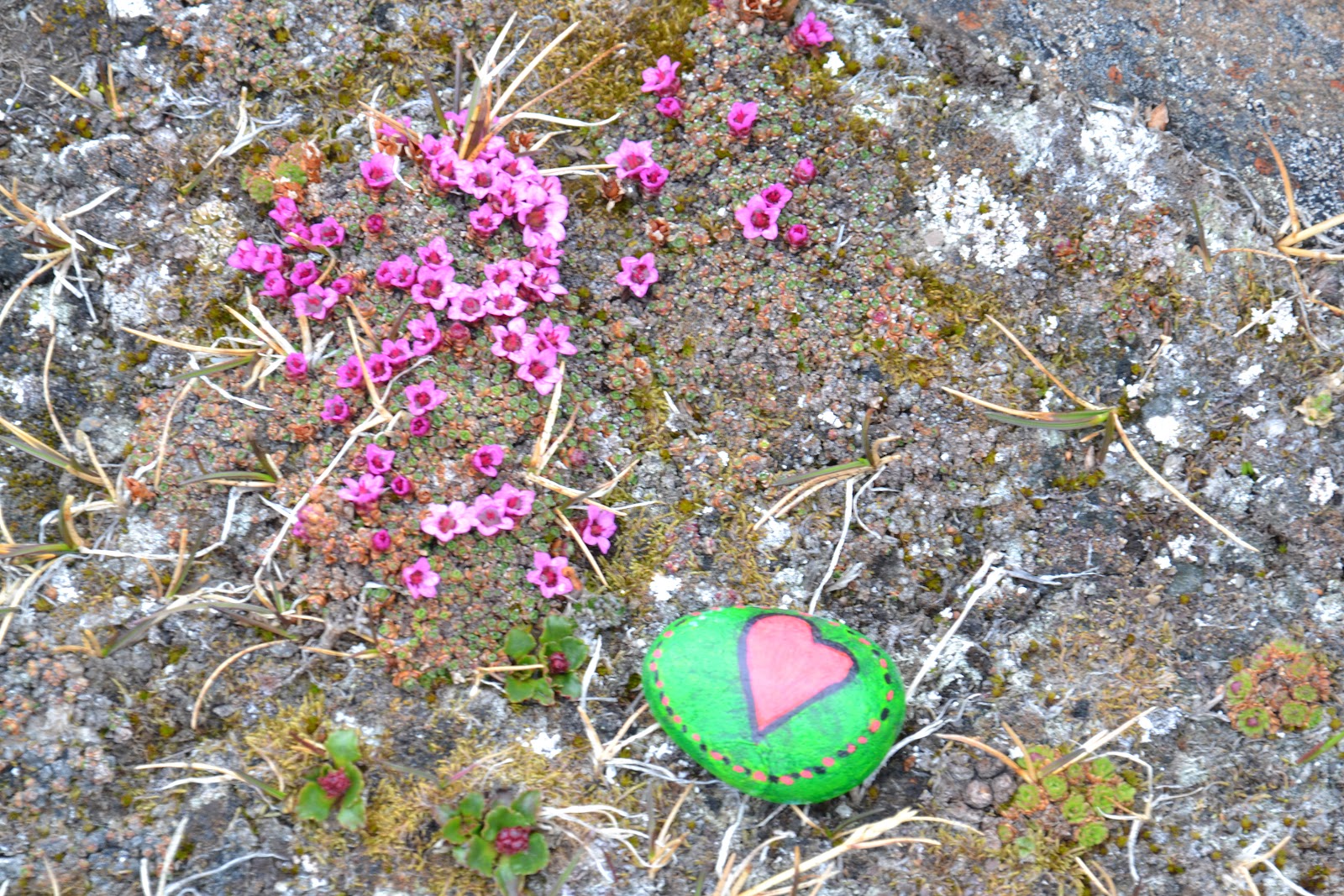
Kindness rocks. As part of the Grosvenor program, some teachers bring tokens from home, to connect their adventure with their classrooms and students. My community, Montpelier, had participated in the Kindness Rocks Project, painting stones with inspirational messages and distributing them around town. I brought a painted rock on my voyage, and I asked guests to pose with it in various places during the trip. It was fun to see how both kids and adults were excited to hold the rock and participate in the project.
A young guest (traveling with his grandparents) 
shows off the Kindness Rock

CM: Okay, I have to ask: How the heck did you get so lucky as to go on this trip?

SK: It all started about two years ago, when I was nominated as Teacher of the Year. Initially I hesitated to go through the TOTY application process. I basically think all teachers should be recognized, and one shouldn't be raised up above others. But then my mother reminded me that she'd listened to me say that teachers don't have a voice in public debates. "This is a chance to speak up for teachers," she reminded me. I realized she was right.

IMG_6306.JPG
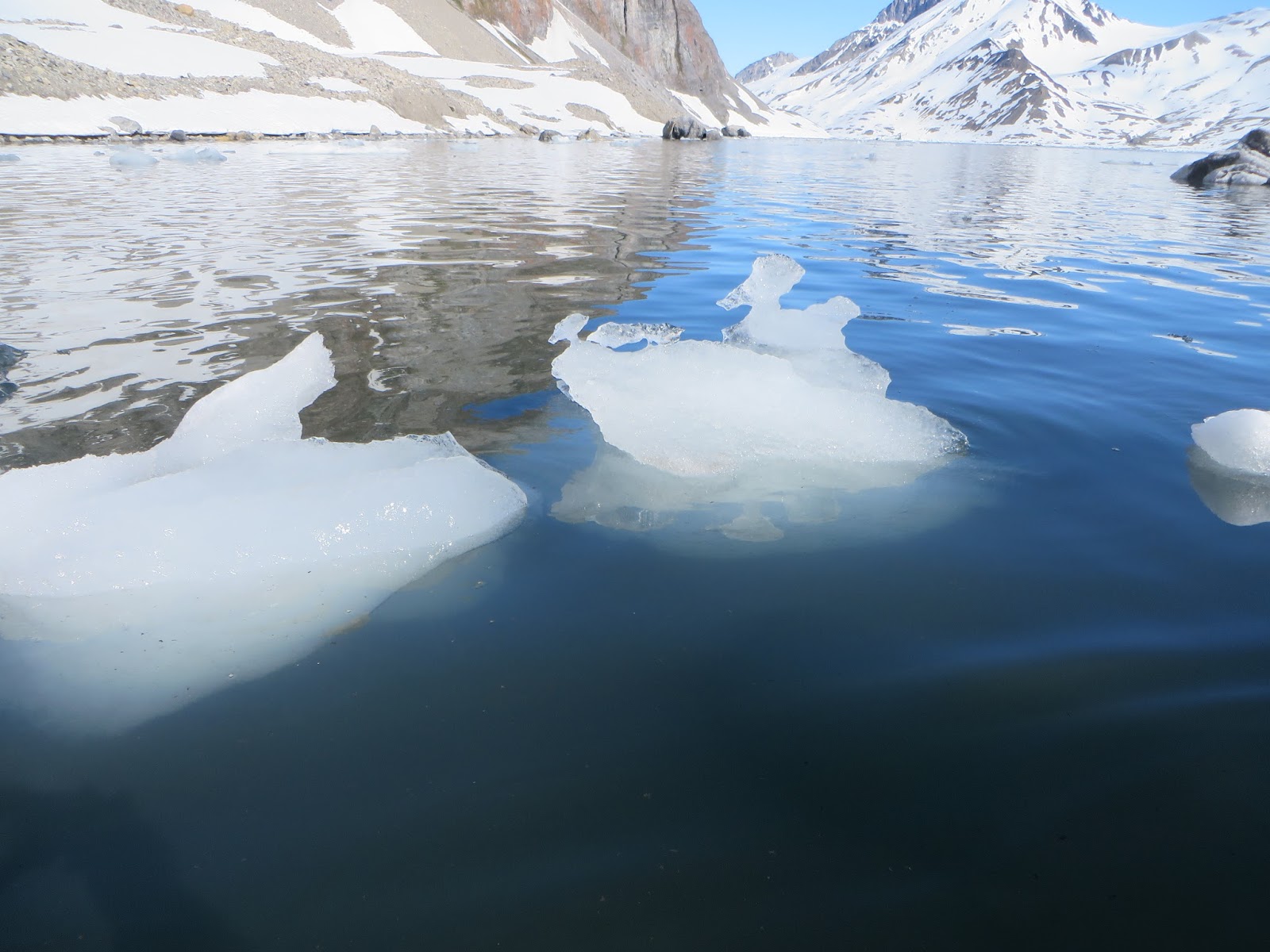
Svalbard Ice
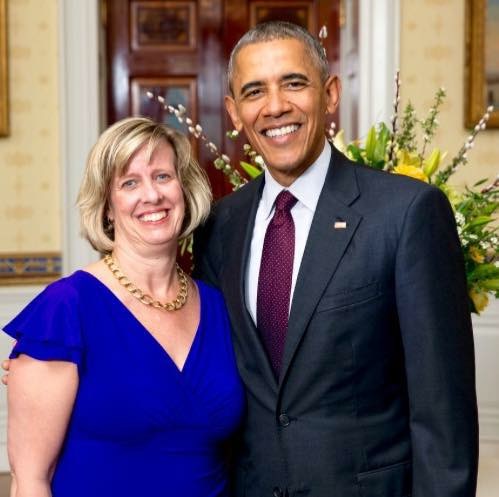
I'm so glad I took that leap, because being named Vermont's 2016 Teacher of the Year led to amazing, eye-opening opportunities. I met passionate, engaged teachers from all over the country. It was inspiring to find this community of people who love teaching as much as I do. We participated in educational programs—NASA Space Camp was awesome—and shared ideas and resources. And of course, a highlight of the year was meeting President Obama at the White House.
IMG_2963.JPG
What a Thrill:
Vermont TOTY Susan Koch and President Obama at the White House
That TOTY recognition made me realize how much we grow when we seek out new experiences, and put me on the path of seeking out challenges. It also expanded my horizons, taught me about the educational opportunities available, and sparked my interest in a global connection. So, when I read on my Twitter feed about the Grosvenor Fellow program, I wanted to apply right away. I love getting kids outside to learn in nature and I've worked hard to develop and sustain an outdoor education program in the Montpelier public schools. The National Geographic Fellowship fits in with those interests, and promotes geographic literacy.


IMG_0494.JPG
Ice Bear in Svalbard
I'd encourage other interested teachers to apply. Just check out the website, here, for information. (Note that starting this year, applicants must be "National Geographic Certified Educators." We're planning a separate post about that next month on GROG.)

CM: Okay, now for the wrap-up, Susi: What new insights did you bring back from the Arctic?

SK: I've been thinking about two things:


IMG_0486.JPG
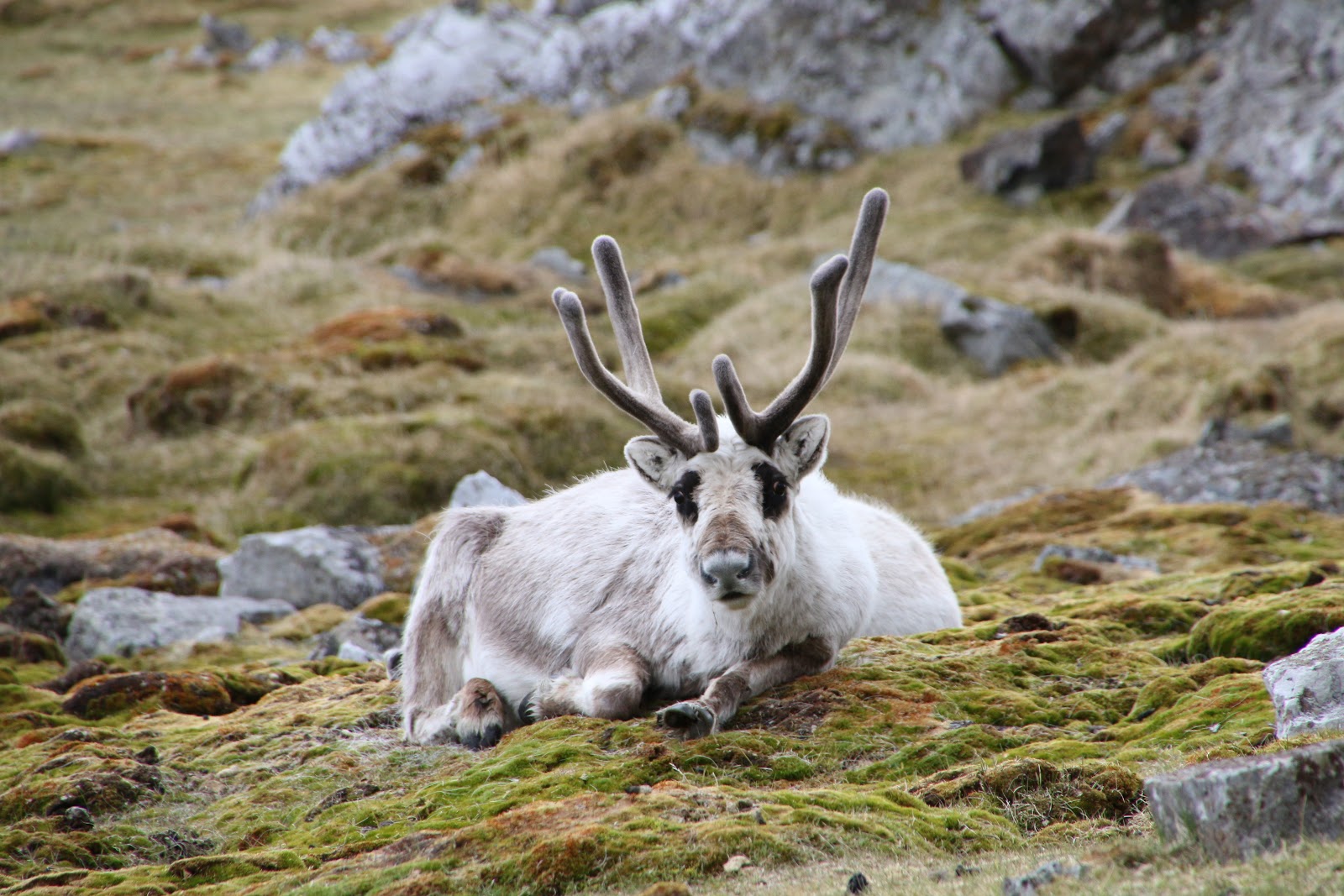
Svalbard Reindeer
The first is that the best learning happens when we’re a little bit uncomfortable. It’s not easy for us to do, but it's important to leave your comfort zone and appreciate a different perspective.


IMG_0727.JPG
Bear on Ice


The second is that the trip has made global warming feel more immediate and real to me. We observed glaciers that had shrunk by as much as seven miles in recent years. When you're in the Arctic Circle, it's just so clear that we need to take action to address climate change. If we do nothing, nothing will improve. As I tell my students, each of us can (and must) do something.


CM: Thanks so much for sharing your experience and lessons learned with GROG, Susi.
And teachers: I hope you'll check out the Grosvenor Teacher Fellow program! (More on that in GROG's September 14 post.)

DSC_0156.JPG
Kindness Rock and lichen of Svalbard


Monday, July 3, 2017

GROG is on vacation.

Happy Summer, loyal readers.


The GROGgers are on vacation in July -- recharging, resting, and stopping to admire the spider webs.

Feel free to browse the archives . . . and of course, please stop by in August. 


We'll pick back up on August 7 with a report from a lucky elementary school teacher who was awarded a fellowship to travel to Svalbard, Norway, with a National Geographic expedition. 


Don't miss it, and meanwhile, enjoy July!

Thursday, June 29, 2017

GET ON THE BUS, GUS--An Interview with Patty Toht-By Sherri Jones Rivers


   I first met Patty Toht at the WOW 2015 conference in Helen, Georgia. I found her to be fun, creative, and a truly kind person. Now I get to interview her about her wonderfully poetic All Aboard the London Bus. Let's get started.


     About how many revisions did you go through before the manuscript was acquired?

     Each poem in All Aboard the London Bus went through so many revisions that it's hard to count, and I'm so grateful to my critique buddies for their help and guidance in that process. The timeline for publication is a little easier to figure out because writing began the last month our family lived in England--November, 2013--and publication was May, 2017.


     Did you always intend on a UK publisher? Did you submit in the states?

     The first editor to take a peek at the manuscript was here in the States. Andrea Welch from Beach Lane Books critiqued it at the LA SCBWI conference in 2014. She liked it and shared it with her publisher but they felt the market in the US would be too small. But their praise gave me courage to pursue submitting it more widely in the UK. Frances Lincoln is a UK publisher with a love for poetry and was the perfect place to send it.

     
     Do you have an agent? 

     My agent is Julia Churchill from A.M. Heath Literary in London. I signed with Julia while our family was living in the U.K. We met at the SCBWI conference in England where she critiqued a picture book manuscript of mine. (SCBWI conferences have been great connectors for me. If you are serious about writing for children, an SCBWI membership is a must!)


     I know you lived in London for several years. Did you always have a love for all things English?

     I always had a love for travel and moving overseas was a goal for our family. Our years in London were magical ones and have cemented my love of the U.K.


                                                Englefield Green     

 My husband and I are returning for two weeks this summer and I can't wait!


     Were there some places/stops/attractions you had to leave out in your manuscript, or did you cover all the sights you wanted to?

     Four of the poems that I wrote for the book were edited out, and the editor asked for three to be added. I was especially sad to say goodbye to a poem about Piccadilly Circus, but then the illustrator, Sam Usher, set the "Rain" poem in that location, so it ended up in the book anyway.


     How do you feel about the art? I think it's fabulous. I especially love the way the artist wove the words into a "river" on the page about the Thames. The Tube page is awesome the way your words fill the page, and the Seek and Find page was an added bonus.


     I adore the artwork in the book and was so lucky to be paired with Sam Usher! He's incredibly talented and his illustrations are the perfect mix of architectural detail and whimsical action. The bird's eye view of London is magnificent. I wrote "The River


Thames" as a shape poem and Sam brought it to life on the page, although I had to edit away several lines to make it fit. I often wonder if Sam was ready to throttle me with "Seek and Find Trafalgar"--that's a lot of detail to squeeze into one spread! With "The Tube" poem, I'm not sure if it was the editor's idea or Sam's to curve the text, but what a clever idea that was.


     What challenges or surprises have you encountered along the way to publication?


     One thing that always surprises me is the variation of time it takes from selling a book manuscript to the time of its publication. All Aboard the London Bus is actually the third book I sold. Two books I sold in 2013 are waiting to be born--Pick A Pine Tree arrives on September 19, 2017, and Pick A Pumpkin will follow next autumn.


     Do you have a writing schedule? Where do you like to write? Do you use mentor texts?

   
     I'm really struggling with my writing schedule right now. Between work and marketing my 2017 books, I'm finding it hard to carve out time for writing. Luckily, my school job allows for a few summer months off--now I just have to figure out how to get myself unstuck! I don't have an office, so I usually write in a corner of the living room, much to the dismay of my family who are constantly stepping over my papers and books. And yes, I use mentor texts ALL the time. I firmly believe that reading hundreds and hundreds of picture books has given me an internal rhythm about page breaks and three-part movements.


     What is something folks might not know about you?

     How about something old and something new? Old--I owned a children's book store from 1988-1995; it was called Never Never Land, and I met my husband there when he stopped in to look at books. New--I started a new job this year working in a middle school library.


     What advice do you have for other kidlit writers working towards that debut picture book?

     Keep going! I am an incredibly late bloomer. I began writing for children in the mid-1990's, just at the time that children's books were heading into a deep slump. Between raising four kids and facing a tough market, I didn't have much success in selling my work for a long time. But a poetry class led me to writing poems
  

for children's magazines and that was my stepping stone to publication.


   Patricia Toht lives in the Chicago area with her husband and youngest son. She has three more adult children and one grandbaby. When she tires of the Chicago winter weather, she buys a lottery ticket, hoping to win it big and be able to spend her summers globe-trotting. You can visit her website at www.patriciatoht.com


Monday, June 26, 2017

Explore What Illustrators Know & Do: Another Picture Book Writer's Tool - by Kathy Halsey

Last Monday we learned to use storytelling techniques thanks to author Lindsay Bonilla. Today we explore more in the second part of my series on new ways to see craft and story. We'll unpack the knowledge that illustrators employ in telling their story. Thinking like an illustrator is a great way to open up our writing even if we've never dabbled in art. 
I always leave room in my professional development playbook for an illustrator workshop to help me see with new eyes. Last Saturday the Ohio South Central SCBWI hosted a great 4 hour workshop with author/illustrator Lindsay Ward entitled "Write, Draw, Read, Repeat: How to Create Successful Picture books in Today's Children's Book Market." 
Author/ Illustrator Lindsay Ward

Lindsay began as an illustrator before she became an author; she works in cut paper, a very hands-on, painstaking process. Her first book, WHEN BLUE MET EGG, took her four years of work. She shared illustration "drafts" of cover designs, dummy pages, and most importantly for us writers-only folks, how she "sees" stories she creates. What follows are the takeaways I added to my writer's toolbox.

From the Illustrator's Mind
1. See the whole. Lindsay tapes/strings up her illustrations across her office to get a sense the organic whole of the story. Writers need to see tone, voice, and imagine pagination after a few drafts to get a sense of the true feel for the work.
2. Pagination and reading aloud. This is where Lindsay starts with a draft. We need to hear/feel page turns. Take your TBR stack and read aloud. Get to the point where you know the page turn because...
3. The page turn is the most powerful narrative tool. Treat it with respect. Use page turns to hide and reveal plot. They can set up the pacing, another big consideration in crafting a masterful picture book. Lindsay concentrates on keeping  a "visual pacing" going in her work.
See the personality reflected in each brother?
4. Characters need defining characteristic. Using BROBARIANS as a mentor text, Lindsay showed us several cover illustrations. She couldn't quite nail the cover until she saw the brothers per their defining characteristic. If you can't "get" your character while drafting or revising, amp up their defining characteristic ( just one, it is a PB) and follow that through the text. Lindsay suggests writing dialogue w/that defining trait to explore the character.
"Ahem, art notes??? Yes? No?
5. But what about art notes? Writers always want to know about the advisability of their inclusion. Our expert advised us that nine times out of ten, art notes are not necessary especially if they are descriptive. 
6. Finally, we received a list on what tools successful illustrators use: composition, perspective, color, line, action, focal point, gutter. Read some PB favorites and see how those elements are employed. And... how might we as writers use these tools to our benefit? 
Read this as a mentor text for action


So as we segue into summer, splash into new ways of writing thanks to Lindsay Ward. She has a fabulous web site, too.


Read this as a mentor text on composition


Thursday, June 22, 2017

BIC and BOC ~By Suzy Leopold

Perhaps you are seated as you read today’s GROG Blog post. 

Writers know the importance of, BIC or Butt in Chair. 

When you have your BIC, you are brainstorming, revising, and polishing. 

BIC = writing. 

Some days, writers are seated with BIC reading a stack of mentor texts or researching facts and information for a nonfiction manuscript. 

A tall stack of mentor texts
Are you sitting at this very moment? I'm thinking you must be.

If you are, please consider removing your BIC now. Come on you can stand up to read this GROG Blog post.

While my intentions are not to take you away from your computer keyboard or pen and paper, you need to get your BOC or Butt off chair to be a better writer. If you choose to stay seated then at least SUS or Sit up straight. 

BOC and SUS will support you and your writing.

I’m certain you may be thinking, “How can this be?”

As a writer, more vertical time throughout the day is best for your writing and your overall health, including your heart.

According to the American Heart Association, sedentary behavior can be risky causing cardiovascular problems. Yes, the life of a writer is sedentary. It’s what writers do to increase word counts on manuscripts, and meet deadlines.

When a writer is sedentary for long periods of time, one develops a foggy brain. Your brain function slows down. 

Walking helps your muscles pump fresh blood and oxygen through the brain and increases the mood-enhancing chemicals. Spending time in green spaces, such as a stroll through a park, a hike up a hill, or enjoying the sights, sounds, and fragrances of a garden will rejuvenate your spirit. 

After a walk, a writer’s memory works better, improves attention, and has a positive impact on creativity.

All you need is a good pair of walking shoes. Grab a water bottle and slather on sunscreen. Now put one foot in front of the other. Remember to replace walking shoes every 500 miles.

Whatever you do, try to walk more. Along with health benefits, its one of the best things you can do for your writing. 

When you sit and write, do you experience some neck pain? How about your back and shoulders—Do they bother you as you write? Craning your neck forward toward a keyboard or tilting your head to write can cause strain on the cervical vertebrae. 

As my Mom (and your Mom, too) always said, “Sit up straight.” Relax your shoulders with your arms close to your sides. Elbows should be bent ninety degrees. Do not lean forward with your head and keep your feet flat on the floor. When you have your BIC, remember to SUS.
SUS
Sit up Straight
Consider standing as you type at your computer. If you have a cool standing desk that you type at, you're doing great. Typing while standing may give you an energy boost. An important tip to remember while standing is to keep your hands near waist level. It is also best to have the computer screen adjusted to eye level.
Stand and type
Walk more. Enjoy walking. When you do, you’re enhancing your creative muscles to write more and write better. You’re also creating a healthy life style with a stronger heart, and a clearer mind.

A writer needs to incorporate more movement every day. Whatever you do, take more breaks every thirty minutes from your writing to walk, to stretch, or stand up. Along with health benefits, its one of the best things you can do for you and your writing. 

After your walk, get your BIC. Make sure you are SUS. Being vertical is best. You can do it.