Wednesday, December 9, 2015

Ready or Not. It's Time to Show Up. ~By Suzy Leopold

Perhaps there are times when you think it isn't the right time to write.  

I'm not ready to write that book. I can't write because I have so much to do.

Perhaps you are a writer, or desire to be a writer, but you are stuck in a pattern of defeat. Dismiss the negative thoughts. You have been given a life that includes goodness, frustrations, blessings, distractions, beliefs and doubts. Dismiss the self-doubt.

In the midst of all of the items on your daily to-do list, your family needs, the demands at work, numerous deadlines, and so forth, don't forget about you and your needs and desires. Sure you have needs for happiness, comfort and good health for you and your loved ones. These are all good desires that everyone deserves in life.

With a new year around the corner, it is time to uncover the needs and desires that make an imprint on your soul and express who you are as a writer. 

Begin thinking about bite-size goals and resolutions for 2016.
January
2016
One of the greatest road blocks a writer faces is the lack of structure. There is no one to tell you what to do and when to do it.

A writer needs goals.

If you don't know where you are headed or what road to take, how will you know when you are there?

Start small. Show a willingness. Begin with an open heart. This is about an emotion of readiness and not a feeling of courage. If you wait to feel courageous before you begin writing, you may be waiting forever.

Learn how to set specific, measurable, attainable, relevant and timely goals for your writing career.

SMART
Specific: Write clear, precise and definite goals that provide a target. If goals are too broad or too general they will be hard to achieve. 
Measurable: Goals must be written so that a writer can measure progress and know when the goals are achieved. Goals are useless if they can't be measured.
Attainable: Think about the steps to take to achieve the goals.
Relevant: Make sure the goals are just right; not too easy and not too challenging.
Timely: Follow a definite timeline. As you check your progress, adjust as need be.

Perhaps you could begin with the Five Ws. Include the word How.


First Step: Set Goals
Second Step: Get to Work
Third Step: Stick to It
Fourth Step: Make a Plan
Fifth Step: Achieve
Consider setting up a list of short-term goals and a list of long-term goals. Short-term goals are reasonable goals that can be accomplished during 2016. The other list will include reasonable goals that will take longer and eventually be accomplished over time.

Which of the following examples are SMART Goals? Which are only dreams that will cause frustration?

I will read X number of books on the craft of writing during 2016.

I will become a published writer in 2016. 

I will research and write X number of picture book manuscripts in 2016.

I will become a famous author in 2016.

I will attend X number of writing retreats, conferences and/or workshops in 2016.

I will write and sell my first chapter book for $100 k.

I will study and examine X number of picture books as mentor texts.

I will purchase all recently published picture books.

If we are to live our lives fully and well, we must learn to embrace the opposites, to live in a creative tension between our limits and our potentials. We must honor our limitations in ways that do not distort our nature, and we must trust and use our gifts in ways that fulfill the potentials God gave us.
~Parker Palmer

Don't sit down to write without a set of goals. A writer needs goals to have a direction and a purpose.

Showing up where you are with what you have is what good writers do. Time to write. Time to create. 

Monday, December 7, 2015

Celebration and Inspiration ~ by Patricia Toht

On Friday, I invited you to come to the Kid Lit TV party for the announcement of the Best in Rhyme picture book winner. Did you tune in? I hope you did. But for those of you who couldn't make it, here are the winners!

Runner up:
by Deborah Underwood
Runner-up: 

by Corey Rosen Schwartz


And the Grand Prize went to: 

by Penny Parker Klostermann

Of course, we celebrated with cake!


And a few silly photos:
Dragon breath!

Angie Karcher isn't too happy about
being swallowed by a dragon...


Kid Lit TV provided a gracious venue for the ceremony and party. In addition, they opened their doors the next day for the RPB REVOLUTION conference. Here are some tidbits and quotes about rhyming picture books. I hope they give you some inspiration!

Penny Parker Klostermann surprised the group with the fact that her book had 29 different versions before it was picked up by Random House. She told everyone to look at every line and every word to make sure it is the best. She also encouraged everyone to give themselves time to imagine.


Agent Kendra Marcus says that a rhyming picture book needs to not only rhyme, but also to have a good story that begins right up front. If it takes to long for a reader to discover where the story is headed, they may lose interest.


Author Lori Degman took the group through exercises on whittling down a rhyming manuscript and making sure the meter and rhyme are perfect. She urges writers to pinpoint the core of what they are trying to say, and then figure out the most condensed way to say it.
"Every time there's a break in the continuity of your rhyme, you may lose your reader," she warns.


Next up were the "Rebeccas Squared" team of author Rebecca Kai Doltish and editor Rebecca Davis from Wordsong and Boyds Mills. "Often people focus so much on the end rhymes that they lose sight of what is between those end rhymes," Rebecca Dotlich said. They stressed the importance of all poetic elements - treat them with equal importance. In other words, make sure a rhyming text takes advantage of luscious word choice, alliteration, metaphor and simile, vivid imagery, personification. "Read and study picture books until the essence of them is in your bones," they said.

The team of author Karma Wilson and Justin Chanda, Publisher at Simon and Schuster, rounded out the day. "Rhyme is wonderful, but it's not EVER the heart of your story. Your story has to stand without the crutch of rhyme," they told us. "Figure out the 'spine' - the theme that lies at the heart of your story - and let all else hang off of it." Karma warned us all to never talk down to a child, their concerns are very real and very large to them.

Celebration. 

Inspiration. 

A terrific weekend!

Unable to attend? It's not too late to purchase a recorded version of this wonderful conference. More information HERE.


Friday, December 4, 2015

Tune in Tomorrow!

Tonight's the night, folks.

After months of nominees for the best rhyming picture book...

After weeks of analysis by a committee of rhymers...

After the tallying of many votes...

The "Best in Rhyme" picture books will be chosen!

The studios of Kid Lit TV will be streaming the awards ceremony tonight at 6:00 pm EST. Come join in the fun. The link should go live then.


Tune into the GROG later this weekend to hear more about the winning picture books.

Wednesday, December 2, 2015

HANUKKAH BEAR, GRANDFATHER'S COAT & More


            By J.G. Annino
            I’m in research mode for an article a Holocaust
educator asked me to write in promotion of a great January
2016 event in our town, involving the story of Anne Frank.

            And so I’ve found a treasure of new books/books new to me
on several Jewish topics, which I feel privileged to know.

            I’m happy to share some of the picture books. They aren’t
about the Holocaust, but have titles such as HANUKKAH BEAR.


            Researching the piece this week creates a harmonic convergence.

            When I approach the commemoration of the U.S. entry into
the Allies’ fight against the Axis in WWII (Monday Dec. 7
is Pearl Harbor Day) I smile about my wonderful parents’ roles
in WWII.

            My father volunteered for WWII as a drill sergeant.  My mother,
still single & who hadn’t met Dad yet,  helped on the home front in
several ways, including as Victory Garden Editor for her newspaper.

            Then I find as I interview people about this Anne Frank event, I am
joyfully wishing them bright Hanukkah lights. This year, the holiday
begins this Sunday, Dec. 6.
           
            So I briefly present bright titles that may make good gifts, in this
month of giving.  And they would be good to borrow from your library.

MY GRANDFATHER’s COAT 
Jim Aylesworth/Barbara McClintock


 This is a family story that celebrates love, resourcefulness & men who sew. It will
also appeal to rhymers & readers of rhymes. It is a deft retelling of a treasured old
Yiddish tale. The ilustrations are joyful and layered with great details.


THE CASTLE ON HESTER STREET           
Linda Heller/ Boris Kulikov


The grandfather spins wild tales about immigration to America.
And the grandmother keeps things more realistic. It’s like a dueling story,
page to page. Meet up with Moishe, a singing goat & of course, that castle.
It's also a retelling.


NAMING LIBERTY
Jane Yolen/Jim Burke


A Russian family emigrates through Ellis Island, sending son Shmuel on ahead to secure a job. They follow with the daughter, Gitl. In Jane Yolen’s lyrical language, this is a story rich in well-researched historical scene-setting, made doubly vivid with the Jim Burke art.


HANUKKAH BEAR
Eric Kimmel/Mike Wahnovtka

Grandma bakes latkes for the rabbi, but guess who’s coming to dinner, instead?
A delightful remake of a 1990 story (THE CHANUKAH GUEST.)


ONE LITTLE CHICKEN
Elka Weber/Elisa Kleven


Young Leora helps her father keep a wayward chicken in their yard comfy, so it can later 
be reunited with the unknown owner. This retelling of a lovely tale of honesty, is inspired by Deuteronomy, chapter 22, verses 1-3. It highlights the rabbinical teaching that  “finders isn’t keepers.”


(On a personal note, I was thrilled to read at the illustrator’s blog that Elsa Kleven’s mother, Lorraine Art Schneider, created “Primer, the iconic “War is not healthy for children and other living things” miniature art known around the world. I have kept a copy of this close to me for decades.)


THE MATZAH BALL FAIRY
 Carla Heymsfeld/ Vlad Guzner


Float along with Freida’s relatives, as she has fun in the kitchen.
A silly out-of-print romp.

              I hope your December is filled with joy & more giving of thanks.

Monday, November 30, 2015

Confessions of a Bullet Journaler by Marcie Flinchum Atkins

What to Do, What to Do


I’ve always been a to-do list maniac. I use lists in every aspect of my life, but I especially use them in my writing. I have written about my incessant list making here.

My problem has always been lots of to-do lists running around on different pieces of paper, but somehow I needed a way to keep them all together. Then I heard about the bullet journal. 

Bullet Journaling 101


After almost a year of using my bullet journal, it really does work with how my mind thinks. I like being able to flip back to the beginning and see my goals for the year. 

Planning Ahead

The downside of the bullet journal is that is doesn’t let you plan far ahead, like a traditional pre-printed planner does. I typically keep my planning ahead on Google Calendar and then transfer the writing aspects into my journal every month. However, in 2016, I’m going to try to put these calendars in the front of the bullet journal for the whole year. 

Bullet Journal Contents

I do not keep my "day job" to-do’s in my bullet journal. I have a separate planner for that at school. Here are the features of my writing bullet journal. 
  • Table of Contents
  • 12x12 page. I list the titles of books that I wrote and the titles of books that I revised.
  • Writing goals for the whole year. I break these down by picture books, middle grade, business, professional reading 
  • Month by month goals
  • Lists of mentor texts by category. I have found this is the best way for me to keep up with my mentor texts lists without losing them. At the end of the year, when I fill up my book, I will transfer them to a Google Sheet. In bullet journaling speak these are called “collections”.


  • Monthly to do list. This usually just includes big projects I’m working on. 
  • A book of stars. This is a list of celebrations—no matter how small. Last year I posted about my “book of stars.” I just did a monthly page in my bullet journal. When I am discouraged, I can look at those pages and see that I’m making progress, little by little. 


  • Picture books read


  • Books and Audiobooks read
  • Writing project to-do lists. I break up a larger project into chunks and write down the list of to do’s. 
  • Weekly or daily to-do lists. 


I moved this year and changed jobs. While I didn’t come anywhere close to meeting all of my writing goals for 2015, I did keep my sanity. I was able to make lists of places I’d applied for jobs, dates they followed up, lists for what needed to be done for our move, and important phone numbers. It was all together. I was also able to keep writing.

Nitty Gritty Supply Details

I prefer the Leuchtturm 1917 with dots. The pages are already numbered, it has a built-in ribbon bookmark, and elastic closure where I clip my pen. The downside is that is expensive, but it’s lasted me a whole year. So, in my opinion, it was worth the money. 


I am a member of the Bullet Journal Junkie Facebook group. This group is great about posting pictures of their bullet journals. Almost all of them are more artistic than mine. My book is more function and less frill. But it works. And this group is a great resource for finding out where to get deals on supplies and how to think of to-do lists in different ways. 

How Do You Bullet Journal?

Are you a bullet journal junkie?

If so, please let me know how you use yours. What types of lists do you make? 

Friday, November 27, 2015

Thanksgiving? Writers Giving! You Giving? by Kathy Halsey

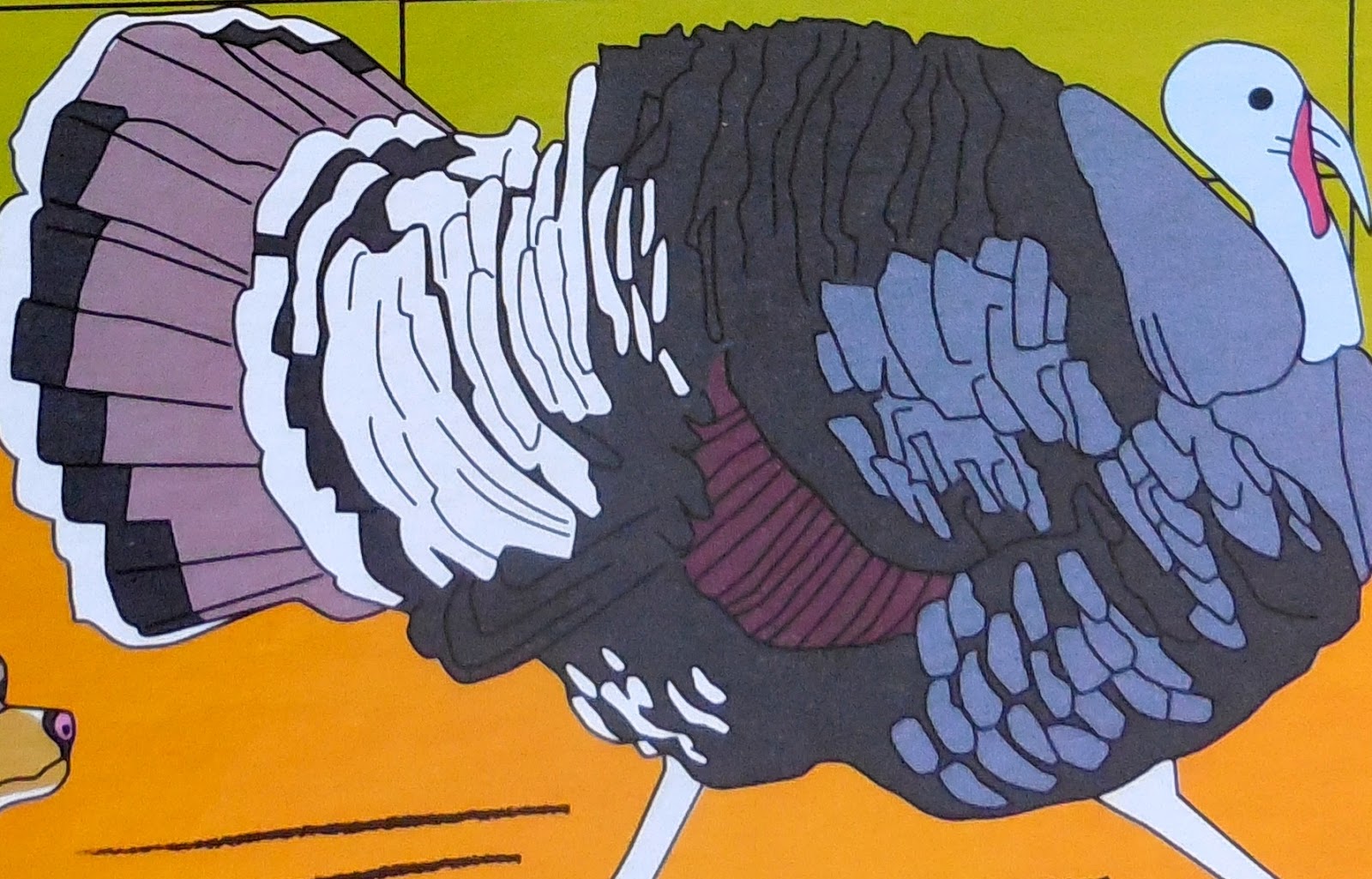
Often we writers are on the chase, like Mr. Gobble here. We chase ideas, stories, our next dream. But, sometimes we come together for a cause, like this writer, Lynn Kelley, who represents many giving writers who've created an anthology, KISSED BY AN ANGEL, the brainchild of writer/mother Robyn Campbell. 
Lynn Kelley
Christopher, Robyn's son, has Sturge-Weber Syndrome, a rare genetic condition affecting the brain which causes calcification of the brain, and blood vessels, but he has powered through with family and friends to live as normally as possible. He even has his black belt! Robyn says others with Sturge-Weber have seizures, blindness, strokes, blood clots and more. Robyn will tell you that her son, Christopher, is the hero, but they are both worthy of that title in MY book.


ALL the proceeds from KISSED BY AN ANGEL will be donated to the Sturge-Weber Foundation to benefit others. Check out that foundation link and their motto, "The stronger the wind, the tougher the trees." We writers all know about tough times in trenches, but what if people whispered about you, made fun of you to the point you had to ask Mom,"Why am I so different?" That's when Robyn told Christopher, who has a port wine stain over much of his body, that he was "touched by an angel." Thus begins the anthology's first story of Christopher as told by Robyn. I have read it with the accompanying photos and it is a hero's journey indeed! 

Most of these tales feature middle grade main characters who are gifted or have exceptional powers. In this 159 page-turner, you'll find code breakers, time machines, undercover agents, and even a fishy mystery. A kid lit writer who is a "kid" himself, Erik Weibel, is part of this awesome group of writers, many whom you know from Facebook:Yvette Carol, Catherine Johnson, Lynn Kelley, Teresa Robeson, Theresa Milstein, Suzy Levinson, Vivian Kirkfield, Ellen Warach Leventhal, Hope Lim, and Cheryl Secomb. 
Randomly generated by Worlde

So while you're munching on cold turkey sandwiches, watching football, or Black Friday shopping, put this anthology on your list as a holiday book that will benefit so many. The book's publication date is tentatively set for December 13, so stay tuned to the GROG for more info. I am grateful to be writing a post on all these heroes, writers, and of course, Christopher.


Wednesday, November 25, 2015

Organize Your Writing Space by Sherri Jones Rivers and Marcie Flinchum Atkins

Today, Marcie Flinchum Atkins is going to tell us how she has organized her office/writing space. You'll find a lot of helpful ideas here, so here's Marcie!
______________________________________________________________

Every person’s writing journey is unique, every situation is unique, and you have to design your writing space based on what you have and the way your mind works. 


Everyone needs a space to write. But everyone’s space looks different. I know that I’m super lucky to have my own office. I know many writers who just have a bag as their space.

Examine Your Space

What do you have access to? A bag? The dining room table? A desk in a closet? Or a whole room? The space you have determines what you will do. However, if you have no space to call your own, it’s okay. I do some of my best writing out of a bag on the go. 


A mindset that you can write no matter what you situation will help you. If we we wait for the right set of circumstances, the perfect space, we may never write. And the PLACE you write doesn’t determine your success. 

If you have to share a space with family members, it’s good to talk to your family about your priorities and really establish that you are serious about your writing life. Even my kids know that I’m serious about writing. If you have to be in a room with others, consider getting noise-canceling headphones. I’m also not above locking myself in the bathroom with my laptop. 

Up front, determine what supplies and space you will need. Here are the spaces I have:

Bookshelves

This is where I keep my writing books, mentor texts, and children’s literature textbooks. Because I have two young kids, this is not the only place we keep books. We have children’s books in every room—both of their bedrooms, our family room, and my office. I keep the ones in my office that I refer to often or use for teaching classes. I also get loads of books from the library, so I always have piles of books on the floor. This is one advantage of being able to close the door. I’m organized but not always neat. 

Desk

I actually have two desks. One desk holds my computer. One is for writing by hand and holding files. They are parallel and my chair is in the middle. These are cheap $30 tables that fold up. I’d love my desk to be set up like this, but I can never keep it this neat. 


Computer and printer

My computer and printer are staples that I can’t do without. Mine are sitting on a extra sturdy bookshelf that used to be a changing table when our kids were babies. 

Office Supplies

I do keep file folders, post-it notes, pens, etc. Most things are above my desk in boxes I purchased at The Container Store. 

If you don’t want to do stackable boxes, I’d recommend getting baskets from the Dollar Store. I tend to hoard office supplies. If you can make do with a less, then I’d recommend just putting a few supplies in a pencil bag, kind of like these ones that fellow picture book writers, Sarah Davis Maynard makes.

Files

I have three spaces for files: 1) stories/books on submission 2) research 3) in-progress. I tend to like to have things out for me to visually see them. This does take up a lot of space, but since my filing cabinet is in a closet and is a bit hard to access, this works for me. 


One of the best books I’ve read about organizing is Julie Morgenstern’s ORGANIZING FROM THE INSIDE OUT. 


She talks about ways to organize files. I’d personally love to transition to digital files ONLY, but I find printing out and marking on paper to be a useful revision strategy. I wrote a post about my files here.  

I do have files in very organized files on my computer, backed up by Dropbox. I date revisions by the title and date. Example: PERFECT PICTURE BOOK 11.15.15. 

Inspiration

I often have things around my desk that inspire me. I actually made vision board based after I read this post.  I created it using fabric I bought in Thailand wrapped around a cork board. Most of the items on the board mean something to me or provide me of a reminder of why I'm doing this writing thing. 


I also have small, tangible items that are representative of books that I’m working on or have worked on. I have Carrara marble, a signed baseball and baseball rule book, fairy stones, and more. These are all things that are tangible reminders of my projects. 

Other Storage


When I’m working on a novel revision, as I am now, I tend to need binders available. For example, I keep one binder as my “bible.” This is all of the “off the page” work I do for the novel. It holds research, histories of characters and their backstories, maps I’ve drawn of the settings in the book, calendar for the timeline in the story, and more. I also have a binder with my latest version of that book and my notes for revision. 

Comfort Station

We writers are a quirky bunch. Sometimes we need weird routines that summon the muse. My writing day begins at 5:00am where I write before I go to my day job. Part of that involves coaxing myself out of bed. Because my office has always been on a floor away from my kitchen, and I have zero desire to wake up the pattering feet in my house that might keep me from writing, so I brought my comfort station to my office. I keep a covered glass pitcher of water there, pour it into my hot pot, and I boil water for tea every morning. My favorite is Yogi Green Tea Kombucha, which I buy in bulk. I also have a KIND or LUNA bar with it. I bring it to my desk and don't make noise or waste time in the morning. It's completely unnecessary, but it makes me very happy. 

Sherri first asked me to do this post because she wanted to redo her office. My biggest piece of advice is do what works for YOU. Organize the places in your office that make sense for your projects, your space, and your habits. 

But most importantly, make it a place that you want to go to often. 

Stay tuned, because coming up next will be a post about how to organize all those things you have to do!