Showing posts with label Penny Parker Klostermann. Show all posts

Thursday, October 5, 2017

PENNY KLOSTERMANN'S 'A GREAT NEPHEW AND A GREAT AUNT'--GREAT IDEA! By Sherri Jones Rivers


     I kind of "met" Penny a year or so ago when
she joined another poet during a webinar at the end of an online class. They were commenting on some first pages the class sent in, and Penny had some good things to say about a manuscript I submitted. Hmmm, I thought. I'd like to get to know her better. Later, I submitted a manuscript to her in a mentor contest. Although I wasn't chosen, she did ask to see more of my work. After a paid critique, it was obvious she knew her stuff. Then, when she asked me to be a part of her blog, A Great Nephew and a Great Aunt, I knew I wanted to know more about this great idea of matching art with poetry. So, here goes:


     How did you get started?


     When I decided to start blogging, I knew there were a large number of blogs about writing, books, and publishing. I wanted to find my own little corner that was unique and came up with the idea of writing a poem and having an illustration to go along with it. I'm not an artist but I have a very artistically talented great nephew. I spoke with his parents and then with him and we decided to give it a go. I named the series A Great Nephew and a Great Aunt because I thought it was fun to have the double meaning of "great." I have to admit that I didn't have Twitter's character limit in mind when I chose the name.
     Here is our very first collaboration:


     At first, Landon and I did a post every other Friday. After doing this for a year I worried about burnout...especially as Landon got older and had more homework and school activities. At that point I decided we would continue our collaborations one Friday a month and I would see if other poets/artists were interested in being guests for the other Fridays. I haven't had any trouble finding people who'd like to be guests! And along the way, some of my other great nephews and nieces have collaborated with me and have been on the series.


     Most of your posts feature young children. How did you decide to go that route?


     I taught school for twenty-six years and the art displayed in the halls of the elementary schools where I taught never failed to take me to a happy place. I LOVE children's artwork and I figure other people do, too. So why not feature child artists and/or poets and take my blog readers to that same happy place.
     Not all of the episodes in the series feature a young child. But there's always the collaboration aspect. I like the idea of two people working together creatively whether they're adults or an adult and a young child.

     Lori Degman collaborated with her adult son and it is a super creative collaboration Here is the link to have a look:
http://wp.me/p22d5X-1hi


     How does the collaboration with your great nephew work?

     I write a poem and he illustrates it. I let him do his own thing and I'm always delighted with his drawings. We live three hours apart so I email the poem and his mom sends back a picture of his art...well now that Landon is older, he takes a picture and sends it to me. There was one time when we reversed our collaboration. The drawing came first, then the poem. This came about when Landon showed me a drawing he'd done of his family (he even included his dog, Aunie) and I loved it so much that I wrote a poem about his drawing.

     Here is that collaboration:


     What kind of reactions have you gotten to your series?

     The reactions have been so positive. I believe my readers look forward to the posts. My guests tell me that they've enjoyed collaborating and some of them plan to collaborate more with their kids in the future due to this experience. Some people have reached out asking to be guests, and if they meet the criteria (collaboration with a poem and art) then I'm happy to try to fit them on my calendar. I've been very pleased with the reactions.


      What's the most unusual post in the series?


     Goodness! That's hard because all the posts are unique and special. I've collected links to every episode on a page on my website so that people can enjoy them. You can find that page here:
https://pennyklostermann.com/episodes-of-a-great-nephew-a-great-aunt


     There are two guest posts that hold a special place in my heart due to my twenty-six year career as a teacher. These posts feature teachers and students collaborating for a project. Ken Slesarik guided his first graders in his after-school poetry club in a project. Here is an artwork grouping and you can view the finished product at this link:
http://wp.me/p22d5X-1yl


     Have you gotten some surprises along the way?


     Yes! Every time I open emails that contain the materials for the guest collaborators I get a surprise! It's like Christmas over and over again. I have to say one of my biggest surprises was when my friend Elaine Kiely Kearns of KidLit411 fame said yes to being a guest and told me she'd be working with Tommie de Paola. I almost dropped my laptop! Here is their collaboration:

http://wp.me/p22d5X-1im


     Is there anything else you'd like to tell us about the series?

     There is an unexpected element that Landon added early on. He did this on his own. He started adding a hidden object to his drawings.


It's always the same object. Every now and then he's forgotten to add it but it's in most of his artwork. I had some readers that could never find the hidden object so I wrote a riddle that gives very obvious hints. You can find it here:
http://wp.me/p22d5X-1F6   


________________________________________
     Penny Parker Klostermann is the author of A Cooked-Up Fairy Tale and There Was an Old Dragon Who Swallowed a Knight, both from Random House Children's Books. She loves all kinds of books, but especially loves very silly picture books that make her laugh. Penny has been known to hug her favorite picture books and seriously hopes that someday her books will gain huggable status too. You can learn more about Penny on her website at https://pennyklostermann.com. 
_________________________________________

Thursday, September 7, 2017

Cooking Up Stories With the Help of Poetry (plus a Giveaway!) ~ Penny Parker Klostermann

Today, the GROG welcomes author Penny Parker Klostermann! 

Penny's delectable new book, A COOKED-UP FAIRY TALE, is the story of young William whose love of cooking makes him a bit of an oddball in the land of fairy tales. One day, when he finds a box containing apples, a pumpkin, and a few beans that is destined for Fairy-Tale Headquarters, William uses his culinary talents to whip up some delicious dishes. But, what will happen to the fairy tale characters who are missing key ingredients to their stories? 
Doesn't this look like a delicious book?
Read on for your chance to WIN A COPY!

Penny's debut picture book, THERE WAS AN OLD DRAGON WHO SWALLOWED A KNIGHT, won the "Best in Rhyme" Award at the first ever Rhyme Revolution Conference.
Penny with the founder of
Rhyme Revolution, Angie Karcher
Penny is our guest today and has some advice for you about using poetry to pump up your writing. So, without further delay, on to the main course!

Penny: As writers, we often hear that we should read, and even write, poetry to help with our picture book writing skills. There's a valuable connection. 

Even though writers often hear about the value of poetry, many dismiss the advice because they feel like they don't have the time or they don't see the value. They wonder:

Why spend time with poetry when I don't want to 
write a poetry collection?

Why spend time with poetry when I'm not interested 
in writing a rhyming picture book?

Why spend time with poetry when there are only 
so many hours in the day and I have so much 
to learn about writing what I want to write...
which is picture books, not poetry?

So, why?


Because a poem is a tiny moment told in just a few words. A poem teaches the economical use of words. A poem uses words and language that will paint a picture in the reader's mind. A poem is meant to be read aloud so poets use words, language, and poetic techniques that add to the read-aloud experience.

You might be thinking, "Whoa! Wait! Hold on! Aren't those the elements of a successful picture book? Isn't this redundant?"

I can promise you that it's not. The reading of poetry will give you an appreciation of language. It will heighten your awareness of techniques that will make your work a pleasure to read aloud. And if you will go a step further and write poems, you will strengthen your skills even more. If you're not a rhymer, don't worry. Writing free verse will benefit you, too. Slowly you will feel poetry influencing your choice of words and language in your picture book manuscripts. 


It's pretty obvious how poetry helped me with THERE WAS AN OLD DRAGON WHO SWALLOWED A KNIGHT. It's a rhyming picture book, so immersing myself in rhyme and meter made sense. But my second book, A COOKED-UP FAIRY TALE is in prose. Yet the reading and writing of poetry had a huge influence on its text. When I compare early drafts to the final text, the revisions I made enhanced the story due to better word choice and the use of poetic techniques. The language and read-aloud-ability are much stronger and helped bring my story to a polished point. 


I encourage you to start making poetry a habit. Even spending 10-15 minutes several days a week reading poetry will have an influence on your writing. Where do you start? There are many resources on the Internet and I have collected many of my favorites on my website in the Poetry Resources page. 

Happy poetry-ing!

Thank you, Penny, for sharing your strategies with our readers!

And now, for the icing on Penny's post -- 

YOU CAN WIN 

a copy of A COOKED-UP FAIRY TALE! Just comment below to enter the drawing (U.S. residents only, please).

As one final treat, gather around and listen to Penny read THERE WAS AN OLD DRAGON WHO SWALLOWED A KNIGHT:

Delicious!

Monday, April 18, 2016

Turn that Picture Book Page! ~ by Patricia Toht

Webster's Dictionary defines a page-turner as "a book, story, etc., that is difficult to stop reading because it is so interesting." 

So, what makes for a great page turn in a picture book? What compels readers to flip to the next spread? 

Above all, a strong story will do the trick, a story that contains elements that propel action forward. Some involve:


• A trip, like this year's Newbery winner, LAST STOP ON MARKET STREET by Matt de la Peña and Christian Robinson. Readers want to know where the journey will ultimately end up.


• A quest, like SAM AND DAVE DIG A HOLE by Mac Barnett and Jon Klassen. Readers turn the page to discover if these diggers will find something spectacular, after all.


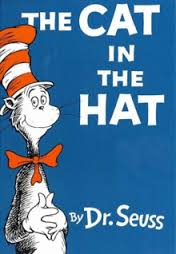
• Strong cause-and-effect. I can still remember that, as a small child reading THE CAT IN THE HAT by Dr Seuss, I actually held my breath when turning one particular page. On that page, the cat was balanced on a ball, holding aloft a huge, teetering tower of things. Could he possibly stay upright? I cringed and turned the page... Nope!


• An escalating problem. THERE WAS AN OLD DRAGON WHO SWALLOWED A KNIGHT by Penny Parker Klostermann and Ben Mantle is a prime example of escalation. The dragon keeps swallowing things, and his growing stomach discomfort surely cannot end well.


In addition to a strong story, or in quieter books or concept books, some other techniques can encourage page turns:

• The use of questions. The nonfiction book, WHAT DO YOU DO WITH A TAIL LIKE THIS? (by Steve Jenkins and Robin Page) uses this technique. To find the answers to this question -

   - readers must turn the page.


• Rhyme. With rhyme, a missing end rhyme will encourage the reader to guess the last word of the stanza, and then turn the page to confirm their guess. Take a look at Miranda Paul's new book, WHOSE HANDS ARE THESE?, illustrated by Luciana Powell. 
(*A warning here -- only write in rhyme if your story demands it and you work diligently to make all the elements of rhyme work. Here is a post on that topic.)


• Sparse text. The best example I can think of for this technique is YO! YES? by Chris Raschka. The entire book contains fewer words than most of my sentences! With few words, readers move forward quickly to add to the story. This book also uses the next technique -


• Alternating characters. With two characters that are fairly balanced in importance and appearance in the story, readers will keep turning the pages to see what is going on with the other character. HERMAN AND ROSIE by Gus Gordon is a personal favorite of mine.


• The use of a "page-turning word" and/or an ellipsis. Alice Schertle uses both in ALL YOU NEED FOR A SNOWMAN, illustrated by Barbara Lavallee. On the spread below, the word "then" followed by an ellipsis requires a page turn to complete the sentence and move things forward.


Picture book editors read tons of picture books and submissions of yet-to-be picture books, so many that they develop a feel, an internal rhythm, of where a page turn occurs. As they read your text, they will subconsciously break your picture book into spreads, adding page turns in their mind. 

You can develop that same feel, that internal rhythm. You can also encourage page turns. How?

#1 READ LOTS OF PICTURE BOOKS

#2 MAKE A DUMMY OF 
YOUR PICTURE BOOK TEXT

#3 INCORPORATE ELEMENTS 
TO ENCOURAGE PAGE TURNS

Never made a dummy before? Don't worry - there's a post for that, too! Check it out here.


So what is your favorite page-turner picture book, GROG readers? Does it include any of the elements above? Something else?

Monday, January 11, 2016

Fracturing a Fairy Tale ~ by Patricia Toht

Back in July, I wrote a post about creating a picture book text by giving an old theme a new twist. Today I'm going to focus on one popular way of doing this --  


Let's fracture some fairy tales, folks!

Fractured fairy tales are nothing new. From way back in the 1960's comes historic proof:

Obviously there's staying power in fractured fairy tales. So, how exactly do you make a fairy tale dance to a different tune? Here are just three of the moves you can do to change a fairy tale or childhood story/rhyme.

The Two-Step (or Three-Step, Four-Step, Five-Step, ...)

Take a short, simple childhood rhyme or story and add to it, expand it. The crucial factor is to assure that the expansion has a story arc to it that will propel the reader forward. Jim Aylesworth has written picture books in this vein.


THE COMPLETED HICKORY DICKORY DOCK begins with the well-known verse and then the author extends it by following the mouse through twelve hours of the day. The book is written in verse, each stanza opens with a fun-to-say nonsense word. The reader can count up the hours as the mouse moves through the day.


MY SON JOHN ends with the familiar verse. Readers follow an arc from sun-up to sun-down. Each spread depicts another child from the rural area taking part in simple activities. Son John ends the day in bed with his one shoe on.


The Twist


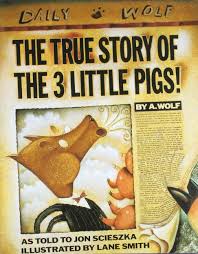
THE TRUE STORY OF THE 3 LITTLE PIGS by Jon Scieszka is a well-known example of a fractured fairy tale. The story is relayed by the wolf, who tells the "true" story of what happened with the pigs from his point of view. According to him, the whole misunderstanding was about a cup of sugar and a case of the sneezes. If you'd like to try writing something similar, take the "bad guy" of a story and examine events from his/her point of view, being sure to add lots of emotion. How does that change the story?


NINJA RED RIDING HOOD by Corey Rosen Schwartz. Corey has written a Ninja trilogy; each one combines a childhood tale with ninja training. The limerick verses in this one are terrifically catchy, and the author manages to work in traditional lines (e.g. "The better to see you with, my dear") with seeming effortlessness. She also dares to even out the match between Wolf and Red -- they've both had ninja lessons! Someone else shows up in a gi to help save the day. To twist like Corey does, select a well-known childhood story and add an element that kids are crazy about. Tara Lazar's "500+ Things that Kids Like" is a great source for brainstorming.


The Mash

What might happen if you mash together a whole bunch of tales or characters? 

Tara Lazar's LITTLE RED GLIDING HOOD is one-part twist and one part mash up. It begins with an amazing title. Obviously "gliding" implies that Red is doing something special -- she's skating. Tara sets a goal for Red that reflects the title. What would a skater want? Why, to win a skating competition, of course. This storyline propels the reader through the story (on a ribbon of ice). But the author adds SO much more! Easily recognized characters are peppered throughout the story, and the feared big bad wolf is not-so-bad after all. Cleverness and puns abound.


The tale in INTERRUPTING CHICKEN by David Ezra Stein combines several childhood stories, but doesn't really scramble them up. As Papa Chicken reads his Chick a bedtime story, Chick keeps interrupting the stories by jumping in them to save characters from harm. 

Penny Parker Klostermann (who won the Best in Rhyme award for THERE WAS AN OLD DRAGON WHO SWALLOWED A KNIGHT) has said that INTERRUPTING CHICKEN was one of the mentor texts for her upcoming mash up, A COOKED UP FAIRY TALE (Summer, 2017). For an interview with Penny about her use of mentor texts, see the interview here.

I hope these examples will give you some ideas for fracturing fairy tales. Start dancing, writers, and see what shakes out!

Monday, December 7, 2015

Celebration and Inspiration ~ by Patricia Toht

On Friday, I invited you to come to the Kid Lit TV party for the announcement of the Best in Rhyme picture book winner. Did you tune in? I hope you did. But for those of you who couldn't make it, here are the winners!

Runner up:
by Deborah Underwood
Runner-up: 

by Corey Rosen Schwartz


And the Grand Prize went to: 

by Penny Parker Klostermann

Of course, we celebrated with cake!


And a few silly photos:
Dragon breath!

Angie Karcher isn't too happy about
being swallowed by a dragon...


Kid Lit TV provided a gracious venue for the ceremony and party. In addition, they opened their doors the next day for the RPB REVOLUTION conference. Here are some tidbits and quotes about rhyming picture books. I hope they give you some inspiration!

Penny Parker Klostermann surprised the group with the fact that her book had 29 different versions before it was picked up by Random House. She told everyone to look at every line and every word to make sure it is the best. She also encouraged everyone to give themselves time to imagine.


Agent Kendra Marcus says that a rhyming picture book needs to not only rhyme, but also to have a good story that begins right up front. If it takes to long for a reader to discover where the story is headed, they may lose interest.


Author Lori Degman took the group through exercises on whittling down a rhyming manuscript and making sure the meter and rhyme are perfect. She urges writers to pinpoint the core of what they are trying to say, and then figure out the most condensed way to say it.
"Every time there's a break in the continuity of your rhyme, you may lose your reader," she warns.


Next up were the "Rebeccas Squared" team of author Rebecca Kai Doltish and editor Rebecca Davis from Wordsong and Boyds Mills. "Often people focus so much on the end rhymes that they lose sight of what is between those end rhymes," Rebecca Dotlich said. They stressed the importance of all poetic elements - treat them with equal importance. In other words, make sure a rhyming text takes advantage of luscious word choice, alliteration, metaphor and simile, vivid imagery, personification. "Read and study picture books until the essence of them is in your bones," they said.

The team of author Karma Wilson and Justin Chanda, Publisher at Simon and Schuster, rounded out the day. "Rhyme is wonderful, but it's not EVER the heart of your story. Your story has to stand without the crutch of rhyme," they told us. "Figure out the 'spine' - the theme that lies at the heart of your story - and let all else hang off of it." Karma warned us all to never talk down to a child, their concerns are very real and very large to them.

Celebration. 

Inspiration. 

A terrific weekend!

Unable to attend? It's not too late to purchase a recorded version of this wonderful conference. More information HERE.