Showing posts with label Giveaway. Show all posts

Wednesday, May 12, 2021

Children’s Literature Book Recommendations

By Suzy Leopold

    All across the globe the world has changed. Life is difficult to navigate during a global pandemic that includes many restrictions. Everyone is acquiring new knowledge and understanding of how we can be safe, happy, and even do our part.

Children’s books can play a powerful role in helping 

kids navigate life’s challenges.

—Caroline Bologna, Huff Post

    During this unprecedented time, many picture books were published to offer information and comfort to readers of all ages. These books include fiction and nonfiction picture books, middle grade, early readers, and more. 

    Additional children’s literature continues to be published and will soon be available for children of all ages. These timely books provide an  understanding of the world around us concerning the current situation with global health issues. 

    Many recently picture books offer facts and information about viruses and germs. Children’s mental and emotional needs are addressed, such as anxiety, stress, and separation from family and friends. These books support our youth to understand they are not alone in their feelings and how they can do their part—hand washing, social distancing, and mask wearing.

    As Mr. Fred Rogers said, “When I was a boy and I would see scary things in the news, my mother would say to me, ‘Look for the helpers. You will always find people who are helping.’”

    This first picture book recommendation is, COVID-19 HELPERS: A Story for Kids about the Coronavirus and the People Helping during the 2020 Pandemic is written by Beth Baker and illustrated by Kary Lee. It is published by Blair, November 2020. 


    This book provides comforting words for readers, ages 5-11, and includes positive, honest information. 

    And just like Mr. Rogers, encourages children to “look for the helpers.”
 
    Keeping the City Going, is written and illustrated by Brian Floca, made its debut in April 2021. The book is a heartfelt thank you to all essential workers during the stay at home orders of the pandemic and is written for ages 4-8. Back matter includes an author’s note.


    The publisher, Atheneum Books for Young Readers states, “An ode to the essential workers keeping the country operating during the COVID-19 pandemic.” Caldecott Medal Winner, Brian Floca’s words and illustrations speak to the reader while everyone is sheltering in place.

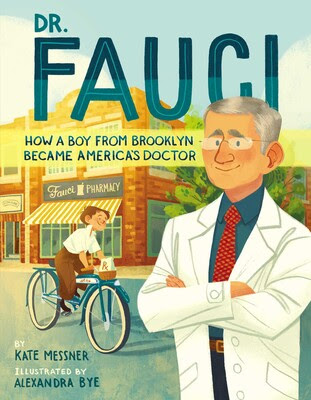
    Author, Kate Messner conducted interviews with Dr. Fauci to create the picture book narrative, Dr. Fauci: How a Boy from Brooklyn Became America’s Doctor. The book is illustrated by Alexandra Bye and published by Simon and Schuster, June 2021. 

    The story is about America’s loved doctor, Dr. Anthony Fauci, Director of the National Institute of Allergy and Infectious Diseases.

    This picture book biography is written for ages 4-8, and includes Dr. Fauci’s role of working with seven presidents. A timeline, facts, and more are included in the back matter.

    Written by Theresa Trinder and illustrated by Grant Snider, There is a Rainbow, is published by Chronicle Books, January 2021. The heart warming message is filled with hope for young readers, ages 3-5. The illustrations are vibrant and expressive.

    The following excerpt shares the uplifting message that makes the book perfect for a read aloud:

On the other side of the window, there is a neighbor.
On the other side of sadness, is a hug.
And on the other side of a storm, there is a rainbow.

    The fifth and final recommendation is a nonfiction book written by Suzanne Slade; illustrated by Elisa Paganelli. June Almeida, Virus Detective! The Woman Who Discovered the First Human Coronavirus is published by Sleeping Bear Press and released in March 2021. This biography is written for 6-9 year olds.
    June was 34 years old when she discovered the first human coronavirus. Her work continues to support researchers today. Sharing a book trailer of this Scottish internationally renowned virologist and woman pioneer.

    Many helpers are doing their part during this unfamiliar and sometimes scary time. As a parent, a grandparent, an educator, a story teller, and a children’s book writer I want to do my part to put these books in the hands of children and students. 

    Perhaps you, too, have read and shared recently published books about the COVID-19 pandemic health crisis with young readers. Share additional children’s literature titles that are timely and relevant during the global pandemic.

    Let’s all do our part to offer reassurance and let children know they are safe. Read to them. Listen to them. Hug on them.

To be eligible for a give away, share a title, including the author and illustrator of a recently published book that addresses the COVID-19 theme. Write it in the comment section. I will paint a watercolor bookmark for one lucky winner—US only. The winner will be announced on the GROG Blog on May 19th.

Additional resources and links for parents and teachers: 

School Library Journal

New York City School Library System

The Today Show on NBC

Helping Children Cope, NASP

Wednesday, July 15, 2020

Rethinking Social Media Time for Creatives

By Suzy Leopold

How are you doing with social media [SM] during these unprecedented times?

Is SM supporting your reading, writing, and creating goals? For many creatives, SM can be a distraction as one attempts to stay informed with issues and concerns during a global pandemic and a call for kindness and respect for all.

I notice when I step back from social media for short, frequent pauses I find more time to do what matters to me. I’m not planning on giving up on my Facebook, Instagram, and Twitter accounts completely. However, I’ve found these social media breaks impact my life in positive ways, including more reading, more writing, more creating, and most importantly more family time. I am thankful for the connections I’ve made with like minded writers I’ve met online, from trusted critique partners to friendships. 

Taking conscious SM breaks provides more headspace for creativity to show up in new ways.
I picked these flowers for you!

Social media and smartphone use are destroying attention span.

We’ve become a distracted world. Research shows our attention span is shorter than that of a goldfish. Research shows our attention span is becoming less. Check out the research in this info gram:

We are interrupted by notifications, reminders, and alerts almost all day long.

Often we interrupt ourselves to quickly check email messages, Facebook posts, create a tweet on Twitter, and/or scroll through Instagram. “Just checking in” derails deep, concentrated creative work and usually extends longer than just a five to ten minute quick look.

The human brain needs twenty minutes to resume and get back on task after a distraction.

As a writer, having an online presence somewhere is important for followers and a reading audience. However, one doesn’t need to be everywhere, all of the time on line.

Social media impacts our creativity in positive and negative ways.

Social media and searching the Internet can spark creativity. There are valuable emails to read, blogs to learn from, and FB posts written by like minded creatives. Many of these posts share information, inspiration, and encouragement for readers, writers, and creators.

These online communities can push your creative boundaries. However, there needs to be a balance. Spending too much time on SM can derail your goals.

The Internet and social media offer resources to writers and illustrators and can be an excellent tool.

There may be times to step away from online communities and engage with people in your community to bring fresh ideas that you won’t find on your FB feed.

Talking and reading about writing are not the same as actual writing.

“Social media groups for writers practically beg us to talk about our work, and it’s easy to spend our designated writing time talking about writing instead of actually writing. It’s important that we balance our desire to connect online with our need to guard our work time.”
Jess Townes, Co-Regional Advisor for the Kansas-Missouri SCBWI

Revisit the SMART goals you created at the beginning of the year. Make adjustments if need be. Push your writing to the next level.

For more information about goals click SMART goals. An additional post can be found by clicking more SMART goals.

I picked some more flowers for you

“Don’t wait, write. Take an hour a week, or twenty minutes a day. Or a four day retreat. If writing is something you love to do, then just do it. Plain and simple. You can do it. Don’t wait, write.”
Amanda Zieba, Children’s Book Author

Balance your desire to connect online with your need to set aside valuable time to read, write, and create.


In the comments below share a tip about how you balance your creative time with social media time to be eligible for the giveaway. If you follow the instructions, I’ll put your name in a hat and draw two winners. Each winner will receive a hand crafted bookmark painted with watercolors. U. S. Mail only.

The two lucky winners will be announced on the next GROG Blog on July 22nd. Good luck!

Wednesday, May 20, 2020

Marketing a Picture Book in a Pandemic ~ by Patricia Toht

Authors and illustrators dream of the big day that their new book launches. They plan bookstore and school visits. They invest in swag and educational materials. Excitement builds as the day nears.

But this year? BAM! A pandemic hits!


So, what can you do to market a book in the time of Covid-19? 

With schools out and bookstores closed, social media is a lifesaver.
Meet Lisa Katzenberger, SCBWI-Illinois' Social Media Coordinator:

Lisa is a former freelance technical writer and social media manager, who now writes for children. She lives near Chicago with her husband and two children.

Her new picture book, NATIONAL REGULAR AVERAGE ORDINARY DAY, illustrated by Barbara Bakos, is released by Penguin Workshop on June 23rd. With Lisa's background, I knew she'd have some ideas about marketing a book in the time of a pandemic.


Q: It's pretty overwhelming to think about launching a book right now. What's the first thing you did when you found yourself in this situation?

Lisa: Honestly, I held a little pity party for myself. I moped. I whined. But after a few days, I put on my big girl pants and started to brainstorm ways to promote my book online. I reached out to friends for help, and people replied with support. I now have three virtual events planned for my release, and a few more in the works.


Q: Are there any ideas that are still feasible for working with bookstores and schools?

Lisa: I read my book to both of my kids' classrooms via Zoom. I did an intro, then shared my screen to display a pdf of the book so they could see it better, and read it to them. Afterward, we did a Q&A. It was a good reminder that you can do school visits, and on a smaller scale (class-sized), so you can give the kids more attention. I'm also working with a publicist to do virtual story-times through independent bookstores.
Lisa, meeting with a class, in pre-pandemic times.
Q: With the various possibilities for promotion, which are ones that you feel will give you more "bang-for-your-buck" (and time)?

Lisa: I'm doing a virtual book launch through The Writing Barn, and they are partnering with an independent bookstore in Austin, Book People. It's a fun way to celebrate and gives people an easy way to order. I can do everything I would do in a live event (except hand out treats!), and I can bring in more people virtually.

Q: Are book giveaways worth it?

Lisa: I don't have enough data to know if they're worth it yet, but they sure do make me feel good! I'm doing them through #PBChat on Twitter and the Debut Review Challenge. It's easiest to partner with someone else who already has a good system in place for handling the giveaway.

Q: What's your preference - Facebook, Twitter, or Instagram?

Lisa: I've been marketing my book on both Twitter and Facebook. I have a wider audience on Twitter, and have the support of author friends who retweet my posts. I try to always include a cover image and a link to buy my book. I use Canva to make a graphic that is properly sized for Twitter. The example below is how I shared a review for my book. 


Thank you, Lisa, for this wonderful information!

Here are a few more ideas:

Facebook, Twitter, and Instagram are all ways of connecting with your audience. 
  • Try an attention-grabbing trailer, like this one by Michelle Schaub, or this one by Suzanne Slade.
  • Do a special countdown or series of focused posts. Eileen Meyer continues to focus on Abraham Lincoln facts to promote her book, THE SUPERLATIVE A. LINCOLN.
  • Add links to activities and/or educational materials. Check out Jarret Lerner's offerings. 
  • Always tag your publisher, illustrator, and key groups!

Magnify your message.
  • Form a group of others with new books, either a formal one like @Perfect2020PBs (Lisa is in this group), an ad hoc mix of friends with similar titles, or join forces with others in your publishing family.
  • Check in with your publisher to see what they are doing. If they are sharing content on their websites, too, that doubles your message. 
  • Offer a giveaway, and add a condition to your draw - ask people to follow you, retweet/share, and/or tag a friend to enter. This will build your audience.

Look for Lisa's book, NATIONAL REGULAR AVERAGE ORDINARY DAY, on June 23rd. You can pre-order it through your local bookseller, IndieBound, Amazon, and B&N. Her next book, IT WILL BE OKAY, publishes on February 1, 2021.


Find out more about Lisa here:
Website - www.lisakatzenberger.com
Twitter - @FictionCity
Facebook - Lisa Katzenberger Author
Instagram - @lisakatz17

⭐⭐⭐⭐⭐⭐⭐⭐⭐⭐⭐⭐⭐⭐⭐⭐⭐⭐⭐⭐⭐⭐⭐⭐⭐⭐


WINNER ALERT!


The winners of the May 13th GROG post by Garden Girl are
KIM P. and ELIZABETH SABA!

If you haven't already been in touch, you can reach Suzy at sleopold (at) gmail (dot) com.

Congratulations!

Wednesday, May 13, 2020

Let’s Look at Satisfying Endings and a Giveaway

by Suzy Leopold

Writers who study the craft of writing children’s literature understand the importance of satisfying endings for picture books.

A good ending should satisfy the reader with delight and include an Aww!, Aah!, or Ha!

As a gardener on the Illinois Prairie, my husband Perry and I strive for a satisfying ending to the garden season. However, before the bountiful harvest is achieved, there is much to do. The first steps include planning and planting for the spring gardening season. This is the beginning. As days become warmer, seeds begin to sprout. Roots dig deep and shoots peek through the soil. Flowers and vegetables grow reaching for warm rays of sun. Watering and weeding take place to encourage strong, healthy plants. All of this care becomes the middle part of our garden story. Garden chores continue and time passes. Finally, the satisfying ending produces fresh garden goodness. This becomes our ending of Aww!
Beginning
Middle
Ending
Just like a gardener, a writer must plan and prepare to achieve a final outcome—a satisfying ending. There are many important elements to consider when writing stories for children. 

For more thoughts about story beginnings with an opening line to hook a reader, click here for a post I wrote in March.

The most common fiction and nonfiction plot structure follows a problem/solution or rise/fall structure. This structure incorporates a beginning, middle, and ending.

Through action, dialogue, obstacles, and challenges, the main character solves a problem and answers questions that were raised during the story. A good ending shares a resolution. The takeaway may be fun, heart warming, surprising, or new learning. The ending shouldn’t be rushed, nor should it drag on. The reader needs to feel satisfied and pleased.

Satisfying endings may circle back to the hook at the beginning of the story. This technique ties the ending with the beginning.


“Come full circle, or bookend your book.
By ending your manuscript with a concept, word, 
or phrase from the beginning, 
you create an appealing, elegant symmetry.”
—Lisa D. Kerr

Sometimes writers like to review the main ideas in a story and remind the reader of important takeaway facts. This is a great technique for nonfiction stories. 

Let’s take a look at a picture book with nonfiction facts.


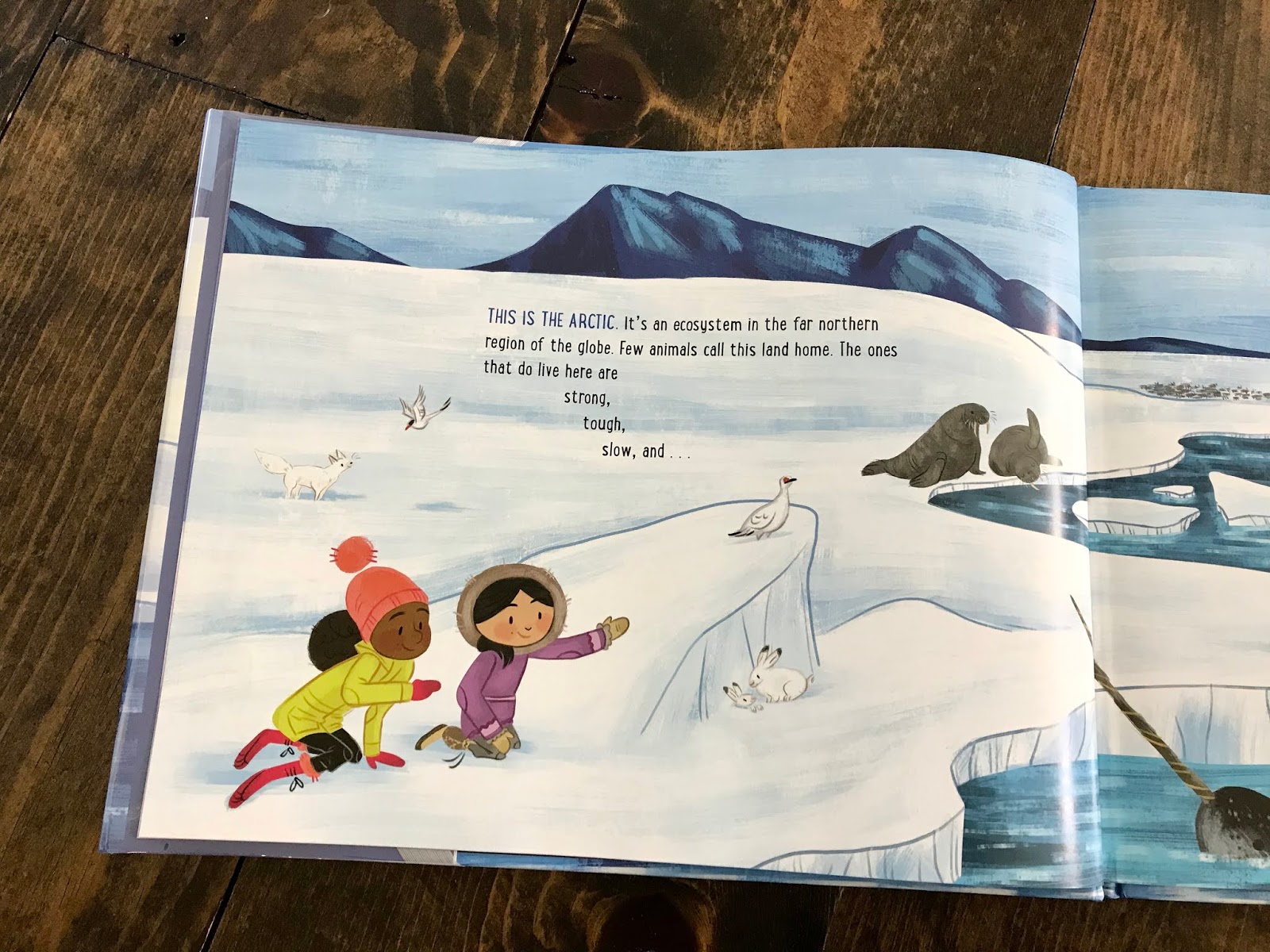
IF POLAR BEARS DISAPPEARED 
written and illustrated by Lily Williams
Roaring Brooks Press, 2018
Beginning
“This is the Arctic. It’s an ecosystem in the far northern region of the globe. Few animals call this land home. The ones that do live here are strong, tough, slow, and ... ”
Ending
“The best way for you to help is to learn everything you can about climate change and how it affects environments like the Arctic. Taking action will lessen its devastating effects.

And maybe we will find that the answer to saving polar bears ...

Has been right in front of us all along.”


Here’s one more example:

MAYBE:
A STORY ABOUT THE ENDLESS POTENTIAL IN ALL OF US
written by Kobe Yamada; illustrated by Gabriella Barouch 
Compendium, Inc. 2019

Beginning
“Have you ever wondered why you are here?”

Ending
“One thing is for sure, you are here.
And because you are here ...

... anything is possible.”


Now it is time to review one of your manuscripts or two. Examine the ending of your WIP. Revise and polish the story to include an Aww! Aah! or Ha!

In the comments below write an outstanding ending from a recently published fiction or nonfiction book to be eligible to win a bookmark. If you follow the instructions, I’ll put your name in a hat and draw two winners. Each winner will receive a hand crafted bookmark painted with watercolors. 
U. S. Mail only.

I will announce the lucky winners on the next GROG Blog on May 20th. Good luck!

1. Write an ending that left you with a feeling of satisfaction.
2. Include the title of the book, the author, the illustrator, and the publication date [2015-2020].

Wednesday, March 18, 2020

Let's Look at Leads and a Giveaway

by Suzy Leopold

Time to learn about leads and opening lines of well-written stories.

The first lines of a story use the just right words to give a reader a quick peek at the character[s], setting, and story line.

The opening lines must hook a reader. The lead is filled with power to keep the reader turning the page. Coax the reader to continue reading.

A writer must spend time crafting a compelling opening to support all of the hard work of planning, researching, writing, and rewriting a manuscript. These first words help to shape a story.

"The lead must do real work."
--Wiliam Zinsser

How can a writer bring color and cadence to one's story idea through a carefully crafted opening line? 
My students and I begin by examining mentor texts. Recently published books are studied and analyzed. Students are encouraged to read like a writer.
"If I don't like the opening sentences, I put the book back 
[on the shelf]--even if I like another book by that author."
--Peter, 5th grader

As an educator, I need to support students in understanding the lead sentence--the opening sentence, and how it must compel the reader to continue.

Together let's take a look at three nonfiction picture books.
THE PEACE TREE FROM HIROSHIMA
THE LITTLE BONSAI WITH A BIG STORY
Written by
 Sandra Moore
Illustrated by Kazumi Wilds

Author Sandra Moore begins with these two sentences with a POV from a bonsai tree:

"I was born nearly four hundred years ago on the island of Miyajima. As I pushed up through the dirt, I saw my reflection in the mountain lake."


PAPER SON
THE INSPIRING SOTYR OF TYRUS WONG,
IMMIGRANT AND ARTIST
Written by Julie Leung
Illustrated by Chris Sasaki
Does this opening line, written by Julie Leung, capture your interest?

"Before he became an artist named Tyrus Wong, he was a boy named Wong Geng Yeo who traveled with his father across a vast ocean to America, clutching a bundle of papers in his hand."
LITTLE LIBRARIES,
BIG HEROES
Written by Miranda Paul
Illustrated by John Parra

This opening line, by Miranda Paul, includes two sentences and a page turn.

"For thousands of years, people have loved stories about heroes.

Mythical heroes, historical heroes, and
even . . . "

All three of these leads use the element of "show, don't tell". Each book depicts sensory images. Color and cadence are used in the opening lines. Do you note specific nouns and strong verbs? 

Additionally, I note the three authors' voices included many of the Five Ws. The illustrator, too, incorporated images to support the opening lines.

TITLE
WHO?
WHAT?
WHEN?
WHERE?
WHY?
THE PEACE TREE
Through pictures:
an inanimate object
Through words, “As I pushed up through the dirt, . . .” Through pictures: a tiny seedling pushed its way through the soil Through words,
“. . . nearly four hundred years ago . . .”
Through words:
“ . . . on the island of Miyajima.” Through pictures: In a forest
Through pictures: a tiny seedling with a big story

PAPER SON
Through words, “. . . an artist named
Tyrus Wong . . . Through pictures:
Father & son aboard a ship
Through words, “ . . . an artist named Tyrus Wong, . . .” Through pictures:
Immigrant, Tyrus & his father
Through pictures:
People aboard a ship from years ago. 

Through words: . . . “Across a vast ocean to America,
 . . . “
Through pictures:
Immigrants aboard a ship from years ago 
Through pictures & words: An implied theme of immigration to seek better opportunities
LITTLE LIBRARIES
Through pictures: heroes Through words, “. . . people have loved stories about heroes.”
Through pictures: heroes
Through words, 
For thousands of years,. . .”
Through pictures: An implied location of everywhere. Through words: “. . . Throughout the years, people have loved stories about heroes.”
An opening line may:
  • Begin with a question.
  • Start with a fascinating fact.
  • Share an enticing andecdote.
  • State a quote.
  • Dive immediately into action.
  • Start off with a conversation that includes dialogue.
  • Depict a memorable image.
Spend time developing a compelling lead, to make every sentence that follows live up to the lead's power. 

Keep the reader wondering, inquisitive, and wanting more.
###

In the comments below share and write a compelling first line from a nonfiction book to be eligible to win a hand-crafted bookmark painted with watercolors. If you follow the instructions, I'll put your name in a hat and draw two winners. U. S. mail only.

I will announce the lucky winners on the next GROG Blog, March 25th. Good luck. 

1. Write the lead that compelled you to read further. 
2. Include the the title of the book, the author, the illustrator, and the publication date 
[2015-2020].
3. Remember to include your name and email address.
Post script thoughts: During this time, with many schools closed, I note many generous folks sharing read alouds, story time, activities, drawing tips, writing lessons, and more online. Thank you bloggers, authors, illustrators, etc. for encouraging children to avoid "The Spring Slide". 

Want more information? Click on Avoid the Spring Slide to find a list of links. I will continue to update the post with more resources overtime.

May our children continue to learn, grow, stay engaged and be healthy. 

Wednesday, July 4, 2018

Lindsey McDivitt, Ageism in Picture Books, and a GIVEAWAY ~ by Patricia Toht


Author Lindsey McDivitt's welcome page on her website sums up the ABCs of a cause that is near and dear to her heart:

As Lindsey says, "I'm passionate about tackling the issue of ageism -- particularly in picture books. Unfortunately (and often unknowingly) we are teaching negative attitudes about older adults to very young children. Kids need realistic and positive images of old. We all do."

According to GeoBase, the estimated life expectancy of a child born in the United States in 2018 is 79.3 years. That's a lot of life! But the American culture is one that places a high value on youth. 

"Negative stereotypes about aging are baked into our culture, and they're harmful to our health and happiness," Lindsey says. "Many books for kids lead them to believe that old = bad or sad. But that is adults socializing them to believe it."

In her own writing, as well as in her blog, "A Is for Aging," Lindsey seeks to promote positive images of growing older. I asked her about her new book, NATURE'S FRIEND: THE GWEN FROSTIC STORY, and her quest to tackle ageism.

PT: Hello, Lindsey, and welcome to the GROG! You are passionate about healthy and positive images of older people in picture books. Do you think the characterizations of aging are improving these days?

LM: I do think it's improved somewhat, particularly with the popularity of picture book biographies perhaps. They often show kids long, satisfying lives and many accomplishments in late life. I love that!


Lindsey's new release, NATURE'S FRIEND, illustrated by Eileen Ryan Ewen, is the story of renowned nature artist Gwen Frostic.
Gwen suffered a debilitating illness as a child, but turned to nature and art for strength. Her persistence and independent spirit led her to study mechanical drawing and work in a bomber manufacturing plant during World War II. After the war, she started her own stationery company in Michigan and built the business by creating and selling her own linoleum block prints.

PT: Gwen Frostic worked until a few years before her death, one day shy of her 95th birthday. What do you think might have been her secret for a long, fulfilling career?

LM: Since childhood, Gwen refused to take in society's stereotypes telling her how she should live her life. She stayed focused on her goals and pursued them with dedication. So age simply wasn't a reason to stop.


PT: Her specialty was lovely linoleum block prints of nature. Have you ever tried your hand at linocuts or other art media?

LM: I recall trying linocuts way back in junior high school and enjoying them. They require slow, careful work! My main artistic endeavor is creating mobiles from driftwood I collect on the beaches of Lake Michigan and Lake Superior.


PT: You've mentioned that you're drawn to the Great Lakes and the Mississippi River. What do you think attracts you to them?

LM: I believe it's their vastness. There's something about standing on the edge of an enormous body of fresh water. It's awe inspiring, much like the ocean, and gives me a sense of where I am on our beautiful planet. 
Lindsey's photo of Lake Superior


PT: In addition to NATURE'S FRIEND, what books can you recommend that show healthy and realistic examples of aging?


LM: A recent book that I love is HENRI'S SCISSORS by author/illustrator Jeanette Winter. It zeroes in on famous artist Henri Matisse near the very end of his life, when he discovers his art anew and creates some of his most well known works.


Another absolute favorite is HARRY AND WALTER by author Kathy Stinson and illustrator QinLeng. The two main characters are the best of buddies separated by almost eight decades, and this picture book avoids every possible cliche!


Here's a link to five more picture book biographies that highlight older role models - http://www.lindseymcdivitt.com/2017/05/26/5-picture-book-biographies-highlight-older-role-models/

PT: Thank you, Lindsey! Many happy writing years to you!

As Lindsey says: "Role models matter!" Books that portray vibrant older people who continue to live full lives and pursue their passions are important for young readers. KidLit authors and illustrators can help by being thoughtful in our depictions of aging. 


Find Lindsey's website here and her blog here. On Twitter, her handle is @AisforAging. On Instagram, mcdivittlindsey. Connect on her Facebook page at lindsey.mcdivitt.3.


And now...

** Readers, what's YOUR favorite book with older characters? Comment below for a chance to win a copy of NATURE'S FRIEND! **