Showing posts with label plot structure. Show all posts

Wednesday, September 28, 2022

Whispering Pines Writing Retreat 2022 Recap with Chris Mihaly and Kathy Halsey

Whee! After two-plus years away from conferences, we (Kathy, from Ohio and Chris, from Vermont) met up at the wonderful Whispering Pines Writing Retreat in Dedham, Massachusetts this weekend, with forty-some other writers and illustrators and a crew of five magnificent mentors. Organized and run with panache by Pam Vaughan and Julia Boyce, this SCBWI-New England workshop is a gem. Here's a quick recap:

Words of Wisdom (from the mentors)

Each mentor shared an amazing presentation. From our copious notes we've distilled a single shining sentence from each ...

Jessica Anderson
(editor, Christy Ottaviano Books) offered practical pointers on optimizing symbolism and plot devices, and weaving them organically into your writing.
 
❤ "Your opening pages will be more powerful and resonant if they include a nod to your most significant symbol or plot device."

Alex Aceves (author, associate editor, Holiday House) explained how to create compelling characters that readers will feel a connection to. 
"Deploy character flaws strategically: readers don't connect with a perfect character, so write a protagonist whose flaws make us care about them and their success."

Sera Rivers
(agent, Martin Literary Management) revealed the secret of "why THIS book!" -- what makes a work stand out from the slush pile.
❤ "Bring a fresh perspective to a universal theme, and make your work accurate and authentic."

Abby Mumford & Brent Taylor (Photo, Mary Cronin)

Brent Taylor (agent, Triada US) broke down the business of children's books. Even the seasoned authors learned a thing or three. (Territories: World, World English, North American) 
❤ Books like Prince & Knight  "would have meant the world" to Brent as a kid. Brent believes territory is just as important to negotiate as royalties."

Chris Krones (editor, Clarion Books) energized us to knock the socks off writer's block.  They suggested going to the bookstore for inspiration and what gaps your book could fill.
❤ For Chris, "interest in the Merriam-Webster Word of the Year. 'they,' and creating a simple list, led to The Pronoun Book. Create lists, look for simple yet compelling concepts. 

Applying the Lessons

L to R: Brent, Alex, Sera, Jessica, Chris (photo, Mary Cronin)
We applied mentors' suggested writing exercises and pointers to make fresh improvements to our WIPs. A couple of examples:

Chris: I used Jessica's insights into symbols and structure to review a picture book manuscript word by word, working to instill visual and other sensory expressions of my major theme. I think it's better!

Kathy: Thanks to Sera's writing exercise, I changed a problematic setting in my picture book manuscript which enabled me ramp up the conflict.


Parting Thoughts: Top Tips for Writing Workshops

We're each sharing a single top tip for workshop and conference-going. (What? Are they contradictory??) We also include a couple of pointers from other attendees -- because WPWR is all about learning from one another! 

Chris: My top tip is: Say yes! Even if your first reaction is that you don't want to play the silly picking-up-dice-with-cups-on-your-hands game with these people you just met ... just say yes. You'll (probably) be glad you did.
Sally is game! photo by Charlotte Sheer
Kathy: My top tip is: Say no! Know when you've reached your limit socially or mentally. Take a break. Nap, walk in nature, write in private and come back refreshed. 

Laura Renauld: Step outside your comfort zone and be receptive to new ideas. That's what it's all about!

Connie Smith: Ask questions. If you don't understand what a presenter is saying, ask for an explanation ... and if you forget other people's names, just keep asking!

Books by WPWR attendees (photo, Nancy Tupper Ling)

Is it time to break your pandemic-era isolation and congregate again? Thinking of brushing off your Lucky Scarf and signing up for a workshop or conference soon? 
If you're looking for a little help getting back into the swing of things, check out these GROG posts from the archives: 

Leave a comment below about your favorite book gatherings. 
And good luck out there!

Wednesday, May 13, 2020

Let’s Look at Satisfying Endings and a Giveaway

by Suzy Leopold

Writers who study the craft of writing children’s literature understand the importance of satisfying endings for picture books.

A good ending should satisfy the reader with delight and include an Aww!, Aah!, or Ha!

As a gardener on the Illinois Prairie, my husband Perry and I strive for a satisfying ending to the garden season. However, before the bountiful harvest is achieved, there is much to do. The first steps include planning and planting for the spring gardening season. This is the beginning. As days become warmer, seeds begin to sprout. Roots dig deep and shoots peek through the soil. Flowers and vegetables grow reaching for warm rays of sun. Watering and weeding take place to encourage strong, healthy plants. All of this care becomes the middle part of our garden story. Garden chores continue and time passes. Finally, the satisfying ending produces fresh garden goodness. This becomes our ending of Aww!
Beginning
Middle
Ending
Just like a gardener, a writer must plan and prepare to achieve a final outcome—a satisfying ending. There are many important elements to consider when writing stories for children. 

For more thoughts about story beginnings with an opening line to hook a reader, click here for a post I wrote in March.

The most common fiction and nonfiction plot structure follows a problem/solution or rise/fall structure. This structure incorporates a beginning, middle, and ending.

Through action, dialogue, obstacles, and challenges, the main character solves a problem and answers questions that were raised during the story. A good ending shares a resolution. The takeaway may be fun, heart warming, surprising, or new learning. The ending shouldn’t be rushed, nor should it drag on. The reader needs to feel satisfied and pleased.

Satisfying endings may circle back to the hook at the beginning of the story. This technique ties the ending with the beginning.


“Come full circle, or bookend your book.
By ending your manuscript with a concept, word, 
or phrase from the beginning, 
you create an appealing, elegant symmetry.”
—Lisa D. Kerr

Sometimes writers like to review the main ideas in a story and remind the reader of important takeaway facts. This is a great technique for nonfiction stories. 

Let’s take a look at a picture book with nonfiction facts.


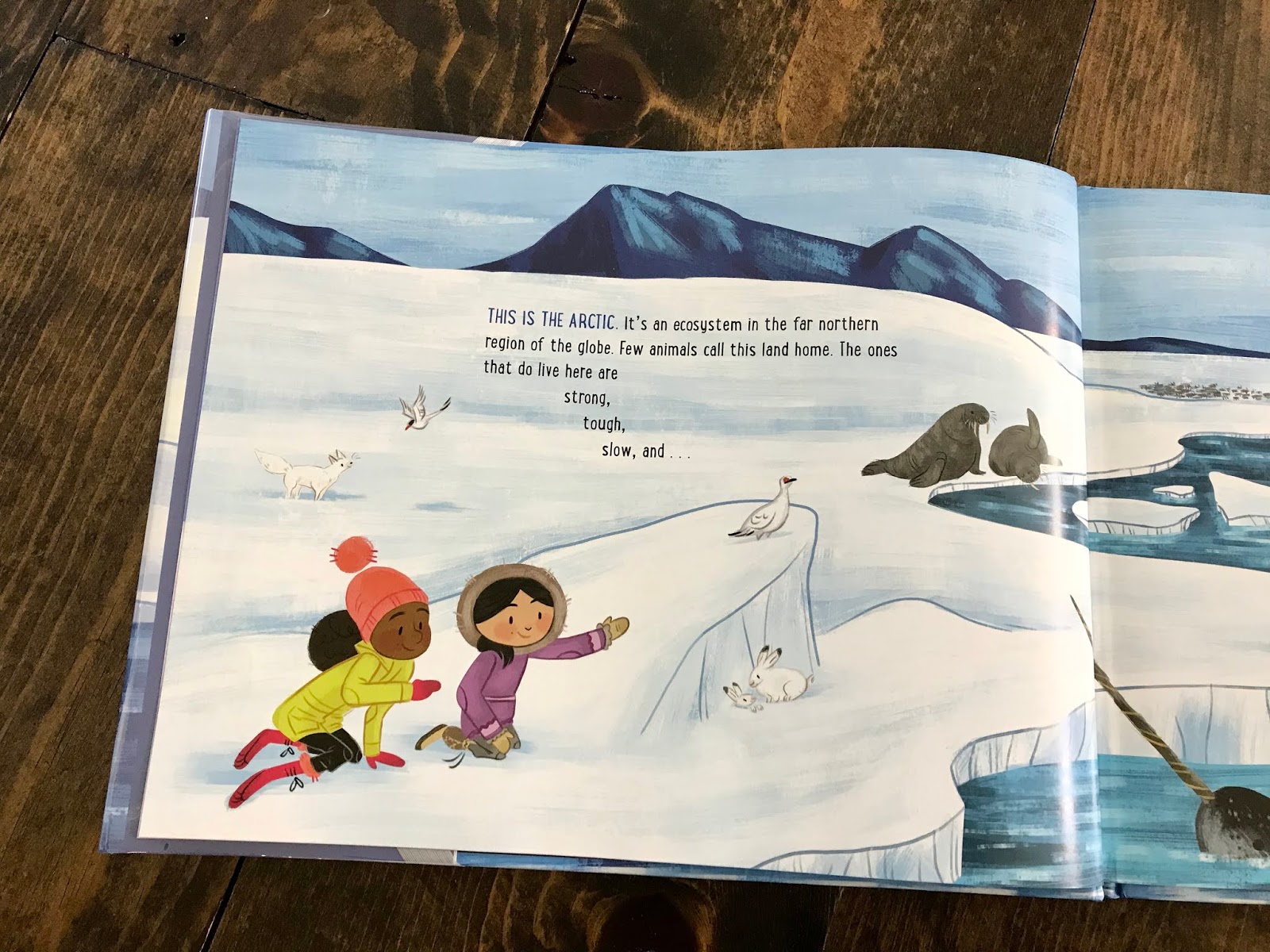
IF POLAR BEARS DISAPPEARED 
written and illustrated by Lily Williams
Roaring Brooks Press, 2018
Beginning
“This is the Arctic. It’s an ecosystem in the far northern region of the globe. Few animals call this land home. The ones that do live here are strong, tough, slow, and ... ”
Ending
“The best way for you to help is to learn everything you can about climate change and how it affects environments like the Arctic. Taking action will lessen its devastating effects.

And maybe we will find that the answer to saving polar bears ...

Has been right in front of us all along.”


Here’s one more example:

MAYBE:
A STORY ABOUT THE ENDLESS POTENTIAL IN ALL OF US
written by Kobe Yamada; illustrated by Gabriella Barouch 
Compendium, Inc. 2019

Beginning
“Have you ever wondered why you are here?”

Ending
“One thing is for sure, you are here.
And because you are here ...

... anything is possible.”


Now it is time to review one of your manuscripts or two. Examine the ending of your WIP. Revise and polish the story to include an Aww! Aah! or Ha!

In the comments below write an outstanding ending from a recently published fiction or nonfiction book to be eligible to win a bookmark. If you follow the instructions, I’ll put your name in a hat and draw two winners. Each winner will receive a hand crafted bookmark painted with watercolors. 
U. S. Mail only.

I will announce the lucky winners on the next GROG Blog on May 20th. Good luck!

1. Write an ending that left you with a feeling of satisfaction.
2. Include the title of the book, the author, the illustrator, and the publication date [2015-2020].