Showing posts with label back matter. Show all posts

Wednesday, January 18, 2023

Back Matter: A Chance to Be More Than a Story, Guest Post by Beth Anderson

Today we have a guest post by author Beth Anderson, who recently had a new picture book biography released, CLOAKED IN COURAGE: UNCOVERING DEBORAH SAMPSON, PATRIOT SOLDIER, illustrated by Anne Lambelet, published by Calkins Creek. I, (Tina Cho), love learning more about the writing craft from Beth. Today she teaches us about back matter. 

For readers, back matter can be scary. Dense paragraphs covering page after page. UGH. Even an author, NF fan, and former educator like me has to admit to sometimes closing the book rather than committing to all that “grown up” text at the end of a gorgeous picture book experience. I know it’s where the author shares lots of great stuff that didn’t fit in the story….but, there’s always the potential of a gigantic info dump. Too much deters. What’s important? What will enhance the story you’ve told? What might answer questions arising from the text? What will invite more thought and exploration?

Creating Back Matter for CLOAKED IN COURAGE

As I wrote CLOAKED IN COURAGE: UNCOVERING DEBORAH SAMPSON, PATRIOT SOLDIER, so much of what I was doing was trying to sort out facts from fiction. Her story had been corrupted early on by one man’s desire to make her into his version of a heroine. And much of that misinformation was carried forward in other sources. One source, Masquerade: The Life and Times of Deborah Sampson, Continental Soldier by Alfred Young, focused on that process of finding the truth, and his historical detective skills were as fascinating as Sampson’s story. So, when it came to back matter, I knew I wanted to share some of that process and my learning with students and educators—some tips along with a few challenges of being a history detective. That choice has resulted in positive comments from reviewers and readers. And I hope it becomes a teaching tool in the classroom.

“The Challenge of Being a History Detective”

It all begins with the Google search, right? In researching colonial times, it helps to know that there was no standard spelling. (See AN INCONVENIENT ALPHABET for that story for kids. 😊 ) Sampson’s name was originally spelled SAMSON. Other names in the story also had multiple spellings. So with that understanding, your access and search widens.

 Then I shared some examples of primary sources. They’re “golden” but can’t be blindly trusted as 100% truth. Critical thinking is essential. I offered some thoughts on the value of secondary sources and went into setting. In the classroom, setting is defined as “time and place,” but I wanted students to think about all that involves for a book like CLOAKED IN COURAGE. I provided specifics such as Continental Army life, using disguises, traditions, and media influence. Also, the importance of trying to understand the meaning of what we learn within the context of the times, not today’s world.

Finally, I provided transparency with some notes about the details in the story that are in question, and that there is so much we can never know. Reading about how the public reacted to her, we know that Deborah Sampson tested the tolerance of her time. She broke barriers, and those courageous actions had a lasting impact. While the book was in the publication process, Congress passed a bill providing protections for female soldiers and veterans—The Deborah Sampson Act. We added that to the back matter because including connections to today helps bring relevance and meaning to stories from the past.

 And there’s more! The back matter in CLOAKED IN COURAGE contains an Author’s Note, which allows kids to see the writer’s personal connection to the story. The Bibliography might be a bit more interesting considering the history detective information. I’m a big fan of quotes and love to include one from or about the main character to give a stronger sense of the person. In this book, I shared a quote about Deborah Sampson from her pension approval signed by John Hancock, someone kids encounter in the basic history of the time. And of course, Acknowledgments—Thank You’s are important in any endeavor, and readers see that it is indeed a collaborative effort.


A Bit on the Benefits of Back Matter

·       For young readers and listeners: extends interest in a book over time, sparks curiosity, enriches story.

·       For teachers: becomes a teaching tool, supports curriculum, adds a higher reading level and different types of text, can support English Language Learners and struggling readers with graphic elements.

·       For publishers: increases range and potential for marketability, can catch reviewers’ eyes.

·       For authors: adds value to your submission, shares more of the story, can be the starting point for a school presentation.


Making Back Matter Inviting

To invite young readers in think about: “density” of text; short sections; graphics, images, and engaging visuals; interactive pieces such as Q&A or search & find.

To support educators consider: What might connect to curriculum or support classroom skills? Further resources are handy. Author’s (and illustrator’s) Notes contribute to understanding objectives like “author’s purpose” and “author’s point of view.” A variety of information formats can expand literacy skills.

 Transparency: Truth matters. Share inconsistencies in research and fictional elements to encourage critical thinking.


More Ideas for Back Matter

Afterword, Words to Know/Glossary, Timeline, Diagrams, Activities, Call to action, Letters, Crafts, Recipes, Experiments, Fun Facts, and Photographs of people, places, processes, realia, etc.  Please feel free to share more ideas in the comments!

 Thank you so much, Beth! And here's my little review of Cloaked in Courage.

Another fantastic picture book biography from Beth Anderson, illustrated by Anne Lambelet, about Deborah Sampson, secret patriot soldier, who used her rebel spirit to push boundaries for women. Never giving up, she accomplished all that she set out to do and more. Beautiful illustrations accompany this riveting text. Impressive back matter explains the usage of primary and secondary sources and how Anderson composed a story using little and conflicting information about her. 


Beth Anderson, a former educator, has always marveled at the power of books. Driven by curiosity and a love for words, she writes untold tales, hoping to inspire kids to laugh, ponder, and question. She’s the award-winning author of CLOAKED IN COURAGE, FRANZ’S PHANTASMAGORICAL MACHINE, REVOLUTIONARY PRUDENCE WRIGHT, TAD LINCOLN’S RESTLESS WRIGGLE, “SMELLY” KELLY AND HIS SUPER SENSES, LIZZIE DEMANDS A SEAT!, and AN INCONVENIENT ALPHABET. Beth has more historical picture books on the way.


https://bethandersonwriter.com  
Twitter • Instagram • FaceBook • Pinterest  


Educator Guide link - https://bethandersonwriter.files.wordpress.com/2022/10/cloaked-in-courage_educatordiscussion-guide.pdf

Wednesday, June 30, 2021

Back Matter that Matters and Sidebars that Support

 By Suzy Leopold

    Today’s craft topic is all about sidebars and back matter.

    Let’s begin with two statements. Are these sentences true or false?

1. _____ Back matter and sidebars are for nonfiction books only.

2. _____ Back matter must be one page only.

    What are sidebars?

  • An opportunity to engage the reader further
  • Fun facts to add context for a deeper understanding of the storyline
  • Adds an additional layer
  • Supports information as a supplemental text
  • Can be read along with the story side-by-side or read separately as two stories in one book
    Elements of sidebars:

  • Facts and information
  • Definitions
  • Charts, Graphs, Maps
  • Timeline

    What is back matter?

  • An opportunity to engage the reader further
  • Adds additional information and supporting facts
  • Enriches a book
  • Increases marketability
  • Supports academic curriculum as a teaching tool
    Elements of back matter:
  • Author’s note
  • Illustrator’s note
  • Words to Know/Glossary
  • Timeline
  • Diagrams
  • Activities
  • Call to action
  • Photographs
  • Letters
  • Crafts, Recipes
  • Activities, Experiments
  • Suggested reading
  • Bibliography and sources
  • Web links
    Think about a current WIP. Perhaps sidebars and/or back matter will enhance your fiction or nonfiction project. Consider features that support your story. There is no need to include every suggested element listed. Select the elements that support, strengthen, and enrich the main story.

    Note some of the suggested sidebar elements are duplicated as back matter items. For example: 

1. Do you think it is best to include definitions for new vocabulary as sidebars in the main text of your story? 
—OR—
2. Perhaps the vocabulary words would best fit into a section of back matter. The reader can discover and expand on the meanings of these new words through an alphabetized list of Words to Know or Glossary.

    The following titles are recently published picture books that feature side bars and/or back matter. All make for excellent mentor texts to study and evaluate.
            
    Perhaps you will discover some ways to incorporate side bars and back matter in a project you are currently writing.

    I’m a Hare, So There!
    Story and pictures by Julie Rowan-Zoch 
    2021

    This fiction book is filled with humor and includes two pages of back matter.

    The back matter includes facts and information. The reader discovers eight Sonoran desert animals that are similar but not the same.


The second page of back matter encourages the reader to identify and find the Sonoran desert creatures.


    How Women Won the Vote: Alice Paul, Lucy Burns and Their Big Idea
    Written by Susan Campbell Bartoletti 
    Illustrated by Ziyue Chen
    2020

    This nonfiction book includes both sidebars and back matter.

A map is inserted as sidebars within the main text of the story for the reader to have an understanding of where the story took place. Several pages integrate photographs throughout the story with side bar captions.
    The author incorporated several elements of back matter as well as an afterword, timeline, sources and notes, further reading, an index and more.


One Little Bag: An Amazing Journey Written and Illustrated by Henry Cole                                                             2020 

This fiction picture book is unique in many ways. 

The story is told in pictures only—a wordless picture book.

It is a 48 page picture book.

The story begins on the end pages.

An author’s note is included as back matter.


Rare and Blue: Finding Nature’s Treasures                                                                         Written by Constance Van Hoven                                                                             Illustrated by Alan Marks                                                                                     2020       

This beautifully illustrated expository nonfiction story applies both picture book elements. The sidebars expand on the story line with facts and information. The four page back matter is extensive and begins with the five categories of species—rare, naturally rare, threatened, threatened, and endangered extinct. The author included words to know, more rare and blue facts, a selected bibliography, tips for viewing wildlife responsibly, and a quote by astronaut, Karen Nyberg.                                     

        To conclude this craft of writing post, I’ll share two quotes:

“If you have back matter, include it the manuscript. Agents and editors want to see your research—the quantity and the quality.” —Teresa Robeson, author

“BACK MATTER? For a fiction book?”—Julie Rowan-Zoch 

    Do you have some current picture book recommendations? Share some favorite book titles in the comments section that include sidebar and/or back matter elements in fiction and/or nonfiction picture books. 

    Check the comments section for the answers to the two true or false statements. Hope you answered them correctly.

    Perhaps you may want to visit the archive for many GROG Blog posts this summer. A Cover to Cover post shares additional information about sidebars and back matter. Part I of a Cover to Cover post covers more ideas various parts of a picture book.

    Next week the GROG Blog will begin a series of summertime posts. We look forward to sharing inspiration for your writing and creating.

    May you enjoy reading, writing, and creating this summer.

Wednesday, November 6, 2019

Eileen Meyer Launches A. LINCOLN (and a Giveaway)! ~ by Patricia Toht

Eileen R. Meyer's new book, THE SUPERLATIVE A. LINCOLN: POEMS ABOUT OUR 16TH PRESIDENT, begins with a definition:

"superlative - 
adjective 
1. of the best or highest quality; supreme..."

The word applies to Abraham Lincoln, the beloved American president, in so many ways. But it also applies to author Eileen R. Meyer. She is one of the most dedicated and hardest working authors I know. Her research skills are impeccable. Her poetry is prime. Come discover her sources of inspiration, her methods of research, and her clever ideas for marketing.

PT: I'm so excited that your new book, THE SUPERLATIVE A. LINCOLN: POEMS ABOUT OUR 16TH PRESIDENT, was released yesterday, Eileen! What drew you to Abraham Lincoln as the subject of this book?

Eileen: Thank you, Patty! I'm excited, too, that this book is now available to young readers. A number of years ago, I read an adult biography about Abraham Lincoln. (As an Illinois native, I've always admired our state's most famous leader.) While reading the book, it struck me that there were still so many interesting stories about Lincoln that could be shared with children. Most young readers know the basic framework of Lincoln's life, but they're probably not as familiar with other stories about him. That was the first germ of an idea for this picture book.

PT: Your three earlier books were picture books, but THE SUPERLATIVE A. LINCOLN is a 48-page, nonfiction, poetry collection. Quite a change! What did you enjoy most about writing it? What were the biggest challenges for you?

Eileen: This book IS quite a change, Patty! I adore writing poetry. I began my writing career by selling poems to magazines, such as Highlights, High Five, Ladybug, and others. Though it is an unusual approach, I wanted to tell true stories within the framework of a poetry collection, highlighting a different story with each poem.
Text by Eileen Meyer
Illustration by Dave Szalay

Why poetry? Poetry provides the reader with an opportunity to slow down, pause, and reflect. Using lyrical language, sound, rhythm, and form, a poem can engage a reader in a very special way. Additionally, most poems are what I would call "bite-sized" - they include plenty of white space on the page - which allows readers to form their own connections.

What did I enjoy most about writing this book? Learning more about Abraham Lincoln! When you undertake a nonfiction project, you know that you'll be spending oodles of time immersed in your subject matter. Reading and spending a lot of time in thought about Abraham Lincoln was a delight!

As for my biggest challenge? With many books about Lincoln in the market, I needed to find a way to tell stories about Lincoln's life that was both fresh and interesting. The "superlative" theme and writing poetry was my "aha!" moment. 

PT: This book required extensive research. How did you go about finding resources? Any tips on organizing your research? And how did you decide which information to include in the book's back matter?

Eileen: I LOVE research projects! Generally, I begin by reading books about my topic. I take lots of notes to ensure there is enough fresh content before I move forward with the project. Truly, I find that the books help steer my path. The books' authors always reference special collections, museums, historical sites, historians, and other topical experts throughout their book text and in the footnotes. That helps direct the next steps of my research.


Eileen at the Lincoln Memorial
Photo by Carol Stalun Photography
Though it takes more time, I'm a big believer in personally visiting important historic sites to conduct research. For this book, I traveled throughout Illinois and also visited Washington, DC. I spent time at the Abraham Lincoln Presidential Library and Museum, Lincoln's New Salem State Historic Site, the National Museum of American History, the National Portrait Gallery, and the Lincoln Memorial. By visiting many of these important sites, I was able to form a deeper understanding of Abraham Lincoln and his impact on others.


University of Illinois Library,
1891 book compiled by
Secretary of State Seward's son
As for organizing my research, I take a lot of photos when I visit historic sites and I take good notes. I keep my notes in 3-ring binders for easy reference. My photos are kept on my laptop computer; I might also print out some key photographs.


Regarding the back matter, I had a conference call with my editor early on in the project and we outlined those elements. The author's note, timeline, resources (books and websites), quotation sources, and selected bibliography were all key components. I'm especially excited about "The Superlative YOU" page in the back matter. It encourages young readers to consider the ways in which they, too, are superlative.

PT: You and fellow Grogger Julie Phend wrote a terrific post about promotional book swag. How are you using swag for THE SUPERLATIVE A. LINCOLN?

Eileen: I think book swag is so much fun! Some folks hire publicists for their marketing. Some plan fancy launch parties. I decided that I wanted to use my marketing budget for some innovative pre-order swag. Folks who pre-ordered copies of my book were able to contact me and receive this swag package:
• "Be Superlative - Be Like Abe!" youth-sized silicone wristband
• One-of-a-kind Lincoln cork coaster for your coffee (a great way to start the day with a reminder to "Be Superlative!")
• A snazzy Lincoln pencil
• An author-signed bookplate to place inside the book
• Two bookmarks featuring illustrator Dave Szalay's awesome art
• Activities (only available in this offer) for a young reader 
• A lucky Lincoln penny

Another plus of the swag is that I can continue to use it at promotional events to come. It was fun to create a little excitement leading up to the launch!

PT: Are you able to tell us what's next for you?

Eileen: Thanks for asking, Patty. I'll only say that I've started researching another history topic and I'm in the preliminary stage where I'm reading books. I've also visited a key historic site. My husband is a good sport, and on a recent trip to the National Book Festival in Washington DC (to listen to some fabulous KidLit authors present programs), we took a little side trip. Traveling for research projects is lots of fun!
Eileen at the Library of Congress

PT: Thank you, Eileen, for a post that's "the most"!

Discover more about Eileen: 
Website - www.EileenMeyerBooks.com
Facebook - eileen.r.meyer children's author
Twitter - @Writer_Meyer
Instagram - eileenmeyerbooks


**** GIVEAWAY ALERT! ****

For a chance to win a copy of
THE SUPERLATIVE A. LINCOLN,
comment below.
For an additional chance, 
share this post on social media
and tag Eileen 
(handles listed above this alert).

Thursday, January 26, 2017

LOVING vs. VIRGINIA: Multi-Cultural Children's Book Day Review ~ Christy Mihaly


Tomorrow is the fourth annual Multi-Cultural Children's Book Day. Hurray! 

If you're a teacher looking for multicultural resources, check out the MCBD Classroom Kindness Kit. MCBD also is making available free books for teachers and diversity book lists and activities for parents and educators.

There's more information about the non-profit MCBD at the end of this post.


As part of MCBD, I have the great pleasure of reviewing Patricia Hruby Powell's excellent forthcoming Loving vs. Virginia.


Described as "a documentary novel of the landmark civil rights case," this book tells the story behind the 1967 United States Supreme Court case holding that states can't ban interracial marriage. It's illustrated by Shadra Strickland and published by Chronicle Books. In addition to Strickland's pictures (in a style she refers to as visual journalism from the 1950s and 1960s), the work features photographs and other primary source materials. Patricia Hruby Powell, author of the award-winning Josephine: The Dazzling Life of Josephine Baker, creates an excellent introduction to an important civil rights issue. At 260 pages, it's advertised for readers 12 and up. 
This spread from Loving v. Virginia illustrates the reality of "separate but equal" segregated schools.
Using verse, the author alternates between the voices of Mildred Jeter Loving (of Native American and African American heritage) and Richard Loving (white). Richard was a friend of Millie's older brothers as they grew up in a racially mixed rural community in Virginia, attending segregated schools. 


The short, poetic chapters provide emotional insights into the family lives, the injustice, the fears and devotion of this young couple. Outside of their small community, white onlookers stare at the couple and hurl insults. They're barred from entering whites-only venues. The injustices anger them, even as their love deepens. They travel to Washington, D.C. to get married. Only weeks later, they're arrested in bed, and terrorized by the local Sheriff because of their "illegal" marriage. They spend time in jail, stand trial and are convicted, and return to Washington, D.C. as exiles. Later, represented by the ACLU, the Lovings initiate their groundbreaking legal case. Nine years later, after numerous setbacks, the Supreme Court unanimously rules in their favor. They return at last to make their home and raise their children in Virginia, where they started. The main narrative spans fifteen years, 1952 to 1967.
First date with brothers and sister at the drive-in

Stopped by the Sheriff again

Arrested in the night, for being married
This hybrid historical fiction novel works well. Its fictional approach allows for lively dialog and lets us see into the hearts of the protagonists, while the factual background and supporting materials provide contextual information about the times in which the Lovings lived. Kudos to the team that created this beautiful book. I recommend it for readers of all ages. Note that some parents may want to be aware that the book describes the birth of the Lovings' first child before their marriage. Mildred left high school to have her first baby. 

Back matter includes a list of interviews conducted by the author and a timeline. Reading this novel may inspire older readers to read more deeply on the covered subject and related issues.
Mildred and Richard Loving, in a photo from the book

Multicultural Children's Book Day was founded by Valarie Budayr from Jump Into A Book and Mia Wenjen from PragmaticMom. Their mission is to raise awareness on the ongoing need to include kid’s books that celebrate diversity in home and school bookshelves while also working diligently to get more of these types of books into the hands of young readers, parents and educators. 

Despite census data that shows 37% of the US population consists of people of color, only 10% of children’s books published have diversity content. Using the Multicultural Children’s Book Day holiday, the MCBD Team are on a mission to change all of that.
Sponsors: Platinum Sponsors include Scholastic, Barefoot Books and Broccoli. Other Medallion Level Sponsors include Author Carole P. Roman, Audrey Press, Candlewick Press, Fathers Incorporated, KidLitTV, Capstone Young Readers, ChildsPlayUsa, Author Gayle Swift, Wisdom Tales Press, Lee& Low Books, The Pack-n-Go Girls, Live Oak Media, Author Charlotte Riggle, Chronicle Books and Pomelo Books.

Author Sponsors include: Karen Leggett Abouraya, Veronica Appleton, Susan Bernardo, Kathleen Burkinshaw, Maria Dismondy, D.G. Driver, Geoff Griffin, Savannah Hendricks, Stephen Hodges, Carmen Bernier-Grand,Vahid Imani, Gwen Jackson, Hena, Kahn, David Kelly, Mariana Llanos, Natasha Moulton-Levy, Teddy O'Malley, Stacy McAnulty, Cerece Murphy, Miranda Paul, Annette Pimentel, Greg Ransom, Sandra Richards, Elsa Takaoka, Graciela Tiscareño-Sato, Sarah Stevenson, Monica Mathis-Stowe SmartChoiceNation, and Andrea Y. Wang.

Monday, June 1, 2015

Five Reasons Why Back Matter Matters in Nonfiction by Pat Miller

What is back matter, and why is it important, even required by many publishers?

Back matter is the information provided by the author after the main text. It can make the topic of the book more clear, more relevant, or more applicable for the reader. Editors and many readers often read nonfiction from the back first, to gain an idea of the author's credibility, sources, and effort to provide more for the reader. 

If you are a writer, you will select those features that fit your work. You will be constrained by the page count, so factor that in when you are writing. Here are five reasons back matter is important in a nonfiction work.

1. It provides information unrelated to the text. (Timeline, Author's Note)


The timeline in At Home in Her Tomb: Lady Dai and the Ancient Chinese Treasures of Mawangdui by Christine Liu-Perkins shows key events at points on a linear timeline. The timeline in Wangari Maathai: The Woman Who Planted Millions of Trees by Franck Prévot is more anecdotal by year, with few specific dates.

For The Hole Story of the Doughnut, I had more than 200 pages of research about Captain Hanson Gregory. But the book's 800 words left out most of it. My author’s note includes information about his registration for the Union Army, his five daughters, the challenge to his claim as inventor and its resolution, his honor from the American Baker’s Association, and the replacement of his lost headstone and the ensuing celebration, all of which didn't fit the main story of the text.

2. To further explain something related to the text. (Further Information, Afterword) 


In The House That George Built, Suzanne Slade explains many of the changes to the President's House since its early days, including its name. Teddy Roosevelt added a tennis court, and William Taft converted the stables into a four car garage. Barack Obama planted a vegetable garden on the south lawn.


The Afterword in Little Melba and Her Big Trombone by Katheryn Russell-Brown gives further details about the bands and places Melba Liston played, and the honors she won--details not given in the text.                                                                                                  
Irena Sendler saved the lives of nearly 400 Polish children during the Holocaust. The Afterword to Irena Sendler and the Children of the Warsaw Ghetto explains what happened to Irena and many of those children after World War II.


Mesmerized: How Ben Franklin Solved a Mystery that Baffled All of France tells how Dr. Mesmer has the French believing that he can control a mysterious force streaming from the stars and use it to compel grown men to cry, women to swoon, and children to fall down in fits. Dr. Franklin uses the scientific method to debunk Mesmer's claims, making for an embarrassing departure for the hypnotic Dr. Mesmer. This true story is followed by three pages explaining the science behind both doctors' endeavors.

3. To explain how or where the information was obtained. (Source Notes)

Source notes are like footnotes provided in longer works. In The Family Romanov: Murder, Rebellion and the Fall of Imperial Russia, Candace Fleming provides 21 pages of notes that give the source for each of the quotations included in the book. 

Christine Liu-Perkins also documented the quotes used in her book about Lady Dai. Footnote numbers are no longer used in children's works. Instead, the first few words of the quotation are listed by chapter and page, and then the source is listed.


4. To provide extra materials of help to the reader. (Further Reading, Map, Glossary, Index, Educational Activities) 

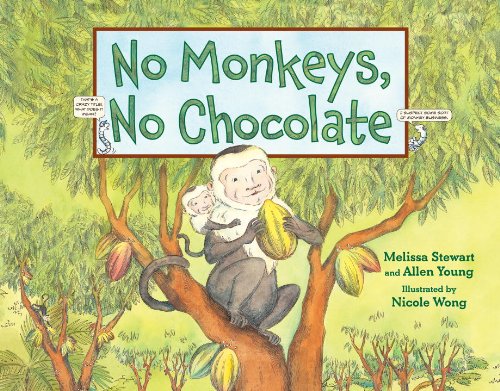
In the back matter, Melissa Stewart and Allen Young provided a list of things readers can do to live in a way that decreases their impact on the natural world in No Monkeys, No Chocolate.  


Because Capital Days: Michael Shiner's Journal and the Growth of Our Nation's Capital is based on the actual writings of a freedman who worked in the Washington Navy Yard through the inauguration of eleven presidents, the words are from centuries ago. Words like coffle, manumit, and cut up shines are no longer used, so they are defined in a glossary.


In A Chameleon's Life by Ellen Lawrence, students are encouraged to be a reptile scientist by writing a report that compares a panther chameleon to a reptile of their choice. It provides sources and questions to help with the research.  


5. To provide credibility for your work. (Acknowledgments, Bibliography or Resources, Image Credits)

The Resource list in Irena Sendler and the Children of the Warsaw Ghetto by Susan Goldman Rubin is extensive, though the story is only 36 pages long, half of them full page illustrations. It includes seven books, several translated from Polish; eleven articles from magazines, newspapers, and The Encyclopedia of the Holocaust; two videos; the written or recorded testimony of Irena herself and other Poles; stories unpublished in English; and correspondence between the author and Polish experts. Rubin is definitely a credible author.

Editors, teachers, and savvy readers will often scan the back matter to see why the author is qualified to write this book. How does one know the information is accurate? In The Hole Story of the Doughnut, I thank seven people in the Acknowledgments, including researchers and historians at various maritime locations and libraries. My Selected Bibliography includes twelve resources. Publishers prefer primary sources. Next in importance are secondary sources from newspapers, experts, or well-respected institutions, whether in print or online.

As a writer, the back matter will add value and information for your reader, and give you additional ways to bring your subject to life. And that matters!