|
| Charles Dickens, by Herbert Watkins |
At first you may think, isn't a writer's conference something of an oxymoron? I mean, isn't writing a solitary activity?
Yes and no. Most writing requires time alone. But improving your writing, and getting a book published, require interacting with others who love writing: illustrators, editors, agents, and authors willing to share what they've learned. That's what conferences and workshops are for. So what's an introvert to do?
 |
| Recommended reading for all |
[Note to Extraverts: This post isn't for you, and you need read no further – unless of course you’re interested in better understanding your introverted friends and colleagues.]
Being introverted is not the same as being shy, or anti-social; introverts can be just as friendly and fun-loving as anyone else. The difference is that for an introvert, socializing comes at a cost – it’s tiring. (For an excellent further explanation of introversion versus extraversion, I recommend Susan Cain’s 2012 book, QUIET: The Power of Introverts in a World That Can't Stop Talking.) So, here are a few introvert-friendly tips for getting conference-ready, and enjoying yourself to the fullest once the conference gets going.
1. Before committing: Research and select with care. Conferences come in many flavors. Where you go should depend on what you're looking for. You'll focus on different types of conferences if your goal is meeting an agent, working on craft, or meeting more people writing nonfiction, for example. (There's a list of GROG reviews of various conferences at the end of this post.) But overall, I’d break all these writerly events into three main categories:
national conferences; medium-sized or specialized conferences; and smaller writing
retreats.
 |
| Large (SCBWI)! |
National conferences: Think large, crowded halls, loud voices filling packed dining rooms, anxious people thronging around the big editors and agents . . . you get the picture. The advantages of large gatherings include the opportunity to meet lots of people in the industry and hear top-notch speakers and panels. If you’re an introvert, though, there are obvious disadvantages. This is not your natural scene. Crowds make you tired and sap your energy. It might be well worth it, but you’ll need to psych yourself up for the event, and plan for some recovery time afterwards.
 |
| Medium (Falling Leaves) |
 |
| Medium (WOW) |
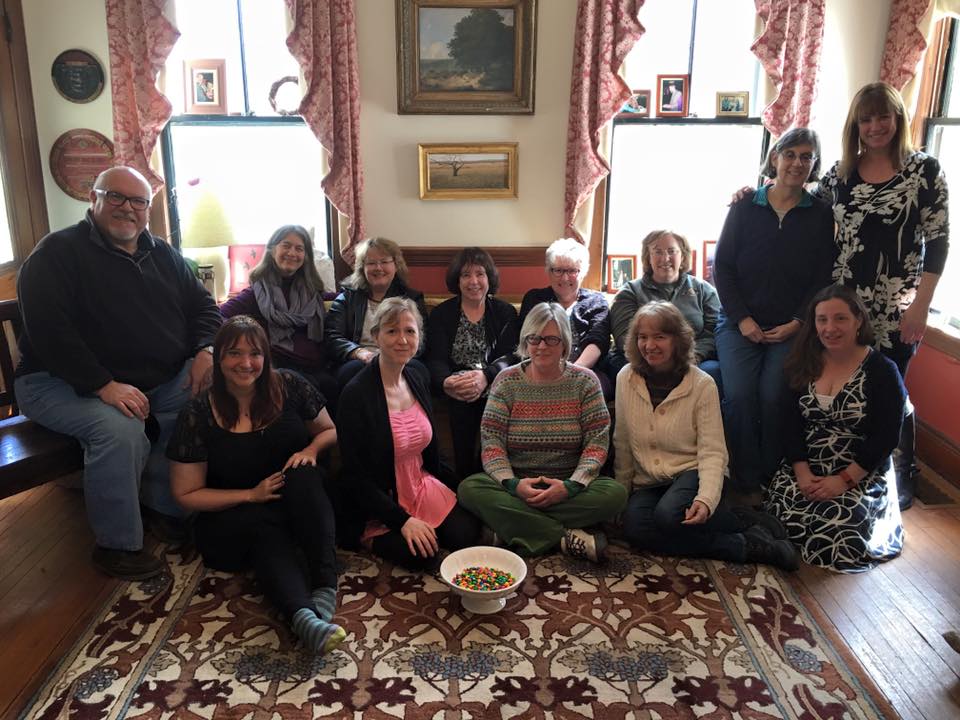 |
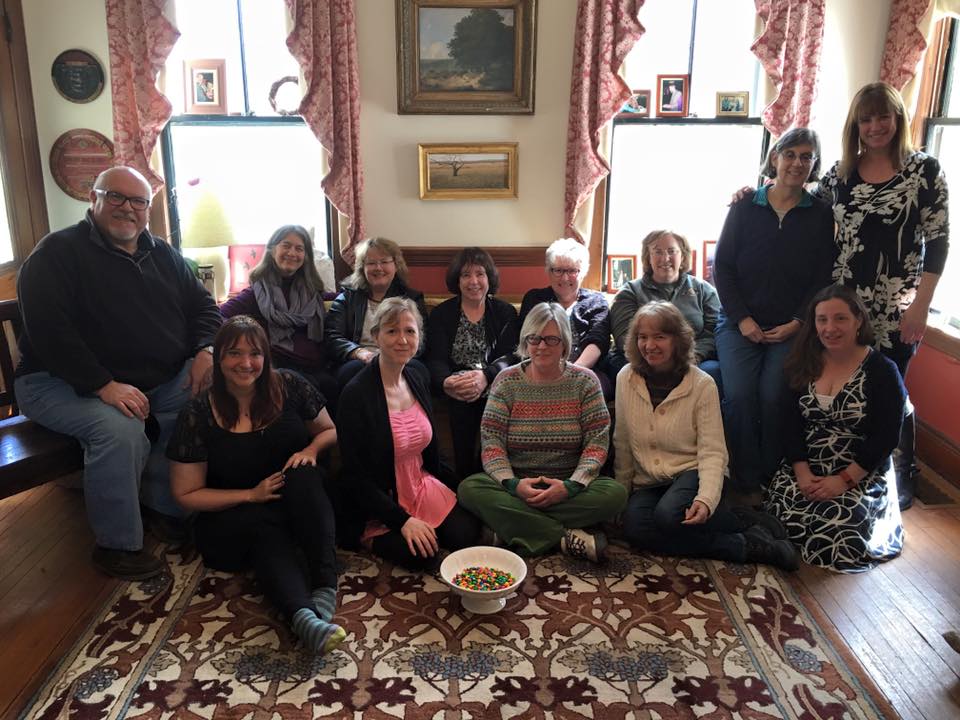
| Small (Picture Book Boot Camp) |
Evaluate your options. Try to talk with others who have attended an event you're considering, or see if you can convince a writing or illustrating friend to attend a conference or workshop with you. But wherever you go, never fear—lots of other conference-goers will be in the Introvert Boat with you.
2. When registering: Some ideas to consider.
Sign up for individual critiques. If they're available, they're almost always worth the price. You'll have a designated time period with an expert to discuss your manuscript. This is much more conducive to a productive conversation than one of those on-the-fly interrupted hallway exchanges with your Dream Agent, trying to shout above the crowd.
Volunteer to help. Many conferences, especially at SCBWI, rely upon volunteers to keep things running smoothly. Volunteering is a great way to meet people, including workshop presenters, and get involved with the organization.
·
Think about requesting a single room. Some retreats
have limited space and will assign roommates. If you really think you’d rather
have a single room, ask whether it’s available and how much extra it would cost
– and consider springing for the extra. How much is your sleep—and
sanity—worth, anyway?
3. Getting ready to go: be prepared.

Print up something to hand to people you meet. Maybe it's your business card. Or you might prepare bookmarks or postcards (especially if you illustrate). When you're momentarily stuck for the next witty thing to say, it's handy to be able to hand over a card with your contact information printed up.


Print up something to hand to people you meet. Maybe it's your business card. Or you might prepare bookmarks or postcards (especially if you illustrate). When you're momentarily stuck for the next witty thing to say, it's handy to be able to hand over a card with your contact information printed up.

· Practice your pitch. Don’t be trying to invent a summary of your latest work in progress on the spot. Take the time before the conference to write down a quick synopsis of your manuscript. Turn that into a witty pitch. And use it when people ask you (as they will) what you’re working on.
4. Enjoying the conference: Techniques and Tips.
·
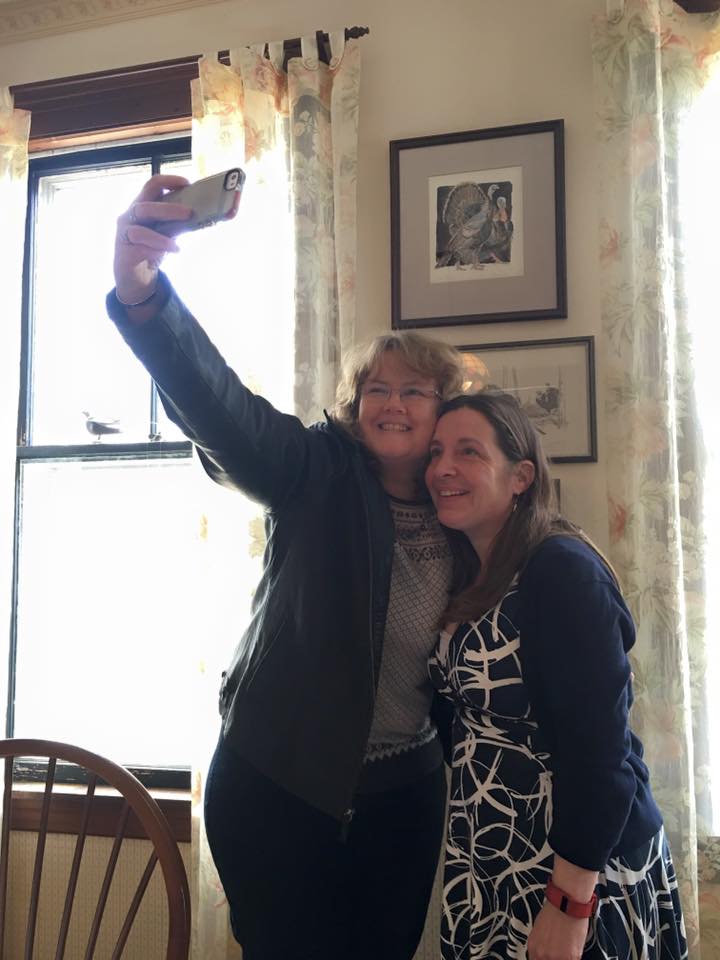
Take photos. This is an old introvert’s trick.
Assign yourself the job of taking photos of your group, or of people you meet (famous or not!). Offer to take photos of speakers during the panels, and offer to email photos that
you take to the people you’ve photographed. Most folks will appreciate this. And it makes meeting people a snap.
 Review the program, and plan for breaks. With some conferences, you'll sign up for small group sessions ahead of time. With others, you'll choose when you arrive. Either way, you'll want to be flexible. But study the schedule, and determine how you'll get the down time you need. An early-morning walk, a work-out in the gym, or a quick reading break in your room can rejuvenate you for the next big group gathering.

 Get offsite: If there are one or two people you’d
like to get to know better, see if they’re interested in going to dinner or
lunch or drinks off site. This may not always be possible, but can be a nice option if the group scene is a little overstimulating, especially during a longer conference.
FOCUS on your GOAL: Set yourself a manageable goal for the conference. (And
no, “sign a three-book contract” is not a manageable goal.) Maybe it’s “meet
Edith Editor,” or “make two new contacts who might want to start a critique
group,” or maybe it’s “figure out how to get that manuscript unstuck.” Focus
on your main goal, and don’t worry if you aren’t the loudest, most
rowdy writer in the room.
That said, be open to the possibilities that arise. The best part of conferences is meeting new (or old) writing friends. Because, really, no matter how much you may love your solitary writing, nobody can write alone all the time!
RESOURCES:
In compiling the list below, I've confirmed that GROG writers really do believe in conferences. Here are a few prior posts providing conference reviews and other conference-related information:
21st Century Children's Nonfiction Conference (T. Burleson & C. Mihaly)
Asian Festival of Children's Content (T. Cho)
Highlights Foundation workshop (J. Annino)
Library Conventions (K. Halsey)
Making a memorable author card (J. Reinart)
NF4NF (Nonfiction for New Folks) (J. Reinart)
Jane Yolen's Picture Book Boot Camp (C. Mihaly)
Rhyming Picture Book Revolution (S. Leopold)
SCBWI Florida (J. Annino)
SCBWI Illinois (P. Toht)
SCBWI National (Los Angeles) (K. Halsey & P. Toht)
SCBWI New England 2016 (K. Halsey)
SCBWI New England 2014 (C. Mihaly & P. Vaughan)
SCBWI Northern Ohio (K. Halsey)
 |
| GROGging at SCBWI |
That said, be open to the possibilities that arise. The best part of conferences is meeting new (or old) writing friends. Because, really, no matter how much you may love your solitary writing, nobody can write alone all the time!
RESOURCES:
In compiling the list below, I've confirmed that GROG writers really do believe in conferences. Here are a few prior posts providing conference reviews and other conference-related information:
21st Century Children's Nonfiction Conference (T. Burleson & C. Mihaly)
Asian Festival of Children's Content (T. Cho)
Highlights Foundation workshop (J. Annino)
Library Conventions (K. Halsey)
Making a memorable author card (J. Reinart)
NF4NF (Nonfiction for New Folks) (J. Reinart)
Jane Yolen's Picture Book Boot Camp (C. Mihaly)
Rhyming Picture Book Revolution (S. Leopold)
SCBWI Florida (J. Annino)
SCBWI Illinois (P. Toht)
SCBWI National (Los Angeles) (K. Halsey & P. Toht)
SCBWI New England 2016 (K. Halsey)
SCBWI New England 2014 (C. Mihaly & P. Vaughan)
SCBWI Northern Ohio (K. Halsey)
SCBWI Rocky Mountain 2015 (L. Tribble)
SCBWI Rocky Mountain 2014 (L. Tribble)
SCBWI Rocky Mountain Nonfiction Picture Book (L. Tribble)
SCBWI Southern Breeze (J. Annino)
Virginia Hamilton Conference on Multicultural Literature for Youth (K. Halsey)
WOW (Week of Writing) (L.C. Tribble); WOW (GROGgers)
The Write Conference for you (K. Halsey)