Showing posts with label challenges. Show all posts

Wednesday, March 3, 2021

Can we Write Our Way out of This Pandemic?

by Sue Heavenrich & the GROG bloggers

A year ago I started a Pandemic Diary - an occupational hazard of being a journalist. I repurposed an old notebook, figuring the 70 remaining sheets of paper should see me through. By October I was out of pages ... scrounging a new notebook and realizing I wasn't going to write my way out of the pandemic. Beyond the Diary, I'd done little work on other writing projects. At some point I finally gave myself permission to “not write”. 

Instead of writing, I read MG and YA novels, vacuumed dust from bookshelves, made fudge and brownies. I took my camera on long walks. I scribbled notes on paper and stuffed them into a tin, and plugged the holiday lights in every night and on cloudy days. I watched re-runs of M*A*S*H, attended SCBWI webinars, zoomed with some writing buddies. The writing started to emerge in unexpected ways. Now, with the return of the sun, the urge to get back to those "projects" is pushing me back to my keyboard. 

Turns out I wasn't the only writer negotiating the bumps in the road. Here’s how my fellow GROGGERS met pandemic challenges:

I'm not the only one who turned to old TV series. Carol Coven Grannick did too. Back in September she had planned a book launch... and instead found herself doing different sorts of promotion. Like many of us, she is grateful for a safe living space and food, and deeply misses meeting friends and family in person. Connecting via zoom and the phone helps, she says, but it’s not the same. 

“The pandemic seems to have fine-tuned the need to live in the present,” says Carol. “Take one day at a time, watch them unfold differently and the same, trusting and hoping that we will be together with family and friends sometime soon, soon, soon.”

upstate NY ~ Sue H
Eileen Meyer discovered that doing mundane things, like shopping for groceries, became more difficult. What helped her get through the pandemic was getting outside.

“Taking breaks to breathe in fresh air and walk in nature is something that really makes me feel refreshed,” she says. To keep the rhythm of her writing routine she stayed involved with her critique group. Having deadlines motivated her to work on projects, she says, “But most importantly, it provides a bit of community in this desert of far-too-much alone time.” 

After losing a family member and then a longtime friend to COVID-19, Sherri Rivers found herself dwelling on dark thoughts. “I needed to remember that life was still good and better days were ahead.,” she says. “Watching cat and animal videos brightened my thinking and warmed my heart.”

On the writing front, Sherri researched funny picture books, and made a commitment for 2021 to write a new draft every month as part of  12 x 12. Online groups and posts help keep her connected and keep the writing fires glowing.

Wilmington, VT ~ Sue H
Chris Mihaly went through a series of Pandemic Phases. With a picture book released in March, she found all her bookstore events, school visits, and book festivals canceled. Thus began the “Disappointed but Zooming” phase filled with free webinars, the SCBWI Summer conference, and other virtual events. 

Next came the “Unable to Concentrate” phase. “It was impossible to summon any creativity at all,” Chris says. “Even in a normal year, it's rough when the days start getting shorter – and this is not a normal year.” But the vaccine roll-out has brought a new, positive phase. “I made a New Year Resolution to write a poem a day,” Chris says. “Each morning I pick a poetic form, then sit down to write a fresh poem in that form. This has sparked my writing energy ... it's definitely a great creativity boost.” Oh yes, and daily walks helped.

Suzy Leopold hoped that more time at home would offer more time to create, but her heart wasn’t in it. At least not at first. “After a few weeks, I finally took a few steps toward a new routine that included being safe, healthy, and creative,” she says. Step number one: revisit her SMART goals, though she made some adjustments.

Pandemic painting ~ Suzy L
She connected with the Springfield, Ill SCBWI Scribes group once a month for manuscript exchanges and critiques, and checked armloads of picture books out of the library to study as mentor texts. “ I also committed to painting every day for 100 days (the100DayProject). I painted my various creations on 4 X 4 cards using watercolors, acrylic paints, and mixed media, and posted them on Instagram.” Suzy also volunteered her time to the Macoupin Art Collective, teaching a class she called  ‘Drawing with Henri’s Scissors’. She also spent as much time as she could outdoors – in the garden or riding a bike. 

Wyoming ~ Leslie

Leslie Colin Tribble is another nature girl, though this past year she limited herself to exploring new areas closer to home and revisiting favorite spots. “I started being more intentional about incorporating things to bring me joy and to feel special. Some were bigger practices, like cooking something new, or dragging out old craft projects. Others were simple like using the good china for meals. The most spontaneous and joyful thing I did in the past year was get a puppy.” 

Leslie also started taking night walks – which open up a whole new word to explore. “Being out in nature at night is something that's so simple, yet so unique and rewarding,” she says. 

We might not be able to write or paint our way out of the pandemic, but as we move into the second year, Suzy shares this bit of wisdom: let's take the time to acknowledge our thoughts and feelings and try not to criticize our lack of energy.

Friday, September 12, 2014

How Do Writers Spend Their Time? -- By Christy Mihaly (and Cheddar)


Join this Writer’s Organization! Try that Challenge! Take another Course! EEK! Writer friends urge me to participate in this course, that workshop, these Facebook groups, those writing challenges. What am I missing? How can I ever find the time? 
Photo by GROGGER Suzy Leopold

Time for a reality check: I turned to my GROG colleagues --  serious writers all, ranging across continents, occupations, levels of experience, and numbers of publications. I asked them: "How do you spend your writing time?" I asked them to estimate how many hours they spent drafting, revising, reading, doing research, conferences, courses, social media, marketing, etc.  

And now, I'm happy to share these thoughts and recommendations, from my informal GROG survey.  

Bottom line: None of us has time to do it all.  We have day jobs, spouses and loved ones, social obligations, volunteer work, children, grandchildren, friends in need. We want to "give back" to the writing world. What’s a writer to do?  

We know the answer: WRITE. The GROGGER responses reminded me that when it comes to all those “writing-related” activities, we have to stick to the ones that are helpful enough to warrant taking time away from actual writing. 

I boiled my colleagues' responses down to these three points: 

1.  Write!  Carve out “writing time” every day.  Make writing your top priority during that designated time. Maybe it’s a half-hour before the rest of the household awakes. Maybe it’s an hour after everyone else is asleep. Whenever it is, make it sacrosanct.  No internet surfing.  No opening mail. “Writing” means drafting and revising. If inspiration isn’t coming, try writing a poem! A journal entry, a cover letter . . . just write! GROGGERs' writing times vary considerably, depending on where they are on a particular project (or other aspects of their busy lives) but range from about an hour a day to 30 hours or more per week.  (And we all spend more time revising than drafting!) 
GRAB THAT PENCIL, CHEDDAR!

2.  Everything else is extra. Select only those “extras” that really help your writing. Want to refine your craft?  Maybe a course or studying a book on craft is your best bet. Are you feeling isolated?  Then join a community, whether it’s an in-person critique group or an online writing group, or volunteer to work with kids. Has your inspiration dried up? Maybe you need to hang out with the grandchildren, or maybe just going for a walk is what you need! You’ll never be able to do it all . . . so choose what inspires you, and nourishes your writing.
Sniffing out new inspiration . . . 
Here's some collective GROGGER wisdom about setting priorities,  from among all those “other” activities:

Research: If you write nonfiction, this is a major element of your process . . . though fiction writers need research too. For our nonfiction GROGGERs, research can take MORE time than writing.  When we're in that "research groove," that's all we want to do. The consensus: Go for it!
                        

Challenges: GROGGERs have tried various online challenges, and concluded it's best to choose one, or at most two, per year. Favorites among GROGGERs are 12x12, WOW, and PiBoIdMo.

Reading: Do it! Study mentor texts, read books on writing craft and the business of writing, adult fiction and nonfiction for pleasure, YA for the heck of it, poetry, The New Yorker – read it all. GROGGER Pam Vaughan suggests that, if you’re stuck in the car a lot (chauffeuring kids, anyone?) try books-on-tape! GROG members agree, reading is a high priority. Most of us try to get some reading done every day.
 Hey, I get great ideas in my dreams!

Conferences/workshops: We can’t afford to attend all the conferences we’d like, but agree that two or three a year is good. SCBWI is the standard. A pointer: Figure out which format – National? Regional? Small? – works best for you, then focus on that type of gathering. For more GROG thoughts on conferences, check out these posts: 21st Century NF; SCBWI LA; SCBWI New England; write conference for you.
Critique groups: Serious writers must share drafts and revisions with trusted writing buddies. Online groups work well for many. Some are lucky enough to find supportive face-to-face groups. Crit groups are well worth the time -- though most GROG members find that one, or two, of these is the most we can responsibly handle.
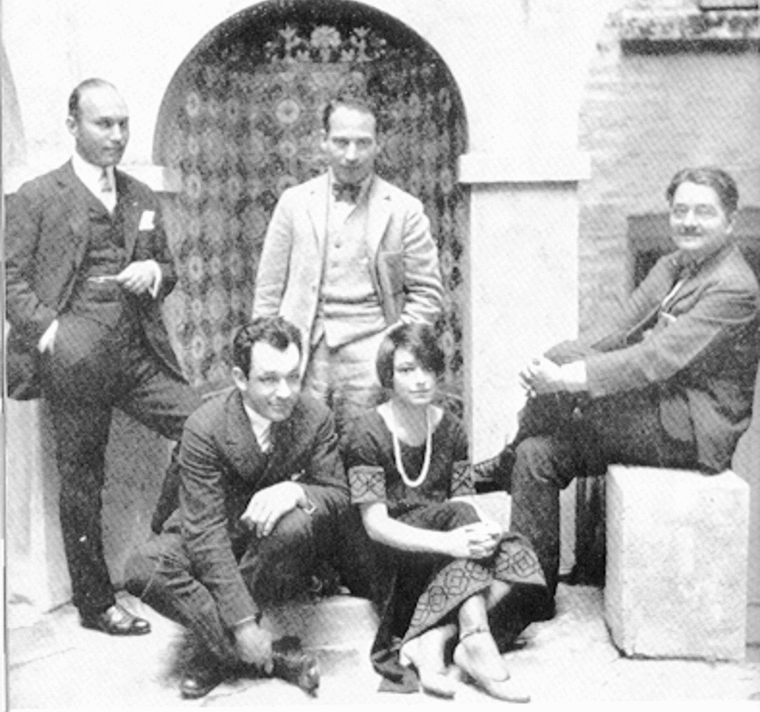
Algonquin Round Table members 
Art Samuels, Charlie MacArthur, Harpo Marx, Dorothy Parker, Alexander Woollcott 
circa 1919, from Wikimedia commons, photographer unknown.

Warning!  Warning!  LIMIT social media!  

Sure, there are some wonderful Facebook groups, and FB can be a great place to share information and support other writers. Twitter provides valuable connections and information too . . . but GROGGERs find social media can consume too much precious writing time. All GROGGERs participate in social media, and we agree a little can be good (a half-hour to an hour a day?).  (See these prior posts:  Facebook groups; more Facebook groups; Twitter tips; more Twitter tips.)  But it's also true that too much is . . . too much.

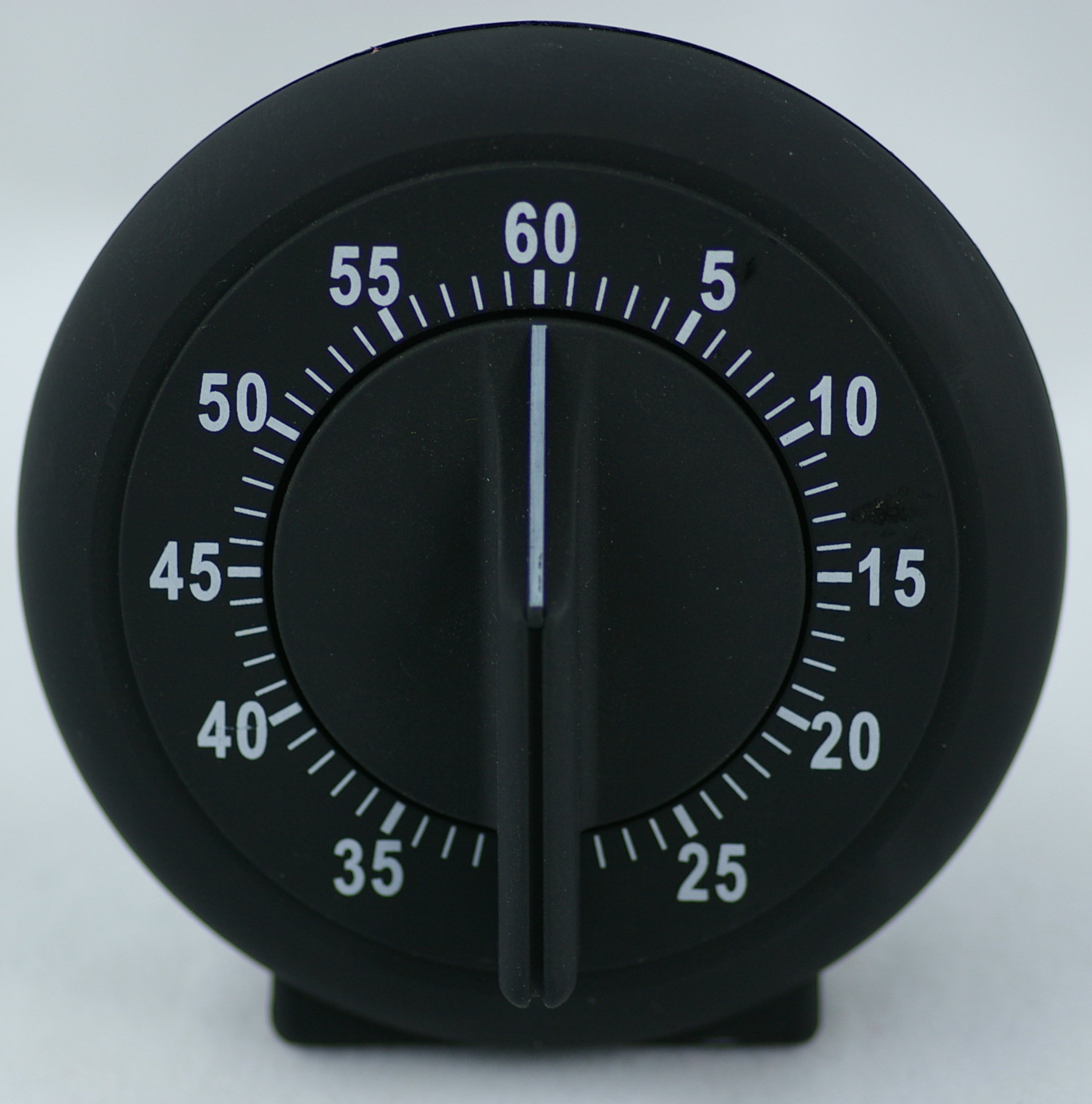
Try setting a timer!


By Hustvedt (Own work) [CC-BY-SA-3.0 (http://creativecommons.org/licenses/by-sa/3.0) or GFDL (http://www.gnu.org/copyleft/fdl.html)], via Wikimedia Commons


3. Keep track of how you spend your time 
(see above). 

Some of my GROG friends could tell me exactly how much time they spent regularly on various activities . . . others, not so much. Try this for a week or a month: record your hours. If you feel you're not getting enough writing done, you’ll see exactly what’s taking up too much time. You'll get a more realistic sense of how long different tasks take. And when you meet a writing target or a goal – celebrate!

Bottom line:  Remember Jane Yolen's essential rule:  "Butt in chair!" And write on. 
That's BUTT in chair, Cheddar!!


Special thanks to Marcie Atkins, Todd Burleson, Tina Cho, Suzy Leopold, Pat Miller, Janie Reinart, Patty Toht, and Pam Vaughan.