Showing posts with label character building. Show all posts

Wednesday, September 28, 2022

Whispering Pines Writing Retreat 2022 Recap with Chris Mihaly and Kathy Halsey

Whee! After two-plus years away from conferences, we (Kathy, from Ohio and Chris, from Vermont) met up at the wonderful Whispering Pines Writing Retreat in Dedham, Massachusetts this weekend, with forty-some other writers and illustrators and a crew of five magnificent mentors. Organized and run with panache by Pam Vaughan and Julia Boyce, this SCBWI-New England workshop is a gem. Here's a quick recap:

Words of Wisdom (from the mentors)

Each mentor shared an amazing presentation. From our copious notes we've distilled a single shining sentence from each ...

Jessica Anderson
(editor, Christy Ottaviano Books) offered practical pointers on optimizing symbolism and plot devices, and weaving them organically into your writing.
 
❤ "Your opening pages will be more powerful and resonant if they include a nod to your most significant symbol or plot device."

Alex Aceves (author, associate editor, Holiday House) explained how to create compelling characters that readers will feel a connection to. 
"Deploy character flaws strategically: readers don't connect with a perfect character, so write a protagonist whose flaws make us care about them and their success."

Sera Rivers
(agent, Martin Literary Management) revealed the secret of "why THIS book!" -- what makes a work stand out from the slush pile.
❤ "Bring a fresh perspective to a universal theme, and make your work accurate and authentic."

Abby Mumford & Brent Taylor (Photo, Mary Cronin)

Brent Taylor (agent, Triada US) broke down the business of children's books. Even the seasoned authors learned a thing or three. (Territories: World, World English, North American) 
❤ Books like Prince & Knight  "would have meant the world" to Brent as a kid. Brent believes territory is just as important to negotiate as royalties."

Chris Krones (editor, Clarion Books) energized us to knock the socks off writer's block.  They suggested going to the bookstore for inspiration and what gaps your book could fill.
❤ For Chris, "interest in the Merriam-Webster Word of the Year. 'they,' and creating a simple list, led to The Pronoun Book. Create lists, look for simple yet compelling concepts. 

Applying the Lessons

L to R: Brent, Alex, Sera, Jessica, Chris (photo, Mary Cronin)
We applied mentors' suggested writing exercises and pointers to make fresh improvements to our WIPs. A couple of examples:

Chris: I used Jessica's insights into symbols and structure to review a picture book manuscript word by word, working to instill visual and other sensory expressions of my major theme. I think it's better!

Kathy: Thanks to Sera's writing exercise, I changed a problematic setting in my picture book manuscript which enabled me ramp up the conflict.


Parting Thoughts: Top Tips for Writing Workshops

We're each sharing a single top tip for workshop and conference-going. (What? Are they contradictory??) We also include a couple of pointers from other attendees -- because WPWR is all about learning from one another! 

Chris: My top tip is: Say yes! Even if your first reaction is that you don't want to play the silly picking-up-dice-with-cups-on-your-hands game with these people you just met ... just say yes. You'll (probably) be glad you did.
Sally is game! photo by Charlotte Sheer
Kathy: My top tip is: Say no! Know when you've reached your limit socially or mentally. Take a break. Nap, walk in nature, write in private and come back refreshed. 

Laura Renauld: Step outside your comfort zone and be receptive to new ideas. That's what it's all about!

Connie Smith: Ask questions. If you don't understand what a presenter is saying, ask for an explanation ... and if you forget other people's names, just keep asking!

Books by WPWR attendees (photo, Nancy Tupper Ling)

Is it time to break your pandemic-era isolation and congregate again? Thinking of brushing off your Lucky Scarf and signing up for a workshop or conference soon? 
If you're looking for a little help getting back into the swing of things, check out these GROG posts from the archives: 

Leave a comment below about your favorite book gatherings. 
And good luck out there!

Wednesday, June 10, 2020

Crafting a Story with Two Main Characters--Where Giving Each Equal Weight Is Important, Guest Post by Vivian Kirkfield


Author Vivian Kirkfield is no stranger to the kidlit world. You can find her just about everywhere in kidlit social media. Her newest picture book, Making Their Voices Heard, debuted the end of January. I, Tina Cho, invited my critique partner to share her writing expertise with our Grog readers. Take it away, Vivian!

Thanks so much for giving me the opportunity to share on the Grog Blog, Tina. I’ve seen a question come up several times on Facebook groups that are devoted to writing, and I thought I would speak to that.


How do you craft a story with two main characters where giving each equal weight is important?


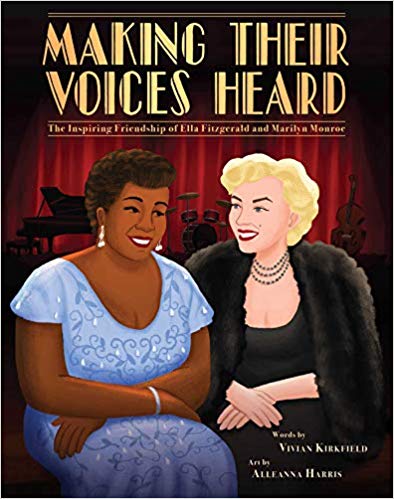
Before I wrote the draft for MAKING THEIR VOICES HEARD: THE INSPIRING FRIENDSHIP OF ELLA FITZGERALD AND MARILYN MONROE, I used several picture books as mentor texts. One of the most helpful was Amelia and Eleanor Go for a Ride by Pam Munoz Ryan, illustrated by Brian Selznick. Another book was Martin and Mahalia: His Words, Her Song by Andrea Davis Pickney, illustrated by Brian Pickney. I studied how the authors introduced their characters and how they relayed information about their lives and how their lives connected.


I’d already done a bunch of research, but none of my sources, mostly books about Ella and Marilyn, spoke about their friendship. I had to become a detective. I contacted the author of one of the Marilyn Monroe books. She didn’t know but she directed me to the website of the president of the Marilyn Remembered fan club. He didn’t know either, but he kindly gave me the phone number of the woman who had been Ella’s promoter for thirty-seven years. It was so hard for me to call her…I’m really timid that way. But I knew I needed the information because I knew I wanted to write an authentic and accurate story for children…and I wanted it to be a story that children could relate to – a story about friendship. Even young kids know about playdates and going to a classmate’s birthday party and how it feels when your friend is mad at you. How to be a good friend is an important lesson for kids. And although it’s true that each of these icons had enormous talent, each was being limited because of discrimination of one kind or another…and it was their friendship and respect for each other which helped break those barriers.

I took a deep breath…or maybe a few…and I called Audrey Franklin. I got her answering machine. And left a message. Miracle of miracles…she called me back the next day - we chatted for hours and she verified that they were, indeed, friends.

So, now I had verified they were friends, but I knew I also had to balance these two superstars. The mechanics of the text set out to do that. I began by introducing both women and pointing out how they are different yet the same.


Ella and Marilyn. On the outside, you couldn’t find two girls who looked more different. But on the inside, they were alike—full of hopes and dreams, and plans of what might be.

Next, I showed how Ella got her start – going from living on the streets to playing with a real band. Then, on the next page, I showed how Marilyn got her start – going from working at an airplane factory to signing a studio contract.

But we need to throw rocks at our heroes, right? And what I love about writing nonfiction is that I don’t have to invent the rocks…these women really faced huge obstacles and barriers. On the next two spreads, I show how Ella, though a jazz phenomenon, battled racial discrimination. And then I show how Marilyn faced an industry run by men who controlled her career.

So far, so good. I was keeping it pretty even and balanced. Now I wanted to show how Ella helped Marilyn…and then how Marilyn helped Ella. The nightclub incident where Marilyn persuades the owner to book Ella by promising to bring the media to his doorstep was easy. There was plenty of online information about that – and Ella even speaks about it in an interview. But how was I going to show how Ella helped Marilyn? That was definitely a challenge.


I found interviews where Marilyn mentioned how much she loved Ella, not only as a singer, but as a person. Ella was actually her idol…Marilyn was a fan girl! And then I read several articles that spoke about how Marilyn studied Ella’s voice to improve her own vocals to get ready for her singing role in Gentlemen Prefer Blondes. Bingo! When critics gave Marilyn rave reviews and her bosses amended her contract and gave her a higher salary and more control over script approval, I knew I had what I needed. Because this was a BIG deal – it’s what she had been fighting for all along. Marilyn also used Ella’s records to help with her insomnia – she’d fall asleep listening to Ella’s voice.

Now when Marilyn spoke, her bosses paid attention. And reporters and photographers followed her everywhere. Determined to thank Ella in person, Marilyn bought tickets to Ella’s next show.

After the show, Ella and Marilyn sit shoulder to shoulder, chatting. When Marilyn discovers that the Mocambo club refused to book Ella, she wanted to help her friend the way her friend had helped her.

Putting their heads together, Marilyn and Ella hatched a plan.
And I love the illustration Alleanna Harris did.


Marilyn put her career on the line to a certain extent because in those days, there was a lot of racial discrimination (not much has changed, unfortunately) and movie studios controlled what their actresses could and couldn’t do. By calling the nightclub owner and insisting that he book Ella, Marilyn stepped up and spoke out. This is what we mean by allyship. You don’t just give money to the cause…you step in and make it happen. The Civil Rights movement was just in its infancy…in fact, the nightclub incident happened in 1954 and it wasn’t until the end of 1955 that Rosa Parks refused to give up her seat on the bus.

I was able to show that both of these strong women admired and respected each other. Ella said, “She was an unusual woman – a little ahead of her time. And she didn’t know it.” And Marilyn said, ““Well, my very favorite person and I love her as a person as well as a singer. I think she’s the greatest and that’s Ella Fitzgerald.”

I also wanted to show how we are all complex individuals. Most of us know Marilyn as a sexy Hollywood star…and kids probably don’t know her at all. Similarly, most kids may never have heard of Ella, but her music was genius…in fact, at the very first Grammys in 1959, Ella Fitzgerald won for best female pop vocalist and best improvised jazz performance. I thought it was time for kids to discover these two special women and how differences in race, color, and creed played absolutely no role in their amazing friendship. And how poignant a time for a book like this. We can, and must, all step up, making our voices heard for what is right, so that our nation can be healed. Covid-19 will, at some point, have a vaccine that will protect us from it. But this sickness of hatred and anger can only be healed with kindness, love, compassion, and with the willingness to listen to the voices of people of color.

Most of you who know me know that I am an extremely optimistic person and I’m always trying to find a positive, even in the darkest of times. My older sister used to call me Pollyanna, after the storybook character who finds something to be glad about in every situation. And I think I have found it. Young people are stepping up and refusing to allow this hatred to go on. A high school junior reached out to me last week. As a school service project, she is building a website where she will showcase videos of teachers reading aloud books from different cultures. She wants to use Sweet Dreams, Sarah and she wrote to ask my permission. Of course, I checked with the publisher who is totally on board. What thrilled me the most were the young girl’s words: “Your book has had a profound impact on my life and has given me the confidence to use my voice.”

And THAT is why I write books for children! Just like Ella and Marilyn, everyone needs to make their voice heard.


Bio: Writer for children—reader forever…that’s Vivian Kirkfield in five words. Her bucket list contains many more than five words – but she’s already checked off skydiving, parasailing, banana-boat riding, and visiting critique buddies all around the world. When she isn’t looking for ways to fall from the sky or sink under the water, she can be found writing picture books in the quaint village of Amherst, NH where the old stone library is her favorite hangout and her young grandson is her favorite board game partner. A retired kindergarten teacher with a masters in Early Childhood Education, Vivian inspires budding writers during classroom visits and shares insights with aspiring authors at conferences and on her blog, Picture Books Help Kids Soar where she hosts the #50PreciousWords International Writing Contest and the #50PreciousWordsforKids Challenge. She is the author of numerous picture books. You can connect with her on her websiteFacebookTwitterPinterestInstagramLinkedin, or just about any place people with picture books are found.

Vivian's books:
PIPPA’S PASSOVER PLATE (Holiday House) illus by Jill Weber
FOUR OTTERS TOBOGGAN: AN ANIMAL COUNTING BOOK (PomegranateKids) illus by Mirka Hokkanen
SWEET DREAMS, SARAH (Creston Books) illus by Chris Ewald
MAKING THEIR VOICES HEARD: THE INSPIRING FRIENDSHIP OF ELLA FITZGERALD AND MARILYN MONROE (Little Bee Books, January 14, 2020) illus by Alleanna Harris
FROM HERE TO THERE: INVENTIONS THAT CHANGED THE WAY THE WORLD MOVES (Houghton Mifflin Harcourt, January 2021, illus by Gilbert Ford

Thursday, September 28, 2017

Guest Post: I Have a Chapter Book Idea--Now What? By Alayne Kay Christian

I want to welcome a kidlit friend, author, and critique partner to the Grog Blog today--Alayne Kay Christian! Her new chapter book Sienna, The Cowgirl Fairy, debuted this summer, and so I invited her to share her expertise in writing chapter books. And Alayne has an awesome prize at the end! Take it away, Alayne!


So you have a chapter book idea. Now what?

A great place to start is by getting to know your protagonist better.

Some writers do a character inventory or character profile. You can find an excellent starting point with the following links that offer a variety of checklists. However, I agree with the note on the epiguide.com character chart that states, “Note that all fields are optional and should be used simply as a guide; character charts should inspire you to think about your character in new ways, rather than constrain your writing.”


Janice Hardy is the founder of Fiction University, which is a site dedicated to helping writers improve their craft. She also has many good books and workbooks on writing. I’ve decided to let some of Janice’s Fiction University posts along with a couple SCBWI posts help me provide you with good information on developing chapter book characters and stories.

If you find character profiles and charts to be a bit too much, check out the links below where Janice Hardy offers some interesting ways to develop your characters.


Of course, there are other characters to consider besides the protagonist. The links below lead to some more good guidelines from Hardy.


The following writers.net link offers some pros and cons of getting too carried away with a character inventory http://www.writers.net/forum/showthread.php?116160-character-inventory

cd

I’m a pantster at heart, so the idea of a character inventory doesn’t appeal to me. But I’ve found that playing around with methods of exploring characters can make one think beyond the surface. It is also a good way to get unstuck if you are struggling to get going on your chapter book. But, don’t let digging into your characters give you an excuse to procrastinate. In my experience, characters often reveal themselves as the story builds. Only you know what works best for you.


The approach you take with your chapter book may be different depending on where your idea starts. Does it start with a character or does it start with a plot? The answer to those questions may influence your approach to character and plot development. Check out this SCBWI post for help with forming connections between character and plot. https://easternpennpoints.wordpress.com/2017/07/10/character-primer-which-hatched-first-the-character-or-the-plot-by-kristen-c-strocchia/

I’ve created a list of questions (below) that may help you brainstorm and develop your idea deeper and begin finding the plot that will fill your chapters. There is much more to writing chapter books than these questions, but it is a start. My goal for this post is to help writers who have a chapter book idea to dig deeper and get to know their protagonist’s journey a little better. Once you get rolling, you might find that your character will help lead you from chapter to chapter.

  • ·    Who is the protagonist that will drive this story idea?
  • ·    What is the question you want to set in your reader’s mind at the beginning of the story? There may be more than one question, but they will likely start with words like “Will s/he?” “Can s/he?” “How will s/he?” “How can s/he?” From here on, for the sake of simplicity, I will refer to the protagonist as she and her.
  • ·   What is the inciting incident? This is the event that pushes your protagonist out of her ordinary world and into the world of the story that you want to write. The world where the protagonist’s journey takes place.
  • ·   What is the protagonist’s goal or problem that will fuel her actions and decisions throughout the story?
  • ·   How does the big story problem escalate throughout the story?
  • ·   How does the protagonist resolve the big story problem in the end?
  • ·   How do the protagonist’s actions and realizations inform the reader? How do her actions and realizations inform her?
  • ·   What does she learn by the end of the story? Has she changed in some way?
  • ·   What is the point of the story?
  • ·   What will make the reader care about the protagonist’s journey?
  • ·   What stands in the way of the protagonist achieving her goal or solving her problem?
  • ·    What are the stakes? What does the protagonist stand to lose if she doesn’t solve her problem or achieve her goal?
  • ·    What do you want the reader to think about long after the story is over?
  • ·    What kind of challenges does the protagonist meet as the chapters develop?
  • ·    How can the big story goal or problem lead to smaller chapter problems? Perhaps there are obstacles to achieving the big story goal. How might these obstacles create tension and escalate as the chapters develop?
  • ·    What is the first problem that stems from the big story problem? How does it escalate with action and tension? How is that first problem resolved?
  • ·   What are three obstacles or challenges to achieving the goal that your protagonist might have to overcome that make her journey all the harder?
  • ·   What kind of decisions might your protagonist be forced to make as she meets twists, turns, surprises, and more setbacks? What might those twists, turns, surprises, and setbacks be?
  • ·    What is the worst thing that could happen to your protagonist? What is the moment that makes her, and the reader, feel that all is lost or there is no hope – as though she will never achieve her goal or solve her problem?
  • ·   What is the event or aha moment that causes the protagonist to climb out of that all is lost place? What kind of realization might she have? What kind of thinking outside the box choice might she make to do something different? What is that one thing that drives her into the action that leads to resolution?
  • ·   What is the resolution? Having a clear vision of the ending or resolution when you start your book will make it much easier to develop your story because you will know where your protagonist needs to end up. All you have to do is figure out how to get her there in a compelling way. Simple right ;-)
  • ·   Is there a surprise twist that will grab your reader one final time?


As I said earlier, there is much more to writing a chapter book. Here is a link to a SCBWI post to help start you thinking about individual chapters, emotional core and tension, and additional characters. https://easternpennpoints.wordpress.com/2017/07/17/chapter-prewriting-guide-essential-character-inventory-by-kristen-c-strocchia/

The following link leads to an excellent post on inner struggle or inner conflict.


The following link leads to another Hardy post. This one is about turning your idea into a story.


Janice Hardy does a great job of laying out a way to start forming your idea into a story. Clarifying an idea.


This next link leads to a post about testing an idea. This is similar to my list of questions above. But Janice has a different approach that may spark something new for you.


Also closely related to my list of questions, Hardy walks her readers through character arc development.


A BIG thank you to Tina Cho and the GROG team for inviting me to be a guest on their wonderful, informative blog.


Alayne’s Bio

Alayne Kay Christian is an award-winning children’s book author and a certified life coach. Her picture book Butterfly Kisses for Grandma and Grandpa (Blue Whale Press, LLC) received the Mom’s Choice Awards gold medal and an IPPY Awards silver medal. Alayne’s Sienna, the Cowgirl Fairy chapter book series first book, Sienna, the Cowgirl Fairy: Trying to Make it Rain is now available at Amazon, Barnes & Noble, and bookstores near you. The next book in the series, Aunt Rose’s Flower Girl, and Alayne’s next two picture books Mischievous Maverick and Magic Mabel are all scheduled for 2018 release. Alayne is the creator and teacher of a picture book writing course, Art of Arc: How to Write and Analyze Picture Book Manuscripts.


Alayne is giving away a chapter book critique (first 3 chapters) to a Grog Blog reader. If you'd like to be entered in the drawing, please let us know in the comments. The drawing will be held on October 6th.