Wednesday, July 15, 2015

Resources for Writers

by Leslie Colin Tribble

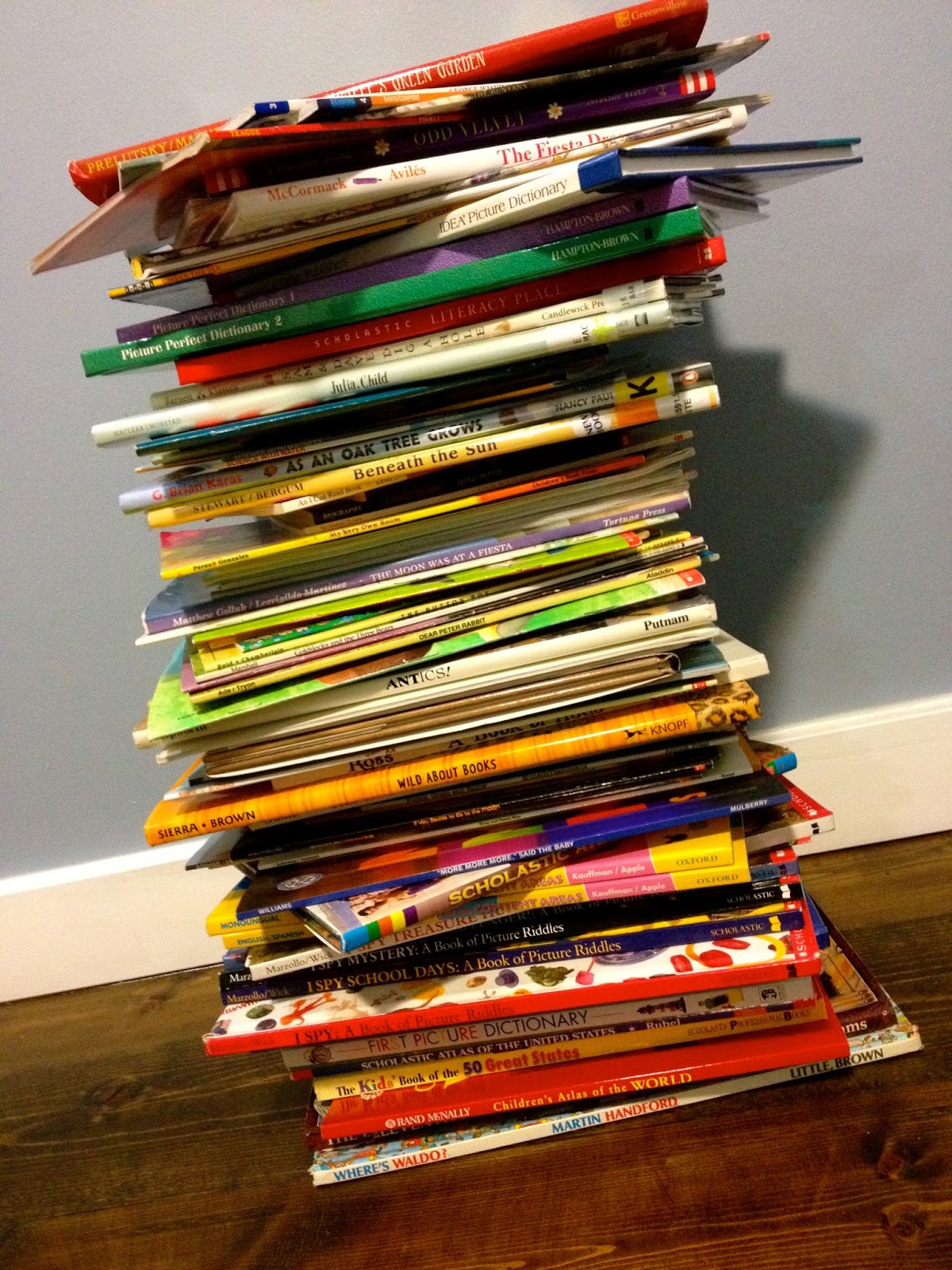
Resources like dictionaries and thesauri are as individual as the writers who own them. Some writers use multiple resources and can't even imagine starting to write without being surrounded by their nearest and dearest. Other writers only pick one up when they're looking for a specific word or are stuck on a particularly unrelenting language pothole.

I recently queried people from two Facebook groups and asked which resources they couldn't live without. Here are their responses with the most mentioned resources listed first. Maybe you'll find something on this list to help your writing journey. Let us know which resources are your personal favorites.

Flip Dictionary - this resource was mentioned several times and is a perennial favorite.


Online Dictionary and Thesaurus - there are several such as Merriam Webster and Dictionary.com. Find one you like and stick with it.


Emotion Thesaurus by Angela Ackerman and Becca Puglisi


World Cat - global network of library content

Fastfacts.com - tool to answer kids' questions about anything

Rhymezone.com or any online rhyming dictionary


SCBWI The Book: The Essential Guide to Publishing for Children

EasyBib - online bibliography maker

The Purdue Online Writing Lab (Owl) - Purdue offers over 200 free resources for writers

The Time Tables of History

Historyorb.com - an 'on this day in history' resource

Please comment below and help us add to this list.

Monday, July 13, 2015

Clip, Clip Here: Pruning Your Word Count by Kathy Halsey

[Disclaimer: All GROG posts this week come to you while many of us are at the WOW Retreat. Read with caution! LOL]
Hum along with me as I sing from the Wizard of Oz, "Clip, clip here, clip, clip there. We give the roughest claws that certain savoir faire in the merry old land of Oz." A makeover feels wonderful, doesn't it? Hair trimmed, nails clipped, manuscript tightened. Yes, even our work needs trimming, especially if we write picture books. Lately I've been called the queen of "slash and burn."I don't mind owning that title. Let me tell you my tricks of the trade.

Trade Secrets
  • Look for "orphans." Linda Sue Park shared this secret last year at the LA SCBWI annual conference. Skim your text for paragraphs that only have a few words hanging out alone on a line. Re-read that 'graph and cut it until there's a nice chunk of text w/no "hangers-on."
  • Think carefully about monikers. Main characters with middle names or titles can spell trouble for word count, and they are tiresome to read aloud, too. Here are a few examples from my work or other critique partners: Lil' Boogie, John Jr., Gracie Mae. If you must use a complicated name, use it once and then shorten it through the rest of the story.
  • Tag lines can be slashed in dialogue. Once a conversation ensues, you really may not need the "said Kate," or "exclaimed Evan." Trust your reader to know who your characters are by their distinctive voices. 
  • Scan and cut prepositional phrases. Instead of saying, "the mouth of the river," try "the river's mouth."
  • Modify the modifier. If you must use an adjective or adverb, just use one. 
  • Print your manuscript and peruse it for repeated phrases that add nothing. We all have those repeated lines that can be slashed. Usually these are transitional words such as "next," "now, "then." If there's a page turn, it serves as a physical reminder of time, so slash away.
  • Dummies! Not calling anybody out here, just know that I don't always create a picture book dummy, but when I do, I usually cut a ton of words.
  • Pare verbs. I'm prone to stringing verbs together in my first drafts. So I watch for constructions like "I went to see a movie," and whittle it to "I saw a movie." 
  • Chunks of text - How a draft looks on a page is important. I look for what I call "dense" paragraphs which are huge chunks of text. I reread these to see if I can thin them out. 
Ah, feel better? You look marvelous with that new trim and so does your lean, mean manuscript.


Friday, July 10, 2015

Part II Hearing Voices: 6 Steps I Used For Creating An Anthology

Dog tags by Lesley Blake
These love stories show the heartache and joy, the fear and pride of mothers awaiting the safe return of their soldiers. The beginning of the article (first three steps), Part I Hearing Voices: 6 Steps I Used For Creating An Anthology can be found here.


4. Search For A Publisher

My first query was sent to a large publishing house interested in war memoirs. My query was rejected. I sent a second query letter with three requested chapters and book outline to a regional press. I approached Gray & Company, Publishers,because they had published a book similar in format to what I envisioned for Love You More Than You Know. After two weeks, I received a call from the publisher. (I was shaking when I found out who it was on the phone.) He was interested, but wanted more stories than I currently had.


5. Call for Submissions

The initial collection included only a dozen stories. I needed to reach more contributors. I had tried word of mouth, personal contacts, referrals, speaking engagements, and articles in the local community newspaper.

Regina Brett

Looking for a larger network, I turned to Regina Brett, a columnist at the Cleveland Plain Dealer, to put out a call for submissions. She graciously featured the vision for our anthology in her column and on her radio show on WCPN FM, our local NPR affiliate. The response was overwhelming. Military moms from Ohio stepped forward and their writing would become the mouthpiece for the world community.


After I arrived home from downtown Cleveland from the radio show, my inbox was filled with inquiries about submissions for the anthology. To organize the flood of e-mails, I painstakingly added names to my computer address book. I placed each story into its own electronic folder and included pictures, and author biographies. The stage was set. I invited contributors to join a blog for encouragement and tips as the writing began. Within a few months of selecting, editing,(I cried through editing 70,000 words), and compiling a manuscript, there were more stories to send to the publisher.

6. Secure Release Forms

Release forms are legally required from authors, and photographers, for text and photos used in the anthology. Deployed soldiers also needed to grant us permission to use their letters, e-mails, and pictures included in their mother’s stories. Each family was sent release forms with a self-addressed stamped envelope to be returned to me. Depending on the situation, international phone calls, e-mails, and even PDF files containing signed release forms helped complete the process. All the release forms were sent to the publisher by registered mail.


The Power of Anthology

When the book was published (on May 1, 2009, my birthday) and we gathered for our book launch, contributors hugged their copies close and some shed tears. Although the mothers in the anthology did not receive monetary compensation, they wanted to be part of this powerful chorus of voices. They wanted to be heard “loud and clear.” One mother confided that to this day, she carries her story in her purse everywhere she goes so that it is always with her. Another mom told how she cried the whole time she was writing, but felt like she was starting to heal. These 45 powerful tales of love, faith, and courage, remind our readers that our children stand in front of our flag, risking their lives so that we can live ours.


Wednesday, July 8, 2015

How to Think Like a Writer in Summer by Tina Cho


Hooray! It's summer. Even though you might be busy with vacations, family reunions, and kids at home, you can still think like a writer and fill your notebook with ideas for when you get some precious minutes to sit down and write. Here are some summery tips:

1. Reminisce with relatives.As you attend family reunions or travel to visit relatives, talk about childhood memories and look at old photo albums. Maybe something from your past can spark a story idea.

2. Fill your tablet/iPad with books. Maybe you're hitting the beach or traveling in the car, download some books to read for yourself and your kids. Summer is the perfect time to catch up on the latest books. 

3. Take note of new settings. While you're on vacation, write about your new setting using the five senses. Maybe this will be the backdrop for a new story. Take photos to accompany your notes so that you can remember clearly.


4. What to do with your kids? This is a tricky one depending on their ages.
  • Keep the kids reading. Enroll them in Scholastic's Summer Club for free. Each day they type in the number of minutes they read. They earn badges, I believe. Overall, their number of minutes is added into the total number of minutes by ALL children enrolled in the program. My son likes to see how his minutes increase the total. So while they read, YOU can have some time to write. Brilliant, huh! I've already started this.

  • If you have little kids, take them to your library's reading program. Usually they have a special summer program and events. This allows you to stay on top of the latest books, too. 
  • Hit museums and zoos. Something interesting might tickle your fancy and become the topic for your next book! Your kids won't know that you're really going to these places for yourself :) 

  • Attend play places. Plop yourself down with a notebook and observe children's play. Listen to their language, names, games, and notice their clothing. A child's name or cute statement might want to be in your next story.

  • Watch a children's movie.(Again, the kids and grand kids are just the excuse.) Watch the movie from the eyes of the writer. How would you write the beat sheet for this movie? (plot line) If you don't know what I'm referring to, you must check out Save the Cat by Blake Snyder. Many picture book writers and novelists use the beat sheet to plot their stories.
5. Set a summer goal to write for something new. Try writing a story or article for your favorite children's or adult magazine. Check out 3-5 issues from your library. Study the style and submissions guidelines. Who doesn't want to make a little extra money?

6. Invent a summer recipe to make with your child/grand child. I've been inspired by my writer friend and critique buddy, Vivian Kirkfield, who published Show Me How! Build Your Child's Self-esteem through Reading, Crafting, and Cooking. She took picture books, developed crafts, and invented recipes to go along with the stories. Genius! Try it! Many children's and parent magazines would love to have your recipes!


I hope these tips give you some ideas as you engage in your summer activities. Happy Summer! ( and Happy Winter to our friends down under)

Monday, July 6, 2015

Feeling Stuck? ~By Suzy Leopold

Are you looking for some creativity and motivation? Are you feeling stuck in the mud because your revisions to your story are not coming together? 
It's okay. It happens. Now turn around and move in another direction. There is no need to go down this road. Negative thoughts are not allowed. Did you turn around? I repeat, do not follow this path! 

Don't feel discouraged. There are no worries. There are no hurries. Think about Pete the Cat by Eric Litwin aka Mr. Eric . . .
"Does Pete worry? 
Goodness, no!" 


Time to rewind. Time to renew. Time to refresh.

1.   Read your manuscript aloud and ask someone else to read your story aloud. After all, a picture book is meant to be read aloud.

2.   Watch television. Better yet, watch TV with the kids or grandkids. Check out the many excellent programs on PBS for Kids. Follow the adventures of Chris and Martin on the Wild Kratts as they travel around the world sharing science discoveries and learning. 

3.   Set your manuscript aside. Put your manuscript away for awhile. Come back to it later. It will still be there. Stories that simmer overtime become well done.

4.   Go outside and enjoy the beauty all around you. Smell the flowers. Pick some weeds. Greet your neighbors. Listen to the birds. Take in all the sights and sounds using your five senses.

5.   Read and study a stack of currently published picture books. Good writers know they make excellent mentor texts.

6.   Listen to children's conversations at the library, park or grocery store to help you write dialogue that is authentic and believable.

7.   Work on a creative project. Sing a children's song, play an instrument, create a woodworking project, knit a scarf or sew a gift for a kid.

8.   Consider watching documentaries with the kids this summer for a change of pace. Expand and inspire young minds about controversial topics to encourage thoughts and opinions. As a writer, you will discover new ideas and topics to write about.

9.   Read picture books with your children and/or grandchildren.

10. Keep a journal or notebook handy for sparkly ideas and thoughts that pop into your head.

11. Read a picture book from a different genre than your current WIP. Find inspiration from the latest 2015 Summer SCBWI Bulletin.

12. Try writing long hand on a piece of paper instead of typing on a keyboard. Write with markers, pencils and colorful pens.

13. Take a nap. zZzZ! A twenty minute nap will give you renewed energy and increase your cognitive skills.

14. Enjoy a snack. For many writers, chocolate always works! A dark chocolate chip cookie, please, [homemade of course] and a tall glass of cold milk should do the trick. It works for me!
"If you give a mouse a cookie,
he's going to ask for a glass of milk.

15. It's five o'clock somewhere. Cheers! ¡Salud! SkÃ¥l!

16. Go for a walk/jog. Take your precious dog with you. Go for a bike ride. Ride with the kids. Go for a swim. Grab your fishing pole. Go fishing. Time to catch some supper.


17. Move away from your writing desk. Consider writing outside at the picnic table under the shade of an oak tree. Grab a clipboard with paper, pencils and pens and a tall glass of lemonade. Don't forget the sunscreen and bug repellent.

18. Listen to some music while writing.
Acrylic paints


Colored pencils
19. Create a book dummy. Consider creating an illustration of your main character. You can do. You don't have to be an illustrator. Use colored pencils to doodle or draw. Paint your character using watercolors or acrylic paints. Draw stick figures. Cut pictures out of a magazine to depict your character.

20. Beat the clock! Set a timer for sixty minutes. Begin writing. Stop when the timer goes bBzZz. How many words did your write? 
Set the timer for 60 minutes.
21. Enjoy a healthy snack of nuts & fruits and/or veggies.
A Glass of
Iced Tea

22. Read a book about the craft of writing for children.

23. Take a brain break . . . Take a deep breath. Stand up and stretch. Lean left. Lean right. Do a little dance. Try ten jumping jacks followed by five knee bends. Now touch your toes. Exhale. Continue writing.

24. How about another cup of coffee or a tall glass of iced tea?

25. Create a mission statement. This is my writer's statement:
"To become a better writer who reads, writes and creates everyday. 
To inform readers with knowledge, inspiration and encouragement." 
~Susan Kaye Leopold 
 Remember the encouraging words of the special blue engine in the classic story, The Little Engine that Could by Watty Piper . . . 
"I think I can. I think I can."
And, finally, everyone has a story to tell. Everyone has an important story to tell. You and I have stories to write and share with kids. Revisions are necessary for rereadbility. You and I have important stories to tell. Write and rewrite your story and when it is the best it can be, kids will say, 
"Let's read it again!"
"The important thing about you 
is that you are you."
Okay, are you feeling a little bit better? Are you feeling refreshed and renewed? Are you ottimista or pessimista? It's not always easy. You can do it. Yes, you can. Perseverance. Dedication. Stamina. Celebrate and reward yourself with your writing accomplishments.

Hopefully, you have found some encouragement to continue your writing journey with these twenty-five tips. Share your thoughts and ideas. What works for you when you are feeling stuck with your writing? How do you turn around and make a detour to avoid the dead end road?

Friday, July 3, 2015

Old Theme, New Twist ~ by Patricia Toht

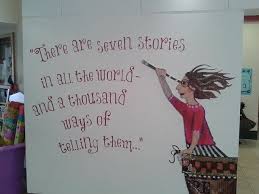
It is said that there are only seven stories in the world. 
A sign at Seven Stories National Centre
for Children's Books
in Newcastle, England
Do you know what the seven stories are? Well, I didn't.

A bit of Googling came up with two different lists. While one list was more plot-based, the other was theme-based:
Man against Man
Man against Nature
Man against Himself
Man against God
Man against Society
Man Caught in the Middle
Man and Woman

With some brain work, I would think that most narrative picture books can be placed within the above themes, too.

• STAND TALL, MOLLY LOU MELON by Patty Lovell and David Catrow? 
Man against Man.


• LITTLE ELLIOT, BIG CITY by Mike Curato? Man (elephant) against Society.


• I DON'T WANT TO BE A FROG by Dev Petty and Mike Boldt? 
Man (frog) against Nature.


So, with only seven stories in the whole wide world, how can we come up with unique ways to tell them? Try giving an old theme a new twist!

Find New Setting
A new picture book takes the tried-and-true theme of "I don't want to go to bed!" and sets it in the world of robots. There is beauty in the details in POWER DOWN, LITTLE ROBOT by Anna Staniszewski and Tim Zeltner. Instead of going to bed, Little Robot is sent to power down in his sleep module; he asks for a can of oil, worries about dreams with error messages, and complains his circuits hurt. So cute!


Choose a New Time Period
I am a huge fan of Tammi Sauer, and her book, ME WANT PET (illustrated by Bob Shea), is one of my favorites. A mere 222 words, this new take on the "I want a pet" theme sets the story in prehistoric days. The choice of pets reflects the period -- a saber-toothed tiger, a woolly mammoth, and a dodo. The clipped language is a perfect fit for the story.

Reverse Roles
Shake up a relationship by reversing the roles between two characters. HOW TO BABYSIT A GRANDMA by Jean Reagan and Lee Wildish offers tips to the child reader about "babysitting" a grandparent. Fun!


Fracture a Fairytale
Fractured fairy tales have been a hot business at least since Jon Scieszka's THE TRUE STORY OF THE THREE LITTLE PIGS hit the shelves in 1989. Although many authors jumped on the band wagon, creative and unusual new renditions of classic tales can still be found. Check out Corey Rosen Schwartz' and Dan Santat's THE THREE NINJA PIGS (2012) and NINJA RED RIDING HOOD (2014), two books that mix common tales with a modern twist of martial arts.

Switch Traits
My last example of a twist is taken from my classic collection. Bulls are known to be fierce, right? Well, not Ferdinand. He wants nothing more than to stop and smell the flowers. Will anything stir him from his docile mood? THE STORY OF FERDINAND by Munro Leaf and Robert Lawson provides the answer.


So next time you feel stumped about a storyline that's been done so many times before, make like Chubby Checker and TWIST!


Wednesday, July 1, 2015

Gathering Moments, Hours, Days


Gathering Moments, Hours, Days by Jan Godown Annino

I Meant To Do My Work Today
by Richard Le Gallienne


...“but a brown bird sang in the apple tree,
and a butterfly flitted across the field,
and all the leaves were calling me
and the wind went sighing over the land
and…”
-       copyright Richard Le Gallienne


Exploring and experiencing are what the talent-saturated & prolific author
Jane Yolen calls Gathering Days. In these summer days & nights,
she recently reminded social media followers to take time to fill the
wells of experience. Look for unusual plants & animals. Pay attention to
the everyday trees, flowers and creatures, too.
Listen to live music. Note odd names on streets and signs. 
Dance a folk dance.
Try a wild ride.
Or wild walk.
                                                     Acorn Street, Boston - May 2015 
                                                                Gathering Wobble!

A Gathering Day, or the Gathering Times & Gathering Moments are

                                                   Our yellow cottage front yard blossoms that 
                                                                       will = eggplants!


some of the many ways we connect with the thrum of activities that
can hold kernels of energy that lead to eyedears & stories.

 For example, how much better for me to write a garden story,
when I have wet dirt under my fingernails (my garden gloves become soaked
& mucky so I usually pull them off.) And when I attempt to grow a new plant 
to my garden patch, such as this year's eggplant & cotton.

How better it is for me to write these poems
about the seashore that I’m at work on after I’ve been engrossed in
following this olive snail’s trail, down on the Gulf of Mexico at St. George Island.


How easier it is to write about fear if I’ve climbed telephone-
pole-high in tree tops, to wobble along Myakka River State
Park’s shaky tree canopy walkway. I do NOT like heights so much.
Or, even a leetle bit.
And I did this!!

Gather Ye Gathers in Summer! 

Gathering Days ought to be sprinkled in our life all year, but for many 
with family & work rhythms tied to the school year, summer is a
fine time to gather aromas, to touch farm animals, to ride horses,
to observe sea creatures, to walk far into fields, run up hills,
even traipse into mountains.

Here are a few Gathering Day moments of mine, through the years,
woven into my stories & poems.

* Meeting a mama bear and her two cubs when they walked up -
and I walked RAN!  along a steep Mt. LeConte, TN trail.


* Meeting a Florida panther in South Florida (an actor for movies &
commercials, but nonetheless a moving, bounding panther.)
I JUMPED back!


* Riding horses on Paynes Prairie, Florida, to see bison up close. (They
were re-introduced, having once roamed there.) But the touch-and-go
moment of the ride was dealing with alligators strewn about this wet
prairie, which made the horses nervous. My husband & I are alive to 
tale the tell. Or to tell the tale. I rather like tale the tell.


(Todd... this Florida bison is for you!)


If the heat index for recent days wasn’t 103 upwards here in North Florida,
I would go out for my Daily Gathering during the day, instead of at nite.
On a regular foot journey, we small- city nayborhood dwellers can
easily walk from this little yellow cottage to a vet’s office, post office,  sub and burger chain & an independent country buffet & indy cookie/cake shop, plus a chain grocery, & bank. And yet - 
we can also climb hilly streets intensely wooded in swaths with tall growth pines, live oaks, dogwoods, cypress & other tree beauties.

The area is pocketed with an elevated road thru swamp, undeveloped grassy and woodsy gathering places where the animals in hiding (sometimes not in hiding) include fox, bunnies, coyotes, armadillos, opossums, bats & other small mammals such as the daily tree scrambles of the squirrels. Herons, Canada geese, owls and many song birds such as jays, cardinals, wrens & warblers visit. As do blackbirds, cowbirds, & treat of treats, hummingbirds. 
Surprising for a swamp, no gator spotted yet!
 Oh - quail. Can't forget the juvenile quail.

                                            (Cutie flew away last week when I went to fix a leetle 
                                                 box lined with soft stuff... Our cat is strictly inside,
                                                 we have no doggie, so why it landed on our door
                                                 mat is a mystery.)


To get back to that Gathering Wobble, our daughter works in Boston 
& the Gathering Day events she’s written to us about include bunny-watching, 
turkey watching, maple syrup making & kayak drifting on the Charles River.

Some gathering moments our family enjoyed together with her in
May in Boston were chipmunk watching, lilac sniffing, bleeding tooth-plant
finding, cobblestone walking on Acorn Street in Beacon Hill,
(avoiding falling) & robin-watching.


Where do you like to spend gathering days? 
What have you gathered in summers past? 
Is it too soon to report in on your “gathers” this season? 
I wish you many great gathering moments that will fill you with eyedears, words,
poems, pages, stories, scripts, illustrations & books.

Free Event!
If you would like to join me & several Group Bloggers in an online summer children's writing school, which is a great boost in gathering pages accomplished and in writing THE END, 
please read my essay about it & think about becoming a summer student in the comfort of your own home. It's created by two energetic SCBWI members. Last summer National Book Award-winning children's author Kathryn Erskine set the nourishing & exciting pace as the first day's faculty member.