Wednesday, February 27, 2019

A Kidlit Breakfast with Buds ~ by Patricia Toht

This past Saturday, I joined hundreds of other children's literature lovers at the annual Andersons' Book Breakfast. 


Anderson's Bookshop is a Chicago-area independent bookseller that specializes in selling children's books and providing book fairs. For 17 years now, they have gathered teachers, librarians, authors, illustrators and others together for a kidlit celebration. Their breakfasts are so popular that they've outgrown location after location. Attendance this year was 500+ attendees!
Look at that crowd!
Photo snapped by author Sarah Aronson

The program of the day included talks from the speakers, book recommendations from the Andersons' staff, and several 10-minute breaks, during which Illinois authors and illustrators visited tables to discuss their books. Having been to several book breakfasts, I knew that I would come away with wonderful stories and bits of advice, so I've collected some here for you.

The first speaker of the day was Lincoln Peirce, author/illustrator of the BIG NATE books. 
(I was surprised to discover that I have been saying his name all wrong! His last name is pronounced "purse"!) Lincoln said that he set out to write the kind of books that he liked to read as a child. Instead of gravitating to novels, he was drawn to Charles Schulz' collections of Peanuts cartoons. BIG NATE began as a syndicated comic strip in 1991, and has grown to include both novels and comic books. Not wanting the series to go on too long, he has now ended it and begun something new -- MAX AND THE MIDNIGHTS. Wanting more variety of sights and interactions, MAX is not tied down to one location in the medieval world, and the first novel packs quite a surprise on p. 48!

Next up was the always entertaining Andrea Beaty, author of powerhouse STEM books. Andrea stated that all of her books begin with "What if...?" The first one in her series, IGGY PECK, ARCHITECT, was based on her son's love of making structures out of any material he could find. When it came time to write the second book, Andrea looked at the illustrations by David Roberts to provide some clues. She said that, while she knows things about her characters, the illustrator knows different things from bringing the characters to life through art. Pouring over IGGY, she spotted the girl that would become ROSIE REVERE, ENGINEER, and began to ask herself questions about Rosie's story. She followed the same path to create ADA TWIST, SCIENTIST and the just-announced SOFÍA VALDEZ, FUTURE PREZ. This reminded me, as an author, of the importance of leaving room for the illustrator

ROSIE REVERE, ENGINEER, 
read from the International Space Station:

Andrea also talked about the importance of local, independent bookstores. She credits her locals with the success of IGGY PECK -- through hand-selling and word-of-mouth, the book grew in sales each quarter. Andrea stresses the value of getting to know your local indies and forging those relationships!

Max Amato spoke about his debut picture book, PERFECT. Max had to return to the drawing board with this book after another title came out with a nearly identical theme of turning mistakes into creativity. Instead of giving up, he asked how he might tell the essential message in a different way, which led to PERFECT. In it, pencil and eraser have conflicting goals but find that joining forces allows for something pretty cool to happen.

Photo by author Patricia Cooley
Next, Illinois illustrator and Caldecott winner Matthew Cordell took us through "My Caldecott Year." It began with an early morning phone call informing him of his win and sped through months of activity (including the celebratory trip to Disney World!). Despite the demands on his time, Matthew found the time to keep working, and has multiple books coming out in the coming years. He shared his sketches from the picture book biography of Fred Rogers, which had me squealing like a fangirl.
Mr. Rogers sketch by Matthew Cordell.
Photo by Patricia Cooley.

Wrapping things up was Mac Barnett. His books range from picture books like SAM & DAVE DIG A HOLE to the novel series THE TERRIBLE TWO. His newest series is "autobiographical" -- the adventures of a kid named Mac, who also happens to be a spy (MAC B, KID SPY). I love how Mac is not afraid to jump to the preposterous from the opening chapter of Book 1. The Queen calling Mac at breakfast to request his help? Of course! 

Mac also shared the text of his upcoming picture book biography, THE IMPORTANT THING ABOUT MARGARET WISE BROWN. Funny, sentimental, and signature quirky, I felt this book perfectly captured the voice of the author. The book had the audience sighing at its close. 

This was my first Andersons' Book Breakfast as an author, so it was an especially meaningful one for me. After the meal, the speakers, and lots of table talk, I joined other Illinois' authors and illustrators at the book signing tables. We discussed what a dynamic kidlit state we have and thanked our lucky stars to have thriving, generous indie booksellers like Andersons' Bookshops.
I feel so...authorly!
Thanks for the photo, Patricia Cooley.

***WINNER*** 

From last week's post, the winner of Cynthia Lord's BORROWING BUNNIES is... Angie Quantrell! Congrats, Angie! (Click here for more information about Angie.)


Wednesday, February 20, 2019

Rabbits + New Books by Cynthia Lord = A Giveaway by Kathy Halsey

Superstition says if a person says "rabbit" on the first day of the month, good luck will follow. Lucky for readers,  Cynthia Lord has two new rabbit books!  The picture book Borrowing Bunnies is out now; Because of the Rabbit, a middle grade, debuts March 26, 2019. Read on and leave a comment to win a copy of Borrowing Bunnies!
Book Reviews
Borrowing Bunnies: A Surprising True Tale of Fostering Rabbits 
Written by Cynthia Lord
Illustrated by Hazel Mitchell 
Photographer  by John Bald
Publisher: Farrar, Straus and Giroux 
Ages: 3-6
Synopsis: From Amazon
In the spring of 2016, Peggotty and Benjamin were saved by Maine’s Cottontail Cottage Rabbit Rescue after their previous owners had neglected them. But before the two Netherland Dwarf rabbits could be adopted, Cynthia had to help them learn to trust people and feel safe inside a home. The bunnies slowly settled in, enjoying their clean pens, nibbling new foods, and playing with fun toys, while Cindy’s husband, John Bald, photographed Benjamin and Peggotty’s every step toward adoption. At that time, hundreds of viewers were drawn to Cindy’s Facebook page to watch their progress. Now, she has adapted the rabbits’ true story into a picture book that explores love, responsibility, empathy, and letting go―along with fostering’s many surprises, both big and small.
Why I love this book:
  • As a former school librarian,  I know most of the books on domesticated pets are from educational publisher and are sold as sets. Cynthia's narrative nonfiction stands apart in this crowd for the originality of design and inherent reader engagement. 
  • Illustrations and photos add a lively mix to the text. The close-ups John caught makes the reader want to reach out and pet these foster rabbits. 
  • Back matter on the pros and cons of ownership are a nice addition. (Warning: After enjoying this true rabbit tale, you may be smitten with bunny love. I am.)  


Because of the Rabbit


Written by Cynthia Lord
Publisher: Scholastic Press
Ages: 8-12
Synopsis: From Amazon
On the last night of summer, Emma tags along with her game warden father on a routine call. They're supposed to rescue a wild rabbit from a picket fence, but instead they find a little bunny. Emma convinces her father to bring him home for the night.
The next day, Emma starts public school for the very first time after years of being homeschooled. More than anything, Emma wants to make a best friend in school. 
But things don't go as planned. On the first day of school, she's paired with a boy named Jack for a project. He can't stay on topic, he speaks out of turn, and he's obsessed with animals. Jack doesn't fit in, and Emma's worried he'll make her stand out.
Emma and Jack bond over her rescue rabbit. But will their new friendship keep Emma from finding the new best friend she's meant to have? 

Why I love this book:

  • This is a great middle grade for the young end of the MG audience.
  • Writers will appreciate how informative facts are woven through the narrative. (Read the "titles" of every chapter for rabbit facts!)
  • Because of the Rabbit includes original topics as well as familiar topics: fitting in, new school jitters, sibling issues as well as homeschooling vs. public school, being on the autism spectrum; the French-Canadian culture and tales of Monsieur Lapin.
  • Cynthia Lord creates realistic dialogue and shares the Emma's interior monologue to render a protagonist readers will root for.    
  • The novel shares a refreshing portrait of a close father- daughter relationship and parents who aren't necessarily antagonists.

Interview with Cynthia

K : It’s interesting you have two bunny books out roughly a month apart. Was the creation/genesis of each book different? I know that Borrowing Bunnies began with the photographic journey of fostering bunnies from your Facebook page.

Cynthia: My stories always begin with something from real life. In both cases, the books began with rabbits, but then the idea went into two directions: a novel and nonfiction. 

I’ve been involved in animal rescue for years. We’ve adopted three rescue bunnies and we also foster rabbits. Borrowing Bunnies,began when a foster rabbit gave birth at our house. My husband is a photographer so it felt like a nice opportunity to do a nonfiction book about fostering together. 

When I write novels, I’m always drawn to sharp contrasts. When opposites exist within a character, situation, or setting, conflict naturally occurs. Rabbits can be sweet, gentle, and timid, but they’re also clever, fast, escape artists. So that contrast appealed to me.  Because of the Rabbit begins when the main character and her dad find a stray rabbit. 

K: Your middle grade, Because of the Rabbit, also gives factual information about rabbits at the beginning of each chapter. Did you use the same research for both books?

Cynthia: Yes, though the research started years before either book. We adopted our first pair of rabbits five years ago, and I needed to learn about them in order to take good care of them. Rabbits are more complex than I first assumed. They have a strict social order and code, and in learning about that, I was amazed at the similarities and difference with our own human social codes.

K: I love the original designs for both books.  In Borrowing Bunnies, original photos taken by your husband John Bard are complemented by Hazel Mitchell's illustrations. In Because of the Rabbit, we find spot art and chapter beginnings with torn, notebook paper. Did you have input on that?

Cynthia: The combination of photographs and illustration in Borrowing Bunnies was the idea of our editor and art designer. Our editor Grace Kendall at FSG, wanted to show movement. That’s tricky in a photograph. For example, I describe a “binky” which is a joyful hop-twist. That’s hard to show in a photograph, because any image caught in mid-air doesn’t convey the right emotion. Designer Monique Sterling combined John’s photos and Hazel’s art in such an appealing, brilliant way.   

With Because of the Rabbit, I was fortunate to work with editors Kate Egan and Emily Seife and designer Nina Goffi at Scholastic. The ripped notebook-paper headings were their great idea!

Emily and Nina do give me the chance to offer my opinion on the design and cover art. I see that as a gracious gift, because not every author has that opportunity. I focus my response on two questions. “Does this reflect the story well?” and “Will kids like it?” For the cover of Because of the Rabbit, I showed our preliminary cover at some school visits and asked the kids to give me some honest feedback. When a potential cover flashes on the screen in a crowded gym, I know in the first two seconds if we have a winner. After that, the kids might try to please me, but those first couple seconds are their honest opinion. It’ll either be gasps and cheering or silence. 

K: Your motifs feel similar in both books. In Borrowing Bunnies, your foster rabbits move from shy to brave. In Because of the Rabbit, Emma must brave the transition from home schooling to public school. Did you plan this?

Cynthia: Wow, I hadn’t thought of that. I guess that’s a common theme in many of my books. I was a shy child and adults are constantly telling shy kids that’s not the way to be. 

We often insist that children try new things, and as adults we forget how hard that is. How often do we choose to try something new outside our comfort zone? But we have some power to say no that children often don’t have. 

In Because of the Rabbit, Emma goes to public school for the first time. So I looked for opportunities to do something new that scared and excited me—and to do it alone. For example, I signed up for a writing retreat on an island where I had only a few things in common with the other participants. Many of the other people already knew each other. As an adult, my impulse was to ask a friend to come with me so I’d have someone to sit with at lunch, etc. But I forced myself not to, because I knew the book would be better for it. So I went through that experience alone, as Emma did. As a writer, I paid attention. I listened to what I said, both out loud and to myself. I noticed what my body felt like. What choices I made. I kept asking myself, “Do I belong yet?” Many of those details went into the book, because whether you’re in your fifties or in fifth grade, the emotions are the similar.

K: I love this quote from Because of the Rabbit. “It’s a powerful thing to rescue something. It changes you both.” How did this idea apply to you when you began fostering rabbits?

    Cynthia: Every fostering experience has moved my heart outward. The rabbits and their new adoptive families are all special to me. I get photos and notes from those families, and it’s the best feeling to see a former foster bunny happy and loved in their new home. 

Not every moment in rescue is happy, though. Some rabbits come to us having experienced abuse and neglect. As a foster, I celebrate the successes knowing that sometimes our own best efforts aren’t enough. That’s the hardest thing I’ve had to face.

K: Many real life details/experiences are found in both books. This makes for a richer read. What writing advice do you have  on weaving personal experiences /passions into our work?

Cynthia: Start by thinking about things you care about and unique experiences you’ve had. Then choose something where you have some mixed feelings or parts of that experience that you don’t understand.  Something that brings up questions without easy answers.  That will bring conflict and make for a much richer story. 

Every important experience in our lives has more than one emotion. There’s the emotion that you expect to feel and it’s often easy to admit to. Then there’s another emotion in that same experience: a smaller, less socially-acceptable, harder one. Often the two feelings are opposites. The smaller, harder one is more difficult to admit to, but that’s the one that will add depth to your story. It’s also the one that children need someone to say for them.    

K: What's next for you?

Cynthia: This winter I’ve been working on a chapter book series. I also would like to do another picture book with my husband. So for fun, we’re working on a fiction photographic picture book about our two guinea pigs. 


Readers, spring into action and leave a comment to win a copy of Borrowing Bunnies signed by Cynthia Lord, John Bard, and Hazel Mitchell.  

Wednesday, February 13, 2019

Writers Use Mentor Texts ~By Suzy Leopold

Writers know the value of reading mentor texts. 

My students at Lincoln Land Community College, know the value of reading mentor texts. Students in my classroom read for pleasure becoming proficient readers. Through daily reading, freshman learn how to write and make improvements with their writing.

Mentor texts can be used in a variety of ways for all students and writers. Mentor texts become powerful models to inspire students and writers.

There are times when I share direct instruction to guide students and model for them good writing elements and what to look for.


"Let's look at what real writers are doing. Let's see how 
we can learn from these writers." 
Ralph Fletcher, Author

A shorter reading passage can be used as a mentor text to focus students' attention with a mini-lesson.
I picked these flowers for you
from my 2018 garden.
Happy Valentine's Day!
Here's an example of a mini-lesson using direct instruction along with what I might say . . .

Today's lesson includes author's word choice. Let's read, and look for word choices made by the author on these two pages.

Now reread. This time as you read, jot down and write as you answer these questions:

1. Do you note active verbs?
2. What word did the author chose? Think of a synonym that may work.
3. Did you find interesting figurative language, such as a metaphor?

I don't always require students to focus on a particular concept, such as word choice. Some lessons are less structure, allowing students to discover what is working in a piece of writing. As an educator, I must encourage higher order thinking through the six steps of Bloom's Taxonomy [there are several variations of Bloom's Taxonomy--a cognitive development tool]. The highest level of learning takes place is through evaluating. To do so, students are judging the value of the material being read for a given purpose.

Click on the link again and you'll note active verbs used by students for this learning outcome: evaluate, appraise, assess, compare, and so forth.

"Every writer, no matter how skilled you are or how beginning 
you are, encounters and reads something that can 
lift and inform and infuse their own writing."
Ralph Fletcher, Author

Writers and readers use mentor texts to discover why writers are successful. Reading and examining books as model texts encourages readers and writers to become better at the craft of writing.

Mentor texts are powerful tools--books that students and writers can learn from, glean from and eventually affects your writing in positive ways.

There are numerous methods for reading and examining mentor texts to support students and writers.

I'll share a mini-lesson on the Book Head Heart Reading Framework.

The BHH model was developed by Kylene Beers and Robert E. Probst. They are the authors of DISRUPTING THINKING WHY HOW WE READ MATTERS.

"What do we mean by Book, Head, and Heart?
This is a simply a short, telegraphic phrase to suggest 
that we need to pay attention to the text, to our thoughts about it, 
and to what we feel and how we might have changed, 
no matter how slightly, as a result of reading."
Kylene Beers and Robert E. Probst

BHH Reading
The BHH framework is a great tool for students and writers to stop, notice, and note.
DISRUPTING THINKING
WHY HOW WE READ MATTERS
Reading carefully requires a certain amount of stamina, concentration, and patience. There are moments when a reader needs to slow down and ask what is working and what isn't.

Open up a mentor text and read it. Now read the story for a second time--better yet, read it aloud. Consider using the BHH Reading Framework. Find several ideas that can be used as a take-away to make your own writing polished and satisfying.

Next month as you participate in ReFoReMo, with coordinators and contributors, embrace mentor texts in a way that makes room for your meaning to improve your writing.

Check out these Picture books by Ralph Fletcher
This tab shares books for writing teachers and there are excellent tips for all writers on the teacher hangout tab.

Wednesday, February 6, 2019

Cabin Fever Writing Month


By the time February comes 'round, writers in my neck of the woods get cranky. Stir crazy. Apt to toss computers out the window and into the snow.

It's Cabin Fever time. But this year a bunch of us have a remedy: Cabin Fever Writing Month. At the back table in the library. Bring your own coffee; chocolate will be provided. Along with heat, books, and a feeling of neighborliness without the demands of making conversation.

You see, we plan to write. Because every one of us took a look at the calendar when NaNoWriMo came along and rolled our eyes.

"A guy must have come up with November," we agreed. After all, there were turkeys to catch, pies to bake, community harvest dinners, family dinners, getting a head start on overseas holiday cards...

"Let's do it next year," we said. Nothing ever happens in February. Sure, there are holidays - Groundhog Day, Lunar New Year, President's Day, Valentine's Day - but nothing requiring pies. Or turkeys. So this month we're pulling out those outlines for novels, our scribbled thoughts for a short story, and picture book manuscripts that got shoved aside during the holidays. We're tucking folders and laptops and thermoses full of hot cocoa or coffee into our book bags and heading to the library. On Wednesdays. To write. With our friends.

Who knows? Maybe we'll actually finish that draft, or turn a few StoryStorm ideas into completed stories.

Because this time next month the sky will be brighter, the days longer, and the world will smell like spring. So this is it, my friends. Sharpen your pencils and get those words onto the page before the ice melts and the sap starts runnin'.

Wednesday, January 30, 2019

Tips for an Awesome Book Debut by Tina Cho and Epic Eighteen Friends

My picture book debut year of 2018 is over, but some of the Epic Eighteen authors and I would like to share our tips with you to help with your debut. It's never too late to start thinking about all the bookish things that need to be done like as soon as you sign the contract or even before, get your author photos taken. Your publisher/agent will ask for one.

General
"Stay organized! Keep a month-by-month master list of tasks to complete before release day. Every time you hear a tip about book promotion, include the tip in your list so you keep track of all the great ideas swirling around. And don't worry if you can't get to all the ideas by release date--your book promotion efforts will continue after that magical date as well!"
~Melissa Stoller of Scarlet's Magic Paintbrush

"Relax. Take time to enjoy this experience that very few people get to have. Not doing every single thing to promote your book won't make or break your book."
~Jamilah Thompkins-Bigelow of Mommy's Khimar

"My top tip is to join a group like Epic Eighteen. For all the obvious reasons. And if you can't find one, create one yourself."
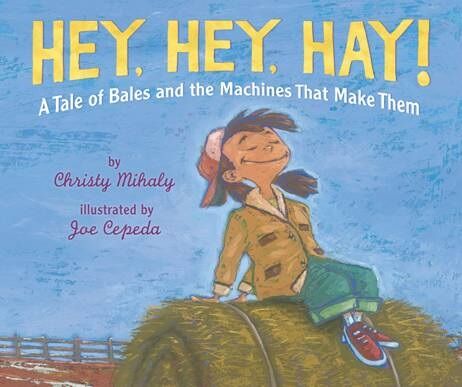
~Christy Mihaly of Hey, Hey, Hay!

Book Promotion
"Don't rely on your publicity department to contact book bloggers--You need to do it yourself 6 months before publication."
~Jeanette Bradley of Love, Mama

"Keep a list of all your guest blog post urls that you've been featured in. Write blog posts ahead of time and keep them in a folder so you don't keep repeating the same things in your posts."
~Tina Cho of Rice from Heaven

"Ask your network to suggest your book for purchase at their public libraries. Library purchases often result in multiple book sales."
~Margaret Chiu Greanias of Maximillian Villainous

"Change all your bios in SCBWI, your website, Twitter, etc... to reflect that you have a NEW BOOK!"
~Tina Cho of Rice from Heaven

"Build a relationship with the local indie bookseller before the book comes out. It really makes a difference. The bookseller has been so helpful, and I think it is because they already knew me as a client way before my book came out.

Set up a GoodReads profile and an Amazon profile.You'll want to copy/paste your US Amazon profile into the other country Amazons (Amazon.co.uk, Amazon.ca etc...) because it does not automatically transfer your profiles over, even if your login info remains the same.

Book bloggers and book review chains help build up your book's visibility."
~Viviane Elbee of Teach Your Giraffe to Ski


Swag
"Wait till your reviews come out before you order postcards so that you can include the reviews on your postcards. On the back of your bookmark, thank people for buying your book and list other ways they can be helpful such as telling their library about the book, telling friends and family and writing a positive online review."
~Kate Narita of 100 Bugs! A Counting Book

"Collect book swag (even swag pictures) that YOU like and might make for your own."
~Tina Cho of Rice from Heaven

"Don't overdo it with swag. The return on investment probably isn't there."
~Hannah Holt of The Diamond and the Boy

Book Signing
"Take Post-It Notes for people to write the spelling of their names and what they'd like written in the autograph.

Decide on refreshments, a craft, and decorations that emphasize the theme or colors of your book."
~Tina Cho of Rice from Heaven

"If you have a relationship with a local elementary school, send home fliers in school folders the week of your launch party. You might be surprised by who shows up to see you read.

Unless you are a celebrity, bookstore readings tend to be sparsely attended (unless they have a regular storytime). It's probably not worth your time to drive an hour to read to one person. Only do these if you are more interested in building a relationship with the bookseller than selling books on that day. A chain store will likely forget you by the next day, but for a smaller shop, you could build meaningful relationships. Hopefully you'll have more books and more events down the road. Build for the future!"
~Hannah Holt of The Diamond and the Man


Tina signing with her special Sharpie pen

School Visits
"Try a school visit...you might actually love it!!"
~Shanda McCloskey of Doll-E 1.0

"During my debut year, I learned that every school handles visits a little bit differently. Be flexible whenever possible."
~Brenda Maier of The Little Red Fort

"During readings at schools or bookstores etc., figure out a way to make your story interactive. This could be having the kids repeat a refrain or listen for a particular word. It could be singing. It could be asking questions as you go along, or showing illustrations and asking kids about it. AND--practice with a friendly crowd before you do your debut reading. I took my ARC to a first grade classroom (where the teacher is a friend) and read it to them and responded to their constructive critique (there was a portion that needed a little explanation for young readers)."
~Christy Mihaly of Hey, Hey, Hay!

"Make your presentation in Google slides, that way you can log into any computer, and it's there. You don't have to worry about carrying your computer or projector or cords."
~Tina Cho of Rice from Heaven


"Make a teacher's guide for your book and have it downloadable on your website. Bonus if you have a craft!"
~Tina Cho of Rice from Heaven

Rice from Heaven craft

After the Debut
"Keep a folder on your computer to collect photos of your book in various places and with other people.

Focus on the children, not the gatekeepers, not how many stars or no stars your book received. If you made a difference in the life of a child (or adult), you achieved your purpose."
~Tina Cho 


Letters from students and a teacher in New York regarding my book

♥♥♥

I hope these tips are helpful to you. Remember, even though your book's birthday or year is up, you still need to promote your book. In the coming weeks I'm doing some author Skypes for World Read-aloud Day and doing an author visit at my school.

What can you start doing for your book's release? Have fun! Be creative!


Wednesday, January 23, 2019

DRESS LIKE A GIRL - A Fashionable Interview with PATRICIA TOHT about her latest PB, including a BOOK GIVEAWAY

Patricia Toht talks girl power, two new books releasing in 2019, and some wise writing advice she received  . . .

By  Eileen R. Meyer

Welcome to another TAKE FIVE interview. I hope that you’ll take five minutes to get to know more about our fellow GROG BLOGGER, Patty Toht and her latest picture book, DRESS LIKE A GIRL.

Patty's new picture book released just yesterday, January 22nd! Her book birthday also happened to coincide with Patty's actual birthday, too--what a great birthday gift! Cake and ice cream for everyone. :) Now on to our Five Questions for Patty:

   1. What was the inspiration behind your new picture book, DRESS LIKE A GIRL? Did your 3-year old granddaughter have anything to do with it?


The book is dedicated to my smart and feisty granddaughter, but the inspiration actually came from Twitter! Early in 2017, a story circulated about a new White House dress code, reportedly stating that female employees should “dress like a woman.” As a result, women began to post photos on Twitter, wearing professional garb that was anything but traditionally “lady-like.” There were astronauts, firefighters, soldiers, construction workers, scientists, etc. After I re-tweeted several images, my agent dropped me an email with a little nudge: “What about Dress Like a Girl”? BRILLIANT! The text came together and was submitted and sold very quickly. (So unlike me - I can be The Pokey Little Writer sometimes!)

2.  This is your third picture book. You’ve previously released: All Aboard the London Bus, 2017 and Pick a Pine Tree, 2017. Tell us more about your writing process. As an author who also works a full-time job and manages a busy family life, how do you work to squeeze in writing and revision time?

I’m anything BUT consistent with my writing, especially with new projects! Although I’m obsessed with recording new ideas in tiny notebooks or on a phone app, I often carry these ideas around in my head for months until I finally get started on them. It’s like a pitcher being filled, and until it reaches overflow level, I’m willing to let it keep filling. But the positive twist is that my first drafts tend to be very well-developed.

As for revisions, I can be grumpy about revising, (my critique partners are angels for dealing with my grousing!), but I love working to an established deadline. I dig in and get the work done. The text for Dress Like a Girl was almost completely rewritten twice, so there was a lot to do!

3. What is the best writing advice that you ever received?  Did it encourage you during a time that you felt stuck?

The best advice I received came from fellow Illinois author Carol Grannick. We both had begun writing for children during the days of snail mail subscriptions, when editors actually sent correspondence in return – either acceptance or rejection letters. But this practice sadly disappeared, to be replaced by a bit of a black hole, with no word unless editors or agents wanted to acquire your work.

Carol had grown discouraged by this and had written a post about putting aside thoughts of publication to focus on craft and writing that brought joy. I decided to do the same. After a few years of doing just that, I discovered that I was enjoying the journey again and my writing had taken a leap forward. I was then ready to start submitting again.

4.  Share something surprising that people don’t know about you.

Most people outside of the Chicago area don’t know that I’ve been writing for over 20 years! It wasn’t until recently that I’ve been published, so many folks see me as a “new” author.

5. Tell me a little bit more about the artist for your book, Lorian Tu, and about how her style was the perfect fit?

My co-creator for Dress Like a Girl is illustrator Lorian Tu. Lorian has illustrated two books for a small press; this is her debut picture book with a large publisher. I’m excited that HarperCollins teamed up my words with Lorian’s illustrations! Her girl characters are adorable, and I love how the overall theme of a sleepover holds everything together. Some pages were a wonderful surprise, like the penguin outfits in the Arctic scene. My original thoughts about the outfits were to keep them quite literal, so I was happy to see the girls in the book being more creative and whimsical. You can check out Lorian’s work on her website, www.loriantubooks.com.

In closing – Patty, you have another book releasing later this year – Pick a Pumpkin! 2019 will be a very exciting year for you. Where can readers and fans find you on social media?

I do have another book coming out in 2019! Pick a Pumpkin (July 2019) is a companion book to Pick a Pine Tree, which came out in the autumn of 2017. Jarvis has illustrated them both in a rich, nostalgic style. I am completely crazy over his illustrations! Lucky me, he will also be illustrating a future book of mine, Together With You (date TBD).

Readers can find me in several places:

My website = www.patriciatoht.com
Facebook = Patricia Toht
Twitter handle = @patriciatoht
Instagram = patricia.toht

Thank you Patty! For readers - leave a comment below and you'll have a chance to win a copy of Patty's new book, DRESS LIKE A GIRL! We’ll announce one lucky winner from those who comment by Saturday, February 2nd.

Thank you for having me, Eileen! I’m so happy to be part of the kidlit world!


Patty is involved with the #KidsNeedMentors program. 
Here is Patty visiting with students and sharing a sneak preview 
of  PICK A PUMPKIN, due out later in 2019.