Showing posts with label Jennifer Ward. Show all posts

Wednesday, April 11, 2018

Cover to Cover, Part I ~By Suzy Leopold


Can you name and identify the numerous parts of a picture book? I bet you’re thinking, “Of course I can.” 

Writers are readers and readers are writers. It’s a reciprocal process. Therefore, many writers know the importance of being a critical reader when reading picture books as mentor texts. Reading and analyzing currently published picture books includes examining what works for the book and why it is successful.

Studying and recognizing the various parts of a picture book and knowing picture book terminology can help to inform your writing, too. It’s useful to know the terminology used for publication. What parts of a book are included in a published book? Understanding the purpose for the creation and construction of a book can make you a stronger writer. 

While picture book parts vary widely based on the genre, the age of the audience, and the subject matter, they all share several common features of a book. Some have more parts than others.

Let’s see how many parts of a published book you are familiar with. You are sure to recognize many.

back cover
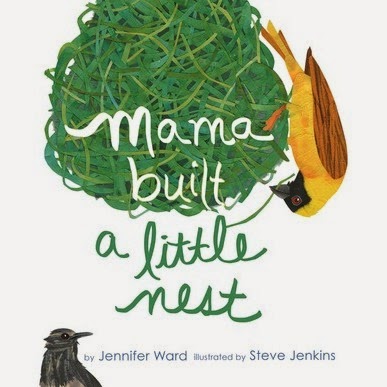
MAMA BUILT A LITTLE NEST
by Jennifer Ward
Let’s begin with the cover—This is the part that everyone recognizes and sees first. Often children and adults, too, look at the cover to determine if its a book of interest and “Judge a book by its cover.” Dig deeper and go beyond the cover. Don't forget to look at the back cover.
front cover
MAMA BUILT A LITTLE NEST
by Jennifer Ward

Most hardcover children’s books come with a book jacket or dust cover to protect a book, making it durable. Open a book to find the book jacket folds into a flap wrapping around the inside of the cover. The front flap shares a brief summary of the book along with superlatives. Biographical information about the author and illustrator are noted on the back flap.


Tom B. at Building a Library is not quite certain about the purpose of book jackets. He asks, “What exactly is the value of dust jackets on kids’ books?” Even his daughter has an opinion and always demands, “Take the wrapper off, Daddy! I don’t like the wrapper!” You can read more in this this post.

Slow down and look at the front matter because “front matter matters,”  
Megan Down Lambert

Open the cover of a picture book and you’ll note endpapers. These are found after the final pages, too. Most often endpapers are left blank. The color may compliment the cover. Some endpapers are illustrated and add to a story. These endpapers may contain additional information, drawings, diagrams, and maps. Sometimes a story begins here and ends here. 

end papers and book jacket flap
MAMA BUILT A LITTLE NEST

by Jennifer Ward
For more information about Jennifer Ward and the books she's written, read a previous post here that I wrote.

More Front Matter  . . . 

Title page--Title, author, illustrator, and publisher are located here. Most often the title page is included in the front matter. Some publishing companies indicate this information in the Back Matter [more on this in a second post].
1. Dedication page--A special message written by the author and illustrator. This is usually a message of gratitude or dedication written to a loved one, family member, or a mentor who supported the creation of the book. Along with a name, the author and illustrator may include a reason why the book is dedicated to this individual.

Copyright page--This page features copyright and publication information--the publisher and year of publication. The Library of Congress cataloging data is included. Sometimes the copyright information is located in the Back matter.

Table of contents--Many nonfiction books include a table of contents listing chapter titles and page numbers.

Table of Contents
READING PICTURE BOOKS WITH CHILDREN
by Megan Dowd Lambert
Preface--A preface may include an author and illustrator's note about the creation. Sometimes a note to parents indicates the content of the book supporting the parents decision to select the title for their child.

Foreword--A forward is a brief introduction usually written by an expert in the field supporting the content of the author's facts and information. The forward gives credibility to the author. The message supports the writer and publisher during the level of marketing and shares a "stamp of approval".


Introduction--An introduction explains why the book was written. It is an opportunity to grab the reader's attention. It may be written by the author or another individual.

Keep in mind, not all picture books include all of these elements.

Now onto the book proper . . . 

Leaves--pages of a book
1. Verso is the left hand page.
2. Recto is the right hand page.
Verso
READING PICTURE BOOKS WITH CHILDREN

by Megan Dowd Lambert
RectoREADING PICTURE BOOKS WITH CHILDREN
by Megan Dowd Lambert


Gatefolds--is an oversized page that is folded into a book. It is typically located in the center of the book and is often called a centerfold. The gatefold encourages the reader to unfold the page to find more information and artwork.

Gutter--The vertical seam between the recto and the verso pages that connects each page to the binding.

"The gutter helps the reader progress toward, 
or resist the pull of, the page turns."
Megan Dowd Lambert
Gutter
BOWN BEAR, BROWN BEAR, WHAT DO YOU SEE?
by Eric Carle

READING PICTURE BOOKS WITH CHILDREN

by Megan Dowd Lambert
How did you do? Were you able to identify all parts of a book, most or some? Can you think of additional important parts of a picture book?

There are many more. This is a two part blog post. Look for Part II on June 6th when I'll share more picture book terminology, including the various parts of back matter.

Sources:
Lambert, Megan Dowd, READING PICTURE BOOKS WITH TO CHILDREN: How to Shake Up Storytime and Get Kids Talking About What They See, Charlesbridge Publishing, 2015.

For a SLJ post, read more about Megan Dowd Lambert in this interview.

Thursday, February 23, 2017

Meet Jennifer Ward ~By Suzy Leopold

Just south of the Illinois Prairie, where I homestead, lives a favorite author. She and I have many of the same interests. We both value the importance of caring for nature. We both value the importance of literacy. More importantly we enjoy combining these values. Through picture books we instill the love of nature and literacy with children and students.

I am delighted to share an interview with you. Let me introduce you to . . .  

Jennifer Ward
Jennifer Ward and Oree
Suzy: 

Why do you like to write? What's the best thing about being an author?

Jen: 
   
Picture books bring me so much joy! That is why I write them. I also enjoy writing because it’s a creative process, and I love being creative. The best thing about being an author? Hmmm. Working in a creative field. Being surrounded by book people (some of the best people in the world!). Working in the field of literacy and nature, something I am passionate about. 

Suzy:

Share your author history. When did you begin writing for children, and how did you know it was something you wanted to do?

Jen:

As a young child, I was always making my own books. Always. My parents knew it was something I enjoyed doing, and although I grew up in a household rich with books, they gave me a very special picture book as a gift once I graduated from college. The book was “Carl’s Busy Day” by Alexandra Day. In it, my father inscribed this message: 

Jenny, 
Your Mother and I see in this book the prototype for your own artistic creativity – a love for life’s children – and animals too! We want to share YOUR volumes in years ahead!! 
All our love, Mom & Dad
Christmas, 1990
    CARL'S BUSY DAY by Alexandra Day
    Inscription from Jenny's Parents

    Obviously, my mom and dad envisioned that I would become a published author someday, even though I never thought it was an attainable goal. However, once I began teaching elementary education, I really became immersed in children’s books - integrating them into cross-curricular studies in my classroom. 


    It was then that I decided I would try and publish my own stories for children.
    By Jenny, age 10
    THE GREY HORSE
    Written & Illustrated by
    Jenny Sultan Ward

    Suzy:

    What inspired you to write your first book? Where do you find inspiration and ideas for your manuscripts?

    Jen:

    I was inspired to write my first published book, “Way Out in the Desert”, published in 1998 (and still in print!) because I was living in the Sonoran Desert and found it fascinating: the plants, the animals, the climate, the adaptations of every living thing to survive a place with such extremes. 

    There were not many children’s books about the Sonoran desert published at that time, so I was making my own stories to use in the classroom with my students during our science/desert biome unit. To this day, nature is the creative driving force behind many of the stories I write.

    Suzy:

    How long did you write until you became published? Can you tell us about the process of finding and signing with an agent/editor?

    Jen:

    My first manuscript received an offer for publication very quickly. However, I knew nothing about publishing when I started out. I didn’t know SCBWI existed. I didn’t know any authors, published or unpublished. Zero networking. Publishers didn’t have websites when I started out and the www wasn’t really so worldly yet! I went into publishing blindly and naively. I wrote “Way Out in the Desert” one summer, sent it off to one publisher - I used the book, “The Children’s Writers and Illustrators Market” to find a publisher that published books about the desert – and by fall the publisher called with an offer to publish. Beginner’s luck, for sure! That was how I found my first editor, Erin Murphy, who currently heads Erin Murphy Literacy Agency (EMLA). Although Erin is not my agent (she’s an amazing agent!), I am so grateful to her for pulling my manuscript from the slush pile and giving me the chance to become a published author.

    I published my first eight books on my own. Then, I signed with the incredibly talented and wonderful Stefanie Von Borstel at Full Circle Literary. A fellow-author/friend referred me to Stefanie. Stefanie and I now have 20+ books under our belts. I adore working with an agent as it frees up the business aspect of publishing: negotiating contracts, royalty schedules and all the number-related stuff. In addition, Stefanie is my biggest cheerleader and keeps the wind in my sails : )

    Suzy:

    Tell us about your two new books that debut this year.

    Jen:

    Thanks for asking! My two newest books are SO beautiful, fun and smart! (Don’t I sound like a bragging mother?) 

    WHAT WILL GROW?
    In February 2017, “What Will Grow?” (Bloomsbury Books for Children) debuts. It’s a guessing book about seeds and what may grow from each, with beautiful gatefolds – pages that fold up, down or sideways, and is illustrated by Susie Ghahremani. Susie and I collaborated on “What Will Hatch?” and GROW is our companion title. “What Will Grow?” has already received two starred reviews, so that’s exciting!


    FEATHERS & HAIR


    My other 2017 spring debut is “Feathers and Hair, What Animals Wear” (Beach Lane Books / Simon & Schuster), illustrated by Jing Jing Tsong. It’s an informational book about animal outwear and the illustrations are stunning!

    In 2018, “Mama Dug a Little Den” (Beach Lane Books / Simon & Schuster) will debut, illustrated by Caldecott medalist Steve Jenkins. It’s a companion title to “Mama Built a Little Nest”.

    In 2019, “How to Find a Bird” (Beach Lane Books / Simon & Schuster) debuts. It’s a picture book about the many ways one may find a bird.

    Suzy:

    We all have favorite writers that inspire us. Name three of yours and why you like and respect their work.

    Jen:

    Really? Just three? That’s tough... but in my top 20: 
    1. Cynthia Rylant – her words speak to me. I love her voice. Her books are thoughtful, deep and evoke a sense of place and wonder. 
    2. Mem Fox – she’s a lyrical genius. 
    3. William Steig – storytelling at its finest. 

    Suzy:

    If you could invite five authors to dinner who would you choose?

    Jen:

    Well, the above three, plus my father and Carson Ellis.

    Suzy:

    Which writer/author would you consider as a mentor?

    Jen:

    I’ve never had a personal (in-person) mentor, but I’ve certainly studied, read and re-read the works of the above mentioned authors to guide my own writing process.
    Suzy:

    What words of wisdom or advice do you have for aspiring writers?

    Jen:

    Write what you know. Write because it makes you feel joyful and passionate. Read (read a lot) in the genre you’re crafting. Allow plenty of time to think about your writing: process it; mull it over. Embrace the revision process. Join a critique group. 

    Consider joining the Society of Children’s Book Writers and Illustrators (SCBWI) for insight into the publishing industry, networking opportunities and support. 

    Most importantly, write because it’s something you enjoy doing.
    Jen & Sue

    Suzy:

    What are your thoughts about critique partners and critique groups? Do you have any advice for finding and writers and sustaining a long term relationship that encourages learning and growing?

    Jen:

    I believe partnering with other writers is a fabulous thing, and SCBWI is a wonderful resource to connect with fellow-writers and illustrators for critique purposes. Personally, when I critique, I partner with like-genre writers. For example, I feel I can best offer support to picture book writers; not so much novelists – because picture books are what I know best. I believe a smart and successful critique group should provide encouragement, intelligent and creative feedback, camaraderie, and that members should buoy one another. 

    Suzy:

    Share some thoughts on school visits and tips for making them successful.

    Jen:

    School visits are GREAT fun for all involved and a great source of inspiration, especially when planned thoughtfully. Communication is very important – keeping the lines open with the person responsible for scheduling the visit. 
    Tips: keep audience sessions close in age range (I prefer to work with primary-only audiences and intermediate-only audiences). This way, I can tailor my content accordingly. I provide an author visit kit to schools in advance of my visit. The kit provides tips on scheduling sessions, how to prepare students so they’re familiar with my work prior to my visit and lesson plans/activities that may be used in classrooms and libraries.
    Suzy:
    Do you write every day? Do you experience days when you get stuck and don't know what to write next? Have you ever given up on a book and filed it away? 
    Jen:
    I may not write every day, but I think about my stories and my writing every day, which is an important part of the process. Yes, sometimes I get stuck. Yes, I’ve filed away many projects.
    Jen's Writing Spot
    with Pez
    Suzy:

    Do you have many ideas in your head at the moment? What is your next project about?

    Jen:
    I have many projects and ideas, some are in-process, some are just nuggets and seeds. All contain an element of nature.

    Suzy:
    What is your current WIP or what is your next project?
    Jen:
    I’m rewriting a book about birds. It’s an adult book and a huge project. 
    Suzy:

    Tell us about the Buckeye Public Library in Arizona.

    Jen:

    I know, right? The Buckeye Public Library in Arizona approached me to ask for permission to integrate one of my books into the architecture of their branch. My publisher, the illustrator and I were very excited, permission was granted and we had no idea how GRAND the integration would be. Let’s just say the final design was beyond my wildest imagination. 

    Today, library patrons may sit and enjoy books inside and beneath my book “There Was a Coyote Who Swallowed a Flea”, which now houses the entire children’s collection at the Buckeye Branch in Buckeye, Arizona. Pretty cool.
    Buckeye Public Library in Arizona

    Suzy:
    What's the funniest book you ever read?
    Jen:
    I recall laughing out loud so hard I cried while reading “Lilly’s Purple Plastic Purse”, by Kevin Henkes. I may have been under a lot of stress that day, I don’t know. But a fellow illustrator and I were reading books out loud to each other and something in that book triggered a laugh-fest between the two of us. 

    I can also tell you the saddest picture book I’ve ever read: “Bluebird”, by Bob Staake. I shared it during a dinner party at my house and had every adult at the table in tears.

    Suzy:

    What books are you currently reading?

    Jen:

    I just finished “The Alchemist” by Paulo Coelho – it’s adult fiction. 
    I spend much of my free reading time with nonfiction publications related to science, nature and birding – and reading photographer blogs related to bird photography in order to learn how to use my camera to its potential.
    As far as picture books, I always look forward to the new spring and fall releases, following Publishers Weekly and social media to see what’s new.
    Tufted Titmouse
    photo by J. Ward
    Suzy:

    Do you have a favorite treat?

    Jen:

    Spending time outdoors, bird watching.  
    Being near or on the ocean. 
    Wine : )

    Suzy:

    Share your love for the beauty of nature. Tell us more about your love for birds.

    Jen:


    I grew up running barefoot through the fields and prairies of Illinois. My family camped a lot, and we picnicked a lot. I can’t imagine a life without nature. 
    Sleepy Eastern Screech Owl
    photo by J. Ward

    I have become especially fond of birds, even more so since I’ve been working on my photography skills. I simply adore observing bird behavior, learning about various species, and making the planet a better place for all wildlife through efforts such as creating birdscapes, planting native, and picking up litter whenever I can.

    Suzy:

    Do you have any hidden talents you want to share? 


    Jen:


    I like to believe I can sing, but I really can’t so well. I love photography. I paint. I draw. I create art with objects found in nature. 

    I’m never bored, even when I’m doing nothing : )
    Suzy:

    Share something about yourself that very few people may now about you.

    Jen:


    I’m an ordained minister and have officiated three weddings : )
    Suzy:

    AND, FINALLY . . . Where can readers find out more about you?

    Jen:
    I have a website: Jennifer Ward Books

    I am on Facebook and I have a Twitter account that I rarely use.

    Facebook is where I am likely to be found on social-media.

    Thank you for being being generous with many thoughtful answers to a long list of questions. I didn't expect you to answer all of them, but you did! We are fortunate to learn more about you, your books and your interests. You are appreciated, Jen.
    Give-a-way
    WHAT WILL GROW?

    And her generosity continues . . . Jennifer Ward is offering a book give-a-way. To be considered for a copy of WHAT WILL GROW?, comment on the GROG Blog, include your email address and share this post on Facebook or Twitter no later than March 2nd. Be sure and indicate which social media you shared this blog post and your account name. Good luck!

    March 3rd Update: Thank you to all who read, made a comment, and shared this interview, ALL ABOUT JENNIFER WARD on social media. 

    Drum roll, please . . . 
    The winner of Jennifer Ward's 
    book & a garden kit is . . . 
    STEPHANIE 
    GECKLE!
    I'll be in touch with you, Stephanie.

    March 6th Update:
    Thank you ALL, for your enthusiasm and book love. It means a lot. And thank you, Suzy, for featuring Susie Ghahremani, me and our sweet book on the Grog Blog. And congrats to Stephanie Geckle, the winner of the give-away! Your package is en route.  
    : )
    xoxo,
    Jen Ward

    Friday, April 4, 2014

    Poetry + Fact = Picture Book Fun! by Patricia Toht

    I confess.

    I have a crush.

    Oh my! Not this -  


                This -                  


    My crush is lasting.

    It began in 2006, when the Caldecott committee awarded an Honor medal to the picture book, Song of the Water Boatman & Other Pond Poems. 


    I bought a copy and discovered not only wonderful woodblock, hand-colored illustrations by Beckie Prange, but also page after page of witty poems and fascinating facts.

    What? Poetry and nonfiction? Together? In one book?

    A pairing as perfect as peas and carrots! Strawberries and cream! Chocolate and more chocolate! I was smitten.

    The book's author is Joyce Sidman, whom I consider to be the queen, the Grand High Poobah, the doyenne of this style of writing. (Too much? Am I gushing?) My personal favorite of her books is Dark Emperor & Other Poems of the Night (a Newbery Honor book, illustrated by Rick Allen).


    This collection of poems explores the nighttime forest. The opening poem invites the reader to:

    "Come feel the cool and shadowed breeze,
    come smell your way among the trees,
    come touch rough bark and leathered leaves..."

    Each spread combines a clever poem with a column of factual information. The length and language of the lyrical and nonfiction parts are in perfect balance. Her observations are amazing. Wonderful for elementary school students and poetry lovers, too.

    But watch out, Joyce Sidman! Others are vying for my attention.

    Laura Purdie Salas has authored two books that fit the mold:


    A Leaf Can Be...                     and                     Water Can Be...


    For a younger-aged reader, each book consists of a single poem - a few luscious words per page that tease readers to discover the diverse and amazing uses of leaves and water. Illustrations by Violetta Dabija are as soft and cozy as a cashmere sweater. Factual information is left to the end of the book, so it doesn't interrupt the flow of the poems.

    I also recently picked up Jennifer Ward's Mama Built a Little Nest. 

    Another great book for younger ages! Snappy four-line poems describe different types of nests being built, and snippets of facts expand the information. Realistic paper collage illustrations by Steve Jenkins had me thinking a bird might actually hop off the page and into my hands. 

    April is poetry month and the perfect excuse to read a book that combines poetry and fact. Maybe you'll develop a crush, too! 

    Find Joyce Sidman here, Laura Purdie Salas here, and Jennifer Ward here.
    (And don't forget to sign up for our party prizes!
                  On this side >>>>>>>>>>>>>>>>>>>>>>>>>>>>>>>)