So, what makes for a great page turn in a picture book? What compels readers to flip to the next spread?




Above all, a strong story will do the trick, a story that contains elements that propel action forward. Some involve:

• A trip, like this year's Newbery winner, LAST STOP ON MARKET STREET by Matt de la Peña and Christian Robinson. Readers want to know where the journey will ultimately end up.
• A quest, like SAM AND DAVE DIG A HOLE by Mac Barnett and Jon Klassen. Readers turn the page to discover if these diggers will find something spectacular, after all.
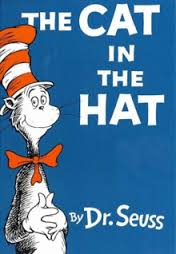
• Strong cause-and-effect. I can still remember that, as a small child reading THE CAT IN THE HAT by Dr Seuss, I actually held my breath when turning one particular page. On that page, the cat was balanced on a ball, holding aloft a huge, teetering tower of things. Could he possibly stay upright? I cringed and turned the page... Nope!
• An escalating problem. THERE WAS AN OLD DRAGON WHO SWALLOWED A KNIGHT by Penny Parker Klostermann and Ben Mantle is a prime example of escalation. The dragon keeps swallowing things, and his growing stomach discomfort surely cannot end well.
In addition to a strong story, or in quieter books or concept books, some other techniques can encourage page turns:
• The use of questions. The nonfiction book, WHAT DO YOU DO WITH A TAIL LIKE THIS? (by Steve Jenkins and Robin Page) uses this technique. To find the answers to this question -

- readers must turn the page.

• Rhyme. With rhyme, a missing end rhyme will encourage the reader to guess the last word of the stanza, and then turn the page to confirm their guess. Take a look at Miranda Paul's new book, WHOSE HANDS ARE THESE?, illustrated by Luciana Powell.
(*A warning here -- only write in rhyme if your story demands it and you work diligently to make all the elements of rhyme work. Here is a post on that topic.)
• Sparse text. The best example I can think of for this technique is YO! YES? by Chris Raschka. The entire book contains fewer words than most of my sentences! With few words, readers move forward quickly to add to the story. This book also uses the next technique -

• Alternating characters. With two characters that are fairly balanced in importance and appearance in the story, readers will keep turning the pages to see what is going on with the other character. HERMAN AND ROSIE by Gus Gordon is a personal favorite of mine.
• The use of a "page-turning word" and/or an ellipsis. Alice Schertle uses both in ALL YOU NEED FOR A SNOWMAN, illustrated by Barbara Lavallee. On the spread below, the word "then" followed by an ellipsis requires a page turn to complete the sentence and move things forward.

Picture book editors read tons of picture books and submissions of yet-to-be picture books, so many that they develop a feel, an internal rhythm, of where a page turn occurs. As they read your text, they will subconsciously break your picture book into spreads, adding page turns in their mind.
You can develop that same feel, that internal rhythm. You can also encourage page turns. How?
#1 READ LOTS OF PICTURE BOOKS
#2 MAKE A DUMMY OF
YOUR PICTURE BOOK TEXT
#3 INCORPORATE ELEMENTS
TO ENCOURAGE PAGE TURNS
Never made a dummy before? Don't worry - there's a post for that, too! Check it out here.
So what is your favorite page-turner picture book, GROG readers? Does it include any of the elements above? Something else?