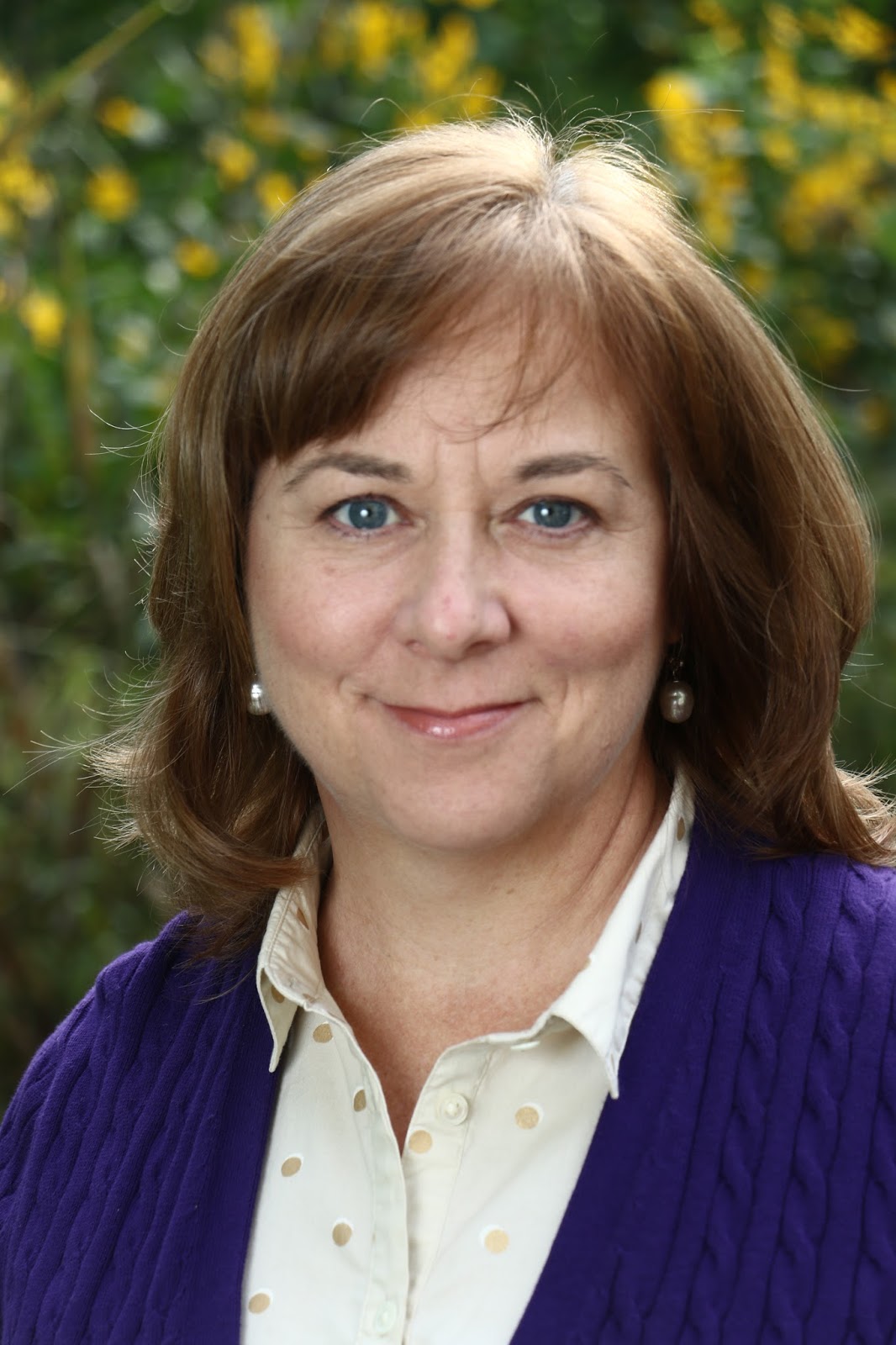
Mary Kay's book Inside Biosphere 2 debuts this month from Houghton Mifflin Harcourt. A description of the book from her website:
In the Arizona desert, scientists conduct studies and experiments aimed to help us better understand our environment and what sort of things are happening to it due to climate change. The location is Biosphere 2, an immense structure that contains a replica ocean, savannah, and rainforest, among many other Earth biomes. It’s a unique take on the Scientists in the Field mission statement — in this case, the lab is a replica that allows the scientists to conduct large-scale experiments that would otherwise be impossible.
I invited her to share her expertise with us.
You studied biology in college. So how did you become a writer?
Most
writers I know started as kids—writing stories, keeping a journal, working on a
school newspaper. But I actually didn’t do any of those things and am now
embarrassed to admit that I only took the minimum required English courses in
college! I didn't really become interested in writing until I was serving as a
Peace Corps volunteer in my early 20s. When letter writing is the only way to
communicate and rainy season traps you in a thatch-roofed shack for weeks,
writing becomes an essential outlet. After returning to the US, I entered a
science-writing program at New York University in an attempt to merge writing
with my interest in science.

How
did you land your first book contract? How did you get into educational
writing?
I actually started off
in educational writing. My first writing job was on an elementary classroom
magazine called SuperScience at Scholastic in NYC.
How
many books have you written to date? Which one is your favorite?
Somewhere in the 50-75 range.
It depends on whether you count books for teachers and leveled readers. Emi
and the Rhino Scientist holds a very
special place in my heart. It's the story of Terri Roth's work at the
Cincinnati Zoo to help a very rare Sumatran rhino named Emi have a calf. Emi
has since passed away, so the book means a lot. Plus it was the first book I
ever got published "out of the slush pile;" the first that my husband
and I both got contracts for; the first for Houghton Mifflin; and I got my
first starred reviews with it.

Do
you pitch ideas to editors you’ve worked with, or do they approach you and your
husband with ideas? Or do you submit like the rest of us do?
No publisher has ever
approached my husband and I about a book idea, unfortunately! How book
contracts are obtained varies by publisher and project. A lot of nonfiction series
titles are assigned. The editors come up with a list of book topics and hire
writers to write them. Some examples of assigned titles from my books include
all nine of the Good Question! books published by Sterling, like What Sank the World’s Biggest Ship? (Titanic)
as well as Magic School Bus readers. The Houghton Mifflin Harcourt books I’ve
written are “author-driven” titles. I submit a proposal to an editor and if a
contract is offered and accepted, then I write the full manuscript. Sometimes
it’s a bit of both. An example is the Inside books, like Inside Tornadoes. An editor at Sterling who I’d worked with invited
myself and fellow writer Melissa Stewart to work up a proposal for a nonfiction
book series that included manipulatives. Once it was hammered out, the
contracts were divided up.

Biosphere
2 looks like a fascinating book. Do
you always visit the places you write about?
Inside
Biosphere 2 was a lot of fun to write. It’s an
amazing and completely unique place to visit! The Scientists in the Field books
are about scientists working, so seeing what they do and how they do it is
important. Plus Tom needs to be there for photos. I don’t always visit places I
write about, but I try to. My preferred writing style is a series of scenes
(like a movie) punctuated with information and background. Being there makes
writing scenes a lot easier! It’s part of why I choose to write about some
topics. For example, I knew I’d be able to visit all the Wright Brothers sites
up in Dayton when I signed on to write The
Wright Brothers for Kids. Likewise with the books I’ve written about the
Underground Railroad, since I live five miles from the Ohio River where so many
crossed into a free state from Kentucky.


What’s
it like to work with your husband on a book? Do you write text to accompany his
photos, or does he take photos to accompany your writing?
In
general, there’s a lot of back and forth. Most of the photos are taken during
research trips, so there is no text yet. That being said, I do have an outline
with experts identified and usually some potential photo ideas. But we kind of
stay out of each other’s way. Tom Uhlman is a fantastic photographer, so when
we're on site together and he's taking pictures and I'm perhaps interviewing
someone, I don't even think about what he's photographing. I'm 100% certain
he'll find and capture the perfect images to go with the text. We’ve been very
fortunate to be able to work on books and travel together. Since we’re both
self-employed and work out of our home, we get on each other's nerves at times,
but I wouldn't trade it for anything.
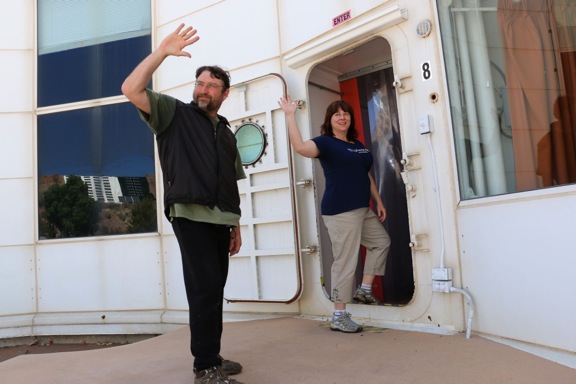 |
| Mary Kay and husband Tom |
A
lot of our readership is interested in nonfiction writing. What tips could you
share on getting that first contract?
Nonfiction magazine
work is probably the easiest to break into if you’ve not been published. If you
want to get into writing nonfiction books, my suggestion would be to try to
plug into a series. Research what’s been written and then write a query letter
suggesting some additional titles along with your credentials and clips. If
you’ve an idea for a more author-driven book, research different trade
publishers and follow their submission guidelines to submit a proposal.
Nonfiction picture books are like any picture book, the entire manuscript needs
to be written and polished before submitting.
I see you have many school visit sessions for educators to choose from. Any tips
on school visits or setting up a session?
Because I write
nonfiction, my programs are primarily built around the content of my
books—bats, rhinos, the solar system, the Wright Brothers, etc. Here are two
great tip-filled resources for putting together school visits: Planning Your
Author School Visit: http://coolschoolvisits.com
and
www.SchoolVisitExperts.com.

What are you working on now?
Tom
and I are finishing up our fifth Scientists
in the Field book for Houghton Mifflin Harcourt. The working title is Mission to Pluto and it’s about New
Horizons, the first spacecraft to visit the Kuiper Belt and Pluto. We got to go
back east for the Pluto flyby event in July, which was super exciting! It will
come out in fall of 2016, so we’re editing this and that and adding updates.
I
know you just presented at an OH SCBWI conference. Are you presenting at any others
this year?
Yes, that was the
Northern Ohio SCBWI annual conference in Cleveland. This year’s American
Association of School Librarians National Conference is in Columbus, and I’ve
been invited to participate in some sort of Ohio author event at the State
Library November 5th, but not presenting. That will be it for 2015.
Just for fun:
Favorite color: purple
Food: Bourdon isn’t a food, so I’ll go with shrimp,
burnt ends, chocolate, or goetta. [Now I’m hungry, Tina!]
Children’s author: Tina Cho, of course! Jean Craighead
George is another favorite.
Children’s book: The
Giver by Lois Lowry. Love it as a story and admire it as a novel.
Most bizarre topic you’ve researched: The process of
how the human body fatally freezes during extreme hypothermia; or maybe Dark
Matter.
Thank you so much, Mary Kay. Your writing is fascinating. You can see more of Mary Kay at:
her website (watch her introductory video!)