Showing posts with label nonfiction writing. Show all posts

Wednesday, January 15, 2020

NF Fest by Leslie Colin Tribble

Hooray, today's the day! The day you can sign up for NF Fest coming in February. What's that? You don't know what NF Fest is and why you should be interested? Well, read on then and learn all about it.

Nonfiction Fest

A few years ago, a group of kidlit writers formed a group they named the Nonfiction Chicks. They've been writing and posting on their blog but decided they wanted something more, something big to help other nonfiction writers. Enter NF Fest, a month-long celebration of all things nonfiction, and it starts February 1.

I reached out to a few writers involved with this event and asked them for a couple sentences on why GROG readers should participate in NF Fest. Here's what some of them said:


Nancy Churnin (organizer)
The Nonfiction Chicks, a group of seven children’s book writers, have been working hard to put together a free writing challenge that will introduce you to what you need to know to get started writing non-fiction for kids and to improve your non-fiction writing for kids. You’ll get posts from some of the best in the business, from Jen Bryant to Candace Fleming to Don Tate and Traci Sorrell, addressing everything from different types of non-fiction, to research, sources, illustration, where to get ideas and more. There’ll be activities and prizes for participants that sign up in the Jan. 15-31 registration period. And, did I mention it is free? FREE! FREE! FREE! Plus, you’ll be part of the NFFest Facebook group where you can ask questions, talk and support each other. The NFFest will give you an amazing and unique opportunity to learn and to meet and become part of the greater community of children’s nonfiction book writers.
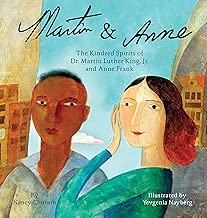
Martin & Anne: The Kindred Spirits of Dr. Martin Luther King, Jr. and Anne Frank

I had the privilege of being roommates with Nancy at a retreat, and all I can say is, if she's in, I'm in.

Lisa Amstutz (organizer)
Nonfiction writers won't want to miss NF Fest this February! This free event will feature daily blog posts from publishing professionals along with giveaways and activities for you to try at home. Join the NF Fest Facebook group for more information, networking, and discussion and check out the website at www.NFFest.com.

Amazing Amphibians: 30 Activities and Observations for Exploring Frogs, Toads, Salamanders, and More (Young Naturalists)

I've also had the privilege of meeting Lisa at retreats, as well as having done a mentorship with her and again, if she's in, I'm in.

Beth Anderson (presenter)
You know your topic. That’s not enough.
You've good writing skills. That’s not enough.
You have a critique group. Still not enough.
What you really need is the village!
There’s no part of a published book that doesn’t benefit from the shared experiences of the generous kid lit community—considering an idea, researching, getting at the heart, finding the right structure, drafting, revising, submitting, publishing, promoting, sharing with classrooms, creating presentations….The names of all the people who contributed in some way to the creation of a book could fill the endpapers front and back. To have a month of learning focused on the challenges of writing NF for kids is a truly special gift and an opportunity not to be missed! You’ll collect resources, pick up new methods, and gather all sorts of nuggets as you connect with like minded writers and find encouragers. (And some of the authors I’ve been stalking a-hem, following over the last few years are IN THIS GROUP!) I can’t wait!
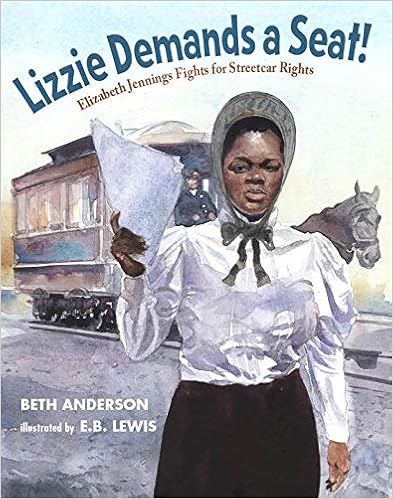


Beth is the author of, An Inconvenient Alphabet, and the just released, Lizzie Demands a Seat. I met her at a SCBWI event and she's amazing.

Vivian Kirkfield (presenter)
Why should Grog Blog readers sign up for NF Fest? When I decided to write children’s picture books, one of the first things I did (after joining SCBWI) was to sign up for writing challenges. StoryStorm, 12x12, Susanna Hill’s contests…those were the building blocks of my writing journey. And now, even though I have three books that debuted in 2019, another that launches this month, and more coming in 2021 and 2022, I know I still have a lot to learn. Then, along came NF Fest and before you could say - do you want to write nonfiction - I was already registered! Every day for a month, an industry pro will offer expertise on one topic or another that relates to writing nonfiction. I’m honored to be one of the bloggers and will be sharing my thoughts on Creating a True Story When Information is Scarce. But more than the knowledge, participants will enjoy the camaraderie, support, and encouragement that is so very important in this business that is filled with rejection and waiting…and more rejection and waiting. Don’t wait another minute…sign up for NF Fest. And guess what? It’s FREE and there will be PRIZES!
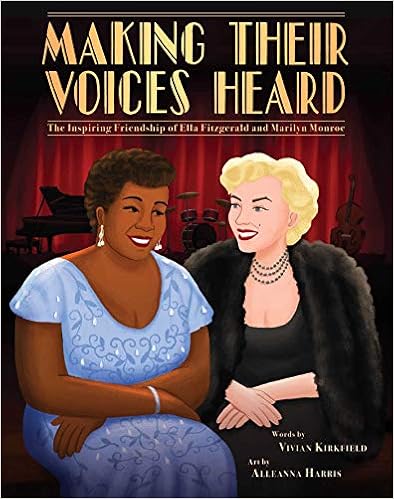

Have you been following Vivian and seen the number of books she's had published in the past year and those coming out in the future? She will have some treasure you can take to heart in your own writing.
Jill Esbaum (presenter)
Any writer who's hooked on nonfiction -- writing it OR reading it -- can't miss Nonfiction Fest. I've seen the list of authors who'll be posting, as well as glimpses of what they'll be sharing. It's an amazing cross-section of talent and a winning combination of education and inspiration! See you there!


We Love Babies!


Jill is a wonderful and prolific writer of picture books in all genres, and just released her latest, We Love Babies! She's a lovely person and incredible author, and you're going to want to hear what she has to say during NF Fest.

Let's face it. February for most of us is a waiting month - the holidays are over, the excitement of a new year has lost its luster, and the weather is awful. Last year in Wyoming the bottom dropped out of the thermometer and we stayed at -20 below zero for weeks. People need something to do indoors at that point, something that will improve the craft of their writing, provide inspiration and give them something to live for until the weather gets better. I think NF Fest fits the bill.


But maybe you don't write nonfiction. Is this still for you? I would say, "ABSOLUTELY!" Craft is craft, whether it be intended for fiction, nonfiction, poetry, humor, whatever. If something gives you inspiration and makes you a better writer, then by all means, be a part of that. And who knows? You might catch the nonfiction bug!

Sign up for NF Fest starts today, January 15 and goes through January 31. See you there!


Monday, September 18, 2017

Searching for Text Structure with Melissa Stewart

by Sue Heavenrich

Melissa Stewart has written more than 180 science books for children, and is one of those authors who supports and encourages emerging writers. I met her at a Falling Leaves nonfiction master class, and again at a 21st Century Children's Nonfiction Conference. So when her new book, Can an Aardvark Bark? came out this summer, I could not wait to read it. It's about the diversity of sounds animals make, from grunts and squeals to barks, whines, and roars. Like other books, this one has layers: a line of text that young children will have fun reading, and sidebars with more in-depth information that a reading buddy, parent, or older sibling can read. It's fun to read, and the illustrations are marvelous cut and torn paper by Steve Jenkins. (My review, and "beyond the book activities" is posted at Archimedes Notebook)

This book was born during a trip to the zoo. There was a plaque next to the tamarins that said they bark. "That night at dinner, my nephew asked if we could make a list of animals that bark," she remembers. From there the list grew into sounds different animals make. She knew there was a book there ... just didn't know what that book would look like. The journey from idea to finished book is always full of crumpled papers, edits, revisions, more revisions, and sometimes a total make-over. Contrary to popular belief, picture books take a long time to write. Years. In Aardvark's case, four. Years. Not counting research.

Over those years, Melissa tried different ways to structure the text of her book. First she tried "compare and contrast", but after a short time she decided that didn't capture what she wanted to say. She tried a couple of "description" styles, and a "question & answer" format. She went back and forth, tried combinations, and at times put the project on a shelf. 

"It's important to spend time away from a project between draft and revision," she said. It might not be a long time - you could finish a draft before lunch and come back after recess (or running to town to do errands), but the important thing is to get that chance to look at your manuscript with "fresh eyes and a fresh mind".

Melissa generously shares her accumulated wisdom, trials, and drafts of her manuscript in a wonderful timeline. One of the things she was looking for, as she experimented with styles, was a hook. "Animal sounds are cool," she said. But she needed a way to get the kids engaged. "I wasn't sure what that hook would be, but I knew it had to be special." At the New York SCBWI conference an editor was talking about sharks, and the phrase, "can a shark bark?" popped into Melissa's mind. Then, half a year later at another SCBWI conference an editor mentioned an orange aardvark.

"By now I'm obsessed," said Melissa. "Can an aardvark bark? No! But could I come up with an order of animals and sounds that would allow some sort of backwards connecting thing?" In search of a solution, Melissa wrote animals and the sounds they made on post it notes - and then stuck them on a wall. Now she could move them around looking for a structure that connected them - she had 300 animals and 50 sounds!

"Writing a nonfiction concept book is not easy," Melissa said. "And writing a picture book is not simple!" That's why she created timelines for this book and an earlier one, to show the careful thought, planning, and years of writing/ stepping back / rewriting that go into a picture book. 

Melissa's next book, Pipsqueaks, Slowpokes, and Stinkers: Celebrating the Animal Underdogs, is coming out next fall (Peachtree, 2018). You can find out more about Melissa at her website and on her wonderful blog, Celebrate Science.

Thursday, August 24, 2017

Dissecting nonfiction

 by Sue Heavenrich

A few years ago (2011, to be exact) Peggy Thomas and Margery Facklam's wonderful guide to writing nonfiction was born. Since then, it's been my go-to reference for questions about writing true stories for kids.

I think it's because I love the way it's organized - if you remember those biology dissection labs, it makes sense. First, the authors define the species: what is nonfiction? What sets it apart from other kinds of storytelling? They present many examples to give writers a feel for the diversity of this species (magazine writing, works for hire...).

Then they crack open the skull and go straight for the Brainstorming: where do ideas come from? What are kids learning about in school, and when? What's a slant and how will you know if you have one?

They spend two chapters on the skeletal system: the bones of the story. This is a deep dive into research, primary sources and where to find them, and the best way to net information from the Web.  There's useful information on photo research, building a bibliography, interviewing people, and even doing hands-on-research.

"Once in a blue moon, an unexpected event takes you to a whole new world," writes Margery. If that opportunity presents itself, grab on with both hands, she advises. Nothing beats firsthand research.

Once the bones are in place it's time to examine the heart and voice of story. This is where Peggy and Margery examine plotting, dialog, and finding a writing voice that kids will hear. Once those basic building  blocks are in place, it's time to assemble the "Story Skeleton", from an "oh wow" lead to a just as "wow" ending, back matter, and more.

The dynamic duo spend three chapters focusing on specific kinds of nonfiction: biographies, science and nature writing, and how-to pieces. Each chapter is packed with information, tips, examples, and resources. For example, in the science chapter there's a handy list of websites that provide accurate science information (NASA, MIT, US Geological Survey, and more). The best advice: think like a child.

"Take readers into the natural world with all their senses. Show the colors, textures, and smells that create the feeling of the swamp..." or forest or wherever you are taking this story, they write. Make sure it's true, accurate, and kid-friendly.

Concluding chapters focus on strengthening your story and finding markets. There's a great section filled with resources, and an index (for those of us who forget to tag pages with sticky-markers).

Check out Peggy's Anatomy of Nonfiction Writing website here. It's filled with insightful posts and discussions - plus there's a link for how to order your own copy of the book.

Monday, October 10, 2016

Pamela Turner Gets Organized


by Sue Heavenrich


Pamela S. Turner has written a whole bunch of books, from picture books to biographies and science for middle-grade readers and older. Her most recent book in the Scientists in the Field series is Crow Smarts: Inside the Brain of the World's Brightest Bird. A few months earlier her book, Samurai Rising hit the shelves.

Whether it’s a tale about samurai or science, Pam loves to delve in and dig up cool facts – especially when it means getting out into the field to do research (she talks about that here). Then she works her word-magic, creating page-turning nonfiction that’s hard to put down (she reveals her secrets here).

Having two books hit the shelves in one year must take a lot of organization. How does she do it?

I try to work on one primary project,” says Pam. “I might have three or four projects in various stages. For example, I’ll be doing background research for a picture book manuscript while writing a fiction story.”

Pam also keeps an ongoing list of “interesting” topics. It’s not very long, she says – maybe ten ideas that she reviews periodically whenever she adds a new topic. “If I see an idea it as a picture book, I’ll do enough research to decide whether I want to go whole hog.”

Pam does outlines. Extensive outlines. Detailed outlines. For Crow Smarts, she wrote a narrative outline prior to heading to New Caledonia to join the scientists in the field. “But…” and you can hear the shrug in her voice, “when you’re in the field, nothing goes as planned.” So out came the pencil and Pam got busy scribbling notes for a different narrative.

“Organization,” she says, “has to be tempered with flexibility.”

With all this wonderful advice, is there anything Pam wishes she’d known when she began writing?

Absolutely, she says. “If there’s a certain thing you want to do, but you’re afraid you won’t be good at it – try it anyway. At the very least you’ll learn something and it’s a good way to explore your voice. You don’t want to have regrets.”

In the normal life of a nonfiction manuscript, the author submits a proposal and then, when the book is accepted, finishes the research and the writing. Samurai Rising took a more circuitous route. Pam had written two sample chapters and a proposal, but couldn’t sell the idea. One editor even asked her why people would be interested. (Ahem! Samurai!)

This is the point at which many writers file the incomplete story in the bottom desk drawer. But not Pam. She decided to write the whole book. Then she sent it back to an editor she’d worked with before. They had rejected the proposal but loved the completed book.

“Sometimes,” says Pam, “you have to commit to something you believe in.” You can find out more about Pam and her books over at her website.

Monday, September 12, 2016

Rebecca Hirsch Writes Science

By Sue Heavenrich


Rebecca Hirsch has written more than sixty books, from picture books to YA nonfiction, for educational and trade markets. She’s also written about science and nature for Spider and other magazines. Her most recent picture book, released just last month, is Plants Can't Sit Still. If you’ve got a wiggly-worm for a child, you’ve gotta get a copy. (I reviewed it on Friday over at Archimedes Notebook)

“This was the manuscript I took to Rutgers back in 2013,” she said, but the story Hirsch took to Rutgers looked nothing like the breezy text of the published book.

“It was a list about cool things plants can do,” she said. Her Rutgers mentor pointed out that it needed just a few things to set it straight:
  • an entry into the story
  • a narrative ark
  • a strong ending
  • turn descriptions into art notes and let illustrations show those details
 The first thing Hirsch did when she went home was to closely study picture books. “I wanted to see how they start. And I discovered I could take out description because it would be shown in the artwork.” One of the books that helped her see a different way to organize material is Ducks Don’t Get Wet, by Augusta Goldin. She paid attention to how that book used a repeating line. It took her about six months, and a complete re-visioning of her story, but she found the heart of the book.

Reading the kind of book that you want to write is important, Hirsch says. One summer when she didn’t have any projects, she read 100 picture books. She chose a number of award-winners and studied how the first sentence worked; how the first page worked; what the “fresh take” was for that story. At the same time, she studied Ann Whitford Paul’s Writing Picture Books.

“It’s focused on fiction, but the rules apply to nonfiction,” Hirsch said.

Her advice to other writers? “Have more than a single project going on at once.” On any single day, Hirsch usually has four to six books in various stages of completeness. Right now she’s doing preliminary research for one, writing text for a middle grade science book, has a couple picture books in the rough draft stage. “This,” she says, “allows me to get away from one project for a couple days – and come back with more clarity.”

Every six months or so, Hirsch takes a step back and reviews her goals. She usually has two or three big goals: write a new picture book; study picture books; maybe write some poetry. She also sets herself a few minor goals that she matches to a timeline: do research, draft the story, do the back matter. She puts these on a calendar.

“Having a framework helps,” says Hirsch. “Knowing that this week I’m working on back matter helps me stay organized.”

It must be working because she’s got another book hitting the shelves in November, Birds vs. Blades. It’s about offshore wind power and protecting seabirds.

Friday, October 23, 2015

Interview with Educational Writer: Mary Kay Carson by Tina Cho

Welcome to Mary Kay Carson, educational writer extraordinaire! She's an Ohio writer and has written around 75 books. Her husband Tom Uhlman, a professional photographer, has been on assignment with her on many of the books. I've gotten to know Mary Kay this past summer through a critique group. 

Mary Kay's book Inside Biosphere 2 debuts this month from Houghton Mifflin Harcourt. A description of the book from her website:

 
In the Arizona desert, scientists conduct studies and experiments aimed to help us better understand our environment and what sort of things are happening to it due to climate change. The location is Biosphere 2, an immense structure that contains a replica ocean, savannah, and rainforest, among many other Earth biomes. It’s a unique take on the Scientists in the Field mission statement — in this case, the lab is a replica that allows the scientists to conduct large-scale experiments that would otherwise be impossible.

I invited her to share her expertise with us.

You studied biology in college. So how did you become a writer?

Most writers I know started as kids—writing stories, keeping a journal, working on a school newspaper. But I actually didn’t do any of those things and am now embarrassed to admit that I only took the minimum required English courses in college! I didn't really become interested in writing until I was serving as a Peace Corps volunteer in my early 20s. When letter writing is the only way to communicate and rainy season traps you in a thatch-roofed shack for weeks, writing becomes an essential outlet. After returning to the US, I entered a science-writing program at New York University in an attempt to merge writing with my interest in science. 

How did you land your first book contract? How did you get into educational writing?

I actually started off in educational writing. My first writing job was on an elementary classroom magazine called SuperScience at Scholastic in NYC.

    How many books have you written to date? Which one is your favorite?

Somewhere in the 50-75 range. It depends on whether you count books for teachers and leveled readers. Emi and the Rhino Scientist holds a very special place in my heart. It's the story of Terri Roth's work at the Cincinnati Zoo to help a very rare Sumatran rhino named Emi have a calf. Emi has since passed away, so the book means a lot. Plus it was the first book I ever got published "out of the slush pile;" the first that my husband and I both got contracts for; the first for Houghton Mifflin; and I got my first starred reviews with it. 

Do you pitch ideas to editors you’ve worked with, or do they approach you and your husband with ideas? Or do you submit like the rest of us do?

No publisher has ever approached my husband and I about a book idea, unfortunately! How book contracts are obtained varies by publisher and project. A lot of nonfiction series titles are assigned. The editors come up with a list of book topics and hire writers to write them. Some examples of assigned titles from my books include all nine of the Good Question! books published by Sterling, like What Sank the World’s Biggest Ship? (Titanic) as well as Magic School Bus readers. The Houghton Mifflin Harcourt books I’ve written are “author-driven” titles. I submit a proposal to an editor and if a contract is offered and accepted, then I write the full manuscript. Sometimes it’s a bit of both. An example is the Inside books, like Inside Tornadoes. An editor at Sterling who I’d worked with invited myself and fellow writer Melissa Stewart to work up a proposal for a nonfiction book series that included manipulatives. Once it was hammered out, the contracts were divided up.


Biosphere 2 looks like a fascinating book. Do you always visit the places you write about?  

Inside Biosphere 2 was a lot of fun to write. It’s an amazing and completely unique place to visit! The Scientists in the Field books are about scientists working, so seeing what they do and how they do it is important. Plus Tom needs to be there for photos. I don’t always visit places I write about, but I try to. My preferred writing style is a series of scenes (like a movie) punctuated with information and background. Being there makes writing scenes a lot easier! It’s part of why I choose to write about some topics. For example, I knew I’d be able to visit all the Wright Brothers sites up in Dayton when I signed on to write The Wright Brothers for Kids. Likewise with the books I’ve written about the Underground Railroad, since I live five miles from the Ohio River where so many crossed into a free state from Kentucky. 

What’s it like to work with your husband on a book? Do you write text to accompany his photos, or does he take photos to accompany your writing?

In general, there’s a lot of back and forth. Most of the photos are taken during research trips, so there is no text yet. That being said, I do have an outline with experts identified and usually some potential photo ideas. But we kind of stay out of each other’s way. Tom Uhlman is a fantastic photographer, so when we're on site together and he's taking pictures and I'm perhaps interviewing someone, I don't even think about what he's photographing. I'm 100% certain he'll find and capture the perfect images to go with the text. We’ve been very fortunate to be able to work on books and travel together. Since we’re both self-employed and work out of our home, we get on each other's nerves at times, but I wouldn't trade it for anything.

Mary Kay and husband Tom

 A lot of our readership is interested in nonfiction writing. What tips could you share on getting that first contract?

Nonfiction magazine work is probably the easiest to break into if you’ve not been published. If you want to get into writing nonfiction books, my suggestion would be to try to plug into a series. Research what’s been written and then write a query letter suggesting some additional titles along with your credentials and clips. If you’ve an idea for a more author-driven book, research different trade publishers and follow their submission guidelines to submit a proposal. Nonfiction picture books are like any picture book, the entire manuscript needs to be written and polished before submitting. 

I see you have many school visit sessions for educators to choose from. Any tips on school visits or setting up a session?

Because I write nonfiction, my programs are primarily built around the content of my books—bats, rhinos, the solar system, the Wright Brothers, etc. Here are two great tip-filled resources for putting together school visits: Planning Your Author School Visit: http://coolschoolvisits.com 

and www.SchoolVisitExperts.com.

   What are you working on now?

Tom and I are finishing up our fifth Scientists in the Field book for Houghton Mifflin Harcourt. The working title is Mission to Pluto and it’s about New Horizons, the first spacecraft to visit the Kuiper Belt and Pluto. We got to go back east for the Pluto flyby event in July, which was super exciting! It will come out in fall of 2016, so we’re editing this and that and adding updates. 
I know you just presented at an OH SCBWI conference. Are you presenting at any others this year?
Yes, that was the Northern Ohio SCBWI annual conference in Cleveland. This year’s American Association of School Librarians National Conference is in Columbus, and I’ve been invited to participate in some sort of Ohio author event at the State Library November 5th, but not presenting. That will be it for 2015.

Just for fun:

Favorite color: purple 

Food: Bourdon isn’t a food, so I’ll go with shrimp, burnt ends, chocolate, or goetta. [Now I’m hungry, Tina!]

Children’s author: Tina Cho, of course! Jean Craighead George is another favorite.

Children’s book: The Giver by Lois Lowry. Love it as a story and admire it as a novel.

Most bizarre topic you’ve researched: The process of how the human body fatally freezes during extreme hypothermia; or maybe Dark Matter.

Thank you so much, Mary Kay. Your writing is fascinating. You can see more of Mary Kay at:
her website  (watch her introductory video!)