Showing posts with label Middle Grade Fiction. Show all posts

Wednesday, October 1, 2025

What I Have Learned So Far About Trust and Truth in Indie Publishing by Todd Burleson

In my first post for the GROG Blog, I shared what I had learned about stepping into the world of independent publishing, choosing an editor, launching a Kickstarter campaign, and discovering communities like Reedsy. That was the beginning of my journey.

This time, I would like to share what happened next. Two areas in particular have taught me lessons that might be useful for other writers, whether you are publishing independently or traditionally:

  1. Trusting beta readers with a manuscript that has been more than a decade in the making.
  2. Wrestling with cover design and learning how to make the outside of a book feel as true as the inside.


My son Jack experiencing flight for the first time, the same feeling I had when I sent the manuscript to beta readers.

Trusting Others With the Story

After thirteen years of shaping this story, handing it to beta readers felt both thrilling and terrifying. I did not choose my readers casually. Colleagues brought professional expertise. Friends knew me well enough to be honest and kind to me. Children, the very audience I was writing for, helped me see what rang true and what did not.

To make it easier for them, I prepared different file formats, including PDFs, ePubs, and print copies for adults, as well as simple tablet-ready files for kids. I created feedback forms that felt like conversations rather than assignments. Parents were invited to read alongside their children, allowing questions to be discussed together.

What I have received so far has been thoughtful and respectful, full of insights that push me to refine characters and settings. It has reminded me that feedback is not just about affirmation. It is about making the story more lifelike and rich.

Waiting for feedback is not idle. It is the work of trust.

For me, the real lesson is that independent publishing is not only about control. It also requires the courage to let go and trust others with the story.


One of my early cover drafts. Beautiful, but not the right fit.

Finding the Outside of the Book

While feedback was coming in, I faced another challenge: the cover.

My first experiments in Canva were clumsy but thrilling. For the first time, the manuscript looked like a book. But early designs worried me. Would they look unprofessional, too homemade, not worthy of the years I had invested?

I experimented with AI images and hired a designer whose work I admired. Neither approach fit. The results were too fantastical, too young, or too far from the tone of a story grounded in WWII Dayton, Ohio.

The lesson was clear: talent is not enough. Fit and truth matter most.

In the end, I returned to my own drafts, layering figures, planes, and backgrounds like a collage. I used ChatGPT as a critique partner, asking it to respond as a professional cover designer. The feedback was concrete and immediate. It was not perfect, but it helped me move forward.

A cover is not just decoration. It is the invitation to the story inside.

Would I have preferred to hire a professional? Absolutely. But working independently often means picking your battles. I invested in the best editor I could afford, which meant learning to stretch myself in other areas of my work.

Lessons for Any Writer

Independent publishing has stretched me in ways I never expected. It has asked for patience, humility, and the willingness to learn skills I had never practiced before.

For any writer, regardless of publishing path, two lessons stand out:

  • Trust others with your story. Beta readers, editors, and critique partners are essential to the writing process.
  • Stay grounded in truth. Do not chase trends. Make sure the inside and outside of the book reflect the story you believe in.

Independent publishing may seem like a form of control, but in reality, it demands courage —the courage to let your work leave your hands and live in the world.


A glimpse at my work over the past thirteen years, from drafts to research notes to cover iterations.

These lessons are still unfolding for me, which is why they are worth sharing now. Publishing is not only about finishing a manuscript. It is about releasing it into the world in ways that require both trust and truth.
I look forward to sharing the next installment in this process.

I would love to hear from you, what part of your own publishing journey has taught you the most, and what you wish you had known sooner?

Wednesday, September 10, 2025

Everything I’ve Learned So Far About Independent Publishing by Todd Burleson

Coming Soon!


I should begin with a confession: I am no expert on independent publishing. I’m very much a beginner. My earlier publishing experience was with a major publisher, and that book was nonfiction. It wasn’t the book I most wanted to write—in fact, I would have loved for it to have been the story I’m working on now. But when a publisher approaches you and asks you to write a book, and you are a struggling teacher, you say yes. It turned out to be a tremendous experience. I earned a little income from it—not much—but what I gained was an inside look at the publishing process. It was an opportunity I’ll always be grateful for.

This time is different. When I chose to publish independently, the reasons went deeper. I wanted control. I didn’t want someone I would never meet deciding on my cover. I didn’t want someone else to have the final say over my story. And after working on this book for more than thirteen years, I wanted it to move into the world at a pace that felt right to me.

“Independent publishing feels like managing a project as much as writing a book.”

What I didn’t fully anticipate was how much independent publishing feels like managing a project as much as writing a book. I knew it would be hard work—anything worth doing usually is—but I wasn’t prepared for the cost.

I learned quickly that in publishing, you get what you pay for. Early on, I decided my priority was to work with a professional editor. Through Reedsy, a platform that connects writers with editors, designers, and illustrators, I found someone with national recognition and a strong track record. She was expensive, but I knew this was where I wanted to invest.

To help cover the cost, I launched a Kickstarter campaign. Asking for help does not come easily to me. But Kickstarter is an all-or-nothing platform—if you don’t meet your goal, you don’t receive a dime. That reality pushed me to research every aspect of how to run a successful campaign. I studied other authors’ projects, learned how to structure levels and rewards, and spent hours figuring out shipping, pricing, and what kinds of extras would make sense. At times it felt overwhelming, like nonsense piled on top of the actual work of writing a book.

There were moments I doubted myself, moments I wondered if anyone would care enough to pledge. It was stressful to put my vision out in public and risk failure. But slowly, support came in.

“In the end, more than $4,000 was pledged by people who believed in the story. That support feels like success already, even before a single reader has turned a page.”

Now I am anxiously waiting for the return of my developmental edit—the kind that digs into the big picture, the characters, and the heart of the story. I feel nervous, excited, and overwhelmed all at once. And part of me wonders how I will balance this next stage with my life as a school librarian heading into a new year. Independent publishing doesn’t happen in isolation—it presses into every part of your time and energy.

If another writer asked me what I’ve learned so far, I would say this: independent publishing is not for the faint of heart. Writers want to write, but this path asks for much more—fundraising, websites, community-building, marketing, design, layout, typesetting, printing, platforms, and even decisions about audiobooks. The list feels endless. But none of it is wasted.

Reedsy has hundreds of free resources. They are also an incredible place where you can be connected with some of the leading editors, designers, and artists to help make your book come to fruition.

My best advice is to find a community. For me, Reedsy has been a lifeline. I stumbled onto it by accident—a friend who isn’t even a writer mentioned it to me. That makes me think there may be many other writers out there who simply don’t know it exists.

Reedsy isn’t just a place to connect with professional editors, designers, and illustrators. They also offer a wide array of free resources for writers, self-publishers, and independent authors. A few highlights I’ve found especially helpful:

  • Reedsy Studio Book Editor – a free online tool where you can write, organize, format, and export your manuscript for print or ebook platforms. It even lets you collaborate with others in real time.

  • Free Learning Courses – over fifty 10-day email courses on everything from plotting a novel to marketing, distribution, editing, and design. These bite-sized lessons are practical and easy to fit into daily life.

  • Articles, Guides, and Webinars – their blog is constantly updated with industry trends and advice, and there’s also a library of webinars with expert talks on publishing and craft.

  • Weekly Writing Prompts & Contests – if you’re looking for accountability or a spark of inspiration, they provide prompts and even cash-prize contests with the chance of publication.

  • Community Support – forums, newsletters, and ways to connect with other writers who are also figuring out the indie path.

All of this is free once you create an account. It’s one of those rare places online where the depth and quality of resources genuinely surprised me.

“Independent publishing has democratized the industry. It’s simply another way to get your story into the hands of readers.”

I also believe the old stigma around independent publishing has faded. Many indie authors have found great success, some even moving into traditional publishing. More importantly, independent publishing has democratized the industry. It’s simply another way to get your story into the hands of readers. And isn’t that what all of us are really after?

My main characters: Jamie and Ken.

This book is written for readers ages ten to fourteen, but I hope it speaks to anyone. With only three more years left to work with students in that age group, I want them to have this story in their hands. It’s not just a story I believe in, it’s an invitation to see our nation’s history and reflect on it in light of today.

That’s why I chose this path. And while I am still learning, I can already say: it has been worth it.

And this is only the beginning. As I move through the next stages—final edits, layout, printing, and beyond—I’ll continue to share what I learn. I hope that by documenting the process, I can encourage and equip other writers who may be considering the same path.

If you would like to take a look behind the scenes of my book, I've built a comprehensive website that will delight anyone who is interested in history, storytelling, photography, and aviation. I still love exploring it! HERE is the link.


If you’ve walked the independent publishing path yourself, what’s one lesson you wish you had known at the beginning?

Wednesday, February 22, 2023

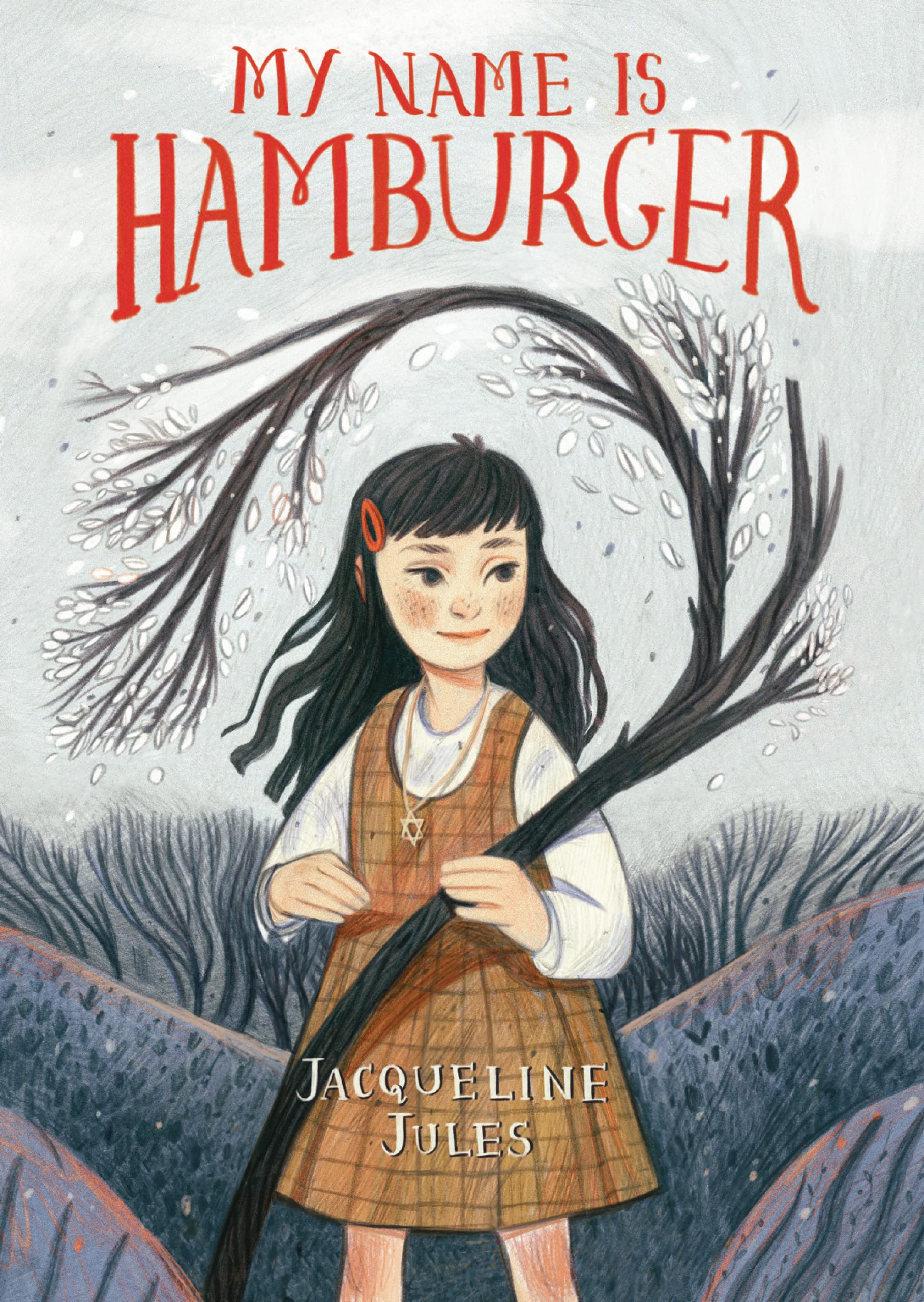
My Name is Hamburger--Interview with Author Jacqueline Jules by Julie Phend


My Name is Hamburger

By Jacqueline Jules


Trudie Hamburger is the only Jewish kid living in the small town of Colburn, Virginia in 1962. Nobody else at her school has a father who speaks with a German accent or a last name that means chopped meat. Trudie doesn't want to be the girl who cries when Daniel Reynolds makes fun of her. Or the girl who hides in the library to avoid singing Christian songs in music class. She doesn't want to be different. But over the course of a few pivotal months, as Trudie confronts her fear and embraces what she loves--including things that make her different--she finally finds a way to say her name with pride.

Julie’s Review

I loved My Name is Hamburger, a middle grade verse novel published in October 2022 by Kar-Ben Publishing. Jacqueline Jules tells Trudie’s story in lyrical, impactful verse that puts us in Trudie's heart as she navigates a confusing year at her new school and emerges stronger for it.

I had the pleasure of interviewing author Jacqueline Jules about the book and her writing career.


Interview with Jacqueline Jules

Julie: You’ve written a lot of books for young people, many of them about Jewish life and culture. What’s new and different about this book?


Jacqueline: All my other books of Jewish interest are picture books written for younger children. I worked as an elementary school librarian in both public and religious settings. Story time was a big part of my job, and for many years I focused on capturing the attention of young listeners with books for adults to read aloud.

My Name is Hamburger is my first middle grade novel. It is a book for reading alone by students old enough to handle mature topics like self-esteem, bullying, and antisemitism. I am excited to share that My Name is Hamburger is a PJ Our Way Selection and was distributed to families through this program. https://www.pjourway.org/story-central/My-Name-Is-Hamburger


Julie: Though this story is set in the 1960s, the topic and issues seem relevant and timely for young people today. Can you comment on that?

Jacqueline: The main character, Trudie Hamburger, is intimidated by a bully and has misunderstandings with friends. Her family is both a source of comfort and embarrassment. She dreams of winning prizes and being admired. Many childhood emotions are universal in every generation.


Julie: You say the book was inspired by your own childhood. What are some of the parallels between your story and Trudie’s?

Jacqueline: My father was a Jewish German-speaking immigrant who came to the United States after World War II. We lived in a small Virginia town. Growing up, I experienced exclusion as a minority. But like Trudie, I also had friends and a strong relationship with my father. And like Trudie, I loved to sing, and I loved to read.


Julie: I love that the book is written in verse. It captures Trudie’s voice so well. I feel her need to prove herself, her hurt when she is teased or rejected, the conflicting feelings she has about how her religion makes her different. At the same time, the poems move the reader through the story with a compelling plotline. Can you comment on your decision to write in verse?


Jacqueline: Thank you for your kind words about Trudie’s voice in the poetry. My Name is Hamburger was originally written in prose. I went through many drafts and none of them quite worked until I began writing the story as a series of poems. At first, it was just an experiment, but as one poem followed another, the main character emerged to tell her story with a stronger, more authentic voice. I love to play with words. When I write, I arrange and rearrange words like the pieces of a jigsaw puzzle. Sometimes I have to turn small, jagged pieces around and around until they fit together. I knew the plot elements of Trudie’s story so I knew what the picture should look like. Finding the words to make that picture clear to the reader was a bigger challenge. Poetry turned out to be the right format because it prompted me to use imagery to express Trudie’s emotions. Each poem focuses on a particular moment and uses metaphor to convey the meaning of that moment.

I never considered writing a novel in verse before My Name is Hamburger. In retrospect, it is surprising because poetry is my first love as a writer. I have well over a hundred poems in literary journals and anthologies. I am the author of three chapbooks and one full-length collection of poems for adults. My poetry collection for children, Tag Your Dreams: Poems of Play and Persistence, was published by Albert Whitman in 2020.       


Julie: Tell us about your publisher, Kar-Ben Publishing. Have you published with this press before?

Jacqueline: I have been a Kar-Ben author since 1998 with the publication of Once Upon a Shabbos. I have twenty books with Kar-Ben. They produce lovely titles and I feel lucky to have found them in the early stages of my career when it was easier to submit without an agent. Once I established a relationship with the editors, I was able to submit new manuscripts, which were luckily accepted.


Julie: Anything else you’d like to share with our readers about writing, publishing, or life?

Jacqueline: Publishing is a hard business. Perseverance is the key to success. There have been many times over the years when I felt discouraged, when I had to force myself to hold on to my dreams of a writing career. The following poem, “Tag Your Dreams” is the title poem of my book, Tag Your Dreams: Poems of Play and Persistence. It was written during a low period in my writing career when I worried that I would not sell another book. The poem was a pep talk to myself. Since I wrote this poem, I have sold twenty-five more books. Believe in yourself. Chase your dreams until you’re breathless.


TAG YOUR DREAMS

by Jacqueline Jules


Play tag

with your dreams.

Chase them

till you’re breathless.

Dreams

have strong legs,

but so do you.

Keep running,

with your arm out,

fingers reaching.

Don’t let them get away.


Thank you, Jacqueline, for sharing your inspiring story. 


Jacqueline Jules is the award-winning author of over fifty books for young readers including the Zapato Power series, the Sofia Martinez series, Duck for Turkey Day, Feathers for Peacock, Never Say a Mean Word Again, and The Porridge-Pot Goblin. Visit her website at www.jacquelinejules.com


Thursday, September 1, 2016

Sandy Brehl's Second Book Bjorn's Gift!

It's an honor to have Sandy Brehl back to visit us on the GROG Blog. When last she visited us, she was sharing about her first novel Odin's Promise, published by Crispin Books, an imprint of Crickhollow in 2014.  Now she is here to talk about the second book in what will be a trilogy, Bjorn's Gift.


Sandy Brehl is a retired educator and active member of SCBWI (Society of Children’s Book Writers and Illustrators). When she’s not reading and writing, she enjoys gardening. She lives in the Milwaukee area and invites you to visit her website (
www.SandyBrehl.com) to learn more about ODIN’S PROMISE and BJORN’S GIFT. Sign up for quarterly newsletters to stay informed about future releases (including MARI’S HOPE), and special events and offers. 
Your second book continues the epic story of life during the German occupation of Norway during what becomes World War Two.  Can you share with us what it is that interested you about this time period?

With a dad who fought in the Battle of the Bulge, I grew up knowing that  World War Two changed the fate of all of our lives. As a young reader and later as a teacher I read and shared dozens of novels about that era, including THE DIARY OF A YOUNG GIRL by Anne Frank,  SADAKO AND THE THOUSAND PAPER CRANES by Eleanor Coerr, Lois Lowry’s NUMBER THE STARS, and many others.
Throughout those readings, I assumed that Norway was neutral, as Sweden was. When I read SNOW TREASURE by Marie McSwigan, as an adult, I realized Norway had been occupied by German forces even before the United States joined the war effort.

Why did you choose to tell the story from the perspective of a young girl in Norway?

The examples I mentioned primarily featured young girl characters, but that wasn’t my original approach to this story. The anecdote that inspired me to share Norway’s war history centered on a wedding story I heard during a visit there.

I wanted it to be a book I could share with young readers. Several early versions involved a younger sister as a secondary character, a “hook” for that age group. I struggled to imagine what a young person living through five years of occupation would think and feel.

Then I found a particular research resource. It included excerpts (with translation, thank goodness) from actual journal entries written by young Norwegians throughout the years of occupation. When I read those excerpts, I suddenly viewed my years (actually decades) of research and writing attempts through Mari’s eyes. From that point on Mari’s voice in my ear pointed me toward her own story. She even made room for my original inspiration, the wedding story that inspired me

When you started with the first book, did you know that you would develop it into a trilogy?  
That original story, and then Mari’s version, spanned the first year of the German occupation of Norway. That structure worked for character growth, plot, and relationships. The fact that the war (and occupation) dragged on for four more years had nothing to do with my story, which I wrote to stand alone. After spending decades getting to that point, one book was totally satisfying to me.

Almost immediately after it released, readers began asking when the sequel would appear. My editor explored several approaches with me and I dove into research. With four more years of occupation, Mari would age from twelve years old to sixteen. My first attempt was far too long.

Writing it as a trilogy was a desperate move, but the only one that made sense to me. During the second and third years of the occupation significant historic developments took place, the German pretext of being friendly occupiers dropped away, and Norwegians sustained hope that the Allies would come to their rescue.
In Bjorn’s Gift Mari ages from barely twelve to nearly fourteen, which is a distinct stage of development.
In the final book, conditions change dramatically in a different direction and Mari will be an even more independent teen, fourteen to sixteen. The only hint I’ll give beyond that is that Mari’s choices will take her beyond her tiny village into a larger city with greater responsibilities and risks. And some key characters from book two play even bigger roles in the final book.


Bjorn's Gift explores the tension around 'joining' groups, both the resistance and the Norwegian Nazi Parties.  How do you draw parallels to challenges faced by your readers today

Germany was determined to erase Norway’s identity through a frightening blend of propaganda, lies, power plays, and veiled threats. By the second year, when Bjorn’s Gift begins, the complexity of those forces affected everyone. It was clear that Germany’s world power was growing, the occupation showed no signs of ending, and life was increasingly difficult for those who resisted. Only by maintaining a firm grip on national identity, family identity, and core values could Mari or anyone else resist pressures from all sides.
Like German youth (Brownshirts), young Norwegians (Unghird) were conditioned to support the Nazis with promises of power and prestige at the sacrifice of individuality, integrity, and independence.

Young people in any time or circumstances, but especially during middle grades, face that struggle on a daily basis: standing up and speaking out against bullying; resisting peer pressure; making poor choices to elevate your social status; pressures to turn your back on true friends because they are considered “less” or “other”.

Choices are rarely clear-cut. Turning to trusted adults can be helpful, but it’s even more important to examine your own values and choices. When it comes right down to it, the only person you’ll live with forever is yourself. Who you see in the mirror, who you see in your heart, should be someone you respect.

Do you have any suggestions for our readers about how to create a character with such believability?

First, thank you for saying that Mari is believable. Bjorn’s Gift and the final Mari’s Hope would never have been written if readers hadn’t insisted they needed to know what happened to Mari and her family and friends. Nothing about writing has been more gratifying than that.
Mari has become very real to me since we first “met” in the journal entries from history. For the first book, those young journal voices allowed Mari to appear and walk right into a fairly scripted storyline. She made it her own, even insisting on some elements that I resisted. Ultimately, letting Mari be herself, listening to what she needed in order to be someone I would want to know, made all the difference.
I credit my critique group for their ability to point out specific passages in which I was overdoing a behavior pattern. They called me on it every time when her voice shifted to mine. Or, worse yet, to a “teacher” voice.  Finding critique partners you can trust is essential.
For this book, which I never intended to write, I had no idea what Mari’s story
would be, so I went back to research and journal reading, drawing on my own
memories of that age, and my years of teaching to allow Mari to face
escalating challenges realistically. Ultimately, letting Mari be herself, listening
to what she needed in order to be someone I would want to know, made all
the difference. I’m anxious to see if readers still feel Mari is worth caring about
in this new book.

  1. Have you been lucky enough to travel to the area about which you write?  If so, how has that inspired you?  If not, how do you develop such fantastic sense of 'place' without being there?

I am NOT Norwegian, but I visited the little village of Ytre-Arne twice with a friend who traveled there to meet her half-dozen aunts and uncles and eleven first cousins for the first time. During both trips, we visited lovely locations, but much of our time was spent in various living rooms in and around Ytre Arna, looking at photo albums and hearing stories about her family history. Many of them centered on the long occupation years, including a true story about a wedding held on their important holiday, Syttende Mai, as a subtle form of resistance. While writing various scenes I held images of rides and walks through that village in my mind’s eye, creating fictional elements that meshed with my memories.

  1. Are there certain 'human' qualities that your novels explore?

Before I was a writer I was a reader and a storyteller. That’s the only way I know how to write. I don’t intentionally try to explore human qualities but do try to tell stories that allow them to be recognized.

Whether writing about history, contemporary stories, or even fantasy, a story’s strength and staying power depend on readers making that human connection, on drawing readers into the drama or humor or adventure in ways they can recognize, even when it’s somewhere as fantastic as Hogwarts. I’m convinced that connection only happens when universal human emotions and challenges and relationships resonate throughout the story.

That’s why making sure all readers have access to all kinds of books with diverse characters and circumstances are so important. History is an important example of that. Within books, we can find ourselves, and we can see  (and feel) ourselves in the lives of others, even decades or centuries in the past. When stories are told well, we can learn and grow within their pages without being taught a single thing.

  1. What is next for you? 

Book three, the conclusion of the trilogy, is Mari’s Hope. It’s scheduled to release in May 2017. It was written last year but will require some thoughtful revisions to accommodate changes in the final version of Bjorn’s Gift.
Throughout this longer-than-expected process, I’ve continued writing picture book texts, (as yet unpublished), and started a contemporary middle-grade novel that’s waiting patiently for my attention until this trilogy is fully launched.
Of course, throughout it all, I read extensively, post reviews on Goodreads, blog about picture books (http://unpackingpicturebookpower.blogspot.com) and historical fiction (http://thestoriedpast.org), and participate actively in Wisconsin’s amazing SCBWI events (http://wisconsin.scbwi.org).
Whew! That sounds like a lot even to me, but I love every bit of it!


In addition to rich background on both the author and her process, Sandy offers valuable resources for teachers who want to use her books with her students.  Her For Teachers Page is a great place to start if you are wondering how to bring these fascinating characters and the time period to life.   

We are so excited to have had this chance to learn more about you and the way these two fascinating books have come together.  We look forward to book three Mari's Hope in 2017.

If you want to get in touch with Sandy, or get to know here work better, take a look at the wide variety of contacts she has shared with us!  

Twitter: @SandyBrehl
https://www.facebook.com/sandy.brehl
SCBWI-Wisconsin
Sandy shares a blog about middle grade historical novels with three other authors: http://TheStoriedPast.org
Also blogs about picture books at
and @PBWorkshop on Twitter