Sunday, September 18, 2016

Lee Bennett Hopkins: Prince of Picture Book Poetry


by J.G. Annino
We here at Group Blog share a lot in common
with the creative and prolific children's author
& editor,
Lee Bennett Hopkins.
He LOVES great picture books.
Especially picture books that connect children to an
appreciation of nature, to their unique heritage,
and to kindness.


And,
if you like picture books that openly celebrate poetry for young readers,
you are really in league with Lee. His mantra is "Poetry is a necessity."


More than 120 beautiful books for young readers
have his name on the cover! This is either via his work
as an editor/anthologist or, via his own writing.


COMING  IN 2017

His newest will arrive in 2017 from Lee & Low,
when Lee Bennett Hopkins collects together contributions
for older children from
Kwame Alexander,
Naomi Shihab Nye,
and Margarita Engle,
among others. Illustrated by 16 incredible artists it is called,
I REMEMBER: POEMS and PICTURES OF HERITAGE.
It sounds significant.

As much as fans like his topics, they like
this author's way of looking at the world through
a child's eyes.

At the beach he discovers:
"Ocean waves rush in
just in time
to give the shore-birds'
hot-burning legs
a cool, cool bath."
c. Lee Bennett Hopkins
"On an August Day" in
THE SEA IS CALLING ME


The award-winning poet tells icicles to
"Swell
and
grow,

put on
your
mighty
show

'cause
you
cannot
know
tomorrow's
tad
of sunshine prey

will
stalk

to take

your
breath
away.
c. Lee Bennett Hopkins
"Icicles" in SHARING THE SEASONS,
illustrated by David Diaz


BELOVED


Beloved people, but also coping with disappointment in childhood, 
are equal subjects of BEEN TO YESTERDAYS, his own story
of his years up to 13, shared in spare,
beautiful poems.
In it we see 
how a teacher stood up for Lee, helping validate that he would grow up 
to be a writer,
how much he loved his mother and his siblings,
and just how important, a butter dish might be.


I feel fortunate, to begin to know
Lee Bennett Hopkins a tiny tad better,
through some of his Beloveds. Since we both live in Florida
(far apart, he & his partner, South, me & my hubby, North) 
I started with a couple of topical topics.


LEE BENNETT HOPKINS Beloveds

sea shell
The shankha or conch, believed to be the
purest of sounds, which ushers in freshness
and new hope.

seafood
Salmon - Well done with Charles Egita's
homemade tartar sauce.

magic trick
Making people disappear (especially those I
don't want to be around!)

magician
David Copperfield

library
My own - with an estimated 18,000 volumes
including poetry and more poetry.

librarian
The late-Augusta Baker, for whom I wrote the poem
"Storyteller" in JUMPING OFF LIBRARY SHELVES (Boyds
Mills Press/Wordsong.) Augusta was the first African-
American to hold an important post in the New York
Public Library system. She was among my dearest
friends.


bookend (as in the hunky thing that holds the books on the shelf)
A pair of wooden pieces sculpted with etchings of sailing ships to remind
me of many years living on the Hudson River in Westchester, N.Y.

book end (as in the last line or lines of a book)
"Don't ever tell anybody anything. If you do you will start missing
everybody. From THE CATCHER IN THE RYE by J.G. Salinger.

bookstore
Any, each, all of them

book
LITTLE WOMEN by Louisa May Alcott

historical figure
Walt Whitman - a man - a poet - far ahead of his time
whose words explode hearts and minds.


historical marker/site
The Statue of Liberty standing for acceptance of all.


stars in the night sky
The cluster that forms Orion, the hunter.


star from the stage
Barbara Streisand, who brightens my life with song.

playground
The Boardwalk on Royal Caribbean's OASIS and ALLURE
ships where I love riding the carousel.

playwright
Tennessee Williams, for his streetcar, tattoo, menagerie
and more.

pen name
Tamara Kitt, pen name of children's author,
Beatrice Schenk de Regniers, whose book MAY I BRING A FRIEND,
won the Caldecott for Beni Montressor. "Tammy" and "Mara" were
two of Beatrice's cat's names. We worked together for years at
Scholastic where she was the first editor of The Lucky Book Club.


pencil
Any one, with a #2 lead!

AWARDS with the LBH TOUCH

Published since 1969, Lee Bennett Hopkins' life work and individual
books are well-awarded, including this year, the bestowing of 
the Regina Medal, from The Catholic Library Association. 
While he is proud of his work & his books' honors, he is more eager to 
highlight awards that you may receive some day, which he helped create.


For two recent posts online about LBH, please see these children's book sites:


So, appreciations and applause to Lee Bennett Hopkins!
We look forward to many more books we can hoard,
books collected, edited, anthologized or written by you,
in pencil #2 lead and
via the keyboard.
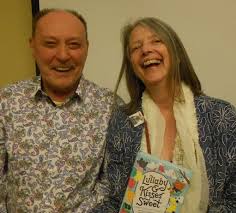
(photo: SCBWI mid-year conference, Florida, Lee Bennett Hopkins 
and fan, Jan Annino.)


Thursday, September 15, 2016

Passive vs. Active ~By Suzy Leopold

Does your current WIP have too many words? Are you looking for just the right word? You know the importance of word count and making every word count.

Perhaps it is time to revise. Let’s look at your manuscript and see what voice you used. As you revise, look for your author’s voice. Doing so, will help you to trim your word count, enhance your manuscript, and clarify the meaning of your story.

There are two types of writing voices. Sentences can be written in a passive voice or an active voice.

Definition of Passive Voice
Tells what is done to someone or something.
  • The action performs and is then followed by the subject. Sometimes the subject is missing.
  • The who or what receives the action and typically precedes the action [verb].
  • The reader is lost in the meaning of the story.
Writing passive sentences is not what you want for your story. A passive voice can sound wordy and awkward. Too many words confuses and looses your reader. Remember the importance of illustrations to tell the story. The pictures will enhance and show the story.

A sentence written in a passive voice may include the verb to be and a past participle of a verb. Look for and eliminate these words:
  • a
  • are
  • be
  • being
  • is
  • had been
  • was
  • were 
Now, let's look at the voice that is best for your story.

Definition of Active Voice
Tells what a person or thing does.
  • The subject performs the action.
  • The order is-subject followed by verb. 
  • The who or what receives the action and typically follows the action [verb].
  • The meaning of the story is clear to the reader.
Writing in an active voice is what you want for your story. An active voice is bold, precise and succinct.

Here are examples of a passive voice versus an active voice:

Passive Voice
Active Voice
The box is filled with picture books.
Picture books filled the box.

Now you try. Change the following sentences from passive to active voice. Remember to write the subject followed by the action.

1. The box of books was destroyed by the rain.
2. The mess will be cleaned by James tomorrow.
3. Reading is enjoyed by Danny.
4. The story was written by Joshua.
5. The letters had been written by the students.
6. The stamps were bought.

How did you do? Did you change each sentence into an active voice? Check for the answers at the end of this post.

As you revise and edit, think about your readers. What do you want the reader to focus on and how do you want to engage them? Eliminate the passive voice. Write in an active voice and choose your words wisely. 

Hope these tips along with the following chart from The Write Life are helpful to you as you revise, edit and polish your manuscript.
“A style that consists of passive constructions will sap the reader’s energy. 
The difference between an active-verb style 
and a passive-verb style–in clarity and vigor–is the 
difference between life and death for a writer.” 
~William Zinsser 
ON WRITING WELL

How did you score? Here are the answers:

1. The rain destroyed the box of books.
2. James will clean the mess tomorrow.
3. Danny enjoys reading.
4. Joshua wrote a fiction story.
5. The students wrote the letters.
6. Dad bought stamps.

Monday, September 12, 2016

Rebecca Hirsch Writes Science

By Sue Heavenrich


Rebecca Hirsch has written more than sixty books, from picture books to YA nonfiction, for educational and trade markets. She’s also written about science and nature for Spider and other magazines. Her most recent picture book, released just last month, is Plants Can't Sit Still. If you’ve got a wiggly-worm for a child, you’ve gotta get a copy. (I reviewed it on Friday over at Archimedes Notebook)

“This was the manuscript I took to Rutgers back in 2013,” she said, but the story Hirsch took to Rutgers looked nothing like the breezy text of the published book.

“It was a list about cool things plants can do,” she said. Her Rutgers mentor pointed out that it needed just a few things to set it straight:
  • an entry into the story
  • a narrative ark
  • a strong ending
  • turn descriptions into art notes and let illustrations show those details
 The first thing Hirsch did when she went home was to closely study picture books. “I wanted to see how they start. And I discovered I could take out description because it would be shown in the artwork.” One of the books that helped her see a different way to organize material is Ducks Don’t Get Wet, by Augusta Goldin. She paid attention to how that book used a repeating line. It took her about six months, and a complete re-visioning of her story, but she found the heart of the book.

Reading the kind of book that you want to write is important, Hirsch says. One summer when she didn’t have any projects, she read 100 picture books. She chose a number of award-winners and studied how the first sentence worked; how the first page worked; what the “fresh take” was for that story. At the same time, she studied Ann Whitford Paul’s Writing Picture Books.

“It’s focused on fiction, but the rules apply to nonfiction,” Hirsch said.

Her advice to other writers? “Have more than a single project going on at once.” On any single day, Hirsch usually has four to six books in various stages of completeness. Right now she’s doing preliminary research for one, writing text for a middle grade science book, has a couple picture books in the rough draft stage. “This,” she says, “allows me to get away from one project for a couple days – and come back with more clarity.”

Every six months or so, Hirsch takes a step back and reviews her goals. She usually has two or three big goals: write a new picture book; study picture books; maybe write some poetry. She also sets herself a few minor goals that she matches to a timeline: do research, draft the story, do the back matter. She puts these on a calendar.

“Having a framework helps,” says Hirsch. “Knowing that this week I’m working on back matter helps me stay organized.”

It must be working because she’s got another book hitting the shelves in November, Birds vs. Blades. It’s about offshore wind power and protecting seabirds.

Monday, September 5, 2016

Translation: A Necessity for Children's Literature by Tina Cho

If you've ever read Heidi or Fairy Tales in your childhood, you have a translator to thank. Translators are an important link in creating quality children's literature. I never realized this until I sat in a class titled "On Translation" taught by Cathy Hirano at the Asian Festival of Children's Content in Singapore last May. 

Cathy is a Canadian who lives in Japan and translated an award winning book by Yumoto Kazumi, The Friends, among many others.


Cathy says, "Books in every language capture unique character and experience." Because of translation we can see into other cultures. Following are notes from her session.

1. Translations can nurture and inspire minds.

We only know of Socrates because of translations. Cathy shared that from reading Heidi, which was written in 1881 and translated from German, she learned she can talk to God. 


In Japan, they wanted to be like the West. So classics such as Alice in Wonderland were translated. During the war, Japan censored what could be translated. However, a lady secretly translated Anne of Green Gables, published in 1952. 

2. Translation can inspire and nurture new authors.

The author Cathy translated for was inspired by Stephen King. Another Japanese writer wrote the first Japanese fantasy, which was inspired by C.S. Lewis's The Lion, the Witch, and the Wardrobe. These authors wouldn't have been inspired by Western authors, if their books weren't translated.

Issues of translating:
Time and money
Publishers are reluctant to take risks. Translation takes a long time and is harder to sell if the character is a different nationality. You must have a quality translation. However, most translators receive low pay and no fame. It would be ideal if the translator also had their name on the cover and received copyright.

I'm so glad I sat in on Cathy's class. It's been fun seeing my author friends' books get translated into other languages, especially Korean. Translating is indeed an art and as difficult as writing the original story. Lately I was able to help critique my friend's English translation of a Korean story they hope to sell to an American publisher. Choosing the right English words and ideas is difficult. Translating isn't word for word, but more thoughts and ideas for thoughts and ideas.
Author friend Julie Hedlund's book translated into Korean: My Love for You Is the Sun

So thank a translator, and if you are bilingual, perhaps you can step in and translate so children can glimpse into your culture.

For more on translating, read this from SCBWI--Translation: Some Frequently Asked Questions.  There are also awards given to translated works, mentioned in these FAQs.

To see an interview of Cathy Hirano, check this link at Cynsations.