Tuesday, September 1, 2020

Illustrator Merrill Rainey Creates Beauty out of Junk: The Debut of the Color, Cut, Create and GIVEAWAY by Kathy Halsey

Craft Chat with Merrill Rainey

Dinosaur World and Horse Ranch! Just add a kid who colors, cuts, and creates!

Who doesn't love creating a new world? Merrill Rainey has created two great escapes for children ages 6 and up.  Merrill makes paper engineering simple with tools that most households have: markers/crayons, scissors, and glue. I gifted my granddaughter Rosie with her own horse farm this past weekend. Two lucky readers who comment on today's post will receive one of these 2 books. Read on and learn more about an illustrator's journey. Merrill shares tips for how author-only folks can find their inner artist, too.

1. I’m drawn to your unique art. You use cut paper, paper engineering, and “create beautiful things out of junk.” (I love that catchphrase!) How did you begin your illustration career? How did your style evolve?

Kathy, where to start! I will try to keep this as short as possible, so let me jump in my wayback time machine, and give you some Cliff notes!

  • -  During the early 2000’s I attended and graduated Kent State University with a degree in Visual Communication Design with a background in Illustration

  • -  In 2003 I was hired as a graphic designer for a company that created large training visuals for fortune 500 companies. As an in-house designer, I was learned many things -  client supply chains and their visions and values, but I wasn’t learning anything about illustration. I was losing track of my original goal becoming a children’s book author and illustrator.

  • -  Over the course of the next few years, I regained focus. I rebuilt my portfolio, got my first magazine assignment with Jack and Jill magazine, and signed with my first illustration rep Tugeau 2, all while working a full time job.

  • -  In 2007 I joined SCBWI, a must in this industry. I owe a lot of my success to the art directors, editors, authors, and illustrators that I have met through this organization.

  • -  In 2010 my son was born. Shortly after this milestone, I was worked a 40+ hour work week at my day job and helped take care of a new baby.  I worked on contract work in the eventing until about 4 or 5 in the morning, slept for a few hours, and did it all over again. Eventually those late nights finally paid off. I quit my full-time job and my business as a full-time freelancer.

  • -  I worked for the next 7 years, slowly building my client list. I worked on projects like creating online world assets for different toy brands, educational illustration work for companies like McGraw Hill, and of course illustration work for Highlights Press and Magazine.

  • -  2014 brought more changes including the arrival of our daughter. During this time, I went through a renaissance with my art. When I started out, I was working completely digitally. Then after a portfolio review at a SCBWI Northern Ohio event, I was told to “find my trade picture book style”. Those six words sent me on a journey to figure out what that statement actually meant and how to achieve this goal. Through a lot of trial and error with different mediums and talking with other illustrators and art directors, I found a renewed love of cut paper and collage work.

  • -  Although I had some bites earlier on, my trade picture book career didn’t really start until 2019 when I got some good advice, and the opportunity to sign with Bookmark Literary. My agent Teresa is a gem and works really hard for her clients! In just a short amount of time, we are already three books in with more on the way.

- The rest is still history in the making! I probably have left out a couple of important moments in time, but 10 years of hard work and persistence is a lot to write down in just one interview. ;-)

2. You’re known for magazine illustrations, especially your brand character work for “Jack and Jill” and “Humpty Dumpty” magazines. Is magazine illustration or your approach to it different than what you with book illustration?

This is definitely a yes and no answer. My starting point to approaching any illustration or project is the same. I start by reading the project brief or manuscript. While reading, I start to jot down thoughts and ideas that I could use to make visuals that work well for the project. From there, I scribble in my notebook and create thumbnail sketches. These sketches are small 2”x2” rough drawings that allow me to start figuring things out in my illustrations: spacing, character placement, camera angles, pacing, or where words will go. These sketches are where my work starts to come to life.

Working on a book is a little different because there are even more things you have to take into consideration when starting out, like the pacing of your artwork with the text, page turns, color consideration for things like moods and emotions, and character consistency. It is a more in- depth process from start to finish.

3. Many of our GROG readers are writers not illustrators. Yet, the picture book’s unique format gives art and words equal weight.  Share some advice to help writers channel their “inner artist” and understand the illustrator’s job. Should they doodle, make dummies, or take an art class?

I think all three suggestions you mention are a great start. I’m a firm believer that the only way to truly understand how something is done, is to experience it firsthand. I would also suggest talking to as many illustrators about their process as possible since all illustrators work a little bit differently. I would also suggest taking an illustration workshop where you get real life experiences on how illustrators create their work. Make sure that the workshop gives you an opportunity to experiment with the new art materials and mediums that you learn about. The Highlights Foundation is a great example of such experiences. If you can’t afford something like that, just take a trip to your favorite bookstore or library and find those picture books you already love. Pull them off the shelf,, and study the art you see. Ask yourself: What is it about this art that makes you love it so much? Is it the characters? Is it the textures made by simple brush strokes? Or is it the mood and emotion set by color? Start to pick apart and analyze what makes the artwork so successful. How do the illustrations flow from one image to the next? 

After you study the art, look at how the words and illustrations work. Do they work well together, or do you stumble and get confused? Do they blow your mind because you would never have thought the illustrations would look one way based on how the text reads? There is so much you can learn by just observing someone’s work. A large part of the art of illustration is just being able to observe the world around you. For example: What shape is a silver maple? What does its bark look like? Is the sky really blue? What do you smell when you walk past a bakery? Is it a cookie? What type of cookie? Maybe chocolate chip? Now, do these observations remind you of anything from your own past memories? What emotion comes to mind when you think of these experiences? Then, once you really understand what you see and feel, can you sketch that in your notebook? Can you now paint or draw it giving enough details so that your viewer will understand what you are trying to convey in your illustration? This is the type of thinking that can help you find your true inner artist.

4. Merrill and I are lucky to live in Ohio, home of the University of Findlay’s Mazza Museum. The Mazza features the most diverse collection of original artwork by children’s book illustrators in the world. Tell us about your art exhibit at Mazza. What does the museum offers to you as an illustrator. (It’s an unknown gem!)

I completely agree that The University of Findlay’s Mazza Museum is a hidden Gem! What a place for true inspiration! With more than 14,000 pieces of original children's book art, there is something to inspire everyone. Their staff is like no other and the programming they offer is just awesome. If you have never had a docent lead tour at the Mazza; you need to! The docents are so well-educated on the museum’s collection. They know every little back story to the art hanging on their walls. To me, those little back stories are just one of the small things that will add a bit of magic to your visit at the Mazza.

A few years back, I had an opportunity to exhibit my collage work for Humpty Dumpty magazine. The experience was just unreal. It was such a thrill to see my work hanging on a museum wall with so many well-known authors and illustrators, especially a museum that is respected by so many in our industry. A few of my pieces were even left with the museum to be preserved and shared with future generations.

5. We're excited to help you celebrate the September 15 launch of your Color, Cut, Create! Dinosaur World and Color, Cut, Create! Horse Ranch with Odd Dot. I know my granddaughter Rosie will fall in love with Horse Ranch. How do you bring a project like this to life? I’m wondering how many hours and tinkering you put into these projects.

A project like this is definitely a great undertaking, but such fun at the same time. I spent months just trying to figure out what was going to be in each book, and how I was going to make them. I had 176 pages to work with. Although that may sound like a lot, when you start to prototype a toy, you have to take into consideration things like page size, and how many pages it will take to build one toy. So for instance the volcano toy for Dinosaur World takes up five pages vs. a single dinosaur toy take up one page. 

For about a year, my kitchen table was full of paper toy prototypes. A prototype is a preliminary model that allows you to figure out and test the functionality of your toys before you add in all of the cool details. Prototypes give you the opportunity to experiment and explore how you are going to make a 3D object out of a single flat sheet of paper. Many, many prototypes were created for both of these books. By the time I finished each book, I had needed to increase my work space from one large table to two. As a toy designer I had to build everything over and over to make sure that it was made well and didn’t fall over or fall apart for the end-user.

Many times when I am creating my products, I will let my kids build and play with them to see how they react. It allows me to observe firsthand what is or isn’t working, and how I can make it better. I sometimes refer to my children as my S.M.E.’s, Subject Matter Experts.

Horse lovers check out this fun video by clicking here. Those who dig dinosaur, here's your video

6. The subjects you bring to life, dinosaurs, horses, asteroids, are so kid-centric. How do you mine your childhood memories to infuse your art with whimsy and humor?

Although not everything was perfect, I have only the best memories of growing up in the 80’s. I come from a large family, and even though we didn’t always have the things our friends and neighbors had, my parents made sure we had what we needed. They gave us opportunities to play, explore, and to just be kids. My siblings and I would spend summers riding bikes, camping, and going on imaginary adventures. Evenings and holidays were always spent playing board games with each other. The fall brought large leaf piles to jump in, and tackle football games at the schoolyard across the street. When winter came, there were hours of tunneling through the snow and snowball fights.

These moments in time instilled in me a sense of observation of the world around me, imagination, love, and family. I still remember things like running to the back door of my childhood home, opening it, and taking a deep breath of the crisp cool air on the first night of fall. Each year I relive the magic and wonder of one Christmas Eve as we returned home from my grandparent’s house to find that Santa Claus had already come and our presents were waiting for us under the tree. These types of memories shape who we are, what we do, and what we create in life.

Now with my own children growing up, I watch and observe them, and take inspiration from their emotions, amazements, and observations of the world.

7. What projects are you working on now?

Besides fixing up my new home, I have my bimonthly magazine work for Jack and Jill and Humpty Dumpty magazine in the works. I also have another new project brewing that I can’t say anything about yet, but keep an eye out. And of course, when I have time, I have a list of stories that I just can’t wait to tell!

8. Was research involved in deciding what horses and dinosaurs to use in the Color, Cut, Create series?

There was a large amount of research done on what horses and dinosaurs I should include in each book. The decision for the dinosaurs was based more on fan favorites like the Spinosaurus, dinosaurs I liked growing up, like the Ankylosaurus, and requests from my kids. The decision for horses to include came from trying to make sure I had a good variety of different breeds of horses in the book. I had spreadsheets listing names of what horses, dinosaurs, set pieces, and ground cover I was going to create. Some of these items were caves, a barn, ground foliage, different kinds of trees, volcano lava, and a ranch gate.

I wanted to make sure that I had a good variety that was also true to life. Once I had my lists created and a prototype of each toy made, I would then send them off to my awesome editor, Justin, at Odd Dot for review. Like most projects, there were always edits and additional toys to make.

Thank you for having me on the Grog! It’s been a pleasure talking with you and your readers. I look forward to seeing who receives the copies of the Color, Cut, Create! books. I hope they have just as much fun building all they toys as I did making them. CHEERS! 


Find more about Merrill here: https://littlerainey.com/ and on twitter: @LittleRainey. 

Remember to leave a  comment or question to win a free Color, Cut, Create books.


Wednesday, August 26, 2020

Hands-on Research Tips with Author, Annette Whipple

By Suzy Leopold

Let's welcome author, Annette Whipple, to the GROG Blog today. I understand Annette thinks facts are fun. I agree. Annette writes informational books for children that include pieces of information as fun facts.

Many writers read books on the craft of writing kid lit to master the art of writing for young readers. Many writers research books and online sites. Annette spends valuable time with hands-on research.

Before Annette gives tips for hands-on research for picture book writers, let's learn more about her as she shares her story and writing journey:

Annette Whipple celebrates curiosity and inspires a sense of wonder in young readers while exciting them about science and history. She's an author of eight fact-filled children's books including:

THE LAURA INGALLS WILDER COMPANION: 

A CHAPTER-BY-CHAPTER GUIDE, 

Chicago Review Press, August 4, 2020


WHOOO KNEW? THE TRUTH ABOUT OWLS, 

Reycraft Books, September 30, 2020


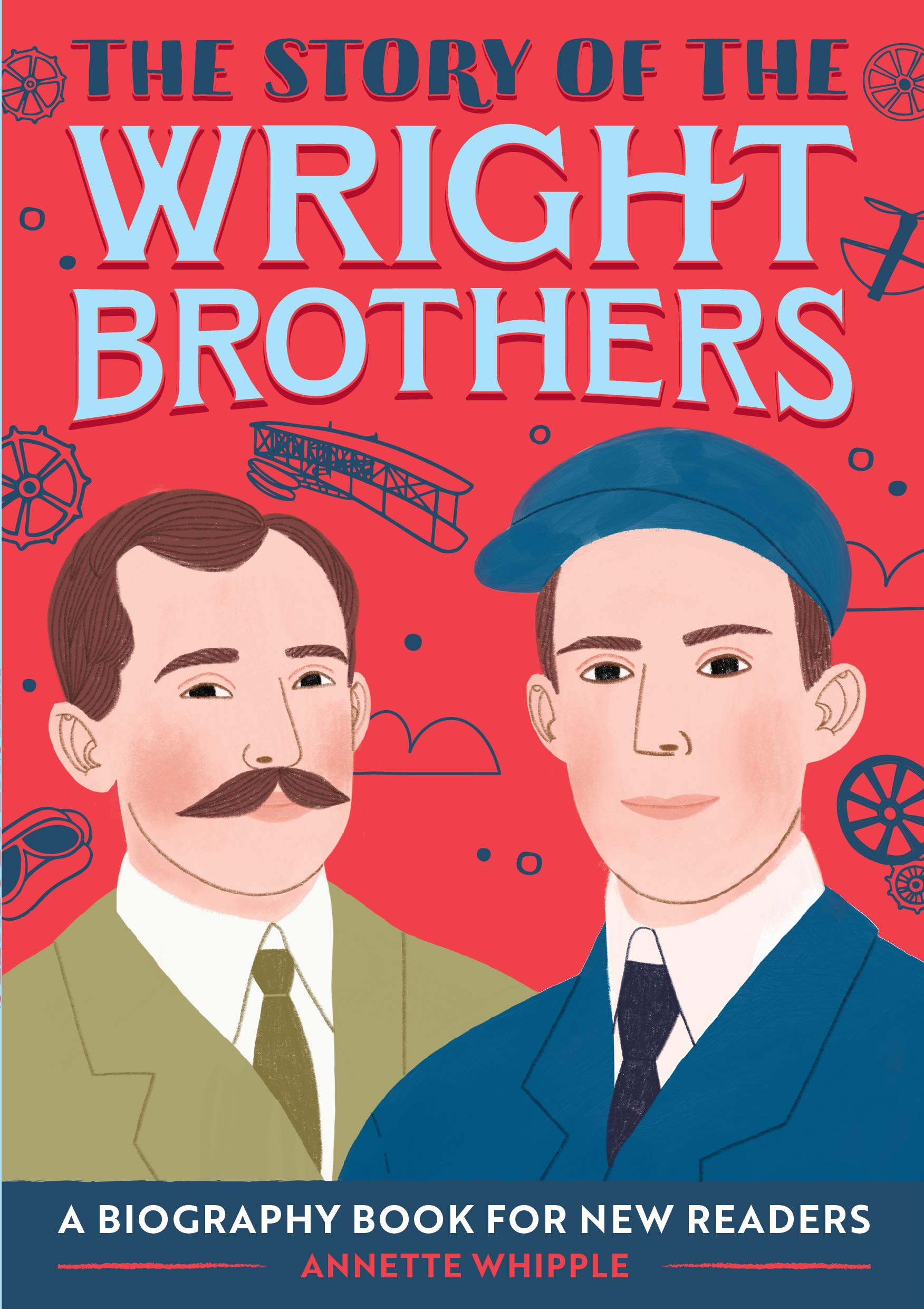
THE STORY OF THE WRIGHT BROTHERS, 

Rockridge Press, 

July 28, 2020

Many writers love chocolate and Annette is no exception. Annette is a fact-loving, chocolate chip cookie-baking children's nonfiction author from Pennsylvania. 

Learn more about children's author, Annette Whipple at her web site.

Tell us more about your writing and reading.

Annette loves to wind down at night and on weekends with a good book. Most of Annette's weekday reading consists of audio books while cooking and exercising. Annette enjoys reading nonfiction books across all age groups--especially kidlit. Additionally, she reads middle grade fiction.

Annette shares why she chooses to read mentor texts and how reading supports her writing in the following quotes:

"Reading great books opens the world [and fictional worlds] for me." 

Books help me connect with and understand people who live very different lives than me.

Even if the characters are fictional, the understanding translates to real people, too.

Of course reading is also huge part of my research process."

Share your writing journal . . . 

My love of writing did not begin as a child. I wrote notes to friends and letters to my penpals. My call to writing began in my thirties.

I began blogging to share my daughter's journey as she overcame a speech disorder apraxia, also known as acquired apraxia of speech [AOS] or childhood apraxia of speech. I quickly learned I loved to encourage others on similar journeys and began sharing my daughter's therapy and progress. I wrote about our home and family life, the books we read, favorite recipes, and fun activities. Overtime, I became serious about writing and took a few classes. Eventually a few magazines published my work.

In August 2014, I had an idea for a book. It was a story I knew I could write. It became my seventh published book. It is:

THE LAURA INGALLS WILDER COMPANION: 
A CHAPTER-BY-CHAPTER GUIDE

For more information click here

I wrote this newest publication because I think the Little House series by Laura Ingalls Wilder is a valuable window into American history. But understanding the historial context makes the stories even richer, especially for children. My book explores the history, people, and the context of each of the books in the Little House series. I address the racism and prejudice found within the books because reading about prejudice is difficult without a conversation. My book can serve as a conversation with others or as an awareness if the book is read independently by a child. I want the reader to understand why people felt the way they did and know it's not right. I included hundreds of pioneer terms and seventy-five activities for readers to "Live Like Laura" [FARMER'S BOY'S activities are referred to as "Live Like Almanzo".]

Children and adults are learning from my book and I've received incredible feedback about THE LAURA INGALLS WILDER COMPANION: CHAPTER-BY-CHAPTER.

I now primarly write for children and I love it. I hope my words inspire, encourage, and teach children about our amazing world.


Tell us about your special place to write and a necessary writing tool . . . 

I don't have a special writing studio or even an office. But I do have a desk made by my great uncle more than twenty years ago. It has my stacks of books and papers all around. It also has a big monitor that I use along with my laptop. Having two screens make writing so much easier. 

My favorite writing tool is probably a good pen. I prefer the Pentel EnerGel pen with a fine tip. I also love my wrist pads and ergonomic wireless mouse.

When you are not reading or writing, what do you like to do?

When I'm not reading or writing, my favorite work-related task is helping authors. I love to critique others' manuscripts and work-for-hire packages. I also love to teach. Though in-person instruction is my favorite, I'm embracing online teaching, too. You can find my on-demand writing video courses at KidLit Creatives.

To relax, you might find me vegging in front of the television or peeking at my bird feeders. Or baking chocolate chip cookies or eating the fruit of my labor. Mmm . . . My favorite!

A literary character that I would like to dine with . . . 

That's a hard phrase to complete. Maybe Ma from the Little House series or the Finch Family from TO KILL A MOCKINGBIRD. Or even Jo from LITTLE WOMEN, LITTLE MEN, and Jo's boys.

I just realized all of those books and series mentioned are more or less based on the lives of authors. Interesting.

Share some hands-on research tips . . .

I write nonfiction and informational fiction for children. So, I want to share a bit of my research process.

I begin my research with books and online searches. I always try to consult with experts. But really, it's getting hands-on with my topics that really makes my writing stronger. 

When I researched and wrote THE LAURA INGALLS WILDER COMPANION, I had a question I could not find the answer to. 

So, I contacted the Wilder Homestead--Almanzo Wilder Farm in Malone, New York. During the conversation, an expert jokingly said I should hop in my car to tour the homestead. That was on a Wednesday afternoon. I planned a road trip and was on my way Saturday morning. I walked around the property with reconstructed barns. I saw Almanzo Wilder's bedroom. I even walked on the floors Almanzo once walked. It was a glorious day at the Almanzo Wilder Homestead. All of it amazed me.

For the book WHOO KNEW: THE TRUTH ABOUT OWLS, I met two owls. Alexandria and Quincy! 

Right away I noted how the Spectacled Owl, Alexandria, had tight, dense feathers. Her feathers keep her dry in the tropical forest of South America. Quincy, the Eurasian Eagle Owl, has fluffy feathers compared to Alexandria. Visting and holding these birds in-person supported my research. I don't believe an on-line photo of the owls could show such detail. 

You can read more about it here.

You can view a book trailer for WHOOO KNEW? THE TRUTH ABOUT OWLS here

Finally, I can't say enough about hands-on research to support your nonfiction writing. 

However, during a global pandemic it's a bit of a challenge. I'm working on another book in The Truth About Animals Series with Reycraft Books. I want to meet some spiders! I should take the time to study spiders I shoo out my back door! However, consulting with an expert and hands-on experience is best to support my research. 

If you want to strengthen your nonfiction writing, try hands-on research to support your manuscript. If you are interested in learning more, consider participating in an on-demand video course through Kidlit Creatives

To receive a 10% off, use this code: WRITER10

Thank you, Annette, for sharing your writing journey, success with publication, amazing book titles, and some outstanding hands-on research for nonfiction writing. 

Facts and information in children's nonfiction literature satisfy a curious young reader to ask for more. Anything with chocolate satisfies a writer to write more.

I baked these dark chocolate chip cookies with dried cranberries for you, Annette.

For more information about Annette:

Author Web Site and Writing Resources

Sign up for a montly Newsletter 

Facebook

Instagram

Twitter

A Giveaway!

To be eligible for a giveaway read and follow these instructions:

In the comments below share a tip about research for nonfiction stories OR a recommendation for a currently published [2020] nonfiction picture book title. 

If you follow the instructions, I’ll put your name in a hat and draw two winners. Each winner will receive a hand crafted 4 X 4 flower cut paper creation painted with acrylics. U. S. Mail only.

The two lucky winners will be announced on the next GROG Blog.

Wednesday, August 19, 2020

Use Your Writing Skills to Pay for that SCBWI Membership

By Leslie Colin Tribble

First off, BIG ANNOUNCEMENT!! 

The winner from last week's drawing for Kirsti Call's signed ARC of her forthcoming picture book, Mootilda's Bad Mood. . . is. . . KIM P

Kim, Congratulations! We'll get that advance copy out in the mail. Please send your mailing address to Krisit Call (her contact info is on last week's post). And enjoy the laughs as Mootilda gets you into a goooood moooood. 😁


Now, onto today's post.

Writers are generally an underpaid lot, even when times are good. But add in a global pandemic, and times can be especially tough for folks who make at least some of their income in the gig economy. Lots of people have been laid off, furloughed or lost jobs the past five months. If that's you, you might just be wondering how to afford to renew your SCBWI membership, or take some of those courses and classes that further your craft. Well, get out that lovely yellow pad and sharpen your pencil, writer, because maybe you'll find something in the following list that gets your writing to pay for your writing needs. 

1. Online Freelance Writing

There are several legitimate sites that offer freelance work and fairly decent pay. You can opt to write one article or blog post, work part-time or even find full-time writing work. Check out Carol Tice's Make A Living Writing for tips to get started plus lists of online companies that list job boards. Problogger and Be A Freelance Blogger are other trusted names that can get you in the business. These companies list bigger name organizations that are looking for someone to write content, and they pay accordingly. However, if you need to get some cash fast, you're a quick writer or editor, and have a broad knowledge on a lot of topics you can sign up to write for online companies like Textbroker. I wrote a lot of articles for them several years ago and actually really enjoyed the experience. I became a better writer, could request a payout weekly and made a few hundred bucks a month. Granted, that's not much, but I did it in my spare time and it was certainly enough to buy groceries for my family. There are other websites like TextBroker but do your research and find ones with decent reviews, ease of use, and lots of work to chose from. I think a lot of these companies have become more stable and legitimate since I was doing this kind of work, so you should be able to find one that meets your needs.

2. Writing for Magazines

Yes, we'd all like to get published in a magazine like Oprah, but set your sights a little lower and chances are you can get published in a regional magazine fairly easily. Your city is probably covered by at least a couple different local publishing firms that are always looking for good, solid content writers. Do you know how to keep a toddler occupied on a long car trip, or have a special recipe that utilizes regional produce? Pitch those ideas to the editor. Or ask what their publishing schedule is for the year and see if you can write a suitable article. Regional publishers are usually easy to work with and pay fairly quickly. If you have some in-depth knowledge about certain topics, go ahead and pitch national publications. Are you an expert rock hounder? Did you climb all of the Colorado 14,000 foot peaks in a season? Do you know a super successful way to teach a left-handed person how to knit? Take your passion, hobby, or career and write an article about it, then find a good match for it. Writing a killer query letter to a magazine editor isn't any different than crafting one for a book editor or agent, so put those talents to good use while you're waiting for that offer to come through.

3. Content Writing for Local Businesses

Look around at the businesses in your town. Nearly all businesses have websites and many of them are looking for some content that showcases what they have to offer. Your job is to convince the owner that you're the best writer for the job. Be creative here. Chances are, especially now, the business is really needing something to entice customers back to their store, but they may not have the ready cash to pay for that service. Now is the time to use your best bartering tactics. Offer to take gift cards in exchange for your word-smithing. Tire shops, clothing stores, book stores, outdoor adventure businesses, restaurants, dentists, yoga or dance studios and even hospitals all need written words to reach their clientele. You may not get paid with a check, but a gift certificate or free classes is just as good. I wrote about 60 articles for our local outdoor retailer and received a house account in exchange. I'll need a new down coat (soon!) to ward off the chill of Wyoming winter and I love knowing I can run down there and buy whatever coat I want, not to mention Christmas and birthday presents for my kids. 

4. Non-profit Agencies

Most non-profits cringe at paying someone for services, but maybe you can find a win-win for both of you. Ask the local animal shelter to pay you in vouchers for dog food. Your church might be able to provide day care for your children, or hook you up with piano lessons for the kids. Do you have legal or tax expertise? Write some blog posts for a non-profit in exchange for services in the future.

5. Writing for Greeting Cards

Fellow Grogger, Sherri Jones Rivers wrote this post about the greeting card industry. If you can write succinctly, wittily and with heart, give this a try.

6. Writing for the Testing Market

Remember all those standardized tests you've taken and the reading comprehension essays? Someone has to write those and it might as well be you. I haven't written for the large testing companies, but I did work for several months for a local company that teaches English to Korean students. They needed practice TOEFL (Test of English as a Foreign Language) essays and questions so that's what I wrote. It was fun and interesting - I got to chose the topics for the essays, then crafted comprehension questions based on that information. It was good money and something I could do as a side-hustle. 

There are a lot of ways of turning your writing skills in cash, or as good as cash. It does require some effort, searching, applications, and most of all, tenacity, but it's worth it. You'll become a better writer, bring in some extra income and probably learn some new and interesting information in the process. 


Wednesday, August 12, 2020

Giveaway and Interview with Picture Book Writer Kirsti Call ~ by Christy Mihaly

A big GROG welcome to picture book author Kirsti Call. Kirsti is offering a signed ARC (advance copy) of her forthcoming picture book, Mootilda's Bad Mood ... just comment and/or tweet to be entered in our giveaway (details below)! 

   GROG:  Welcome, Kirsti! I know that in addition to writing, you co-host the new Picture Book Look podcast, and you're a Cybils judge and co-coordinator of Reading for Research Month (ReFoReMo). 
    Before we talk about your books, please tell us a little about ReFoReMo. What does it involve, and why should GROG readers participate?

    Kirsti: ReFoReMo was originally Carrie Charley Brown’s idea, and when she asked me to join in on the fun, I was thrilled. We had both judged for the Cybils awards, which helped us understand how reading great books helps us write great books. Paying attention to what I love about a story, and attempting to add those elements into my own stories, is one of my favorite ways to improve my writing. We wanted to share that with others.

Well, thanks to you and ReFoReMo for sharing all those mentor text insights. What more should our readers know about ReFoReMo?
    Kirsti: ReFoReMo is not only for writers, but for librarians, teachers, and kids. Though we post every Tuesday all year long, March is our challenge month. That's when authors, educators, librarians, agents and editors share insights and favorite mentor texts that we can read and learn from. 

ReFoReMo is a great resource for anyone who loves picture books. Now, what can you tell us about judging the Cybils?

A: For the last six years, I’ve read all 300-ish nominated picture books for the Cybils award over a two-month period. This picture book overload totally helps me understand the market, what editors love, and what I love about picture books.

Read, read, read, right? Kirsti, you're also a marriage and family therapist. Does that work give you story ideas or otherwise inform your children's books?

Kirsti: I love using bibliotherapy in my work as a therapist. Reading and discussing books in therapy helps people process and heal. This work definitely influences my stories and what I write. In fact, if you read my forthcoming picture book, Mootilda’s Bad Mood (Sept. 1, 2020, Little Bee), you'll notice a very obvious connection between the story and my work as a therapist. 

Spread from Mootilda: "We're in a bad mooooooood!"
Mootilda's Bad Mood is co-written with Corey Rosen Schwartz and illustrated by Claudia Ranucci. It's about a cow in a bad mood. Where did this fun idea come from?
cover

   Kirsti: Corey and I joke about her being in a bad mood and me being in a good mood all the time.  We thought it would be fun to take that dynamic and explore how a cow in a bad mood would approach life ... and overcome all the cow-tastrophes that make her feel worse and worse. 


Uh-oh, cow-pun alert!! Kirsti, how does the co-writing process work differently from solo writing?

MOOTILDA swag!
   Kirsti: Corey and I have written many manuscripts together. In fact, we have another book coming out in the fall of 2021 with Little Brown. It’s called "Cold Turkey!" Writing together involves lots of texts and messaging in google docs and talking on the phone. It’s a much more social than writing solo.

  Big congratulations on Mootilda, Kirsti (and Corey and Claudia). I'm sorry, though, about the timing.
How have you been promoting your new book in the midst of the covid-19 closures and cancellations?
Book Launch in the Time of Covid (Sept.5)

Kirsti: Little Bee is planning a virtual book tour that we’re excited to participate in. We have a couple of virtual events coming up on Sept. 5 at The Writing Barn, and Sept. 8 at An Unlikely Story. We’re also considering a socially distanced book launch at a farm featuring cows and ice-cream. We’ve created some digital assets that we’ll be offering with pre-sales. In fact ...

** ALERT! GROG Bonus! **  


... if any GROG readers pre-order Mootilda, they can DM me on Twitter, Facebook, or Instagram to receive a signed bookplate, sticker, and mood-o-meter coloring page. 

We’re trying to be creative in these uncertain times. But one thing I am certain of, "Mootilda's Bad Mood" is something that will resonate with many people given the pandemic.

    These days it takes extra imagination and energy to get our books into readers' hands. Good luck with your launch! What else would you like GROG readers to know about you and your books?

    Kirsti: I’m super excited about another book that’s coming out with HMH in March—Cow Says Meow. I’m not certain why all of my upcoming books feature farm animals, but I do have a pair of cow shoes I can wear for each release date! 
    
Kirsti Call (whose cow shoe [and foot] appears below) is the co-host of the new Picture Book Look podcast and co-coordinator of ReFoReMo. She reads, reviews, revises and critiques every day as an "elf" for the 12x12 Picture Book Challenge, a blogger for Writer's Rumpus, and a critique group member. She's judged the Cybils award for fiction picture books since 2015. Kirsti has a picture book, MOOTILDA'S BAD MOOD (Little Bee) coming in the fall of 2020. COW SAYS MEOW (HMH) and COLD TURKEY (Little Brown) release in 2021. Kirsti is represented by Emma Sector at Prospect Agency.

For the GIVEAWAY: 

Your name will be entered for a chance to win Kirsti's signed ARC if you: 
(1) comment on this post (below) explaining why you'd like to win the ARC.
(2) tweet about this post, mentioning GROG and Kirsti Call, and tag me (@CMwriter4kids). 
Do both to get two chances!

We'll draw the winning name and post it on the GROG post next week. Good luck!

And remember, if you pre-order Mootilda's Bad Mood, contact Kirsti to get your swag. 

Find her here:
@kirsticall (Instagram)
Kirstine Erekson Call (Facebook)
@kirsticall (Twitter)


Thanks for visiting GROG! 
(And don't forget to leave a comment ...) 
Christy Mihaly

Wednesday, August 5, 2020

How to Turn Your Vacation into a Star Story by Tina Cho

Yesterday (August 4th) was the book birthday of The Ocean Calls: A Haenyeo Mermaid Story published by Kokila, illustrated by Jess X. Snow, my 4th picture book. It’s the end of summer, and I want to encourage you Grog Blog readers to turn your curiosities and vacations into stories! Then your vacations can be tax deductible, hehe.
An 83 year old haenyeo & me
So, it all started with a tweet I read on Twitter in 2016 about the haenyeo. Here I was living in South Korea, and I had never heard of them! They are diving women off the coast of Jeju Island, the southern tip of Korea. They are unique because they don’t use breathing equipment, and most of them are over 50 years of age. Some are in their 80s. 

I scoured the Internet for everything I could read and watch about these fascinating mermaids of the sea. I wrote a first draft. This draft was pure nonfiction, and I thought Highlights Magazine would be interested. I was correct. They were interested, but they wanted more sensory details and quotes. Ugh. No sale.

Jeju Island
I asked my husband how far Jeju was from where we lived, how much it would cost to fly there, etc… It turned out to be a cheap ticket & 30 minute flight. This would be our spring break vacation. I could research haenyeo. I dragged took my family to every haenyeo spot around the island. I took photos, talked to them, and even visited the haenyeo museum. When I returned home, I wrote a new story, this one fictional with a haenyeo grandmother teaching her granddaughter the tradition. The story went through 9 drafts with my critique groups. My agent sold it to Kokila, a new imprint of Penguin Random House in 2018. Since then, we’ve flown back to Jeju for spring break 2019 and snapped more photos for the illustrator, Jess X. Snow. I also found haenyeo in Busan, a large city on the southern tip of Korea and was able to take photos of them.
intergenerational theme

My advice for turning your vacation into a star story:

1. Plan your vacations around your curiosities and places you are interested in.
Canola among the volcanic rocks
2. Write down detailed sensory notes. Because I was able to watch the haenyeo firsthand, I could hear their special breathing called sumbisori which sounds like “hoowi,” when they exhale all their held-in breath. You will find that several times in my book. I took photos of the landscapes and shared them with the illustrator. Off the sandy shores were fields of bright yellow canola flowers and volcanic rocks. Jess did a beautiful job showing it! This is my favorite scene.

my favorite spread

3. Find a way to tell your story using your vacation as the backdrop. You can write nonfiction, or like me, fictionalize it but keep it based on something true.

4. Take lots and lots of photos and videos. You never know when an editor or illustrator will need them. I took photos of locals’ houses, and when invited inside a haneyo spot, I took more photos. 
Haenyeo spot in Busan, South Korea
5. Talk to the locals. Get their perspective on things.

6. Find the uniqueness of your vacation story. My uniqueness is the haenyeo themselves. I couldn’t find any English children’s books about them. 

7. Find a way to relate your story to today’s generation of kids. In my story the main character is afraid to swim & dive in deep water. She also learns something new from her grandmother. And many kids nowadays are trying new things since they have been home-bound.

8. Add layers of themes. My story showcases women and girls who are strong and courageous, attune to nature, with an intergenerational thread, the passing of tradition and culture, in a caring sisterhood of community.

9. Make sure it has a snazzy title that gives a hint about the story and snags an agent or editor. Add back matter if appropriate.

10. Send it to your critique group(s). I belong to 3. And they each chimed in with different perspectives and advice.

The Ocean Calls garnered 4 stars—from Kirkus, Booklist, Publisher’s Weekly, & School Library Journal. It’s also a Junior Library Guild selection.

Me in South Korea

Bio: Tina Cho is the author of four picture books-- Rice from Heaven: The Secret Mission to Feed North Koreans (Little Bee Books August 2018), Korean Celebrations (Tuttle August 2019), My Breakfast with Jesus: Worshipping God around the World ( Harvest House June 2, 2020), and The Ocean Calls: A Haenyeo Mermaid Story (Kokila/Penguin Random House Aug. 4, 2020). Her lyrical middle grade graphic novel, The Tune Without Words, debuts from Harper Alley in 2023. On July 22nd, she and her family flew across the ocean to start a new life back in the states. Korea will always be part of their home.