Showing posts with label NF Fest. Show all posts

Wednesday, February 23, 2022

We Are On This Journey Together: Writers Helping Writers

by Sue Heavenrich

Writing can feel like a long and lonely enterprise. Fortunately, in the kid-lit community, other writers are often willing to share the journey. Sometimes they offer a place to hang-out, eat cake and talk about books. Sometimes they offer a series of MFA-worthy lessons on the craft. The only thing they ask in return is that you pay it forward. 

Here, in no particular order, are a few of the groups and blogs that have helped me in my writing journey.

NF Fest is a “month-long crash course in writing nonfiction for children” organized by the Nonfiction Chicks. Nonfiction writers and illustrators share their accumulated wisdom in blog posts about graphic nf books, back matter, resources for research, structure, and more. There are activities and challenges, and always suggested books to read. You get out if it what you put in. Last year I studied 25 expository nf picture books and 25 narrative nf picture books, jotting notes about each one. Not only did I learn a whole bunch, but now I have a useful bunch of mentor texts for future projects. What’s cool: posts are archived so you can refer to them any time.

StoryStorm is a month-long brainstorming event that happens every January. Tara Lazar created it back in 2009 as Picture Book Idea Month (PiBoIdMo). Eight years later, she moved the event to January and changed the name to Storystorm – to reflect a broader scope. The event is open to any writer of any genre eager to brainstorm ideas. The basic idea: come up with/brainstorm 30 ideas for picture book stories (or novel chapters or essays or….) in 30 days. Each day there’s a post by a writer or illustrator sharing tips, thoughts about rhyme, how-to’s and more. What’s cool: There are prizes, and some lucky writers win opportunities for manuscript critiques, books, etc. Also, posts are archived.


12 Days of Christmas for Writers is a post-Solstice event that invites writers to welcome back the light, and bring light into the areas of our writing that are dark. Julie Hedlund started it a few years ago. There are no prizes and there aren’t any lessons, as such. Instead, you get inspiration and time to reflect. Participants get daily exercises to evaluate the previous writing year, tools to illuminate successes, resources, inspiration, and tips on how to go forward with our writing into the new year. It’s a nice bridge from one year to the next. You can sign up for the email notifications here and find the group on Facebook. 

March On With Mentor Texts is a month of reading - and discussing - mentor texts. Mentor texts are books writers look to as excellent examples of story structure, or point of view, or narrative arc. Starting in March 2022, Rate Your Story has taken on hosting the event, so what used to be known as ReFoReMo (Research for Reading Month) has been given a new name and switched addresses. It continues to be free to all, and this first year they are taking “late registrations” for participants. I’ve learned a lot from reading the suggested books and the blogs, which touch on topics as diverse as back matter to how-to-hook a reader. You can find March On with Mentor Texts here. Also on the blog: Mentor Text Mondays. There are free Mentor Text Talks on Sundays as well -   join the Group to stay updated on upcoming guests and other info.

There are so many info-packed websites and blogs that I could not mention them all. So I’ll mention a few of my favorites. Feel free to add your faves in the comments below.

Melissa Stewart has a wonderful blog that focuses on nonfiction. “Info-licious” offers Inspiration Celebrating Nonfiction Reading and Writing. She explains different types of nonfiction, story structures, shows her own process, and often features nonfiction authors who write about their books and most interesting research adventures.

Rosi Hollinbeck regularly reviews books for San Francisco and Manhattan Book Reviews, and posts reviews for middle-grade books at her blog. She also shares inspiration and information for writers, gleaned from a number of places, and often posts a comic or bit of writerly humor.

Kidlit 411 shines a spotlight on authors, curates and shares posts from other blogs, and has a vast library for writers seeking information about writing picture books, from formatting to character arcs. Another library for middle grade, one about mentor programs, and links to upcoming contests and awards.

Susanna Leonard Hill hosts Tuesday Debuts, where she interviews a newly published picture book author. She also hosts Would You Read It Wednesdays, where someone posts a pitch and other writers offer comments about what works and what could be improved. In addition to Friday book reviews, Susanna also hosts writing contests – her blog is like a coffeehouse where writers can gather, nosh on brownies, and chat about writing. 

Another way writers help each other is with collaborative marketing. The idea is to share news about each other’s book releases across social media outlets. You may have heard of  The Soaring 20s or PB Crew 22 or STEAM Team books. Some authors review books, others share and retweet, others help find book bloggers, and even others create online book release parties. The idea is that two (or twenty) heads are better than one…

What can we do to help our fellow writers?
  • We can be active in a critique group, offering constructive comments on other’s works-in-progress. 
  • We can be an accountability partner to another writer, checking in each week to encourage and support their journey.
  • If we’re submitting our manuscripts, we can support others in their submission journey. Look for groups like the facebook group 100 Rejections are a Good Thing or Sub it Club 
  • We can actively participate in local gatherings of the Society of Children’s Book Writers and Illustrators or other local writing groups.
  • We can share good books we’ve read on social media, and share/retweet book release announcements for our friends.
  • We can suggest books to our local libraries and school libraries.
  • We can … (add your own ideas in the comments)
This post was edited March 19, 2022.

Wednesday, February 19, 2020

Nonfiction vs. Informational Fiction: A Former School Librarian's View by Kathy Halsey

During February. I've taken advantage of NF Fest, a new challenge for nonfiction picture book authors. It's a free deep dive into the genre created by the NF Chicks, Pat Miller, Linda Skeers, Lisa Amstutz, Nancy Churnin, Peggy Thomas, Stephanie Bearce, Susie 
Kralovansky.  
The Facebook Discussion from NF Fest

Recently we've had an in-depth Facebook discussion about the nomenclature of "informational fiction" vs. "nonfiction." Melissa Stewart, who I consider an authority on the subject, has given us definitions and examples of each, yet confusion still remains. 


From our discussion, Melissa indicated, "An informational fiction book has some  documented information and some made up parts." She goes on to say that labeling a book as informational fiction alerts readers "to the fact that some of the info in the book is made up. We need to be honest with them." I agree. 

Some writers in the NF Fest suggested libraries create a separate section for informational fiction. However, this may be problematic for school librarians who have cataloging done by library jobbers such as Follett. (Note that many school librarians are in charge of several buildings and don't have the time to catalog.)

Another trend nonfiction writers need to know about is the "genrification" of library collections. To gentrify is to arrange a library by category to make book location easier, similar to bookstores. Some libraries may only genrify fiction (all dragon books shelved as a subgenre in fantasy.) Other school libraries may place all fiction, nonfiction, biographies and picture books together in genres such as war, sports or supernatural. (They ditched the Dewey Decimal system.)  School librarian and nonfiction author Marcie Flincum Atkins said, "Books that haven't moved in years are getting lots of love." It transformed her circulation numbers - data that administrators understand when determining library budgets.

Melissa Stewart and I continued our discussion privately where she shed more light on this topic.
  • First, wholesalers are already tagging informational fiction in their databases, so it's no longer a matter of debate as to whether people agree to the term "informational fiction." As Melissa states, "It's part of the landscape."
  • Stay tuned for Melissa's new book this fall from Stenhouse about the classification of nonfiction and the research showing that many kids prefer expository nonfiction. She does discuss informational fiction in this book, but it isn't a major focus.
  • Finally, here's a blurb from Stenhouse, a publisher that provides professional resources for educators. 5 Kinds of Nonfiction: Enriching Reading and Writing Instruction with Children's Books highlights more than 150 high-quality children's nonfiction titles for K-8. It provides strategies for building strong, diverse classroom and library collections and includes 22 innovative reading and writing activities that show teachers how to utilize the many wonderful nonfiction children's books being published today. This book will be a boon for writers, too.
NF vs. Informational Fiction Exercise
As a former school librarian, I'm sharing a process of determining whether these exemplary books are informational fiction or nonfiction. 


Both Sea Otter Heroes: The Predators That Saved an Ecosystem by Patricia Newman and Wait, Rest, Pause: Dormancy in Nature by Marcie Flinchum Atkins are nonfiction. Check out these books, and follow theses clues with me yourself.
  • If one turns to the dedication pages and looks at the CIP, Cataloging-In-Publishing data, we see their Dewey Decimal numbers - 599.7695 for Sea Otter Heroes and 571.78 for Wait, Rest, Pause. 
    Patricia's book - DDC 599.7695

  • They are both by Millbrook Press, a well-respected name in nonfiction. 
  • They have back matter that includes further reading, web sites, photo acknowledgments, and acknowledgments of subject matter experts who have provided information or vetted the book. 
    Marcie's book back matter


Atlantic by G. Brian Karas is a lyrical informational fiction book. Follow the clues to see why.
  •  The writing uses extended metaphors and a first person POV to give facts about the ocean. 
  • From the book one can pick out the facts: "I am the blue water at the beach, the waves, mist and storms. That salty smell is me, too. / I stretch from the icy poles, North and South. I rub shoulders with North America and bump into Africa. I slosh around South American and crash into Europe. 
  • The Cataloging-In-Publishing data indicates no actual Dewey number but places it in "E" (a designator for picture books organized by author's last name). The cataloging summary indicate the text gives characteristics "as described by the ocean itself." The ocean is speaking. That is a fictional element.
    Can you find the "E" designator and heading "Fiction"?


Head over to the NF Fest and join in the Facebook discussion and go to the web site to read posts. You may want to try these exercises with students or for yourself asking questions like this: 1. Can you identify the real stuff and the made up parts? 2. Can you figure out why the author included them? 3. Is it NF or IF? Happy classifying.


Wednesday, January 15, 2020

NF Fest by Leslie Colin Tribble

Hooray, today's the day! The day you can sign up for NF Fest coming in February. What's that? You don't know what NF Fest is and why you should be interested? Well, read on then and learn all about it.

Nonfiction Fest

A few years ago, a group of kidlit writers formed a group they named the Nonfiction Chicks. They've been writing and posting on their blog but decided they wanted something more, something big to help other nonfiction writers. Enter NF Fest, a month-long celebration of all things nonfiction, and it starts February 1.

I reached out to a few writers involved with this event and asked them for a couple sentences on why GROG readers should participate in NF Fest. Here's what some of them said:


Nancy Churnin (organizer)
The Nonfiction Chicks, a group of seven children’s book writers, have been working hard to put together a free writing challenge that will introduce you to what you need to know to get started writing non-fiction for kids and to improve your non-fiction writing for kids. You’ll get posts from some of the best in the business, from Jen Bryant to Candace Fleming to Don Tate and Traci Sorrell, addressing everything from different types of non-fiction, to research, sources, illustration, where to get ideas and more. There’ll be activities and prizes for participants that sign up in the Jan. 15-31 registration period. And, did I mention it is free? FREE! FREE! FREE! Plus, you’ll be part of the NFFest Facebook group where you can ask questions, talk and support each other. The NFFest will give you an amazing and unique opportunity to learn and to meet and become part of the greater community of children’s nonfiction book writers.

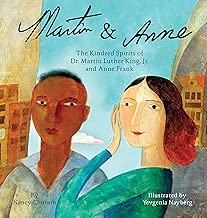
Martin & Anne: The Kindred Spirits of Dr. Martin Luther King, Jr. and Anne Frank

I had the privilege of being roommates with Nancy at a retreat, and all I can say is, if she's in, I'm in.

Lisa Amstutz (organizer)
Nonfiction writers won't want to miss NF Fest this February! This free event will feature daily blog posts from publishing professionals along with giveaways and activities for you to try at home. Join the NF Fest Facebook group for more information, networking, and discussion and check out the website at www.NFFest.com.

Amazing Amphibians: 30 Activities and Observations for Exploring Frogs, Toads, Salamanders, and More (Young Naturalists)

I've also had the privilege of meeting Lisa at retreats, as well as having done a mentorship with her and again, if she's in, I'm in.

Beth Anderson (presenter)
You know your topic. That’s not enough.
You've good writing skills. That’s not enough.
You have a critique group. Still not enough.
What you really need is the village!
There’s no part of a published book that doesn’t benefit from the shared experiences of the generous kid lit community—considering an idea, researching, getting at the heart, finding the right structure, drafting, revising, submitting, publishing, promoting, sharing with classrooms, creating presentations….The names of all the people who contributed in some way to the creation of a book could fill the endpapers front and back. To have a month of learning focused on the challenges of writing NF for kids is a truly special gift and an opportunity not to be missed! You’ll collect resources, pick up new methods, and gather all sorts of nuggets as you connect with like minded writers and find encouragers. (And some of the authors I’ve been stalking a-hem, following over the last few years are IN THIS GROUP!) I can’t wait!


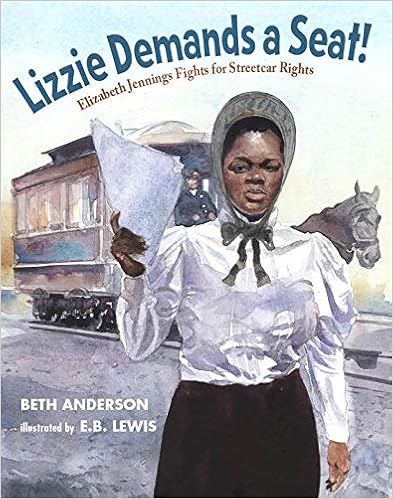
Beth is the author of, An Inconvenient Alphabet, and the just released, Lizzie Demands a Seat. I met her at a SCBWI event and she's amazing.

Vivian Kirkfield (presenter)
Why should Grog Blog readers sign up for NF Fest? When I decided to write children’s picture books, one of the first things I did (after joining SCBWI) was to sign up for writing challenges. StoryStorm, 12x12, Susanna Hill’s contests…those were the building blocks of my writing journey. And now, even though I have three books that debuted in 2019, another that launches this month, and more coming in 2021 and 2022, I know I still have a lot to learn. Then, along came NF Fest and before you could say - do you want to write nonfiction - I was already registered! Every day for a month, an industry pro will offer expertise on one topic or another that relates to writing nonfiction. I’m honored to be one of the bloggers and will be sharing my thoughts on Creating a True Story When Information is Scarce. But more than the knowledge, participants will enjoy the camaraderie, support, and encouragement that is so very important in this business that is filled with rejection and waiting…and more rejection and waiting. Don’t wait another minute…sign up for NF Fest. And guess what? It’s FREE and there will be PRIZES!


Have you been following Vivian and seen the number of books she's had published in the past year and those coming out in the future? She will have some treasure you can take to heart in your own writing.
Jill Esbaum (presenter)
Any writer who's hooked on nonfiction -- writing it OR reading it -- can't miss Nonfiction Fest. I've seen the list of authors who'll be posting, as well as glimpses of what they'll be sharing. It's an amazing cross-section of talent and a winning combination of education and inspiration! See you there!


We Love Babies!


Jill is a wonderful and prolific writer of picture books in all genres, and just released her latest, We Love Babies! She's a lovely person and incredible author, and you're going to want to hear what she has to say during NF Fest.

Let's face it. February for most of us is a waiting month - the holidays are over, the excitement of a new year has lost its luster, and the weather is awful. Last year in Wyoming the bottom dropped out of the thermometer and we stayed at -20 below zero for weeks. People need something to do indoors at that point, something that will improve the craft of their writing, provide inspiration and give them something to live for until the weather gets better. I think NF Fest fits the bill.


But maybe you don't write nonfiction. Is this still for you? I would say, "ABSOLUTELY!" Craft is craft, whether it be intended for fiction, nonfiction, poetry, humor, whatever. If something gives you inspiration and makes you a better writer, then by all means, be a part of that. And who knows? You might catch the nonfiction bug!

Sign up for NF Fest starts today, January 15 and goes through January 31. See you there!