Showing posts with label creative nonfiction. Show all posts

Wednesday, January 15, 2020

NF Fest by Leslie Colin Tribble

Hooray, today's the day! The day you can sign up for NF Fest coming in February. What's that? You don't know what NF Fest is and why you should be interested? Well, read on then and learn all about it.

Nonfiction Fest

A few years ago, a group of kidlit writers formed a group they named the Nonfiction Chicks. They've been writing and posting on their blog but decided they wanted something more, something big to help other nonfiction writers. Enter NF Fest, a month-long celebration of all things nonfiction, and it starts February 1.

I reached out to a few writers involved with this event and asked them for a couple sentences on why GROG readers should participate in NF Fest. Here's what some of them said:


Nancy Churnin (organizer)
The Nonfiction Chicks, a group of seven children’s book writers, have been working hard to put together a free writing challenge that will introduce you to what you need to know to get started writing non-fiction for kids and to improve your non-fiction writing for kids. You’ll get posts from some of the best in the business, from Jen Bryant to Candace Fleming to Don Tate and Traci Sorrell, addressing everything from different types of non-fiction, to research, sources, illustration, where to get ideas and more. There’ll be activities and prizes for participants that sign up in the Jan. 15-31 registration period. And, did I mention it is free? FREE! FREE! FREE! Plus, you’ll be part of the NFFest Facebook group where you can ask questions, talk and support each other. The NFFest will give you an amazing and unique opportunity to learn and to meet and become part of the greater community of children’s nonfiction book writers.
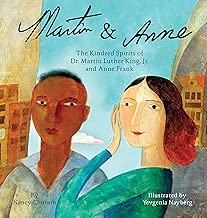
Martin & Anne: The Kindred Spirits of Dr. Martin Luther King, Jr. and Anne Frank

I had the privilege of being roommates with Nancy at a retreat, and all I can say is, if she's in, I'm in.

Lisa Amstutz (organizer)
Nonfiction writers won't want to miss NF Fest this February! This free event will feature daily blog posts from publishing professionals along with giveaways and activities for you to try at home. Join the NF Fest Facebook group for more information, networking, and discussion and check out the website at www.NFFest.com.

Amazing Amphibians: 30 Activities and Observations for Exploring Frogs, Toads, Salamanders, and More (Young Naturalists)

I've also had the privilege of meeting Lisa at retreats, as well as having done a mentorship with her and again, if she's in, I'm in.

Beth Anderson (presenter)
You know your topic. That’s not enough.
You've good writing skills. That’s not enough.
You have a critique group. Still not enough.
What you really need is the village!
There’s no part of a published book that doesn’t benefit from the shared experiences of the generous kid lit community—considering an idea, researching, getting at the heart, finding the right structure, drafting, revising, submitting, publishing, promoting, sharing with classrooms, creating presentations….The names of all the people who contributed in some way to the creation of a book could fill the endpapers front and back. To have a month of learning focused on the challenges of writing NF for kids is a truly special gift and an opportunity not to be missed! You’ll collect resources, pick up new methods, and gather all sorts of nuggets as you connect with like minded writers and find encouragers. (And some of the authors I’ve been stalking a-hem, following over the last few years are IN THIS GROUP!) I can’t wait!
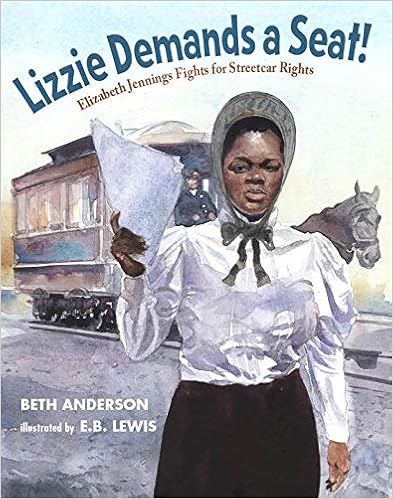


Beth is the author of, An Inconvenient Alphabet, and the just released, Lizzie Demands a Seat. I met her at a SCBWI event and she's amazing.

Vivian Kirkfield (presenter)
Why should Grog Blog readers sign up for NF Fest? When I decided to write children’s picture books, one of the first things I did (after joining SCBWI) was to sign up for writing challenges. StoryStorm, 12x12, Susanna Hill’s contests…those were the building blocks of my writing journey. And now, even though I have three books that debuted in 2019, another that launches this month, and more coming in 2021 and 2022, I know I still have a lot to learn. Then, along came NF Fest and before you could say - do you want to write nonfiction - I was already registered! Every day for a month, an industry pro will offer expertise on one topic or another that relates to writing nonfiction. I’m honored to be one of the bloggers and will be sharing my thoughts on Creating a True Story When Information is Scarce. But more than the knowledge, participants will enjoy the camaraderie, support, and encouragement that is so very important in this business that is filled with rejection and waiting…and more rejection and waiting. Don’t wait another minute…sign up for NF Fest. And guess what? It’s FREE and there will be PRIZES!
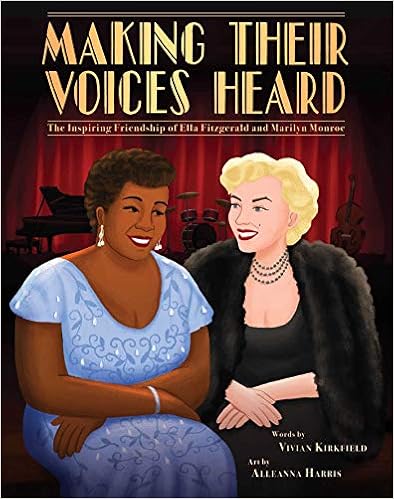

Have you been following Vivian and seen the number of books she's had published in the past year and those coming out in the future? She will have some treasure you can take to heart in your own writing.
Jill Esbaum (presenter)
Any writer who's hooked on nonfiction -- writing it OR reading it -- can't miss Nonfiction Fest. I've seen the list of authors who'll be posting, as well as glimpses of what they'll be sharing. It's an amazing cross-section of talent and a winning combination of education and inspiration! See you there!


We Love Babies!


Jill is a wonderful and prolific writer of picture books in all genres, and just released her latest, We Love Babies! She's a lovely person and incredible author, and you're going to want to hear what she has to say during NF Fest.

Let's face it. February for most of us is a waiting month - the holidays are over, the excitement of a new year has lost its luster, and the weather is awful. Last year in Wyoming the bottom dropped out of the thermometer and we stayed at -20 below zero for weeks. People need something to do indoors at that point, something that will improve the craft of their writing, provide inspiration and give them something to live for until the weather gets better. I think NF Fest fits the bill.


But maybe you don't write nonfiction. Is this still for you? I would say, "ABSOLUTELY!" Craft is craft, whether it be intended for fiction, nonfiction, poetry, humor, whatever. If something gives you inspiration and makes you a better writer, then by all means, be a part of that. And who knows? You might catch the nonfiction bug!

Sign up for NF Fest starts today, January 15 and goes through January 31. See you there!


Monday, September 11, 2017

What's New at the Library?

By Leslie Colin Tribble

We order new books every month at our public library and since I'm in the cataloging department, I get to see all the new titles as they come in. Here are a few picture books that have hit the shelves recently. This is a mixed bag of stories - hopefully there's something in here for everyone.


Rhino in the House - Daniel Kirk (author of the Library Mouse series)
Because I can't pass up a great animal story, this was the first book I picked up in our children's library. It's a true story with a great ending so it's a win-win for me. In his author notes, Daniel Kirk explains he wrote the story because he found a photo of a woman, Anna Merz, sitting next to a black rhinoceros, Samia. In his research, he discovered that Anna founded a rhino sanctuary in Nairobi, Kenya to protect the animals from poachers. Samia was a calf born on the sanctuary, but wasn't being cared for by her mother.  Anna took the baby to her house and successfully raised her.

First off, what a great story! As a child, I asked my parents for all sorts of animals (we did have dogs, so I wasn't totally pet-deprived) including a giraffe, penguins (thanks to Mr. Popper's Penguins) and a baby musk ox. A baby rhino would have been right up my alley. I loved that Anna Merz brought tiny (a relative term when speaking of rhino's) Samia to her home and even snuggled with her in bed - this is my kind of woman.

Daniel Kirk did a wonderful job with the illustrations - Anna looks like a nice, loving grandmotherly-type and Samia is adorable. He brings in other African wildlife and gives readers an understanding of what Samia's native habitat looks like. I also love that he included pictures that illustrate Samia's communication with Anna - "Hoo hoo hoo" means "I'm coming!" followed by a picture of a charging baby rhino.

This is a wonderful book for children who love animals. It beautifully illustrates a true conservation idea along with the work of a woman who was determined to see it happen. Rhino in the House is a great starting place to introduce the idea of "passion" to children and how we can all find something we're passionate about.


The Giant of Jum - Elli Woollard; Illustrated by Benji Davis
This fun book is a take off on Jack and the Beanstalk. If you have a child that knows the refrain, "Fee, fi, fo, fum ..." this will be a rollicking read. The Giant of Jum is a rhyming picture book about a grumpy old grouch of a giant who pines to eat a child on a dish. He stomps off in search of a child, especially the boy Jack which his brother told him about. The children out-smart the giant by convincing him he really is quite nice and he couldn't possibly eat Jack or any other child. Instead, what giants prefer is . . . cake.

The illustrations are perfectly child-friendly and give an adorable sense of size and proportion. Everyone is excited when the giant cake appears, because seriously, who isn't excited by cake? The rhyme is fun to read and the rhythm accentuates the story. This is a great read-aloud because you can use lots of different voices, especially your grouchy giant voice.


Someone Like Me - Patricia McLachlan; Illustrated by Chris Sheban
The soft edges and subtle colors of the illustrations in this picture book enhance the dreamy quality of the story of a young girl who is a gatherer of stories. When she's not reading, she's listening to people telling stories and trying to teach her dog and chicken to talk. She climbs into trees to watch the sky and like her great-grandmother loves the dark prairie earth. When she grows up she might be someone like the author - a writer.

I really enjoyed this book. The illustrator gave the girl's face a pensive expression - she's thinking deep thoughts about everything, something writers are known to do. There's an ethereal feel to the book, giving weight and importance to words and books and stories without coming out and telling us they're important. Children wonder deeply about their worlds and here's a book that says it's ok to do so.


Blue Sky, White Stars - Sarvinder Naberhaus; Illustrated by Kadir Nelson
I saved the best for last. This book will find a home in the hearts of everyone. Using only 68 words (most of them the same on each spread), this book defines America and what it means to be an American. The author takes the symbols on the United States' flag - its red rows, blue sky and white stars - and uses those same words to describe America.

This is a stunningly beautiful book in both words and illustrations. It's a tear-inducing read and kids will wonder why you're all choked up by the end of the story. It's guaranteed to stoke patriotism even in the heart of complete cynics. This is the perfect book to read on holidays like Independence Day, Veteran's Day, Memorial Day, Martin Luther King Day, and President's Day.

Blue Sky, White Stars showcases history, the beauty of the land, immigration, and civil rights, as well as the concepts of achievement and freedom. If you're looking for a picture book to give children a crash course in Civics, this is it. It would also be a helpful reminder for most adults. This book deservedly received four, starred reviews and I hope it continues to win favor and acclaim.

Wednesday, August 26, 2015

Making Science Sing: Writing creative nonfiction about science, for kids. By Christy Mihaly

If you're interested in writing about science for children, you've probably heard that editors are looking for creative nonfiction. If you find that confusing, you're not alone.

What is creative nonfiction? Writers, readers (and a few editors) sometimes trip over the definition. My librarian friends could talk all day about how best to categorize science-related books. But the basic rule is simple:

NONFICTION=ALL TRUE


If you want to write nonfiction—to submit to a nonfiction magazine, or for educational publishing, or because you want teachers to teach your book as nonfiction—you can’t make anything up.

Take this quick quiz.

Is it Fiction or Nonfiction if . . .

1. a fictional character tells a friend (or a student, or a grandchild) important factual information you want to convey to readers?
A: FICTION. You may call it “informational fiction” or some other name, but it’s basically fiction, with factual information embedded in it.

2.  in describing a scientific discovery, you invent a dialog between the scientist and her husband?
A: FICTION. Use a single word that you can’t substantiate with a reliable source, and you’ve turned your story into fiction.

3.  you describe the planet Mars from the perspective of a resident there?
A: Again, FICTION. If you’re writing from a Martian’s perspective, you’re making something up. It may be science fiction – but that’s fiction.

Nonfiction requires thorough  research, and checking your facts. If you say anything that you can’t verify as factual, then it’s fiction. Which is fine—I like fiction! Just don’t call it nonfiction. 

Which brings us back to our question of the day:

Q: How do I make an article about ants, or a book about physics, compelling to young readers? How do I use creative nonfiction for science?

The answer: use the fiction writer's tools . . . tools like poetic language, a story arc, setting the scene with detailed descriptions and an engaging voice . . . to liven up your nonfiction. 

Here are some ideas and examples.

Make it poetic

As long as you keep your text factual and accurate, you can use poetry to breathe life into simple concepts such as the water cycle.

Wait . . . the water cycle?

Yes, even that. In Water is Water, Miranda Paul uses simple rhymes to show us the cycle from water to steam, to clouds, and on and on.

Laura Purdie Salas, in her poetic series of books (A Leaf Can Be; A Rock Can Be; Water Can Be . . . ) explores different aspects of the natural world.

In these books, the art, while scientifically accurate, can also introduce kid-friendly whimsy and even show characters and story lines that draw readers in. 

Jason Chin’s illustrations in Water is Water show a sweet family story to illuminate the text, and the cover of A Rock Can Be features a smiling crab.

Nonfiction writing need not be altogether serious. Jane Yolen has published several poetry collections conveying information about animals. A recent example is Bug Off!, which contains 13 funny poems about insects paired with fabulous photographs and facts about the featured bugs.

Non-poets, take heart! You don’t have to write actual poetry to use lyrical language for science topics, like horseshoe crabs . . . .  

Lisa Kahn Schnell’s beautiful book about horseshoe crabs provides factual information while drawing young readers into a story about the life cycle of these fascinating creatures. See more in this prior GROG post.
. . . or eggs.

In An Egg is Quiet, Dianna Aston’s lyrical language and Sylvia Long’s beautiful illustrations illuminate eggs in all their colorful and mysterious glory.


Make it tell a story

A great way to write lively science is to make it “narrative nonfiction” with a story arc.

Obvious examples are biographies of scientists or inventors, or stories of their inventions. In BOMB: The Race to Build—and Steal—the World’s Most Dangerous Weapon, Steve Sheinkin recounts for middle grade and YA readers a riveting tale of history and scientific discovery, along with politics and philosophy along the way. 

Nonfiction? Yes. Great narrative writing? Absolutely.

Sometimes it's challenging to uncover a story arc. Here’s where creativity comes in! In writing about an animal, for example, you could follow it through its life cycle, or a single day, or a migration.

Melissa Stewart found a fascinating story arc in a rain forest ecosystem. Her book, No Monkeys, No Chocolate, uses the delicious hook of “Chocolate!” to explain how cocoa pods, monkeys, and brain-eating coffin fly maggots are all part of the interdependent process that makes chocolate possible. This book is written on several different levels, from the simple narrative for the younger reader, to more detailed information for older kids (or adults).

Make it interactive
How could you make medical history interesting to kids? Carlyn Beccia did it with a humorous (and sometimes revolting) multiple-choice quiz, in her 2010 book, I Feel Better with a Frog in My Throat: History’s Strangest Cures. 

Do you know, for example, whether any of these old-fashioned treatments cured a sore throat?
A: A frog down the throat;
B: A necklace made from earthworms;
C: A dirty sock tied around the neck.

For each choice, the book explains the origin of the “cure,” and provides the answer (Yes, No, or Maybe) with a discussion of why the particular procedure may or may not have worked. This book packs a surprising amount of information into 48 illustrated pages. 

Cheddar finds it fascinating.

Magazines often incorporate crafts, quizzes, experiments and other projects into science articles. 


Increasingly, book publishers are getting into the act with how-to manuals, project books, and the like. Check out titles such as those illustrated here for inspiration to increase your interactivity.

Make it fun
Just because you can’t make anything up in your story doesn’t mean that you can’t make it fun. Think of an imaginative format. If you were a kid, how would you view a topic?

Susan Goodman’s middle grade book for kids about space travel uses a title sure to intrigue her readers: How do you BURP in Space?

This 2013 book is set up as a travel guide, with chapters such as “Planning your trip” and “Dining.” It presents technical information on gravity and other important topics in a fun format. Interested readers can refer to a glossary, index, and timeline of space exploration and travel in the back. The futuristic fonts and jazzy illustrations (a mix of cartoons and space photography) add to the kid appeal.


Bottom line: 
If you love science, why not write about a topic you care about, in a way that will make kids love it too? That's creative nonfiction!

+++++++++++++

For further reading, check out these selections from the GROG archives:

See some nature books that GROGGer Leslie Colin Tribble loves here

Read about science books for kids in Sherri Rivers' two-part post with interviews from writers Miranda Paul and Heather Montgomery

And for a fun chat about nonfiction rhyming picture books, look to Sherri's interview of Nancy Day.