Friday, September 19, 2014

IS YOUR CRITIQUE GROUP RIGHT FOR YOU? ~ Jackie Wellington


So you spent months, even years, slaving away at a manuscript. You picked the right hook. Your first line is enticing. Your beginning set the stage. You jumped straight into the scene because you heard that's what agents want. You built your character with strengths as well as flaws. (You even contemplated whacking them off at the end. )Your plot is strong. Conflict is established - man versus man, society, nature, or self. The arc strikes an emotional response from the reader. Finally, a satisfying ending.

You revised over and over. Now what?

If you are not in a critique group, it is time to find one. Why? It's simple. It is an important component to your writing success. Critique Partners (CP) can help you find the faults in your draft and polish your work so it is ready for query status.

How do you choose the right critique partners?  

Do not find the "caterers." Those are the ones who cater to your feeling. The ones who tell you what you want to hear versus what you need to know. The one who is afraid you will break down and cry your poor heart out so it is easier to stroke your ego. Family members are out unless they made millions selling novels or have won major writing awards. Your family love you. They will not want to hurt your feelings. You want honest feedback. You want to know what it is you are doing wrong. You want the opportunity to correct it and make your manuscript marketable and saleable.

I have been in a few groups. At this time, I have some great critique buddies. I have the kind of buddies that tell me how to make the manuscript better. I also have some readers that I can send my manuscript to and get immediate feedback. But this all started because I build relationship. Critiquing is about building relationships.

If you are in a group where the members are always bickering, do yourself a favor and leave. Negative energy drains your creative spark. Establish rules from the beginning. Treat others the way you want to be treated. And be respectful of all time. Writing is not easy. And we all can benefit from love and support.

How do you find the group?

* Check various social media sites. WOW Nonfic on Facebook have critique groups for picture book writers. So check within other groups to see what they have available.

*Writing Conferences. After the WOW Retreat 2014, I came home with new friends and a boatload of critique buddies. The connection I made with these ladies was unbelievable. Now I always have someone to read and give feedback if needed.

*Writers Associations have local chapters in your area. Give them a call. Find out when and where they meet. And if they do not have one, you start it.

In summation, think about your critique groups. Are they beneficial to your writing? Do the members of your group write in your genre. Think about it. If you write picture books and your critique group are young adult authors, this group may not be right for you. Picture book writing and young adult writing are not the same. In picture books, every word counts. In young adult, you have more words with which to play. So now and find the right group. Let us know if your group is right for you.


Wednesday, September 17, 2014

Staying AFLOAT with Picture Book Author Laura Sassi: 4 Writerly Things I Learned From Noah & his Ark (And a GIVEAWAY!)

I want to welcome one of my writing buddies, Laura Sassi, to the Grog blog.  I'm so proud of Laura, because she's on a blog tour for her debut picture book, Goodnight, Ark, published by Zonderkidz. I've had the opportunity to read it, and some special person will win a copy here. (U.S. residents only)

Take it away, Laura...

Thank you for hosting me on my first ever blog tour! I’m so excited that GOODNIGHT, ARK is finally afloat, but the journey to this point was not easy. I spent two years getting my story ready to float. Was all that time worth it? You bet. 

Now, in celebration of the release of GOODNIGHT, ARK, here are four things Noah and his ark have taught me about getting boats, er stories, to float. 

Don’t expect your boat to float overnight. When I first got the idea for GOODNIGHT, ARK my mind whirred with possibilities. Which animals would be scared of what?  How would they get to Noah’s bed? And how would Noah ever comfort them and return them to their bunks?  I knew early on that I wanted to write the story in rhyme but finding the perfect meter and line length did not come easily. So I played around with plot and form again, and again, and again. Each time I finished a draft, I’d put it away and work on other things for several weeks so I could see it with fresh eyes. I repeated this cycle for two years and each time the story improved so much that it ended up with two offers! That experience has taught me not to worry about how long a story is taking me to write. Instead, I relax and let creativity work at its own pace until my stories are buoyant and ready to set sail.

Every ARK needs an ARC. Even with all that revising, my agent thought the initial version of GOODNIGHT ARK I sent her was too quiet. In that early version, the storm escalated and animals kept piling in, but there was no sense of rising action or urgency in resolving the night-time pile up. Except for the fact that the animals changed, the scenes were essentially static. In other words what the ark needed was an arc! The story still needed to be soothing for littlest readers, so I knew any tension/ rising action I infused had to be playful and fun. It took many hours of writing and re-writing, but I hope readers will agree that the final version with its ark tipping, bed crashing buildup and stinky, yet ultimately soothing, resolution is anything but static. I now analyse all my stories for effective rising action, climax, and resolution early on in the writing process. One way I do this is by making a 32-page dummy. That way it’s easy to see if your scenes are static as they build across 14 - 15 spreads or if there’s a sense of rising action etc. Plus, it’s a lot of fun, especially if you have little ones at home who like illustrating your dummies!
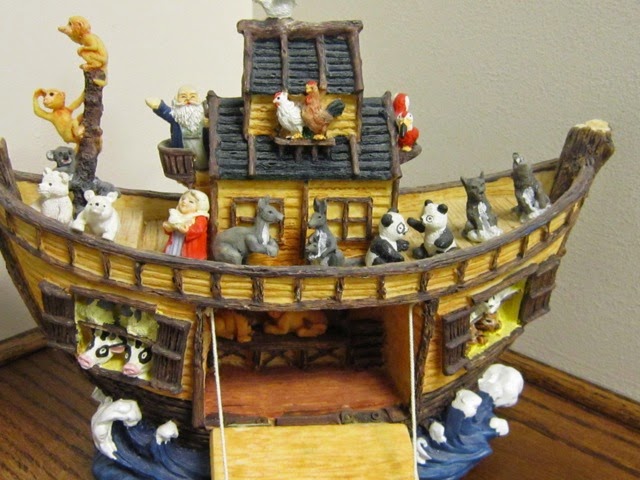


Don’t overload the decks. Noah’s ark was sturdy and well-planned with three decks, but though Noah may have been tempted to bring aboard extra animals, thank goodness, he showed restraint and took only two of each. Overcrowding would have put a strain on provisions. Worse yet, the ark might have capsized! Likewise, as a writer, I’m sometimes tempted to overcrowd my story with cute phrases and details that only weigh down the plot. During early stages of a project, I don’t worry about overwriting. My goal at that point is simply to build my story. Before I let it out of the port, however, I make sure to streamline the plot so every word and event pushes the story forward.

Everything’s better with a buddy. Noah didn’t try to build the ark all alone. His family cheered him on and pitched in with the building, providing much needed moral support amid the taunts and jeers of the onlookers. Likewise, I’ve found that the long, hard journey to publication just wouldn’t be the same without a nice support system. For me this includes my family, my lovely agent, and the wonderful network of like-minded children’s writers I’ve connected with over the years, many of whom have become dear friends and trusted critique partners. So, my last bit of ark-themed advice for staying afloat and giving your stories a floating chance, is to find a writing buddy or two to join you on the journey!


BIO:Laura’s poems, stories, articles and crafts have appeared in many publications including Highlights for Children, Cricket, Ladybug, Spider, Focus on the Family’s Clubhouse and Clubhouse Jr., FamilyFun, and Pack-O-Fun. GOODNIGHT, ARK, published by Zonderkidz, a HarperCollins Company, and illustrated by Jane Chapman is her first picture book. She is represented by Lara Perkins of the Andrea Brown Literary Agency. Laura writes from her century-old home in New Jersey where she lives with her awesome husband, two adorable kids, and a black cockapoo named Sophie. You can also find her on her blog, Facebook, and Twitter. 

Leave a comment for Laura here and sign on the Rafflecopter to be entered into a drawing to win her new picture book, Goodnight, Ark. To be eligible, you must be a U.S. resident and have a physical address, not a P.O. Box. Thanks! Drawing will be held Sunday 9/21 after 8 pm CST.
a Rafflecopter giveaway

Monday, September 15, 2014

Ten Ways to Prepare for Your Upcoming Conference by Pat Miller

The kids are back in school, the semester is revving up, and your thoughts may turn to some classes or conferences for your own education. After you book that special event (see conference directory at the end of this post), consider these ten tips:

  1. MAKE SESSION SELECTIONS IN ADVANCE Highlighting your choices on the schedule in advance can be a big help when you have to cross a conference center in 10 minutes.  
  1. KNOW YOUR SPEAKERS Facing the dilemma of two must-see, but conflicting, sessions? Research the speakers. If one of the speakers has a writing book or blog, opt to attend the one that doesn't. Then read the blog or book for a post-conference boost by the other presenter. 
  1. READ THE VISITING AUTHORS Read a book or two by every author you intend to hear. It makes for a richer experience. 

  1. UPDATE YOUR BUSINESS CARDS Does yours include your photo? Make it easier for that agent or editor to remember you. Free or inexpensive online sites make it easy to design your own. I designed my first business cards in Microsoft Publisher and printed them on pin-perforated linen cardstock. This card was done on Vistaprint. I included different information on both sides to make the most of this tiny real estate.                         
  1. MAKE A CHATTY CHEAT SHEET Not every encounter needs an elevator pitch. Make notes on your favorite speakers in case your paths cross (try to make that happen!) Because of a conflicting luncheon, Suzanne Bloom had only me in her autographing line. From online research, I knew that she has cats, two sons, and a brother who is also an illustrator. Asking about them kicked off a fun 30-minute conversation. We bonded because I was prepared, and have since become friends. (Full disclosure: I discovered Suzanne is so friendly that we would have bonded without the notes—but I didn’t know that in advance.) 
  1. INVITE THE SPEAKER FOR LUNCH If your session finishes just before lunch or dinner, ask the speaker if he has plans. If not, have lunch or dinner together! It’s okay to have separate checks. It’s surprising how often wonderful presenters end up eating alone. (Speaking from sad experience.)
  1. PREPARE FOR AUTOGRAPHING Add your must-see authors’ scheduled times and locations to your general schedule. Will the author’s books be sold onsite at a discount? In their publisher’s booth? At a signing party? Or should you bring your own? Bring sticky notes to adhere personalization info for the author. They will appreciate it!
  1. YOU’LL THANK ME LATER When you get someone’s business card; write a note on the back about any conversation you shared. Then when you write to that colleague, editor, or agent, you can mention the future of pop-up books at their company, ice fishing when she was a kid, or about his twin grandsons. After the post-conference dust settles, it makes you a standout from the hundreds they may have met. 
  1. TAKE PHOTOS OF ATTENDEES especially if you will be spending several days with the same people in a retreat setting like October's NF 4 NF Nonfiction for Children’s Writers conference. Ask the person to hold their name tag near their face, so that when you take a close-up, you will create a photo directory to help your memory long after the conference is over. 
  1. SPECIAL THINGS TO PACK                                                                              
·         Special events – Do you need to pack a costume? A book to autograph? A gift for a friend, agent, or colleague? Don’t forget your phone recharger.
·         Bedtime – Sharing a room? Bring ear plugs, your roommate may snore. Unfamiliar beds often keep people from sleeping—pack your sleep aid medicine.
·         Bring snacks – Think protein (beef jerky, roasted edamame, peanut butter crackers) and fruit (trail mix, dried fruit, grapes, apples),
·         Stay hydrated – Research shows that brain function is the first to be affected when your body is thirsty. By the time you are aware that you are thirsty, your brain is already stressed! Especially if you fly—keep bottled water with you at all times and DRINK it!
·         Thank you cards -- Complete one during a session and give it to the presenter before you go. I guarantee you will make her/his day! (And it will give you a warm feeling as well.)

How can you find a conference that feeds your needs, your budget, and your time frame? Kidlit 411:Conferences, Workshops, and Retreats is a goldmine arranged by month. Kidlit 411 is a comprehensive site that you should have on speed click. Founder and author Elaine Kiely Kearns and author/illustrator Sylvia Liu have compiled an amazing, and beautifully illustrated, one-stop site for all things writerly. Best wishes for a wonderful conference!

Friday, September 12, 2014

How Do Writers Spend Their Time? -- By Christy Mihaly (and Cheddar)


Join this Writer’s Organization! Try that Challenge! Take another Course! EEK! Writer friends urge me to participate in this course, that workshop, these Facebook groups, those writing challenges. What am I missing? How can I ever find the time? 
Photo by GROGGER Suzy Leopold

Time for a reality check: I turned to my GROG colleagues --  serious writers all, ranging across continents, occupations, levels of experience, and numbers of publications. I asked them: "How do you spend your writing time?" I asked them to estimate how many hours they spent drafting, revising, reading, doing research, conferences, courses, social media, marketing, etc.  

And now, I'm happy to share these thoughts and recommendations, from my informal GROG survey.  

Bottom line: None of us has time to do it all.  We have day jobs, spouses and loved ones, social obligations, volunteer work, children, grandchildren, friends in need. We want to "give back" to the writing world. What’s a writer to do?  

We know the answer: WRITE. The GROGGER responses reminded me that when it comes to all those “writing-related” activities, we have to stick to the ones that are helpful enough to warrant taking time away from actual writing. 

I boiled my colleagues' responses down to these three points: 

1.  Write!  Carve out “writing time” every day.  Make writing your top priority during that designated time. Maybe it’s a half-hour before the rest of the household awakes. Maybe it’s an hour after everyone else is asleep. Whenever it is, make it sacrosanct.  No internet surfing.  No opening mail. “Writing” means drafting and revising. If inspiration isn’t coming, try writing a poem! A journal entry, a cover letter . . . just write! GROGGERs' writing times vary considerably, depending on where they are on a particular project (or other aspects of their busy lives) but range from about an hour a day to 30 hours or more per week.  (And we all spend more time revising than drafting!) 
GRAB THAT PENCIL, CHEDDAR!

2.  Everything else is extra. Select only those “extras” that really help your writing. Want to refine your craft?  Maybe a course or studying a book on craft is your best bet. Are you feeling isolated?  Then join a community, whether it’s an in-person critique group or an online writing group, or volunteer to work with kids. Has your inspiration dried up? Maybe you need to hang out with the grandchildren, or maybe just going for a walk is what you need! You’ll never be able to do it all . . . so choose what inspires you, and nourishes your writing.
Sniffing out new inspiration . . . 
Here's some collective GROGGER wisdom about setting priorities,  from among all those “other” activities:

Research: If you write nonfiction, this is a major element of your process . . . though fiction writers need research too. For our nonfiction GROGGERs, research can take MORE time than writing.  When we're in that "research groove," that's all we want to do. The consensus: Go for it!
                        

Challenges: GROGGERs have tried various online challenges, and concluded it's best to choose one, or at most two, per year. Favorites among GROGGERs are 12x12, WOW, and PiBoIdMo.

Reading: Do it! Study mentor texts, read books on writing craft and the business of writing, adult fiction and nonfiction for pleasure, YA for the heck of it, poetry, The New Yorker – read it all. GROGGER Pam Vaughan suggests that, if you’re stuck in the car a lot (chauffeuring kids, anyone?) try books-on-tape! GROG members agree, reading is a high priority. Most of us try to get some reading done every day.
 Hey, I get great ideas in my dreams!

Conferences/workshops: We can’t afford to attend all the conferences we’d like, but agree that two or three a year is good. SCBWI is the standard. A pointer: Figure out which format – National? Regional? Small? – works best for you, then focus on that type of gathering. For more GROG thoughts on conferences, check out these posts: 21st Century NF; SCBWI LA; SCBWI New England; write conference for you.
Critique groups: Serious writers must share drafts and revisions with trusted writing buddies. Online groups work well for many. Some are lucky enough to find supportive face-to-face groups. Crit groups are well worth the time -- though most GROG members find that one, or two, of these is the most we can responsibly handle.
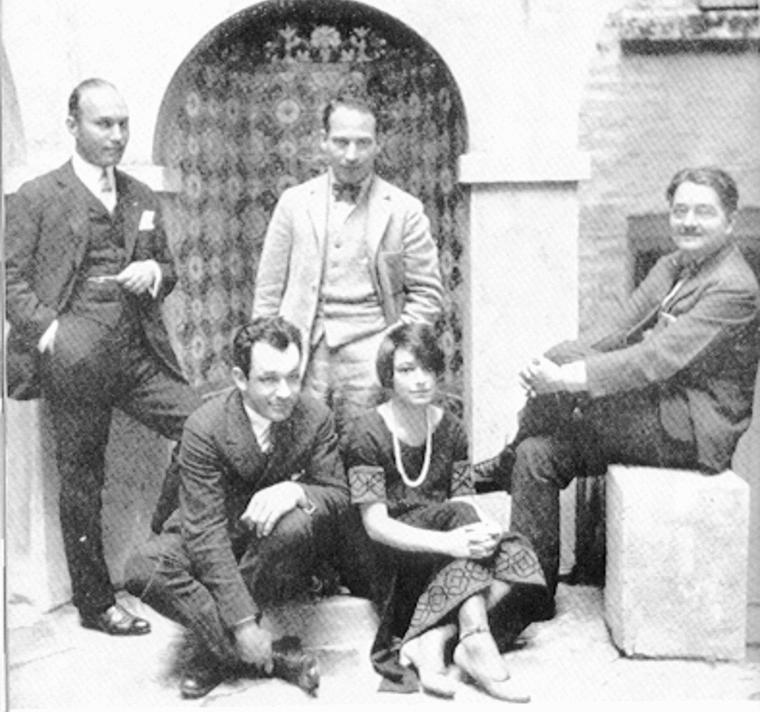
Algonquin Round Table members 
Art Samuels, Charlie MacArthur, Harpo Marx, Dorothy Parker, Alexander Woollcott 
circa 1919, from Wikimedia commons, photographer unknown.

Warning!  Warning!  LIMIT social media!  

Sure, there are some wonderful Facebook groups, and FB can be a great place to share information and support other writers. Twitter provides valuable connections and information too . . . but GROGGERs find social media can consume too much precious writing time. All GROGGERs participate in social media, and we agree a little can be good (a half-hour to an hour a day?).  (See these prior posts:  Facebook groups; more Facebook groups; Twitter tips; more Twitter tips.)  But it's also true that too much is . . . too much.

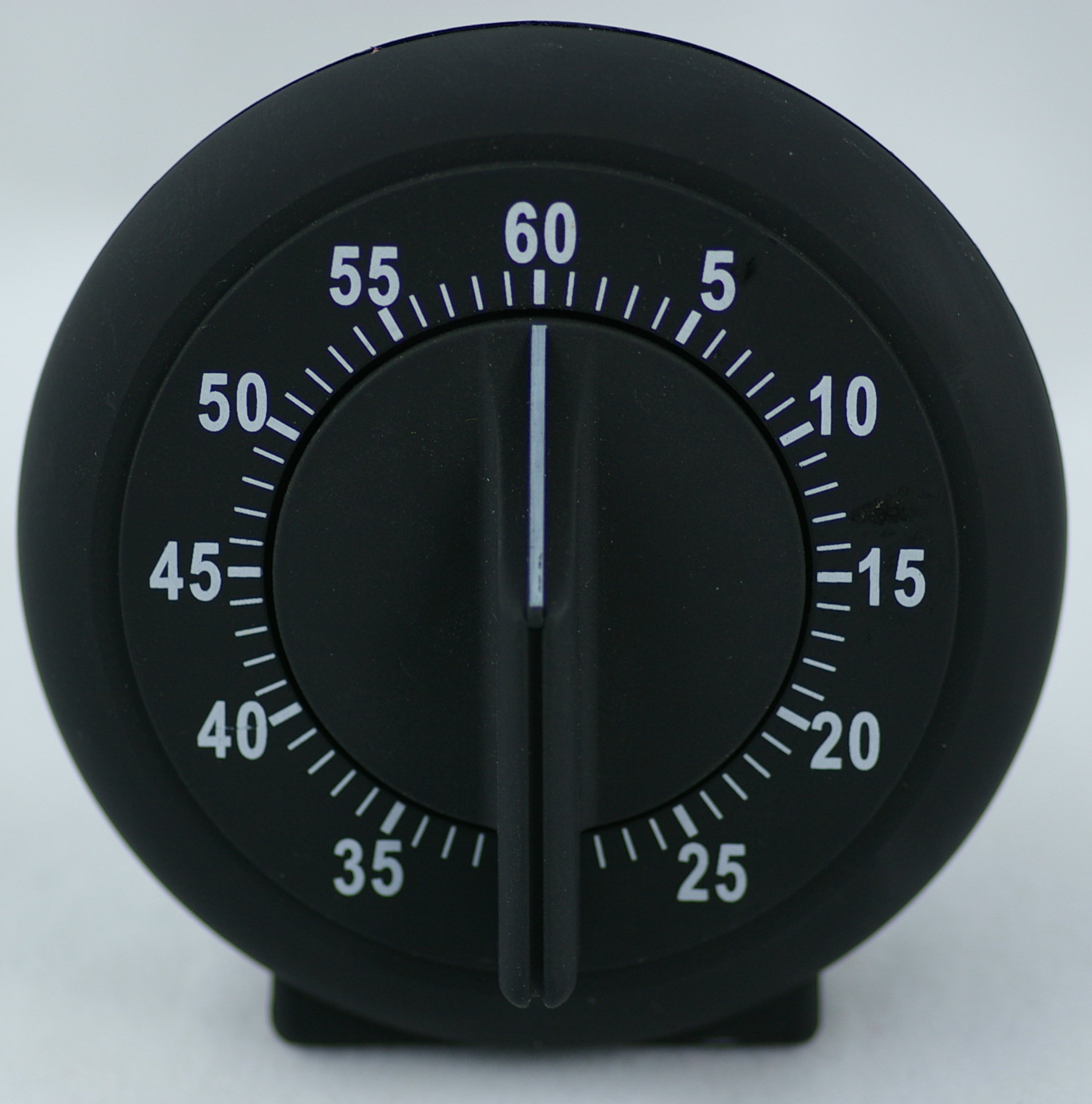
Try setting a timer!


By Hustvedt (Own work) [CC-BY-SA-3.0 (http://creativecommons.org/licenses/by-sa/3.0) or GFDL (http://www.gnu.org/copyleft/fdl.html)], via Wikimedia Commons


3. Keep track of how you spend your time 
(see above). 

Some of my GROG friends could tell me exactly how much time they spent regularly on various activities . . . others, not so much. Try this for a week or a month: record your hours. If you feel you're not getting enough writing done, you’ll see exactly what’s taking up too much time. You'll get a more realistic sense of how long different tasks take. And when you meet a writing target or a goal – celebrate!

Bottom line:  Remember Jane Yolen's essential rule:  "Butt in chair!" And write on. 
That's BUTT in chair, Cheddar!!


Special thanks to Marcie Atkins, Todd Burleson, Tina Cho, Suzy Leopold, Pat Miller, Janie Reinart, Patty Toht, and Pam Vaughan.

Wednesday, September 10, 2014

Fee vs. Free Author/Illustrator Visits: What's the Difference and Why It Matters by Todd Burleson

Meeting an author or illustrator can be magical for both kids and adults.  The Society of Authors recently released their intensive survey of the impact of author visits.  As a Library Media Specialist for the past five years, I've had the good fortune of welcoming some of the best into our school.  This post is meant to encourage teachers/librarians/parents to explore the multitude of opportunities to connect with authors and illustrators.  We'll look at the difference between a "Free" vs. a "Fee" visit and the benefits/challenges to each.
Caldecott winning author/illustrator Jon Klassen visited my school in 2013; the year he won for I Want My Hat Back.


First of all, in my opinion, there is no better way to encourage children to read than to meet an author.  Books still evoke a sense of magic in children.  Meeting the person behind the pictures and/or words is like seeing the magician doing his tricks in slow motion.  It encourages and challenges students to strive to create their own stories/images.  

 Marc Brown: author/illustrator of the Arthur Series.

Whenever an author/illustrator is scheduled to come to our school, it provides a chance to meaningfully explore their work.  We read everything the author/illustrator has done and develop questions we hope to be able to ask at the visit.  

David Shannon, author/illustrator of the David books.

The very best way to get 'connected' and find out about author/illustrator visits is to form a positive relationship with your local independent book store.  In Winnetka, we have a phenomenal book store named:  The Book Stall. 

Jon Muth, author/illustrator of Zen Shorts and many more titles has visited Winnetka several times over the past three years.

I interviewed Robert McDonald, the Children's Specialist at the store, to get some insight into arranging and facilitating author visits.  All of the author/illustrator visits we have had through The Book Stall have been free.  I wanted some insight on how these are arranged and funded.


Jon Muth and I last year when he visited to promote his newest book, Hi, Koo!


1.  What is the process you and The Book Stall go through to connect with authors and find out that they are coming to your area?

Publishers send us a "grid" or list of what authors they are sending out on book tour. We place our requests based on who is coming and if we feel that we have several good area options for schools to place those authors.  We don't always get every author we request, so we don't know for sure which authors we will be able to work with in a given season until 1-3 months before the event. Generally we get no say in what day or date we have an author. This varies a bit from the usual way a paid school visit  would work, where the school and the author would reach an agreements about timing. Of course the advantage for the school in working with a bookstore is access to nationally recognized authors and illustrators with no honorarium involved.

We do also foster relationships with local authors, and at their request will place them for free into schools when they have new books coming out. 


Wendy McClure visited last year to promote her new book, Wanderville.

2.  What two or three points would you say make for a successful author/illustrator visit to a school?

I've been to hundreds of school visits now, and here's what I think really helps make a visit work well:

A. The kids and teachers have been aware of the event well in advance, and are all familiar in some ways with the visiting author's work.  This may include reading the first few chapters of a book aloud, reading several of the picture books to younger grades, and/or showing the book trailer to the classes.  Any way that the staff can figure out ways to work the author's art and writing into curriculum, and emphasize to the students that this visit is a lucky event helps pave the way for the author to have that much more of an impact.  When an author arrives to see welcome signs made by kids, and maybe have artwork based on their book, it's going to make for a happier, more engaged author.

 Author/illustrator Steve Barnes visited our school in 2013

Be aware that these free author visits are free because the publisher wants to get more buzz and attention for an author's work. They also want to sell copies. The bookstore will want the school to promote book sales prior to the visit, so that the author has a good stack of books to sign for kids the day of the event. In general, there's no set number of books that MUST be sold, but in the long-term a bookstore won't be eager to work with you if author visits do not generate any sales. 

B. Kids model what they see, so if I ruled the world I'd insist that staff attending an author presentation be fully engaged, and NOT using the time to grade papers or catch up on email.  If the educator is paying attention, she has that much more insight and material she can use to reinforce and expand on lessons learned.  And the kids will take the visit more seriously.

C. There is almost always a Q and A section of an author visit.  Prep the kids beforehand, and discuss as a class what good questions could be, or even have a class contest to get your question "chosen" to ask the author in front of the large group. The better the questions, the better the visit will be.

Dan Gutman, award winning author, has a page on his site to help prepare for a successful author visit.


Arun Gandhi, the grandson of Mahatma Gandhi, visited last spring to promote his book called, Grandfather Gandhi.

3.  What advice would you give a teacher/librarian who would like to begin working with an independent book store to arrange author visits?

Look and see what authors are visiting a local bookstore.  If a store in your area is having in-store children's author events, they are almost certainly placing authors in schools for free. Call and ask to speak with the children's specialist.  Be willing to be flexible--an author out on book tour might not be able to stay at your school all day and see every student in the school, but if you are willing to work with independent bookstores  (or Barnes and Noble for that matter--many of them do arrange free author visits in schools) you may be able to host multiple authors in a school year, a picture book author for K-1 one time, something for the 4th-5th grades another.  I have a lot of schools now that are able to host 2-3 authors a year.

If your local bookstore does not yet arrange free author visits, reach out to them and suggest they start!

Invite a bookstore to help you with a visit you are already arranging and paying for--if you sell books through a bookstore, you'll make your visiting author happy  (They love to see book sales at the schools they visit) and you'll be establishing a relationship with a store--they will think of you the next time they have a big-name author in town.

Not all of our author/illustrator visits are free.  Usually, about once a year we reach out to an author/illustrator to arrange a Fee based visit.  We do this usually because we are hoping to expand on the traditional author/illustrator visit.  Last year we arranged an author visit with Steve Cotler, the author of the Cheesie Mac series.

Because this was a sponsored visit, we were able to arrange several more presentations with him as well as some specific work with our older students on developing 'writer's voice' and writing dialogue.
 This year, our school is sponsoring an author visit from Kristy Dempsey.  She is the author of several children's picture books, an educator and a Library Media Specialist who currently lives and works in Brazil.  I was curious as to her take on the difference between a Free vs. Fee author/illustrator visit.  Coming from the dual perspective of both author and librarian, I knew that her insight would prove very valuable.

Kristy Dempsey (photo courtesy of the author's website)

How do you feel about free vs. fee author/illustrator visits?

When free visits are possible, I absolutely believe in them. I think there are a couple of kinds.  There are visits that the author is willing to do completely for free. I have done some of these visits at Title 1 schools that have no PTA and few resources. ( I have also done paid visits at Title 1 schools that have received grants for visits.) I know other authors who sometimes donate their time like this and when it's possible, I think it's great. Because of travel and schedules and such, it's often not possible, or perhaps it's cost-prohibitive for the author. Mid-list authors don't make a ton of money from royalties, so they would be paying out of their own pockets for this. Or often, the school (or in conjunction with a bookstore) will use the profit from doing book sales to pay for an author visit, which seems to me a way to do a "free" visit that still supports the author. 


I do have concerns, as well, about free visits. I don't view author visits as just entertainment or even simply cheerleading about reading and writing. And my fear is that unestablished authors (self-published or otherwise) that do free visits, without truly understanding how to make the visit valuable for teachers (connecting to standards, etc) as well as inspiring students, are misleading schools about how valuable a school author visit can be. (Whew. Be careful if you quote me on that. I don't want to bash anyone. In fact, some self-published and unestablished authors are VERY good at this.)


So ultimately I believe that the difference is that a paid visit (especially with established authors and illustrators) is held to a higher quality control. Authors and illustrators who are making part of their living off of school visits are literally in the same business as teachers. They are designing their instruction to benefit student learning. And if they're not, they won't be invited back (or "keep" their jobs!) 

There are many other ways to bring authors/illustrators to schools as well.  With technology, many author/illustrators are willing to do Skype visits, or Google Hangouts.

There are thousands of resources online to help connect author/illustrators with schools/libraries.  One of my favorite is the listing on the Scholastic web page for children and young adults. 

I hope that this post has been helpful in helping you think about the power of author/illustrator visits.  You never know the impact of one of these visits on the young minds of writers.  Someday they may be in the position to be a visiting author/illustrator themselves!