Showing posts sorted by relevance for query smelly kelly. Sort by date Show all posts

Wednesday, October 21, 2020

Guest Post by Beth Anderson: Being There: In Search of Setting + a Give-away!

Beth Anderson is no stranger to the Grog Blog. She offers wonderful picture book biography wisdom. Her new book, "Smelly" Kelly and His Super Senses: How James Kelly's Nose Saved the New York City Subway debuts October 13th from Calkins Creek, & it is fabulous! Today Beth shares about setting in picture book biographies. 

Setting is one of the basic elements of story, and when a story is set in a different time or place than our own, it calls for research. Searching out clothing, technology, buildings, transportation, and more, we aim to avoid anachronisms and make our characters’ world come to life. But setting is more than a “costume” or façade to make a story look right. Setting creates conflict, brings meaning, and is a vital part of point of view. So how can you “be there” as a character when you can’t travel to a place or time?

When I researched Elizabeth Jennings for Lizzie Demands a Seat, I pored over maps to get the lay of the land and locate her home, streetcar route, church, and courthouse. Putting myself in 1854 New York City, I imagined her footsteps clicking…wait…was there pavement? Basic questions like this lead us to seek out and examine images. Details on daily life, clothing, and weather help enhance scenes. 

But as I got to the heart of Lizzie’s story, I needed information on social aspects of life like class, gender, race, traditions, “unspoken rules,” and attitudes. How did she fit in her time and place? How did setting clash with her character? We can understand segregation on transportation being unjust, but how did it impact black lives? And Lizzie as a teacher—an educated, African American female who likely loved children—isn’t unusual today. But when we embed that fact in setting, we see her as exceptional. And when we look deeper, Lizzie as educator indicates she’s part of the abolitionist movement to secure equal rights and end slavery. Looking at her world through her eyes intensifies the emotions and adds meaning. Learning about the social fabric came from reading widely beyond her immediate surroundings, and about what happened before and after her actions. 


“Smelly” Kelly and His Super Senses called for setting research with a different focus. James Kelly’s story was more dependent on understanding the physical setting. I studied photographs of New York City from the 1930s to 1950s. I pored over subway maps to find locations of various incidents. And to “be there” as a character with super senses, I had to perceive his world as he did—through his senses. What would he have smelled with his super sniffer? What sounds would’ve bombarded his ears? I found some amazing historical maps— stench, sound, and industry maps! The sound map linked to newsreel clips! Though I didn’t use much of what I discovered, I could immerse myself in his sensory world. 


I’ve always wondered what was beneath those sidewalk grates and manhole covers. I needed to know about subway tunnels and access to infrastructure beneath the street. You Tube is a treasure trove! From teens exploring abandoned tunnels to workers building the subway, I learned about the underground world. [And let me add a special shout out to You Tube. I’ve used how-to videos, re-enactments (musket shots!), tours, historical footage, videos of animals, street sounds, drives through the countryside, and so much more.]

 Kelly’s radio crackled…” Wait a minute—would he have had a radio? How did he get messages to go check out clogs or leaks? An expert answered my question. No radios. He would have used phones marked by blue lights in the tunnels. Note for illustrator. 


Skyscrapers went up…their foundations went down. The city grew. How did that impact Kelly? Broken lines and mains, more miles of track to inspect [museum records]. Drips and leaks threatened cave-ins and explosions. Kelly could be electrocuted by the third rail. Inherent dangers inspire fear, tension, action.

 Why did he investigate a leak in a hotel and a stink in a tavern? Ahhh, everyone blamed that new-fangled, mysterious underground subway. Articles revealed attitudes.

 Media and trends influence how people see their world and sometimes offer interesting possibilities for imagery and writing. Smelly Kelly’s time, the heyday of detective stories and the emergence of superheroes, inspired me to play with both, and I ended up with a superhero thread that tied into the special heart that framed my telling. 


Different stories and characters require you to dig into different aspects of setting. In An Inconvenient Alphabet, I needed to delve into education, reading, writing, and language of the Revolutionary War period. Primary sources revealed traditions, attitudes, implications, and plenty of odd spellings which provided conflict and helped me take readers into the mix.  


It’s important to get the details of setting right and present your character’s world accurately. Even if you’re writing fiction, setting details make your world real and enhance the telling. There are plenty of online tools to gain access to a character’s world: maps of all kinds, Google Earth, You Tube, photographs, images, personal narratives, first-hand accounts, town records, digitized archive materials, varied media of the time, and EXPERTS! But to get past merely “dressing” your story in setting, consider the impact of all you’ve learned about the time and place on your character and the deeper meanings that emerge. Setting isn’t a backdrop and props, it’s sort of a living entity that affects character decisions, actions, and emotions. Some of the most important parts of setting involve aspects you can’t see.

 Dig deep and wide. Wrap yourself in the social fabric. Visualize physical details. Take in the sensory world like Smelly Kelly. But don’t just “stand” in that time and place. Immerse your heart in it. Be there. So your reader can be there, too. 

Thank you, Beth! To win a copy of "Smelly" Kelly & His Super Senses, please leave a comment for Beth by October 31. (U.S. addresses only)

Beth Anderson, a former English as a Second Language teacher, has always marveled at the power of books. Armed with linguistics and reading degrees, a fascination with language, and penchant for untold tales, she strives for accidental learning in the midst of a great story. Beth lives in Loveland, Colorado where she laughs, wonders, thinks, and questions; and hopes to inspire kids to do the same. Author of AN INCONVENIENT ALPHABET (S&S 2018), LIZZIE DEMANDS A SEAT! (Calkins Creek, 2020), and “SMELLY” KELLY AND HIS SUPER SENSES (Calkins Creek, Oct. 2020), Beth has more historical gems on the way.

Book Trailer for Smelly Kelly: https://www.youtube.com/watch?v=EfUyhYJbJBk


Signed copies of my books available at Old Firehouse Books https://www.oldfirehousebooks.com  
and Boulder Book Store https://www.boulderbookstore.net


Wednesday, March 16, 2022

Guest post: The Power of Imagery by Beth Anderson

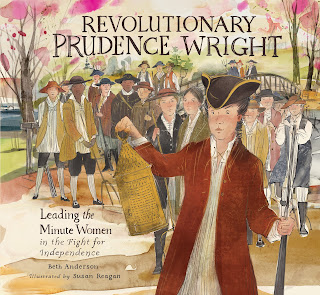
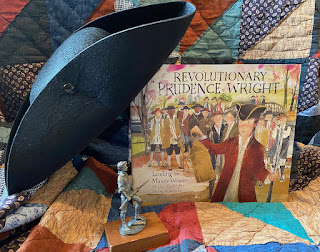
Beth Anderson is back with us this time with another new picture book biography--Revolutionary Prudence Wright: Leading the Minute Women in the Fight for Independence, published by Calkins Creek, February 1, 2022. Beth shares her expertise, this time, in the area of imagery. 


I’m a big fan of imagery – as a teacher, reader, and writer! Imagery elevates the narrative, invites lyricism, strengthens theme, and enhances heart. It’s a much used tool in my writer’s toolbox.


What exactly is imagery? Literarydevices.net defines it this way:


Imagery is a literary device that refers to the use of figurative language to evoke a sensory experience or create a picture with words for a reader. By utilizing effective descriptive language and figures of speech, writers appeal to a reader’s senses of sight, taste, smell, touch, and sound, as well as internal emotion and feelings. Therefore, imagery is not limited to visual representations or mental images, but also includes physical sensations and internal emotions.


Wow! Makes you just want to pour it on! But…imagery should be subtle and not waste words. It should flow naturally and not feel contrived. It should be sprinkled, like spices or herbs, to enrich what’s already there. 


In AN INCONVENIENT ALPHABET, I placed “battle” words throughout to reinforce the idea that a revolution is more than a military battle. “Breaking free of old ways” involves many areas of our lives.


The imagery in TAD LINCOLN’S RESTLESS WRIGGLE was also in word choice. I powered the story with his wriggle as an irrepressible force of energy. This doesn’t rob him of his dignity or impose a negative judgement for the reader. 


In SMELLY KELLY AND HIS SUPER SENSES, I interwove super-hero imagery with details, words, and phrases. Sensory images abound for this character with super senses.


In LIZZIE DEMANDS A SEAT!, imagery went deeper than word choice. Footsteps echo through the story—a ticking clock, heartbeats, a stranger’s approach, and, in the culmination of the heart thread, others stepping up to carry forward social justice.


I think everything I write uses alliteration, onomatopoeia, and sensory language. But when a story lends itself to using a metaphor, that’s something special! And REVOLUTIONARY PRUDENCE WRIGHT invited the opportunity…  


When I dive into a story, I try to think about the different angles I might tell it from, or look for something in the setting that might ring through the story. Then I consider those ideas along with themes and the heart thread, and I start generating word lists that I can draw from as I write. This preps my brain and frames my thinking.  


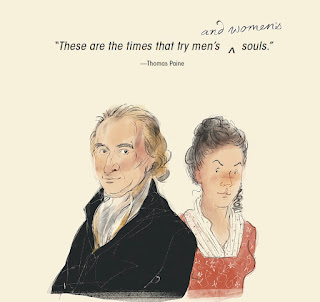
As I researched Prudence Wright, I collected words and phrases in my spiral, beginning with those related to revolution and independence.  One of the first items I wrote was the Thomas Paine quote that starts the story: “These are the times that try men’s souls.” I saw it as a truth, but also as leaving out women. Thus, the addition of “and women’s” seemed to fit Prudence and her story perfectly. That’s where her voice first emerged.


I created a word bank of military and revolution words. I wanted to show that the women’s actions were as powerful as the men’s.


Since the main event occurs in April, one of my first ideas for the “big picture” imagery of a metaphor was that of spring, gardens, and planting the seeds of independence. But, though it fit the home front idea, I knew immediately that it didn’t fit the concepts and had the wrong tone.


One of my Pepperell contacts had shared photos of a few artifacts from Prudence’s life, including her love box and lantern that could easily be used in the story. Prudence designed and created beautiful quilts, but there were no pictures available. Learning about and seeing personal items from my subject’s hands connected me in a special way. Could I use them in the story?


I listed words associated with a lantern and fire, and I also jotted down words about quilts. Could either serve as a metaphor? The idea of quilts really fit the story, not only because Prudence made them, but because they are from the hands, often involve a community of women, are made from remnants of lives, and handed down as family history.


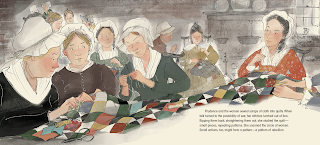
Metaphors fall into place as I write. Lizzie’s footsteps came through during the revision process when I realized I had the pieces and just needed to connect them better. Prudence’s story was about women bound together as community and breaking old patterns. And as I worked to transition scenes, I realized that their boycott actions were like scraps for a quilt, of little consequence until joined with others. Organizing the pattern of resistance was like the larger design of a quilt. Suddenly the quilt idea popped and became powerful! And paired with the scene of the women quilting, it emphasizes that this rebellion is coming from homes. Yahoo! Don’t you just love it when it all comes together!


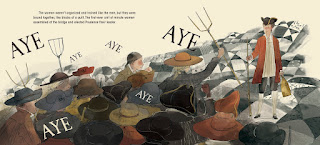
Illustrator Susan Reagan brought back the quilt image in the art at the end, reflecting the simile on the page, “The women weren’t organized and trained like the men, but they were bound together, like blocks of a quilt.” Use of imagery also opens up potential with illustration, and the merging of art and text tightens and strengthens the story.


 The image of a quilt fit every aspect of the story. The metaphor brought abstract concepts “home,” comprehensible in a concrete and beautiful way.


Though we think of imagery as evoking images, as the definition above says, imagery is more than visual or sensory. It touches us internally, emotionally. No wonder it’s so powerful! 

Thank you, Beth! I love this new story and the image of the quilt since my mom quilts. I love how you find unique angles on all your picture book subjects.

You can find more about Beth here! And more blog posts from Beth here and here.

Bio: Beth Anderson, a former English as a Second Language teacher, has always marveled at the power of books. With linguistics and reading degrees, a fascination with language, and a penchant for untold tales, she strives for accidental learning in the midst of a great story. Beth lives in Loveland, Colorado where she laughs, ponders, and questions; and hopes to inspire kids to do the same. She’s the award-winning author of TAD LINCOLN’S RESTLESS WRIGGLE, “SMELLY” KELLY AND HIS SUPER SENSES, LIZZIE DEMANDS A SEAT!, and AN INCONVENIENT ALPHABET. Beth has two more picture books on the way in 2022: FRANZ’S PHANTASMAGORICAL MACHINE, illustrated by Caroline Hamel, and CLOAKED IN COURAGE: THE STORY OF DEBORAH SAMPSON, PATRIOT SOLDIER, illustrated by Anne Lambelet.


Wednesday, September 12, 2018

Back to School with An Inconvenient Alphabet Written by Beth Anderson, Interviewed by Tina Cho

As a kindergarten teacher, I love ABC books. When I heard about Beth Anderson's An Inconvenient Alphabet, I had to find out more! She & I are part of the Epic 18 Debut Picture Book group, where I've gotten to know her. She's also a former educator. Welcome, Beth!
Photo by Tina Wood

1. How did you come up with this idea?

First, thank you so much for sharing AN INCONVENIENT ALPHABET with your readers!
As a writer who loves narrative nonfiction, I’m always on the lookout for interesting tidbits from history or science or maybe a combo. When I saw an article on Ben Franklin’s alphabet, it caught my eye. And then, as I read Ben’s words, “Those people spell best who do not know how to spell,” it hit me in the heart – my teacher, parent, language-loving heart. But it still required lots of digging to find the premise and shape the story.

2. What was your research like? Did you travel anywhere special to find golden nuggets of info? How long did it take to research?

My research started with scouring the internet to get an overview as I considered the potential of the topic and gathered a list of sources. Then I turned to the library and began requesting books about Ben and Noah and language history. I am so grateful for all the historical texts that have been digitized and are shared on a number of databases – such incredible resources! I reached out to historical societies, the Library on Congress, museums, and other institutions.
The first round of gathering information took a few weeks. Then as I drafted and revised, I continued to get more books as one source led to more and more, a dribble of ongoing research for a few months. As I’ve found with every manuscript, I needed to do another dive into the research, rereading my notes and searching out more resources, to reframe or hone a special thread of the story after receiving critiques.  


3. What was your favorite bit of information that you uncovered?

ISH. Ben had me at “ish,” his letter for the SH sound. That along with the quote I mentioned above were my favorites. Oh, but then there was the fact that Noah and Ben were opposites, Noah being a tad pushy and wanting to legislate his ideas. And I have to admit to liking the point that Ben, Super Founding Father, didn’t hit it out of the park every time he had a new idea. He let his ideas “take their chance in the world,” which is great advice for me as a writer. So basically, I kept finding more to love. :)

4. How many drafts before this sold?

I did about 40 drafts of this manuscript.

5. What have you learned about marketing? Any tips to newbies?

I’m still a newbie at marketing, learning as I go. I’m trying to take advantage of any opportunities, learn from other authors’ experiences, keep records for the future, and have fun with it. 

6. I see you have two more picture book biographies coming in 2020 from Calkins Creek. Would you like to share anything about those?

Although these two picture books both deal with transportation in New York City, they are very different.
LIZZIE DEMANDS A SEAT: ELIZABETH JENNINGS FIGHTS FOR STREETCAR RIGHTS, illustrated by the phenomenal E.B. Lewis, is a civil rights story about a woman who won the first court case for desegregation of public transportation. She’s an amazing woman, much like Rosa Parks but a century earlier. To me, her story shows how we are links in time, standing on the shoulders of those who came before us and inspiring those who follow, as well as how we all need to find the courage to step up and play a role in establishing social justice.
“SMELLY” KELLY AND HIS SUPER SENSES: THE MOSTLY TRUE STORY OF AN ORDINARY MAN AND HIS EXTRAORDINARY NOSE, illustrated by Jenn Harney, is set in the fascinating underground world of the 1930’s New York City subway. There, James Kelly, a humble immigrant learns to use his natural talents for the benefit of all—and also finds out what it takes to be a true hero.
7. What are you working on now?

At the moment I’m working on editor revisions for a third Calkins Creek title that hasn’t been announced. I’m also revising a new manuscript on a bit of revolutionary history that I’d never heard of before that seems incredibly relevant in today’s world. And then there’s pile of research and a few ideas that keep swirling in my head…

Wow, Beth, Congratulations, on these additional forthcoming titles! You've been busy with research. I hope you all get to read An Inconvenient Alphabet! 


Bio
Beth Anderson, a former English as a Second Language teacher, has always marveled at the power of books. Armed with linguistics and reading degrees, a fascination with language, and penchant for untold tales, she strives for accidental learning in the midst of a great story. Beth lives in Colorado where she laughs, wonders, ponders, and questions; and hopes to inspire kids to do the same.
Beth blogs at https://bethandersonwriter.com/
An Educator’s Guide will be available on 9/25 HERE

Wednesday, November 4, 2020

Jazzing Up Your Writing with ONOMATOPOEIA! Plus a Bonus WORD LIST By Eileen R. Meyer


POP!

BOOM! 

WHAM!


What exactly is Onomatopoeia?


     Besides being a word that we all have trouble spelling correctly, Merriam-Webster defines onomatopoeia as “the naming of a thing of action by a vocal imitation of the sound associated with it (such as buzz or hiss).” Simply put, onomatopoeia words are sound words. Clap, growl, jangle, vroom—all of these choices have distinctive sounds and are examples of onomatopoeia.


Why use Onomatopoeia?


     Using effective sound words in your writing—such as clang or achoo—will certainly help you come up with the most creative way to convey what is happening in a scene. Importantly, it also enhances the sensory experience for the reader. And it’s FUN!

You’ll also find that your sentences can be trimmed of unnecessary words—one onomatopoeia word choice usually replaces a much lengthier description. If you are writing children’s picture books where the economy of words is especially important, utilizing sound words will help you keep your word count low. Consider these examples:


“She made a low, mournful sound as if she were in pain” or She groaned

“He ejected gas spasmodically and noisily from his stomach through his mouth” or He belched


You get the picture. Onomatopoeia allows you to be concise. Additionally, sound words inject an element of humor and playfulness into your piece.


Children’s Books that showcase Onomatopoeia:


There are oodles of children’s picture books that effectively employ onomatopoeia. Here are a few of my favorites:


A Mouthful of Onomatopoeia, by Bette Blaisdell

Bear Snores On, by Karma Wilson

Boom Boom, by Sarvinder Naberhaus

“Buzz,” said the Bee, by Wendy Lewison

Click, Clack, Moo, Cows that Type, by Doreen Cronin

Hush!: a Thai Lullaby, by Minfong Ho

Muncha! Muncha! Muncha!, by Candace Fleming

Roller Coaster, by Marla Frazee

Split! Splat!, by Amy Gibson

Squeak! Rumble! Whomp! Whomp! Whomp!: A Sonic Adventure, by Wynton Marsalis

The Little Old Lady Who Was Not Afraid of Anything, by Linda Williams

Watersong, by Tim McCanna

We’re Going on a Bear Hunt, by Michael Rosen

Who Likes Rain?, by Wong Herbert Yee

Whoosh, Crunch, Roar: Football Onomatopoeia, by Mark Weakland

Zin! Zin! Zin!: A Violin, by Lloyd Moss


A Handy-Dandy Onomatopoeia Word List


             Writers love tools that save them time—at least, I know I do.  I recently began working on a picture book project where I wanted to associate a key sound with each of my anthropomorphic characters. I searched on the internet for an expansive list of sound words.  I found a few pretty good listings, but I couldn’t find ONE complete list that included the entire universe (or close to it) of great onomatopoeia words. So I took one for the team and gave up an afternoon to put all those lists into one comprehensive onomatopoeia word list. And POW!— I’m sharing it with YOU, our devoted GROG Blog Readers so that you may take advantage of it, too.


Find my list on this page on my website:  

https://www.eileenmeyerbooks.com/extras/


Note: I’m sure that YOU, our whip-smart blog readers may know some onomatopoeia words that I missed. If so, comment with additional words on this GROG post and I’ll add them to this handy listing. In a few weeks, I’ll reshare the document. Happy writing!


AND the winner of the picture book, SMELLY KELLY, by Beth Anderson is Angie Quantrell. Congratulations!


Wednesday, March 25, 2020

WIDE RESEARCH: “WE ARE MADE BY HISTORY” --Guest Post by Author Beth Anderson

Beth Anderson
I, Tina Cho, want to welcome author Beth Anderson back to the Grog Blog. Both of us had debut picture books in 2018, & you can read about her previous book here. I have learned so much from Beth's blog and expertise as a nonfiction picture book writer. She's the author of An Inconvenient Alphabet: Ben Franklin & Noah Webster's Spelling Revolution (2018) and most recently, Lizzie Demands a Seat: Elizabeth Jennings Fights for Streetcar Rights. (Jan. 2020) Beth is going to show us about researching widely to get to know our character & story. Plus, you can watch her talk about the book at the end of this post. Take it away, Beth!

Martin Luther King, Jr. said, “We are not makers of history, we are made by history.” As I researched, wrote, and revised Lizzie Demands a Seat, I really got it.

I learned a lot about researching wide, as well as deep, with Lizzie’s story. As my reach widened, I saw how delving into the issues and complexities of the time and place can provide valuable insight into character and a deeper understanding of crucial emotional elements like motivation, stakes, and impact, especially when there’s limited information about a person.

I’ll show you what I mean with a few examples, along with some lines from the book, of how wide research opened the story up as I understood more about how Elizabeth Jennings was “made by history.”


Elizabeth Jennings’ published statement revealed her cleverness, poise, tenacity, courage, confidence, and own sense of self. What shaped her character? Her abolitionist parents, certainly. But beyond the basic meaning, the more important question is how did that play out? I learned about community, social attitudes, and key ideas and goals of the African American movement to abolish slavery and obtain equal rights in the north.

·             Education – One goal was to educate both children and adults in order to better their lives. With that, the fact that Elizabeth Jennings was a teacher makes her part of a movement, which goes much deeper than a “job” and enhances her impact and commitment. As part of the movement, we understand why her fight to ride goes beyond her as an individual to a court fight that will impact all African Americans.
“This wasn’t about her. It was about dignity, about justice—ideas she’d been raised on.”

And when you add her being part of a movement to her upbringing in a home frequented by leaders like Frederick Douglass and J.W.C. Pennington, it underscores her urgency and courage when she stands strong against the conductor.
“Suddenly late-for-church wasn’t as important as late-for-equality.”

·             Public opinion – Another goal of the movement was to affect public opinion to bring about social change. They used newspapers, lectures, and personal narratives to inform, create empathy, and present the idea that democracy isn’t democracy if all can’t participate equally. Knowing about the importance of public opinion, the fact that a white witness offered to testify for her might carry more meaning as a “representative” of public opinion. The fact that no one on the streetcar objected to her presence also reinforces the idea that many whites might believe in her rights. That’s encouraging for Lizzie on more than a personal level.  
“As she watched him disappear, a flicker of hope sparked. A witness. Someone who believed in her rights.”  


When it came to the court case of Elizabeth Jennings v. The Third Avenue Railroad Company, I had very little information. With no court records and only a few newspaper articles about the ruling, wider research and an expert allowed deeper understanding.

·             Motivation - First, it’s easy to understand her motivation for standing firm against the conductor’s words and for taking her case to court after reading about the African American movement of the time.  
“There was one place where justice for one could mean justice for all. A courtroom.”

·             Risk/Stakes – At first glance, her risk was losing due to discrimination. But looking at the history of the right to ride, I learned about a case lost thirteen years earlier that worsened discrimination. To the public, the loss appeared to support segregation. Knowing this increases her stakes and the emotional tension of her decision.
“But if she failed to win, she could make it worse. Thirteen years before, a black man lost his case for the right to ride. No one had dared try again.”

This loss also made it clear why many blacks didn’t want to push too hard for rights and believed that waiting it out was better. With this I understood how crucial community support was for Elizabeth Jennings and why she didn’t take it to court on her own.

·             Jury – While black men could vote at the time and could technically serve on a jury, tradition probably ruled and excluded them. With a white judge and jury, once again we see the importance of shifting public opinion.
“Newspapers printed Lizzie’s account. Her father spoke in churches, wrote letters and articles, and appealed for public support.”

·             Judges – In the cases that followed hers, some people won and some lost. Given her precedent, why? It turns out a judge’s instructions to the jury were key. He could emphasize business rights or individual rights and tip the case. This also provided information for a more complete courtroom scene.
“The Third Avenue Railroad Company argued for its right to do what was good for business.”

Also, after seeing how judges could tip the scale, when the judge in Lizzie’s case said that streetcars were required to carry all respectable, well-behaved people, I considered how the key words, “well-behaved” and “respectable,” could be interpreted differently by different people. No doubt Lizzie knew this all too well, and it presented an opportunity to amp up her anxiety. 
“Was it ‘respectable’ to demand her rights? Was it ‘well-behaved’ to fight back? If the jury didn’t think so, they could deny her right to ride.”


In addition to deepening the emotional impact of Lizzie Demands a Seat, wide research brought my “vital idea” into focus—no hero does it alone, change requires many, creating a “path of inspiration” through history.

It’s true – “we are made by history.” And I think that’s an important concept for us as writers.
Wide research is time-consuming work. But when Kirkus, in a starred review, said, “…Anderson’s third-person text allows readers under Lizzie’s skin…,” that was the highest praise I could ever hope for.

Thank you, Beth. That was very helpful, especially for me & my nonfiction writing. I came across Beth talking about her book on Kidlit TV and know you would all love to watch it. Click here! And below are photos of the neat shoe activity she does on Kidlit TV.


Twitter, Instagram, Pinterest: @BAndersonWriter

Beth Anderson loves digging into history and culture for undiscovered gems, exploring points of view, and playing with words. A former educator who has always marveled at the power of books, she is drawn to stories that open minds, touch hearts, and inspire questions. Born and raised in Illinois, she now lives in Loveland, Colorado. Author of AN INCONVENIENT ALPHABET (S&S 2018), LIZZIE DEMANDS A SEAT (Boyds Mills & Kane, 2020), and “SMELLY” KELLY AND HIS SUPER SENSES: HOW JAMES KELLY’S NOSE SAVED THE NEW YORK CITY SUBWAY (Oct. 2020, Boyds Mills & Kane), Beth has more historical gems on the way.

From the desk of Suzy aka Prairie Garden Girl--
The winners from the March 18th Giveaway are:
Charlotte Dixon
Janet Smart

Wednesday, January 18, 2023

Back Matter: A Chance to Be More Than a Story, Guest Post by Beth Anderson

Today we have a guest post by author Beth Anderson, who recently had a new picture book biography released, CLOAKED IN COURAGE: UNCOVERING DEBORAH SAMPSON, PATRIOT SOLDIER, illustrated by Anne Lambelet, published by Calkins Creek. I, (Tina Cho), love learning more about the writing craft from Beth. Today she teaches us about back matter. 

For readers, back matter can be scary. Dense paragraphs covering page after page. UGH. Even an author, NF fan, and former educator like me has to admit to sometimes closing the book rather than committing to all that “grown up” text at the end of a gorgeous picture book experience. I know it’s where the author shares lots of great stuff that didn’t fit in the story….but, there’s always the potential of a gigantic info dump. Too much deters. What’s important? What will enhance the story you’ve told? What might answer questions arising from the text? What will invite more thought and exploration?

Creating Back Matter for CLOAKED IN COURAGE

As I wrote CLOAKED IN COURAGE: UNCOVERING DEBORAH SAMPSON, PATRIOT SOLDIER, so much of what I was doing was trying to sort out facts from fiction. Her story had been corrupted early on by one man’s desire to make her into his version of a heroine. And much of that misinformation was carried forward in other sources. One source, Masquerade: The Life and Times of Deborah Sampson, Continental Soldier by Alfred Young, focused on that process of finding the truth, and his historical detective skills were as fascinating as Sampson’s story. So, when it came to back matter, I knew I wanted to share some of that process and my learning with students and educators—some tips along with a few challenges of being a history detective. That choice has resulted in positive comments from reviewers and readers. And I hope it becomes a teaching tool in the classroom.

“The Challenge of Being a History Detective”

It all begins with the Google search, right? In researching colonial times, it helps to know that there was no standard spelling. (See AN INCONVENIENT ALPHABET for that story for kids. 😊 ) Sampson’s name was originally spelled SAMSON. Other names in the story also had multiple spellings. So with that understanding, your access and search widens.

 Then I shared some examples of primary sources. They’re “golden” but can’t be blindly trusted as 100% truth. Critical thinking is essential. I offered some thoughts on the value of secondary sources and went into setting. In the classroom, setting is defined as “time and place,” but I wanted students to think about all that involves for a book like CLOAKED IN COURAGE. I provided specifics such as Continental Army life, using disguises, traditions, and media influence. Also, the importance of trying to understand the meaning of what we learn within the context of the times, not today’s world.

Finally, I provided transparency with some notes about the details in the story that are in question, and that there is so much we can never know. Reading about how the public reacted to her, we know that Deborah Sampson tested the tolerance of her time. She broke barriers, and those courageous actions had a lasting impact. While the book was in the publication process, Congress passed a bill providing protections for female soldiers and veterans—The Deborah Sampson Act. We added that to the back matter because including connections to today helps bring relevance and meaning to stories from the past.

 And there’s more! The back matter in CLOAKED IN COURAGE contains an Author’s Note, which allows kids to see the writer’s personal connection to the story. The Bibliography might be a bit more interesting considering the history detective information. I’m a big fan of quotes and love to include one from or about the main character to give a stronger sense of the person. In this book, I shared a quote about Deborah Sampson from her pension approval signed by John Hancock, someone kids encounter in the basic history of the time. And of course, Acknowledgments—Thank You’s are important in any endeavor, and readers see that it is indeed a collaborative effort.


A Bit on the Benefits of Back Matter

·       For young readers and listeners: extends interest in a book over time, sparks curiosity, enriches story.

·       For teachers: becomes a teaching tool, supports curriculum, adds a higher reading level and different types of text, can support English Language Learners and struggling readers with graphic elements.

·       For publishers: increases range and potential for marketability, can catch reviewers’ eyes.

·       For authors: adds value to your submission, shares more of the story, can be the starting point for a school presentation.


Making Back Matter Inviting

To invite young readers in think about: “density” of text; short sections; graphics, images, and engaging visuals; interactive pieces such as Q&A or search & find.

To support educators consider: What might connect to curriculum or support classroom skills? Further resources are handy. Author’s (and illustrator’s) Notes contribute to understanding objectives like “author’s purpose” and “author’s point of view.” A variety of information formats can expand literacy skills.

 Transparency: Truth matters. Share inconsistencies in research and fictional elements to encourage critical thinking.


More Ideas for Back Matter

Afterword, Words to Know/Glossary, Timeline, Diagrams, Activities, Call to action, Letters, Crafts, Recipes, Experiments, Fun Facts, and Photographs of people, places, processes, realia, etc.  Please feel free to share more ideas in the comments!

 Thank you so much, Beth! And here's my little review of Cloaked in Courage.

Another fantastic picture book biography from Beth Anderson, illustrated by Anne Lambelet, about Deborah Sampson, secret patriot soldier, who used her rebel spirit to push boundaries for women. Never giving up, she accomplished all that she set out to do and more. Beautiful illustrations accompany this riveting text. Impressive back matter explains the usage of primary and secondary sources and how Anderson composed a story using little and conflicting information about her. 


Beth Anderson, a former educator, has always marveled at the power of books. Driven by curiosity and a love for words, she writes untold tales, hoping to inspire kids to laugh, ponder, and question. She’s the award-winning author of CLOAKED IN COURAGE, FRANZ’S PHANTASMAGORICAL MACHINE, REVOLUTIONARY PRUDENCE WRIGHT, TAD LINCOLN’S RESTLESS WRIGGLE, “SMELLY” KELLY AND HIS SUPER SENSES, LIZZIE DEMANDS A SEAT!, and AN INCONVENIENT ALPHABET. Beth has more historical picture books on the way.


https://bethandersonwriter.com  
Twitter • Instagram • FaceBook • Pinterest  


Educator Guide link - https://bethandersonwriter.files.wordpress.com/2022/10/cloaked-in-courage_educatordiscussion-guide.pdf