Thursday, June 23, 2016

The Picture Book as "Object?" Yes, THE STEAM of PBs by Kathy Halsey

We picture book writers have probably analyzed our genre in a gazillion ways. But, have you thought of the picture book as an "object?" If we examine a picture book in its totality via the STEAM (Science Technology Engineering Art Math) lens, we notice that the "book as object" is

  • engineered
  • produced
  • designed
  • and is a multimodal format.
My own educational process in mining the picture book as object began with Megan Dowd Lambert's groundbreaking professional title READING PICTURE BOOKS WITH CHILDREN, 2015, Charlesbridge. Megan, a mom of five, is a multitalented authors/educator with an MA in Children's Literature from Simmons and almost a decade at the Eric Carle Museum. She knows the picture book and created a new approach for storytime that educators, librarian, AND writers can adapt for their own purposes. In librarian parlance, this book is "E," for "everybody" connected to children's literature.

By studying the format via the "engineer-design" process, students of all ages will better see why we librarians have designated the picture book for "everybody," also. The book or "paratext" may become a more significant subject to older students and educators across the curriculum via this point of view. STEM and STEAM are currently educational buzz words that rightly belong to books, especially picture books with their specific format of 32 pages, illustrations, end papers, back/front matter, and typography. 
For Educators/Librarians (Visiting Authors, too)
  • Megan created/field-tested "The Whole Book Approach,"   during her Carle Museum tenure. (Peruse the SLJ article here.)  
  • Instead of using storytime for "artificial" themes such as zoo animals or holidays, invite children to look at picture books as museum pieces that tell a story. 
  • Ask questions such as: "What's going on in this picture?" and "What makes you say that?" Then wait for the response. (based on the Visual Thinking Strategies of Housen and Yenawine)
  • Take time to explore/examine a book's paratexts, the material beyond art & main text, before you read aloud. Children will be fascinated by what covers, jackets, endpapers, and front matter lend to the totality of story.
  • Expect these strategies may take time. However, interruption of the story proper can be a form of engagement by your audience as well as a great way to approach questions!
For Picture Book Writers
  • Dive into this book and use it for the craft of writing especially if you are a writer only, not an illustrator. After studying this for my craft, I realized I need to trust the design layout as well as the illustrator to say what my words may not.
  • Use the "Glossary of Book and Storytime Terminology" for design terms that may be unfamiliar. (Do you know the terms "knockout type," "recto," and "intraiconic?")  
  • Much of "show don't tell" for which we writers strive can happen with the physical elements of typography, use of the gutter and other physical book constructs.
  •  Here are two examples:
      • Notice the font size changes in BULLY by Laura Vaccaro Seeger. As a writer, she doesn't need to say the bull yelled or when the character changes his approach to the other animals. Typography does it for her.
      • Or examine Chris Raschka's YO YES for character change and development. Placement of characters on opposite sides of the gutter and then on the same side of the gutter show us visually the progression of friendship. No words are needed. 
Megan Dowd Lambert @ NESCBWI

I can honestly say that READING PICTURE BOOKS WITH CHILDREN has freed me as a writer to approach my manuscripts differently. I can let my words breathe better on the page knowing the "codex" (look in the glossary...) will also project my plot to readers. And, as an educator and speaker, I can draw readers and audiences into the picture book world in an engaging new way!


Monday, June 20, 2016

Introverts Attending Conferences: Words of Advice ~ Christy Mihaly

As the summer conference season gets underway, this post offers some conference tips and techniques for introverts—ways to optimize your experience in what may be a challenging forum.
Charles Dickens, by Herbert Watkins

At first you may think, isn't a writer's conference something of an oxymoron? I mean, isn't writing a solitary activity? 

Yes and no. Most writing requires time alone. But improving your writing, and getting a book published, require interacting with others who love writing: illustrators, editors, agents, and authors willing to share what they've learned. That's what conferences and workshops are for. So what's an introvert to do?

Recommended reading for all
Okay, yes, I realize some writers are extraverts. These folks thrive in crowds, get pleasure from promoting themselves, and are otherwise somewhat incomprehensible to those of us who revel in retreating to our quiet writing corners. 
[Note to Extraverts: This post isn't for you, and you need read no further – unless of course you’re interested in better understanding your introverted friends and colleagues.] 

Being introverted is not the same as being shy, or anti-social; introverts can be just as friendly and fun-loving as anyone else. The difference is that for an introvert, socializing comes at a cost – it’s tiring. 
(For an excellent further explanation of introversion versus extraversion, I recommend Susan Cain’s 2012 book, QUIET: The Power of Introverts in a World That Can't Stop Talking.)  So, here are a few introvert-friendly tips for getting conference-ready, and enjoying yourself to the fullest once the conference gets going.

1. Before committing: Research and select with care. Conferences come in many flavors. Where you go should depend on what you're looking for. You'll focus on different types of conferences if your goal is meeting an agent, working on craft, or meeting more people writing nonfiction, for example.  (There's a list of GROG reviews of various conferences at the end of this post.) But overall, I’d break all these writerly events into three main categories: national conferences; medium-sized or specialized conferences; and smaller writing retreats. 
Large (SCBWI)!   

National conferences: Think large, crowded halls, loud voices filling packed dining rooms, anxious people thronging around the big editors and agents  . . .  you get the picture. The advantages of large gatherings include the opportunity to meet lots of people in the industry and hear top-notch speakers and panels. If you’re an introvert, though, there are obvious disadvantages. This is not your natural scene. Crowds make you tired and sap your energy. It might be well worth it, but you’ll need to psych yourself up for the event, and plan for some recovery time afterwards.

Medium (Falling Leaves)
Regional/specialized conferences: Regional conferences and meetings organized around a particular subject or genre tend to be smaller (though sizes will vary). I've attended conferences focusing on nonfiction and on picture books, for example. Like the big national gatherings, these usually offer keynote speeches, specialized panels and instructional workshops. They often include the opportunity for one-on-one critiques, round tables or open-microphone events or pitch competitions. Remember that SCBWI regional conferences are open to people from outside the region, so don't feel limited to your own geographical niche.
Medium (WOW)
Writing retreats or workshops: Smaller in size, these retreats (sometimes called "master classes") are often held in rustic locations and may offer quiet time for contemplation or writing. In this more casual atmosphere, attendees have the opportunity for relaxed socializing with other writers, editors and agents, walks in the woods, and often writing time too. The one-on-one critiques often run longer: 30 or 45 minutes. And did I mention there's less noise and more time for leisurely conversations? 
Small (Picture Book Boot Camp)
Evaluate your options. Try to talk with others who have attended an event you're considering, or see if you can convince a writing or illustrating friend to attend a conference or workshop with you. But wherever you go, never fear—lots of other conference-goers will be in the Introvert Boat with you.

2.  When registering: Some ideas to consider.
      Sign up for individual critiques. If they're available, they're almost always worth the price. You'll have a designated time period with an expert to discuss your manuscript. This is much more conducive to a productive conversation than one of those on-the-fly interrupted hallway exchanges with your Dream Agent, trying to shout above the crowd.

     Volunteer to help. Many conferences, especially at SCBWI, rely upon volunteers to keep things running smoothly. Volunteering is a great way to meet people, including workshop presenters, and get involved with the organization. 

·      Think about requesting a single room. Some retreats have limited space and will assign roommates. If you really think you’d rather have a single room, ask whether it’s available and how much extra it would cost – and consider springing for the extra. How much is your sleep—and sanity—worth, anyway?

3. Getting ready to go: be prepared.

Print up something to hand to people you meet. Maybe it's your business card. Or you might prepare bookmarks or postcards (especially if you illustrate). When you're momentarily stuck for the next witty thing to say, it's handy to be able to hand over a card with your contact information printed up.

·      Practice your pitch. Don’t be trying to invent a summary of your latest work in progress on the spot. Take the time before the conference to write down a quick synopsis of your manuscript. Turn that into a witty pitch. And use it when people ask you (as they will) what you’re working on.


4. Enjoying the conference: Techniques and Tips.
·      Take photos. This is an old introvert’s trick. Assign yourself the job of taking photos of your group, or of people you meet (famous or not!). Offer to take photos of speakers during the panels, and offer to email photos that you take to the people you’ve photographed. Most folks will appreciate this. And it makes meeting people a snap.

  Review the program, and plan for breaks. With some conferences, you'll sign up for small group sessions ahead of time. With others, you'll choose when you arrive. Either way, you'll want to be flexible. But study the schedule, and determine how you'll get the down time you need. An early-morning walk, a work-out in the gym, or a quick reading break in your room can rejuvenate you for the next big group gathering.

        Get offsite: If there are one or two people you’d like to get to know better, see if they’re interested in going to dinner or lunch or drinks off site. This may not always be possible, but can be a nice option if the group scene is a little overstimulating, especially during a longer conference. 

FOCUS on your GOAL: Set yourself a manageable goal for the conference. (And no, “sign a three-book contract” is not a manageable goal.) Maybe it’s “meet Edith Editor,” or “make two new contacts who might want to start a critique group,” or maybe it’s “figure out how to get that manuscript unstuck.” Focus on your main goal, and don’t worry if you aren’t the loudest, most rowdy writer in the room. 
GROGging at SCBWI

That said, be open to the possibilities that arise. The best part of conferences is meeting new (or old) writing friends. Because, really, no matter how much you may love your solitary writing, nobody can write alone all the time! 

RESOURCES: 

In compiling the list below, I've confirmed that GROG writers really do believe in conferences. Here are a few prior posts providing conference reviews and other conference-related information:
21st Century Children's Nonfiction Conference (T. Burleson & C. Mihaly)
Asian Festival of Children's Content (T. Cho)
Highlights Foundation workshop (J. Annino)
Library Conventions (K. Halsey)
Making a memorable author card (J. Reinart)
NF4NF (Nonfiction for New Folks) (J. Reinart)
Jane Yolen's Picture Book Boot Camp (C. Mihaly)
Rhyming Picture Book Revolution (S. Leopold)
SCBWI Florida (J. Annino)
SCBWI Illinois (P. Toht)
SCBWI National (Los Angeles) (K. Halsey & P. Toht)
SCBWI New England 2016 (K. Halsey)
SCBWI New England 2014 (C. Mihaly & P. Vaughan) 
SCBWI Northern Ohio (K. Halsey) 

Thursday, June 16, 2016

What Makes a Book Award Worthy? By Tina Cho

I had the privilege of attending one day at the Asian Festival of Children's Content in Singapore. One exceptional session was "What Makes a Book Award Worthy?" The moderators were Dr. Murti Bunanta from Indonesia, Leonard Marcus from the U.S., and Deborah Ahenkorah from Ghana.

Maybe back in each writer's mind is a tiny thought--could this story win an award someday? How do judges choose? I'd like to share my notes from this session. One of the main questions was "Why have awards?" And then "What makes a book award worthy?"

Leonard Marcus, Dr. Murti Bunanta, Deborah Ahenkorah

Dr. Murti Bunanta is a children's literature specialist and President of the Society of the Advancement of Children's Literature, a researcher, folklorist, and an international award-winning author of 50 books. She has judged many international illustrations competitions. 

She said that awards make writers happy and make them want to continue their work. If your book is even published in another country, that in itself is an award-- that it is being recognized by another country! She said make a book worthy for the readers, not just for a competition. A fun fact about Murti: She has 30,000 books in her house!

Leonard Marcus is a historian, writer, book critic, exhibition curator, and author/editor of more than 25 award-winning books. He teaches at NY University and the School of Visual Arts. 

Leonard said that a hundred years ago there were no awards. Then in 1922 the first Newbery Medal in the U.S. was created by librarians. Children back then were an important group, but they weren't allowed in the library with their sticky fingers. Most immigrant children weren't getting a good life. So three reasons for having an award:

  1. To get 1st rate writing for kids and to rethink the value of kids' books.
  2. To give parents an indication of the best books for their children.
  3. To build a nation culturally--Previously America looked to England and Europe for children's books.
Today books are given awards to correct misconceptions and fill in gaps. For example, nonfiction children's books have been sparse in previous years. So the Sibert Medal was created in 2001 for informational children's books. There was a gap in African American literature. The Coretta Scott King Award was created in 1969 at the ALA Conference. And so on. 

Leonard also said awards try to correct misconceptions. For example, there's a misconception that elaborate pictures are better than simple pictures. However, Eric Carle, one of the best-known illustrators, has never won a prize. Another misconception is that photography isn't an art form. Or that short stories are less significant than novels.


Deborah Ahenkorah of Ghana is the founder of the Golden Baobab Prize and CEO of African Bureau for Children's Stories, a publishing house. The Baobab Prize is now going on its seventh year. She created this award because of the gap in African American books for her country. She wants stories to represent the people who read them. She says the reasons for a book award is to have recognition, money, and to get people to create. If you are a citizen of Africa and have a children's story in English, do check out the Golden Baobab Prize!

Lastly, now that you might be wondering if your manuscript might fill in a gap for an award, I want to leave you with Leonard Marcus's criteria questions for an award-winning book.

1. What is the author trying to do?

2. How well has the author accomplished the goal?

3. Is this book appropriate to the audience?

4. Has the author brought something to the book that is a fresh, new experience?

Leonard Marcus was Chief Judge of the Scholastic Asian Book Award

Go forth and create people! Find those gaps and write and illustrate.


Monday, June 13, 2016

What Do You Need as a Writer? Three Things Highlights Gave Me by Marcie Flinchum Atkins


In May I attended a Highlights workshop on Novels in Verse with fellow Grogger, Jan Godown Annino. I set my eyes on a Highlights workshop many years ago, and even put it on my vision board so I would keep that goal in the forefront. But it couldn’t just be any workshop. In my mind, it had to be just the right workshop for me. 

I wrote a book in 2010 that needed some work. It was written in prose, but it also had some poetry sprinkled throughout. My critique group, and eventually an interested agent, said they thought it would work as a novel in verse. 

I worked on it several times and after several rejections, I finally put it back in the drawer knowing that I just wasn’t ready to write this book yet. 

But this book wouldn’t leave me alone. It kept begging me to work on it. I worked on other books, but this one was determined not to stay in the drawer. 

When the Highlights Foundation advertised the Novel in Verse workshop led by Kathy Erskine and Alma Fullerton, two writers who have written novels in verse, then I knew, this was the “just right” workshop I’d been looking for. 

Highlights provided 3 things for me:

1) Quiet. 


I work as a librarian in an elementary school with 700+ kids. Then I go home to a 7 and 11 year old. Quiet is something I don’t get much of. It’s part of the reason I get most of my writing done at 5:00am, when no one else is awake. The quiet at Highlights is amazing. There’s no TV, internet in the cabins is slower than usual, and cell phone service is spotty. I’m not complaining about this. I needed to be away from all of that noise anyway. There’s something about a quiet cabin that allows you to focus on the writing at hand. In fact, I’m craving that quiet so badly that I hope to go to an unworkshop very, very soon. 

2) Camaraderie. 


While I loved the quiet time and space to write, I also loved my time with other writers. Our group really connected. The writers attending this conference were passionate about their writing and serious about craft. I learned so much from being with them. I get energy from being around other creative people who are also diligently working to create their best stories. The encouragement from Kathy and Alma and others really helped buoy me through revisions. 

3) Craft. 


While I love going to bigger conferences, I have found that I’ve grown the most as a writer when I attend smaller, craft-focused writing events. I’ve made it a priority to attend more craft-focused events, instead of just publishing related events. Keeping up with publishing is essential, but in order to get my writing ready for that world, I know I need to push myself to get better and better at the craft. Each day we focused on a different aspect of writing the novel in verse. Then I had opportunity to go back to my cabin and apply what I learned. This was HUGE. So many workshops I’ve been to  provide a lot of information in a short amount of time, then I have to sift through the information after returning home. Having the time to sift and sort while still there was just what I needed. 

What About You?


What is that one thing you’ve been wanting to do for awhile? An area of writing you want to pursue, a workshop you want to attend, or a gift you want to give to yourself? 

Write it down, and hang it up. 

It took me several years to make this workshop happen, but because I had my radar out for such a workshop, and I had a specific manuscript that needed extra work, I knew that this opportunity was THE ONE I wanted to pursue when it came across my email. 


Make today the day you acknowledge that goal. If you want to make that goal public, leave a comment and share it with your fellow writers. 

Thursday, June 9, 2016

Highlights from a Highlights Foundation Workshop

Highlights from a Highlights Foundation Workshop
by Jan Annino

I hope you are curious about the famed workshops
for children's writers held by the people who bring the
world HIGHLIGHTS - Fun with a Purpose, the
magazine.
I was curious. But I'm not. anymore.
That's because I recently returned from a May
workshop with these creative & wonderful folks.


The first part of the article is about The Tour
of the Highlights Office.
The second part is about The Workshop.

High Fives from The Office,  THE TOUR

1

Highlights logo emblazoned on scattered carpets

2
A giant skull in the editor-in-chief’s office (which will be explained
when you take the tour.)

3
Magazine editors work in an old, downtown former mayor’s home, an impressive
building accented with high ceilings, big, built-in bookcases, and tall windows.

4
Editor name plates are old Scrabble tile holders, to display the letter tiles
that spell their first names. (Hello Joelle, Channing & everyone!)

5
All on staff answer mail from children; every piece of child mail is answered.


My heart also melted when I saw that books created by friends
(Lee Bennett Hopkins, Lisa Desimini, Irene Latham) were so handy for reference.

Okay, so I can’t count, that’s six.
The Highlights folks like to over deliver and
I feel all on tour caught that attitude.

If you get in touch with the magazine folks, be sure to say Happy Birthday! 
They are celebrating their sweet 70th. Here's to at least 70 more.

I'm happy to share a fun freebie.
Highlights would love to have young readers take their
2016 STATE of THE KID SURVEY.
(You may want to tell them you heard about it, here!)

So now it's onto the workshop.

THE HIGHLIGHTS FOUNDATION WORKSHOP

Work!
A lot of it.
In the ardent
doodle, doodle, idea, idea, scribble, scribble
sense.

Breakthrough moments bubbled up,
which meant chucking swaths of lines
and retooling. Terrific progress.
Insights that peeled away the dreck.

Workshoppers!
Twelve of us.
In the nourishing
meet and greet, exchange resources, helpful critique
sense.

Mornings I awakened to birdsong. 
First light filtered in from a wood, across
a red clover field where a red tractor sat.
A breeze tickled delicate white curtains
against honey blond, paneled cabin walls.

(This image is lent me by Joanne R. Fritz.
copyright Joanne R. Fritz, all rights reserved.)


Each of the perfect-weather mornings, I grabbed my
journal-type notebook with the embossed mantra,
 “A moment of gratitude makes a difference in attitude.”  
It arrived home juicy with first pages impressions,
characters, thoughts, titles, snatches of dialogue & questions.

I broke away from the cabin’s spell & went outside early.
Plump robins were at work building a nest in a beam
of my front porch. Writers also saw Baltimore orioles.
I stopped in my path as a blue-purple banner flashed joy -
an indigo bunting!
Bluebirds visited me uncountable times. Plus, such a delight –
chipmunks wove in an out of the slate walls near the 5,200 square
foot airy conference center, known as The Barn. 

More Work
Each morning top-drawer children's authors who became everyone's
dear friends - Kathryn Erskine and Alma Fullerton - 
guided us with pithy & lively lectures & writing prompts. This moved
us forward in our novels-in-verse projects (& one biography-in-
verse project that we know will be a winner.)

The authors were so physical in their presentations, at times it
felt as if we were watching theater.
They surprised us by reading to the group, lines from our
works that they felt were flowing in the right direction.
We also listened to a potent talk & enjoyed many encouraging
conversations, with visiting author Padma Venkatraman,
(A Time to Dance, Island’s End, Climbing the Stairs.) Her works
were knew to me before Kathryn & Alma introduced us to her;
now I have an invitation to have coffee with her in Rhode
Island, when I'm next visiting our family there.

Afternoons offered well-subscribed time for
one-on-one meetings with the mentors.
And for individual writing marathons, inside.
Or out. With assistance from previously noted chipmunks and avians.
Writers who went to the creek at the bottom of the hill
drank in a view of flowing clearness, reflecting the clarity of our
thoughts & work.

(This creek at Highlights image is lent to me by Kathryn Erskine. 
It is Calkins Creek.  Yes, same as the famed Highlights imprint...
copyright Kathryn Erskine, all rights reserved.)


By 4 we collected in the living room of The Barn at
a daily group critique for the brave.
Everyone felt brave, drawn out by the nurturing faculty.
We appreciated the Floyd Cooper art on the walls & the
big sofas holding red pillows emblazoned with the
distinctive H for Highlights logo. Around the corner
a bright Eric Carle poster and a library of great picture
books to browse,  added to the creative atmosphere. 

The evenings were usually free for reading,
writing, or discussion with mentors & new pals who
were now, new mentors.  
I am fortunate that an insightful librarian, also working on
historical fiction like me, asked me to share evening work
time in The Barn, our lecture, lounging, dreaming &
eating space, beyond our cabins.
Another night we were gifted with visits from City
Folk, an accomplished agent & an esteemed editor.
Such insights, we gleaned. Such access, we appreciated.

Here at home, I've since written an entirely new opening to my
story. Which  my weekly critique partner, talented MG/YA
novelist Adrian Fogelin, read just last night.
I've changed a character's name, for the better.
(The workshop helped me understand why I was
stumbling over her name...)  I've written new story lines,
begun more research & feel fortunate to be back on track to
putting more words on the pages.
Thank you Highlights Foundation Workshop.

Favorite Words of Wisdom
Katherine Erskine, whose books include, Mockingbird 
(National Book Award winner), Quaking, The Badger Knight,
plus the forthcoming, Mama Africa:

All of your stories will make wonderful books.

Imagine an elaborate line-up of dominoes that you will be setting off, in touching
the first one. Each domino must connect. Each scene must connect with the next.

Keep in mind who is the antagonist. Who is the battle against.

Alma Fullerton, whose books include, In The Garage, Libertad, Burn &
the forthcoming, 50 Lashes:

Don’t sacrifice story for poetic form.

My first draft is basically barfing on the paper.

The evil person can be even nastier if we don’t see
him/him from his point of view, but when we view that antagonist from the outside.


Bonus Staff
The talented, kind & funny chef staff  (hello there, Marcia,
Amanda, Megan, Derrick & a spot-on walk-on, Kent!) matched
the quality of the story-crafting faculty. And their treats are
missed (hello there, toasted kale appetizer, mushroom loaf,
stuffed peppers, cream of squash soup, rhubarb crunch,
grilled asparagus, local cheeses, et. al!)


Bonus Friends
It was a thrill to discover that Group Blogger Marcie was in the
cabin next door! We often sat side by side at the group critiques
or for dining. I was delighted to learn so much about her
Thailand-set novel. which is sure to be a winner.
I am eager to read her impressions about
this transformative Highlights experience & know they
will be along when this funny & super-bizee pal can
catch her breath. We are so fortunate to have her here
at Group Blog! I know I will have her book in my hands one day,
for her autograph. I can say I knew her... way back when.
I don't have my picture of us together, as my 125 images &
camera didn't make it home with me. But, that's another Story.

More. I read every page of the journal that dwells in my cabin
& discovered that a mentor of mine, esteemed children's editor Paula Morrow,
was previously the cabin's dweller. I left many appreciations
in the journal along with a doodle of the cabin.

Bonus Work
Although I only anticipated that my novel-in-verse would move
other book projects are boosted from my time at Highlights.
I gleaned insights for two completed but not contracted books.
One is a p.b. bio,  which I have added to my To Do
list for revision.
For my chapter book series that has two written books
& the outline for several others, where animal
characters provide the antics, discussion helped me realize
that my stakes aren't high enough. So these two are
returned to the Must Do To Do List.

Tip
If you travel from afar, a feature is that you can ask
the accommodating staff to arrange to arrive a bit early or
stay later, for ease of your traveling. This of course depends
upon availability.
So a few of us were there the evening after the midday end of the
workshop, for extra fellowship. And then in the morning,
I was floored at how considerate Founder Kent Brown, Jr. was
with my balky station wagon. He even corralled a pal
to come & add coolant. Upon arrival back in Florida,
I scooted a small thank you box from our family,
a gift package of choice, fresh pecans (our house is just
about 30 minutes from the best sw Georgia
pecan groves) - sent priority mail to The Barn,
for use in the gleaming & airy kitchen.

Another tip is that since many Group Bloggers are focused
on picture books, Kathryn Erskine will be co-leading a picture
book workshop this year, in October.
Tell her I sent you to her!

If you ever see Kathryn or Alma or Padma listed for a workshop & can
arrange to attend their event, I feel you will be
so appreciative of their mentoring.
https;//www.highlightsfoundation.org/


To Be Continued
And finally, it was sweet to learn that one of my new friends
from the workshop, mentioned above as our
spiffy techie librarian who set up our workshop fb group,
is pals with a poem maker & writer friend of mine,
here in Florida.

I have email & fb messages from a buncha new writer-mentors pals.
We are pledged to encourage each other on our research & writing &
publishing paths, in the way everyone is so good to all here,
at sweet Group Blog.

Appreciations to everyone who made the stay so transformative.
Appreciations to Group Blog for providing this platform to share goodness.




Monday, June 6, 2016

A Story Can Be… A Nature Walk and A Community Builder By Kathy Halsey

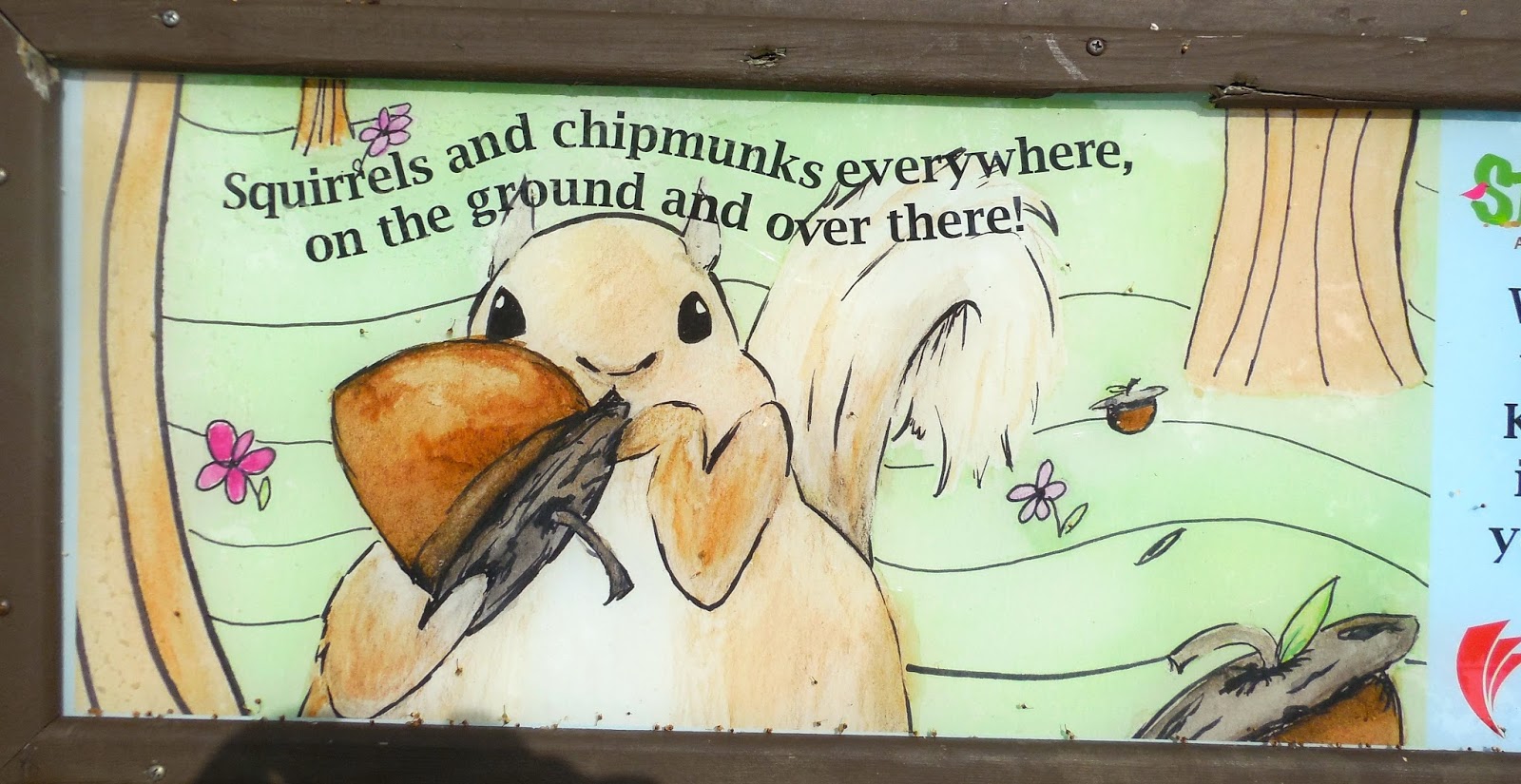
A writer can wear many hats as children's writer Laura Purdie Salas tells us in her monthly e-news, "A Writer Can Be..." (Sign up here.) A story can be more, too, I discovered. I hit the Story Trail with intermediate/middle school writers via a collaborative project this winter in conjunction with the Columbus Metropolitan Library, Art Garden Studios, and Gahanna Lincoln schools. Children's Director Angie Sharkey, librarian Kathe Bumbaugh and I instructed six budding writers as we created 14 story board "spreads."  Our finished product, GOING ON A NATURE WALK, debuted over Memorial Day. This is our story process in case you'd like to replicate the idea in a park near you. ( Be sure to check w/Dawes Arboretum as the StoryTrail is trademarked by them.


The seed for our tale germinated with Dawes StoryTrail when Shutta Crumm's book, BRAVEST OF THE BRAVE, was featured. (See her blog post for details here.) Gahanna Parks and Recreation and the Gahanna Library branch were given permission to borrow the trail idea, and now five years worth of stories have been created! Mounted under glass, on wooden frames set low to the ground for little eyes to read, the stories last one complete year. Older stories are being mounted in other parks this year. According to Recreation Supervisor Zac Guthrie, each installation costs approximately $1500. Children and families have fun exploring the outdoors and learn that reading can happen anywhere.


Denise Fleming's IN THE TALL,TALL GRASS

This year's student writers relied on a mentor text to give structure to their tale, GOING ON A NATURE WALK. In six weekly hour-and-a-half sessions, students journeyed through writing a picture book by:

  • reading/discussing science and nature-related picture books
  • brainstorming ideas for their collaborative book
  • making a dummy draft using giant post-it notes
  • revising their draft by changing spreads, adding figurative language, paying attention to the sound and rhythm of text
  • looking for plot and character arc in the story.


Student writers at the Ribbon-cutting Ceremony


GOING ON A NATURE WALK as well as the other Story Trail titles helps families to encourage early literacy skills. The Ready to Read program skills embedded in the board spreads encourage storytelling, ABCs, sounds, and loving books. All 14 story boards include illustrations created by Cera, a Gahanna Lincoln High School senior, paired with a reading skill activity selected by our librarians. 

A story like this can also be a springboard for a writer like you to engage with your local librarians and community. It may lead to future projects, just as mine did. This June, the Gahanna library branch hired me to teach a picture book class for the summer reading program. I know my volunteer work with the Story Trail gave others the chance to see my work in action! Thank you librarians and student writers for a wonderful opportunity! 


Thursday, June 2, 2016

The Asian Festival of Children's Content 2016 by Tina Cho

My first ever writing conference happened in Singapore at the Asian Festival of Children's Content May 25-29th. I was only able to attend May 24th - May 25th because my other job is a teacher at an international school. 

The AFCC is "an annual festival in Singapore that celebrates and promotes the creation and appreciation of children's books and content, with a focus on Asian themes." 

May 24th was the awards ceremony for the Scholastic Asian Book Awards in which my novel manuscript was shortlisted and won 1st Runner Up. I was honored to shake the hand of Singapore's Parliamentary Secretary of the Ministry of Education. And I was even more honored that the renowned U.S. historian and author Leonard Marcus was the chief judge who read my story! 
Me, Leonard Marcus
Sessions I attended and a blurb about each:
  • From Comics, Graphic Novels, and Picture Books to Fusion Texts by Dr. Janet Evans: She explored books that entwine elements of the three mentioned genres into a fusion book which allows controversial texts for younger children. Ex. The Wolves in the Walls by Neil Gaiman

  • On Translation by Cathy Hirano: An excellent session by an American who has lived in Japan for many years and translates books. She explained why translated stories are crucial to understanding culture and why translated books are needed. She also explained issues in translation. I'll blog about this more later.

  • The Editors Are Your Best Friend Panel Discussion: Sarah Odedina (Editor-at-Large for Pushkin Press and editor of Harry Potter books England), Daphne Lee (editor Scholastic Asia), Andrea Pasion-Flores (agent Jacaranda Agency Philippines): This panel discussed all things editing--what drew you to editing, publication process, what are you looking for. Perhaps more later in a blog post.

  • What Makes a Book Award Worthy: Leonard Marcus (U.S.), Dr. Murti Bunanta (Indonesia), and Deborah Ahenkorah (Ghana): Compared Newbery/Caldecott with Africa's Baobab Award and more. I'll definitely blog more about this one with criteria that make an award-winning book!

  • Tackling Novel Revision by Holly Thompson (Japan SCBWI R.A.) She shared her tips for revising your novel.

Cynthia Leitich Smith (L), Holly Thompson (middle), Andrea Pasion-Flores (Rt)
  • First Pages Critique: I was brave and submitted 100 words of a picture book manuscript. It was so fun to hear Australian author Christopher Cheng read my words out loud with his wonderful accent. And the popular Cynthia Leitich Smith (U.S. author) and Holly Thompson (Japan SCBWI R.A.) and Andrea Pasion-Flores (agent Jacaranda Philippines) critiqued it live. 

I'm so glad I went but hated having to leave early. Like everyone says, attending a conference is so wonderful with the connections you make and book deals you walk away with! (Yes, Scholastic Asia wants to publish my novel.)