Friday, April 17, 2015

Stories of our Jewish Friends + Family by Jan Annino


            Stories of our Jewish Friends + Family 

            This week is a special time for students and families who think about Jewish families.  It is a time of remembrance of those who survived, and who didn't survive, The Holocaust. (Also targeted: Polish people, Jehovah's Witnesses, homosexuals, the Roma people, the physically or mentally disabled, children who had a black parent, and, select others.)

           My heartfelt connection to The Holocaust began with great sobs and shock in reading The Diary of Ann Frank in school and in learning about the fate of the people in the secret annex.

            To balance my sadness fortunately I played with a school pal, Susan Entenberg, when I was nine and ten. Not only did her older sister let us listen to her Beatle records, but there also was an extra unintended joy in visiting and staying overnight. 


            Her mother explained that the family’s strict Kosher kitchen was too easy for children to mess up, simply by placing food and dishes in the wrong pantry or area. A rabbi would have to come in and a ceremony would re-consecrate the kitchen. I remember coming home and announcing that I wanted to be Jewish. No kitchen duty for children. And such sweet treats to eat. Yum! In recent years my hubby & I attend our neighborhood's cultural Jewish Festival weekend, where we load up on favorite Jewish foods. If the weather is good, we can walk. But then, we can't carry so many goodies home.
           
            This year’s days of reverent Holocaust Commemoration are April 16-19. At a particular moment in Israel, the entire nation is asked to stop activities and assist in the remembrance.  Indeed, all over the world people will find ways to remember, such as several March of the Living events in Europe.

            Our family has previously visited  The United States Holocaust Memorial, which provides a reliable source of important information.

            Here in my hometown,  special services with Christians and Jews together are offered during the year and this week is no exception. Last weekend, my husband and I were fortunate to attend a small talk at the WordofSouth books event that showcased excellent student art, solicited from students of all faiths, by our hometown Holocaust Education Resource Council.


            With encouragement from my writing group, I submitted a Jewish topic picture book manuscript that I had worked on for a couple of years. My story is inspired by real life. In it an observant Jewish girl is thrilled by the approach of Easter, although this girl’s excitement naturally mystifies her visiting grandpapa. By the end of the story, we see what goes on at Easter for her and -  her grandpapa’s reaction.

            It is helpful to me that I have friends & colleagues of Jewish heritage to consult,
but I am especially fortunate that one of my regular writing critique partners who is Jewish
strongly encouraged me, Christian, to submit to KAR-BEN. This publisher brought out a popular picture book on The Holocaust. The Whispering Town is a picture book that beautifully tells a child's role to help defy Nazi's in Denmark. It is uplifting to read.


            KAR-BEN is a respected imprint of Lerner and well-regarded for publishing Jewish-theme topics. Favorites of mine from the KAR-BEN house include not only The Whispering Town, but also,  Feivel’s Flying Horses, Goldie Takes a Stand and Rifka Takes a Stand.
           
            If you are pulled to writing on Jewish themes you will naturally be reading the best in books for young readers. Some resources:
JEWISH BOOK MONTH – about mid-November thru Hanukkah

              Another resource is the comprehensive, 170-page HITLER YOUTH by renowned nonfiction children's author and former teacher, Susan Campbell Bartoletti. While focusing on the
Nazi activities that few children and teens escaped conducting in pre-war and wartime Germany, the book also documents the brave children who resisted the Nazi activities. Learn about 16-year-old Helmuth Hubener, who was beaten in a Berlin jail, tried, and at age17 in 1942, executed. The teen created a Nazi resistance movement within Germany as adults were managing to do, also risking death, in the rest of Europe. Other students who clandestinely worked against Hitler are documented.

            May this never happen again. But, recently, we attended a university talk where the terrorism of the killers known as ISIS was compared to Nazi Germany. My response is to remain informed, hug children & help train them up in the good ways.  I find hope in writing poems, stories & books of quality, for young readers.

Wednesday, April 15, 2015

Pinterest for Writers Part 2 by Tina Cho

Welcome back!
This is a continuation of Pinterest for Writers which you can read part 1 here, if you haven't done so.

I already established why authors should use Pinterest. Did you know there's also a set time that's better for pinning to reach your followers?


According to Fannit Marketing Services, the best time to pin is on Saturdays from 2-4 pm, and 8-11 pm. Perhaps that's when women have downtime and can spend it perusing Pinterest without kiddos bothering them. The infographic listed here also shows posting times for other social media sites as well.

I usually check the Pinterest board feed once a week and pin to MY boards when I come across things I want to save. As with all social media, use your time wisely, and you'll get a lot accomplished in your day.

Another thing to remember about Pinterest is that teachers LOVE Pinterest. They pin lesson plans, books to use in the classroom, and crafts. I have a Teachers Pay Teachers store and created a board for my TpT items. Educators repin those pins along with other educational products I've written for work-for-hire publishers. If you want your books to get noticed by teachers, start an educational board to attract teacher followers. You could also make a board and pin lesson plans and teacher guides that relate to your book. Author Barb Rosenstock has a wonderful board of teacher-related items for her picture book The Noisy Paint Box. 

More ideas for boards:
  • quotes for writers
  • setting for your book (scenes, character's bedroom, maps)
  • info about your characters (favorite food, clothing styles, pictures, pets)
  • how-to boards (I have a how to write a novel board and everything pertaining to that goes on that board)
  • poetry
  • other ideas were listed in part 1


Lastly, did you know there are SECRET boards? You can make a board and in the settings click the button to make it a secret board for your eyes only. I made one secret board for my current WIP which takes place in North Korea. I've pinned scenes, people, web sites, and articles that pertain to this WIP. Why a secret? Well, I don't think my followers would like to be bombarded with pins about North Korea, and secondly, sometimes a WIP is secretive until it goes out into the world :) Try making a secret board for your research or anything that you want for your eyes only. 

If you want to learn how to gain more followers or use Pinterest more wisely, check the articles pinned on this board.

If you're a newbie to Pinterest and want to know how to pin and set up your boards, check this video.

And here are boards of some of the groggers. Feel free to follow all or some of our boards!
(Thanks Grog friends for sharing Pinterest tips!)

Tina Cho
Suzy Leopold
Marcie Atkins
Jan Godown Annino
Patricia Toht
Janie Reinart
Grog Blog


Happy Pinning!


Monday, April 13, 2015

How to Write a Children's Picture Book: The Home Version by Pat Miller

I didn’t earn an MFA in writing. I simply started writing as a kid, and haven’t stopped. But I have longed for courses in writing. When the cursor blinks relentlessly on the blank page, when my prose is limp and my imagination is indolent, I definitely feel my lack of training.

Then I discovered and read the three-book series, How to Write a Children’s Picture Book by Eve Heidi Bine-Stock. They don’t replace a MFA, but Bine-Stock has definitely schooled me in how to energize my writing and motivate my imagination. You can get the same one-on-one attention with her titles. Let’s take a look.

The first book is How to Write a Children’s Picture Book: Structure. It uses 26 favorites from the New York City Public Library’s list, “100 Picture Books Everyone Should Know” as exemplars. The goal is not to study the plots, characters, settings, and so on. It’s to analyze the underlying story structure so it can be replicated. In fact, if you don’t have the bones of structure underneath, the story elements won’t hang right, no matter how much you revise. No wonder my prose was limp.


Though it has less than 200 under-sized pages, this book is a master’s course. In Part One, she uses books like Ten, Nine, Eight by Molly Bang and Goodnight Moon by Margaret Wise Brown to reveal the two-part structure of many concept books. Use her analysis of these deceptively simple books if you are writing a similar book.

In Part Two, Bine-Stock reveals what she calls the Symmetrical Picture Storybook Paradigm, “which underlies most of the best-loved picture storybooks.” This is such a fresh concept that Bine-Stock developed her vocabulary based on screenwriting. She shows how Leo the Late Bloomer by Robert Kraus has three acts separated by two plot twists. And those acts are symmetrically divided into 7-9-7 pages. This is one of fifteen classics that Bine-Stock deconstructs, and her chart lets you apply what you learn to your own WIPs.

Part Three uses Millions of Cats by Wanda Gag and Mike Mulligan and His Steam Shovel by Virginia Lee Burton to take you through what Bine-Stock calls The Iterative Paradigm. Then she says enough with the showing, now it’s your turn. The last section is a blueprint “to plan and structure your picture story-book before you sit down to write it.” Wow--here's the X on the writer’s treasure map.  

One course does not an MFA make, nor does one book tell you all you need to know as a writer. But wait! There’s more! Volume II: Word, Sentence, Scene, Story is not what you think. Don’t expect to learn about vivid verbs, grabby sentences, convincing scenes, and story arcs—things you probably already know. 


Instead, Bine-Stock talks about focus and rhythm, cohesion, action and reaction. She talks about beginning and ending scenes. She explains storytelling strategies based on problem first, character first, background first, or action first. But Bine-Stock is more than talk. She shows how easily acquired books like Caps for Sale and Harry the Dirty Dog use these techniques. She’s all about showing as well as telling.


The final book in the series is Volume III: Figures of Speech. By now you know to expect the unexpected, the fresh, the truly helpful from Eve Bine-Stock. This is not the book of metaphors, similies, or idioms. 


Instead, you will learn to freshen and intensify your work with figures of speech like epizeuxis, immediate repetition like that found in Lyle, Lyle Crocodile. Or, in the same book, a kind of repetition called anadiplosis—repeating the end of a prior sentence in the beginning of the next.

This is the house.
The house on East 88th Street.
Mr. and Mrs. Primm
and their son Joshua
live in the house
                               on East 88th Street.

Though impressive, the unusual names of these figures of speech aren’t important. But the examples in children’s literature and the possibilities for your own work are immensely important. You will see first-hand how these figures contribute to the emotional power and memorable quality of these classics--and you will have real tools to enrich your own work. 

These books are readily available online, new and used. They are much easier on your budget than tuition in an MFA program, but may very well impact your work as much. Give this three “semester” course on How to Write a Children’s Picture Book a try!

Wednesday, April 8, 2015

Resources to Pump Up Your Poetry ~ by Patricia Toht


April is sweet. Not only does the Chicago winter finally lose its grip and flowers poke up in the garden, but it's also the month for EVERYTHING POETRY. To celebrate, I thought a poetry post was in order.

While waiting for the muse to arrive, I began to straighten my workspace. That's when that cheeky muse struck me (literally) with an idea. A wonky stack of books slid off the shelf and onto my foot -- books about writing poetry.


A post on poetry resources! And so, here are some of the things that help me pump up my poetry:

Read! Books for Poets.
• A great rhyming dictionary and thesaurus. My preferred editions are Webster's New World Roget's A-Z Thesaurus (Wiley Publishing, 1999) and The Complete Rhyming Dictionary, edited by Clement Wood (Doubleday, 1991).


• Books about writing poetry. Top of my stack is Myra Cohn Livingston's POEM-MAKING: WAYS TO BEGIN WRITING POETRY. Its advice is simple enough for students, yet thorough enough for seasoned poets. 


Two others, geared for students yet thoroughly useful to me, are KNOCK AT A STAR by X.J. Kennedy and Dorothy M. Kennedy and HOW TO WRITE POETRY by Paul B. Janeczko. 
These books take me back to the basics and remind me that a clever couplet can be as sublime as a sonnet.
For books aimed at the (ahem) "mature" poet, I like THE ODE LESS TRAVELLED by Stephen Fry, which erases a bit of the intimidation and mystery that surrounds the writing of poetry. Two on my to-be read list, based on fellow poets' suggestions, are  Mary Oliver's A POETRY HANDBOOK and Susan G. Wooldridge's POEM CRAZY. (Thanks Mandy, Dawn and Dianne!)  

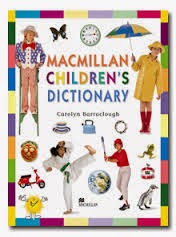
• A children's picture dictionary. I use this to un-stick me when I'm short on ideas to write about. I close my eyes, randomly open it, and plunk down a finger on an entry. Then I brainstorm ideas, based on the selection. 


Learn! Take a Class.

• Local. My first poetry class was "The ABC's of Children's Poetry" by Heidi Bee Roemer, a Chicago-area poet/author. This four-day workshop reawakened my interest in poetry and kick-started my writing.

• Not-so-local. The Highlights Foundation offers a poetry workshop each year. This year it runs April 15 to April 19. I participated in a five-day retreat led by Rebecca Kai Doltich, Alice Schertle, and Susan Peerson. A real "highlight" on my poet's journey! 

• Online. I'm saving my pennies to take Renée LaTulippe's "Lyrical Language Lab." The class covers 19 lessons over 4 weeks and aims to pump up your prose with elements of poetry.


Be Inspired! Visit Poetry Blogs.
Blogs challenge me, inspire me, educate me. Some of my favorites include:

• The Poem Farm by Amy Ludwig VanDerwater
• Poetry for Children by Sylvia Vardell
• The Miss Rumphius Effect by Dr. Patricia Stohr-Hunt
• Today's Little Ditty by Michelle Barnes
• No Water River by Renée LaTulippe
• Poetry 4 Kids by Children's Poet Laureate, Kenn Nesbitt
• A Great Nephew and a Great Aunt by Penny Parker Klostermann

Step Up to a Challenge!

• RhyPiBoMo -- Created by Angie Karcher. A full month of support and advice for those writing picture books in rhyme. Great fun!

• The March Madness Poetry Competition -- Brainchild of Ed DeCaria. In the spirit of college basketball's March Madness, the competition pits one poet against another. Each is challenged to write a poem that uses a random vocab word and readers vote for the winner in each round. This year's champion, crowned just a few days ago, was Buffy Silverman!

Find Your Tribe! Join.

• Poetry Friday. Every Friday, poets in the Kidlitosphere gather to celebrate poetry with original poems, reviews, and thoughts. Different blogs host, so this is a good way to get to know other poets.

• The Poetry Foundation, based in Chicago, is a national organization that supports poetry. They appoint a Children's Poet Laureate every two years, spotlight new poetry books, and offer a "Poem of the Day".


• On Facebook, the Poetry Advocates for Children & Young Adults promotes and supports kid's poetry.

• Organize a critique group, just for poetry. 
My tribe! Poets Eileen Meyer, Cathy Cronin,
Heidi Roemer, Michelle Schaub, and me 

So there you have it. My list of poetry resources. 

What's on your list, GROG readers?


Monday, April 6, 2015

Pinterest for Writers Part 1 by Tina Cho

Bulletin Board clip artRemember the days of cork bulletin boards? Today's generation can use a virtual bulletin board called Pinterest, thanks to Ben Silbermann, Paul Sciarra, and Evan Sharp who started the web site in 2009 after seeing that people needed a place to put images of products they'd like to buy. Since then, Pinterest has taken off.

The Pinterest web site describes this social media as "a place to discover ideas for all your projects and interests, hand-picked for people like you."

Watch the short video about Pinterest.


Why should writers care about Pinterest when they're already inundated with other social media platforms? Glad you asked!

Mia Wenjen, a prominent blogger and social media user I found on Twitter, wrote an excellent blog post called "Social Media Marketing 101 for Authors." I highly recommend you read this! Mia suggests that of all social media platforms, "Pinterest is where it is at. Pinterest is the number one driver of referral traffic for all bloggers that I know."

Check out these stats from Pinterest:


So writers, if you haven't already, join Pinterest! It's free, but you have to have an invite from a friend. (I can send you one if you need; let me know in the comments.)

Once you're a member, you create thematic boards and pin anything to your board with virtual bookmarks called pins. (see movie above) Popular boards are crafts, recipes, home decorating and remodel ideas, etc... But writers can take advantage of these boards as well. 

  • pin photos of the setting of your story
  • pin photos of people whom your characters are based upon
  • start a board on mentor texts (Our grogger Marcie Atkins has many already)
  • pin web sites of writing classes you want to take
  • pin covers of books you want to read or have read
  • pin THINGS YOU'VE WRITTEN (and your family and friends will repin them)
  • pin articles for research
Okay, the sky's the limit, and this post is too long. Let's continue Pinterest for Writers Part 2 on April 15th. See you then!


Friday, April 3, 2015

Writers Need Models ~By Suzy Leopold


What do you love to do? What do you think you are really good at? All of us recognize our strengths and believe in what we can do. The thing that you are good at is probably something that you enjoy doing often.

Stop for a moment and think about something that you believe you are good at or at least have some level of fluency or mastery. You probably had an excellent model who taught you how to do what you feel you are good at. This individual may have encouraged you, inspired you, and believed in you.  

The first time you tried playing baseball perhaps you were unsure and nervous. When it was your turn to bat, did you hit a homerun or strike out? With practice you improved upon the sport. Your coach shared tips with you and encouraged you. You practiced daily. Soon you became stronger and more confident.
Grandson Lane
Who taught you how to bake a great loaf of bread? Perhaps you watched and learned at first. Then an experienced baker showed you how to measure all of the ingredients needed and how to work with the yeast. You were taught how to kneed the bread, shape the loaf and how long to bake it.
Like many of you, I learned how to ride a bike as a kid. I have a memory of riding a bicycle for the first time without training wheels when I was five years old. I've always enjoyed riding my bike. Sure I knew how to ride a bike. At least I thought I did. However, my husband Perry taught me and inspired me to be a better cyclist.
Suzy Rides
My Pink Marin Portofina
Riding together, Perry modeled for me. The rules of the road were explained to me. Perry taught me the importance of staying hydrated and fueled. Words of encouragement were shared. He helped me to improve my form on a bike. Together we buildt my stamina and over time I have achieved many 50+ mile bike rides with Perry. It's been a journey and continues to be.

Writing is a journey. Becoming a published author is a journey. A writer learns through great models by using mentor texts that model great writing.

Never hesitate to imitate another writer. Imitation is part of the creative process for anyone learning an art or craft. Bach and Picasso didn't spring full-blown as Bach and Picasso; they needed models. This is especially true of writing.
~William Zinsser

Mentor texts have power to help a writer grow. Studying great picture books before writing is what I did during the month of March for Research for Reading Month ReFoReMo with Carrie Charley Brown. Many of you, too, participated in this first annual writing challenge.

I now have a better sense of reading picture books with a purpose and studying them while looking at the entire book page by page from cover to cover. Studying these high quality, currently published picture books as models are encouraging me to be a stronger, better writer. I no longer just read quality picture books I study them.

Here is an example of how I now study picture books:

The Right Word Roget and His Thesaurus
By: Ben Bryant 
Illustrator: Melissa Sweet
42 pages
Ages 7 +
Genre: Creative nonfiction/Biography
Published by: Eerdmans Books for Young Readers, 2014
Grand Rapids, Michigan
Cambridge, UK 
Awards: 
2015 Caldecott Honor Book
2015 Sibert Medal Winner 
2105 Orbis Pictus Honor Book and many more

The Right Word Roget and His Thesaurus
  • Beautiful, unique illustrations created with watercolor, collage and mixed media that depict imagery of classification and scientific illustrations. Old botanicals and vintage papers are used throughout the book. 
  • A picture of a page from Roget's orginal word book is included.
  • Illustrations and page layouts contribute to the story line.
  • The Back Matter includes: List of Principal Events [timeline], Author's Note, Illustator's Note, Selected Bibliography, a section For Further Reading and Sources.
  • The endpapers list Roget's thousand words with abbreviations.
  • The author shares with the reader Peter Mark Roget's childhood, his precocious intellect, his nervous habits and much more through the drama and contradictions and historical details of Roget's fascinating life until his death in 1869.
  • Some pages are written as a columns depicting lists that Roget kept in his notebooks.
  • Story is written in a lyrical text.
  • Speech bubbles are used to support the text.
  • Rich vocabulary acquisition for students.

End Papers
Page on right is written as a column.
Consider using great picture books that model great writing. Great picture books are excellent mentors that teach a writer to be a better writer. Do you read picture books to become a better writer? How do you read and study great picture books?

Happy Easter to you and your family.
An Easter Treat for You!

Wednesday, April 1, 2015

Studying Picture Books with a Dummy

by Leslie Colin Tribble

A writing friend recently posted in a Facebook group that she’s been studying 3-5 picture books a week and discovered some enlightenment on how to revise a couple of her current manuscripts. I was intrigued. How does one study a picture book, other than reading it? Her advice was to create a picture book dummy or storyboard and analyze the text for pacing, repetition, flow and placement of illustrations.

Patricia Toht's own picture book dummy


I headed off to my library and snagged some new picture books. Then I made a picture book dummy, as described by our own Patricia Toht, for each book. Here are the books I read and what I learned.


This book just ate my dog! 
Written and illustrated by Richard Byrne

This was a really cute book, coming in an amazing 114 words. The text is simple, the layout is simple and the illustrations are simple but in a very compelling way. I had the book laid out at 34 pages, but Amazon states it has 40 pages (maybe the UK edition?). The page turns happen as different animals, individuals and vehicles disappear into the book. There’s a very slight twist at the end, pulled off solely by the illustration. There were nine pages of illustrations only. The sparseness of the text was a good lesson!


A Moose that Says Moo 
Written by Jennifer Hamburg and illustrated by Sue Truesdell

This rhyming book contains 329 words with only five pages without text. I’ve never even attempted to write in rhyme so I made a point of really analyzing this book. Almost each line contained a meter of 11 beats with rhyming end words. Some pages had two lines of four beats followed by a line with 10 beats. That broke up the basic pacing and provided interest. The rhyme and rhythm make this a great read aloud, which is probably why this book is on the short list for the Wyoming State Library Association and State Reading Council Favorite Book Award by children in kindergarten through third grade.


Winter is Coming 
Written by Tony Johnston and Illustrated by Jim LaMarche


This book reads like a nature journal as written by the girl in the illustrations. Each spread had text on the left and illustrations on the right and came in at a whopping 751 words. This is one of those fiction/non-fiction books as the text provides factual information about various animals getting ready for winter, but reads like a story. I loved this book. If I had owned this book growing up it would have been a favorite because I would have wanted to be the main character, living in the country and keeping a nature diary. After reading this book a few times I started noticing the vivid, action words that show, not tell.  


These are some of the sentences which caught my eye:

“Ice is in the air.” How much better is this than, “The air is cold.”

“The fox shines like a small red fire.” Not “The fox is red.”

Bear movement is described as rustle, snuffle, searching. These are much more exciting words than walking, sniffing, looking.

Woodpeckers hammer, scrounge and riddle. The lynx ghosts along and has Egypt eyes. What great image words!

The refrain, “Winter is coming,” carries the sense of time forward and is used 12 times in 14 page spreads. The author often uses the word “quiet” to describe action in both the animals and the girl. And isn’t fall a quietly expectant season as the world waits for the first flakes of winter snow?


Wolfie the Bunny 
Written by Ame Dyckman, Illustrated by Zachariah Ohora

I loved everything about this book! It has great illustrations with a huge range of emotions on the cutest bunny faces and a fast, snappy text to boot.  This book has 364 words with two repeating phrases used to carry the theme. What I appreciated most about this book was the clever use of just the right words. 

Here are some examples:
“Dinner!”  Instead of saying, “The Bear grabbed Wolfie for dinner.” The author just used one succinct word to get the idea and emotion across.

Wolfie pounced.” Not “Wolfie wanted to hug Dot.”

“Instead, she ran forward.” This is all action with no telling. I probably would have written something like, “Dot wanted to save Wolfie so she ran to the Bear.”

I really learned a lot by pouring over these books. Studying picture books is a great way to understand the difference between “showing not telling.”


If you’re still unclear about story boards or dummies you can read more about them. Tara Lazar has an interesting post that talks about picture book lay out and Uri Shulevitz does a good job of weaving in text and illustration considerations. Try one for your own stories. You just might be enlightened on how to craft a better picture book.